More powerful version of the U-2.
Engine: Siemens-Halske Sh 4, 30 kW (40 hp)
More powerful version of the U-2.
Engine: Siemens-Halske Sh 4, 30 kW (40 hp)
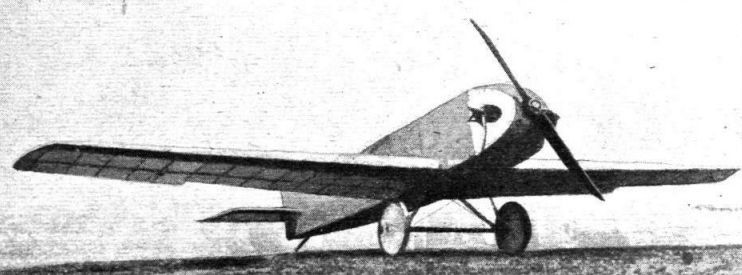
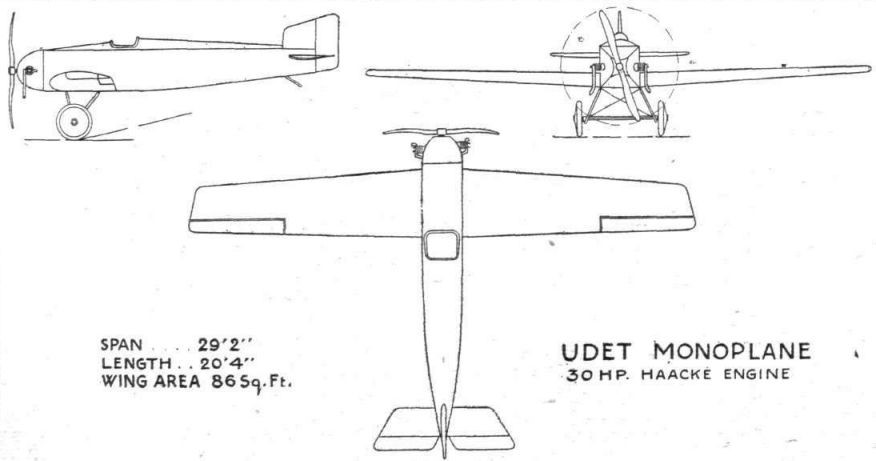
In the summer of 1921, a new aviation company was formed using the WWI German flying ace, Ernst Udet’s name. William Pohl from Milwaukee, Henry Hans Herrmann and Erich Scheuermann joined to company to fund the aircraft before wartime treaty restrictions were lifted on aircraft production with the intent of building an inexpensive aircraft for the American market. Designed by Hans Henry Herrmann, the builders produced and flew the U 1 five months before the formation of the Udet Flugzeubau GmbH company. The first flight being in May 1922.
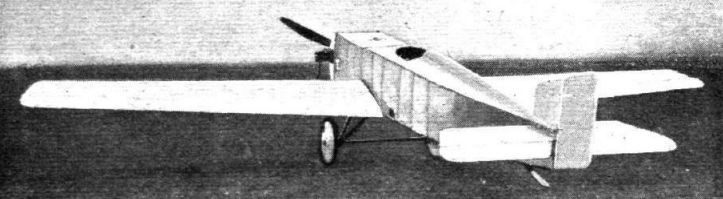
The design was a single seat low wing, open cockpit monoplane with conventional landing gear. The aircraft was large enough to accommodate two passengers, but did not have enough power for more than one person. Only the one was built.
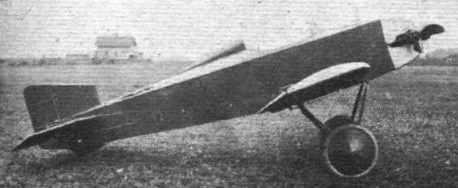
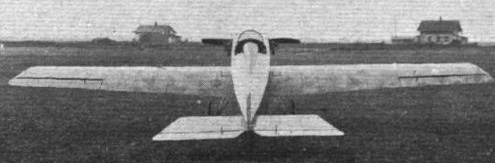
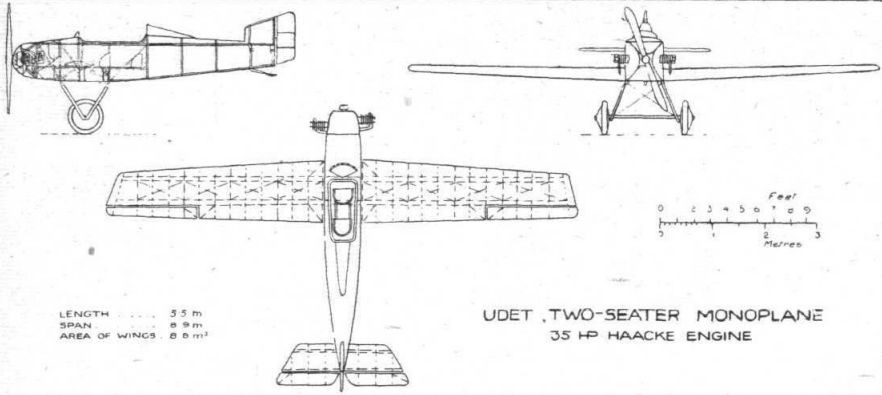
The Udet U 2 was a two seat production variant, first flying in March 1923. Four were produced.
Specifications:
U-1
Engine: 1 × Haacke, 16 kW (22 hp)
Length: 5.33 m (17 ft 6 in)
Wingspan: 8.9 m (29 ft 2 in)
Height: 1.7 m (5 ft 7 in)
Wing area: 8 m2 (86 sq ft)
Gross weight: 200 kg (441 lb)
Maximum speed: 180 km/h (112 mph; 97 kn)
Endurance: 2.5 hr
Crew: 1
U-2
Engine: Haacke, 35 hp
Wingspan: 6.9 m
Length: 5.5 m
Seats: 2
The 1909 Ueda Hiryu-go biplane was designed and built by Shoraro Ueda in Japan.
The 1913 Tsuzuku monoplane No. 3 was designed and built by Tetsaburo Tzusuku in Japan for the Revolutionary Government of China.
Span: 37’5″
Length: 24’7″
Gross weight: 1213 lb
Speed: 56 mph
In 1962 Joseph E Tyndall built a 2 place, enclosed, midwing monoplane, registered N464T.
The sole example built crashed in 1963, killing its designer.
Engine: Lycoming, 108hp
Wing span: 22’0″
Length: 19’6″
Useful load: 500 lb
Max speed: 125 mph
Cruise speed: 115 mph
Stall speed: 60 mph
Range: 250 mi

A two seat enclosed autogyro. The basic frame is bolted 2×2 aluminium, with twin rudders and fibreglass cabin.
The Shadow is fitted with certified disc brakes, a gearbox-driven prerotator, and full electrical system for avionics, lights, etc.
Easily reducible height for storage in a garage or transport by trailer.
Engine: Lycoming 0-320, 150 to 180 hp
Length: 13 ft
Height: 8 ft 4 in (reducible to 6 ft)
Width: 7 ft
Number Of Seats: 2
Empty Weight: 750 lbs
Gross Weight: 1,290 lbs
Useful Load: 540 lbs
Rotor Diameter: 29 ft
Rotor Construction: Composite
Disc Loading: 1.95 lb/sq.ft
Fuel Capacity: 12 USGal (18 USGal opt.)
Range: 100 (min.) to 150+ miles
Take-Off Distance: 100 to 150 ft
Landing Distance: 0 to 25 ft
Rate-Of-Climb: 800 to 1,500+ fpm
Cruise Speed: 70 to 80 mph
Maximum Speed: 100 mph
Vne: 110 mph
Service Ceiling: 18,000 ft
In 1937 William B Tyler built a single seat, open cockpit monoplane. Registered N2043, the Tyler A was powered by a 50hp Ford engine.
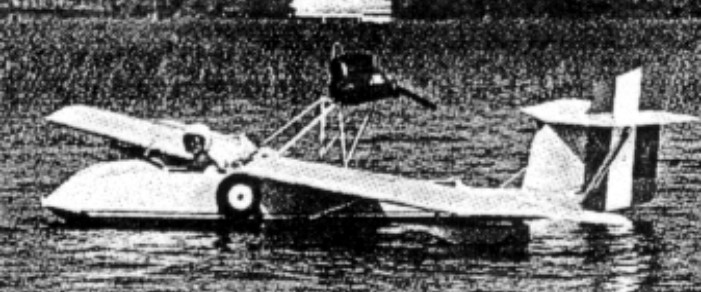
Amphibian pusher made from sheet metal, tube and fabric.
Engine: Rotax 447, 40 hp
HP range: 30-100
Height: 6 ft
Length: 18.75 ft
Weight empty: 304 lbs
Gross: 650 lbs
Fuel cap: 10 USG
Speed max: 63 mph
Cruise: 55 mph
Range: 75 sm
Stall: 27 mph
ROC: 800 fpm
Take-off dist: 200 ft
Landing dist: 250 ft
Service ceiling: 12,000 ft
Seats: 1 or 2
Landing gear: tail wheel, retractable

Amphibian pusher made from sheet metal, tube and fabric.
Engine: Subaru, 60 hp
HP range: 30-100
Height: 6 ft
Length: 18.75 ft
Weight empty: 300 lbs
Gross: 900 lb
Fuel cap: 10 USG
Speed max: 100 mph
Cruise: 85 mph
Range: 400 sm
Stall: 31 mph
ROC: 1000 fpm
Take-off dist: 200 ft
Landing dist: 250 ft
Service ceiling: 20,000 ft
Seats: 1 or 2
Landing gear: tail wheel, retractable
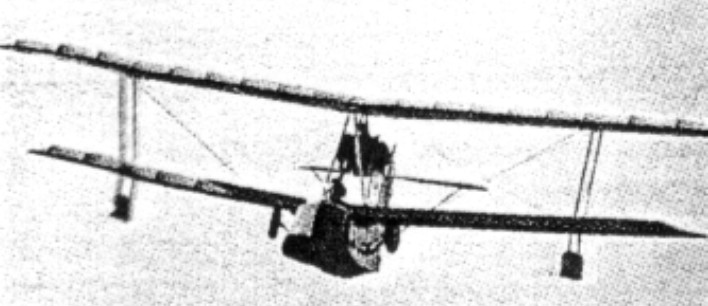
Amphibian pusher made from sheet metal, tube and fabric.
Engine: Subaru, 60 hp
HP range: 30-100
Height: 8 ft
Length: 18.75 ft
Wing span: 28.5 ft
Wing area: 204 sq.ft
Weight empty: 370 lbs
Gross: 950 lbs
Fuel cap: 10 USG
Speed max: 100 mph
Cruise: 80 mph
Range: 400 sm
Stall: 29 mph
ROC: 1500 fpm
Take-off dist: 175 ft
Landing dist: 225 ft
Service ceiling: 20,000 ft
Seats: 1 or 2
Landing gear: tail wheel, retractable

