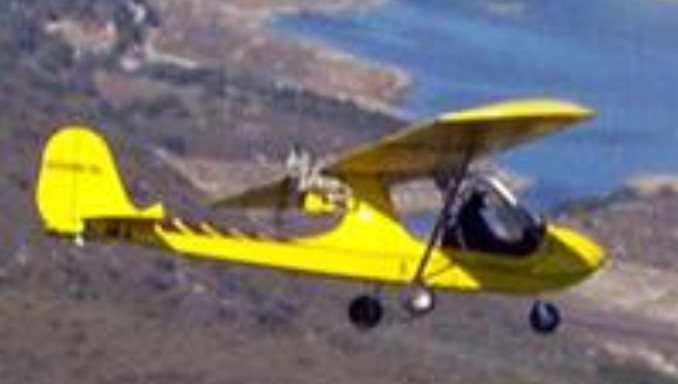
US Light Aircraft Hornet

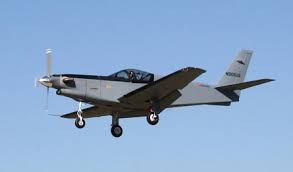
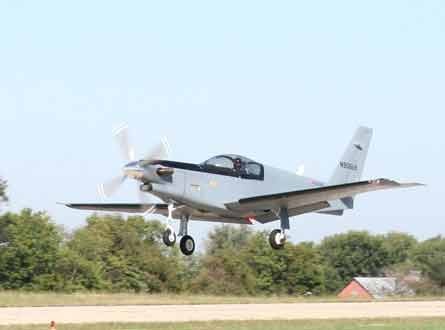
The entire airframe is completed by the factory, assembled in precise factory jigs, with over 7,000 rivets.
The Hornet components are manufactured by computer automated equipment, especially designed by U.S.L.A.C. to produce the most precise, highest-quality aircraft possible. 2009 Price: 18950 US$

The Hornet has pneumatic suspension on all three wheels, electrically actuated flaps and horizontal staliser. First flown in 1993. The Hornet qualifies under the 51% rule.

Engine: Hirth, 55 hp
HP range: 55-70
Fuel cap: 10 USG
Weight empty: 490 lbs
Gross: 454 kg / 1000 lbs
Height: 6 ft
Length: 20ft
Wing span: 27.5 ft
Wing area: 137 sq.ft
VNE: 104 kt / 120 mph / 193 kmh
Cruise: 61 kt / 70 mph / 113 kmh
Range: 400 sm
Stall: 35 mph
ROC: 700 fpm
Glide Ratio: 9:1
Take-off distance: 175 ft / 53 m
Landing distance: 150 ft / 46 m
Service ceiling: 12,000 ft
Seats: 2
Landing gear: Nose wheel

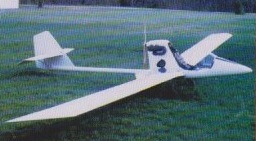
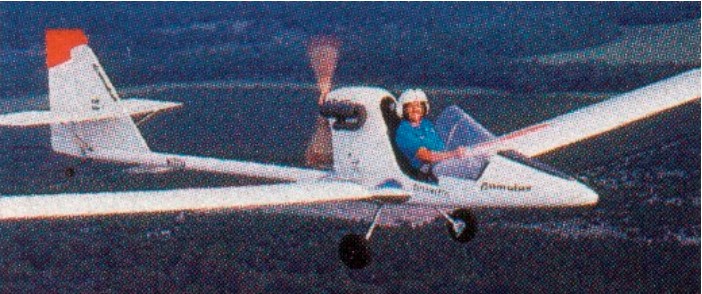
US Aviation Cumulus

The Cumulus has a foldable cantilever wing in riveted sheet dural, dacron covered, and a welded steel spaceframe fuselage and a composite cockpit.

In 1998 the Cumulus returned to the market after and inflight failure of the spar involving the designer.

An Ultralight / Microlight Motorglider Construction is steel and fabric, first flown in 1995. Was available as a kit manufactured by AeroDreams, for $9995. 2009 Price: 7995 US$ airframe only.

Engine: Rotax 277, 28 hp
HP range: 28-35
Height: 4.5 ft
Length: 20.5 ft
Wing span: 43 ft
Wing area: 141 sq.ft
Fuel cap: 5 USG
Weight empty: 320 lbs
Gross: 560 lbs
Speed max: 90 mph
Cruise: 82 mph
Range: 275 sm
Stall: 27 mph
ROC: 600 fpm
Take-off dist: 120 ft
Landing dist: 170 ft
Service ceiling: 15,000 ft
Seats: 1
Landing gear: tail wheel
Glide: 20:1@ 43 mph
Sink: 195 fpm @ 30 mph
Fuel: 1 USG/h.

Engine: Rotax 447, 28 hp
HP range: 28-40
Height: 4.5 ft
Length: 20.5 ft
Wing span: 43 ft
Wing area: 140 sq.ft
Fuel capacity: 5 USG
Empty weight: 163 kg / 360 lbs
Gross weight: 290 kg / 640 lb
Top speed: 90 mph
Cruise: 56 kt / 65 mph / 105 kmh
Stall: 29 mph
VNE: 78 kt / 90 mph / 145 kmh
Aspect ratio: 13-1 sm
L/D: 20-1 fpm
Landing dist: 250 ft
Service ceiling: 15,000 ft
Seats: 1
Landing gear: tailwheel
ROC: 800 ft/min / 4 m/s
Range: 275 sm
Glide Ratio: 20.1
Take-off distance: 170 ft / 52 m
LSA: yes

Engine: Rotax 447, 42 hp
Wing span: 13.1 m
Wing area: 12.7 sq.m
MAUW: 291 kg
Empty weight: 164 kg
Fuel capacity: 19 lt
Max speed: 144 kph
Cruise speed: 97 kph
Minimum speed: 55 kph
Climb rate: 5 m/s
Seats: 1
Fuel consumption: 6 lt/hr
Kit price (1998): $7995

U S Airplane Co U S Flyer

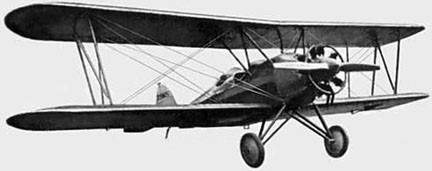
U S Flyer NX6605

Built by the U S Airplane Co in 1928, the U S Flyer prototype NX6605 c/n11 was designed by L B Coombs and priced at $2,250-6,500. Originally powered by a 110 hp Anzani engine, the only one built was later powered with 90hp Curtiss OX-5 and Wright Whirlwind.

Engine: 110hp Anzani
Wingspan: 33’0″
Length: 24’0″
Useful load: 400 lb
Max speed: 100 mph
Cruise speed: 88 mph
Stall: 35 mph
Range: 425 mi
Seats: 3

US Aircraft A-67 Dragon

Start-up US Aircraft changed direction in its plans to develop a low-cost counter-insurgency aircraft for use in Afghanistan, Iraq and elsewhere. After funding design of the A-67 Dragon by US warbird restoration specialist Golden Aviation, it began working with Brazil’s Geometra on an aircraft based on a design by Josef Kovacs, former chief designer of Embraer’s EMB-312 Tucano trainer.

The original A-67 made its only flight in October 2006 in Missouri. The aircraft flew from Cassville, Missouri to Golden’s base at Monett Municipal Airport, ending with a landing gear collapse.

The Ohio-based company planed to base its A-67 on a scaled-up version of Kovacs’ K52, a general-aviation aircraft strongly resembling the Tucano, after testing a Brazilian-built prototype. US Aircraft planned to combine features from both designs, but where the original A-67 had side-by-side seating, the new design uses a tandem set-up.

Powered by a 1,250shp (930kW) Pratt & Whitney Canada PT6A-68 turboprop, the 4,620kg (10,200lb) gross-weight A-67 has an estimated maximum cruise speed of 381kt (706km/h) at 20,000ft (6,100m). Endurance will be 10h and external payload 1,620kg.

A subsidiary of US Technology, which produces the plastic media used for stripping paint from aircraft, US Aircraft was funding design work on the A-67, but sought private investors to complete development and begin production.

A-67 prototype
Engine: 1 × Pratt & Whitney PT6A-67 turboprop, 1,250 shp (930kW)
Prop: four-blade
Wingspan: 38 ft (11.6 m)
Wing area: 211 ft² (19.6 m²)
Empty weight: 4,800 lb (2,200 kg)
Max. takeoff weight: 10,200 lb (4,640 kg)
Maximum speed: 371 knots (427 mph, 687 km/h) at 20,000 ft
Range: 1,880 mi (3,008 km)
Service ceiling: 35,000 ft (11,000 m)
Rate of climb: 4,882 ft/min (1,488 m/min)
Wing loading: 35.1 lb/sq ft
Crew: 2