
Vina Monoplane
Villiers last design was Type 26 twin-float cabin monoplane.
two prototypes of Type 4 HBA2 twin-float biplane for armed reconnaissance were built.
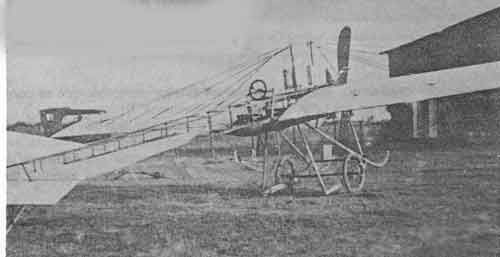
Claimed to be the first powered aeroplane built in Mexico (a claim sometimes made for all of Latin America), by Juan Guillermo Villasana, Santiago Poveregsky and Carlos Leon in 1912.
Suggested not to be a direct copy of a Deperdussin, but except for the uncovered fuselage, they may be indistinguishable.

Early in 1914 Villard built a second model with a frame made of steel tubes. An Anzani 100hp radial engine was mounted on top of a central tripod structure to which the rotor blades were attached. Movements of the pilot’s seat enabled the aircraft’s centre of gravity to be shifted. There was also a small tail rotor 60 centimetres in diameter.
Villard ‘s tests were brought to a swift end by the German invasion of Belgium.

In 1913 Henry Villard, who had previously performed some direct lift experiments in France, carried out various trials in a balloon hangar near Brussels with an aircraft which he had designed. It was a lifting device 2.7 metres in diameter, driven directly by a 100hp type 1912 Anzani engine. The device weighed 400 kilos, and during its tests the rear wheels left the ground.
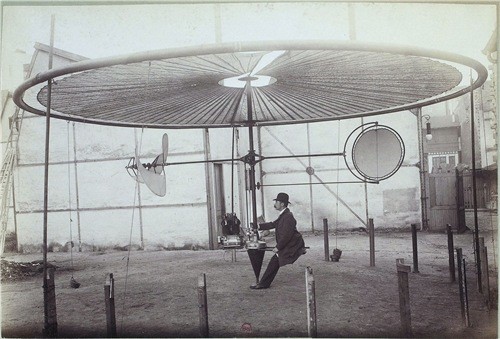
Félix Henri Villard submitted his first patent application on April 22, 1901, and by July he built his helicopter in metal.
A round fan with a diameter of 7.22 meters was driven by an internal combustion engine of 12 hp.
The craft weighed 320 kg and could stand on its leg without falling, but only.

The 1930 Viking V-2 was based on the Schreck Hydroavions FBA-17HT-4 designed by Louis Schreck in France.
One prototype was built, N37V, and ATC2-113 covered three French-built Schreck 17-HT-4 with 180hp Hisso E pusher, NC136N, NC519M, and NC792K, an ATC 2-168 for NC136N modified as a two-seater. They were priced at $15,000.
V-2
Engine: 225hp Wright R-760
Wingspan: 42’3″
Length: 29’4″
Useful load: 1250 lb
Max speed: 105 mph
Cruise: 90 mph
Stall: 46 mph
Range: 380 mi
Seats: 4
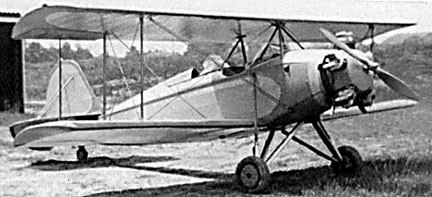
The 1931 Viking Kittyhawk B-8 (ATC 392 and 2-318) was designed by Allen Bourdon from the Bourdon B-4. At least five were built; NC753Y, NC794Y, NC868Y, NC975M, and NC996M.
ATC 2-463 is for an EDO float conversion.
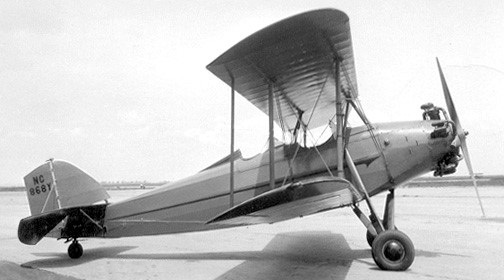
Kittyhawk B-8
Engine: 125hp Kinner B-5
Wingspan: 28’4″
Length: 22’11”
Useful load: 772 lb
Max speed: 112 mph
Cruise speed: 95 mph
Stall: 42 mph
Range: 380 mi
Seats: 3
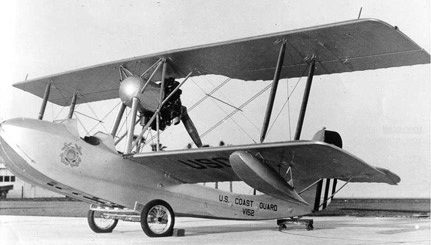
Viking Flying Boat Co built in 1936, at New Haven, Connecticut, five OO-1 single pusher-engined flying-boats for US Coast Guard, based on French Schreck FBA 17HT-4.

The five built as OO-1 (V152-156) were USCG scout version of the V-2. The cost $6500.
Wingspan: 38’7″
Length: 29’4″
Max speed: 104 mph
Cruise: 88 mph
Stall: 45 mph
Range: 390 mi

