Acme Sierra S-1 Sportplane / Beattie-Fellers S-1

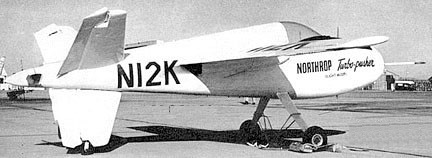
Acme Sierra N12K at Edwards FTC

Designed by Ron Beattie and Walt Fellers, two North American Engineers who came to work for the Northrop Division, the 1948 Acme Sierra (a.k.a. “Sierra Sue”) N12K was built by the Acme Aircraft Co. at the Torrance Airport in late 1948. It was built by Acme’s Crawford and Keeney.

Designed and flown by Ron Beattie and Walt Fellers, the first flight took place on 23 November 1953. It was built according to Goodyear Racing Plane specifications. Although it was never entered in any races, extensive data was obtained during its many flights.

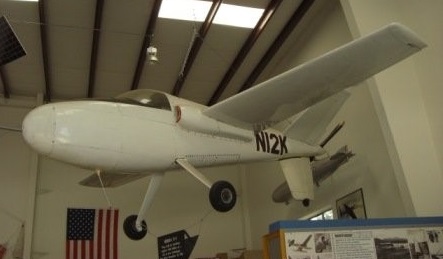
It was built to investigate the advantages of a pusher propeller configuration. It has a “Y” shaped tail incorporating ruddervators on the upper fins, an unswept wing mounted midway up the fuselage, an engine mounted directly behind the cockpit, and large air scoops mounted in the forward end of both wing roots. The aircraft, now designated as the Sierradyne S-1, was used by Sierradyne Inc. in the 1960’s to test and promote Northrop’s and Dr Werner Pfenninger’s boundary layer control concepts. Northrop used it as a flying technology demonstrator for the Air Force’s AX close-support aircraft design competition in 1972, but despite its being re-labeled as the Northrop Turbo-Pusher, the plane was never officially considered a Northrop aircraft.

It is reported displayed at the Los Angeles Science Museum.
Engine: Continental C-85, 85hp
Wing span: 20′ 2″
Length: 18′ 0″
Max speed: 200 mph
Empty weight: 590 lb
Seats: 1
ACME Anser Amphib

The Air Craft Marine Engineering Co was a four place cabin, mid-wing monoplane amphibian twin-jet prototype fighter was reported under construction in 1958, but never completed. Assigned RS-695B project number by the Army Air Forces Air Materiel Command. “Anser” was acronymic for “Analytical Service Inc,” involved in the project to an unknown degree. The COIN fighter selected at the time was North American OV-10A.

Ackland Legend

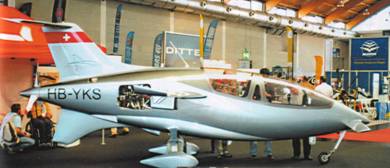
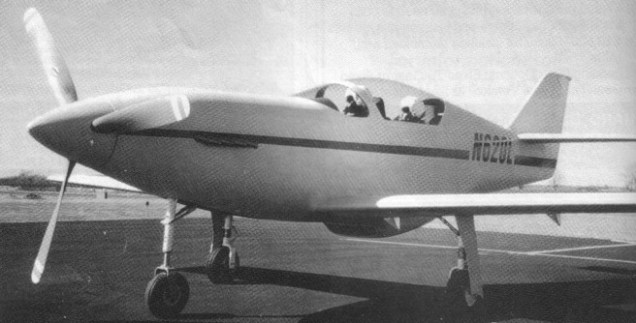
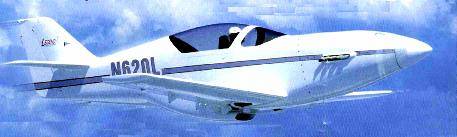
After finishing the Star*Kraft, Jeff Ackland went on to design and build the Legend. Martin Hollmann helped Ackland at the beginning of the design. First flown in June 1996, the aircraft is designed for aerobatics at full gross weight. After a successful debut at Oshkosh 1996, Performance aircraft announced kit production.

The prototype two-seat tandem Legend was powered by a 575 hp, 620 cu.in Chevy based aluminium V-8 engine using a Geschwender chain drive propeller speed reduction unit turning a three blade, constant speed Hartzell prop. Jeff Ackland claims the airframe can go up to 1000hp.

Construction is with vacuum-bagged prepreg carbon fibre composites with honeycomb cores. A wide stance retractable tricycle undercarriage and laminar flow wing with electrically actuated slotted Fowler flaps allow more manageable landings. Ackland claims an honest 2500 hrs is required to build the legend. An extended wing became an option.

The kit price in 1996 was US$78,500, not including engine, prop, PSRU, instruments, avionics, paint  or upholstery. Total build cost was estimated to be US$150,000.

Engine: Chevrolet 620ci, 575 hp
Cruise: 400 mph
Vne: 500 mph
Empty weight: 2100 lb
MAUW: 3000 lb
Useful load: 1000 lb
Cockpit width: 30 in

Engine: Chev 541 ci, 600 hp
Hp range: 400-1000
Wingspan (extended wing): 28.5 ft
Wing area: 100 sq.ft
Length: 25 ft
Height: 8.7 ft
Empty wt: 2000 lb
MAUW: 3000 lb
Fuel cap: 125 USG
Top speed: 376 mph
Cruise: 362 mph
Range: 1500 sm
Rate of climb: 5500 fpm
TO dist: 800 ft
Ldg dist: 1000 ft
Service ceiling: 25,000 ft
Seats: 2
Undercarriage: retract/nosewheel

Aces High Light Aircraft Cuby

Cuby I

The Cuby I was first flown in 1982. Built with welded steel fuselage.

Cuby II

The Cuby II was first flown in March 1983. An optional engine was the Emdair 80.

Cuby I
Engine: Rotax 277, 28 hp
HP range: 28-65
Fuel cap: 5 USG
Weight empty: 250 lbs
Gross: 850 lbs
Height: 5.8 ft
Length: 18.3 ft
Wing span: 33.5 ft
Wing area: 161 sq.ft
Seats: 1
Speed max: 95 mph
Cruise: 55 mph
Stall: 25 mph
ROC: 700 fpm
Take-off dist: 150 ft
Landing dist: 300 ft
Landing gear: tail wheel

Cuby II
Engine: Rotax 503, 52 hp
HP range: 47-65
Fuel cap: 12 USG
Weight empty: 413 lbs
Gross: 1058 lbs
Height: 5.8 ft
Length: 18.25 ft
Wing span: 33.5 ft
Wing area: 161 sq.ft
Seats: 2 tandem
Speed max: 100 mph
Cruise: 80 mph
Range: 230 sm
Stall: 30 mph
ROC: 700 fpm
Take-off dist: 150 ft
Landing dist: 300 ft
Landing gear: tail wheel

Ace K-1 / Ace 200 / Ace 300 / Keane K-1

K-1

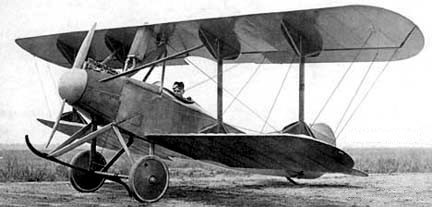
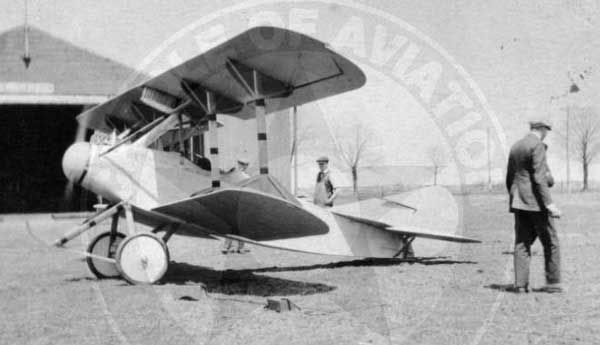
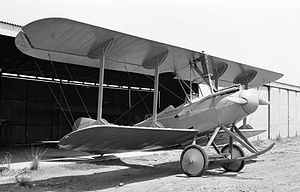
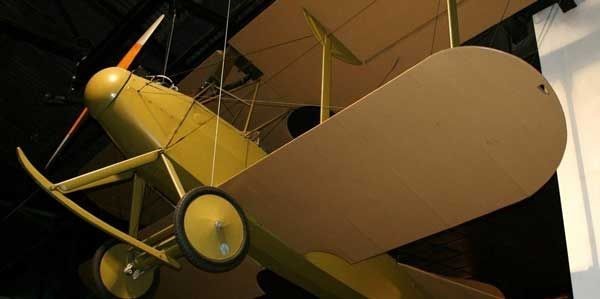
The 1919 K-1 biplane was designed by Alexander Klemin (Professor of Aeronautical Engineering, NYU) and N W Dalton. The prototype had a Ford T motor. The K-1 featured four “self-aligning” I-struts and all-wood frame. The landing gear was fitted with a skid with the rear end turned down to act as a brake in landing.

Manufactured at the ACE Flying Field in New York City’s Central Park, it was one of the first planes to be built on an assembly line, primitive as it was. Final assembly and flight tested at Central Park (Bethpage) Flying Field. Its engine was built in Queens. The aircraft performed well for its day, it was fully aerobatic and sold for $2500, eight were built. One made the national press when it landed on Clay St in Oakland CA as a publicity stunt on 1 December 1920.  

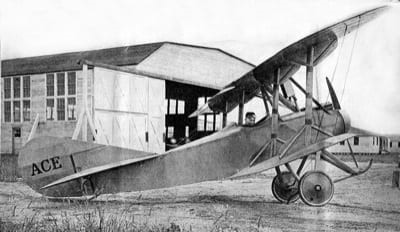
Production model in front of a hangar at Central Park, Bethpage, L.I.

The 1920 version was modified with beefed-up struts, redesigned fuselage with enclosed motor, and folding wings. These sold for $3,000.

Circa 1920 the inventory and manufacturing rights to ACE K-1 were acquired by Horace Keane, (sales office) 280 Madison Ave, NYC, (plant) North Beach, Long Island NY. Photos of the plane appeared in some Keane ads.

In 1931 Ace produced two, with Salmson AD-9, N952Y c/n 1, and LeBlond 5D, N953Y c/n 2, registered as Ace 300 and 200 respectively. One located and restored in California 1955, N69097. A sole surviving example is in a museum.

Engine: Ford T / Keane “Acemotor”, 40hp / 30 kW
Wingspan: 28 ft 4 in / 8.64 m
Length: 19′ 2″
Weight: 600 lbs
Useful load: 225 lb
Max speed: 63 mph / 101 km/h / 55 kn
Cruise: 55 mph
Stall: 30 mph
Range: 160 mi / 139 nmi / 257 km
Seats: 1

1920 K-1
Engine: ACE Ford T, 40hp
Wingspan: 25’0″
Wingspan folded: 10’
Useful load: 235 lb
Max speed: 80 mph
Stall: 32 mph

Ace 200
Engine: LeBlond 5D
Registration N953Y
c/n 2

Ace 300
Engine: Salmson AD-9
Registration: N952Y
c/n 1