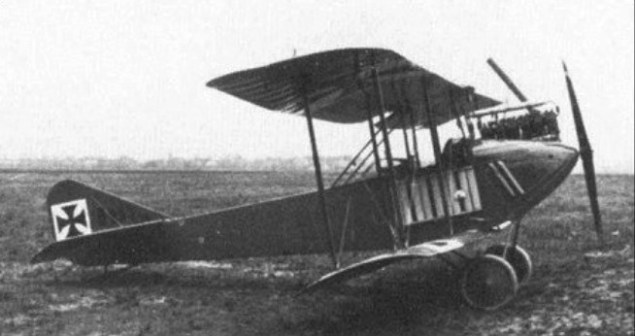
AEG ZK.9 / C.I

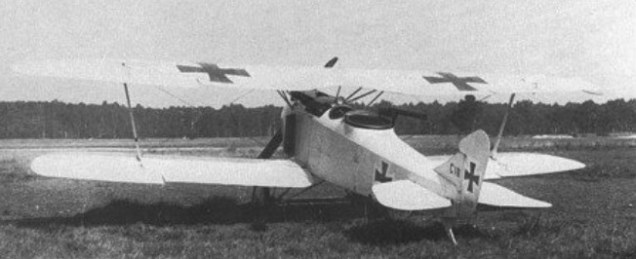
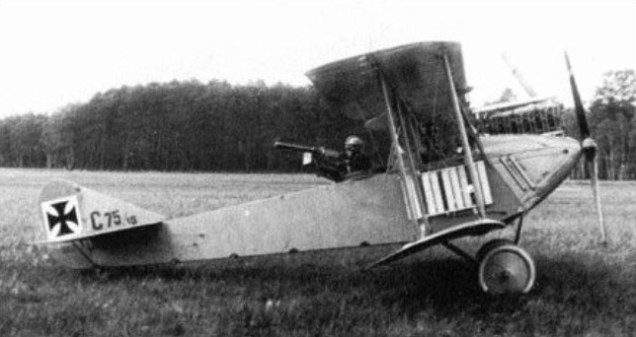
Introduced in March 1915, as the AEG C.1, the ZK.9 designed by Georg König was a minor development of the B.II with a more powerful Benz Bz.III engine and the observer relocated to the rear cockpit. The rear cockpit being fitted with a Schneider Drehring gun mount and a 0.312in (7.92mm) MG 14 Parabellum trainable machine gun for defence of the rear and sides.

Engine: 1 x Benz Bz.III, 150hp
Wingspan: 15.00 m / 49 ft 3 in
Length: 9.00 m / 30 ft 6 in
Height: 3.50 m / 12 ft 6 in
Wing area: 41.50 sq.m / 446.70 sq ft
Empty weight: 650 kg / 1433 lb
Max. speed: 140 km/h / 87 mph
Cruise speed: 120 km/h / 75 mph
Ceiling: 4800 m / 15750 ft
Range: 480 km / 298 miles
Armament: 1 x 7.92mm

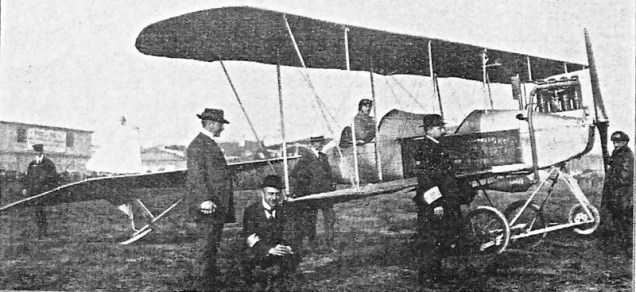
AEG Z.9 / B.II

Designed by Georg König the 1914 Z.9 (military B.II) of 1914 was an improved version of the Z.6 (military B.1). A two bay biplane of smaller wingspan, the Z.9 was powered by the Mercedes D.II engine of 120 hp and saw limited war service.

Engine: 1 x Mercedes D.II, 120hp
Wingspan: 15.50 m / 51 ft 10 in
Length: 10.50 m / 34 ft 5 in
Height: 3.15 m / 10 ft 4 in
Wing area: 40.12 sq.m / 431.85 sq ft
Empty weight: 723 kg / 1594 lb
Max. speed: 110 km/h / 68 mph
Cruise speed: 96 km/h / 60 mph
Ceiling: 3000 m / 9850 ft
Range: 1130 km / 702 miles
Crew: 2

AEG Z.6 / B.I

Designed by Georg König, the Z.6 three-bay biplane of unequal span became the company’s first mass production type, serving with the military from 1914 as the B.1, an unarmed two-seat reconnaissance aircraft.
Almost the entire structure was of welded steel tube, the wings each having two tubular steel spars with wooden ribs covered in fabric. The tailskid featured a nosewheel unit mounted beneath the engine to protect the propeller if the aircraft nosed over. Large radiators for the engine were mounted on each side of the fuselage.

Type: Reconnaissance biplane.
Engine: Mercedes D.I inline, 100 hp.
Wingspan: 50 ft 10.25 in / 15.5 m
Length: 34 ft 5 3/8 in / 10.5 m
Wing area: 473.6 sq.ft / 44 sq.m
Empty wt: 1433 lb / 650 kg
Max speed: 62 mph / 100 kph
Seats: 2
AEG Wright Type

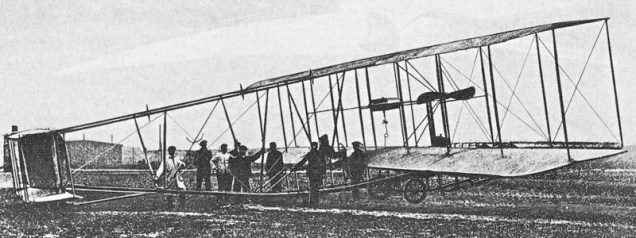
The first aircraft in 1912 was of wooden construction and modeled after the biplane of the Wright brothers. It had a wingspan of 17.5 m, powered by an eight-cylinder engine producing 75 hp; unladen weight was 850 kg and could attain a speed of 65 km / h.

Engine: 1 x 8-cylinder, 75 hp
Wingspan: 17.5 m
Empty weight: 850 kg
Max speed: 65 km / h.

AEG Z.1

The Allgemeine Elektrizitäts-Gesellschaft decided in 1910 to start an aeroplane department (Abteilung Flugzeugbau) at Berlin-Hennigsdorf. At the beginning they had no knowledge of design and production methods for aircraft, so as other firms they started with analyzing a proven machine. They chose a Wright biplane. After analyzing it they realized the limitations of building aircraft in wood. To gain experience in designing and building metal machines they decided in 1910 to start with a research machine which was the responsibility of chief designer Oberingenieur Paul Stumpf. The design was an open-fuselage all-metal tube construction of large dimensions, with a span of 17.5 m. It was a single-seater, with the pilot placed in the open aft of the wings. In front of the wings a small platform construction held the 75 hp Körting engine, which drove a tractor propeller mounted in the middle of the wings via a chain. The factory identification was Z. 1, with Z for Zweidecker (Biplane).

Span: 57’5″
Weight empty: 1870 lbs
Speed: 40 mph