Aircraft Manufacturing & Design Alarus CH2000

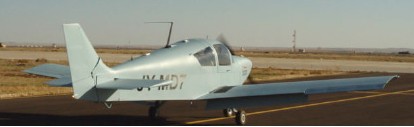
Designed by Chris Heintz and evolved from Zenair, the CH2000 is a two-place powered by a 115hp Lycoming O-235-N2C engine.

Priced at $84,900, ($99,000 IFR) sixty were built.
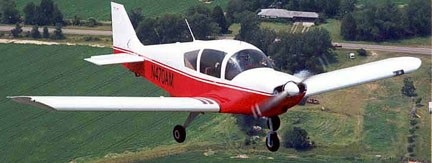
Alarus CH2000 N470AM

The FAA type certified (Utility/Normal and IFR TC TA5CH) Alarus is of all metal, semi-monocoque stressed skin construction with internal ribs, longerons, and bulkheads distribute the loads. It is simple, tough and easy to inspect and repair. The landing gear system containing a 65 lb piece of metal extending from one wheel to the other to absorb hard landings. New wheel axles are used, similar to other certified aircraft.

The nose gear system is a simple self-centering super tough bungee system and direct nose wheel steering is fitted. At the rear of the fuselage, an aluminum tailskid is attached. The tailskid is mounted on rubber dampeners.
Two different sizes of rudder are available for the 2000, the larger rudder, (used on the “spin certified option”) and a smaller standard sized rudder. Large and responsive flight surface controls make landings in cross winds of up to 25 knots possible.
The Lycoming 0235-N2C powerplant engine is standard including the Sensenich propeller, carburetor air intake filter, muffler system etc.
The cockpit area is manufactured out of Carbon Fiber with molded windshield and side windows. The butterfly (gull) doors open to a cabin of about 46 inches wide. The seats use NASA type Tetra foam, designed for 26g load absorption, and covered with micro porous grey leather-like fabric. The centre section of the seat belts are fastened to the main wing spar and the roll-over-protection tube between the seats. The AmSafe airbag seat belt system is standard equipment on the 2006 model.
For applications that does not require certification (military), the aircraft has been expanded to include a larger Lycoming engine up to 180-200 HP, and increased gross weight to 2,200 lbs. This aircraft is called the SAMA CH2000.

Alarus CH2000
Engine: Lycoming 0235-N2C, 116 hp
Propeller: Sensenich
Gross weight: 1,692 lb
Best climb speed: 63 kt
Rate of climb: 800+ fpm
Cruise: 95-100 kt
Approach speed: 60 kt

SAMA CH2000
Engine: Lycoming O-360, 180-hp
Propeller: fixed-pitch Sensenich 76-EM8-0-63 metal
Gross Weight: 2,200 lb
Empty weight: 1,200 lb
Max level speed: 157 mph / 251 km/h
Cruise speed (75% power @ 7,000 ft) : 150 mph / 240 km/h
Stall speed (flaps down): 47 mph / 76 km/h
Stall speed (flaps up): 58 mph / 93 km/h
Rate of climb: 950 fpm / 4.8 m/s
Service ceiling: 12,800 ft / 3,900 m
Endurance (standard): 3 hrs 45 min
Range (standard): 510 miles / 820 km
Take-off roll: 990 ft / 300 m
Landing roll: 1,150 ft / 350 m
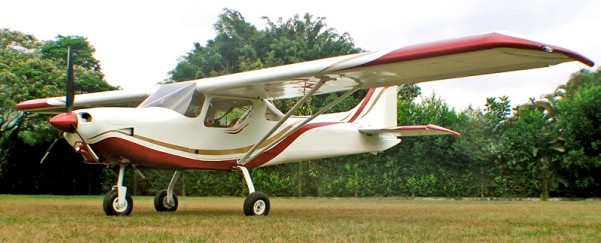
Aircraft Manufacturing & Design Patriot 150

The Patriot 150 aircraft is only being supplied as a factory-built S-LSA aircraft, and is not available in kit form.

Engine: Continental O-200, 100 hp
Wing Span: 32 ft. 10 in / 10 m
Wing Chord: 48 inches / 1.23 m
Wing Area: 132 sq. ft / 12.25 m.sq
Length: 20 ft. 6 in / 6.3 m
Gross Weight: 1,310 lbs / 595 kg
Empty Weight: 785 lb / 356 kg
Useful Load: 525 lb / 240 kg
Fuel Capacity: 24 US Gallons (2 x 12) 90 litres
Load Limits: +6 G / -3 G
VNE (Never Exceed Speed): 143 mph / 230 km/h
Cruise Speed (75%): 124 mph / 200 km/h
Stall Speed: 41 mph / 66 km/h
Stall Speed, no flaps: 46 mph / 74 km/h
Rate of Climb: 1,100 fpm / 5.6 m/s
Range (no reserve): 500 sm / 800 km
Endurance: 5 hours 5 hours
Service Ceiling: 12,000+ ft / 3,660 m
Take-Off Roll: 400 ft / 122 m
Landing Roll: 500 ft / 150 m
Cabin Height: 45 inches / 1.13 m
Cabin Width: 46 inches / 1.16 m
Landing Gear: tricycle, steerable nosewheel
Landing Gear Width: 78 inches 2.0 m
Seats: 2 side by side

Aircraft Manufacturing Depot Kanpur

Construction of this little aircraft is orthodox, with fabric-covered steel-tube fuselage and fabric-covered two-spar metal wings. It is fitted with a 250 h.p. Lycoming O-540-A1B5 engine, and the 40 gal of internal fuel can be supplemented by external tanks carried on the wing bracing struts.

The Kanpur-1 prototype was tested with spray-bars.

The basic version is a four-seat military AOP and liaison aircraft, but the Kanpur-II is suitable for a wide range of other duties, including agricultural work.

Kanpur I
Span: 37 ft 0.5 in
Length: 26 ft 6 in
Height: 7 ft 6 in
Wing area: 200 sq.ft
Gross weight: 2,600 lb
Empty weight: l,700 lb
Max speed: 137 mph
Econ cruising speed: 100 mph
Max rate of climb at SL: l,155 ft/min
Service ceiling: 20,500 ft
TO distance to 50ft: 750 ft
Landing distance from 50ft: 720 ft;
Range with max payload: 460 miles

Aircraft Manufacturing Co Texas Bullet

In 1950, Aircraft Manufacturing Co. acquired the rights to produce a refined four-seat version of the Johnson Rocket, which it called the Texas Bullet. The original Rocket was powered by a 185-hp four cylinder Lycoming engine; the Texas Bullet changed over to a Continental of the same rating. Also, the fabric covering of the Rocket was traded for an all-metal, flush-riveted skin, and a redesigned tail was added. The Bullet sported a top speed of 210 mph, a cruise speed of 183 mph, and a climb rate of 900 fpm.
Overall, the new refinements added only 100 pounds to the empty weight, and 50 pounds were added to the fully loaded weight. Exhaust gasses from the engine of the Rocket and Bullet were led into a unique “jet assist” cylinder below the fuselage. It was claimed that the device converted engine exhaust into useful thrust at speeds faster than 40 mph. Also, both aircraft made use of a Hartzell hydro-selective two-blade variable-pitch propeller.

Don Gabriel
My wifes Aunt and Uncle died in Va after he had bought a used Texas Bullet….an airline pilot wanted to buy it, met the relatives, Aunt and Uncle (owners) let the Airline pilot fly it and they rode along in it…..shortly after takeoff something happened and it went down in the woods short of the runway…..all were killed after it crashed and burned…..
I forgot to mention that at that time I held a Commercial Pilots License and had asked to fly that plane several times…..the relative who owned it said it scared him and he had not flown it prior to the crash…..he had years of flying planes he had owned but this one killed him and his wife along with the airline pilot….FAA never came out with a reason for the crash……..
November 2025

ADC Nimbus

The ADC Nimbus was a British liquid-cooled inline piston aero engine that first ran in 1926. The Nimbus was developed from the Siddeley Puma aero engine by Frank Halford of the Aircraft Disposal Company, the goal was to develop the Puma to produce its intended power output which Halford eventually achieved. The Nimbus was further developed into an air-cooled version known as the ADC Airsix which did not enter production and was not flown.

Applications:

Airco DH.9
de Havilland DH.37
de Havilland DH.50
Nimbus Martinsyde
Vickers Vendace

Components:
Valvetrain: 1 inlet and 2 exhaust valve per cylinder
Fuel system: Carburettor
Fuel type: 74 octane
Cooling system: Air-cooled
Reduction gear: Direct drive, right hand tractor

Nimbus
Type: Six-cylinder, inline, liquid-cooled, upright piston engine
Bore: 6.0 in (152 mm)
Stroke: 7.5 in (190 mm)
Displacement: 1,150.3 cu in (18.85 L)
Length: 70 in (1,778 mm)
Width: 17.5 in (444 mm)
Height: 44 in (1,118 mm)
Dry weight: 670 lb (304 kg)
Performance
Power output: 305 hp (227 kW) at 1,450 rpm (takeoff power)
Specific power: 0.26 hp/cu in (12 kW/L)
Compression ratio: 5.4:1
Power-to-weight ratio: 0.46 hp/lb (0.9 kW/kg)

ADC Cirrus / Cirrus Aero Cirrus / Cirrus-Hermes Cirrus Blackburn Cirrus

ADC Cirrus

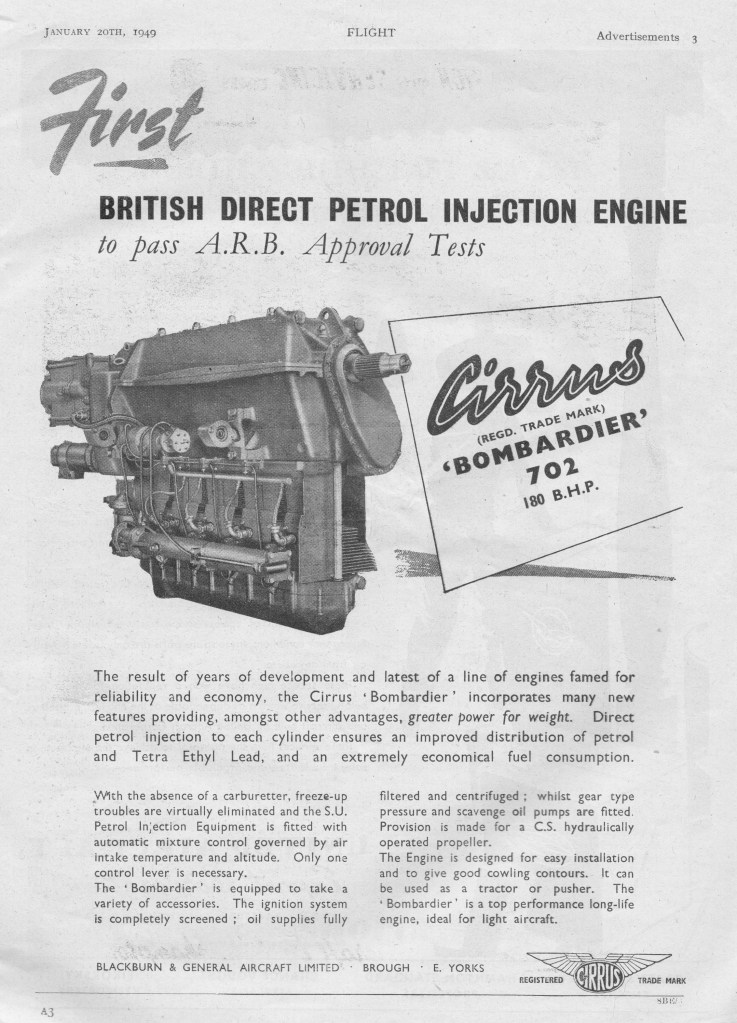
The 4-cylinder ADC Cirrus engines were originally built by ADC Aircraft until Cirrus Aero Engines Limited was formed in 1927. The company became Cirrus-Hermes in 1931 when it was bought by the Cirrus-Hermes Engineering Company and later became the Cirrus Engine Section of Blackburn & General Aircraft Limited in 1934, and operated as a separate division until production ended in the post-World War II era.

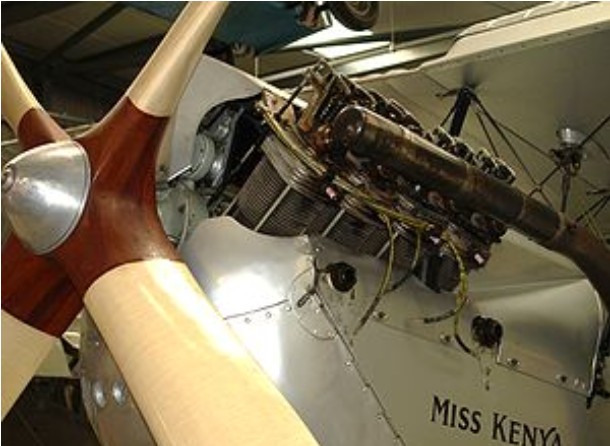
Cirrus’s first product was the 90 hp (67 kW) Cirrus I, which passed its 50 hour type rating in 1925. It was the first air-cooled inline engine, a design by Frank Halford that proved extremely popular for light aircraft. The basic layout (using one cylinder bank of an ADC Airdisco V-8 engine) was quickly copied by a number of other manufacturers. Later versions named the Cirrus II, and Cirrus III were produced each with slightly greater displacement, and power (Cirrus II – 85 hp, Cirrus III – 90 hp).

September 1948

The next model line, Cirrus-Hermes I, II, and IV were produced ranging in power from 105 hp to 140 hp depending on type. The later Cirrus engines were designed to run inverted.

Jan 1949

In 1949 Blackburn and General Aircraft Ltd extended the major inspection of the Cirrus Minor II from 300 hours to 400 hours.

Gallery

Variants:
Cirrus I (1925)
Cirrus II (1926)
Cirrus III (1929)
Cirrus IIIA (1933)
Cirrus-Hermes I (1929)
Cirrus-Hermes II (1930)
Cirrus-Hermes IIB (inverted) (1931)
Cirrus-Hermes IV (1930)
Cirrus-Hermes IVA (1929) Inverted engine

Applications:

Cirrus I
Avro Avian
Avro Baby
de Havilland DH.60 Moth
Short Mussel
Westland Widgeon

Cirrus II
Avro Avian
de Havilland DH.60 Moth
de Havilland DH.71 Tiger Moth
Piaggio P.9
Short Mussel
Westland Widgeon
Bloudek XV Lojze

Cirrus III
Avro Avian
Blackburn Bluebird
Cierva C.17
de Havilland DH.60 Moth
de Havilland DH.71 Tiger Moth
Dudley Watt D.W.2
Klemm L.26
Klemm L.27
Short Mussel
Simmonds Spartan
Spartan Arrow
Westland Wessex
Westland Widgeon

Cirrus IIIA
Miles M.2 Hawk

Cirrus-Hermes I
Avro Avian
Blackburn Bluebird
de Havilland DH.60 Moth
Desoutter I
Hawker Tomtit
Hendy 302
Parnall Elf
Saro Cutty Sark
Simmonds Spartan
Southern Martlet
Westland Wessex
Westland Widgeon

Cirrus-Hermes II
Avro Avian
Blackburn Bluebird
Desoutter I
Spartan Arrow
Spartan Three-Seater
Westland Widgeon

Cirrus-Hermes IIB
Arrow Active
BFW M.23
Klemm L.27
Koolhoven F.K.44
Koolhoven F.K.45
Spartan Three-Seater

Cirrus-Hermes IV
Avro Cadet
Hendy 302
Miles M.2 Hawk
Percival Gull
Spartan Cruiser
Spartan Three-Seater

Cirrus-Hermes IVA
Avro Club Cadet
Blackburn B-2
Blackburn Segrave

Specifications:

Cirrus I
Type: Inline, air-cooled, upright 4-cylinder piston engine
Bore: 4.13 in (105 mm)
Stroke: 5.12 in (130 mm)
Displacement: 274.36 cu in (4.5 L)
Length: 45.8 in (116.3 cm)
Width: 18.26 in (46.4 cm)
Height: 34.3 in (87.1 cm)
Dry weight: lb ( kg)
Valvetrain: 1 inlet and 1 exhaust valve per cylinder
Fuel system: 1 Claudel carburettor
Fuel type: 70 octane
Cooling system: air
Power output: 60 hp ( kW)
Compression ratio: 4.7:1

ADC Airdisco

ADC Airdisco installed in a DH.51

An air-cooled V-8 piston engine, the ‘Airdisco’ was developed from the French Renault 70 hp aero engine by Frank Halford of the Aircraft Disposal Company. First running in 1925, the main difference being the use of aluminium cylinder heads. Halford later used one bank of cylinders to create the Cirrus engine.

Components:
Valvetrain: 1 inlet and 1 exhaust valve per cylinder
Fuel system: Carburettor
Fuel type: 74 octane
Cooling system: Air-cooled
Reduction gear: 0.5:1, right hand tractor
Power output: 120 hp ( kW) at 1,800 rpm (takeoff power)
Compression ratio: 4.6:1

Applications:
Avro 548A
Cierva Parnall Gyroplane
de Havilland DH.51
Royal Aircraft Factory S.E.5A
Airdisco
Type: Inline air-cooled, upright, V-8 piston engine
Bore: 4.13 in (105 mm)
Stroke: 5.12 in (130 mm)
Displacement: 548.94 cu in (9 L)
Length: 46 in (1,168 mm)
Width: 21.3 in (541 mm)
Height: 31.1 in (790 mm)

ADC Nimbus Martynside

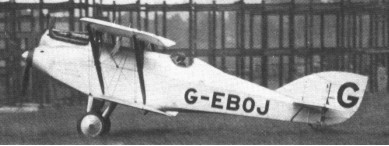
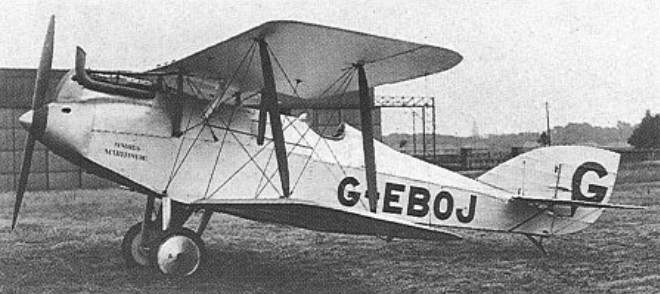
In 1926, John Kenworthy developed a single-seat fighter based on the F.4 Buzzard but utilising a 330 hp A.D.C. Nimbus six-in-line water-cooled engine. Referred to as the “Nimbus-Martinsyde”, with an essentially similar airframe to the Buzzard, it featured modified vertical tail surfaces with a horn-balanced rudder and revised aft upper fuselage decking. Its intended armament was two synchronised 0303-in (7,7-mm) Vickers machine guns, but these were never installed. Two prototypes were built and flown, both participating in the King’s Cup Air Race on 9-10 July 1926, and in 1927, the first prototype was modified with faired undercarriage legs and cylinder head fairings. No orders were placed for the Nimbus-powered aircraft and both prototypes were scrapped.

Engine; ADC Nimbus, 330hp
Span, 32 ft 9 in (9,98 m)
Length, 26 ft 10 in (8,18 m)
Height, 9 ft 6 in (2,89 m)
Wing area, 320 sq ft (29,73 sq.m)
Empty wt; 2014lbs, 914kg
Loaded wt; 2665lb, 1209kg
Max speed sea level, 150mph, 241 kph at sea level
Climb to; 10,000ft: 7min 30sec
Climb to 15,000ft: 14min
Climb to 20,000ft: 25min
Service ceiling; 23,500ft
Endurance: 2.5hrs

ADC 1

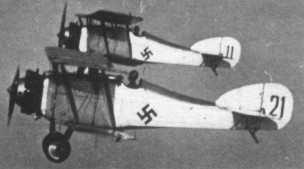
With the liquidation of the Martinsyde Company in February 1924, and the acquisition of its stores, stocks and goodwill by the Aircraft Disposal Company (A.D.C.), development of the Buzzard continued under the design leadership of John Kenworthy. This resulted in the A.D.C.1, which was fundamentally an F.4 Buzzard airframe with a 380 hp Armstrong Siddeley Jaguar radial engine. The prototype A.D.C.1 was first flown on 11 October 1924, subsequently participating in the 1925 and 1926 King’s Cup races, and considerable foreign interest was displayed in the type. In the event, only one order for the A.D.C.1 materialised, from Latvia and comprising eight aircraft which were delivered in 1926, at least two of these surviving until 1938.

Engine, Armstrong Siddeley Jaguar radial, 380 hp
Span, 32 ft 9 in (9,98 m)
Length, 25 ft 0 in (7,62 m)
Wing area, 320 sq ft (29,73 sq.m)
Empty weight, 1,865 lb (846 kg)
Loaded weight, 2,650 lb (1202 kg)
Max speed, 163 mph (262 km/h) at sea level
Time to: 5,000 ft (1525 m), 2.42 min
Time to 10,000ft: 5min 30sec
Time to 15,000ft: 17min 30sec
Service ceiling; 27,000ft
Armament: two synchron¬ised 0.303-in (7,7 mm) Vickers guns

ADC Aircraft  Aircraft Disposals Company / Airdisco

The Aircraft Disposals Company (ADC) or Airdisco, was a British firm established in March 1920 to take over from His Majesty’s Disposals Board to dispose of surplus aircraft not required for use by the diminishing RAF.

One of the founders was Frederick Handley Page, the British aviation pioneer. ADC bought the entire available stock of surplus aircraft engines and spares, including 10,000 airframes and 30,000 engines, for the sum of £1,000,000 plus a share of any profits. Many ex-military aircraft were converted to various civil roles before being sold on while others were sold to military buyers.

Stored in six depots, with the main one at Waddon Aerodrome, Croydon, Surrey, specimen aircraft were demonstrated in many parts of the world, and a drawing office was formed under J. Kenworthy, formerly with Austin and Westland. Many modifications (e.g. Lamblin radiators) were made on standard military types.

In February 1924 Martinsyde’s manufacturing rights, goodwill and stock of aircraft were bought up by the Aircraft Disposal Company, who continued to develop the F.4 as the ADC 1 with Armstrong Siddeley Jaguar radial engine. Eight of this type sold to Latvia in 1926, in the same year Nimbus Martinsyde (with ADC Nimbus engine) appeared.

By 1925, it had sold 2,000 airframes and 3,000 engines, generating profits of over £2,500,000, of which half was returned to the British Treasury.

The company produced a small range of aircraft engines under the direction of Frank Halford, the ‘Cirrus’ line continued to be manufactured by Cirrus Aero Engines Ltd and their successors.

The company had several sites across Britain including 11 acres (45,000 sq.m) of Regents Park in London known as Marylebone Green. Three of the National Aircraft Factories became part of the Aircraft Disposal Company including Aintree in Liverpool, Waddon in Croydon, and at Stockport near Manchester.

The company became known as Airdisco from its telegraph address. The company had offices at Regent House, 89 Kingsway London WC2. The company name was changed to The Imperial & Foreign Corporation Ltd and was finally wound up in 1930.