The aircraft G300 was being developed as an agricultural spraying aircraft. A single engine, low wing monoplane, the G300 has a 600 kg capacity spraying tank.
Seats: 1
Engine: SMA SR305, 230 hp
Fuel: JET A1
Spray capacity: 600 Kg.
The aircraft G300 was being developed as an agricultural spraying aircraft. A single engine, low wing monoplane, the G300 has a 600 kg capacity spraying tank.
Seats: 1
Engine: SMA SR305, 230 hp
Fuel: JET A1
Spray capacity: 600 Kg.
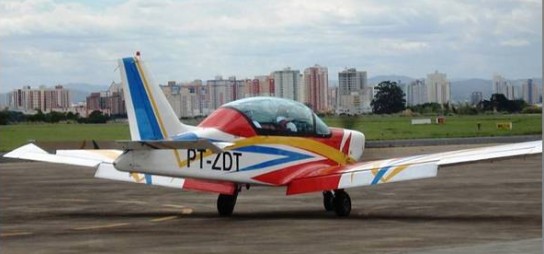
The aircraft is a single engine low wing monoplane, with tandem two seats, and fixed tricycle landing gear. Metallic construction semi monocoque fuselage.
Engine: Lycoming AEIO 360 A1B6, 300 hp or SMA SR305 – 230 hp, fuel JET A1
Number of seats: 02 (tandem)
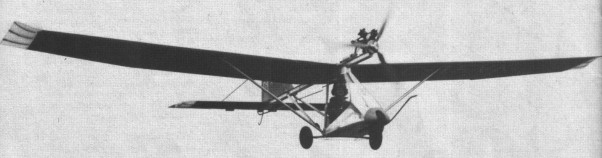
The Skylark is high-wing with a forward engine mounted on a cantilever beam fuselage. The forward-swept wing is rectangular with a tapered trapezoidal tip, and is supported by a single strut. Tail surfaces are classic, and tricycle landing gear is used. The engine and propeller are well forward of the cockpit. The forward-swept wing and under-wing cockpit location produce good visibility; pilot weight has minimal effect on the aircraft’s center of gravity; and the ideal spanwise lift distribution inhibits stalling of the wingtips, ensures against spinning and signals approaching stall by buffeting of the tail surfaces. Two people can easily disassemble the Skylark. By removing three bolts, the horizontal tail surfaces can be folded up against the fin. Each wing can be detached by removing only four bolts. The Skylark wing profile was designed by NASA using technology specially for use in slow-flying aircraft. Features in¬clude low drag in the range of useful air¬speeds, low stall speed, and mild stall characteristics (which are fully exploited by the forward-swept wing to produce a “spinproof” design). Aluminium sheet, extruded tubes and angles, all of general-aviation proven 2024 alloy are used throughout. Airtech uses modern adhesive bonding technology, along with blind and solid rivets. High-strength PVC foam, stamped aluminum ribs, silky-smooth Teflon bellcrank bearings, aluminum pushrods with spherical couplings, “Ceconite 7600 Process” aircraft fabric, precision molded fiberglass fairings, molded plexiglas windscreen all combine to satisfy the most demanding aviators. The standard airspeed indicator, altimeter, tachometer and toe-operated disk brakes are as comforting to the pilot as the contoured seat designed for those up to 6 feet, 6 inches, with “stick-and-rudder” controls. The Skylark uses the Konig SD-570 four-cylinder radial. Using a 2.8:1 reduction drive, the Skylark’s engine turns its 72-inch propeller at only 1500 rpm during takeoff; the result is exceptional static thrust and the virtual elimination of propeller noise.
Engine: Koenig SD-570 4-cyl radial two-stroke
Reduction: 2.8:1
Prop: 72 in
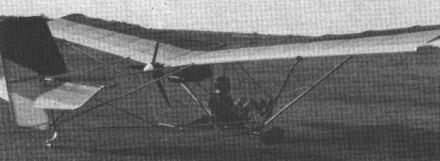
Engine: Rotax 377
Wing span: 30 ft
Fuel cap: 4.5 USG

Developed by CASA of Spain and IPTN of Indonesia, and marketed by the joint company of Aircraft Technology Industries (AirTech), the CASA/IPTN-designed, General Electric CT7-powered CN-235 first flew in I November 1983. In military configuration a 15,000kg payload may be carried, comprising 48 passengers, 41 paratroops, or 24 stretchers.
Orders to 1990 were nearing 200, with a majority for military operators, including the air arms of Spain Indonesia and those of France, Saudi Arabia, Ecuador, Botswana, Panama, Morocco and Turkey – where the CN-235 will also be assembled.
Export deliveries began in February 1987, when the Royal Saudi Air Force received the first of four aircraft. Jordan
ordered two in 1985, while the Indonesian armed forces will receive 50, comprising 32 for the Air Force and 18 for the Navy. At least six of the latter will be of the maritime surveillance version, with equipment including a 360 degree-scan search radar, AM.39 Exocet anti-shipping missiles, and Mk.46 torpedoes.
CN.235-100
Engine: 2 x GE CT7-9C turboprops, 1,870 shp (1 394 kW)
Installed pwr: 2536 kW
Span: 25.8 m
Length: 21.3 m
Wing area: 73 sq.m
Empty wt: 8600 kg
MTOW: 14,400 kg
Payload: 5000 kg
Cruise speed: 454 kph
Initial ROC: 540 m / min
Ceiling: 8110 m
T/O run: 554 m
Ldg run: 585 m
Fuel internal: 5268 lt
Range/payload: 600 km with 5000 kg
Capacity: 38/40 pax
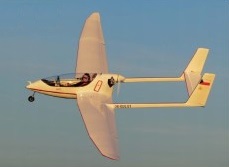
The Airsport Song is a Czech ultralight aircraft, designed by Marek Ivanov to comply with the LTF-L 120 kg, US FAR 103 Ultralight Vehicles and English SSDR categories. It features a cantilever low-wing, twin-booms, a single seat enclosed cockpit, fixed tricycle landing gear and a single engine in pusher configuration. The Song has been produced in both a twin–tail and inverted V-tail layout. In most configurations, the Song includes a Galaxy GRS 3/270 ballistic parachute rescue system.
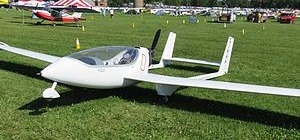
The Song is made from composites. Its polyhedral wing comes in two optional spans: 7.5 m (24.6 ft) (with flaperons) and 11.2 m (36.7 ft) (with ailerons and either spoilers or flaps). Standard engines available are the 20.5 hp (15 kW) Bailey V5 four-stroke and the 35 hp (26 kW) Verner JCV 360 four-stroke powerplant.
Randall Fishman of Electric Aircraft Corporation produces an electric-powered version of the Song, the Electric Aircraft Corporation ElectraFlyer-ULS.
Song SW-V
Engine: 1 × Bailey V5 Single Cylinder, 15.3 kW (20.5 hp)
Wingspan: 11.2 m (36 ft 9 in)
Wing area: 10.5 m2 (113 sq ft)
Length: 5.9 m (19 ft 4 in)
Empty weight: 110 kg (243 lb)
Gross weight: 220 kg (485 lb)
Fuel capacity: 25 litres (5.5 imp gal; 6.6 US gal)
Maximum speed: 201 km/h (125 mph, 109 kn)
Cruise speed: 80 km/h (50 mph, 43 kn)
Stall speed: 50 km/h (31 mph, 27 kn)
Never exceed speed: 140 km/h (87 mph, 76 kn)
Rate of climb: 1.5 m/s (300 ft/min) with Bailey V5, (5 m/s with Verner JCV 360)
Crew: one
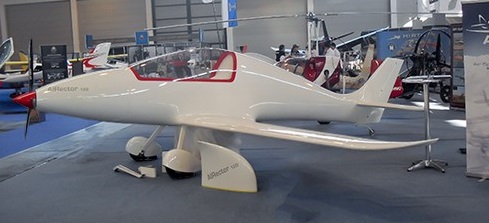
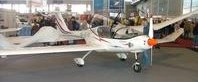
The Air Sports AIRector 120 is a German ultralight aircraft, designed and produced by Air Sports Aircraft of Dassel. It was introduced at the Aero show held in Friedrichshafen in 2010.

Ultralight Motor Glider with retractable prop.
Stall: 30 kt / 34 mph / 55 kmh
Cruise: 49 kt / 56 mph / 90 kmh
VNE: 97 kt / 112 mph / 180 kmh
Empty Weight: 278 kg / 613 lbs
MTOW Weight: 450 kg / 992 lbs
Climb Ratio: 400 ft/min / 2 m/s
Glide Ratio: 1:36
Stall: 35 kt / 40 mph / 64 kmh
Cruise: 76 kt / 87 mph / 140 kmh
VNE: 113 kt / 130 mph / 210 kmh
Empty Weight: 253 kg / 558 lbs
MTOW Weight: 450 kg / 992 lbs
In 1943, the British government formed a committee under the chairmanship of Lord Brabazon of Tara to identify post-war civil aviation requirements. In its February 1943 report, they recommended a twin-engined, unpressurised design in the 14.5 tonnes gross weight class, short to medium-range piston-engined aircraft for British operators and for sale to European airlines.
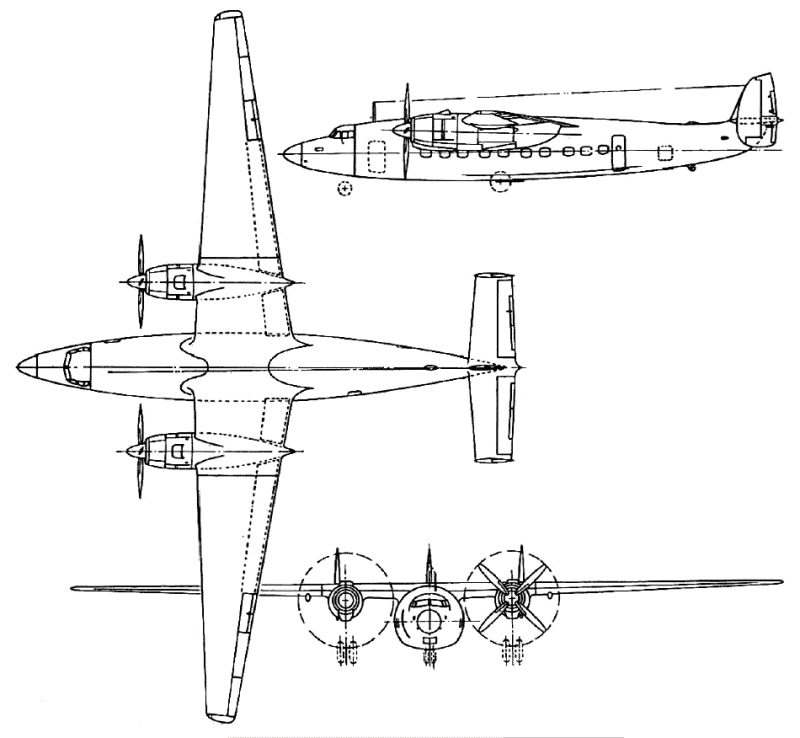
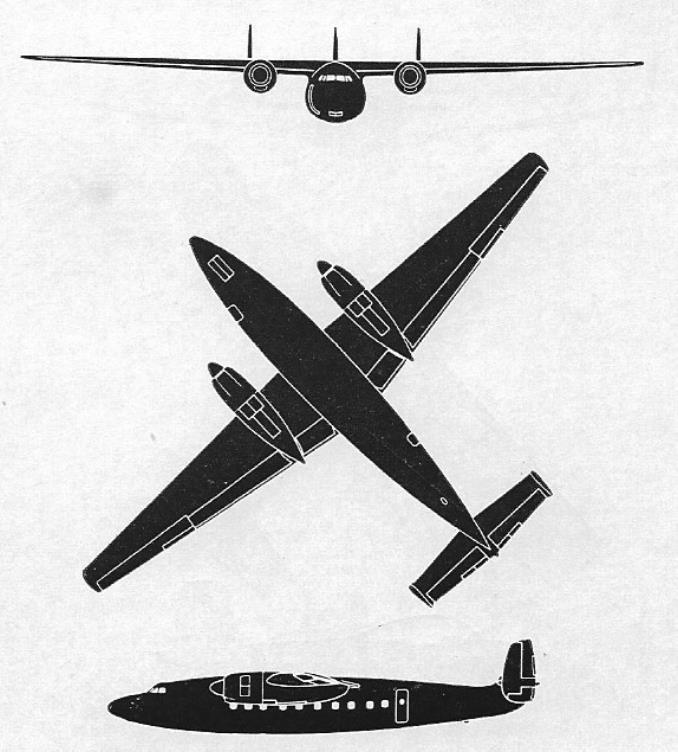
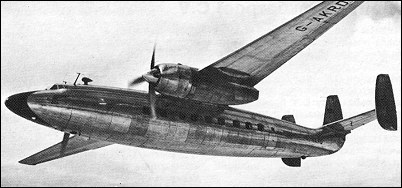
The Airspeed AS.57 Ambassador was designed by a team headed by Arthur Hagg, their work taking shape on the drawing-board while the UK was still at war. Spanning 115ft and 81ft long, the Ambassador had two Bristol Centaurus 661s, each developing 2,700 hp and driving a 16ft 6in diameter four bladed de Havilland propeller.
A normal capacity of 47 passengers was envisaged with an all up weight would be 52,500 lb, with ranges of 720 and 1,560 miles at cruising speeds of 280 and 220 mph respectively.
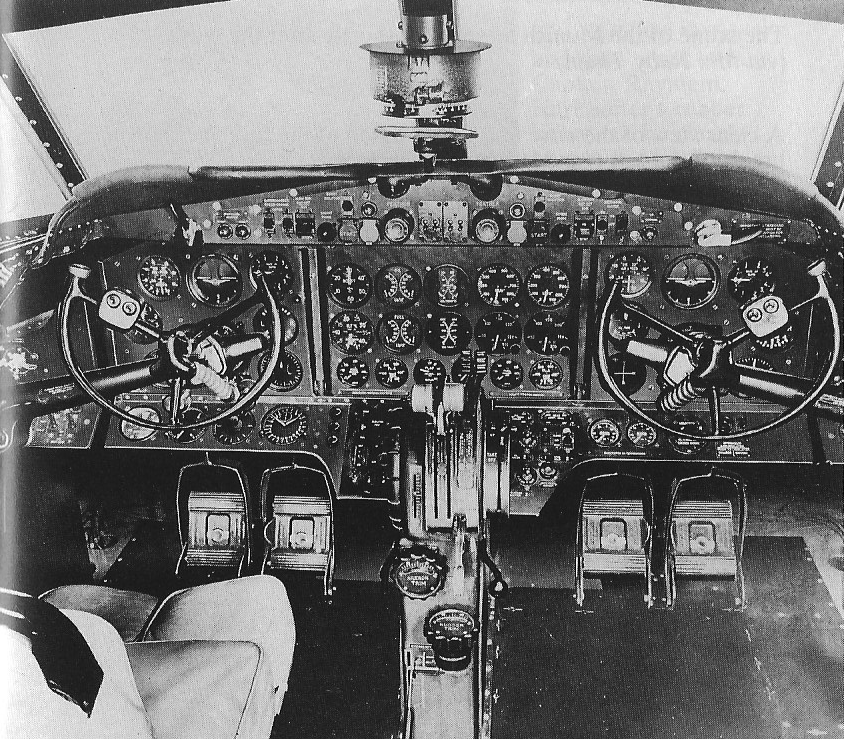
There was capacity for future “stretch”, and the wings were designed with strongpoints to accommodate a future powerplant change to four propeller turbines of the Rolls Royce Dart type.
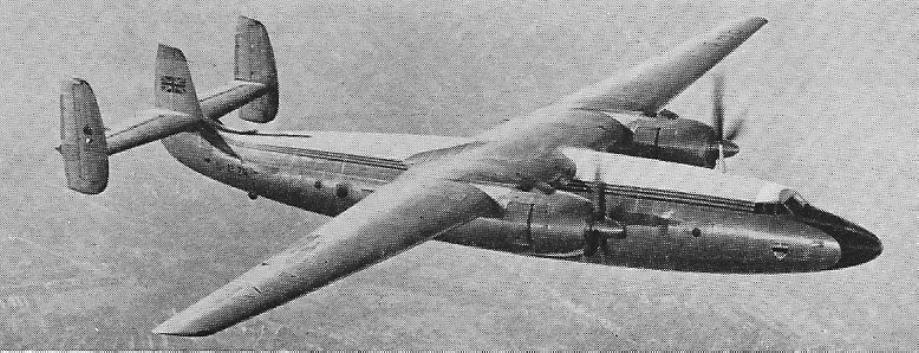
By the time the British Ministry of Aircraft production ordered two prototypes from Airspeed Ltd., immediately after the end of the World War II, the design had grown. The Ambassador would be pressurised and have a maximum gross weight of almost 24 tonnes, offering seating for 47 passengers. The Ambassador was a high-wing monoplane with triple fins, retractable nosewheel.
The Ambassador was of cantilever high-wing monoplane configuration of all-metal construction, with its fuselage stressed for cabin pressurisation. The three-finned tail unit was car¬ried high on an upswept aft fuselage, and the retractable tricycle landing gear incorporated twin wheels on each unit.
The prototype (G-AGUA) powered by two 2.600 hp Centaurus 631 radials, was first flown on 10 July 1947 from Christchurch. In 1948 the first (and also the only) order for 20 Ambassador 2s was received from British European Airways. The second prototype (G-AKRD) flew on 26 August 1948; two static-test airframes were built, followed by one pre-production Ambassador (G-ALFR) which was used to obtain the C of A and for route proving by BEA – British European Airways. Airspeed AS57 Ambassador G-ALFR had the definitive Centaurus 661 powerplant, and was flown first in May 1950.
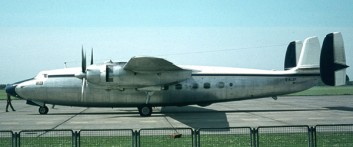
British European Airways (BEA) ordered 20 pressurised Ambassadors on 20 September 1948. Problems with the engines, undercarriage and pressurisation system delayed service introduction until 13 March 1952.
The Ambassadors were called ‘Elizabethan’ class by BEA.
On 13 March 1952, the first British European Airways service London-Paris was inaugurated, with 47 seats and 2,012kW Centaurus 661. BEA called its fleet “Elizabethans” in honour of the newly crowned Queen Elizabeth 1, during their six years of operation. In 1954, after two years’ service, BEA requested clearance of an increased maximum take off weight from 52,500 lb to 55,000 lb. This was achieved.
After service with BEA the Ambassador passed to several independent airlines including BKS, Dan-Air and Globe Air of Switzerland – some serving as freighters and horse transports. Three were used for a time by Butler Air Transport in Australia, and one was owned by the King of Morocco.
The second AS.57 prototype (G-AKRD) was later used for development testing of the Bristol Proteus 705, Rolls¬Royce Tyne and Rolls-Royce Dart turboprops, and was still airworthy in 1969.
The third prototype (G-ALFR), was used for testing of the Napier Eland turboprop, but was later converted to airline standards and sold to Dan Air.
Only 23 Airspeed Ambassadors were produced.
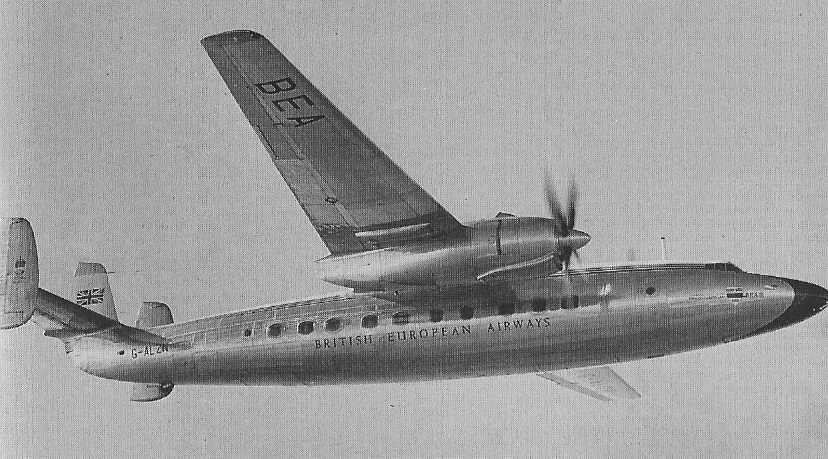
Engine: 2 x Bristol Centaurus 661 two-row sleeve-valve radial piston, 1939-kW (2,600-hp)
Wing span: 35.05m (115 ft 0 in)
Length: 24.69m (81 ft 0in)
Height: 5.59m (l8ft 4in)
Wing area: 111.48sq.m (1,200 sq.ft.)
Max take-off 23814 kg (52,500 lb) – 55000.0 lb / 24947.0 kg
Empty equipped weight: 16230 kg (35,781 lb)
Max. speed : 271 kts / 502 km/h
Maximum cruising speed: 438 km/h (272 mph)
Economic cruising speed: 399 km/h (248 mph)
Range with maximum payload: 1159 km (720 miles).
Range w/max.fuel: 1930 km / 1199 miles
Service ceiling : 36089 ft / 11000 m
Crew: 3
Pax cap: 47