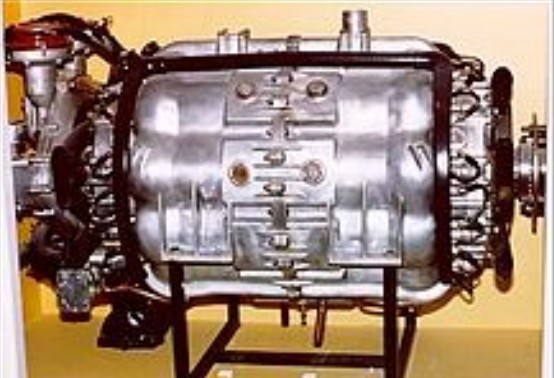
Experimental barrel engines for aircraft use were built and tested by Mr J.O. Almen of Seattle in the early 1920s, and by the mid-1920s the water-cooled Almen A-4 (18 cylinders, two groups of nine each horizontally opposed) had passed its United States Air Corps acceptance tests. It however never entered production, reportedly due to limited funds and the Air Corps’ growing emphasis on air-cooled radial engines. The A-4 had much smaller frontal area than water-cooled engines of comparable power output, and thereby offered better streamlining possibilities. It was rated at 425 horsepower (317 kW), and weighed only 749 pounds (340 kg), thus giving a power/weight ratio of better than 1:2, a considerable design achievement at the time.
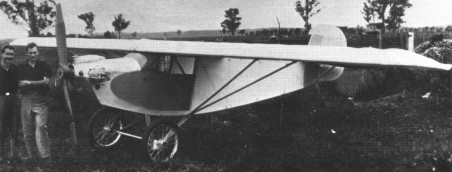
The Allison Airplane Company was established in 1920 to build a small single-seat high-wing monoplane known as the Alco Junior Coupe. Powerplant was a single 40 hp Szekely 3- cylinder radial air-cooled engine. The Alco Junior was a kitset aircraft circa 1929.
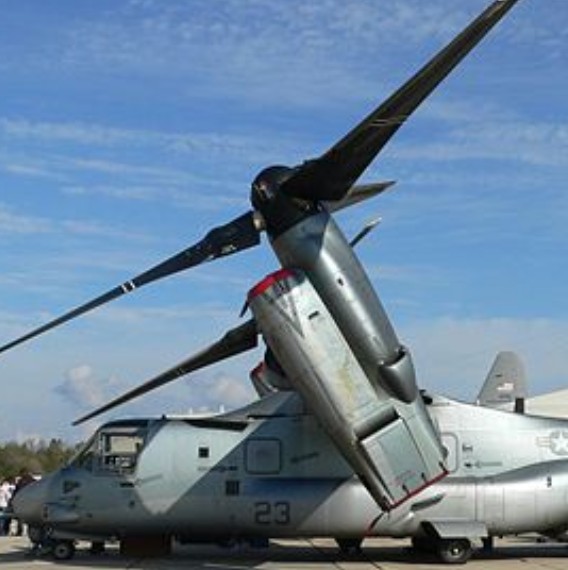
The Rolls-Royce T406 (company designation AE 1107C-Liberty) is a turboshaft engine which powers the Bell-Boeing V-22 Osprey tiltrotor. The engine delivers 6,000 shp (4,470 kW) and shares a common core with the AE 3007 and AE 2100 series of engines.
The V-22’s T406 powerplants are housed in wing-tip tilting nacelles, allowing the distinctive flight characteristics of the V-22. For take off and landing the nacelles are directed vertically (90° to fuselage), while for forward flight they are rotated parallel to fuselage.
In April 2012, the DoD ordered 70 AE 1107C engines for the Osprey, with options for up to 268 engines.
Applications V-22 Osprey
Specifications: T406 Type: Turboshaft Length: 78.1 in (1,980 mm) Diameter: 34.2 in (890 mm) Dry weight: 971 lb (440 kg) Compressor: 14-stage high pressure axial compressor Turbine: 2-stage high pressure and 2-stage power turbine Maximum power output: 6,150 shp (4,586 kW) Overall pressure ratio: 16.7:1 Power-to-weight ratio: 6.33 shp/lb (10.4 kW/kg)
MD-80 first flight, 13 April 1989, powered by one Allison 578-DX Propfan
The Pratt & Whitney/Allison 578-DX was an experimental aircraft engine, a hybrid between a turbofan and a turboprop known as a propfan. The 578-DX was developed as a joint venture between Pratt & Whitney and Allison. Unlike the competing General Electric GE-36 UDF, the 578-DX was fairly conventional, having a reduction gearbox between the LP turbine and the propfan blades. First run in 1986, noise considerations, plus a significant reduction in the real cost of aviation fuel, brought the NASA funded program to a halt
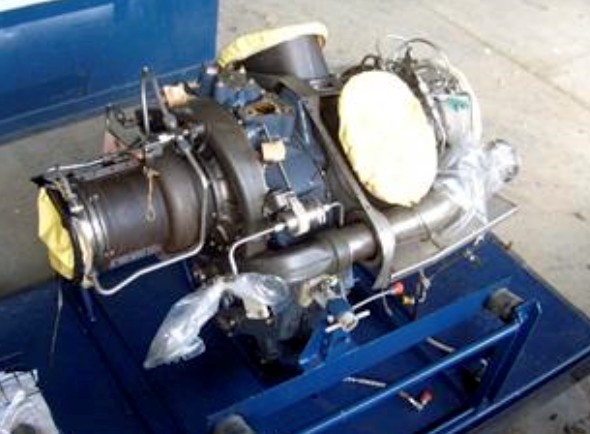
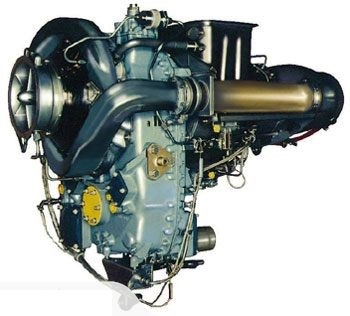
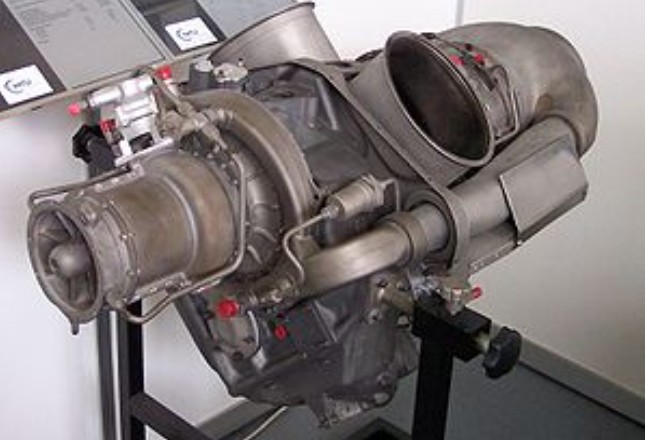
The Allison Model 250, known as the Rolls-Royce M250, (US military designations T63 and T703) is a successful turboshaft engine family, originally developed by the Allison Engine Company in the early 1960s. The Model 250 has been produced by Rolls-Royce since it acquired Allison in 1995.
Allison adopted a reverse airflow engine configuration for the Model 250: although air enters the intake/compression system in the conventional fashion, the compressed air leaving the centrifugal compressor diffuser is ducted rearwards around the turbine system, before being turned through 180 degrees at entry to the combustor; the combustion products expand through the two stage HP turbine, which is connected, via the HP shaft, to the compression system, before expanding through the two stage power turbine; the exhaust gases then turn through 90 degrees to exit the engine in a radial direction; a stub shaft connects the power turbine to a compact reduction gearbox, located inboard, between the centrifugal compressor and the exhaust/power turbine system.
Allison / Rolls Royce A250
One of the latest versions of the Model 250 is the -C40, which has a centrifugal compressor pulling a pressure ratio of 9.2:1, at an airflow of 6.1 lb/s (2.8 kg/s), and developing, at the shaft, 715 hp (533 kW). Some of the earlier versions have axial compressor stages mounted on the HP shaft to supercharge a relatively low pressure ratio centrifugal compressor. The -C20R is typical, pulling an overall pressure ratio of 8.0:1, at an airflow of 4.0 lb/s (1.8 kg/s), with a power output, at the shaft, of 450 hp (340 kW). The Model 250 powers a large number of helicopters, small aircraft and even a motorcycle (MTT Turbine Superbike). As a result, nearly 30,000 Model 250 engines have been produced, making the Model 250 one of the highest-selling engines made by Rolls-Royce.
The Allison TF41 (Company designations RB. 168-62 and Model 912) is a low-bypass turbofan engine jointly developed by Allison Engine Company and Rolls-Royce from the latter’s RB.168-25R Spey. First run in 1967, Allison manufactured the TF41 under license, while Rolls-Royce supplied parts common to existing Speys. The TF41 was developed for use in the LTV A-7D Corsair II for the USAF, and the US Navy’s A-7E. Between 1968 and 1983, a total of 1,440 TF41s were delivered.
TF41 of a U.S. Navy A-7E-4-CV
Applications LTV A-7 Corsair II (USAF -D and US Navy -E models)
Specifications: TF41-A-1 Type: Turbofan Compressor: Three-stage LP compressor, two-stage IP compressor (both driven by LP turbine),11-stage HP compressor Combustors: Cannular combustor with ten flame tubes Turbine: Two-stage LP, Two-stage HP Maximum thrust: 14,250 lb Overall pressure ratio: 20:1 Bypass ratio: 0.77:1
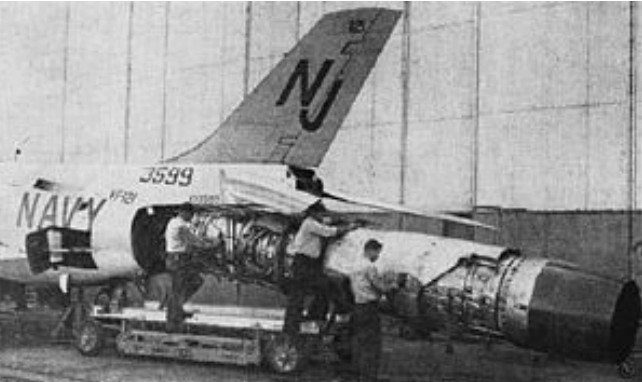
The Allison J71 was a turbojet engine, designed and built in the United States. It began development in 1948 as a modified J35 and was originally designated the J35-A-23.
The Allison J71 turbojet powered the Douglas B-66 Destroyer and the McDonnell F3H-2 Demon after the failed Westinghouse J40 proved unworkable. The prototype P6M SeaMasters were also fitted with the engine.
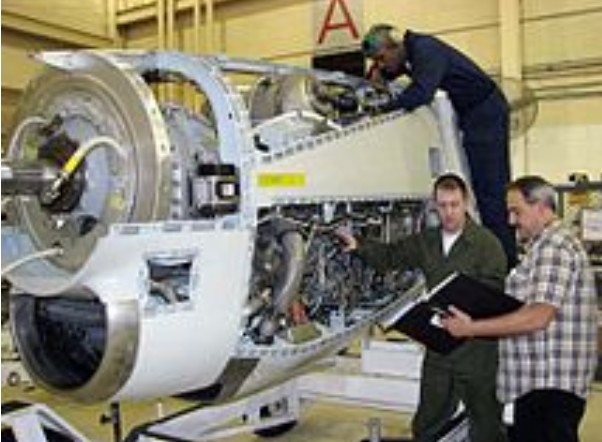
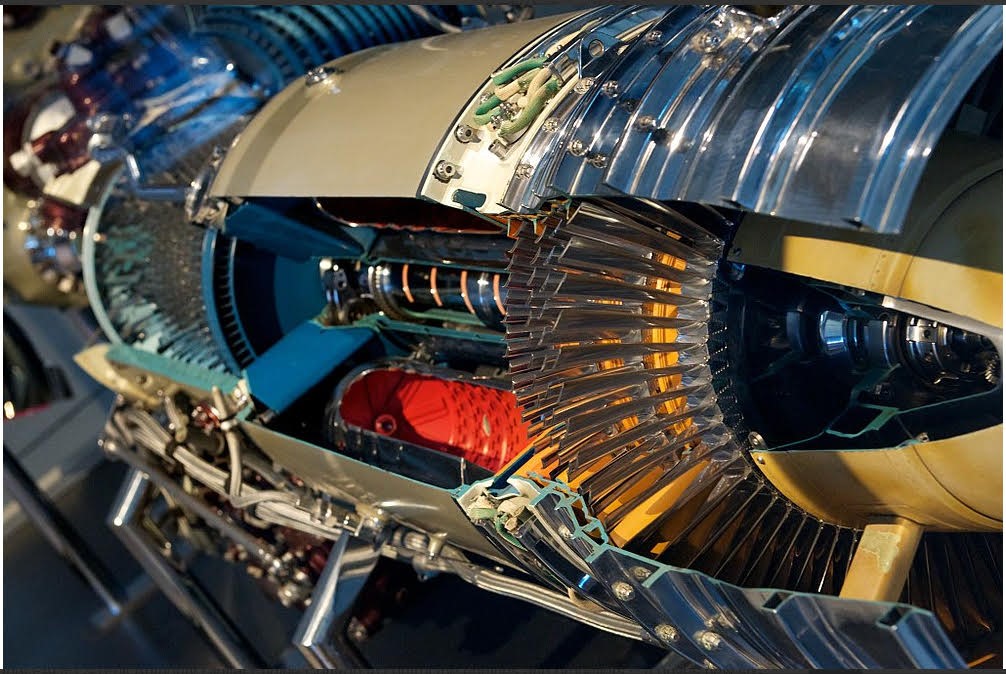
The Allison T56 is a single shaft, modular design military turboprop with a 14 stage axial flow compressor driven by a four stage turbine. It was originally developed by the Allison Engine Company for the Lockheed C-130 transportentering production in 1954 but was produced under Rolls-Royce which acquired Allison in 1995. The commercial version is designated 501-D. With an unusually long and numerous production run, over 18,000 engines have been produced since 1954, logging over 200 million flying hours.
The engine evolved from Allison’s previous T38 series. It was first flown in the nose of a B-17 test-bed aircraft in 1954. Originally fitted to the Lockheed C-130 Hercules, the T56 was also installed on the P-3 and E-2/C-2 aircraft, as well as civilian airliners such as the Lockheed Electra and Convair 580. A shipboard version, the 501K engine, is used to generate electrical power for all U.S. Navy cruisers and destroyers currently in commission.
More than 18,000 have been built.
Allison T56
In the Lockheed Martin C-130J Super Hercules which first flew in 1996, the T56 is replaced by the Rolls-Royce AE 2100, which uses dual FADECs (Full Authority Digital Engine Control) to control the engines and propellers. It drives new six-bladed scimitar propellers from Dowty Rotol.
Variants:
501-D13 (Series I) Lockheed L-188 Electra and Convair CV-580 (Replacing P & W R-2800) starting December 1957
501-D13A (Series I) Similar to -D13
501-D13D (Series I) Similar to -D13
501-D13H (Series I) Similar to -D13
501-D22 (Series II) Lockheed L-100 Hercules
501-D36A (Series II) (non-type certified)
501-D22A (Series III)
501-D22C (Series III) similar to -D22A
501-D22G (Series III) similar to -D22A
501-M62 Company designation for the T701-AD-700 Turbo-shaft engine to power the Boeing-Vertol XCH-62 Heavy-lift helicopter.
T56-A-7 (Series I)
T56-A-8 (Series I)
T56-A-9 (Series I)
T56-A-9D (Series I) Lockheed C-130A Hercules Starting December 1956 and on all Grumman E-2A Hawkeyes from 1960
T56-A-9E (Series I) Similar to -A-9D
T56-A-10W (Series I) with water injection
T56-A-7A (Series II) Lockheed C-130B Hercules Starting May 1959
T56-A-7B (Series II) Similar to -A-7A
T56-A-10WA (Series II)
T56-A-14 (Series III) Lockheed/Kawasaki P-3/EP-3/WP-3/AP-3/CP-140 Aurora from August 1962
T56-A-15 (Series III) Lockheed C-130H Hercules from June 1974
T56-A-16 (Series III)
T56-A-425 (Series III) Grumman C-2A Greyhound from June 1974
T56-A-14+ (Series III.V) Fuel efficiency and reliability upgrade
T56-A-15+ (Series III.V)
T56-A-16+ (Series III.V)
T56-A-425+ (Series III.V) Northrop Grumman E-2 Hawkeye from August 2011
T56-A-427 (Series IV) Northrop Grumman E-2 Hawkeye upgrades from 1972
T56-A-427A (Series IV) similar to the -A-427
T701-AD-700 (501-M62) Turbo-shaft engine for the Boeing-Vertol XCH-62 Heavy-lift helicopter.
Applications: Lockheed Martin C-130 Hercules Lockheed P-3 Orion Northrop Grumman E-2 Hawkeye Grumman C-2A Greyhound Convair 580 and Convair 5800 Lockheed L100 Hercules Lockheed L-188 Electra Lockheed R7V-2 Constellation – Done for testing the model 501D for use on the L-188 Electra. Was nicknamed “Elation” during testing. Aero Spacelines Super Guppy
Specifications:
T56 Series IV Type: Turboprop Length: 146.1 in (3,711 mm) Diameter: 27 in (690 mm) Dry weight: 1,940 lb (880 kg) Compressor: 14 stage axial flow Combustors: 6 cylindrical flow-through Turbine: 4 stage Fuel type: JP8 2412 pounds per hour Maximum power output: 4,350 shp (3,915 kW) limited to 4,100 Turbine inlet temperature: 860°C Power-to-weight ratio: 2.75:1 (shp/lb)
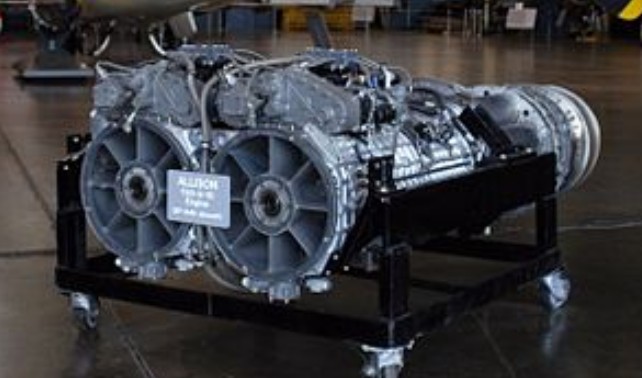
The Allison T40, company designation Allison Model 500, was an early American turboprop engine composed of two Allison T38 power sections driving a contra-rotating propeller via a common gearbox.
The T40 concept originated at Allison in 1944, where design studies were carried out on a 4,000 shp (2,983 kW) turboprop engine. Taking advantage of this effort, the US Navy awarded Allison a contract for the design and development of a 4,100 shp (3,057 kW) turboprop engine. The resulting T40 combined two Allison T38-A-1 power sections side-by-side with a common reduction gearbox powering a contra-rotating propeller. Similar in layout to the Armstrong Siddeley Double Mamba, the T40 differed in that each engine drove both the forward and the rear propellers, unlike the Double Mamba, where each Mamba power section drove either the front or the rear propeller separately. The T38-A-1 power sections each contained 17-stage compressors giving a pressure ratio of 6.3:1, eight combustion chambers, and four-stage turbines. A combining reduction gearbox was driven via extension shafts from the power sections. Each transmission shaft incorporated a clutch to allow the power sections to be run independently.
Accessories included a Master Control Unit, mounted above the compressors; and an air driven starter on the gearbox. The compound reduction gear had an overall reduction ratio of 15.75:1 and incorporated an airscrew brake to prevent windmilling when the engine was stopped. Anti-icing for the air intakes was supplied by compressor bleed air. The contra-rotating propeller consisted of two 14 ft (4.3 m) three-bladed Aeroproducts propellers fitted to concentric shafts.
Testing of the XT40 began on 4 June 1948, revealing some major vibration problems from the reduction gearbox due to mis-matched noise frequencies caused by poorly designed gear teeth. The de-coupling system, designed to disconnect a power section in the event of failure worked successfully. During a run in a test cell one power section developed a major oil leak and an attempt to shut it down failed because the engine carried on running on the leaking oil. After many attempts to shut it down the offending power section could only be shut down by destroying the compressor with buckets of nuts and bolts thrown down the intake, proving the de-coupling system.
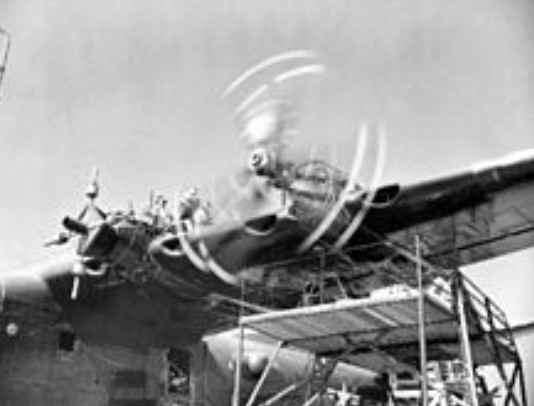
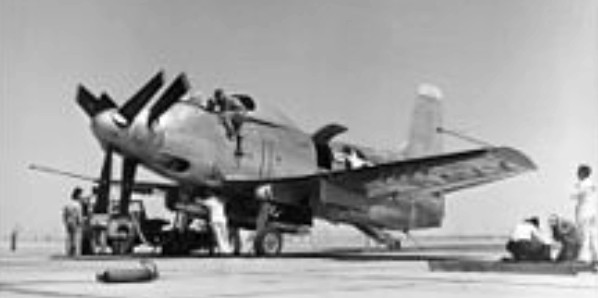
First flight test of the T40 was in the Convair XP5Y flying boat on 18 April 1950 fitted with four T40-A-4 developing 5,250 shp (3,915 kW). Service use of the T40 revealed problems with integrity of the propellers and gearboxes with at least one instance each of a propeller breaking free and a gearbox separation. One unusual problem was discovered during ground running of the Republic XF-84H Thunderscreech turboprop powered fighter; the special transonic 3-bladed single propeller set up harmonics that proved to be harmful to humans within a certain distance from the aircraft.
T40 engines on the XP5Y-1 prototype in 1950
The major problems of the T40 were its fragile gearbox, and the propeller control system which used 25 vacuum tubes, and was far from reliable. As the individual power plants were clutched into the gearbox, it was intended in most instances that the aircraft could cruise on one half of the engine and only engage the second power-section when there was need. In practice the system did not work well. Failure to recognize that one of the T38s had failed, and its compressor was devouring power produced by the other section, led to the loss of the first prototype Douglas XA2D-1 and its pilot on 14 December 1950.
The first aircraft to fly with the T40 was the Convair XP5Y-1 patrol aircraft prototype. As flying boat patrol aircraft became redundant, the US Navy changed the role of the aircraft from Anti-Submarine Warfare to Transport. Modifications to the XP5Y-1 (such as provision of air conditioning and pressurisation) produced the Convair R3Y Tradewind, which was to become the only aircraft using the T40 to actually enter service. These large four-engined flying boats served primarily between NAS Alameda and Hawaii during the mid-1950s, (replacing the Martin Mars flying boats). There were numerous problems with the T40s. One resulted in near disaster in 1956, when an R3Y managed to land with a runaway engine, resulting in a collision with a seawall. This event gave the US Navy one more reason to ground the R3Y, which it did soon after.
The only other aircraft to be produced in any quantity to be powered by the T40 was the Douglas A2D-1 Skyshark. Of the sixteen examples built, the twelve used for evaluation suffered similar problems to the R3Y. Propeller control problems and gearbox failures were among the more common problems.
Second Douglas A2D being prepared for its first flight in April 1952.
The T40 was also fitted to the North American A2J-1 Super Savage but the poor performance of the aircraft and continuing difficulties with the engines forced cancellation in favour of the Douglas A3D Skywarrior.
The most notable successes of the T40 were in the field of vertical take-off aircraft, being used to power three different types, the Convair XFY-1 Pogo, Lockheed XFV-1 and the Hiller X-18 tilt-wing research aircraft. Fitted with the more powerful 7,100shp YT40-A-6 the XFV-1 flew the first full flight from vertical take-off to horizontal flight and back to vertical flight for landing, of a fixed wing aircraft, in November 1954. Continuing concerns over propellers and the poor payload and performance precluded further development.
Some flying was carried out with the Hiller X-18 but most research was carried out with the aircraft attached firmly to a force measuring platform, that could be raised hydraulically, to gather data on ground cushion effects.
Limited flying was carried out by the two Republic XF-84H Thunderscreech turboprop fighter aircraft, but the continuing difficulties with the T40 engine, supersonic propeller, not to mention performance completely overshadowed by contemporary rivals led to cancellation of production plans.
Applications:
Douglas A2D Skyshark (1 × XT40-A-2) North American A2J Super Savage (2 × XT40-A-6) Convair P5Y (4 × XT40-A-5) Convair R3Y Tradewind (4 × XT40-A-10) Hiller X-18 (2 × T40-A-4) Lockheed XFV (1 × YT40-A-14) Convair XFY (1 × YT40-A-14) Republic XF-84H Thunderscreech (1 × XT40-A-1 driving a single three-bladed transonic propeller)
Specifications:
XT40 Type: Turboprop Length: 13 ft 11 in (4,240 mm) Diameter: 3 ft 3 in (990 mm) Dry weight: 2,500 lb (1,100 kg) Compressor: 17-stage axial flow (2 of) Combustors: 8 can-type per power-section Turbine: 4-stage axial flow (2 of) Fuel type: Kerosene based jet fuel Oil system: pressure spray scavenged Maximum power output: 4,000 shp Overall pressure ratio: 6.3:1 Specific fuel consumption: 0.6
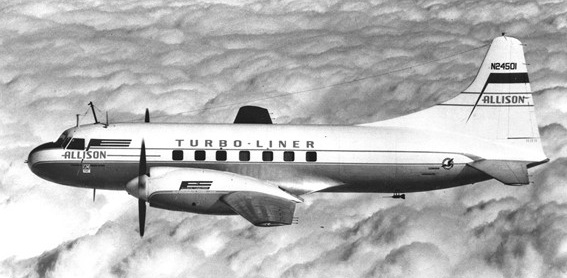
The Allison T38 (company Model 501) was an early large turboprop engine developed by Allison Engine Company during the late 1940s. Starting with a 19-stage axial compressor, eight can type combustion chambers, a 4-stage turbine driving the compressor and the extension shaft to the reduction gearbox, and initially rated at 2,000 shp (1,491.40 kW), the T38 first ran in 1947 and flew in the nose of a Boeing B-17 Flying Fortress test-bed on 19 April 1949, rated at 2,250 shp (1,677.82 kW). Problems with gearbox vibration and combustion were dealt with during the test programme and were mirrored by problems in the T40 programme. The engines fitted to the Convair CV-240-21 Turboliner were rated to 2,750shp.
Convair CV-240-21 Turboliner, December 1952 (Courtesy Pat Ford)
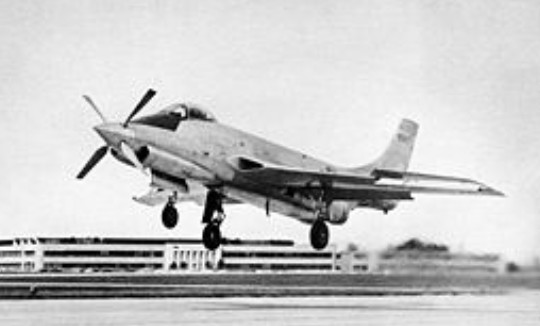
Although the only aircraft slated to receive the T38 as a production engine, the Convair T-29E, was cancelled, the T38 did power a converted Convair CV-240 (the CV-240-21 Turboliner, a project that would be abandoned due to engine problems), and was fitted in the nose of the McDonnell XF-88B to drive experimental supersonic propellers. Further development of the T38 provided the power sections for the Allison T40 as well as forming the basis for the Allison T56/Model 501 and the projected Allison T39.
Derivatives:
T39 A projected 9,000 shp (6,711.30 kW) development of the T38 which was cancelled before hardware had been produced.
T40 A 4,100 shp (3,057.37 kW) turboprop derivative composed of two T38s driving a common gearbox.