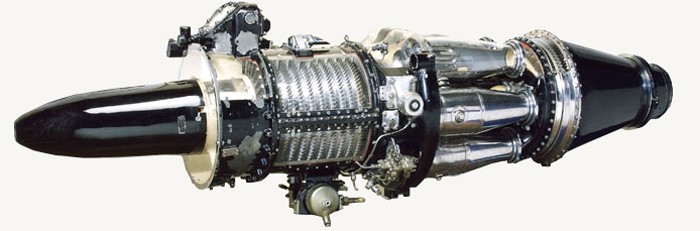
Armstrong Siddeley Adder

The Adder, a pure-jet derivative of the Armstrong Siddeley Mamba ASM3 airscrew gas-turbine, was originally developed as an expendable engine to power the Jindivik 1 target drone. The engine, first run in November 1948, was then developed into a longer-life engine before evolving into the more-powerful Armstrong Siddeley Viper.

The ASA.1 Adder was flight tested in the rear-turret position of the Avro Lancaster III SW342, the aircraft also having been previously modified and used for icing trials of the Mamba by Armstrong Siddeley’s Flight Test Department at Bitteswell.

Applications:

GAF Pika
Saab 210
Folland Midge

Specifications:
Type: Turbojet
Compressor: Axial Flow
Maximum thrust: 1,050 lb
Max continuous power: 900 lb / 409 kg
Diameter: 28 in / 71,12 cm
Length: 73.3 in / 1,84 m
Net dry Weight: 580 lb / 263 kg
Take-off power: 1,100 lb / 500 kg
Fuel burn max continuous: 1.2 lb/lb th/h

Armstrong Siddeley Viper / Bristol Siddeley Viper / Rolls-Royce Viper

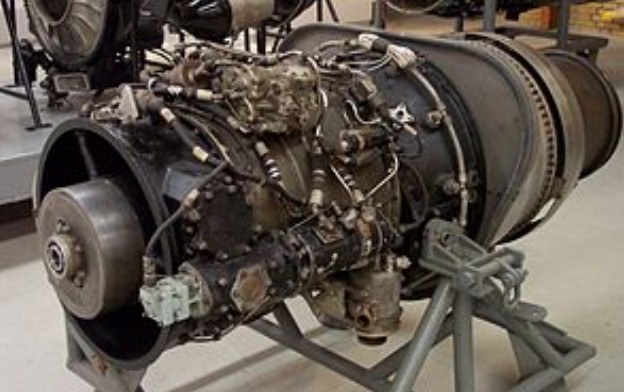
The Viper turbojet engine was developed and produced by Armstrong Siddeley and then by its successor companies Bristol Siddeley and Rolls-Royce Limited. First run in April 1951 it entered service in 1953 and remained in use with the Royal Air Force, powering its Dominie T1 navigation training aircraft until January 2011.
The design originally featured a seven-stage compressor based on their Adder engine — the Viper is in effect a large-scale Adder.
The Viper was developed as an expendable engine for powering production versions of the Jindivik target drone, but the limited-life materials and total-loss oil systems were replaced with standard systems for use in manned aircraft.
Because it was initially developed as an expendable engine, the Viper was subject to many recurring maintenance issues. This led to the development of the first Power by the Hour program in which operators would pay a fixed hourly rate to Bristol Siddeley for the continual maintenance of the engines.
A production Armstrong Siddeley Viper ASV.5 turbojet, of the type specified for the Percival P.84 trainer, was to undergo high-altitude trials mounted on the tip of one wing of Armstrong Siddeley’s Sapphire – Canberra WD933 in 1954. The other wing-tip can either carry a similar turbo-jet or, as in the case of the Canberra, a counterbalancing weight. The Canberra should be able to test the Viper at altitudes up to about 50,000 ft.

Variants:
Viper 8
(Mk.102 / Mk.104): Engines for the Hunting-Percival Jet Provost TMk.3 (Mk.102} and GAF Jindivik Mk.102B target drone (Mk.104).
Viper 9
(Mk.103): Powered the Bell X-14 and Handley Page HP 115 among others.
Viper 11
(Mk.200): Powered the Hunting-Percival Jet Provost TMk.4 and GAF Jindivik Mk.3 among others.
Viper 20
(Mk.500 series): Powered the Hawker Siddeley HS.125 and Piaggio-Douglas PD.808 among others.
Viper 22
Built under licence by Piaggio for the Aermacchi MB.326
Mk.102
Mk.103
Mk.104
Mk.200
Mk.201
Mk.301
Mk.500 series
Mk.520
Mk.601

Applications:
Aermacchi MB-339
Aermacchi MB-326
Atlas Aircraft Impala
Avro Shackleton
BAC Jet Provost
BAC Strikemaster
Bell X-14
Dassault M.D.550 Mystere-Delta
Embraer AT-26 Xavante
Folland Midge
GAF Jindivik
Hawker Siddeley Dominie
Handley Page HP.115
IAR 99
Piaggio PD.808
Saunders-Roe SR.53
Soko J-22 Orao/IAR-93
Soko G-2 Galeb
Soko G-4 Super Galeb

Specifications:

Viper ASV.12
Type: Turbojet
Length: 64.0 in (1,625 mm)
Diameter: 24.55 in (624 mm)
Dry weight: 549 lb (249 kg)
Compressor: Seven stage axial
Combustors: Annular, 24 burners
Turbine: Single stage
Fuel type: AVTUR, AVTAG
Oil system: scavenge, metered
Maximum thrust: 2,700 lb (12 kN) at 13,800 rpm
Overall pressure ratio: 4.3:1
Specific fuel consumption: 1.09 lb/hr/lb oil consumption=1.25 pints/hr (0.7l/h)
Thrust-to-weight ratio: 4.9:1

Armstrong Siddeley

In April 1919 Siddeley-Deasy was bought out by Armstrong Whitworth Development Company of Newcastle upon Tyne and in May 1919 became Armstrong Siddeley Motors Ltd a subsidiary with J. D. Siddeley as Managing Director. In 1927, Armstrong Whitworth merged its heavy engineering interests with Vickers to form Vickers-Armstrongs. At this point, J. D. Siddeley bought Armstrong Siddeley and Armstrong Whitworth Aircraft into his control. In 1928, Armstrong Siddeley Holdings bought Avro from Crossley Motors.

Armstrong Siddeley manufactured luxury cars, aircraft engines, and later, aircraft. In 1935, J. D. Siddeley’s interests were purchased for £2 million by Tommy Sopwith owner of Hawker Aircraft to form Hawker Siddeley, a famous name in British aircraft production. Armstrong Whitworth Aircraft became a subsidiary of Hawker. The aviation pioneer Thomas Octave Murdoch Sopwith – Tommy, later Sir Thomas, Sopwith – became chairman of Armstrong Siddeley Motors, a Hawker Siddeley subsidiary.

Armstrong Siddeley was merged with the aircraft engine business of Bristol Aero Engines that had developed the Olympus engines for the TSR 2 (that engine was subsequently developed for used in Concorde) to form Bristol Siddeley as part of an ongoing rationalisation of the British aerospace sector. Armstrong Siddeley produced their last cars in 1960. Bristol Siddeley and Rolls-Royce merged in 1966, the latter name subsuming the former.

In June 1972, Rolls-Royce (1972) Ltd. sold all the stock of spares plus all patents, specifications, drawings, catalogues and the name of Armstrong Siddeley Motors Ltd to the Armstrong Siddeley Owners Club Ltd.

However, the name survived with Hawker Siddeley Aviation and Hawker Siddeley Dynamics joining with others to become BAe – British Aerospace, and with further mergers has now become BAE Systems the premier defence contractor, which among other things builds Aircraft Engines, Aircraft, and Aircraft carriers.

Throughout the 1920s and 1930s, Armstrong Siddeley produced a range of low- and mid-power aircraft radial engines, all named after big cats. They also produced a tiny 2-cylinder engine called the Ounce, another name for the snow leopard, for ultralight aircraft.

The company started work on their first gas turbine engine in 1939, following the design pioneered at the Royal Aircraft Establishment by Alan Arnold Griffith. Known as the “ASX” for “Armstrong Siddeley eXperimental”, the original pure-turbojet design was later adapted to drive a propeller, resulting in the “ASP”. From then on, AS turbine engines were named after snakes. The Mamba and Double Mamba were turboprop engines, the latter being a complex piece of engineering with two side-by-side Mambas driving through a common gearbox, and could be found on the Fairey Gannet. The Python turboprop powered the Westland Wyvern strike aircraft. Further development of the Mamba removed the reduction gearbox to give the Adder turbojet.

Another pioneer in the production of the RAE engine design was Metrovick, who started with a design known as the Metrovick F.2. This engine never entered production, and Metrovick turned to a larger design, the Beryl, and then to an even larger design, the Sapphire. Armstrong Siddeley later took over the Sapphire design, and it went on to be one of the most successful 2nd generation jet engines, competing with the better-known Rolls-Royce Avon.

The company went on to develop an engine – originally for unmanned Jindivik target drones – called the Viper. This product was further developed by Bristol Siddeley and, later, Rolls-Royce and was sold in great numbers over many years. A range of rocket motors were also produced, including the Snarler and Stentor. The rocket development complemented that of Bristol, and Bristol Siddeley would become the leading British manufacturer of rocket engines for missiles.

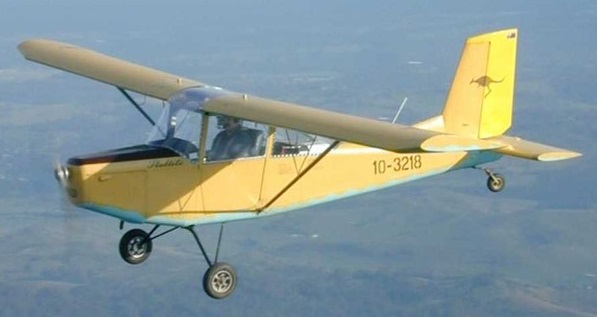
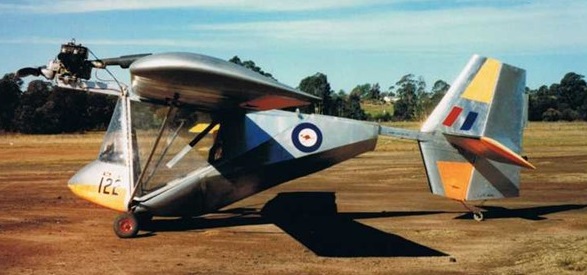
ArmourKraft Stolite

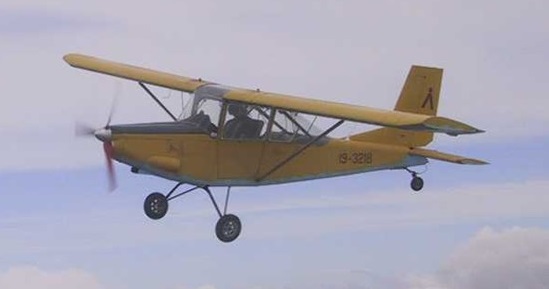
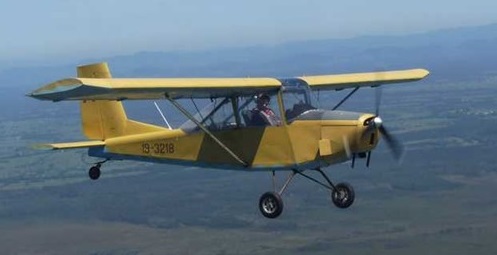
Stollite Mk1 single seat with R503

The ArmourKraft Stolite was a project designed by Arthur Armour to be built by his apprentice while he was building something else. It took three years to build, working two nights a week after work. The wings are from the ArmourKraft Super Cricket.

Design to fit Australian 95:10 class, MTOW 300kg (661lb), single seat, it was powered by a Rotax 503, registered 10-3218, and first flew in 1999 at The Oaks, NSW, Australia.

After a minor incident, aircraft was rebuilt in the next ‘class’ allowing more weight and two seats, and was fitted with a Rotax 582, and registered 19-3218.

Stollite Mk2, two seat with R582

Eventually the 582 failed, so an old Rotax 912 was fitted.

Stollite Mk3 now with Rotax 912

The 912 was required for another project and removed, to be replaced with a modified BMW R100 bike engine.

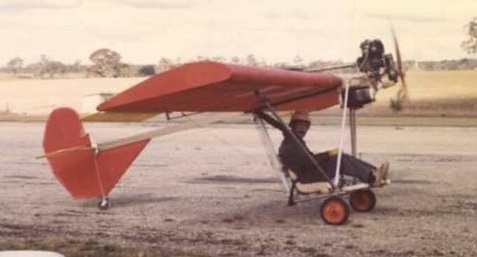
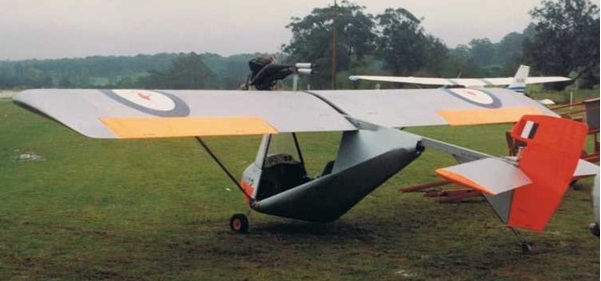
ArmourKraft Super Cricket

Original

The Super Cricket was the first ultralight Arthur Armour completed. It was rebuilt from a cloned machine bought to build up flying time.

Registered 10-0122 and originally powered by a modified Yamaha 350 bike engine, it would barely fly.

After the first rebuild, it still wouldn’t fly well, so a Rotax 503 was fitted. That made it fly.

Rebuilt

It was slowly improved over a couple of years until blown over in a storm and parted out.

Final form

Engine: Rotax
Prop: Catto

Arjanguelsky USB

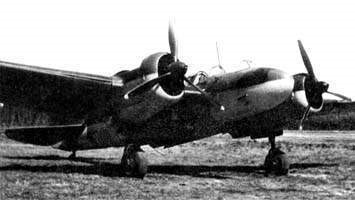
Between March 11 and 16, 1938, tests were carried out on an experimental version of the SB equipped with an open cockpit for the instructor pilot, located in the position of the navigator’s cockpit.

For this purpose, a series SB was taken from the production batch of Factory 22 and equipped with a second cabin with double control and all the necessary instrumentation for the instructor. First flying in March 1938, this cabin was designed in such a way that it could easily replace the navigator’s cabin directly in the operational units.

After the tests, which were favourable, a small series was developed as the Arjanguelsky USB (Russian: Архангельский УСБ). During 1938, 110 cabins were prepared for instructors, of which 29 were located in new aircraft and the other 81 were delivered to the units for operational conversion.

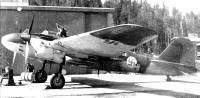
At least one was captured by the Finnish forces during the Winter War, being used by T-LeLv 17 of their Air Force.

USB captured by the Finns and operated by T-LLv 17, summer 1943.

USB
Engines: 2 x М-100А, 860 hp
Wingspan: 20.33 m
Length: 12.57 m
Height: 3.48 m
Wing area: 256.00 m²
Empty weight: 4138 kg
Normal takeoff weight: 5738 kg
Maximum speed: 425 km / h
Cruising speed: 315 km / h
Ascent speed: 437 m / min
Practical ceiling: 9000 m
Practical range: 900 km
Accommodation: 3

Arjanguelsky SB-B

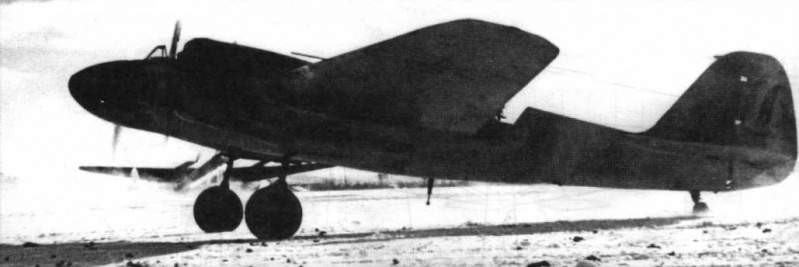
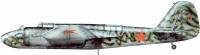
Arjanguelsky SB-B (Russian: Архангельский СБ-Б). The SB-B was the last attempt to keep the SB in service.

Parallel to the development of the SB-RK 2M-105 model, the bureau led by Arjanguelsky began work on a short-range, high-speed bomber in 1939. Initially, the project received factory index S (with this designation tests were performed in the wind tunnel of the model in TsAGI), but soon the name was changed to B. The new design was a radical modification of the model with the aim of obtaining much higher performance and better technological processes to facilitate construction.

The crew was three: pilot, navigator and radio operator-gunner.

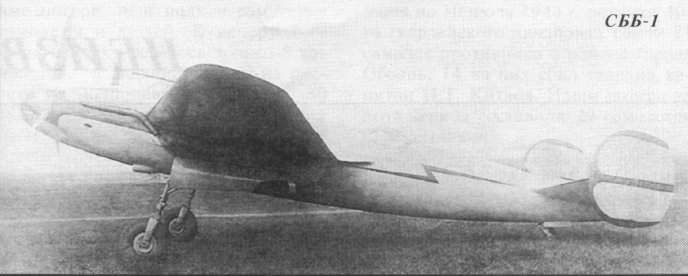
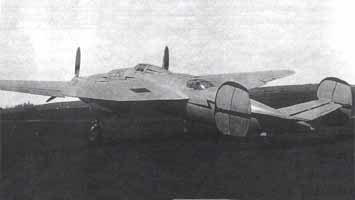
The main advantage of the model lay in the aerodynamic improvements. Although similar in configuration to previous models, the B featured a double-tail unit.

The biggest changes focused on improving the aerodynamics. The wingspan was reduced and the wingtips modified. In general, the wing area was reduced to 40 sq.m. The tail unit was modified to carry double tails. The power nacelles were once again aerodynamically improved.

In the structure of the SB-B it was decided to use open profiles instead of metal tubes. Also noteworthy is the extensive use of rivets and stamped parts instead of welds. Due to the war, aluminum production was scarce. For this reason, the ends and the area of the wings between the stringers were built using bakelite sheets glued to the metal structure, which allowed to obtain a higher quality and high resistance surface. To avoid perforations in this structure, the decision was made not to attach the main undecarriage into the wings.

The powerplant was again modified. The Klimov M-105TK engine included a TK-2 turbocharger that made it possible to reach 612 km / h at a height of 9000 meters. The use of the Klimov M-106 was also foreseen, with which according to the calculations it would reach 587 km / h at 7000 meters of altitude. In both engine versions, the use of 3-SMV-2 three-bladed propellers with a diameter of 3.25 m was foreseen.

The radiators were located inside the wing with the intakes on the leading edge of the central plane and the outlets to the rear. They planned to use aluminum radiators developed in the SKB of the NKAP of Leningrad.

The tail wheel of the landing gear could be retracted in flight, also to improve aerodynamics.

The normal operating capacity envisaged 600 kg of bombs, but the maximum capacity was 1000 kg, of which 800 kg could be located in the hold. The armament included bombs between 2.5 and 250 kg.

The defensive weapons included a normal caliber UltraShKAS machine gun in the nose with 600 rounds, operated by the navigator and another UltraShKAS with 800 rounds or a heavy caliber ShVAK-12 machine gun with 300 rounds, operated by the radio operator-gunner.

The performance of the new model far surpassed that of the standard SB bomber. However, the results still did not exceed the 600 km / h requested by the Defense Committee. The biggest problem was the ranga. With a cruising speed at 0.8 of the maximum speed the range with Klimov M-105TK engines, the calculations did not exceed 880 km and with Klimov M-106 engine 970 km. At the cost of reducing the offensive load, the range could be increased to 1,500 km. To solve these difficulties, the project envisaged the use of external fuel tanks of 520 kg to be located under the wings. In this case the take-off weight was 7025 kg.

In November 1939, after a detailed review of the model, the construction of the prototype was approved. By decision of the Defense Committee on 4 March 1940 two copies would be built, B-1 and B-2, at Factory No. 22. The first version would correspond to a fast bomber, while the second would correspond to a dive bomber. The B-2 would have a wider fuselage and nose with a different configuration.

The B-1 prototype with Klimov M-105 series engines was completed around October 1940 and flight tests immediately began. On October 2 the B-1 was taken off the list of Factory No.22 and ground work and test runs began. The problems presented by the Klimov M-105 engine, which ended with catastrophes in Nikolai Polikarpov’s aircraft, forced extreme care in the tests of the B-1, so it was decided to transfer the plane to the Central Airfield in Moscow where the November 6 took flight with test pilot Yu.K. Stankievich at the controls. After six flights, it was decided to return the plane to the airfield of Factory No.22 in Fili. On 26 November 1940, while landing at Fili the left landing gear was damaged.

Upon returning to the workshops, Arjangelsky decided to take the opportunity and carry out a series of improvements as a result of the test flights carried out. The plane was ready to fly again on February 20, 1941.

Between 24 March and 9 of June 1941 the factory tests piloted by Stankevich got excellent speed of 540 km / hr at 4900 meters. After minor refinements it was expected to increase this number by 20 – 25 km / h. The second prototype, the B-2, was built during the summer of 1941 and it was expected to achieve an increase of 40 to 60 km / h.

In November 1940 a high-ranking commission that included representatives of the TsAGI, the VVS and the NKAP made a comparison between the Petlyakov PB-100, the Yakovlev BB-22PB and the Arjanguelsky SB-RK and SB-B. As a result of this meeting, it was decided to promote the production of the PB-100 (future Pe-2) as the main dive bomber and to keep the BB-22 in production. The SB-B was not approved because at that time it had not yet passed the testing stage. However, the program received the green light to continue its course.

Despite the excellent results obtained by the SB-B, even superior in many respects than those of the Pe-2, the start of the war brought about the cancellation of the project. The prototype B-1 was sent to the rear deep once the decision to evacuate the KB of Arjanguelsky to the city of Omsk. What may have happened later is unknown. Arjanguelsky set about repairing the existing SB bomber and was eventually reinstated to the KB of Tupolev.

SB-B / B
Engines: 2 1050 hp М-105Р engines in the B-1
Wingspan: 16.00 m
Wing area: 46.0 m²
Length: 12.27 m
Height: 3.52 m
Empty weight: 4100 kg
Normal takeoff weight: 5980 kg
Maximum speed at sea level: 454 km / h
Maximum speed at height: 540 km / h
Cruising speed: 475 km / h
ROC: 788 m / min
Range at 80% maximum speed: 880 km
Ceiling: 10,100 m
Crew: 3: commander, navigator and radio operator-gunner.
Armament: 4 ShKAS 7.62 mm machine guns
Bombload: 8 max capacity was 1000 kg / normal weights 600 kg