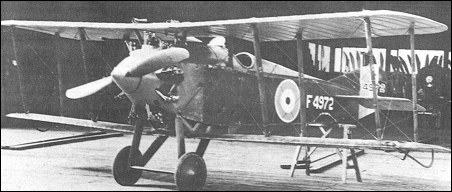
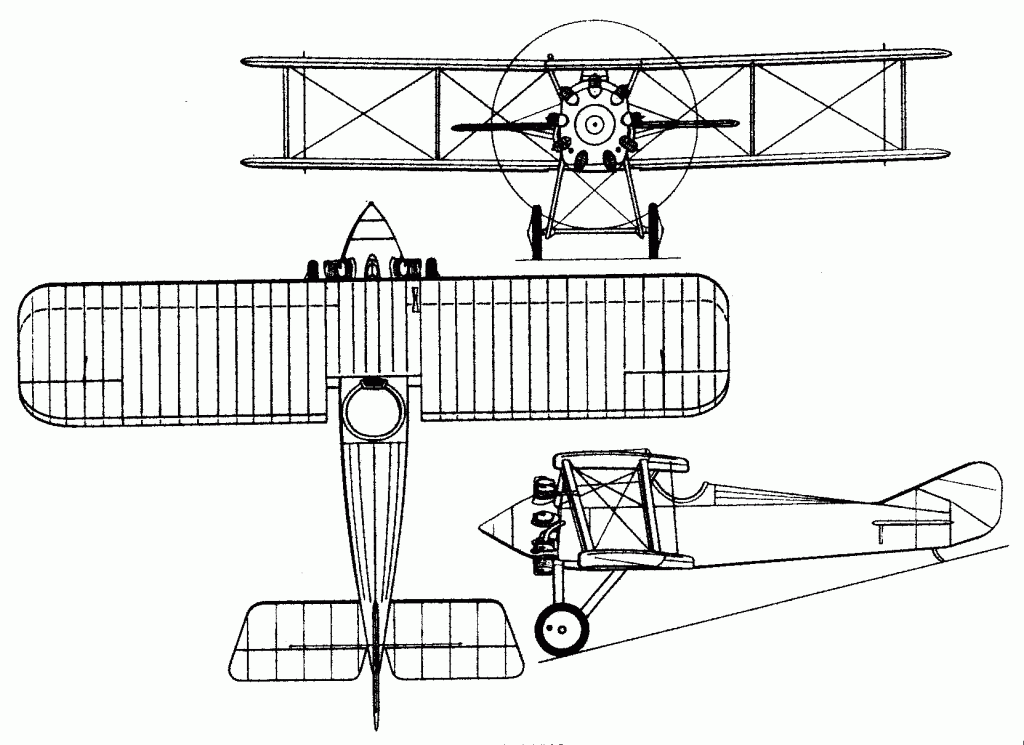
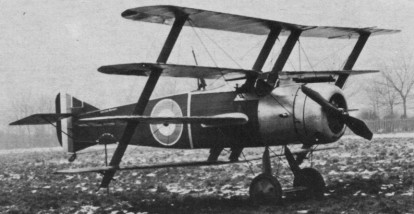
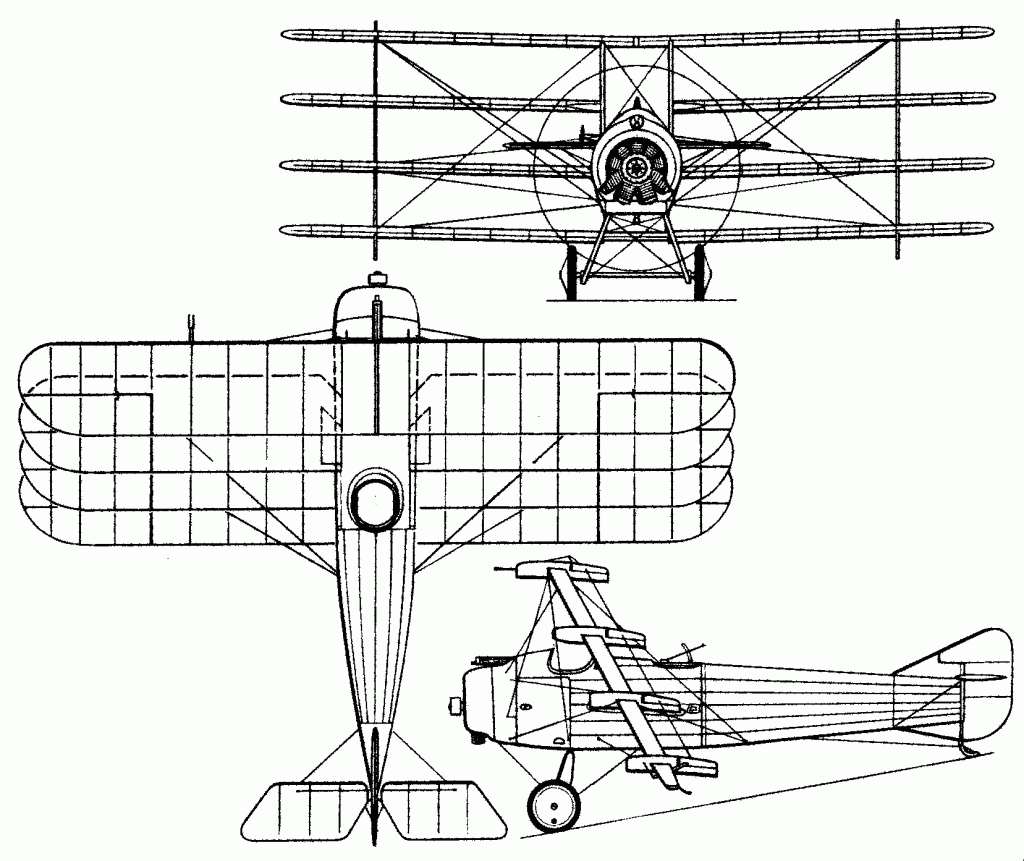
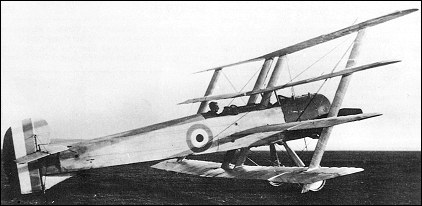
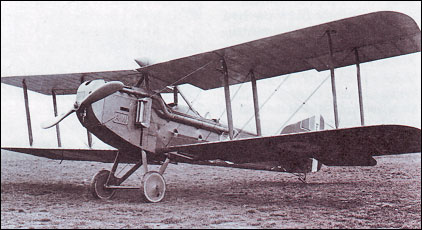
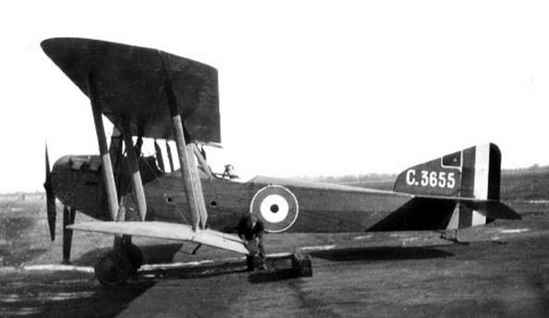
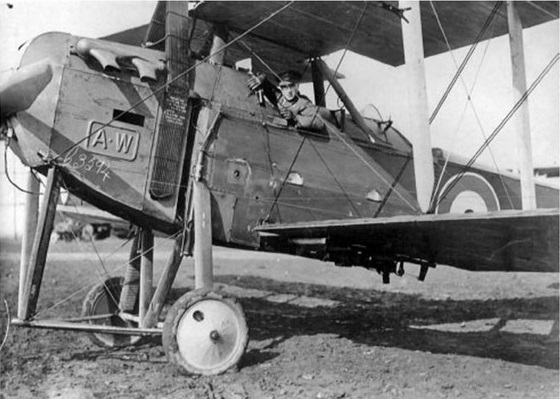
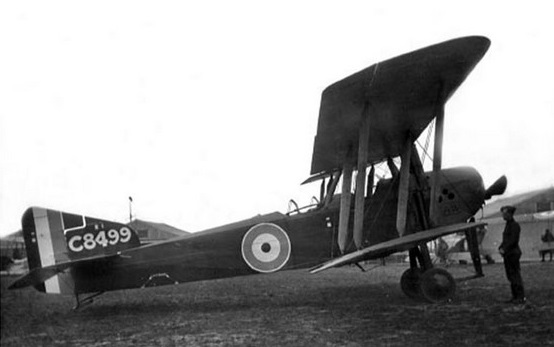
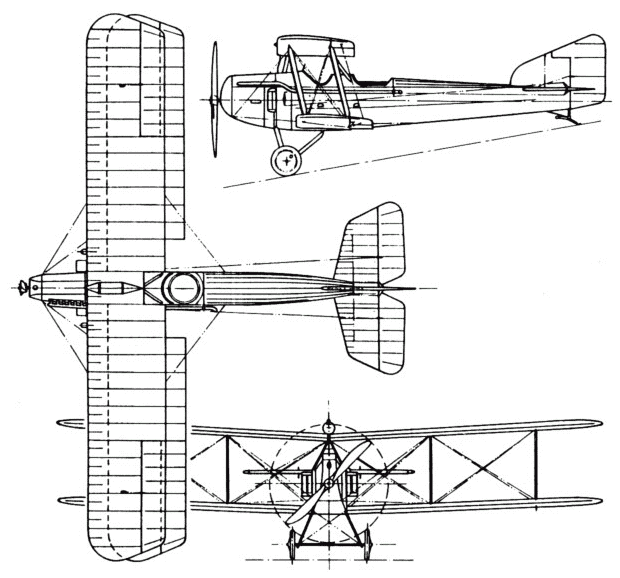
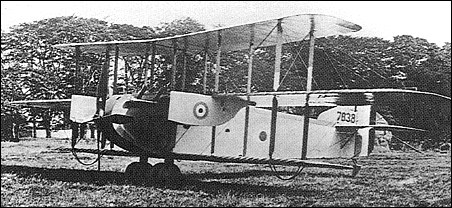
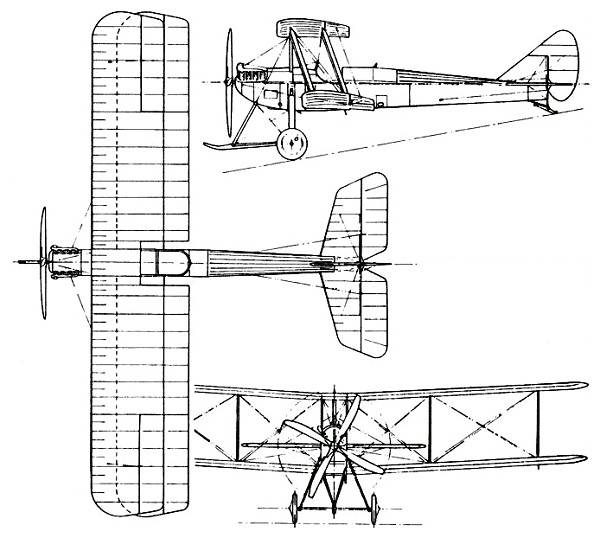
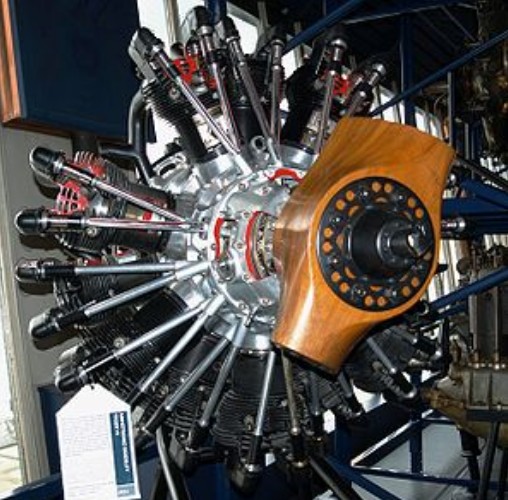
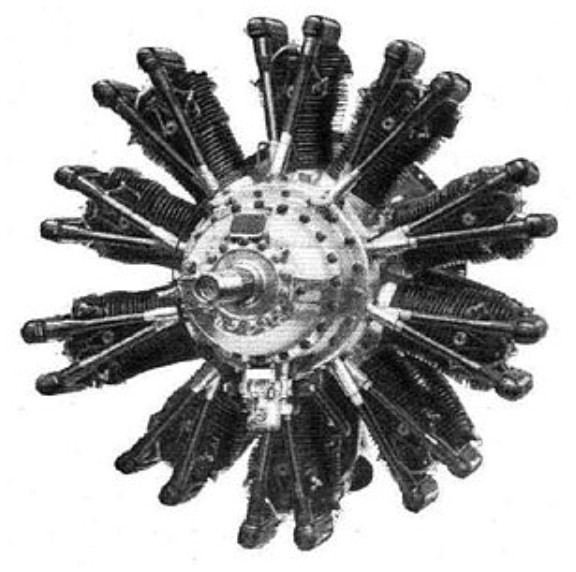
Designed in 1918 around the newly developed ABC Dragonfly nine-cylinder air-cooled radial of 320hp, three prototypes of the Ara were ordered. Delays in delivery of the Dragonfly engine led, in October 1918, to abandoning of plans to produce a Dragonfly-powered fighter in quantity. Companies with a design under development were each allocated one Dragonfly engine in December 1918 in order to enable them to complete and test one prototype. The ABC engine proved extremely unreliable when the Ara commenced trials early in 1919. A second prototype was completed and flown before, late in 1919, Sir W G Armstrong Whitworth & Co Ltd closed its aircraft department. The planned armament of the Ara comprised two 7.7mm Vickers guns.
Take-off weight: 875 kg / 1929 lb Empty weight: 599 kg / 1321 lb Wingspan: 8.35 m / 27 ft 5 in Length: 6.17 m / 20 ft 3 in Height: 2.39 m / 7 ft 10 in Wing area: 23.87 sq.m / 256.93 sq ft Max. speed: 241 km/h / 150 mph
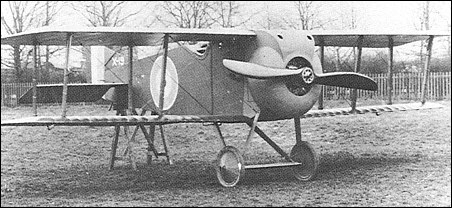
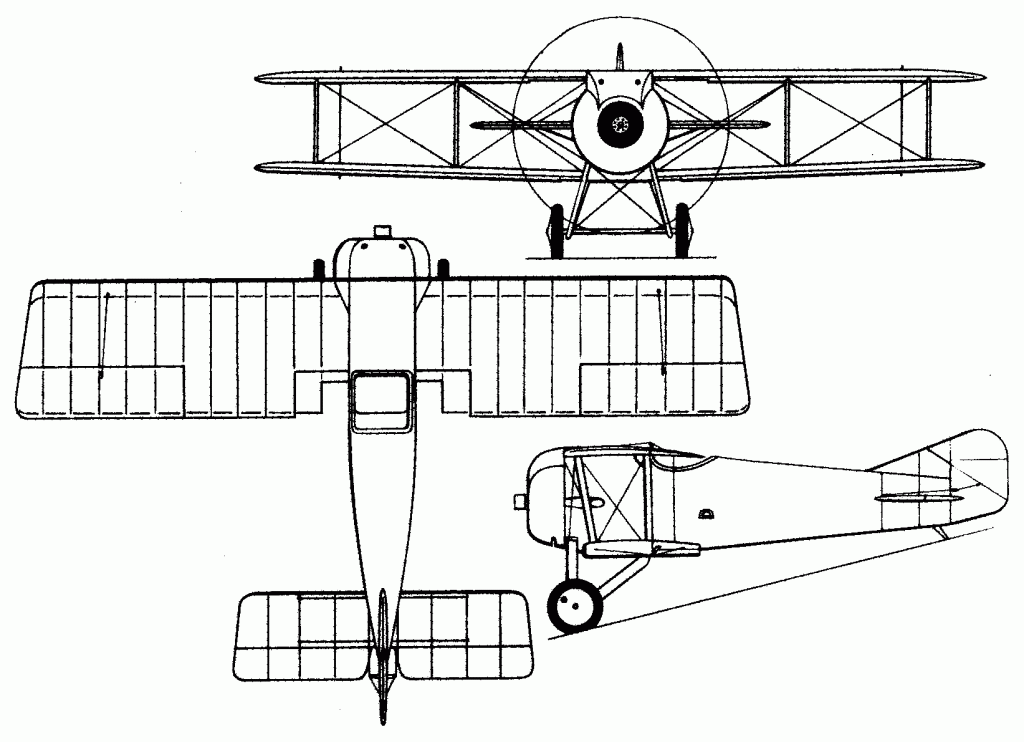
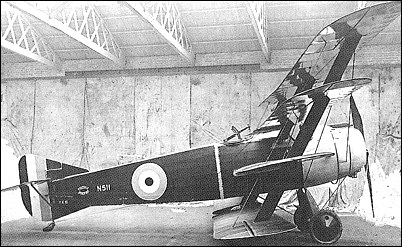
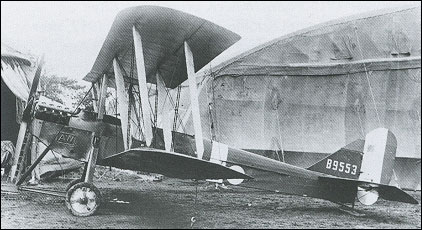
F Murphy, who had succeeded F Koolhoven as chief designer to Armstrong Whitworth, began the design of the Armadillo late in 1917 and the construction of two prototypes began early in 1918 as a private venture. The first of these was flown in April 1918 powered by a 230hp Bentley B.R.2 nine-cylinder rotary. The Armadillo had provision for an armament of two synchronised 7.7mm Vickers machine guns. Flying characteristics were declared to be unsatisfactory and flight testing was terminated in June 1918, the second prototype never being flown.
Engine: Bentley B.R.2 nine-cylinder rotary, 230hp Take-off weight: 844 kg / 1861 lb Empty weight: 567 kg / 1250 lb Wingspan: 8.46 m / 27 ft 9 in Length: 5.74 m / 18 ft 10 in Height: 2.38 m / 7 ft 10 in Wing area: 21.55 sq.m / 231.96 sq ft Max. speed: 201 km/h / 125 mph
Frederik Koolhoven’s final designs for Armstrong Whitworth were several quad¬ruplhnes in early 1916. A batch of 50 improved F.K.9 versions, later designated F. K. 10, was ordered from Angus Sanderson & Company of Newcastle-on-Tyne on December 30, 1916 on behalf of the RFC. Eleven machines received official serial identities but only five aircraft were completed before the contract was cancelled. Three were ordered for the RNAS, two of these from the Phoenix Dynamo Manufacturing Company and one from Armstrong Whitworth, these eventually being completed and tested. After many minor modifications and part redesigning the F.K.10 still failed to reach a satisfactory performance, and the type was never put into service use operationally.
The F.K.10 was normally powered by a 130hp Clerget 9B rotary, but at least one was flown with a 110hp Le Rhone, and armament comprised one fixed 7.7mm Vickers gun and one free 7.7mm Lewis.
Engine: Clerget 9B rotary, 130hp Wingspan: 27 ft 10 in / 8.4 m Length: 22 ft 3 in / 6.7 m Height: 3.5 m (11 ft 6 in) Empty weight: 1226 lb / 556 kg Loaded weight: 2038 lb / 924 kg Maximum speed: 169 km/h (105 mph) at ground level Service ceiling: Approx 3660 m (12000 ft) Armament: 1 Lewis .303 in (7.7 mm) mg
Engine: Le Rhone 9J, 110 hp Wingspan: 8.48 m / 27 ft 10 in Length: 6.78 m / 22 ft 3 in Height: 3.50 m / 11 ft 6 in Wing area: 36.27 sq.m / 390.41 sq ft Take-off weight: 916 kg / 2019 lb Empty weight: 560 kg / 1235 lb Max. speed: 135 km/h / 84 mph Armament: 1 x fixed .303 Vickers mg, 1 x Scarff-mounted .303 Vicker mg
The F.K.9 two-seat fighter-reconnaissance quadruplane was built by Sir W G Armstrong Whitworth & Co Ltd as a private venture. Initially flown in the summer of 1916, trials dictated a number of modifications, including new wings with enlarged ailerons, an enlarged fin, a redesigned engine cowling and increased undercarriage track Powered by a 110hp Clerget 9Z rotary engine, and with one fixed 7.7mm Vickers gun and one free 7.7mm Lewis gun, the F.K.9 was officially tested in November-December 1916 at the Central Flying School. A production contract for 50 examples of an improved version, the F.K.10, was awarded.
Engine: Clerget 9Z rotary, 110hp Wingspan: 8.46 m / 27 ft 9 in Length: 7.87 m / 25 ft 10 in Height: 3.45 m / 11 ft 4 in Wing area: 32.98 sq.m / 354.99 sq ft Take-off weight: 924 kg / 2037 lb Empty weight: 556 kg / 1226 lb Max speed: 151 km/h / 94 mph Armament: 1 x fixed .303 Vickers mg, 1 x Scarff-mounted .303 Vicker mg
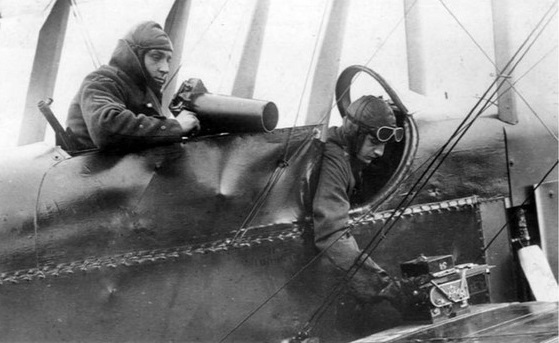
Designed by Frederik Koolhoven, the F.K.8 prototype first flew in May 1916, and was similar to its predecessor, the F.K.3 and intended to supersede the capabilities of the FK.3.
The standard production versions were powered by a 120 hp Beardmore engine and in the original form had an angular engine cowling and radiators which met in an inverted Vee in front of the top wing. After a time production aircraft were delivered with a more rounded cowling carrying a small box-like radiator on each side.
Early models had a Vee-skid in front of their wheels.
Later machines with a 160 hp Beardmore. All were fitted with a form of dual control so that the rear cockpit observer could partially fly the machine if his pilot was incapacitated.
Armament consisted of a single forward-firing fixed 7.62mm Vickers machine gun and a single 7.62mm trainable Lewis-type in the rear cockpit position. Provisions for bombs were also a part of the arsenal for the FK.8.
F.K.8
The first RFC unit to receive F.K.8s was 35 Squadron, which flew fully equipped to France on January 24, 1917. Number 2 Squadron began to re-equip in April 1917; 10 Squadron in July; 8 Squadron in August, and 82 Squadron, fully equipped with the type, arrived in France in November 1917. In the Middle East zone of operations, 17 and 47 Squadrons in Macedonia, and 142 Squadron in Palestine were equipped with F.K.8s by 1918, and continued to operate them until the end of the war. In England, several home defence units were partly equipped with the F.K.8, and one belonging to 50 Squadron was responsible for shooting down a Gotha bomber on July 7, 1917.
The F.K.8 first came into prominence during the German spring offensive of March 1918, being used primarily in a tactical low-level bombing and strafing role against German infantry.
F.K.8
At least 1596 machines were built and delivered for service use. By October 31, 1918, a total of 694 F.K.8s were still on RAF charge, but at the end of 1919 few examples remained. Eight found their way onto the Civil Register, and two went to Australia where they helped to pioneer air travel from late 1922 onwards.
Armstrong Whitworth F.K.8 Engine: 1 x 120hp Beardmore Wingspan: 13.26 m / 43 ft 6 in Length: 9.58 m / 31 ft 5 in Height: 3.33 m / 10 ft 11 in Wing area: 540 sq.ft Armament: 1 x 7.62mm Vickers mg, 1 x 7.62mm Lewis mg
Armstrong Whitworth F.K.8 Engine: 1 x 160hp Beardmore Wingspan: 13.26 m / 43 ft 6 in Length: 9.58 m / 31 ft 5 in Height: 3.33 m / 10 ft 11 in Wing area: 540 sq.ft Max take-off weight: 1275 kg / 2811 lb Empty Weight: 1,918 lbs (870kg) Fuel capacity: 47.5 Imp.Gal Max. speed: 153 km/h / 95 mph / 83kt Service ceiling: 3690 m / 12100 ft Endurance: 3 hr Armament: 1 x 7.62mm Vickers mg, 1 x 7.62mm Lewis mg Crew: 2 Hardpoints: 4
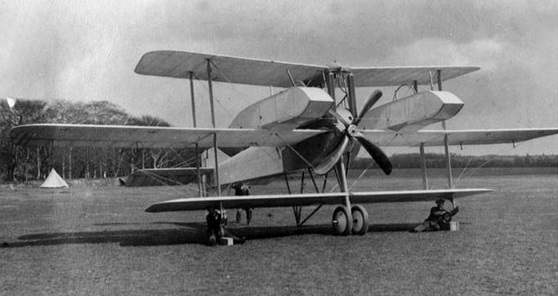
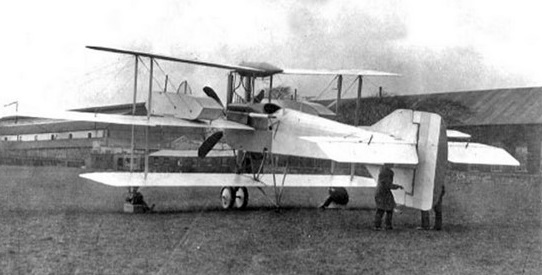
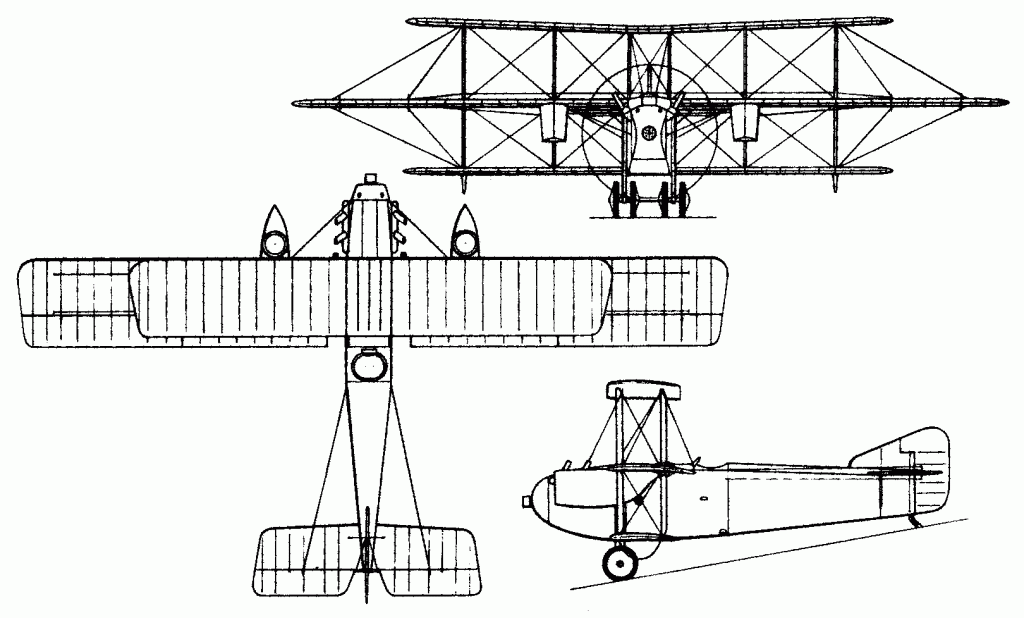
In 1915, Frederick Koolhoven, the chief designer of Sir W G Armstrong Whitworth & Co Ltd, initiated work on a three-seat triplane powered by a 250hp Rolls-Royce 12-cylinder water-cooled engine. It was intended to accommodate two gunners each with a 7.7mm machine gun in shallow nacelles mounted above the centre wing on each side of the fuselage, the gunners being seated ahead of the propeller plane of the tractor engine.
Although a prototype was completed and allegedly designated F.K.5, this was never flown, being extensively damaged as a result of a ground loop during its first take-off attempt. The design was extensively revised early in 1916 to meet an RFC requirement for an airship interceptor and long-range escort fighter. The revised design is believed to have been designated F.K.6 and four examples were ordered, two of these being intended for the RNAS. In the event, only one F.K.6 was built. The gunners’ nacelles were underslung on the central mainplane, armament remained two 7.7mm Lewis guns and the 250hp Rolls-Royce engine was retained. It is believed that relatively limited flight testing was undertaken. And no armament was actually fitted.
The middle wing was much longer than the others, but the other wings were equal span.
F.K.5
Engine: 1 x 250hp Rolls-Royce piston Wingspan: 19.14 m / 62 ft 10 in Length: 11.29 m / 37 ft 0 in Height: 5.18 m / 16 ft 12 in Max. speed: 160 km/h / 99 mph Crew: 3
When W G Armstrong, Whitworth & Co received a contract in 1914 to build B.E.2 aircraft for the Royal Flying Corps and the Royal New Zealand Air Service, it offered to design and build a simpler but equally efficient two seat trainer aircraft instead. Similar in configuration to the B.E. in its initial state, with separated cockpits for pilot and observer, the Frederik Koolhoven designed F.K.3 construction started in August 1915.
Production versions incorpo¬rated a tandem crew cockpit with the pilot seated forward and a more efficient tail design. The prototype F.K.3 had a 120 hp Austro Daimler engine, but most production models had the 90 hp RAF la, while a few had the 105 hp RAF lb.
Approximately 500 F.K.3s were ordered for RFC use, the bulk of which were allotted to training units where they gave service until the end of hostilities.
F.K.3
Only one RFC squadron used F.K.3s operationally; 47 Squadron in Macedonia, where they became a bomber and general reconnaissance machine from late 1916 until the Armistice. On October 31, 1918, the RAF had a total of 62 F.K.3s still on charge. At least four of these went onto the post 1918 Civil Register as G-¬EABY (ex 119629), G EABZ (ex-B9518), G EAEU (ex-B9612) and G EALK (ex-B9603).
Engine: RAF.1a, 90 hp or Beardmore, 120 hp Span: 12.2 m (40 ft) Length: 8.8 m (29 ft) Height: 3.6 m (11 ft 10.75 in) Empty weight: 762 kg / 1682 lb Loaded weight: 932 kg / 2056 lb Maximum speed: 142 km/h (88 mph) at 1980 m (6500 ft) Service ceiling: 3962 m (13 000 ft)
F.K.1 Engine: Renault V-8, 70 hp Wingspan: 40 ft 0 in Length: 29 ft 0 in / 8.8 m Height: 11 ft 10.5 in / 3.5 m Empty weight: 1386 lb / 628 kg Loaded weight: 2447 lb / 1109 kg Max speed: 68 mph / 109 kph
F.K.2 Engine: RAF.1a, 90 hp Wingspan: 40 ft 0 in / 12.1 m Length: 29 ft 0 in / 8.8 m Height: 11 ft 10.5 in / 3.5 m Empty weight: 1386 lb / 628 kg Loaded weight: 2447 lb / 1109 kg Max speed: 78 mph / 125 kph
The Armstrong Siddeley Tiger was a British 14-cylinder air-cooled aircraft radial engine developed by Armstrong Siddeley in the 1930s from their Jaguar engine. First run in 1932, the engine was built in a number of different versions but performance and dimensions stayed relatively unchanged. The Tiger VIII was the first British aircraft engine to use a two-speed supercharger.
Tiger VIII Type: 14-cylinder supercharged two-row air-cooled radial engine Bore: 5.5 in (139.7 mm) Stroke: 6.0 in (152.4 mm) Displacement: 1,995 in³ (32.7 l) Length: 64.6 in (1,641 mm) Diameter: 50.8 in (1,290 mm) Dry weight: 1,287 lb (584 kg) Valvetrain: Two pushrod-actuated valves per cylinder Supercharger: Two-speed centrifugal type supercharger, first gear ratio 5.34:1, second gear 7.96:1. Fuel system: Claudel-Hobson carburettor Fuel type: 87 octane rating petrol Cooling system: Air-cooled Reduction gear: Spur, 0.594:1 Power output: 907 hp (677 kW) at 2,375 rpm for takeoff 850 hp (634 kW) at 2,450 rpm at 7,150 ft (2,180 m) – first supercharger gear 771 hp (575 kW) at 2,450 rpm at 16,240 ft (4,950 m) – second supercharger gear 582 hp (434 kW) at 2,200 rpm economy cruise Specific power: 0.45 hp/in³ (20.7 kW/l) Compression ratio: 6.25:1 Specific fuel consumption: 0.49 lb/(hp•h) (294 g/(kW•h)) Oil consumption: 0.21–0.42 oz/(hp•h) (8–16 g/(kW•h)) Power-to-weight ratio: 0.70 hp/lb (1.16 kW/kg)
The Serval was a ten-cylinder, double-row, air-cooled radial piston engine. It was developed from the Armstrong Siddeley Mongoose and was, more or less, two Mongooses built around a single crankcase. In fact, it first appeared as the Double Mongoose in May 1928.
Built in several variants, power output was about 340 hp (254 kW).
Variants:
Serval I initially Double Mongoose (1931) 340 hp.
Serval III (1932)
Serval IIIB (1932) 310 hp.
Serval IV 310 hp.
Serval V (1933) 340 hp.
Applications:
Airco DH.9 Armstrong Whitworth Atalanta BFW M.36 Canadian Vickers Vancouver Fairey Fox ICAR Comercial Saro Cloud
Specifications:
Serval I Type: 10-cylinder double-row radial Bore: 5 in (127 mm) Stroke: 5.5 in (139.7 mm) Displacement: 1,080 cu in (17.7 L) Length: 54.25 in (1,378 mm) Diameter: 45.6 in (1,158 mm) Dry weight: 714 lb (324 kg) Valvetrain: Overhead poppet valves Fuel type: 77 Octane petrol Cooling system: Air-cooled Reduction gear: Direct drive, Left hand tractor Power output: 340 hp at 2,000 rpm at sea level Compression ratio: 5:1 Power-to-weight ratio: 0.47 hp/lb