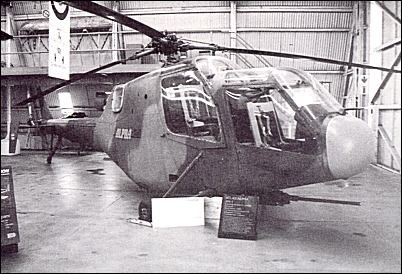
Atlas Aviation Alpha XH-1            

Relying on their own resources, due to trade embargoes with South Africa, Atlas Aviation produced an experimental tandem-seat attack helicopter. Based on the Aérospatiale Alouette III, the Alpha XH-1 tandem-seat attack helicopter was developed under a Government design and manufacture contract signed in 1981.

The Alpha XH-1 was purely a test-bed for weapon and cockpit systems. It was fitted with a GA-1 Rattler 20mm cannon in a steerable turret, linked to a Kukri helmet-mounted sight. During 1987, the first of two XTP-1 Puma-based test-beds were built and used to evaluate engines, avionics, optronics, weapons and associated control systems for the larger airframe. These test-beds also included the use of locally-produced composite materials used in both airframe and rotor systems.

The XH-1 first flew on February 3, 1985. Engine and transmission systems are from the Alouette III, but apart from the tail boom the airframe is a completely new design. Stub wings for weapons carriage were a projected development, while the gun turret is able to accept an alternative arrangement of four 7.62mm machine guns.
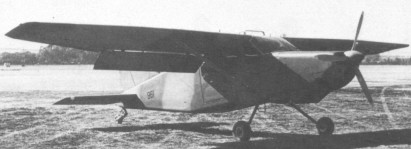
Atlas Aviation C4M Kudu

In South Africa, Atlas Aircraft Corporation flew the prototype (ZS IZF) of the newly developed Atlas C4M Kudu on 16 June 1975, suitable for six to eight passengers or light cargo. The C4M STOL aircraft uses major components of the AM.3C. Large double doors are fitted on the left side for cargo.
It was in service with the South African air force under the name Kudu.

Wing span: 43 ft (13.1m).

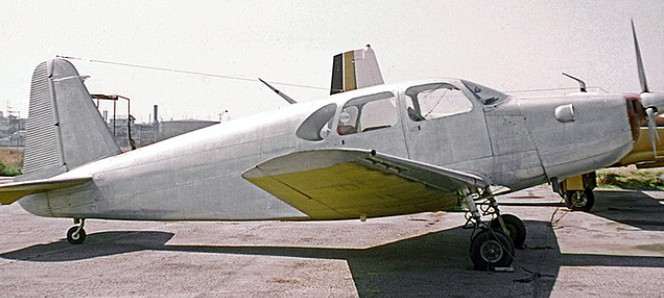
Atlas Aircraft Co H-10

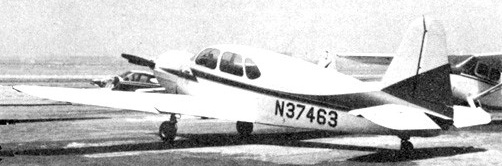
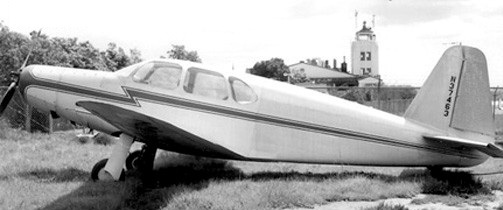
Designed by Max Harlow and based on his Harlow PJC-2, the 1948 H-10 was a four-seat cabin monoplane of all-metal stressed-skin construction. It featured retractable undercarriage and two 145hp Continental O-300 mounted in tandem driving two counter-rotating props. It was priced at $2,995 in 1939.

Atlas H-10 N37463

The plane, N37463, was soon converted to a single 215hp Harlow-modified Franklin 6AB, and was active into the 1990s with a 400hp Lycoming IO-720.

Atlas H-10 N37463

Wingspan: 35’9″
Length: 28’4″
Max speed: 170 mph
Cruise: 150 mph
Stall: 55 mph
Range: 800 mi
Seats: 4

Atlantis Aviation Chicken Hawk

A high mono-wing with double surface and three-axis controls, three-position flaps.

Engine: Kawasaki 440-A, 38hp
Reduction drive: 2.2:1
Propeller: three-blade, 48-inch pusher
Wingspan 34 ft.
Wing area 139 sq.ft.
Length 18 ft.
Empty weight 252 lbs.
Gross weight 512 lbs.
Cruise speed 35-55 mph.
Stall speed, no flaps 24 mph, full flaps 18-21 mph.
Takeoff run 120-140ft.
Landing roll 80-100ft.
Climb rate 700 fpm.
Glide ratio 7-9:1.
Fuel capacity 5 USG.
Landing gear: Taildragger, wheel pants.

Atelier Dedalius Pegastol

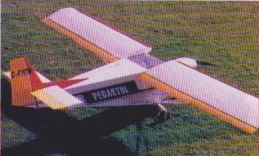
The Pegastol is effectively a Zenair CH 701 STOL improved by fitting a longer wing equipped with auto-retracting leading edge slats and new flaperons. The lift coefficient measures 3.6.

Engine: Rotax 503, 52 hp
Empty weight: 225 kg
Wing span: 8.85 m
Wing area: 13 sq.m
Fuel capacity: 50 lt
Certification: Canada
MAUW: 453 kg
Seats: 2
Max speed: 160 kph
Cruise speed: 148 kph
Minimum speed: 32 kph
Climb rate: 4.4 m/s
Price (1998): Can$6500 wing only

LACAB T.7

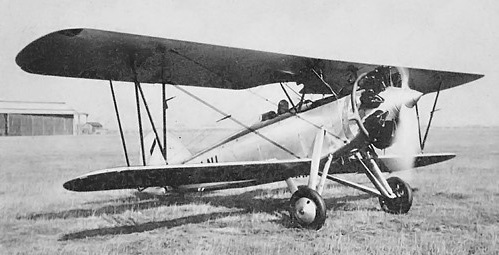
LACAB T-7 OO-ANL

As the Air Force was looking for a new training aircraft, the “Ateliers de Construction Aéronautique Belges” (LACAB) created the T-7. The plane was presented to the authorities on October 17th, 1933, but it is the Avro 626 that won the challenge. In 1934, the LACAB T-7 was bought by the defense ministry and written off on May 31st, 1935. The unique T-7 disappeared completely.