Avia Akciova Spolecnost Pro Prumysl Letecky BH-21

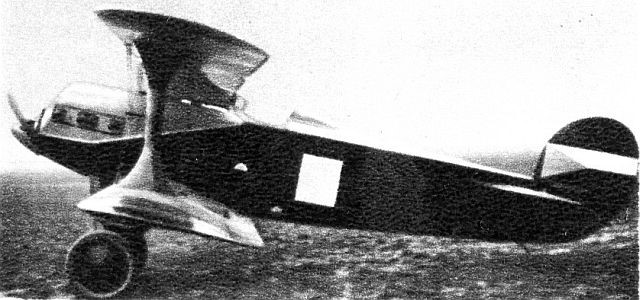
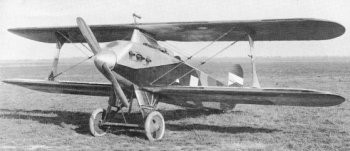
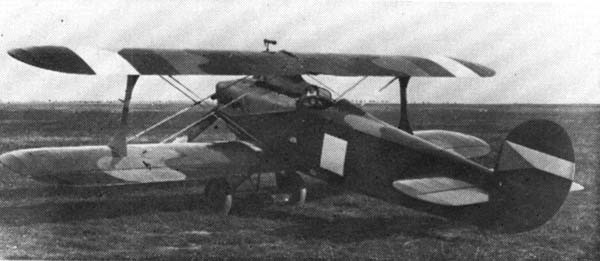
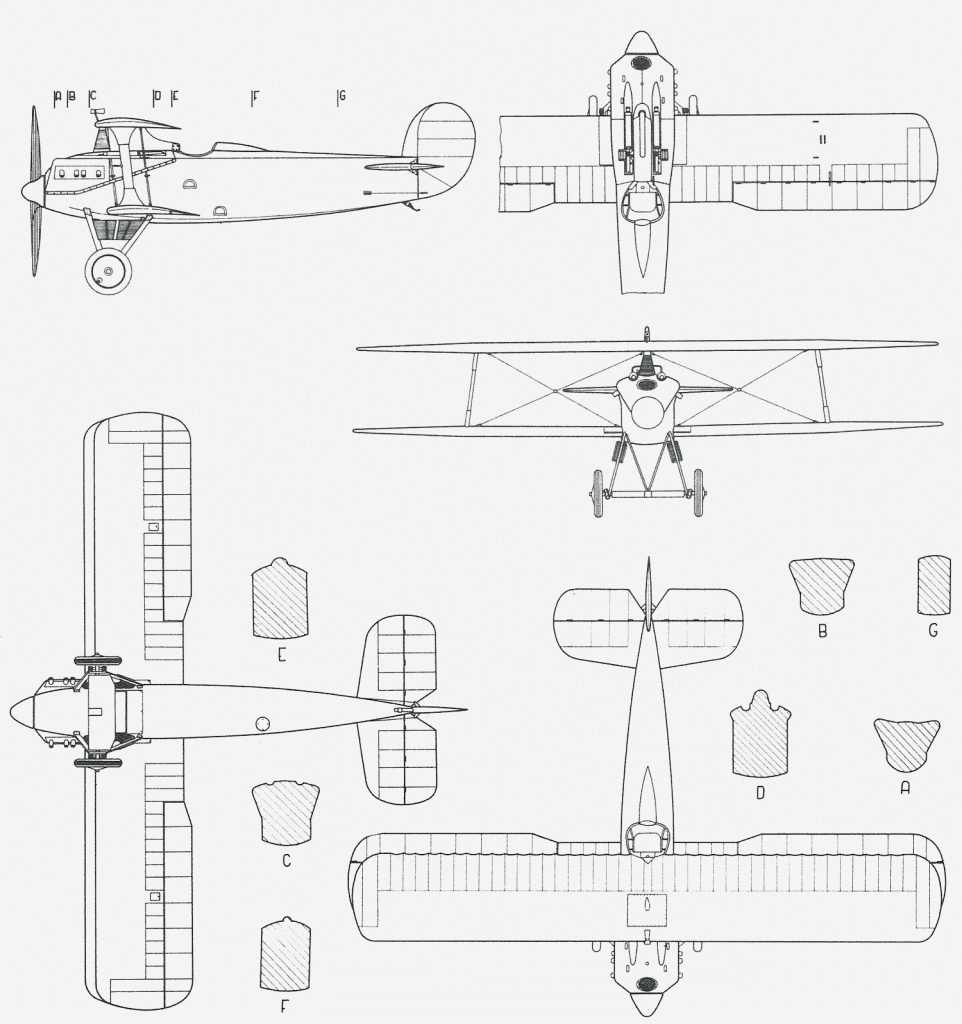
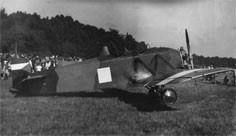
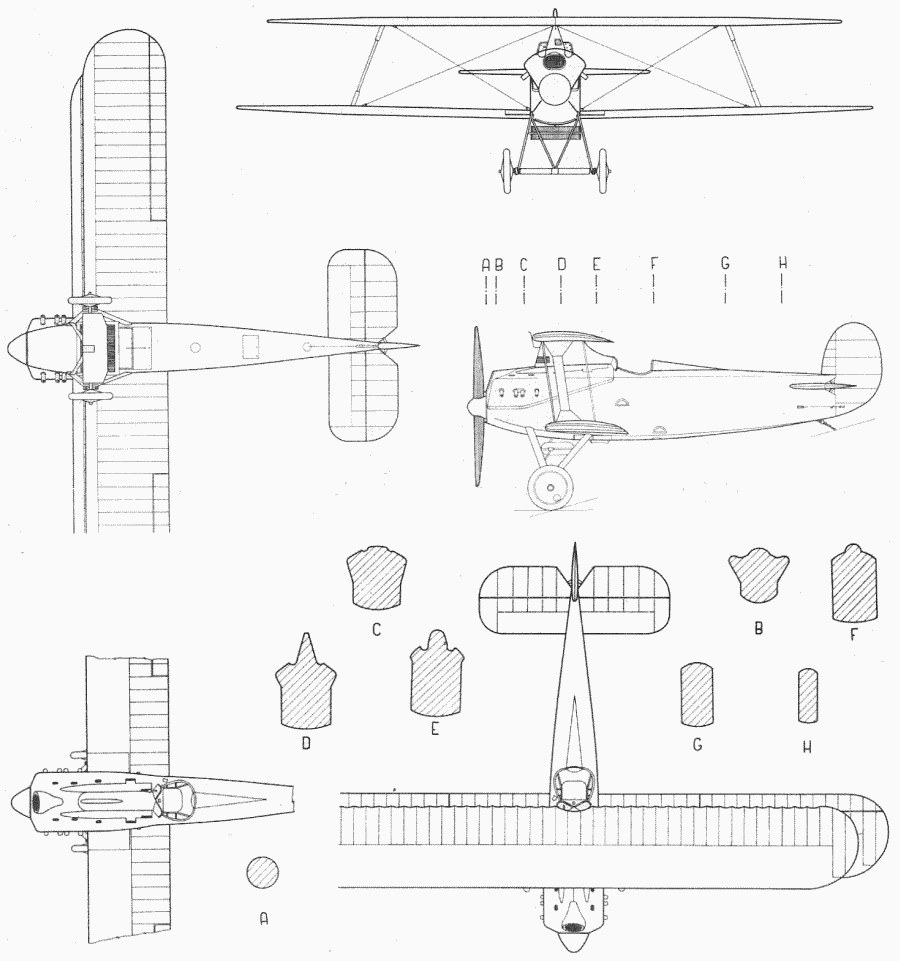
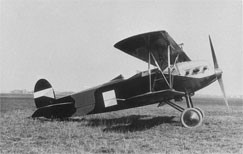
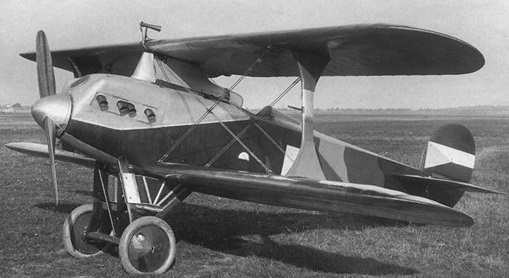
The 1925 BH-21 single-piston-engine one-seat biplane fighter/racing aircraft was a forerunner of a BH-22 military training fighter. A conventional biplane, the predecessor of the BH-21, the Avia BH-17, was designed by Pavel Beneš and Miroslav Hajn in 1922 as a response to a Czechoslovak Defense Department requirement for a new fighter aircraft. The BH-17 was actually only part of five Avia designs submitted to the Defense Department along with competing designs from the Letov Kbely and Aero companies. After extensive review, the BH-17, one of Avia’s three biplane designs, was chosen and limited production initiated for evaluative purposes.

Wings, tailplane, rudder and elevator wood-framed, covered by fabric. The steel-tube skeletal structure of fuselage covered by plywood, and fin fabric-covered.

Testing revealed some deficiencies in the BH-17 and a subsequent redesign in 1924 morphed the BH-17 into its final form as the BH-21 which included straightened interplane bracing and allowed for better field of view for the pilot.

A special training version, designated the BH-22, was also created. Both versions utilized 224 kW (300 hp) Hispano-Suiza 8fb engines built under license by Škoda.

The BH-21 was put into production in 1925 and had a one-year production run which yielded 182 aircraft with 137 being produced by Avia for the Czechoslovak Air Force, one more was built by Avia for SABCA and another 44 were produced under license by the Belgian company, Société Anonyme Belge de Constructions Aéronautiques “SABCA” for the Belgian Air Force.
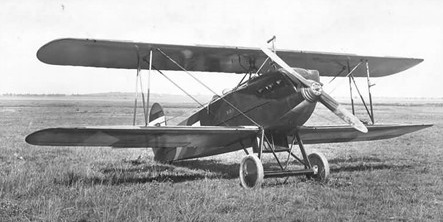
There were also two experimental variants: BH-21J with Bristol Jupiter engine (predecessor of BH-33) and a single-seat clipped-wing race plane BH-21R with boosted HS-8Fb engine (298 kW/400 hp).

While in service, the BH-21 saw no combat as it was retired before the outbreak of World War II. In spite of this, it served as a stepping stone to the more advanced BH-33 and BH-34 types.

The BH-21’s most lasting achievement came when a racing version, the BH-21R, won several national air-race competitions in 1925 sporting an upgraded HS 8Fb engine producing over 298 kW (400 hp).
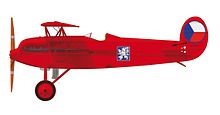
Avia B.21.96, nicknamed “Red devil”, which flew Czechoslovak acrobatic flyer František Malkovský. He died in its cockpith after the crash in Karlovy Vary on 8th June 1930
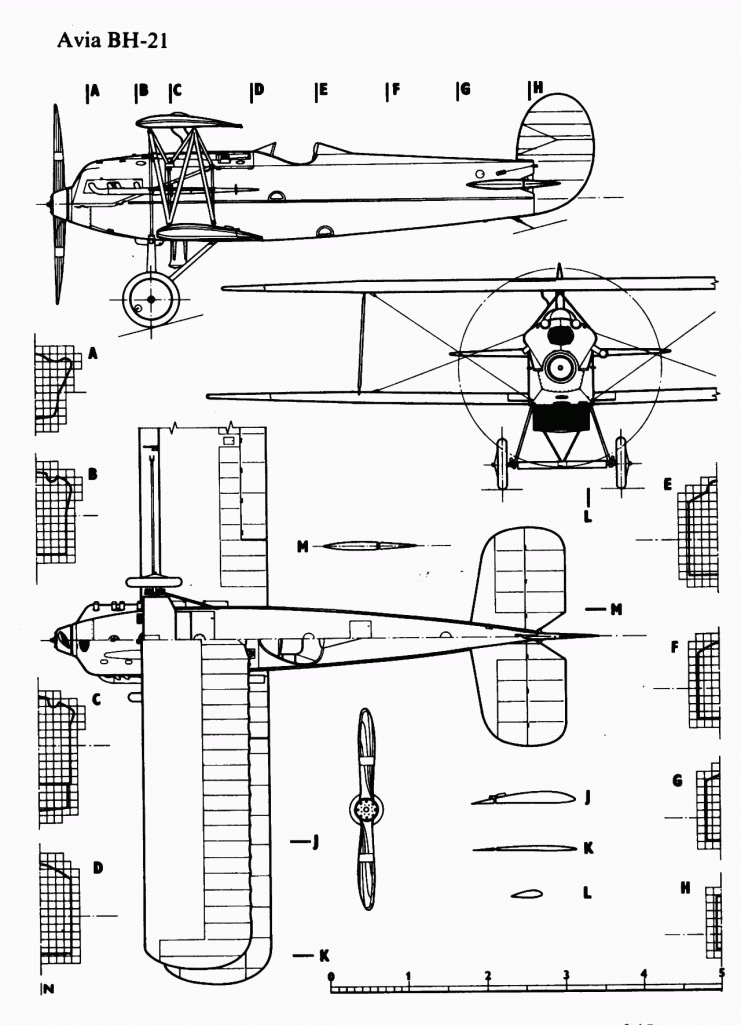
BH-21
Engine: 1 × Hispano-Suiza 8Fb, 227 kW (304 hp) @ 1,850rpm
Wingspan: 8.9 m (29 ft 2 in)
Wing area: 21.96 m2 (236.4 sq ft)
Length: 6.87 m (22 ft 6 in)
Height: 2.74 m (9 ft 0 in)
Empty weight: 720 kg (1,587 lb)
Max takeoff weight: 1,085 kg (2,392 lb)
Maximum speed: 245 km/h (152 mph; 132 kn) at 3,000 m (9,843 ft)
Endurance: 2 hours
Service ceiling: 5,500 m (18,045 ft)
Rate of climb: 521 m/s (102,600 ft/min)
Time to altitude: 5,000 m (16,404 ft) in 16 minutes
Crew: 1
Armament: 2 × 7.7 mm (.303 in) Vickers machine guns
Avia Akciova Spolecnost Pro Prumysl Letecky BH-17

Although the prototype BH-8 designed by Pavel Benes and Miroslav Hein, beat competing Letov S-7 and Aero A-20 types in competition, it was never accepted by the military. The IMO and engineers were not fully satisfied with its performance and characteristics. The original model BH-8 was reworked, as the Avia BH-17.

A number of characteristics of BH-8 was maintained – still it was the all-wood biplane upper wing seated on a central pylon, box structure of the fuselage and tail surfaces were not changed. Among the most significant structural changes include reduced wingspan, increased area of the wings and extended fuselage. Coolers were moved between the undercarriage struts. The oil tank was placed in the leading edge of the central pylon.

The first prototype was powered with a Hispano-Suiza 8Fb engine of 310 hp, and first flew September 5, 1923 with a demonstration to the Army on December 31 the same year. The BH-17 was armed with two 7.7-mm machine guns Vickers, mounted above the engine.

After successful completion of military trials, in June 1924 were ordered 24 BH-17. The first was B-17.2, which first flew 16 July 1924 (pilot Černohous). On August 16, 1924 it was followed by B-17.1 (Karl Fritsch).

The BH-17 first entered the fighter squadron in 1924. 32 and 34 squadron Aviation Regiment 1 in Prague received BH-17 from January to April 1925.

Although the aircraft Avia B-17 represented a considerable improvement to the previous BH-6 and BH-8, there were still problems. The fuel system failures occurred after just a few hours flown. Several times there was fire and subsequent destruction of virtually new aircraft. All B-17s were therefore withdrawn from use and passed back to the factory where they reconstructed fuel installations, and also rebuilt wings and tail.

Refurbished machines were returned to combat units, but were handed over to the fighter pilot school in Cheb. Here they lasted into the late twenties, when they were replaced by B-21.

Coloring all machines were classic – on upper and side surfaces tri-color camouflage, lower surfaces painted with aluminum paint. Engine cover, center pylon and spinner remained in the color of unpolished aluminum. Feathered coats of arms on the wing and tail, the fuselage side regimental emblem and the model and serial number. Propeller remained in the color of wood, varnished.

Further development of the B-17 was the construction of Avia B-21.

BH-17
Engine: Hispano-Suiza 8Fb, 221 kW / 310 hp
Propeller: Two-blade wooden
Upper wing span: 8.73 m
Lower wing span: 8.86 m / 29 ft 0,81in
Wing chord: 1.80 m
Length: 6.73 m / 22 ft 0,95in
Height: 2.65 m / 8 ft 8,32in
Wing area: 21. 30 sq.m / 229.27 ft 2
Empty weight: 762 kg / 1680 lb
Normal takeoff weight: 1072 kg / 2363 lb
Maximum speed: 238 kph / 147.9 mph
Cruising speed: 206 kph / 128 mph
Practical range: 500 km / 310 mi
Rate of climb: 358 m / min
Practical ceiling: 8000 m / 26247 ft
Climb to 3000 m: 7 min 10 s
Climb to 5,000m / 16404 ft: 13 min
Load factor: 10
Crew: 1
Armament: 2 x 7.7-mm Vickers Mk. 09 machine gun, 300 rpg

Avia Akciova Spolecnost Pro Prumysl Letecky BH-11

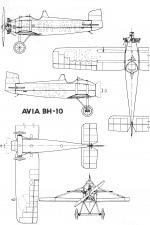
A 1923 development of BH-9 with wooden wings partially covered by plywood, and overall canvas. The fuselage had plywood covering and aluminum cowling. Two-seat sport aircraft

A BH – 11 won the famous cup Coppa d’Italia. The Czech military used the BH-11as a trainer or courier.

Engine: Walter NZ, 60 hp
Wingspan: 9.72 m
Length: 6.64 m
Empty weight: 351 kg
Max speed: 155 kph
Ceiling: 4500 m
Range: 600 km