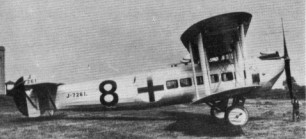
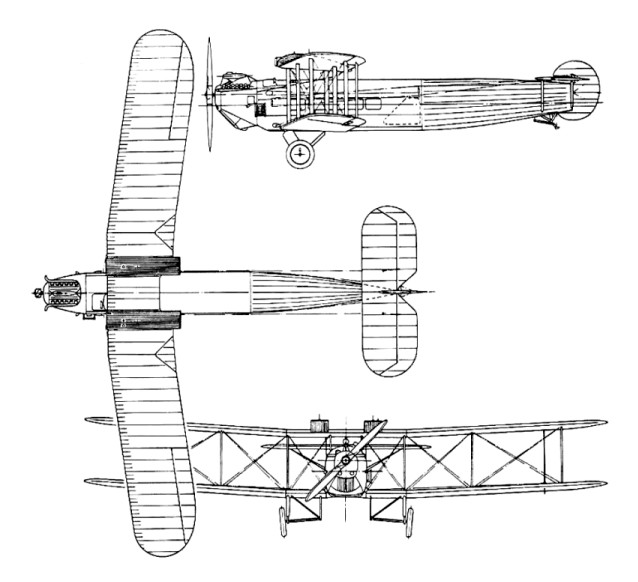
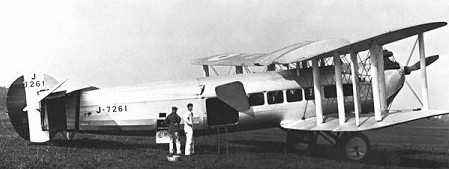
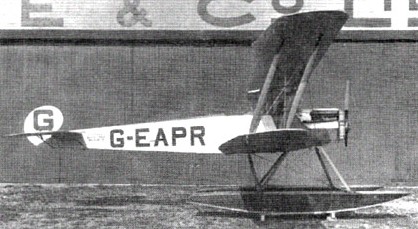
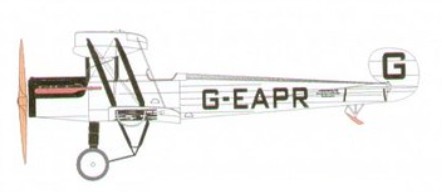
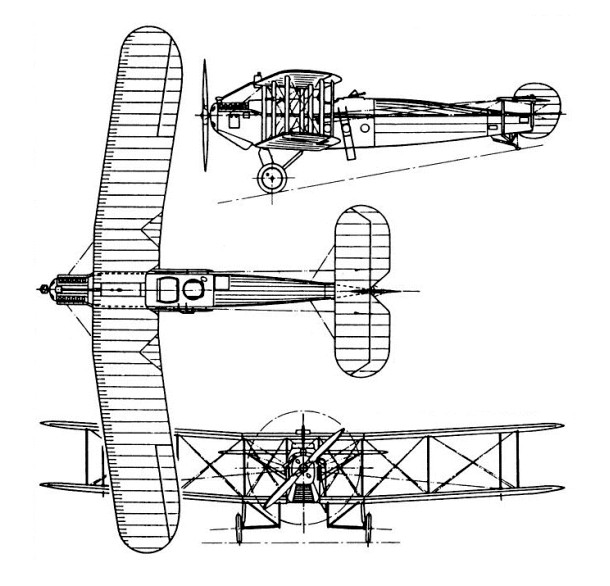
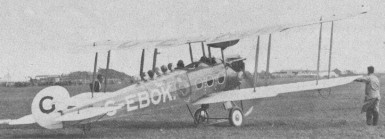
One commercial version of the Avro 561 was built as the Avro 563. This was operated by Imperial Airways on its cross-Channel services. Both versions powered by one 485kW Rolls-Royce Condor III engine.
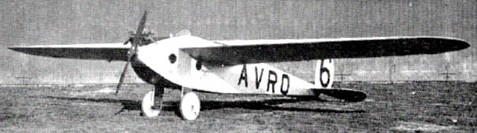
Engine: 1 x 38hp Blackburne Thrush Take-off weight: 477 kg / 1052 lb Empty weight: 275 kg / 606 lb Wingspan: 9.17 m / 30 ft 1 in Length: 7.32 m / 24 ft 0 in Height: 2.74 m / 9 ft 0 in Wing area: 22.85 sq.m / 245.96 sq ft Max. speed: 121 km/h / 75 mph
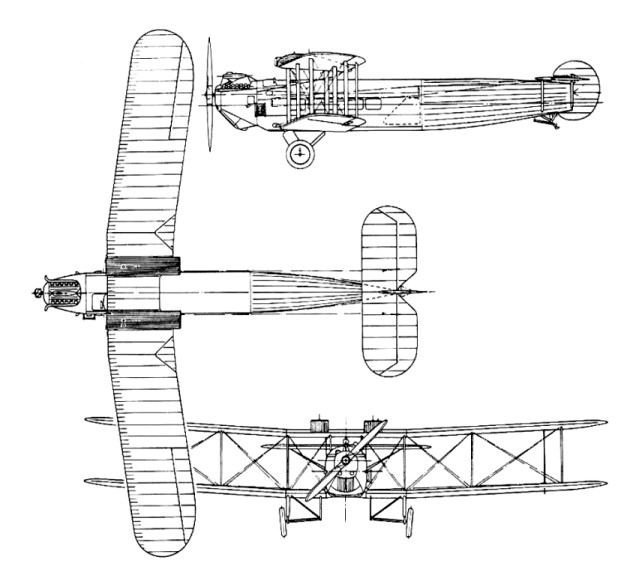
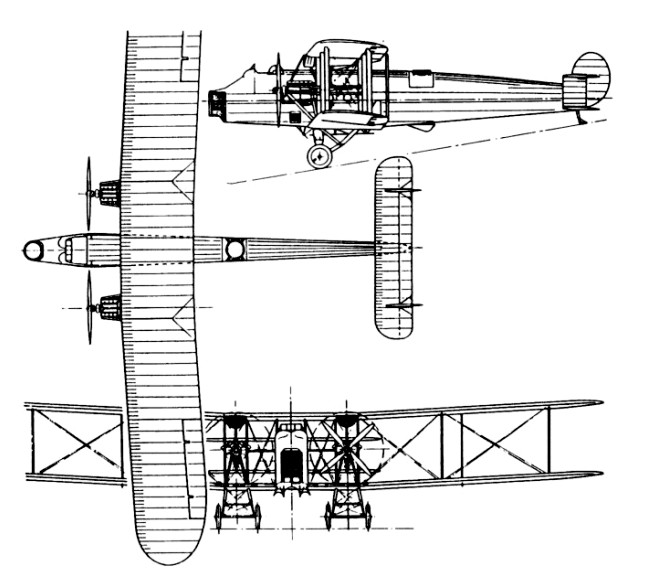
Similar to the Aldershot, the 561 Andover was produced to fly the RAF’s Cairo-Baghdad air service. Four were built but only three were delivered, with accommodation for 12 passengers, or stretchers as an air ambulance. One commercial version was built as the Avro 563. Both versions powered by one 485kW Rolls-Royce Condor III engine.
Avro 561 Engine: 1 x 650hp Rolls-Royce Condor III Take-off weight: 5221 kg / 11510 lb Empty weight: 3169 kg / 6986 lb Wingspan: 20.73 m / 68 ft 0 in Length: 15.62 m / 51 ft 3 in Height: 4.65 m / 15 ft 3 in Wing area: 98.66 sq.m / 1061.97 sq ft Max. speed: 177 km/h / 110 mph Ceiling: 4115 m / 13500 ft Range: 741 km / 460 miles
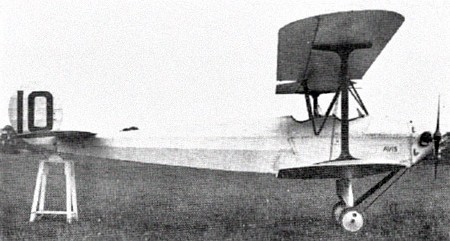
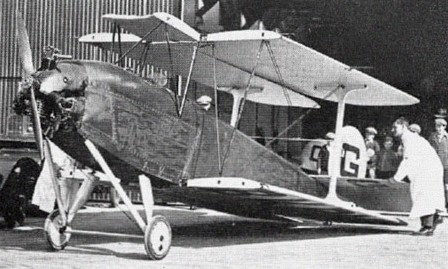
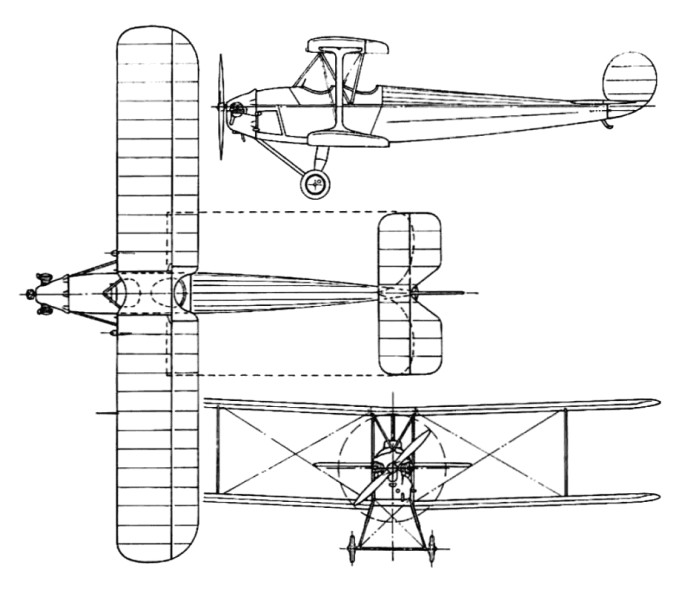
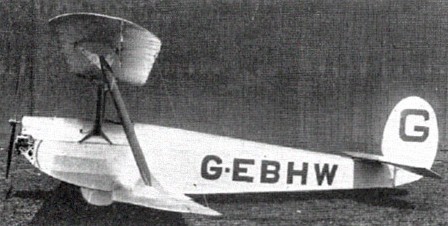
Engine: 1 x 698cc Blackburne Tomtit upright engine Take-off weight: 214 kg / 472 lb Empty weight: 129 kg / 284 lb Wingspan: 10.97 m / 36 ft 0 in Length: 6.40 m / 21 ft 0 in Wing area: 12.82 sq.m / 137.99 sq ft
Engine: 1 x 500cc Douglas or 698cc Blackburne Tomtit Take-off weight: 218 kg / 481 lb Empty weight: 133 kg / 293 lb Wingspan: 9.14 m / 30 ft 0 in Length: 5.94 m / 20 ft 6 in Wing area: 15.42 sq.m / 165.98 sq ft
Avro 557 Ava Mk II Engine: 2 x 650hp Rolls-Royce Condor III Take-off weight: 9291 kg / 20483 lb Empty weight: 6040 kg / 13316 lb Wingspan: 29.06 m / 95 ft 4 in Length: 17.75 m / 58 ft 3 in Height: 5.99 m / 20 ft 8 in Wing area: 200.95 sq.m / 2163.01 sq ft Armament: 3 x 7.7mm machine-guns, 4 x 250kg bombs Crew: 5
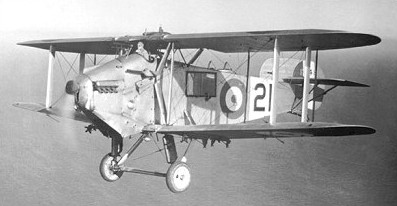
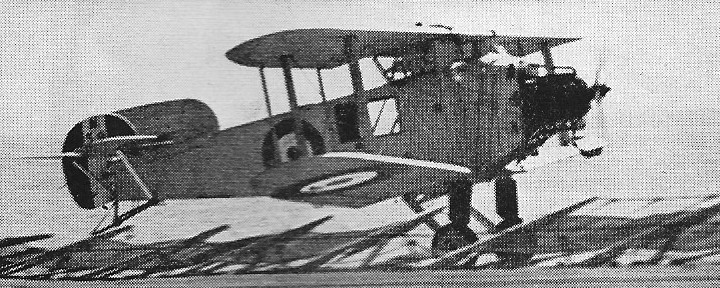
The Bison was designed to meet the British Specification 3/21 for a carrier based fleet spotter and reconnaissance aircraft. An order for three prototypes was placed in October 1921, together with three of the competing design from Blackburn Aircraft, the Blackburn Blackburn. Avro’s design, the Type 555 Bison, was a two-bay biplane, powered, like the Blackburn, by a Napier Lion engine. The deep slab-sided fuselage was constructed of steel tube, with the pilot sitting in an open cockpit forward of the wings, and the engine cowling sloping steeply down ahead of the pilot. An enclosed cabin with large rectangular windows on each side housed the navigator and radio operator and all their equipment, with sufficient room room to stand upright, while a cockpit for a gunner armed with a Lewis gun on a Scarff ring was provided in the rear fuselage. The upper wings were mounted directly on the top of the fuselage.
The first prototype flew in 1921, with an order for 12 Bison Is following. The aircraft had handling problems, however, caused by interference of the pilots cockpit with the airflow over the upper wing. This was resolved by revising the wing design of the second prototype, raising the centre section of the upper wing by 2 ft (0.6 m) and removed dihedral from the upper wings, flying in this form in April 1923. Further production orders followed with these modification incorporated as the Bison II, while some Bison Is were modified to a similar standard, sometimes known as the Bison IA. A Bison I was fitted with floats and retractable wheels but tests proved the design was not suitable for seaborne use.
Bison II
Although designed for a naval requirement the first deliveries were to the Royal Air Force in 1922 to replace the Westland Walrus for coastal reconnaissance work with No. 3 Squadron RAF. In April 1923, 3 Squadron was broken up to form a number of Fleet Spotter Flights of the Fleet Air Arm, Naval aircraft served on HMS Argus, HMS Eagle and Furious and on-shore at Gosport, England and Hal Far, Malta. The aircraft were retired in 1929 when they were replaced by the Fairey IIIF.
Bison II
Operators:
Fleet Air Arm 421 Flight FAA 423 Flight FAA 447 Flight FAA 448 Flight FAA
Variants:
Avro 555 Bison Three prototypes to Air Ministry specification 3/21.
Avro 555 Bison I Twelve Lion II powered production aircraft, survivors re-built as Ias
Avro 555 Bison IA Bison Is modified with a biplane gap and additional dorsal fin.
Avro 555A Bison II Improved variant with biplane gap modification, 23 built.
Avro 555B Bison I One Bison I converted to an amphibian to meet Air Ministry Specification 8/23, not ordered into production.
Specifications:
Bison IA Engine: 1 x Napier Lion II, 336kW Take-off weight: 2631 kg / 5800 lb Empty weight: 1887 kg / 4160 lb Wingspan: 14.02 m / 46 ft 0 in Length: 10.97 m / 36 ft 0 in Height: 4.22 m / 14 ft 10 in Wing area: 57.6 sq.m / 620.00 sq ft Max. speed: 177 km/h / 110 mph Cruise speed: 145 km/h / 90 mph Ceiling: 4265 m / 14000 ft Range: 547 km / 340 miles Armament: 1 x 7.7mm machine-gun
Bison II Engine: 1 × Napier Lion II, 480 hp (358 kW) Wingspan: 46 ft 0 in (14.02 m) Length: 36 ft 0 in (10.98 m) Height: 14 ft 2 in (4.32 m) Wing area: 630 sq.ft (58.6 sq.m) Empty weight: 4,116 lb (1,871 kg) Max. takeoff weight: 6,132 lb (2,787 kg) Maximum speed: 108 mph (94 knots, 174 km/h) Cruise speed: 90 mph (78 knots, 145 km/h) Range: 360 mi (313 nmi, 580 km) Service ceiling: 12,000 ft (3,660 m) Rate of climb: 450 ft/min (2.3 m/s) Armament: 1 × fixed forward firing .303 in Vickers machine gun and 1 × .303 in (7.7 mm) Lewis Gun on Scarff ring
The 1921 Avro 552 was a variant of the Avro 504N with a Wolseley Viper engine.
Avro 552
Engine: 1 x 180hp Wolseley Viper Wingspan: 10.97 m / 36 ft 0 in Length: 8.53 m / 28 ft 0 in Height: 3.18 m / 10 ft 5 in Wing area: 30.66 sq.m / 330.02 sq ft
A three-seat heavy bomber of 1922 powered by a 485kW Rolls-Royce Condor III engine. Fifteen were built for No 99 Squadron, RAF, serving between 1924 and 1926.
Aldershot testbed for 1000 hp Napier Cub engine, with an Avro Baby.
Avro 549 Mark III Engine: 1 x 650hp Rolls-Royce Condor III Take-off weight: 4971 kg / 10959 lb Empty weight: 2865 kg / 6316 lb Wingspan: 20.73 m / 68 ft 0 in Length: 13.72 m / 45 ft 0 in Height: 4.65 m / 15 ft 3 in Wing area: 98.85 sq.m / 1064.01 sq ft Max. speed: 177 km/h / 110 mph Ceiling: 4420 m / 14500 ft Range: 1050 km / 567 nm Armament: 3 x 7.7mm machine-guns, 4 x 240kg bombs or 8 x 110kg bombs Crew: 3-4
Avro 548 Engine: 1 x 80hp Renault Take-off weight: 882 kg / 1944 lb Empty weight: 607 kg / 1338 lb Wingspan: 10.97 m / 36 ft 0 in Length: 8.97 m / 29 ft 5 in Height: 3.18 m / 10 ft 5 in Wing area: 30.66 sq.m / 330.02 sq ft Max. speed: 129 km/h / 80 mph Cruise speed: 105 km/h / 65 mph Range: 282 km / 175 miles