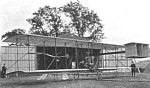
The 1909 Barnwell canard biplane was designed and built in Scotland by Frank and Harold Barnwell. It was flown only briefly.
Span: 48′
Weight: 1568 lb
The 1931 1T was a two-place open-cockpit biplane, registered N10677 c/n 1000. First flown in September 1931, with a tail design that “prevented flat spins”.
Engine: 45hp Szekely SR-3
Wingspan: 20’0″

Side seating, dual controls, 3 throttles – left, center, right – in front of seat cushion. 44″ wide inside.
Luggage space under and behind the bench seat. Price includes engine. Info pack, Barnett video and Subaru video – all for $47.50 Kit Price: $32,766 Plans: $185 in 2009.
BRC Coupe540 plans 2001: $225.
BRC540 Coupe
With a maximum airspeed of 138 mph faster than some basic helicopters the sporty “coupe” suffix is fitting. Cruising speed ranges from 85 to 105 mph, depending on altitude and load. The fully enclosed side-by-side two-seater also has dual controls, three throttles and two spaces for luggage.
Two-seat, side-by-side, fully-enclosed autogyro
Engines: Lycoming O-360, Continental, Subaru EJ22/EJ25
Propeller: 7′ prop capability
Rotor Blades: 32′ X 8″
Cruise 110 mph
Top Speed 138 mph
Empty Weight 625 lbs
Gross Weight 1,248 lbs
Height 8’1″
Length 14’5″
Fuel Capacity 17.5 gal
Disc Span 29.4′

The Barnett Gyroplane is a single-place craft constructed of tubular 4130 steel, fiberglass and aluminum. Its pusher prop is powered by a 65-hp Continental engine (originally a VW engine). The pilot sits inside an enclosed cabin shell. The J3-M differs from the J-4B by replacing the molded fiberglass cockpit nacelle with a flat-sided fabric-covered structure. Both models are fitted with tricycle gear and disc brakes.
Welded 4130 tubing airframe and tail. Fiberglass body shell polycarbonate covered canopy. Powder coated
assemblies. All four wheels sprung. Info pack, Barnett video and Subaru video – all for $47.50
Kit: $7,000 plus engine and instruments Plans: $135; 2009
Flying solo, you’ll get up to 125 mph in the single-seat J4B, but cruise is 110 mph in the tandem J4B2. J4B is available enclosed or partially enclosed, while the two-seater J4B2 is an enclosed model. The J4B plans 2001: $155

The Barnett J4B2 is a two seat, tandem, enclosed autogyro. Welded 4130 tubing airframe and tail. Fiberglass body shell. Side pivot on canopy. All four wheels sprung. Prerotator optional. Cruising speed is 110 mph in the tandem J4B2. The J4B is available enclosed or partially enclosed, while the two-seater J4B2 is an enclosed model. J4B2 plans 2001: $185
Welded 130 tubing airframe and tail. Fiberglass body shell. Side pivot on canopy. All four wheels sprung.
Prerotator optional. Info pack, Barnett video and Subaru video – all for $47.50
Kit: $7,500 plus engine and instruments. Plans $185 in 2009.
J-4
Engine: VW, 34 hp
Gross Wt: 750 lb
Empty Wt: 441 lb.
Fuel capa¬city: 15 USG.
Main rotor length: 24’.
Length: 12’2”.
Top speed: 115 mph.
Cruise speed: 90 mph.
Climb rate: 700 fpm.
Ceiling: 14,000 ft.
Takeoff run: 200 ft.
Landing roll: 0-20 ft.
Range: 250 sm.
J-4B
Engine: 100 hp Continental O-200
Engine range: 65-100 hp
Prop: Barnett 57.5” Precision 3 blade wood laminate.
Rotor blades: Bonded and rivited aluminium 10’ x 7 3/8”.
Disk span: 23 ft.
Disk area: 415 sq.ft.
Min speed: 30 mph.
Cruise: 97 mph.
Top speed: 120 mph.
ROC: 1500 fpm.
Fuel cap: 15 USG.
Empty wt: 530 lbs.
Useful load: 350 lbs.
Gross wt: 850 lbs.
Width: 6’8”.
Height: 7’8”.
Length: 12’4”.
J-4B
Engine: Subaru, 100 hp.
Max speed: 120 mph.
Cruise speed: 97 mph.
Range: 270 sm.
ROC: 1500 fpm.
TO dist: 150 ft.
Ldg dist: 0-20 ft.
Service ceiling: 15,000 ft.
Fuel cap: 15 USG.
Empty wt: 441 lb.
Gross wt: 850 lb.
Height: 7.8 ft.
Length: 12.1 ft.
Disk span: 23 ft.
Disk area: 415 sq.ft.
Seats: 1.
J4B2
Engine: Continental O-200, 100 hp.
HP range: 100-150.
Speed max: 112 mph.
Cruise: 93 mph.
Range: 199 sm.
ROC: 500 fpm.
Take-off dist: 300 ft.
Landing dist: 0-20 ft.
Service ceiling: 8,000 ft.
Fuel cap: 17 USG.
Weight empty: 512 lbs.
Gross: 1085 lbs.
Height: 8.1 ft.
Length: 13.67 ft.
Disk span: 25.4 ft.
Disk area: 505 sq.ft.
Seats: 2.
Landing gear: nose wheel.
Prop: Barnett 57.5” Precision 3 blade wood laminate.
Rotor blades: Bonded and rivited aluminium 12’ x 7.75”.
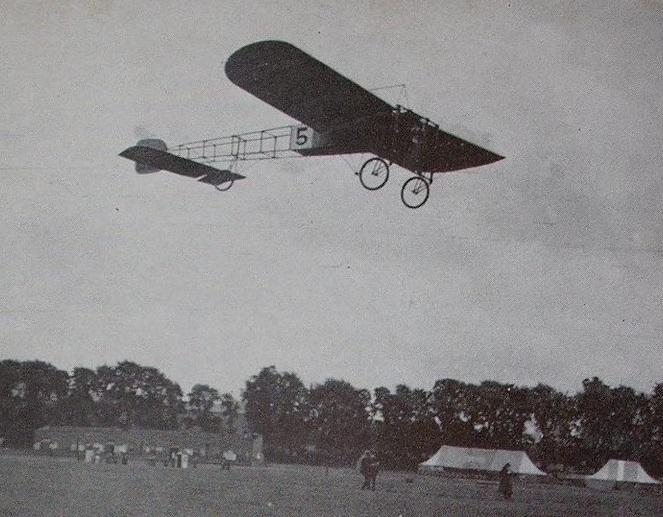
Englishman G.N.Barnes flew a monoplane of his own design at Wolverhampton in July 1910.
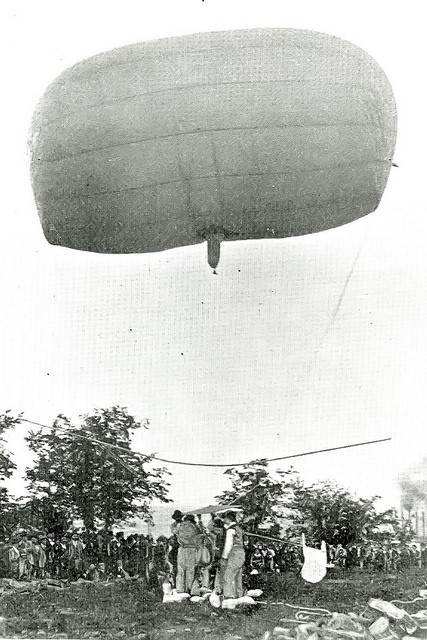
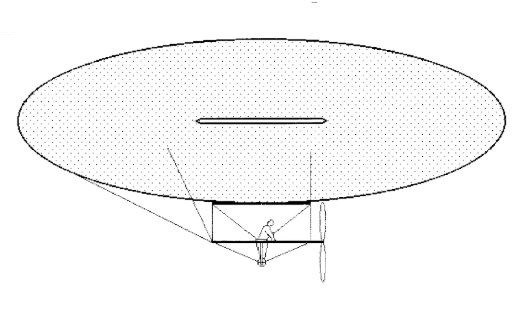
Professor Arthur W. Barnard, Director of Physical Training for the YMCA of Nashville, built this airship, which measured 18 feet in diameter and 46 feet in length. It was filled with hydrogen and used a propeller of 8 feet diameter. Barnard pedalled his Centennial Airship in Nashville at the Tennessee Centennial Exhibition of 1897. He went a distance of some 20 miles with the help of a strong wind, but on the return the spar broke off one of the propellers and he landed twelve miles short of returning to the Exhibition grounds. During another ascension the balloon split at the height of a half mile. It descended with great rapidity, but when some distance from the ground it formed a kind of a parachute and the professor landed safely near the exposition grounds. He received a shaking up, but was not injured.

The Barling NB-3, powered with a Velie 55 hp engine, was planned for student, transport, and passenger use. The NB-3 featured a worm type gear adjustable stabiliser. Cruise was 87 mph.

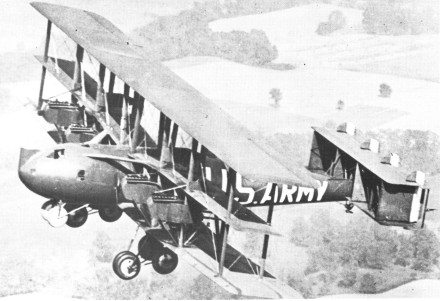
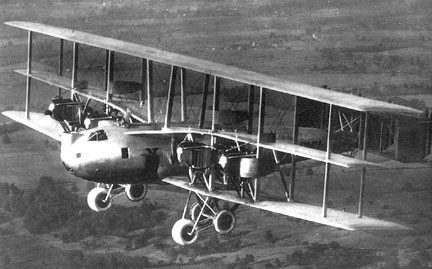
Designer Walter Barling went to America, where General ‘Billy’ Mitchell provided him with a $375,000 contract, let by Engineering Division, McCook Field, to build a bomber capable of carrying a 2268-kg / 5000-lb bombload for 12 hours at 160 kph (100 mph). Not surprisingly the Barling NBL-1 bore a strong resemblance to the Tarrant Tabor, though its triplane wings spanned 3.35 m (11 ft) less and its six 12-cylinder Liberty engines were all mounted on the same level, between the lower and middle wings. On 22 August 1923 from Wilbur Wright Field at Dayton, Ohio, whence it had been railroaded from the Witteman-Lewis Aircraft Company’s works in New Jersey where it was constructed.
As AS64215, Barling was aboard for that 20-minute maiden flight and later that year the Barling bomber flew to the Inter¬national Air Race at St Louis with Major General Mason Patrick, chief of the Army Air Service, as a passenger. It later carried a 2000-kg (4408-lb) load up to 2,050 m (6722 ft).
But with Billy Mitchell’s proposed bomb load the burly Barling could not top 160 kph (100 mph) and had a range of 275 km (170 miles) rather than the 1930 km (1200 miles) the general wanted. It flew around (slowly) for years, appearing as a curiosity at airshows, and was eventually broken up in 1928, save for its ten huge undercarriage wheels which are preserved at Wright-Patterson Air Force base from where the triplane made its first flight.
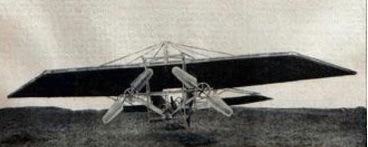
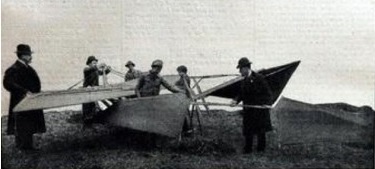
This monoplane-like kite of Barlatier and Blanc (France) was powered by a small engine (1.25 to 2.25 hp) driving two tractor propellers. It was a proof-of-concept model for a planned bigger machine, and was tested in the spring of 1906, showing “remarkable stability”.
The designers and builders were M. Barlatier, president of the Automobile-Club de Marseille and M. Blanc, a lawyer.
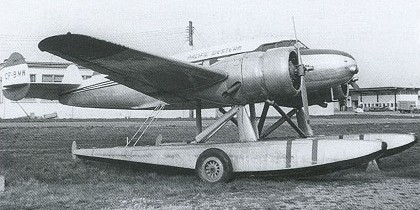
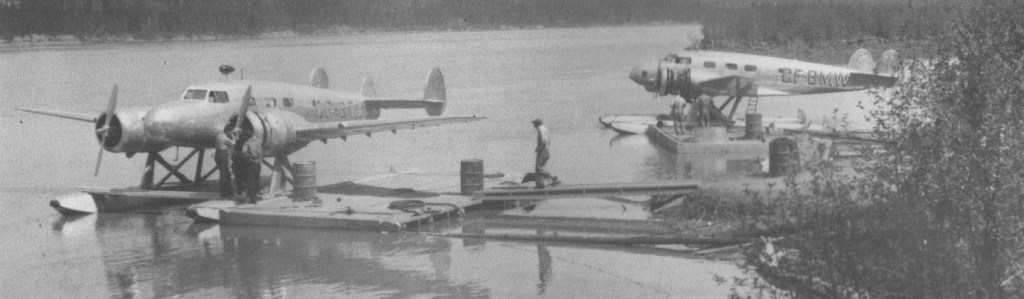
This aircraft was built in a small hanger at the Detroit City Airport, Michign, and operated in the Canadian north into the sixties. It was a flexable aircraft for the bush as it could operate on wheels, skis or floats. The pictured plane was Canadian registered and operated by Pacific Western Airlines.
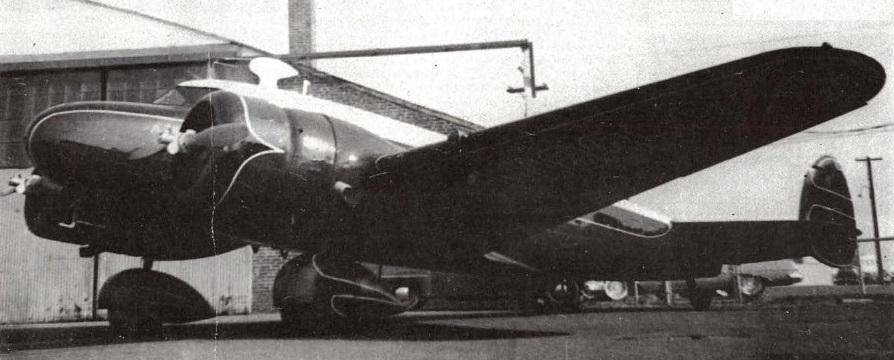
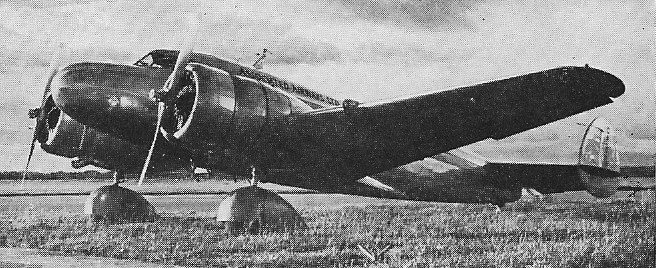
The design incorporated a multispar stressed-skin wing with two X-spars patented by A. S. Barkley (US patent #2,122,709 to Barkley in 1938) that eliminated the need for ribs or bulkheads in the wing.
The initial example made its first flight in April 1937, piloted by Frank Cordova.
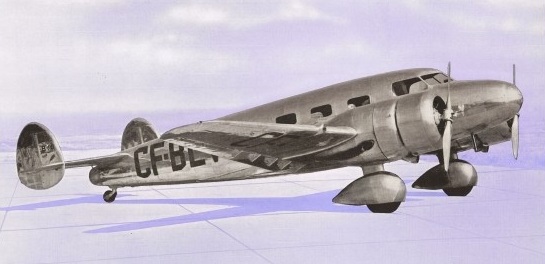
After a series of demonstration flights, the prototype went to Canada where it was registered CF-BVE.
Canadian Car & Foundry obtained the world-wide distributing rights for all but the United States.
Only 11 T8P-1s were constructed. Canadian Car demonstrated the aircraft to the Department of Defence but apart from selling only one aircraft to the RCAF, no government orders were obtained. The RCAF preferred the Beech 18.
Receiving ATC 662 and priced at $37,500, those built include prototype NX18388=CF-BVE=NC18388, NC18470, NX26400=CF-BQM, NC26496=CF-BTX, YRAHA=OB-GGK, CF-BLV, CF-BMG, CF-BMV, CF-BMW, some on twin EDO floats.
As a robust aircraft, three T8P-1 survived into the late 1960s.
Through the purchase of Yukon Southen Air Transport, Mackenzie Air Service and Prairie Airways, CPAL acquired a total of six Barkley-Grows.
The prototype aircraft, CF-BVE, was sold in 1945 and BMG and BTX were written off. CF-BLV, BMV, BMW and BQM served until late 1949/early 1950 when replaced by more modern aircraft.
CF-BQM was being restored at the Aeo Space Museum in Calgary, Canada.
T8P-1
Engine: Pratt & Whitney Junior, 400 hp
Wingspan: 50 ft 8 in
Length: 36 ft 2 in
Height: 9 ft 7.5 in
Empty weight: 5880 lb
Loaded weight: 8750 lb
Max speed: 220 mph at 5000 ft
Cruise: 185 mph at 10,000 ft
ROC: 1400 fpm
Cruise range: 1000 mi
Crew: 2
Passengers: 8

