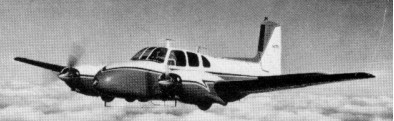
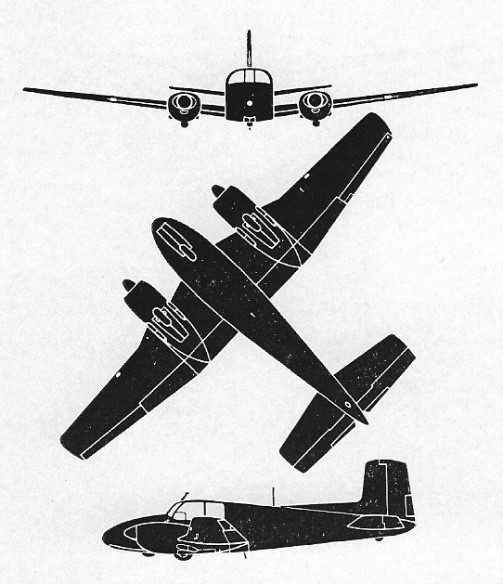
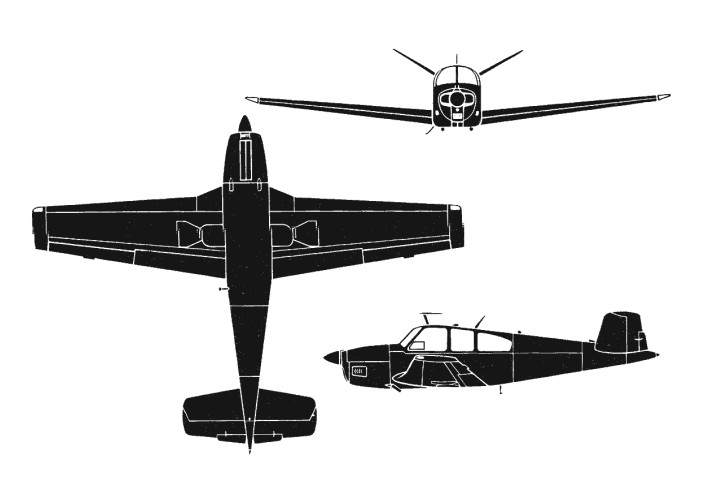
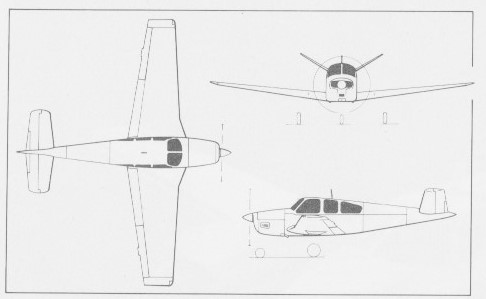
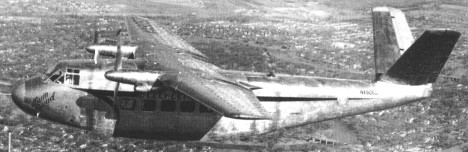
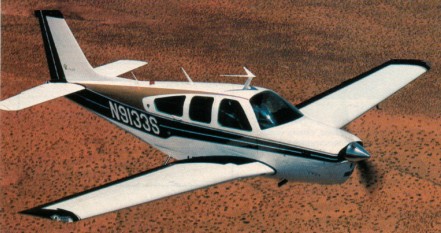
The Twin Bonanza first flew in November 1949 (TC 5A4). Widening the Model 35 Bonanza fuselage to accommodate three abreast and placing an engine on each wing equalled the Twin Bonanza.
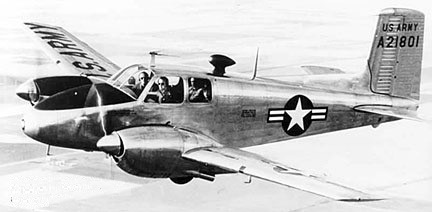
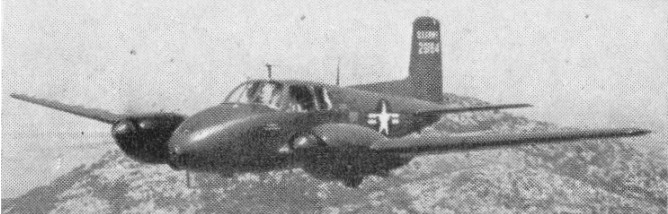
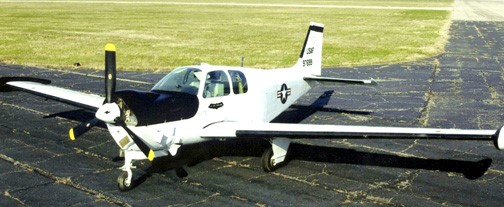
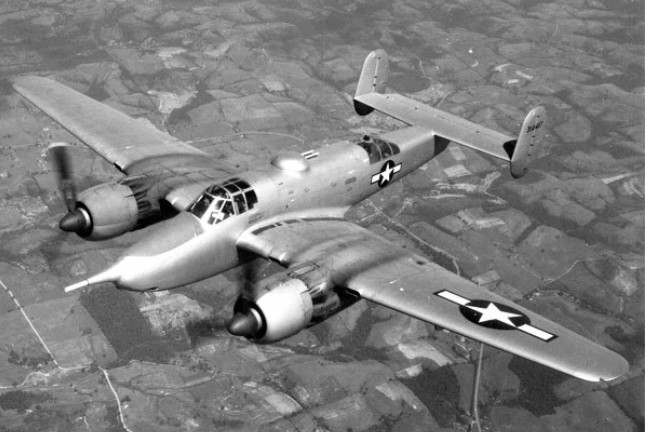
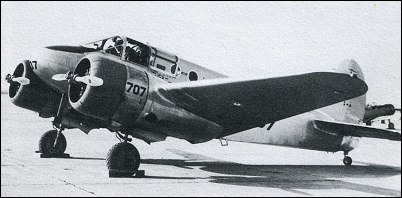
The US military used the Twin Bonanza as the L-23 Seminole, redesignated as U-8 in 1962. Four YL-23 were purchased in 1952 [52-1800/1803]. These were followed by 55 L-23A models [52-6162/6216] (most rebuilt later as L-23D.
Beech YL-23 62-1801
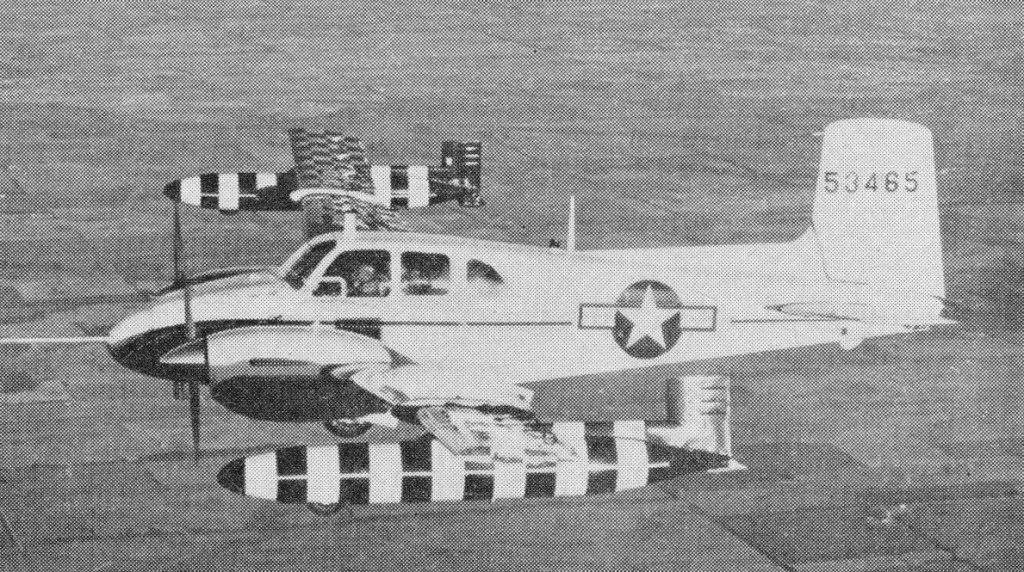
Forty L-23B [53-6153/6192] were purchased and a single XL-23C [55-3465] in 1955, converted to U-8G.
L-23 trials included “flying fuel tanks” to greatly increase fuel loads with the extra wing area attached to the tanks offsetting the greater weights involved.
Both civil and military versions continued to be developed through various marks. By 1955, 96 L-23As and Bs were built.
L-23B
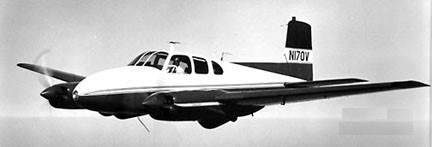
In 1958 the US Army sought an upgrade which lead to the development of the L-23F with its enlarged cabin. It was the first post-war light twin to reach quantity production in the United States, and late models grossed 7300 pounds. Built with 260, 275, 295, and 340-hp Lycoming engines, the Twin Bonanza design has proved highly versatile. Beech produced the military U8 Seminole, the civil Queen Air and early King Airs from the Twin Bonanza wing, and Swearingen has marketed a conversion of the basic Twin Bonanza as the Excaliber.
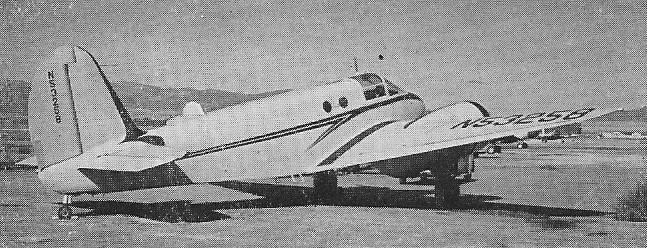
Swearingen Excalibur N170V
The design started life as a six-seater, and a seventh was added on the J model in 1960. There is so much room inside that numerous luxury executive interiors have been custom-installed. The aircraft has also been successful as an ambulance plane with room for a stretcher and medical attendants, in addition to the crew.
From the L23F derivative of the Model 50 Twin Bonanza Beech developed the civil Model 65 Queen Air with it first flying on 28 August 1958.
C50 Engines: two 275-hp Lycoming GO-480-F6 Wing span: 45 ft 3.5 ft Wing area: 277.06 sq.ft Length: 31 ft 6.5 in Height: 11 ft 4 in Gross Wt. 5500 lb Empty Wt. 3800 lb Fuel capacity 33 USG Top 205 mph Cruise 65%: 197 mph at 10,000 ft Stall 64 mph Initial climb rate 1450 fpm Ceiling 20,000 ft Range 920 sm Takeoff distance (50’) 1350 ft Landing distance (50’) 1210 ft Seats 4-6
D50A-E Engines two 295-hp Lycomings Seats 6. Gross Wt. 6300 lbs. Empty Wt. 3981 lbs. Fuel capacity 180 USG. Top speed 214 mph. Cruise 203 mph. Stall 71 mph. Initial climb rate 1450 fpm. Ceiling 20,000 ft. Range 1650 sm. Takeoff distance (50’) 1260 ft. Landing distance (50’) 1452 ft.
Beechcraft 1958 D50A Twin Bonanza Engine: Lyc. GO-480G2D6, 295 hp TBO: 1400 hr Fuel type:100LL Propeller: Const. spd. Landing Gear type: Tri./Retr. Gross weight: 6300 lb Empty weight, std: 4090 lb Useful load: 2210 lb Fuel: 134 USgal Payload, full std. fuel: 624 lb Wingspan: 45 ft. 3 in. Overall length: 31 ft. 6.5 in. Height: 11 ft. 4 in. Wing area: 277 sq. ft Seating capacity: 7 Cabin width: 54 in Cabin height: 51 in Baggage capacity: 500 lb Cruise speed, 8,000 ft 75% power: 203 kt Cruise speed, 8,000 ft 65% power: 201 kt Max range (w/ res) 65% power: 825 nm Fuel consumption 70% power: 37 US gph Fuel consumption 65% power: 34 US gph Stall speed (gear, flaps down): 71 kt Best rate of climb: two engines: 1450 fpm Best rate of climb: one engine: 300 fpm Service ceiling two engines: 20,000 ft Service ceiling one engine: 7000 ft Takeoff ground roll: 905 ft Landing ground roll: 700 ft
Beechcraft E-50 Twin Bonanza Business Twin, USA, 1957 Engine : 2 x Lycoming GSO 480 B1 B6, 316 hp Length: 31.529 ft / 9.61 m Height : 11.516 ft / 3.51 m Wingspan : 45.21 ft / 13.78 m Wing area : 276.958 sq.ft / 25.73 sq.m Max take off weight : 4795.9 lb / 2175.0 kg Weight empty : 5009.8 lb / 2272.0 kg Max. weight carried : 1991.1 lb / 903.0 kg Max. speed : 198 kt / 366 km/h Initial climb rate : 1614.17 ft/min / 8.20 m/s Service ceiling : 24606 ft / 7500 m Wing load : 17.43 lb/sq.ft / 85.0 kg/sq.m Range : 864 nm / 1600 km Endurance : 5 h Crew : 2+5
J50 Engines two 340-hp Lycomings. Seats 6-7. Gross Wt. 7300 lbs. Empty Wt. 4460 lbs. Fuel capaci.ty 230 USG. Top speed 235 mph. Cruise 223 mph. Stall 82 mph. Initial climb rate 1270 fpm. Range 1650 sm. Ceiling 29,150 ft. Takeoff distance (50’) 1450 ft. Landing distance (50’) 1840 ft.
Excalibur / Beech Twin Bonanza Engines: 2 x Lycoming IGSO-540-A1A, 380 hp. Seats: 6/7. Wing loading: 22.7 lb/sq.ft. Pwr loading: 9.6 lb/hp. Max TO wt: 7300 lb. Empty wt: 4768 lb. Equipped useful load: 2200 lb. Payload max fuel: 820 lb. Range max fuel/ 75% cruise: 797 nm/3.5 hr. Range max fuel / 55% cruise: 1343 nm/ 6.7 hr. Service ceiling: 30,000 ft. 75% cruise: 226 kt. 55% cruise: 202 kt. Vmc: 78 kt. Stall: 72-78 kt. 1.3 Vso: 93 kt. ROC: 1900 fpm. SE ROC: 340 fpm @ 102 kt. SE ceiling: 17,500 ft. Min field length: 2612 ft. Fuel cap: 1380 lb.
Excalibur Excalibur 800 / Beech Twin Bonanza Engines: 2 x Lycoming IO-720-A1B, 400 hp. Seats: 6/7. Wing loading: 22.7 lb/sq.ft. Pwr loading: 9.5 lb/hp. Max TO wt: 7600 lb. Empty wt: 4768 lb. Equipped useful load: 2500 lb. Payload max fuel: 1120 lb. Range max fuel/ 75% cruise: 901 nm/4.4 hr. Range max fuel / 55% cruise: 1156 nm/ 6.3 hr. Service ceiling: 22,200 ft. 75% cruise: 204 kt. 55% cruise: 185 kt. Vmc: 78 kt. Stall: 71-80 kt. 1.3 Vso: 92 kt. ROC: 1870 fpm. SE ROC: 440 fpm @ 102 kt. SE ceiling: 11,800 ft. Min field length: 2178 ft. Fuel cap: 1380 lb
YL-23
L-23A Engines: 2 x 260hp O-435
L-23B Engines: 2 x 260 h.p. Lycoming GO-435-17 Span: 45 ft. 3 in. Weight: 5.500 lb. Max. Speed: 202 m.p.h. Sats: 6 Range: 985 miles at 190 m.p.h.
XL-23C
L-23D / E/F-50 / U-8D / RU-8D / RU 8D Seminole 1958 Engines: 2 x 340hp O-480 Useful load: 2026 lb Max speed: 233 mph Cruise speed: 203 mph Range: 1355 mi Seats: 6 No built: 85 [56-3695/3718, 57-6029/6094, 57-3084/3101, 58-1329/1353, -1357/1364, -3048/3092, 59-2535/2543, -4990/4992], included remanufactured L-23As.
RL 23D Radar photo-observation, from civil E50 No built: 9
L-23E / U-8E / D-50 Engines: 2 x 295hp GO-480 No built: 6 [56-4039/4044], plus 1 civil to military to civil [N1779G=66-15360=N5375G=N888JE=N74GV].
The Beechcraft Model 40A was an experimental twin-engine aircraft based on the Bonanza. Only one prototype was built in 1948. It featured a unique over/under arrangement of two 180-hp Franklin engines mounted on top of each other and driving a single propeller.
The plane had a different engine cowl from a standard Bonanza, and the nose gear could not fully retract, but otherwise it greatly resembled the production Bonanzas of the time.
Certification rules demanded a firewall be fitted between the two engines, however, thus stopping development.
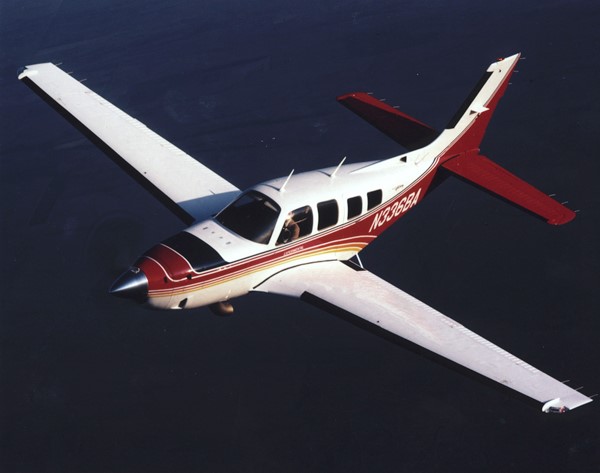
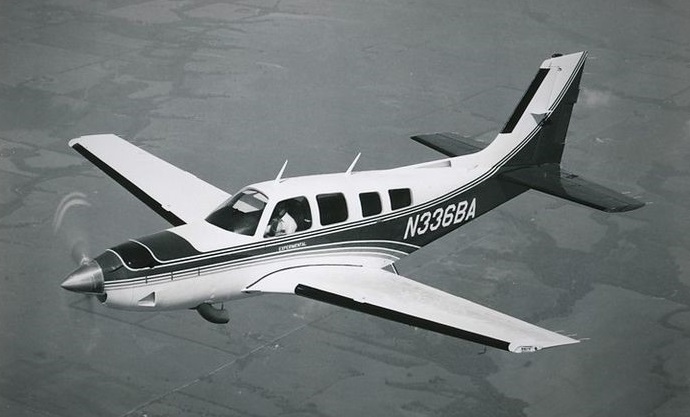
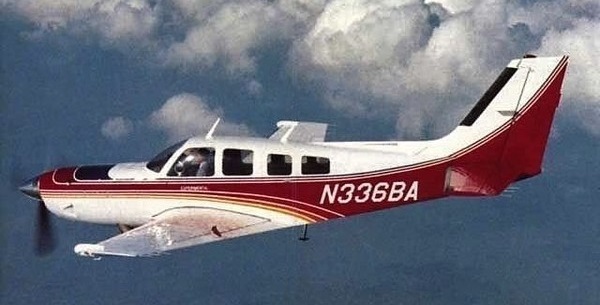
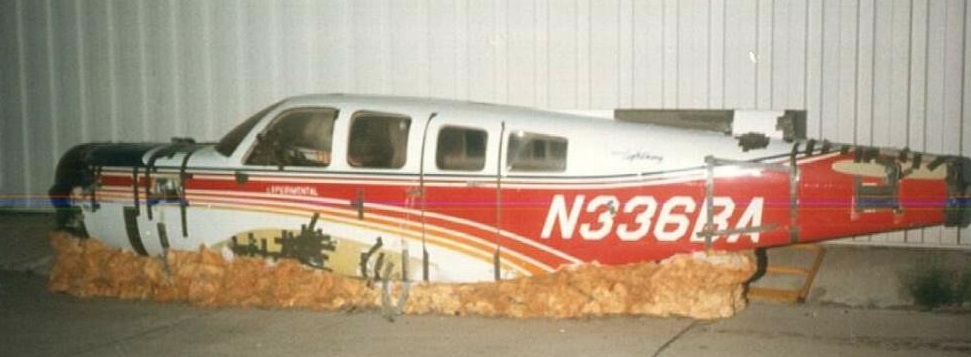
The Model 38P (Pressurized) (also known as the model PD.336) was created during 1981 by installing a Garrett AiResearch TPE-331-9 engine in the nose of a Beechcraft Baron 58P fuselage, which was mated to a Beechcraft B36TC Bonanza wing in place of the Baron’s wing with two engines. This resulted in a low-wing aircraft with six seats including the pilot’s.
The aircraft, registered N336BA c/no EJ-1, flew for the first time on June 14, 1982, piloted by Lou Johansen. After 133 flights over almost 18 months the aircraft was temporarily grounded so that the TPE331 could be removed and a Pratt & Whitney Canada PT6A-40 engine fitted in its place.
A total of 133 flights were logged and the last flight of the Model 38P was made on 14 November 1983. The PD 336 prototype was also fitted with a 630shp UACL PT6A-40 powerplant and was flown by Lou Johansen on 9 March 1984. This aircraft logged 68 flights before the last flight was made on 8 August.
Beechcraft originally planned to put the Lightning into production but the economic downturn among general aviation manufacturers in the United States in the 1980s led to the project being shelved shortly after the first flight with PT6A power.
Three variants were expected to be offered to customers: the Model 38P powered by a PT6A-40, the Model 38P-1 powered by a PT6A-116 and the Model 38P-2 powered by a TPE-331-9. In spite of 75 letters of intent, Beech announced during the summer of 1984 that further development work on the Model 38P Lightning was being suspended because of poor market conditions and purchase deposits collected were returned.
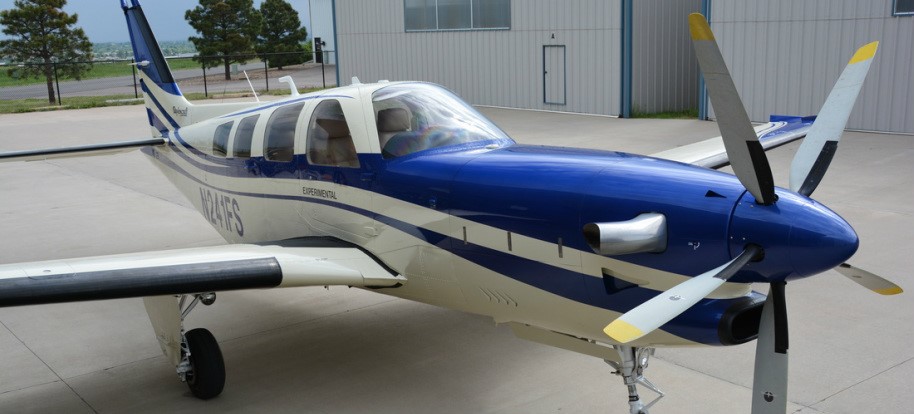
Advertised for sale in August 2019 was Lightning N241FS S.N.: RB-01, for $590,000.
Lightning N241FS
Lightning N241FS was reported as powered by a Walters Diemech 601 EXP Turboprop with an Avia Five Bladed, full feathering/reverse prop. This Lightning was manufactured and certified in 2006. Climb rates were 2,000 fpm which it can maintain into the flight levels. High speed cruise is 241 kts, thus the N number of N241FS (for “fast ship”). Normal cruise is 220-230 kts TAS depending on density altitude. Cruise fuel flows are 40-45 gph depending on altitude. A cruise prop setting of 1850 makes for a very quiet cabin. Useful load is 2500 lbs. With full fuel, you can put over 1300 lbs in the cabin. Useful Load: 2500 lbs. Takeoff and landing ground roll is typically 1000-1500′ depending on weight and density altitudes. This is a full feathering and reverse prop which saves on the brakes on short runways. It was currently flying and at last count, had a little over 150 hrs total time.
Model 38 P Engine: 1 × Pratt & Whitney Canada PT6A-40 turboprop, 550–650 shp (410–480 kW) Wingspan: 37 ft 10 in (11.53 m) Length: 29 ft 11 in (9.12 m) Height: 9 ft 2 in Wing area: 188.1 sq.ft Loaded weight: 5800 lb Max speed: 316 mph (509 km/h, 275 kn) Cruise 20,000ft: 279 mph Cruise 25,000ft: 238 mph Range normal: 1075 mi Rang eco: 1285 mi Service ceiling: 25,000 ft (7,600 m) Crew: 1 Capacity: 5 passengers
First flying on 4 January 1968, the single-engine Model 36 Bonanza was introduced in 1968 to compete with Piper’s Cherokee Six and the 200-series from Cessna. The A36 was developed by lengthening (0.25m) the fuselage of the Model 33, and using the same wing, landing gear and Continental engine of the Baron family, and the tail unit of the Model 33. Six seats were available, and with club-seating arrangements and a foldout table, it became a flying office. In 1975, the A36 outsold all other Bonanza models for the first time. With a longer cabin and wide double doors, the Bonanza A36 offers greater utility and convenience without sacrificing performance and economy. In 1977 the A36 was offered with factory-installed electric trim, formerly available only on aircraft equipped with an autopilot. The A36 accounted for 50% of the total Bonanza production in 1977, and that percentage increased in 1978. Beech added a turbocharged version of its Bonanza A36 in mid-1979. The aircraft is certified to a maximum operational altitude of 25,000 feet and has approximately the same takeoff distance as the A36. Power is supplied by a 300 hp Continental engine, which conforms to the minimum horsepower concept introduced on the Baron 58P and 58TC in 1977. The A36TC has a gross weight of 3,650 pounds, which is 50 pounds more than the standard A36. A shortened three-blade propeller reduces tip speed, increases ground clearance, and reduces noise. Standard features on late models of both the normally aspirated and turbocharged versions are an extended rear compartment for up to 70 pounds of baggage, bringing the baggage total to 470 pounds with four seats occupied; 15-degree approach flap setting; and optional propeller anti-icing. In 1982, Beechcraft replaced the A36TC with the B36TC Turbo Bonanza. The new design mated the longer Baron wing to the Model 36 fuselage, and fuel capacity was increased from 74 gallons to 102 gallons. Service ceiling for the A36TC and B36TC remained at 25,000 feet. Production of Model 36 Bonanzas totalled some 3,390 by early 1989. The final year of production for turbocharged Bonanzas was 2001. The B36TC’s production run ended in 2001. Beginning in 2005, the six-seat Beech came to market with an all-glass panel. Brief mention must be made of two military versions of the A36 Bonanza. Designated QU-22B, a number were provided with special avionics equipment under the USAF’s ‘Pave Eagle’ programme. They were deployed in Vietnam to pick up and relay to a ground station the data transmitted from acoustic sensors. Intended to keep track of enemy movements in the dense jungle, the sensors were air-dropped along known or suspected transport routes. To meet the requirements of the USAF’s ‘Pave Coin’ competition, Beech developed a close-support two-seat armed version of the A36. Designated Model PD 249, this prototype was evaluated with a wide variety of weapons, carried on underwing racks that could accommodate loads of up to 535kg, but no production examples were built.
1975 A36 Bonanza Engine: Continental IO-520-BA, 285 hp TBO: 1700 hr Fuel Type:100/100LL Propeller type: McCauley CS Landing Gear type: Tri./Retr. Max ramp weight: 3612 lb Gross weight: 3600 lb Landing weight: 3600lb Empty weight, std: 2096lb Useful load, std: 1504 lb Payload, full std. fuel: 1060 lb Usable fuel: 74 US gal Wingspan: 33 ft. 6 in. Overall length: 27 ft. 6 in. Height: 8 ft. 5 in. Wing area: 181 sq. ft Wing loading: 19.9 lbs./sq. ft Power loading: 12.6 lbs./hp Wheel base: 7 ft. 10 in. Wheel size: 6.00 x 6 in Seating capacity: 6 Cabin doors: 3 Cabin width: 42 in Cabin height: 50 in Baggage capacity:70 lb Cruise speed 75% power @ 6,000 ft: 170kt Cruise speed 65% power @ 10,000 ft: 162 kt Cruise speed 45% power @ 12,000 ft: 148 kt Max range (w/ res) 75% power: 694 nm Max range (w/ res) 65% power 749 nm Max range (w/ res) 45% power 769 nm Fuel consumption 75% power: 15.2 USgph Fuel consumption 65% power: 13.3 Usgph Fuel consumption 45% power: 11.5 USgph Stall speed (gear, flaps up): 63 kt Stall speed (gear, flaps down): 53 kt Best rate of climb: 1015 fpm Best rate of climb (12,000 ft): 550 fpm Service ceiling: 16,000 ft Takeoff ground roll: 1257 ft Takeoff over 50-ft. obstacle: 2167 ft Landing ground roll: 833 ft Landing over 50-ft. obstacle: 1575 ft
BE-A36 Engine: 1 x Continental IO-520-BB, 285 hp. TBO: 1700 hr Prop: McCauley 2 blade, constant speed 84 in Seats: 4/6 Length: 27.5 ft Height: 8.4 ft Wingspan: 33.5 ft Wing area: 181 sq.ft Wing aspect ratio: 6.2 Max ramp wt: 3612 lb Max take off wt: 3600 lb Standard empty wt: 2195 lb Max useful load: 1417 lb Max landing wt: 3600 lb Wing loading: 19.9 lbs/sq.ft Power loading: 12.6 lbs/hp Max useable fuel: 444 lb Climb rate: 1030 fpm @ 96 kt Climb gradient: 644 ft/nm Rate of climb @ 8000 ft: 570 fpm Service ceiling: 16,600 ft Max speed: 179 kt Cruise @ 65% power @ 8,000ft: 158 kt Fuel flow @ 65% power @ 8,000ft: 79 pph Endurance @ 65% power @ 8,000ft: 5.4 hr Stalling speed clean: 62 kt Stall speed gear/flaps down: 52 kt Turbulent air penetration speed: 140 kt Retractable nose wheel undercarriage
Beechcraft A36 Bonanza Engine: Continental IO-550B, 300 hp TBO: 2000 hr Fuel type: 100/100LL Propeller: CS Landing gear type: Tri/Retr. Max ramp weight: 3650 lb Gross weight: 3650 lb Landing weight: 3650 lb Empty weight, std: 2247 lb Useful load, std: 1403 lb Payload, full std. fuel: 959 lb Usable fuel, std: 74 US gal Wingspan: 33 ft. 6 in. Overall length: 27 ft. 6 in. Height: 8 ft. 5 in. Wing area:181 sq. ft Wing loading: 20.2 lbs./sq. ft Power loading: 12.2 lbs./hp Wheel track: 7 ft. 1 in. Wheel size: 6.00 x 6 in Seating capacity: 6 Cabin doors: 2 Cabin width: 42 in Cabin height: 50 in Cruise speed: 169kt Vs: 59 kt Vso: 59 kt Best rate of climb, SL:1210 fpm Best rate of climb, 8000 ft: 800 fpm Service ceiling: 18,500 ft. Takeoff ground roll: 971 ft Takeoff over 50-ft. obstacle:m1913 ft Landing ground roll: 913 ft Landing over 50-ft. obstacle: 1473 ft
BE-A36TC First built in 1979 Engine: 1 x Continental TSIO-520-UB turbo charged, 300 hp TBO: 1600 hr Prop: McCauley 3 blade, constant speed 80 in Seats: 4/6 Length: 27.5 ft Height: 8.4 ft Wingspan: 33.5 ft Wing area: 181 sq.ft Wing aspect ratio: 6.2 Max ramp wt: 3666 lb Max take off wt: 3650 lb Standard empty wt: 2278 lb Max useful load: 1388 lb Max landing wt: 3650 lb Wing loading: 20.2 lbs/sq.ft Power loading: 12.2 lbs/hp Max useable fuel: 444 lb Climb rate: 1165 fpm @ 110 kt Climb gradient: 635 ft/nm Rate of climb @ 8000 ft: 1070 fpm Certificated ceiling: 25,000 ft Max speed: 214 kt Cruise @ 65% power @ 8,000ft: 161 kt Cruise @ 65% pwr @ 18,000 ft: 175 kt Fuel flow @ 65% power @ 18,000ft: 85 pph Endurance @ 65% power @ 18,000ft: 5 hr Stalling speed clean: 67 kt Stall speed gear/flaps down: 57 kt Turbulent air penetration speed: 139 kt Retractable nose wheel undercarriage
2009 BONANZA G36 Engine: Continental IO-550-B, 300 hp TBO: 1700 hr Fuel type: 100LL Propeller type: 3-blade, CS Landing gear type: Tri./Retr. Gross weight: 3650 lb Empty weight, std: 2530 lb Useful load, std: 1120 lb Usable fuel, std: 74 US gal /444 lb Payload, full std. fuel: 676 lb Wingspan: 33 ft. 6 in. Overall length: 27 ft. 6 in Overall height: 8 ft. 7 in Wing area: 181 sq. ft Wing loading: 20.2 lbs./sq. ft Power loading: 12.2 lbs./hp Seating capacity: 6 Cabin doors: 3 Cabin width: 42 in Cabin height: 50 in Cruise speed 75% power, 6000 ft: 176 kt Cruise speed 65% power, 10,000 ft.: 171 kt Cruise speed 55% power, 10,000 ft.: 153 kt Range 75% power, 6000 ft.: 671 nm Range 65% power, 10,000 ft.: 775 nm Range 55% power, 10,000 ft.: 916 nm Best rate of climb, SL: 1230 fpm Service ceiling: 18,500 ft Vso: 59 kt Takeoff ground rol: 1913 ft Landing ground roll: 950 ft
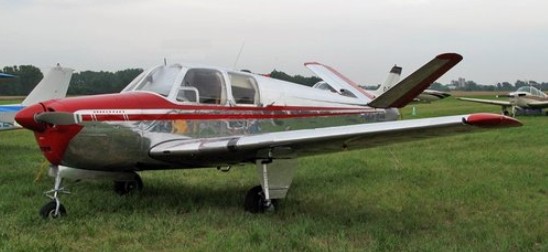
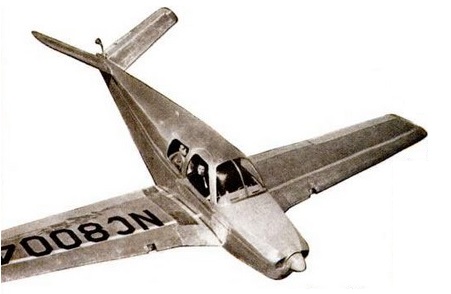
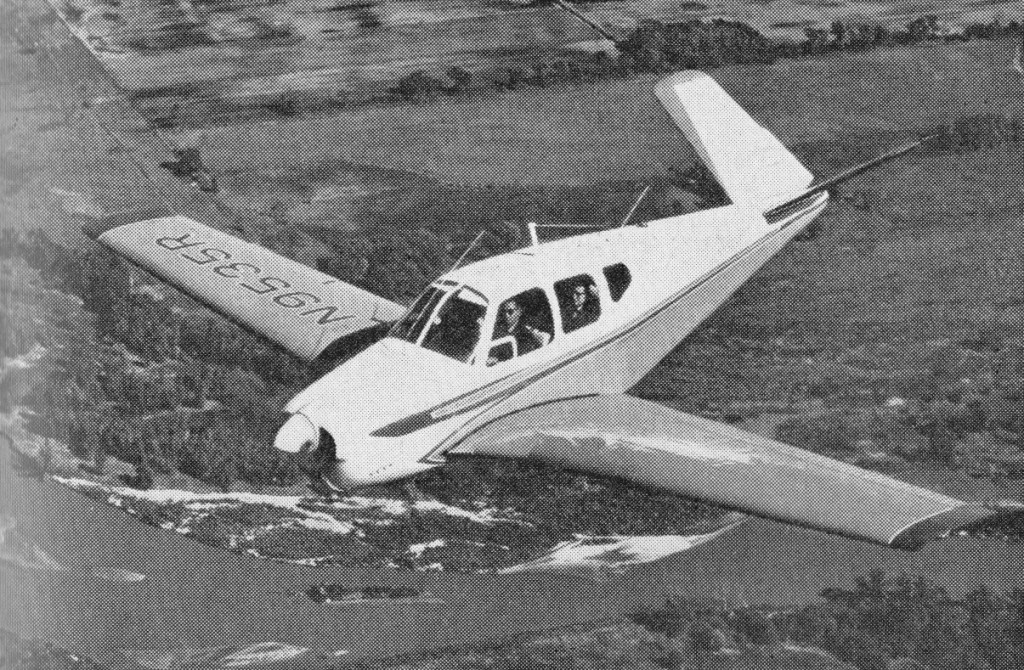
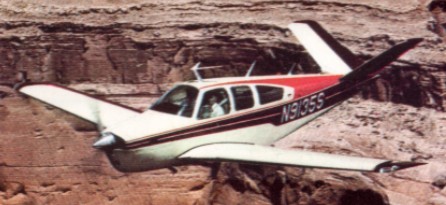
First flown on 22 December 1945, The test pilot claimed there was nothing unusual in flying the V-tail. Powered by a 185 hp Continental engine, the airplane cruises at 175 mph and can achieve a maximum speed of 184 mph. Its gross weight was 2550 lb and it could carry 40 USG of fuel. The pilot’s primary complaint was that it stalled with little warning. A situation that the company remedied by installing a stall warning light as standard. Beech expected to sell the Bonanza for $7345.
The Bonanza was introduced as a production model in 1947 and was labeled the Model 35. The first Bonanza 35 was delivered in 1947. In 1947, 1,299 were built. Powered by a Continental 165 hp, the top speed was 184 mph and cruise 175 mph. Subsequent aircraft were designated A35, B35, C35, etc. until the S35, after which the letter V was placed in front of the model number and the lettering process began all over again. Early models were fitted with 185-hp engines and seated four persons. In 1952, the C-model appeared with enlarged tail surfaces and a 205-hp engine. The 225-hp Continental was first used in 1954 with the E35. The H35 utilized a 240-hp engine and the J through M models were fitted with 250-hp Continentals.
1960 35M
The 35M was distinguishable by squared and cambered wingtips and other small refinements.
By 1960 more than 6000 Bonanzas had been sold since the war.
The 260-hp engine was introduced in the N35, and the 285-hp engine first appeared in 1964 in the S35.
In 1965 the USAF conducted tests with a V-tail Bonanza (model S35) that had been modified with a conventional cruciform tail unit and six wing hardpoints with the inner pylons stressed for 600 lbs and the two outer pylons on each wing stressed to 300 lbs. Testing took place at Eglin AFB, Florida.
Early-model Bonanzas are still highly competitive on the used plane market and are highly prized as personal transportation aircraft. All were four seaters until the S35, after which all have accommodations for up to six. Like other Bonanzas, the V35B model benefits from the new 15-degree flap setting and the 28-volt electrical system to support optional propeller deicing equipment. The V35B Bonanza is certificated in the utility category. This provides a 4.4 G positive manoeuvring load factor compared with 3.8 Gs for the normal category.
V35B
From 1966 to 1970, Beech built a handful of airplanes labeled the V35TC, V35ATC and V35BTC. These were turbocharged versions of the V tail Bonanza. Unfortunately, the program was nipped in the bud by the 1969 70 recession. Beech had to cut back somewhere, and the blown Bonanza was it. At the beginning of 1972 Model V35B Bonanza 9,288 had been built. Early 1979, Beech re entered the turbo market with a new turbocharged Bonanza, the A36TC. During the nine years between the demise of the V35BTC and the introduction of the A36TC, the normally aspirated Model 36 became the best seller in the Bonanza line, so it was logical to turbocharge it rather than bring back the V35BTC. The most obvious physical difference between the normally aspirated A36 and the A36TC is the presence of five sets of gills and louvers on the sides of the TC’s cowling. Also, the cowl flaps have been replaced with fixed lips, as on early Debonairs. By contrast, the V35TC had an intricate arrangement of four cowl flaps. Beech originally used cowl flaps on the A36TC, too, but found them to be ineffective under certain conditions. With its gills and louvers, along with some baffle changes, tests showed the A36TC could climb out at 110 knots (best rate of-climb speed) on a 100 degree day without overheating. Under the demanding conditions of high altitude, maximum cruise power setting and high outside air temperature, the airplane will not exceed temperature limits, even at its maximum certificated altitude of 25,000 feet. The pilot never has to touch a cowl flap or install winter baffles, and sufficient cooling is not at the expense of an excessively rich mixture. In 1979 both the normally aspirated and turbo models have extended baggage areas behind the last row of seats that will accommodate 10 cubic feet and 70 pounds of bags, equalling the Baron 58’s cabin baggage capacity. The large double doors to the rear of the cabin facilitate loading and can be removed for flight. Production of Bonanzas of all types amounts to about 15,000, production extended over 35 years. The Bonanza also provided the foundation for the design of the conventional tailed T 34 Mentor, for many years a primary trainer for the US and foreign services.
A35 Initial 4 seat version Engine: Continental E-185-1, 185 hp
B35 1950
C35 1951 Engine Continental E-185-11, 205-hp Gross Wt. 2725 lbs. Empty Wt.1675 lbs. Fuel capacity 39-59 USG. Top speed 190 mph. Cruise 180 mph. Stall 55 mph. Initial climb rate 1100 fpm. Ceiling 18,000 ft. Range 775 sm. Takeoff distance (50’) 1375 ft. Landing distance (50’) 970 ft. Seats 4.
D35 1953 Engine Continental E-185-11, 205-hp Seats 4. Gross Wt. 2725 lbs. Empty Wt.1675 lbs. Fuel capacity 39-59 USG. Top mph 190. Cruise mph 180. Stall mph 55. Initial climb rate 1100 fpm. Ceiling 18,000 ft. Range 775 sm. Takeoff distance (50’) 1375 ft. Landing distance (50’) 970 ft.
E-35 1954 Engine Continental E-185-11, 205-hp Gross Wt. 2775 lbs. Empty Wt. 1722 lbs. Fuel capacity 39 USG. Top mph 194. Cruise mph 184. Stall mph 55. Initial climb rate 1300 fpm. Range 775 sm. Ceiling 19,000 ft. Takeoff distance (50’) 1300 ft. Landing distance (50’) 970 ft. Seats 4.
F35 1955 Engine: Continental E-225-8, 225 hp Wingspan: 32 ft 10 in Wing area: 177.6 sq.ft Length: 25 ft 2 in Height: 6 ft 6 in Empty weight: 1697 lb Loaded weight: 2750 lb Max speed: 194 mph at SL Cruise: 184 mph at 8000 ft ROC: 1300 fpm Seats: 4
F35 1955 Engine: Continental E185-11, 200 hp Wingspan: 32 ft 10 in Wing area: 177.6 sq.ft Length: 25 ft 2 in Height: 6 ft 6 in Max speed: 190 mph at SL Cruise: 180 mph at 6000 ft ROC: 1100 fpm Seats: 4
G35 1956
H35 1957 Engine: Continental O-470-G, 240 hp
J35 1958 Engine: Continental O-470-C, 250 hp
K35 1959 Engine: Continental IO-470, 250 hp TBO hrs: 1500 Fuel type: 91/96 Propeller type/diameter: CS Landing gear type: Tri./Retr. Max ramp weight: 2950lb Gross weight: 2950 lb Landing weight, std: 2950lb Empty weight, std: 1832 lb Useful load, std: 1118 lb Payload, full std. fuel: 818 lb Usable fuel: 49 US gal Wingspan: 33 ft. 5 in. Overall length: 25 ft. 1 in. Height: 6 ft. 5 in. Wing area: 177.6 sq. ft Wing loading: 16.6 lb/sq. ft Power loading: 11.8 lb/hp Wheel size: 6.00 x 6 in Seating capacity: 4 Cabin doors: 1 Cabin width: 42 in Cabin height: 50 in Baggage capacity: 180lb Cruise speed 75% power @ 10,000 ft.: 150 kt Cruise speed 75% power @ 20,000 ft.: 164 kt Cruise speed 65% power @ 10,000ft: 141 kt Cruise speed 65% power @ 20,000 ft: 152 kt Max range (w/ reserve) 75% power @ 10,000 ft.: 541 nm Max range (w/ reserve) 75% power @ 20,000 ft.: 568 nm Fuel consumption 75% power: 19.1 US gph Fuel consumption 65% power: 16.7 US gph Fuel consumption 55% power: 14.0 US gph Vs: 62 kt Vso : 54 kt Best rate of climb (SL): 1050 fpm Service ceiling: 27,000 ft Takeoff ground roll: 910 ft Takeoff over 50-ft. obstacle: 1740 ft Landing ground roll: 735 ft Landing over 50-ft. obstacle: 1395 ft Optional fifth seat
M35 1960 Squared-off wingtips
N35 1961 Engine: Continental IO-470-H, 260 hp
1961 Bonanza “N” V35 Engine: Cont IO-470 N, 260 hp TBO: 1500 hr Fuel Type: 100 Propeller type: CS Landing Gear type: Tri./Retr. Max ramp weight: 3125 lb Gross weight: 3125 lb Max landing weight: 3125lb Empty weight: 1855 lb Useful load: 1270 lb Payload (full fuel): 826 lb Usable fuel: 74 US gal Wingspan: 33 ft. 6 in. Overall length: 25 ft. 2 in. Height: 6 ft. 5 in. Wing area: 181 sq. ft Wing loading: 17.3 lbs./sq. ft Power loading: 12.0 lbs./hp Wheel size: 6.00 x 6 in Seating capacity: 4 Cabin doors: 1 Cabin width: 42 in Cabin height: 50 in Baggage capacity: 270 lb Cruise speed 75% power @ 24,000 ft.: 170 kt Cruise speed 65% power: 162 kt Max range (w/ reserve) 75% power: 800 nm Stall speed (gear, flaps up): 58 kt Stall speed (gear, flaps down): 52 kt Best rate of climb (SL): 1150 fpm Service ceiling: 19,200 ft Takeoff ground roll: 1050 ft Landing ground roll: 650 ft
P35 1962 Engine: Continental IO-470-C, 260 hp
N-P35 Engine 260-hp Continental. Seats 4-5. Gross Wt. 3125 lbs. Empty Wt. 1855 lbs. Fuel capacity 49-78 USG. Top speed 205 mph. Cruise 195 mph. Stall 60 mph. Initial climb rate 1150 fpm. Ceiling 19,200 ft. Range 690-1215 sm. Takeoff distance (50’) 1050 ft. Landing distance (50’) 840 ft.
S35 1964 Engine: Continental IO-520-B, 285 hp Optional 6th seat, extra cabin window, redesigned wingtips
V35 1965
V35B Engine: Continental IO 520 BA, 285 hp. TBO: 1,500 hrs. Prop: Constant speed, two blade 84 in. diameter (three blade opt.). Length: 26 ft. 5 in. / 8.05 m Height: 7 ft. 7 in. Wingspan: 33 ft. 6 in. / 10.21 m Wing area: 181 sq. ft. Wing loading: 18.8 lbs./sq.ft. Cabin length: 8 ft 1 in / 2.46 m Cabin width: 3 ft 6 in / 1.07 m Cabin height: 4 ft 2 in / 1.27 m Seats: 4 6. Empty wt: 2,204 lbs. Useful load: 1,196 lbs. Payload with full fuel: 752 lbs. Gross wt: 3,400 lbs. / 1542 kg Power loading: 11.9 lbs/hp. Fuel capacity, opt: 74 USG/444 lbs. Baggage compartment cap: 270 lb / 122.5 kg Baggage compartment volume: 35 cu.ft. / 0.99 cu.m Minimum runway requirement: 1,870 ft. ROC: 1,136 fpm / 346 m/min Service ceiling: 17,500 ft. / 5335 m Max speed: 182 kts. Cruise (75% power @ 6,500 ft/1980m): 176 kt / 203 mph / 327 kph Economy cruise (45 % power @ 12, 000 ft.): 142 knots. Range (75 % power @ 6,500 ft/ 1980m, 45 minute res): 710 nm / 816 mi / 1313 km Range (45 % power @ 12,000 ft/3660m, 45 min res): 873 nm / 100mi / 1620 km Duration at 75 % power, no res: 4.8 hrs. Stall speed (clean): 64 kts. Stall speed (gear and flaps down): 55 kts.
V35B Engine: 1 x Continental IO-520-BB, 285 hp. TBO: 1700 hrs. Prop: McCauley 2 blade, constant speed 84 in. Seats: 4/5. Wingspan: 10.21 m / 33 ft 6 in Length: 8.05 m / 26 ft 5 in Height: 2.31 m / 7 ft 7 in Wing area: 16.81 sq.m / 180.94 sq ft Wing aspect ratio: 6.2. Max ramp wt: 3412 lbs. Max take off wt: 1542 kg / 3400 lbs. Standard empty wt: 2110 lbs. Max useful load: 1302 lbs. Max landing wt: 3400 lbs. Wing loading: 18.8 lbs/sq.ft. Power loading: 11.9 lbs/hp. Max useable fuel: 444 lbs. Climb rate: 1167 fpm @ 96 kts. Climb gradient: 729 ft/nm. Rate of climb @ 8000 ft: 670 fpm. Service ceiling: 17,858 ft. Max speed: 182 kts. Cruise @ 65% power @ 8,000ft: 163 kts. Fuel flow @ 65% power @ 8,000ft: 80 pph. Endurance @ 65% power @ 8,000ft: 5.3 hr. Stalling speed clean: 64 kts. Stall speed gear/flaps down: 51 kts. Turbulent air penetration speed: 134 kts. Retractable nose wheel undercarriage.
1966 Beech V35TC Bonanza Engine: TSIO-520D, 285hp 16,000 ft. TBO: 1400 hr Fuel Type: 100/100LL Propeller type: CS Landing Gear type: Tri./Retr. Max ramp weight: 3400 lb Gross weight: 3400 lb Landing weight: 3400 lb Empty weight, std: 2021 lb Useful load, std: 1379 lb Payload, full opt. fuel: 935 lb Usable fuel: 74 US gals Wingspan: 33 ft. 5 in. Overall length: 25 ft. 5 in. Height: 6 ft. 7 in. Wing area: 181 sq. ft Wing loading: 18.8 lb/sq. ft Power loading: 11.9 lbs./hp Wheel track: 9 ft. 7 in. Wheel size: 6.00 x 6 in Seating capacity: 4 Cabin doors: 1 Cabin width: 42 in Cabin height: 50 in Baggage capacity: 270 lb Cruise speed 75% power @ 24,000 ft: 200 kt Cruise speed 65% power @ 6,500 ft: 176 kt Cruise speed 45% power @ 16,000 ft: 144 kt Max range (w/ reserve) 75% power: 826 nm Max range (w/ reserve) 65% power: 887 nm Max range (w/ reserve) 45% power: 940 nm Stall speed (gear, flaps up): 64 kt Stall speed (gear, flaps down): 55 kt Best rate of climb (SL): 1225 fpm Service ceiling: 29,500 ft Takeoff ground roll: 950 ft Takeoff over 50-ft. obstacle: 1320 ft Landing ground roll: 647 ft Landing over 50-ft. obstacle: 1177 ft
The Twin Quad was an unpressurized, 20-passenger entrant into the feeder-line market. The name ‘Twin Quad’ came from the two horizontally-opposed, 400hp (300kW) Lycoming GSO-580 engines buried transversely in each wing to drive a single propeller through a common gearbox. The Twin Quad also had a V-tail similar in shape to that of the Bonanza. The first flight of the prototype was on October 1, 1947, at Wichita, Kansas. Following more than a year of flight testing, it was damaged beyond economical repair in a forced landing. By then, Beech had learned that the feeder-line market could not support a new design. Even had there, the unique powerplant installation would have required considerable development to achieve the reliability needed for airline service.
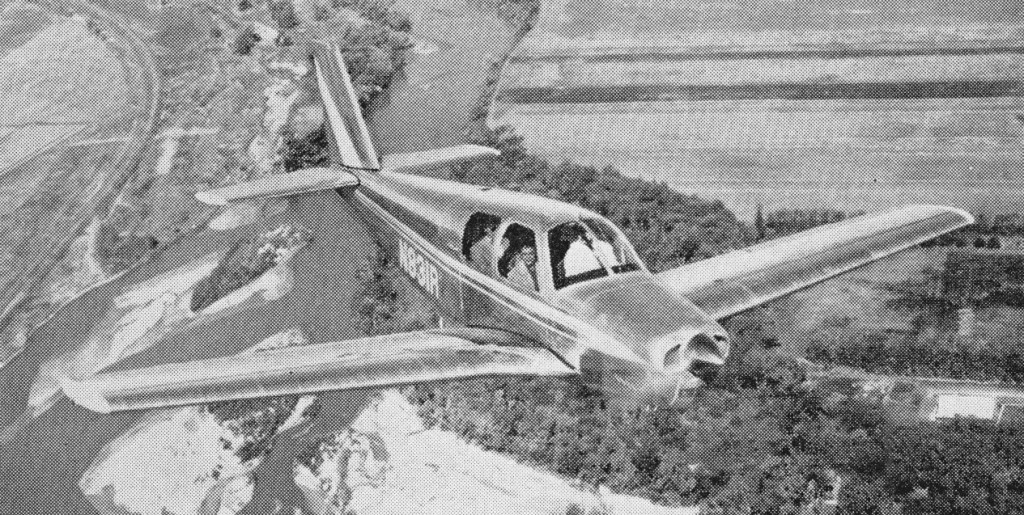
Despite large demand for the V-tailed Model 35, there were many potential buyers who considered this tail unit to be a gimmick that might present problems. To meet their needs, Beech introduced the Model 33 Debonair, following a first flight on 14 September 1959. With a conventional tail unit, and with a slightly lower-powered engine, the Debonair seated a pilot and three passengers. It represented a lower-cost version of the Bonanza, and was built and marketed in parallel until production of the Debonair, as such, ended in 1966, by when almost 1,200 had been built.
1960 33 Debonair
The Model 33 Debonair was produced in four-seat versions with a 225-hp Continental, six-cylinder engine. It had a simplified interior and less elaborate equipment than the Model 35. In 1961, the aileron and elevator trim tabs were improved; larger rear windows and a restyled cabin interior with bucket seats were featured.
Offered by Beechcraft in 1964 for European sale was a Debonair beefed up with a stronger empennage, horizontal stabiliser, rudder cables and vertical stabiliser to meet British requirements for a three-turn spin.
In 1966, the option of a 285-hp powerplant was added.
In 1967, the Debonair name was dropped and the subsequent aircraft, now a part of the Bonanza family, were simply designated E33, F33 and G33. During these years all model numbers ending in “A” featured the 285-hp Continental. All others retained the 225-hp engine.
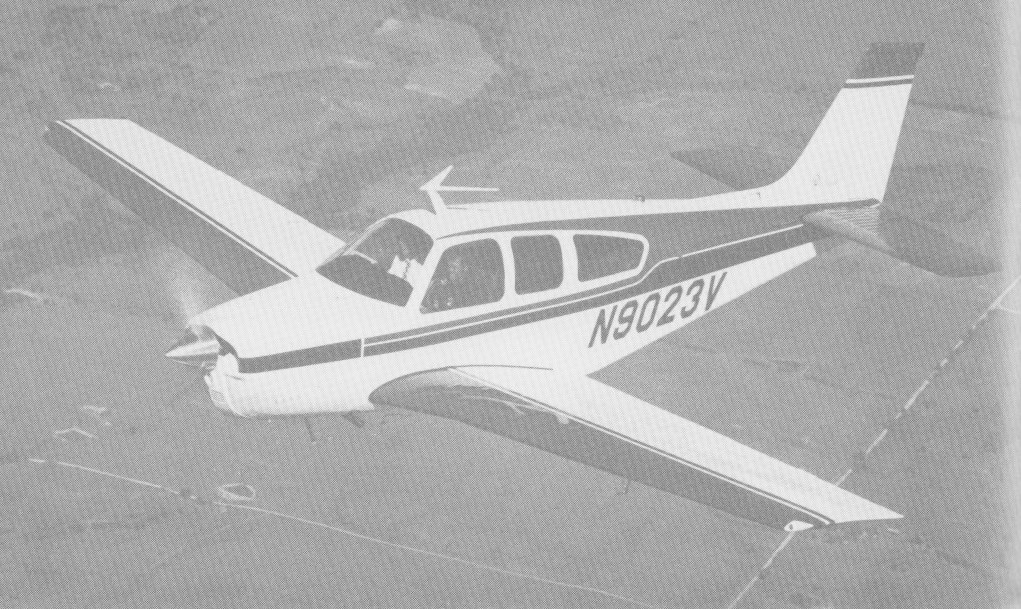
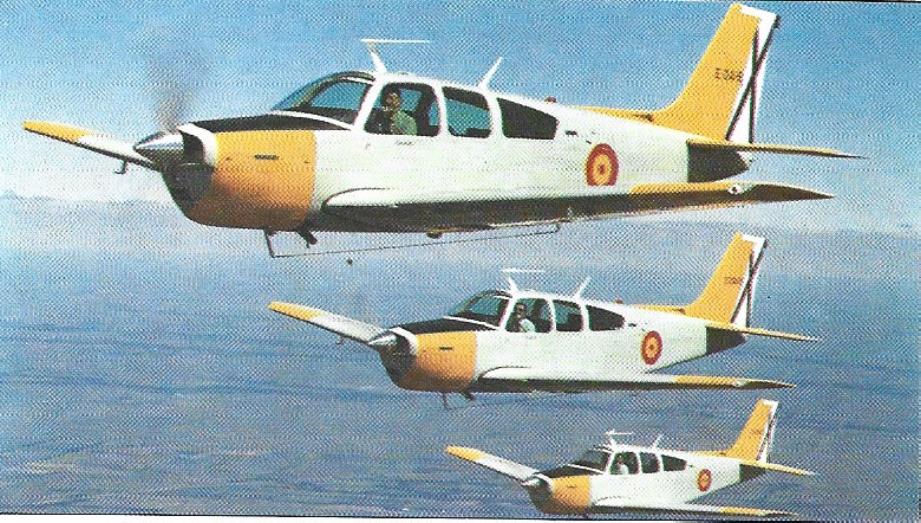
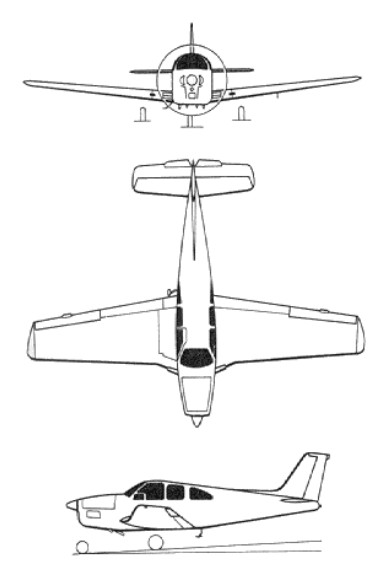
The Debonair was replaced in 1967 by the Model E33 Bonanza, a four/five-seat version that was virtually identical to the V-tail Model 35, except for the provision of a conventional tail unit with sweptback vertical surfaces. This version, in F33A standard and F33C aerobatic/utility versions, remained available in late 1989, by which time production of Model 33 Debonairs/Bonanzas was approaching a total of 3,000. Examples of these aircraft have been used for civil or military training by organisations that include the air force of Iran, Lufthansa, the Mexican navy, the Netherlands government, Pacific Southwest Airlines, and the Spanish air ministry/air force.
F33A Bonanza
The Bonanza F33C is an aerobatic version of the Bonanza F33A.
Spains’s EdA used the F.33C Bonanza designated E.24.
In 1972, the G33 was introduced with a 260-hp Continental. In 1980 only the F-33A remained in production. Since its introduction as the Beechcraft Debonair, more than 2230 Model 33s have been produced. New standard features for all Bonanza models are a 15-degree approach flap setting and a 28-volt electrical system. The approach flaps are identical to the Baron models and will allow for a maximum extension speed of 175 mph. The new electrical system speeds up the landing gear cycle and allows Bonanzas to be equipped with propeller deicing. Also, all Bonanzas will offer increased oxygen capacity.
Around 1967 the US military used militarized, supercharged Debonair with increased wingspan and wingtip tanks adapted to surveillance duties in Vietnam, relaying information to tactical fighters and gunships as the U-22. Six, 68-10531/10536, were used as unmanned, radio-controlled drone version as QU-22A, and 69-7699, 70-1535/1548 as -22B.
Beech QU-22B 69-7699
The civil D33 N5847K was used in 1970 by USAF testing in the PAVE COIN program as ground-attack as the YAU-22A 70-7859.
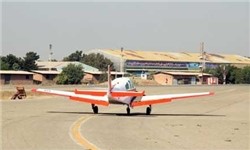
The Islamic Republic of Iran Air Force staff of the logistic-support command repair centre developed the Parastu-14 (Persian: پرستو ۱۴) as a training aircraft for the Iranian Air Force from Beechcraft F33 Bonanza.
Parastu 14
Parastu-14 trainer aircraft was introduced during an unveiling ceremony in “Hunting base of Shahid Major General Pilot Hossein Lashgari” in September 2013, and was added to Iran’s military air-force.
A33 Debonair Engine: Continental IO 470-J, 225-hp. Gross Wt. 2900 lb Empty Wt. 1730 lb Wing span: 33.5 ft (10.2m) Fuel capacity 64 USG Top speed: 195 mph. Cruise speed: 185 mph. Stall: 60 mph. Initial climb rate: 930 fpm. Range: 650 sm. Ceiling: 17,800 ft. Takeoff distance (50’) 1288 ft. Landing distance (50’) 1298 ft. Seats 4/5.
1963 Debonair B33 Engine: Continental IO-470-K, 225 hp TBO hours: 1500 Fuel type: 80/87 Propeller type: CS Landing Gear type: Tri./Retr. Max ramp weight: 3000 lb Gross weight: 3000 lb Landing weight: 3000 lb Empty weight, std: 1745lb Useful load, std: 1255lb Usable fuel, std: 74US gal Payload, full std. fuel: 811 lb Wingspan: 32 ft. 10 in. Overall length: 25 ft. 6 in. Height: 8 ft. 3 in. Wing area: 177.5 sq. ft Wing loading: 16.9 lb/sq. ft Power loading: 13.3 lb/hp Seating capacity: 4 Cabin doors: 1 Cabin width: 42 in Cabin height: 50 in Cruise speed, 6,500 ft 75% pwr: 161 kts Max range (w/ res) 55% power: 991 nm Stall speed (flaps up): 62kt Stall speed (flaps down): 52kt Best rate of climb, SL: 960 fpm Service ceiling: 18,400 ft Takeoff ground roll: 982 ft Takeoff over 50 ft. obstacle: 1288 ft Landing ground roll: 643 ft Landing over 50 ft. obstacle: 1298 ft
1966 Debonair C33A Engine: Continental IO-520-B, 285 hp TBO: 1700 hours Fuel type: 100 Propeller type: CS Landing Gear type: Tri./Retr. Max ramp weight: 3300 lb Gross weight: 3300 lb Landing weight: 3300 lb Empty weight, std: 1888lb Useful load, std: 1412lb Payload, full std. fuel: 968lb Usable fuel, std: 74 USgal Wingspan: 32 ft. 10 in Overall length: 27 ft. 6 in. Height: 8 ft. 7 in Wing area:181 sq. ft Wing loading: 20.2 lbs./sq. ft Power loading: 12.2 lbs./hp Seating capacity: 6 Cabin doors: 2 Cabin width: 3 ft. 6 in. Cabin height: 4 ft. 2 in. Cruise speed @ 6,500 ft 75% power: 174 kt Max range (w/ res) 55% power: 939 nm Stall speed (flaps up): 63 kt Stall speed (flaps down): 53kt Best rate of climb: 1200 fpm Service ceiling: 18,300 ft Takeoff ground roll: 880 ft Takeoff over 50 ft. obstacle: 1225 ft Landing ground roll: 625 ft Landing over 50 ft. obstacle: 1150 ft
1968 E33A Bonanza Engine: Continental IO-520-B/-BA, 285 hp TBO: 1700 hr Fuel type: 100/100LL Propeller type: Hartzell /CS Landing gear type: Tri./Retr. Max ramp weight: 3300 lb Gross weight: 3300 lb Landing weight: 3300 lb Empty weight, std: 1915 lb Useful load, std: 1385 lb Useful fuel: 80 US gal Payload, full std. fuel: 945 lb Wingspan: 32 ft. 10 in. Overall length: 25 ft. 6 in. Height: 8 ft. 3 in. Wing area: 177.6 sq. ft Wing loading: 18.6 lbs./sq.ft Power loading: 11.6 lbs./hp Wheel size: 6.00 x 6 in Seating capacity: 5 Cruise speed: 75% power: 174 kt Vso: 53 kt Best rate of climb, SL: 1200 fpm Service ceiling: 18,300 ft Takeoff ground roll: 880 ft Takeoff over 50-ft. obstacle: 1225 ft Landing ground roll: 625 ft Landing over 50-ft. obstacle: 1150 ft
F33A Engine: 1 x Continental IO-520-BB, 285 hp. TBO: 1700 hrs. Prop: McCauley 2 blade, constant speed 84 in. Seats: 4/5. Length: 26.7 ft. Height: 8.3 ft. Wingspan: 33.5 ft. Wing area: 181sq.ft. Wing aspect ratio: 6.2. Max ramp wt: 3412 lb Max take off wt: 3400 lb Standard empty wt: 2125 lb Max useful load: 1287 lb Max landing wt: 3400 lb Wing loading: 18.8 lbs/sq.ft. Power loading: 11.9 lbs/hp. Max useable fuel: 444 lb Climb rate: 1167 fpm @ 96 kt Climb gradient: 729 ft/nm. Rate of climb @ 8000 ft: 670 fpm. Service ceiling: 17,858 ft. Max speed: 182 kts. Cruise @ 65% power @ 8,000ft: 163 kts. Fuel flow @ 65% power @ 8,000ft: 80 pph. Endurance @ 65% power @ 8,000ft: 5.3 hr. Cruise speed (75% power): 199mph. Maximum range (75% power): 956mi. Equipped payload (750 miles fuel, 75% pwr): 895 lb Stalling speed clean: 64 kts. Stall speed gear/flaps down: 51 kts Turbulent air penetration speed: 134 kt Retractable nose wheel undercarriage Cabin width (elbow to elbow): 45.0in.
G33 1971 Shorter span wings Engine: Continental IO-470-N, 260 hp
H33 Bonanza Engine: Cont. O-470-G, 240hp Propeller type/diameter: Beechcraft 278 CS/84 in. Landing Gear type: Tri./Retr. Gross weight: 2900 lb Landing weight :2900 lb Empty weight, std: 2046 lb Useful load, std: 854lb Wingspan: 32 ft. 10 in. Overall length: 25 ft. 1 in. Height: 6 ft. 6 in. Wing area:177.6 sq. ft Power loading: 12.1 lbs./hp Wheel size, mains: 6.5 x 8 in Seating capacity: 4 Cabin doors: 1 Baggage capacity: 270 lb Cruise speed 75% power @ 7500 ft: 165 kt Cruise speed 65% power @ 11.500 ft.: 160 kt Cruise speed 55% power @ 12,500 ft.: 150 kt Max range (w/ reserve) 75% power @ 7500 ft: 610 nm Max range (w/ reserve) 65% power @ 11,500 ft: 621 nm Max range (w/ reserve) 55% power @ 12,500 ft: 665 nm Fuel consumption (gph @ .42 lbs./hp/hr. sfc) 75% power @ 7500 ft.:13.2 Fuel consumption (gph @ .42 lbs./hp/hr. sfc) 65% power @ 11,500 ft.:11.4 Fuel consumption (gph @ .42 lbs./hp/hr. sfc) 55% power @ 12,500 ft.:9.4 Estimated endurance (65% power with 1-hr. reserve): 3 hrs. 54 mins. Stall speed (dirty): 50 kts Best rate of climb: 1250 fpm Service ceiling: 19,800 ft Takeoff ground roll: 705 ft Takeoff over 50 ft. obstacle: 1320 ft Landing ground roll: 925 ft Landing over 50 ft. obstacle: 1530 ft
QU-22 Engine: TCM GTSIO-520
A36 1968 Engine: Continental IO-520-BA, 285 hp Wing span: 33 ft 6 in / 10.21m Length: 27 ft 6 in / 8.38m Cabin length: 10 ft 11 in / 3.39m Cabin width: 3 ft 6 in / 1.07m Cabin height: 4 ft 2 in / 1.27m Empty equipped weight: 2096 lb / 951 kg MTOW: 3600 lb / 1633 kg Baggage capacity 400 lb / 181 kg Max cruise 75% 6500ft/1980m: 170 kt / 196 mph / 315 kph Max ROC SL: 1015 fpm / 309 m/min Service ceiling: 16,000 ft / 4875 m Range 55% at 12,000ft/3660m with opt fuel: 769 nm / 886 mi / 1425 km + res Seats: 6
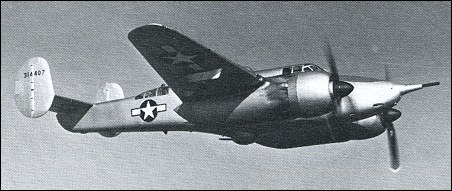
The XA-38 was a developmental twin-engine heavy fighter produced by Beech. Only two XA-38 prototypes were ever built with the project ultimately shelved at the end of the war.
The United States Army Air Force entered into a contractual agreement with Beech Aircraft in December of 1942 after considering the company’s Beechcraft Model 28. The contract called for two initial prototypes to be built as the XA-38 to fulfill a requirement replacing the Douglas A-20 Havocs then in service. This new aircraft would have to exceed in all areas the A-20. The XA-38 achieved first flight on May 7th, 1944 with Beech test pilot Vern Carstens at the controls, from the Beech airfield in Wichita, Kansas. It was then flown to Elgin Field in Florida to undergo testing with the US Army.
Design of the XA-38 centered around the large 75mm cannon armament mounted in the nose. The cannon was positioned as such that the barrel protruded from the nose cone assembly of the all-metal airframe. The fuselage was of a conventional design featuring a forward cockpit area and a rear gunner station and fit together as four main sections for ease of maintenance and repairs. Wings were mid-mounted monoplane airfoil of NACA-2300 series, joining the fuselage to each side of the cockpit and designed with a heated leading edge and surfaces. On the wings were twin Wright R-3350-53 radial engines of 2,700 horsepower each, driving three-bladed, constant speed Hamilton Standard propellers. Cooling was provided for through circular cowlings and controlled via automatic flaps. The engine nacelles were fitted to the wing leading edges. The empennage was conventional and featured a horizontal tailplane with two vertical tail fins. The undercarriage was a typical “tail dragger”, with two forward single-wheeled landing gears and a single-wheeled tail system – all fully retractable via hydraulics with a backup pneumatic emergency system. Crew accommodations was the pilot and a gunner under separate glazed canopies. The gunner sat in a dorsal position on the empennage.
While the primary armament of the XA-38 was its nose-mounted 75mm cannon (the entire forward nose section was hinged to open upwards for easy access to the cannon), this was augmented by 6 x .50 caliber Browning air-cooled heavy machine guns. Two were fitted to the lower forward nose section in a forward-firing fixed position while the remaining four were placed in dorsal and ventral General Electric remote-controlled turrets (two machine guns to a turret). These turrets were tracked via periscope sights by the gunner in his rear cabin. Additional external stores could be carried. With its accessible hinged nose assembly, the XA-38 was envisioned to fit other adaptable armament systems.
The XA-38 posted stable flight characteristics but was most notable for her top speed. Her speed was comparable to the single-engine fighters of her day. The XA-38 fell by the wayside as the B-29’s took her engines, the need for dedicated attack craft dwindles and the war came to its inevitable close a year later. It is known that one of the XA-38 prototypes fell the way of the scrap yard while the whereabouts of the other prototype are unknown.
Beechcraft XA-38 Destroyer (Model 28) Engines: 2 x Wright GR-3350-43 Cyclone radial, 2,300 hp each. Length: 15.76 m / 51 ft 8 in Wingspan: 20.45 m / 67 ft 1 in Height: 5.33 m / 17 ft 6 in Maximum Speed: 370mph (595kmh; 321kts) Maximum Range: 1,625miles (2,615km) Service Ceiling: 27,800 ft Armament: 1 x 75mm T15E1, 6 x 12.7mm Browning machine guns External stores: 2,000lbs Crew: 2 Hardpoints: 2 Empty Weight: 22,481lbs (10,197kg) Maximum Take-Off Weight: 36,330lbs (16,479kg)
The expansion of US training facilities in 1941 created a need for trainer aircraft to conserve raw materials, notably aluminium and magnesium alloys, would have to be needed for first-line types.
Built as the model 25 prototype, Beech’s T.A. Wells engineering team evolved the Beech Model 26, which was the first all-wood trainer to be accepted by the US Army Air Force, designated AT-10 Wichita. The design avoided the use of compound curves and of hot moulding processes for the structure’s sub-assemblies, allowing them to be sub-contracted to non-specialist wood-working firms: 85 per cent of the airframe was manufactured on this basis, with final assembly by Beech.
Metal airframe parts were limited to engine nacelles and cowlings, and panelling around the cockpit section. The wooden fuel tanks were lined with synthetic rubber. For operation as a multi-engined conversion trainer, the Wichita was equipped with dual controls and an autopilot, and entry to the cockpit was via rearward-sliding side windows.
The AT-10 was powered by two 220kW Lycoming R-680-9 engines, and by 1943 Beech had completed four contracts, for 150, 191, 1,080 and 350 aircraft respectively, bringing the total built at Wichita to 1,771. The last of these was delivered on 15 September 1943. Beech then supplied engineering and production data to the Globe Aircraft Corporation of Dallas, Texas, so that an additional 600 could be manufactured.
Engines: 2 x Lycoming R-680-9 radial, 295 hp /220kW Take-off weight: 2781 kg / 6131 lb Loaded weight: 2155 kg / 4751 lb Wingspan: 13.41 m / 43 ft 12 in Length: 10.46 m / 34 ft 4 in Wing area: 27.68 sq.m / 297.94 sq ft Max. speed: 319 km/h / 198 mph Ceiling: 5150 m / 16900 ft Range: 1239 km / 770 miles
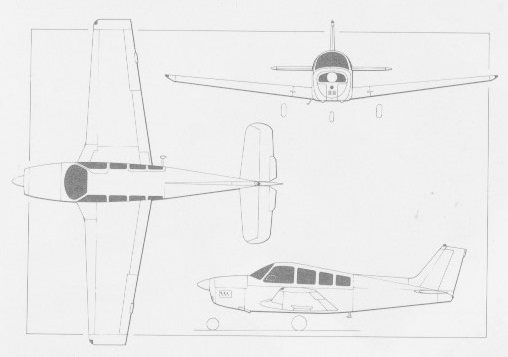
The Musketeer family was developed by Beechcraft as a lower cost and lower performance four seater than the Bonanza, intended to compete with the Cessna 172 and Piper Cherokee. Flown for the first time on 23 October 1961, the first of Beech’s “Three Musketeers” was introduced to the flying public in 1962 as the four-place, fixed gear, Avco Lycoming O-320-D2B 160-hp Model 23. First production aircraft were delivered in autumn 1962 at an initial price of $13,300. The Musketeer wing introduced bonded honeycomb construction to the lightplane market. Only the first Musketeers had full-swiveling nose wheels, the rest are steerable 15 degrees each way.
More than 500 of these 23s had been sold when a redesigned model, the A-23, went into production in 1964. Production, engineering and sales activities for the four-place Beech Musketeer were transferred from Wichita, Kan, to a plant in Liberal, Kan, in 1964.
The A-23, powered by a 165-hp fuel-injected Continental IO-346-A engine, had an increased landing flap angle and a restyled interior. This Musketeer became the Musketeer A23A Custom III in 1966 (Avco Lycoming O-360-A4J 180 bhp / 134kW) when it was joined by the two-seat (optional four-seat) Musketeer A23-24 Super III (Avco Lycoming 112kW) and the Musketeer A23-19 Sport III (Avco Lycoming 150 hp). The Beech 19 was introduced as a 1966 model year with a standard price of $11,500. Despite having a lower model number, it was a later variant and was a lower-powered trainer version of the Model 23. It lacked the 23’s third side window and had a Lycoming O-320-E2C powerplant of 150 bhp (110 kW). Along with the introduction of the lower-powered Model 19 in 1966, Beechcraft also introduced a higher-powered version of the Model 23 Musketeer and named it the Beechcraft 23-24 Musketeer Super III. This upgraded model had a Lycoming IO-360 fuel injected powerplant which produced 200 bhp (150 kW), 35 hp (26 kW) more than the standard Model 23 Musketeer of that year. This model initially sold for a price of $16,350 in 1966. The fixed-gear Model 23-24 was produced only between 1966 and 1969.
A total of 369 Musketeer Super IIIs were completed before it was superseded by the Model 24 Sierra. These were serial numbered MA-1 to MA-369 and were the only models to have a “MA” serial number, making them easier to distinguish than other members of the Musketeer line. In the last few airframes of the series a new instrument panel with the same “vertical tape” gauges that were used in the early Sierras was introduced. These models were known as the A24 and are not to be confused with the first Sierras, which were designated A24R models. Other than the instrument panel these aircraft were mechanically identical to the earlier A23-24 model. In 1966 a single demonstration Model 23-24 was equipped with a constant speed propeller. In succeeding years approximately one third of production aircraft were delivered with the constant speed propeller.
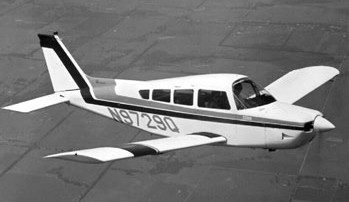
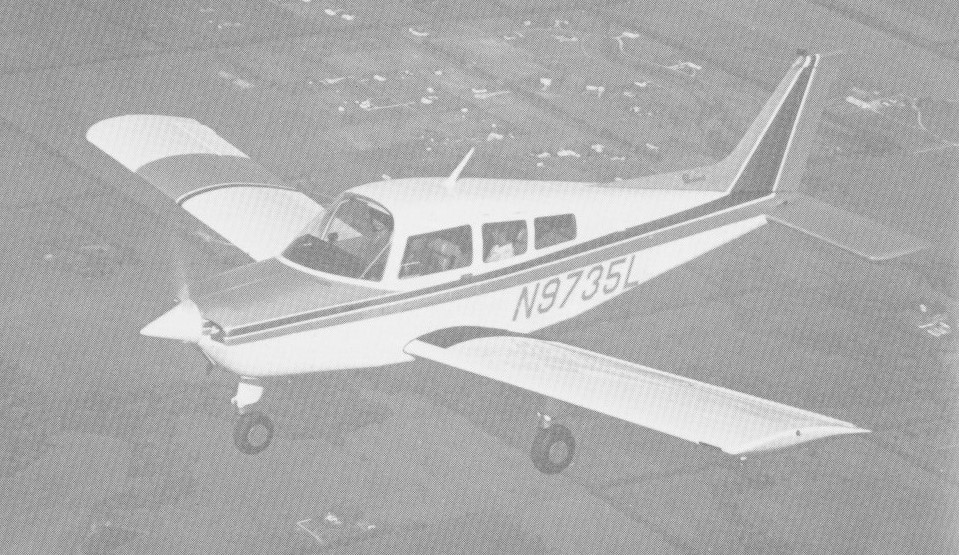
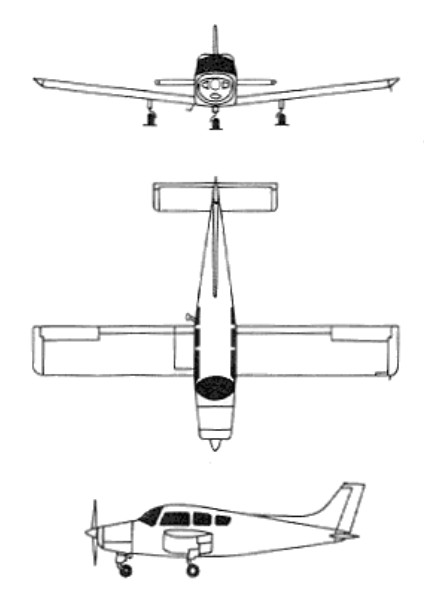
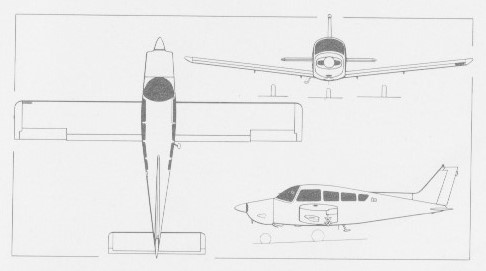
24 Sierra
The Super Musketeer typically has a useful load of 1050 to 1080 pounds – giving it one of the highest payloads of four-cylinder, fixed gear, simple single engined aircraft available. Most Model 23-24s were produced in a four-seat configuration. A very small number were produced with a 4+2 configuration with the baggage area convertible to seat two children. This configuration option was more common on the Sierra models that followed the Model 23-24. One of the few weaknesses of the Model 23-24 is that it had a simple heat distribution system that provided warm air via the firewall to the area under the instrument panel only. This meant heat to the rear seat passengers was less than optimal. Later aircraft featured increasingly better ducting designs that provided heat to all four seating positions. The Model 23-24 Musketeer Super III proved the utility of the 200 hp (150 kW) engine in the Musketeer airframe, with six seats optional, a constant speed prop, but the fixed gear configuration prevented using full advantage of the extra power of the injected Lycoming. The obvious solution was retracting the landing gear and this resulted in the Model 24.
In 1970, Beech redesigned the Musketeer fuselage, giving it a more rounded shape, and adding four and a-half inches across the front seats. Windows were re-shaped, with the 150-hp B 19 Sport retaining two on each side, the Custom and 200-hp Super with three. The 1970 and 1971 Supers were offered with a fourth cabin window as an extra-cost option, along with an additional bench seat in back, making them six-placers sort of. The Super was discontinued in 1972 (replaced by the retractable-gear Sierra).
Christened the “Sierra”, the first model year for the new retractable version was 1970. The initial A24-R Sierra Super R was powered by a Lycoming IO-360-A1B of 200 bhp (150 kW) and sold for a standard price of $24,950. The Model 24 completed the Beech line between the fixed gear Musketeers and the much larger, faster, more complex and expensive Beechcraft Bonanza. Both models were continued through 1971, when the fixed-gear model was dropped. As part of the Aero Center line, the 200-hp retractable version became known as the Sundowner. The name changes and the “cleaning up” of the Musketeer line was all part of a major corporate redirection by Beech management to devote more attention to the small airplanes. Beech Aero Centers were set up around the country, franchised just to sell the Sport, Sundowner and Sierra. More recent Sierras benefit from increased useful fuel, an optional autopilot, a larger diameter propeller, and wheel well fairings. The result is increased range, a greater rate of climb, and a higher cruise speed and service ceiling.
The Lycoming engine of 180 hp (130 kW) started with the B23 Musketeer Custom of 1968. Optional aerobatic kits were also available for the Musketeer Custom and Musketeer Sport when flown as two-seaters. A fourth version was introduced in late 1969: known as the Musketeer Super R, it was basically the same as the Musketeer Super but incorporated retractable tricycle landing gear. In 1970, Beech redesigned the Musketeer fuselage, giving it rounded sides and more cabin room. The panel was improved extensively and a third side window was added, and the models were renamed Musketeer B19 Sport, Musketeer C23 Custom and Musketeer A24 Super. The 1970 and 1971 Supers were offered with a fourth cabin window and a bench seat in the back for six seats.
1973 saw the introduction of the improved B24-R Sierra powered by the Lycoming IO-360-A1B6 engine variant. The improved C24-R was powered by the same engine and replaced the “B” model in 1977. Sierra production ended at the same time as the Model 23 Musketeer assembly line was closed, during the aviation economic downturn of 1983. A total of 744 Sierras were delivered.
The Musketeer name was dropped in 1971 and a further renaming took place. The Custom became the Sundowner C23, the Super R became the Sierra A24R, and the Sport became the Sport R19 and production of the Musketeer Super was discontinued. Like other models, the Sundowner is also available with an autopilot and its useful fuel has been boosted to 57 gallons. This extra gasoline translates into greater range and 30 pounds of additional useful load. The Sundowner is equipped with a fixed-pitch propeller and nonretractable landing gear. An Aerobatic version is offered which is approved for rolls, Immelmann turns, loops, spins, chandelles, etc. When properly equipped, the A19, B19, and M19 Sports are approved for limited aerobatics.
The B19 Sport and C23 Sundowner, with 150 and 180-horsepower respectively, continued in production through 1976, with 1977 list prices of US$22,000 and US$26,450.
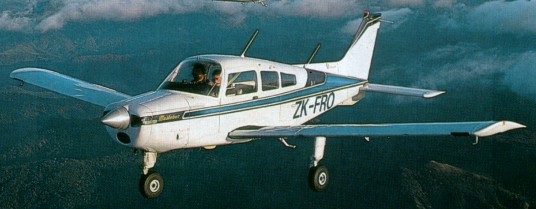
Sundowner
A total of 922 Model 19 were built over the 15 years of production which ended with the 1979 model year. The Sierra was given a new cowling, quieter engine and more efficient prop in 1974, and various aerodynamic changes were made to the Musketeer family in 1977. Sport manufacture ended in 1978. The Sundowner 180 and Sierra 200 remained in production into the 1980s, with series production ceasing in 1983 after over 5,000 had been built.
A total of 2,331 Beechcraft 23s of all variants were manufactured by the time production was completed 20 years later in 1983. The main difference between the Musketeer line and other similar light aircraft is the Musketeer’s undercarriage. While the competitive Cessna 172s use sprung steel main gear, the Piper PA-28 Cherokees use oleos and the Grumman American AA-5s use fibreglass sprung main gear, the Musketeer family use a trailing idler link gear system with a compressed rubber puck suspension system. This gives the aircraft quite different landing characteristics compared to the competition; light touchdowns are often accompanied by the idler links skipping and producing a less-graceful than anticipated landing. The Musketeer design was further developed into a twin-engine aircraft, the Beechcraft Model 76 Duchess. Used by the Canadian Armed Forces as the CT-134, Musketeers have been delivered for civil or military training use to Algeria, Indonesia and Mexico.
Late in 1973, an AD Note was issued by the FAA restricting spins in the acro version of the Sundowner. While there’s some question as to the legitimacy of those complaints, Beech added small fences or strakes on each side of the cowl and on the stabilator’s leading edge to disturb the airflow over the tail on the aerobatic versions of the Sundowner, and this presumably satisfied the FAA. Another AD requires inspection of the forward wing attachment brackets (for possible cracks) on these airplanes.
Military operators Algerian Air Force (4 x B24R Sierra) Canadian Forces (48 x CT-134 and CT-134A) Royal Hong Kong Auxiliary Air Force (2 x B23-19) Mexican Air Force (20 x A23-19) Royal Moroccan Air Force (1 x 23)
Variants
23 Musketeer Four-seat light cabin aircraft First certified 20 February 1962 Engine: 160 hp (119 kW) Lycoming O-320-D2B Empty Weight: 1300 lbs Gross weight: 2,300 lb (1,043 kg) Fuel Capacity: 60.00 gal Top Speed: 123 kts Cruise Speed: 111 kts Stall Speed (dirty): 52 kts Range: 800 nm Rate Of Climb: 720 fpm Ceiling: 13500 ft Takeoff Ground Roll: 925 ft Landing Ground Roll 640 ft Takeoff over 50 ft obstacle: 1275 ft Landing over 50 ft obstacle: 1260 ft Undercarriage: fixed tricycle
Musketeer I Initial 4 seat version Engine: Lycoming O-320-B2C, 160 hp
A23 Musketeer II Four-seat light cabin aircraft First certified 7 June 1963 Engine: 165 hp (123 kW) Continental IO-346-A Gross weight: 2,350 lb (1,066 kg) Empty Weight: 1325 lbs Fuel Capacity: 60 USgal Rate Of Climb: 880 fpm Ceiling: 11870 ft Top Speed: 127 kts Cruise Speed: 120 kts Stall Speed (dirty): 50 kts Range: 565 nm Takeoff Ground Roll: 990 ft Landing Ground Roll 640 ft Takeoff Over 50 ft obstacle: 1460 ft Landing Over 50 ft obstacle: 1260 ft Undercarriage: fixed tricycle
Musketeer II 1963 re-design Extra windows, increased deflection flaps Engine: Continental IO-346-A, 165 hp Span: 32 ft 9 in. Length: 25 ft. Height: 8 ft 3 in. Empty wt: 1398 lbs. Gross wt: 2350 lbs. Useful load: 952 lbs. Wing loading: 15.87 lb/sq.ft. Pwr loading: 14.12 lb/hp. Baggage cap: 140 lbs. Max speed: 127 kts / 146 mph. Cruise 75% pwr: 118 kts / 137 mph. Stall: 54 kts / 62 mph. Initial ROC: 770 fpm. Service ceiling: 12,550 ft. Range: 570 sm. Fuel cap: 40 USG.
A23A Musketeer Custom III Four-seat light cabin aircraft First certified 5 November 1965 Engine: 165 hp (123 kW) Continental IO-346-A Propellers: 2-bladed fixed pitch Length: 25 ft 8 in (7.82 m) Wingspan: 32 ft 9 in (9.98 m) Height: 8 ft 3 in (2.51 m) Wing area: 146 sq ft (13.6 sq.m) Airfoil: NACA 63A415 Empty weight: 1,375 lb (624 kg) Max. takeoff weight: 2,400 lb / 1089 kg Fuel Capacity: 60 US gal Maximum speed: 127 kt (146 mph; 235 km/h) Cruise speed: 102 kt (117 mph; 189 km/h) long range cruise speed Stall speed: 63 kn (72 mph; 117 km/h) Never exceed speed: 152 kn (175 mph; 282 km/h) Range: 676 nm (778 mi; 1,252 km) with reserves Service ceiling: 13,000 ft (4,000 m) Rate of climb: 728 ft/min (3.70 m/s) Takeoff Ground Roll: 990 ft Landing Ground Roll 640 ft Takeoff Over 50 ft obstacle: 1460 ft Landing Over 50 ft obstacle: 1260 ft Rate Of Climb: 880 fpm Ceiling: 11870 ft Undercarriage: fixed tricycle
Sport 1971 re-named Musketeer III Sport Engine: Lycoming O-320-E2C later D, 150 hp Seats: 2 / 4
Musketeer Sport II Engine: Lycoming O-320-E3D, 150 hp@2700@SL TBO: 2000 hr Fuel type: 80 Propeller diameter: 74 in Landing gear type: Tri./Fixed Max ramp weight: 2155 lb Gross weight: 2150 lb Landing weight: 2150 lb Empty weight, std: 1325 lb Empty weight: 1416 lb Useful load: 734 lb Useful fuel, std: 57 US gal Payload, full std. fuel: 422 lb Wingspan: 32 ft. 9 in Overall length: 25 ft. 9 in Height: 8 ft. 3 in Wing area: 145.96 sq. ft Wing loading: 14.73 lbs./sq. ft Power loading: 14.33 lbs./hp Wheel base: 11 ft. 10 in. Wheel base: 6 ft. 4 in. Mains wheel size: 6.00 x 6 in Seating capacity: 4 Cabin doors: 1 Cabin width: 44 in Cabin height: 48 in Baggage capacity: 340lb Cruise Speed, 6,500 ft: 75% Power: 108 kt Cruise Speed 65% Power: 96 kt Cruise Speed 55% Power: 83 kt Max Range, 6,500 ft (w/res) 75% power: 599 nm Max Range, 6,500 ft (w/res) 65% power: 634 nm Max Range, 6,500 ft (w/res) 55% power: 634 nm Fuel burn 6500 ft 75% power: 9.0 US GPH Fuel burn 6500 ft 65% power: 7.6 US GPH Fuel burn 6500 ft 55% power: 6.6 US GPH Estimated endurance, 65% power: 7.5 hr Vs: 49 kt Vso: 57 kt Best rate of climb: 800 fpm Best rate of climb, 8,000 ft: 300 fpm Service ceiling: 14,900 ft Takeoff ground roll: 840 ft Takeoff over 50-ft obstacle: 1255 ft Landing ground roll: 767 ft Landing over 50-ft. obstacle: 1630 ft Base price: $14,250 (orig. factory price)
A23-19 (Model 19) Sport III Musketeer Two or four-seat light cabin aircraft First certified 9 December 1965 Engine: 150 hp (112 kW) Lycoming O-320-E2B, E2C or E3D Gross weight: 2,200 lb (998 kg) Empty Weight: 1325 lbs Fuel Capacity: 60.00 USgal Top Speed: 122 kts Cruise Speed: 114 kts Stall Speed (dirty): 48 kts Range: 800 nm Takeoff Ground Roll: 840 ft Landing Ground Roll 590 ft Takeoff Over 50 ft obstacle: 1255 ft Landing Over 50 ft obstacle: 1220 ft Rate Of Climb: 900 fpm Ceiling: 14900 ft Undercarriage: fixed tricycle
A23-24 Super III Musketeer Four or six-seat light cabin aircraft First certified 7 March 1966 Engine: 200 hp (149 kW) Lycoming IO-360-A2B or A2D, or when equipped with a constant speed propeller a Lycoming IO-360-A1B or A1D Empty Weight: 1410 lbs Gross weight: 2,550 lb (1,157 kg) Fuel Capacity: 60 US gal Top Speed: 137 kts Cruise Speed: 130 kts Stall Speed (dirty): 52 kts Range: 643 nm Rate Of Climb: 880 fpm Ceiling: 14850 ft Takeoff Ground Roll: 950 ft Landing Ground Roll 660 ft Takeoff Over 50 ft obstacle: 1380 ft Landing Over 50 ft obstacle: 1300 ft Undercarriage: fixed tricycle
A24 Four or six-seat light cabin aircraft First certified 5 February 1970 Engine: 200 hp (149 kW) Lycoming IO-360-A2B or A2D, or when equipped with a constant speed propeller a Lycoming IO-360-A1B or A1D Gross weight: 2,550 lb (1,157 kg) Undercarriage: fixed tricycle
19A Two or four-seat light cabin aircraft First certified 31 August 1967, approved in the aerobatic category 12 March 1968 Engine: 150 hp (112 kW) Lycoming O-320-E2B, E2C or E3D Gross weight: 2,250 lb (1,021 kg) Undercarriage: fixed tricycle
M19A Two-seat light cabin aircraft First certified 9 December 1969, including in the aerobatic category Engine: 150 hp (112 kW) Lycoming O-320-E2B, E2C or E3D Gross weight: 2,250 lb (1,021 kg) Undercarriage: fixed tricycle
B19 Sport / Sport III / Sport 150 Two or four-seat light cabin aircraft First certified 13 February 1970, including in the aerobatic category Engine: 150 hp (112 kW) Lycoming O-320-E2B, E2C or E3D Propeller: fixed pitch 2-blade Wing span: 32 ft 9 in / 10.0 m Length: 25 ft 9 in / 7.84 m Height: 8 ft 3 in / 2.51 m Gross weight: 2,250 lb (1,021 kg) Undercarriage: fixed tricycle
Beech B 19 Sport 150 (prior to 1977) Horsepower: 150 Gross Weight: 2150 lbs Top Speed: 110 kts Empty Weight: 1414 lbs Cruise Speed: 107 kts Fuel Capacity: 52 USG Stall Speed (dirty): 50 kts Range: 643 nm Takeoff Ground Roll: 1030 ft Landing Ground Roll 824 ft Over 50 ft obstacle: 1635 ft Landing Over 50 ft obstacle: 1693 ft Rate Of Climb: 680 fpm Ceiling: 11650 ft
Beech B 19 Sport 150 (1977 and later) Horsepower: 150 Gross Weight: 2150 lbs Top Speed: 110 kts Empty Weight: 1414 lbs Cruise Speed: 107 kts Fuel Capacity: 57.00 gal Stall Speed (dirty): 50 kts Range: 643 nm Takeoff Ground Roll: 1030 ft Landing Ground Roll 824 ft Takeoff Over 50 ft obstacle: 1635 ft Landing Over 50 ft obstacle: 1693 ft Rate Of Climb: 680 fpm Ceiling: 11650 ft
B23 Four-seat light cabin aircraft First certified 13 December 1967 and in the aerobatic category 22 November 1968 Engine: 180 hp (134 kW) Lycoming O-360-A2G Gross weight: 2,450 lb (1,111 kg), Undercarriage: fixed tricycle
C23 Four-seat light cabin aircraft First certified 13 February 1970 including in the aerobatic category Engine: 180 hp (134 kW) Lycoming O-360-A4G, A2G, A4J or A4K Gross weight: 2,450 lb (1,111 kg) Undercarriage: fixed tricycle
Beech C 23 Sundowner (prior to 1976) Horsepower: 180 Propeller: fixed pitch 2-blade Wing span: 32 ft 9 in / 10.0 m Length: 25 ft 9 in / 7.84 m Height: 8 ft 3 in / 2.51 m Gross Weight: 2450 lbs Top Speed: 128 kts Empty Weight: 1494 lbs Cruise Speed: 116 kts Fuel Capacity: 52 US gal Stall Speed (dirty): 51 kts Range: 565 nm Takeoff Ground Roll: 1130 ft Landing Ground Roll 703 ft Takeoff Over 50 ft obstacle: 1955 ft Landing Over 50 ft obstacle: 1484 ft Rate Of Climb: 792 fpm Ceiling: 12600 ft
1975 C23 Sundowner Engine: Lyc. O-360-A4J, 180 hp TBO: 2000 hr Propeller: Fixed Landing Gear type: Tri/Fixed Gross weight: 2450 lb Empty weight: 1494 lb Useful load: 956 lb Fuel: 52 US gal Wingspan: 32 ft. 9 in. Overall length: 25 ft. 9 in. Height: 8 ft. 3 in. Wing area:146 sq. ft Seating capacity: 4 Cabin width: 44 in Cabin height: 48 in Baggage capacity:270 lb Cruise speed 75% power: 118 kt Cruise speed 65% power: 110 kt Max range (w/ res) 75% power: 470 nm Max range (w/ res) 65% power: 508 nm Fuel consumption 75% power: 9.5 US gph Fuel consumption 65% power: 8.2 US gph Estimated endurance (65% power with 1-hr. res): 5 hr 54 min Stall speed (gear, flaps down): 51 kt Best rate of climb: 792 fpm Service ceiling (.): 12,600 ft Takeoff ground roll: 1130 Landing ground roll: 703 ft
1977 Sundowner Engine: Lycoming O-360-A4K, 180 hp@2700 rpm @SL TBO 2000 hr Fuel type: 100/100LL Propeller: Sensenich/76 in Landing Gear: Tri/Fixed Max ramp weight: 2450 lb Gross weight, normal category: 2450 lb Gross weight, utility category: 2030 lb Landing weight: 2450 lb Empty weight, std: 1500 lb Useful load, std: 950 lb Payload, full std. fuel: 638 lb Usable fuel, std: 52 USgal Wingspan: 32 ft. 9 in. Overall length: 25 ft. 9 in. Height: 8 ft. 2 in. Wing area:146 sq. ft Wing loading: 16.7 lbs./sq. ft Power loading: 14.1 lbs./hp Wheel base: 6 ft. 4 in. Wheel track: 11 ft. 10 in. Wheel size: 6.00 x 6 in Seating capacity: 4 Cabin doors: 2 Cabin width: 44 in Cabin height: 49 in Baggage capacity:270 lb Cruise speed @ 8,000 ft. 75% power: 118 kt Cruise speed @ 8,000 ft. 65% power: 111 kt Cruise speed @ 8,000 ft. 55% power: 93 kt Max range (w/ res): 75% power: 459 nm Fuel consumption 75% power: 9.5 US gph Fuel consumption 65% power: 8.2 US gph Fuel consumption 55% power: 6.9 US gph Estimated endurance (65%): 5.0 hr Stall speed (flaps up): 57kt Stall speed (flaps down): 52kt Best rate of climb (SL): 792 fpm Best rate of climb, 8,000 ft: 405 fpm Service ceiling: 12,600 ft Takeoff ground roll: 1130 ft Takeoff over 50 ft. obstacle: 1955 ft Landing ground roll: 703 ft Landing over 50 ft. obstacle: 1484 ft
Beech C 23 Sundowner (1977 and later) Horsepower: 180 Propeller: fixed pitch 2-blade Wing span: 32 ft 9 in / 10.0 m Length: 25 ft 9 in / 7.84 m Height: 8 ft 3 in / 2.51 m Gross Weight: 2450 lbs Top Speed: 128 kts Empty Weight: 1494 lbs Cruise Speed: 116 kts Fuel Capacity: 57.00 gal Stall Speed (dirty): 51 kts Range: 565 nm Takeoff Ground Roll: 1130 ft Landing Ground Roll 703 ft Takeoff Over 50 ft obstacle: 1955 ft Landing Over 50 ft obstacle: 1484 ft Rate Of Climb: 792 fpm Ceiling: 12600 ft
Custom III / Sundowner C23 / Sundowner 180 Engine: Avco Lycoming 134kW / 180-hp Wing span: 32 ft 9 in Length: 25 ft Height: 8 ft 3 in Gross wt. 2,450 lb Empty wt. 1,505 lb Fuel capacity Std: 40 USG Fuel capacity opt: 57 USG. Useful load: 1085 lb Baggage cap: 140 lb Wing loading: 16.78 lb/sq.ft Pwr loading: 13.61 lb/hp Top speed: 141 mph. Cruise 75% pwr: 124 kts / 143 mph Stall: 52 kts / 59 mph. Initial climb rate 792 fpm. Ceiling 12,600 ft Range 670 miles. Takeoff distance (50′) 1,955 ft Landing distance (50′) 1,484 ft Seats 4.
C23 Sundowner Engine 180-hp Lycoming O-360-A4G. Prop; Fixed pitch. Gross Wt. 2450 lbs. Empty Wt. 1425 lbs. Useful load; 1025 lbs. Baggage cap: 270 lbs. Fuel capacity 57 USG. Wing span: 32 ft 9 in. Length: 25 ft 9 in. Height: 8 ft 3 in. Fuel flow 65% power: 7.6 US Gal/hr. Power loading; 12.25 lbs / hp. Wing Loading; 16.08 lbs / sq.ft. Max Level Speed; 131 kts / 151 mph. Cruise 75% power; 125 kts / 143 mph. Stall: 52 kts / 60 mph. Initial climb rate 820 fpm. Service Ceiling 13,650 ft Max Range; 641 nm / 737 sm Takeoff distance (50’) 1130 ft. Landing distance (50’) 1484 ft. Undercarriage; Fixed tricycle. Wheel base: 6.3 ft. Wheel tread: 11.8 ft. Seats 4
A24R Sierra 200 Four or six-seat light cabin aircraft First certified 23 December 1969 Engine: 200 hp (149 kW) Lycoming IO-360-A1B or A1D Gross weight: 2,750 lb (1,247 kg) Undercarriage: retractable tricycle
B24R Sierra 200 Four or six-seat light cabin aircraft First certified 18 June 1973 Engine: 200 hp (149 kW) Lycoming IO-360-A1B6 Wingspan: 32 ft 9 in / 9.98 m Length: 25 ft 8 .5 in / 7.84 m Cabin length: 7 ft 11 in / 2.41 m Cabin max width: 3 ft 8 in / 1.18 m Cabin volume: 103.2 cu.ft / 2.92 cu.m MTOW: 2,750 lb / 1,247 kg Empty Weight: 1711 lb / 776 kg Fuel Capacity: 52.00 gal Useful load: 1047 lb Baggage capacity: 270 lb / 122 kg Top Speed: 140 kts Max cruise 7000 ft / 2135 m, 2600 lb / 1179 kg: 131 kts / 151 mph / 243 kph Cruise (75% pwr): 151 mph. Stall Speed (dirty): 55 kts Range (52 USG fuel, 75% pwr, 7000ft / 2135m. 45 min res): 561 nm / 646 mi / 1040 km Range (52 USG fuel, 55% pwr, 10,000ft / 3050m. 45 min res): 592 nm / 682 mi / 1097 km Rate of climb SL: 893 fpm / 272 m/min Service ceiling: 14,350 ft / 4375 m Takeoff Ground Roll: 1169 ft Landing Ground Roll 803 ft Takeoff Over 50 ft obstacle: 1804 ft Landing Over 50 ft obstacle: 1519 ft Undercarriage: retractable tricycle
C24R Sierra 200 Four or six-seat light cabin aircraft First certified 1 October 1976 Engine: 200 hp (149 kW) Lycoming IO-360-A1B6 TBO: 1800 hrs. Prop: Hartzell 2 blade, constant speed 76 in. Wing span: 32 ft 9 in / 10.0 m Length: 25 ft 9 in / 7.84 m Height: 8 ft 3 in / 2.51 m Wing area: 146 sq.ft. Wing aspect ratio: 7.4. Max ramp wt: 2758 lbs. Max take off weight: 2,750 lb (1,247 kg) Empty Weight: 1696 lbs Max landing wt: 2750 lbs. Wing loading: 18.8 lbs/sq.ft. Power loading: 13.8 lbs/hp. Fuel Capacity: 57 US gal Max useable fuel: 343 lbs. Max speed: 145 kts Cruise speed 75% power: 131kt Cruise @ 65% power @ 8,000ft: 125 kts Fuel flow @ 65% power @ 8,000ft: 54 pph. Endurance @ 65% power @ 8,000ft: 6.1 hr. Stall Speed (dirty): 60 kts Stalling speed clean: 65 kts Turbulent air penetration speed: 125 kts Max range (w/ res) 75% pwr: 561 nm Rate Of Climb: 927 fpm @ 80 kts Climb gradient: 695 ft/nm. Rate of climb @ 8000 ft: 500 fpm. Service Ceiling: 15385 ft Takeoff Ground Roll: 1063 ft Landing Ground Roll 816 ft Takeoff Over 50 ft obstacle: 1561 ft Landing Over 50 ft obstacle: 1462 ft Cabin width: 44 in Cabin height: 49 in Baggage capacity:270 lb Undercarriage: retractable tricycle