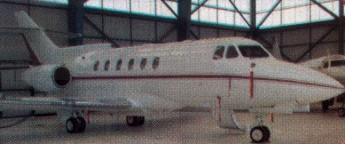
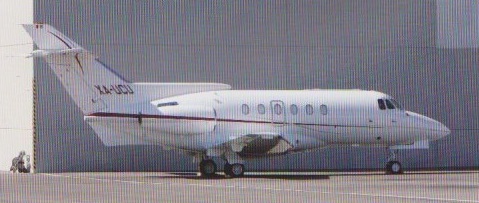
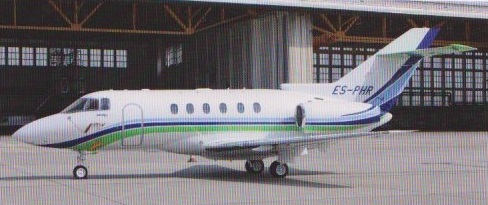
Brothers Aimé and Joseph Behaeghe completed their first aeroplane, a biplane of their own design powered by a 25hp engine, in 1910, after 12 months work. Evidently this aircraft had a limited performance but, undeterred, the brothers went on to build other aircraft.
Engines – Power
Beets G/B Special
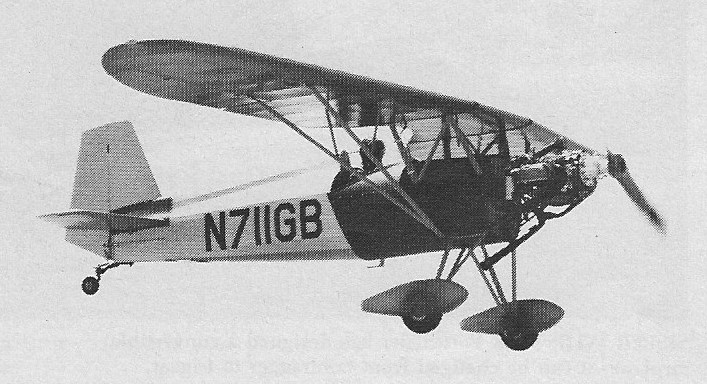
Designed by Glen Beets, the G/B is a single-seat, open-cockpit sporting plane featuring a high parasol-braced wing and conventional tailwheel type landing gear. While the fuselage is a fabric-covered steel tube structure, the wing is built with spruce spars and ribs, also fabric covered. All plans, kits, and components are sold through the Stolp Starduster Corp.
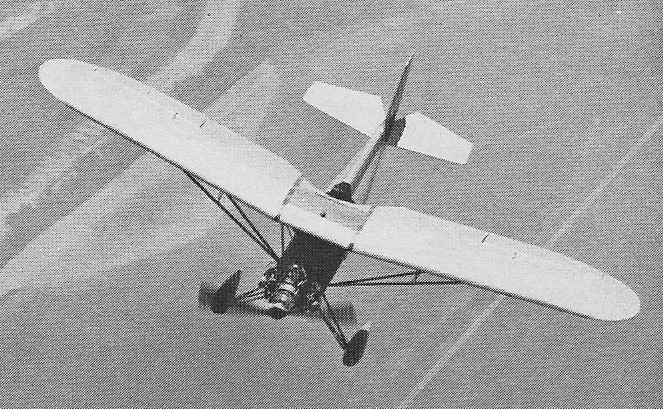
The engine uses a 2.5:1 gear reduction unit designed and built by Beets and Fred Nelson.
Engine 70-hp Volkswagen, 1641cc.
Gross Wt. 925 lbs.
Empty Wt. 603 lbs.
Wingspan 25 ft
Length 16 ft 4in
Top speed 156 mph.
Cruise 120 mph.
Stall 35 mph.
Climb rate 2000 fpm.
Takeoff run 200 ft.
Landing roll 300 ft.
Range: 600 sm.
Beecher Co
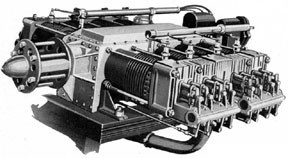
In 1918 the (B L) Beecher Co of New Haven CT., USA, built a horizontally opposed, air cooled 8 cylinder aero engine.
Beechcraft-SFERMA PD-146 Marquis
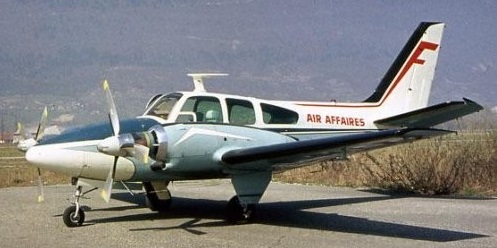
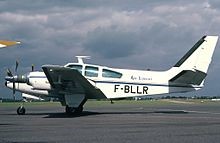
In 1962, the SFERMA (French Society for Maintenance and Repair of Aeronautical Equipment) modified a Model 95 Travel Air by fitting it with the swept tail units of the Model 55 “Baron” and by replacing the piston engines with two Astazou IIA turboprop of 440hp.
Seventeen Model 55 “Baron” cells are also re-engineered, including three for Beechcraft, and an eighteenth is not completed.
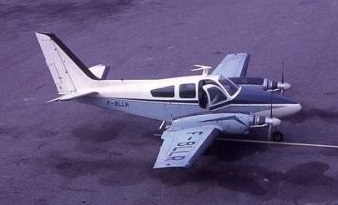
The PD-146 “Marquis” n°2 (F-BJSI) is re-engined with Astazou X 600hp turbines and established several world speed records in its category (C-1-d, Group 2):
On February 21, 1964, 1,000km at 502.12km / h (piloted by Maurice Oppeneau and Jacques Boisbeau).
On June 19, 1964, 2,000km at 446.92km / h (piloted by Maurice Oppeneau and Jacques Boisbeau).
Beechcraft T-36
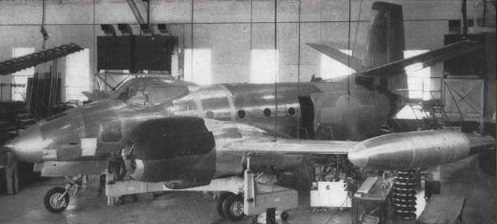
A 4-12 place low wing monoplane with retractable undercarriage, the T-26 was intended to replace C-45s in Air Training Command. A batch of 195 aircraft was ordered, but canceled June 1953 when the first flight of the prototype was a matter of only hours away.
Two were built, as T-36A, but neither was flown.
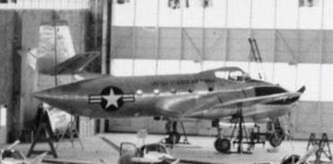
Engines: two 2300hp P&W R-2800
Wingspan: 70’0″
Length: 52’2″
Est speed: 300+ mph
Gross wt: 25,000 lb approx.
Beechcraft 45 / T-34 Mentor
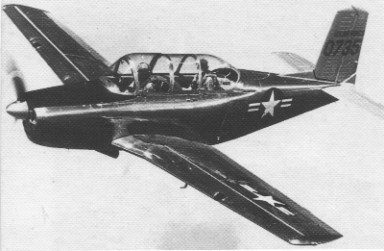
In 1948 Beech built as a private venture a two-seat trainer developed from the V-tail civil Bonanza. Having tandem seating for pupil and instructor and a conventional tail unit, the aircraft was designated Beech Model 45 Mentor, and flew for the first time on 2 December 1948.
Beechcraft 45 / T-34 Mentor Article
USAF evaluated three examples of the Beech Model 45, two powered by the 153kW Continental E-185-8 engine and one by the 168kW Continental E-225-8; all three were designated YT-34 by the USAF. These three aircraft made their first flights in May, June and July 1950, and were tested extensively during a competition period, being flown not only by evaluation pilots, but also in the primary training role with pupils and instructors. On 4 March 1953, the USAF selected the Model 45 as its new primary trainer, under the designation T-34A Mentor, and ultimately 450 were built for that service, 350 by Beech and 100 by the Canadian Car & Foundry Company in Montreal, Canada. An initial order from the USAF for 34 aircraft was followed by one for 25 from the RCAF and yet another from the USAF for 66. RCAF plans were changed after only one training course and in 1955, 23 of its Mentors were donated to the Turkish Air Force. The last complete airframe to be built by Car Car was the T 34A Mentor.
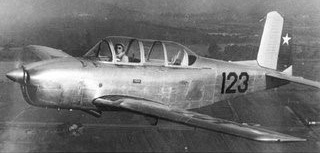
US Navy evaluation of the Model 45 began soon after the USAF had placed its initial contract with Beech, and on 17 June 1954 the Navy ordered 290 under the designation T-34B. A total of 423 were acquired eventually. In July 1951 one of the original prototypes was modified to mount two 7.62mm machine-guns in the wings, with provision additionally for underwing racks capable of accepting six rockets or two 68kg bombs; this was evaluated by the USAF as a potential light close-support aircraft, but no orders materialised.
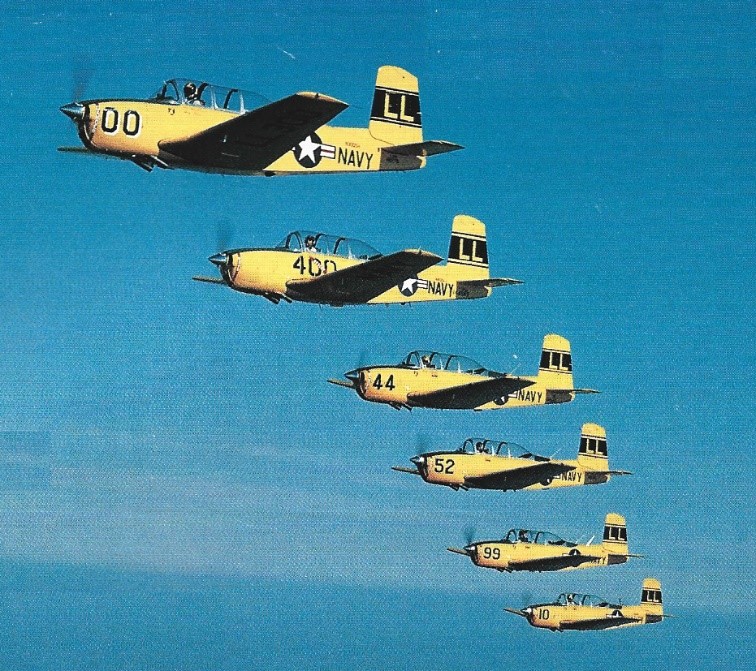
The US Navy decided in 1973 to investigate the possibility of retaining the Mentor in service, with its piston engine replaced by turbine powerplant. To evaluate this proposal, the USN instructed Beech to convert two T-34Bs to turbine power, under the designation YT-34C.
The powerplant chosen by Beech for the conversion was a Pratt & Whitney Aircraft of Canada PT6A-25. In this particular application it is provided with a torque limiter that restricts power output to some 56 per cent of maximum, ensuring constant performance over a wide range of altitude/temperature conditions, and also offering long engine life. The first YT-34C was flown on 21 September 1973, and following satisfactory evaluation of the two aircraft, Beech received contracts valued at approximately $72 million for the construction of 184 new aircraft. In addition to the installation of the new engine, the production aircraft were also given structural strengthening to ensure an airframe fatigue life of some 16,000 hours. The first T-34C Turbo-Mentor entered service with the USN’s Naval Air Training Command in November 1977, and student training with the type began during the following January. Since then production has reached 353, with six being transferred to the US Army.
The landing gear was designed to survive the hard simulated carrier landings practiced by student pilots and angle of attack indicators, a necessity for carrier approaches, are standard on the T-34C. Even though the Beeches are not operated on carriers, new Navy pilots become aware of the importance of angle of attack right from the beginning. Power off stall speed with gear and flaps down is 56 knots; the stall warning is a rudder shaker felt as a shudder in the pedals when approaching the stall.
On 24 June 1976, the US Navy replaced both its North American T 28 Trojan and Beech T 34B Mentor trainers by the improved Beech T 34C turboprop¬-powered version of the Mentor.
In 1981 the US Navy ordered an additional batch of 41 T-34C Turbo Mentors with FY81 funds. Previously a total of 155 T-34Cs had been delivered to the USN, and 81 had been exported to seven nations.
Beech developed a T-34C-1 version for armaments system training, equipped with four underwing hardpoints with a total weapons capacity of 544kg. Examples of this version have been supplied to the navies of Argentina, Ecuador, Peru and Uruguay, and to the air forces of Ecuador, Indonesia and Morocco. An export civil version, known as the Turbine Mentor 34C, has also been delivered for use in Algeria’s national pilot training school.
In Japan, the Fuji company built 176 T-34s for their own and the Philippine military forces. The Canadian Car and Foundry produced 125 Mentors, and an additional 75 were assembled in Argentina.
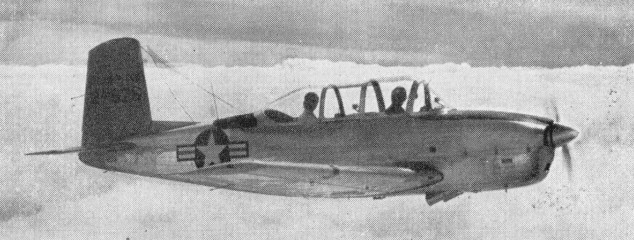
T-34
Engine 225-hp Continental.
Gross Wt. 2950 lbs.
Empty Wt. 2156 lbs.
Fuel capacity 50 USG.
Top speed 189 mph.
Cruise 173 mph.
Stall 53 mph.
Initial climb rate 1120 fpm.
Range 975 sm.
Ceiling 20,000 ft.
Takeoff distance (50ft) 1200 ft.
Landing distance (50ft) 960 ft.
Seats 2.
T-34A
Engine: Continental O 470 13, 225 hp.
Max speed, 189 mph (304 kph)
Cruise, 173 mph (227 kph)
Initial climb, 1,230 fpm (6.24 m/sec)
Service ceiling, 20,000 ft (6096 m)
Range, 737 mls (1186 km)
Empty weight: 2,156 lb (978 kg)
Loaded weight: 2,950 lb (1338 kg)
Span, 32 ft 10 in (10 m)
Length, 25 ft 11 in (7.9 m)
Wing area, 177.6 sq.ft (16.49 sq.m)
T-34B
Engine 225-hp Continental O-470-13
Wingspan: 32 ft 10 in
Wing area: 177.6 sq.ft
Length: 25 ft 10 in
Height: 9 ft 7 in
Empty weight: 2055 lb
Loaded weight: 2750 lb
Fuel capacity 50 USG.
Max speed: 188 mph
Cruise: 167 mph
Vne: 280 mph IAS
Stall 53 mph.
ROC: 1210 fpm
Service ceiling: 21.200 ft
Max range: 975 mi
Takeoff distance (50ft) 1200 ft.
Landing distance (50ft) 960 ft.
Seats 2.
T-34C Turbo Mentor
Engine: Pratt & Whitney PT6A 25, 400 shp.
Prop: 3 blade, constant speed, reversible.
Length: 28 ft 8 in.
Height: 9 ft 11 in.
Wingspan: 33 ft 5 in.
Wing area: 179 sq.ft.
Max ramp weight: 4,325 lbs.
Max takeoff weight: 4,300 lbs.
Standard empty weight: 3,003 lbs.
Max useful load: 1,297 lbs.
Max landing weight: 4,300 lbs.
Wing loading: 23.9 lb/sq.ft.
Power loading: 10.8 lb/hp.
Max usable fuel: 130 USG/845 lbs.
Max rate of climb, sea level: 1,440 fpm.
Max rate of climb, 8,000 ft: 1,350 fpm.
Max operating attitude: 20,000 ft.
Max speed (17,500 ft): 214 kts.
Cruise, max power at 17,500 ft: 214 kts.
Cruise, max range at 20,000 ft: 186 kts.
Fuel flow at max cruise: 39 USGph.
Endurance at max cruise, no res: 3.3 hrs.
Stalling speed, clean: 74 kts.
Stalling speed, flaps down: 56 kts.
Range: 683 nm / 1265 km
Turbulent air penetration speed: 195 kts.
Crew: 2
T-34C-1
Engine: 1 x P&WAC PT6A, 300 kW.
Span: 10.2 m.
Length: 8.7 m.
Wing area: 16.7 sq.m
Empty wt: 1360 kg.
MTOW: 1950 kg.
Warload: 620 kg.
Max speed: 425 kph.
Initial ROC: 660 m / min.
Ceiling: 9150+ m.
T/O run (to 15m): 595 m.
Ldg run (from 15m): 470 m.
Fuel internal: 490 lt.
Range: 1390 km.
Combat radius: 555 km.
Allison AT-34 Mentor
Average conversion price: US$430,000
Engine: Allison 250B17F, 450 hp
TBO: 3500 hr
Fuel type: Jet A, Jet A1, JP 5, JP 8, limited AvGas
Propeller make/type: 90-inch CS three-blade full-feather reversing
Landing Gear type: Tri./Retr.
Gross weight: 3400 lb
Max landing weight: 3400 lb
Empty weight, std: 2020 lb
Useful load, std: 1380 lb
Fuel capacity, std: 114 USgal
Wingspan: 32 ft. 10 in.
Overall length: 27 ft. 8 in.
Height: 10 ft
Wing area: 177.6 sq. ft
Wing loading: 16.8 lbs./sq. ft
Power loading: 7.6 lbs./hp
Wheel track: 9 ft. 7 in.
Wheel size: 6.00 x 6 in main; 5.00 x 5 in nose
Seating capacity: 2
Cabin doors: 2
Cabin width: 25 in
Cabin height: 42 in
Baggage capacity: 220lb
Cruise speed @12,000 ft.: 200 kt
Cruise speed @17,500 ft.: 212 kt
Cruise speed @23,000 ft.: 195 kt
Fuel consumption @12,000 ft.: 28 USgph
Fuel consumption @17,500 ft.: 25 USgph
Fuel consumption @23,000 ft.: 21 USgph
Stall speed (gear, flaps up) (kts.): 60
Stall speed (gear, flaps down): 55 kt
Best rate of climb (sea level): 2500 fpm
Service ceiling: 25,000 ft
Takeoff ground roll: 600 ft
Landing ground roll: 600 ft
Landing over 50 ft. obstacle: 670 ft
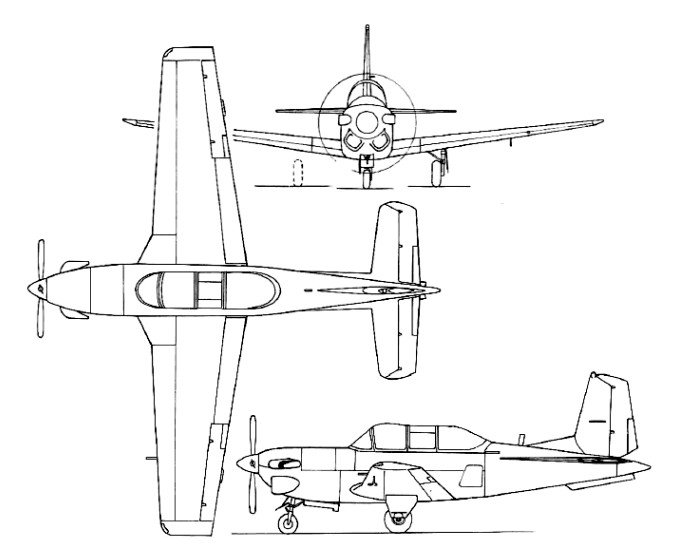
Beechcraft 2000 Starship 1
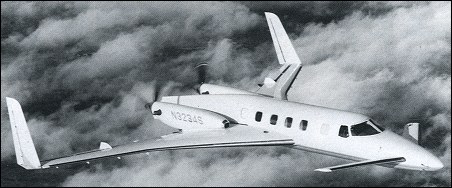
Success in testing the SCAT 1 led to the construction of the Model 2000 Starship 1. The Starship design has compound taper main wings, which mount the two pusher engines. Large endplate fins, known as tipsails, provide longitudinal stability, augmented by two small fins on the wing trailing edge. Additional keel area is provided by a ventral fin under the extreme rear of the slender fuselage. The large canard foreplanes of variable-geometry, sweeping forward by 4 degrees for low-speed flight and 30 degrees back in the cruise.
Beechcraft 2000 Starship 1 Article
The Starship is built entirely of composites such as carbon graphite, Kevlar and E-glass, which make for an exceptionally strong and light aircraft that isn’t subject to the same inherent long-term weaknesses found in aluminum airframes. The composite makeup of the airframe doesn’t transmit noise or vibration from its twin 1,200 shp Pratt & Whitney engines, thus keeping interior cabin sound levels extremely low. Because of its canard configuration, the design is virtually impossible to stall. Virtually the entire structure is made of Nomex honeycomb and graphite/epoxy composites, with titanium used in high-stress areas.
The prototype composite construction Starship rolled out at Wichita to begin its certification in 1985. The first of three flying pre-production Starship 1s flew on 15 February 1986. Another three airframes were produced for static, damage tolerance and pressure testing. Basic FAA certification followed on 14 June 1988, and the first production machine flew on 25 April 1989. This has been used for customer demonstration flights, resulting in 40 orders by June of that year.
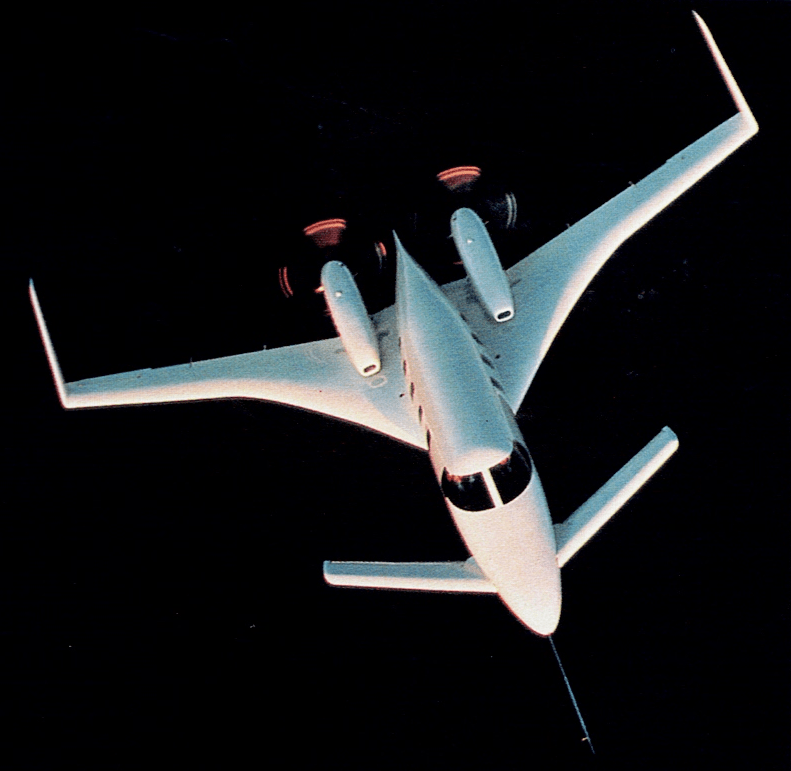
The tandem wing, twin pusher corporate aircraft is capable of a maximum cruise of 352 knots and a 41,000 foot ceiling. The Starship is the first all-composite, pressurised aircraft to receive FAA type certification. Starship is constructed of layers of graphite fibre surrounding a core of honeycombed nomex, bonded with adhesive resin.
The unique Starship entered production in 1988 following first flight of a full-scale prototype on 15 February 1986. Seating eight passengers in a pressurised cabin, the aircraft is powered by two 1,200 shp (895 kW) P & W Canada PT6A-67A turboprops in “pusher” configuration giving a max cruising speed of 335 kts (621 km/h). Composites form a major portion of the Starship’s construction and among its aerodynamic features are variable-geometry foreplanes and large wingtip stabilisers called “tipsails”.
Production ceased approximately 10 years after its introduction.
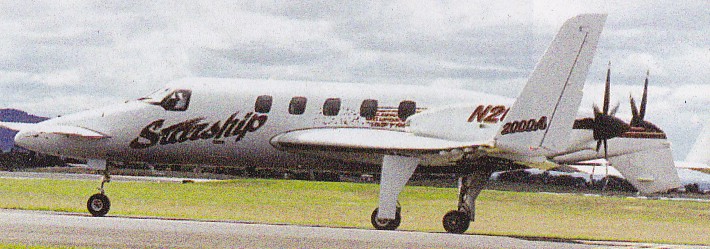
Beech 2000 Starship 1
Engines: 2 x Pratt & Whitney Canada PT6A-67A turboprops, 1,200 shp / 895kW
Max take off weight : 14001.8 lb / 6350.0 kg
Weight empty : 8917.0 lb / 4044.0 kg
Max. weight carried : 5084.7 lb / 2306.0 kg
Fuel capacity: 534 US gal
Wingspan: 16.6 m / 54 ft 6 in
Length: 14.05 m / 46 ft 1 in
Height: 3.96 m / 12 ft 12 in
Wing area: 26.09 sq.m / 280.83 sq ft
Wing load : 49.82 lb/sq.ft / 243.0 kg/sq.m
Max. speed : 352 kt / 652 km/h
Landing speed : 84 kt / 156 km/h
Cruise speed: 621 km/h / 386 mph
Initial climb rate : 3346.46 ft/min / 17.0 m/s
Service ceiling: 12495 m / 41000 ft
Range: 3132 km / 1946 miles
Payload : 8-11pax
Takeoff distance, 50 ft.: 4,093 ft
Landing distance, 50 ft.: 2,630 ft.
Beechcraft SCAT 1
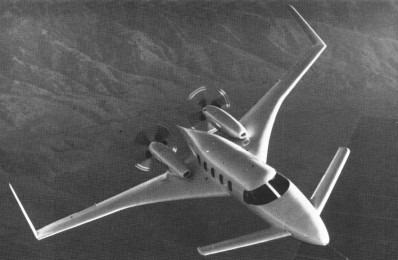
To provide a new generation of corporate transports, Beech looked to Burt Rutan’s Scaled Composites Inc. to design and produce the SCAT 1, an 85% scale technology demonstrator of a canard-configured aircraft. Success in testing led to the construction of the Model 2000 Starship 1.
Beechcraft Premier 1 / Raython Premier 1
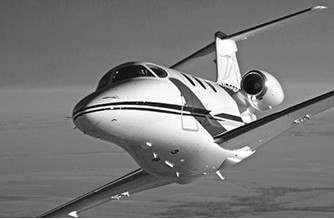
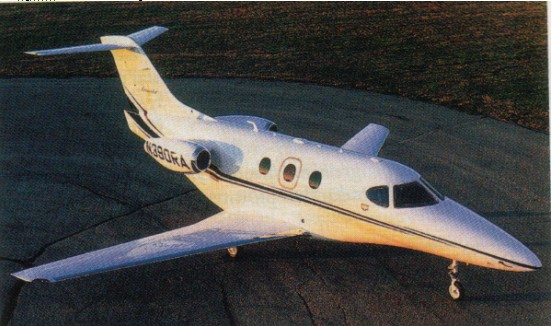
Raytheon developed the composite Premier I entry-level jet with a composite fuselage, empennage and control surfaces built of graphite and epoxy laminates with honeycomb construction, totaling more than a million miles of carbon-fiber filaments. The wings are aluminum.
First flying in December 1998, the Premier offers typical jet speed and altitudes. The Premier I is also certified for single-pilot operation.
Premier 1
Engines: two 2,300 lb Williams FJ44-2A
Seats: 2+6
Gross weight: 12,500 lb
Empty weight: 8,470 lb
Fuel capacity: 548 USgals
Max cruise: 451 kts
Range: 826-1,502 nm
Ceiling: 41,000 nm
Takeoff distance: 3,792 ft.
Landing distance: 3,170 ft.
Premier 1A
Engines: (2) Williams FJ44-2A
Max Cruise Speed: 451 kt @FL330
Max Range: 1460 nm
Max Certified Altitude: 41,000 ft
Takeoff Distance: 3792 ft
New Price 2009: US$6.4 million
Beechcraft Hawker 700 / 750