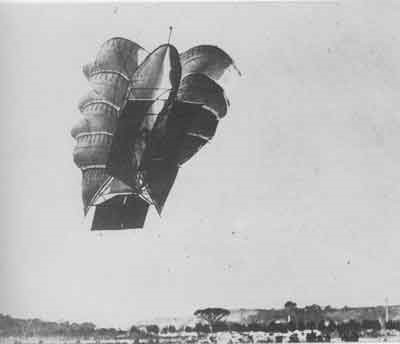
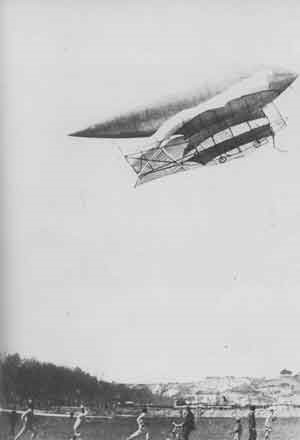
Shown in Rome in 1905, the “Aerostave” was financed by the Italian industrialist Achille Bertèlli (1855-1925). As a consequence the machine is commonly known as the Aerostave Bertèlli. The man who designed the machine was Vittorio Cordero di Montezemolo, who in 1903 published his ideas in a study of aerial navigation. The complex multi-wing structure was eventually built at the Surcouf factory in Paris. There, powered by a Levavasseur engine of 22 hp, trials were performed fitted with a gas bag, thus giving it additional lift in the manner done in 1906 by Santos-Dumont when testing his No. 14-bis.
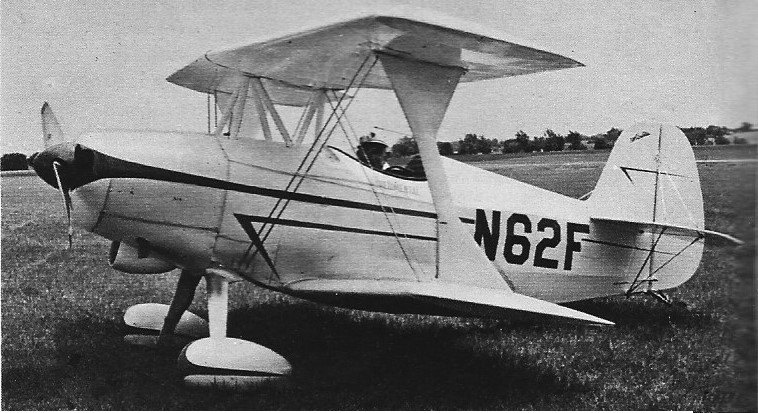
The Bert BF-4 N62F single-seat biplane was the fourth design of Floyd Bert. It took a year to construct at a cost of about $3500.
The wings are wood with Ceconite cover, and ailerons, on the lower wings only, are aluminium and fabric. The fuselage and tail are steel tube and fabric.
The engine is fitted with an inverted fuel system.
Engine: Lycoming O-320-A1A Wingspan: 14 ft / 4.3 m Length: 15 ft / 4.6 m Empty weight: 660 lb / 299.4 kg Gross weight: 1000 lb / 453.6 kg Cruise: 140 mph / 225 kph Landing speed: 60 mph / 96.6 kph ROC: 3200 fpm / 16.26 m/sec Endurance: 2 hr 30 min
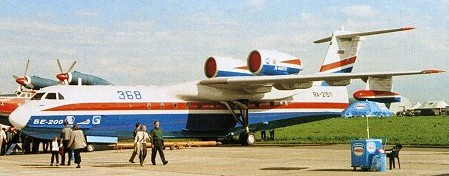
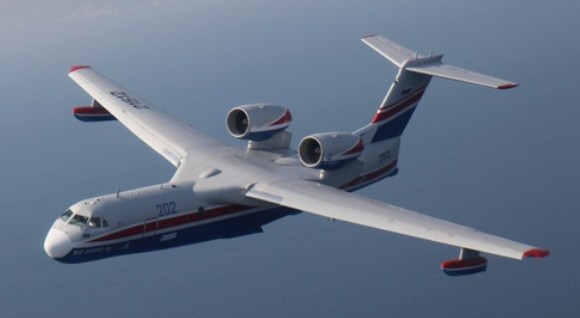
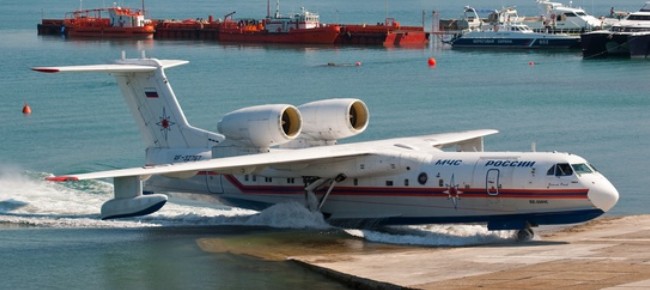
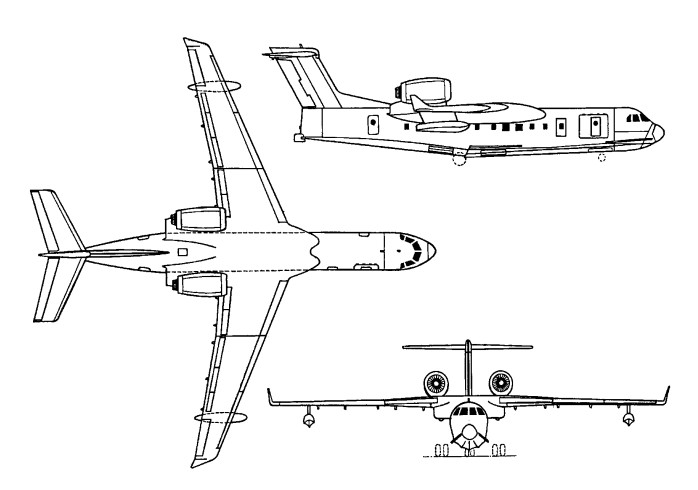
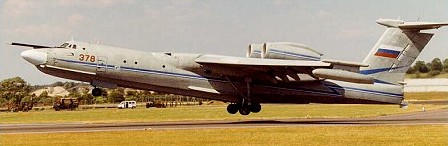
Beriev’s Be-200 multipurpose amhibious aircraft was designed as a further development of the A-40 antisubmarine aircraft. The Be-200 has a 66 passenger or 8000 kg cargo capacity. Six aircraft were launched into production at the Irkutsk Aviation Production Association. The first prototype flew on September 24, 1998.
Engine: 2 x Progress D-436TP turbo-prop, 73.5kW Wingspan: 31.8 m / 104 ft 4 in Length: 31.2 m / 102 ft 4 in Height: 8.7 m / 28 ft 7 in Take-off weight: 37000-43000 kg / 81571 – 94799 lb Max. speed: 710 km/h / 441 mph Cruise speed: 600 km/h / 373 mph Ceiling: 8000 m / 26250 ft Range: 2100 km / 1305 miles Range w/max.fuel: 3850 km / 2392 miles Payload: 6.5 ton or 64 pax. Crew: 2
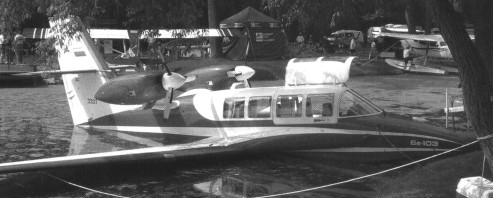
A 1986 designed amphibious twin engine aircraft. Licence built in the USA and certified by the FAA. The first prototype flew on 19 July 1997.
Engine: 2 x Teledyne Continental Motors 10-360ES4, 210hp Take-off weight: 2435 kg / 5368 lb Wingspan: 12.7 m / 41 ft 8 in Length: 10.6 m / 34 ft 9 in Cruise: 165 mph. Seats: 6.
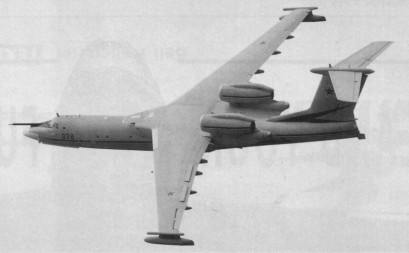
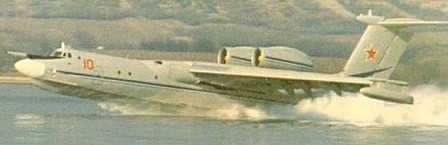
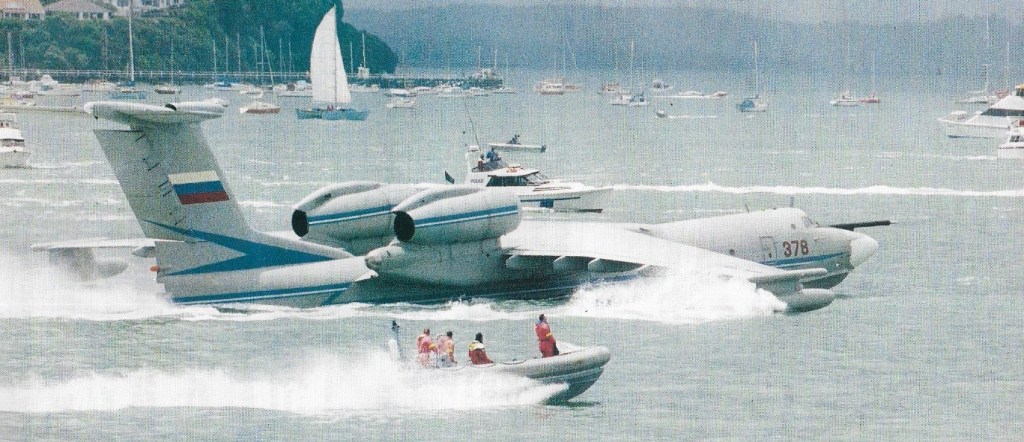
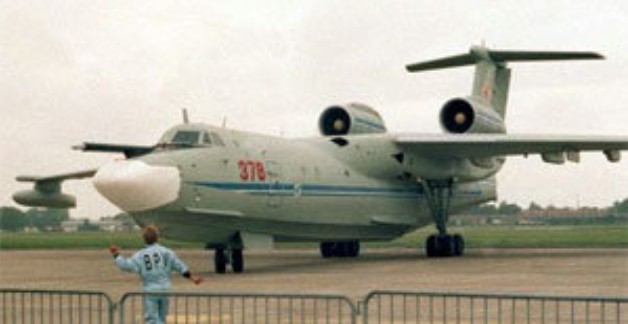
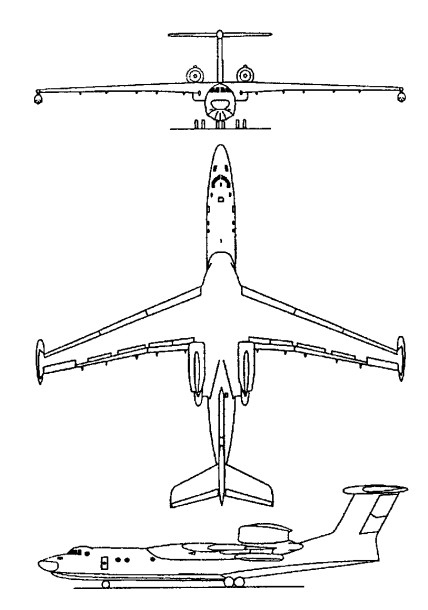
The A-40/Be-40 Albatross Mermaid turbofan-powered intermediate-range antisubmarine, search-and-rescue and patrol amphibian, first flown December 1986 and ordered for the Russian Navy in 1992 but not funded. The A-40 amphibian aircraft is intended for antisubmarine warfare in the near coastal zone at any time of the day and year, in VFR and IFR weather conditions. The aircraft is provided with an inflight refueling system. Its onboard equipment provides for automatic solution of flight/navigation problems, search, detection, tracking and destruction of hostile submarines both in surface and submerged positions and on the sea bottom. The equipment comprises a search/sighting system, a flight control and navigation complex, communications facilities, and other equipment. The search/sighting system consists of radar, sonar and magnetometric subsystems.
The engines are started by an auxiliary power unit and the cruise turbofans are equipped with a thrust reverser, thereby reducing the landing roll and the abortive takeoff distance.
The type first showed up in US reconnaissance photographs during 1988 satellite passes over Taganrog but the first “closeups” came with the amphibian’s surprise debut at an air show in August 1989. NATO dubbed the aircraft, christened Albatross by the G M Beriev Taganrog Aviation Scientific Engineering Complex, “Mermaid”.
A requirement for the two large 26,455 lb static thrust PERM Soloviev D 30KPV engines to be placed away from ingesting water saw an over wing configuration incorporated in the design. The rear part of the pylon ac¬commodates RD 60 booster engines providing an increase in thrust by 6065 lbs st apiece. In the SAR role the A 40 can cover 1240 nm (2000km) from its base and take on board up to 54 survivors. The crew usually totals five plus a rescue team of around four to six. An improved search-and-rescue variant became the Be-42 (sometimes referred to in the West as A-45).
Engines: 2 x PERM Soloviev D-30KPV turbofan, 117.7 kN (26,455 lb) and 2 x Klimov RD-36-35AFV, 24.5 kN Take-off weight: 86000 kg / 189599 lb Wingspan: 41.6 m / 136 ft 6 in Length: 43.8 m / 143 ft 8 in Height: 11.1 m / 36 ft 5 in Wing area: 200.0 sqm / 2152.78 sq ft Max. speed: 760 km/h / 472 mph Cruise speed: 720 km/h / 447 mph Ceiling: 9700 m / 31800 ft Range w/max.fuel: 5500 km / 3418 miles Range w/max.payload: 4100 km / 2548 miles Armament: 6500kg Crew: 8
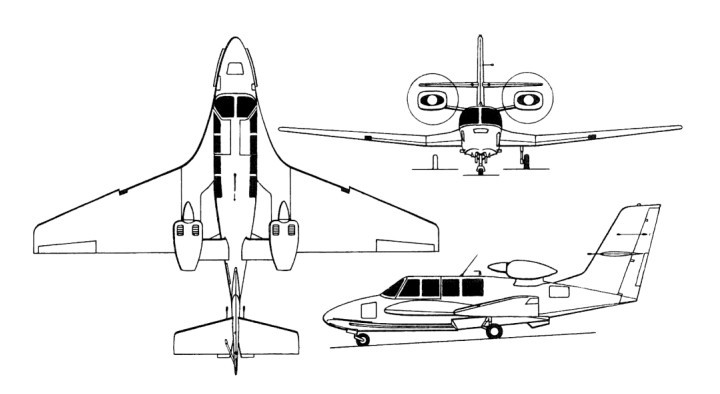
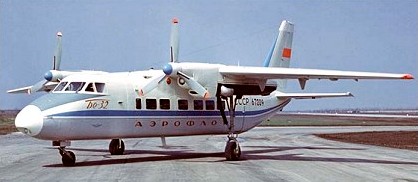
Beriev’s Be-32 were built for the ‘commuter’ programme in the 1970s, first flown in 1976. The LET 410 was selected, ten were built, and the Be-32 was cancelled.
Engine: 2 x Glushenkov TVD-10 turboprops, 708kW Take-off weight: 5860 kg / 12919 lb Wingspan: 17.0 m / 55 ft 9 in Length: 15.7 m / 51 ft 6 in Height: 5.46 m / 17 ft 11 in Wing area: 32.0 sqm / 344.44 sq ft Cruise speed: 480 km/h / 480 km/h Range: 1300 km / 808 miles Passenger cap: 16
The Beriev Be-30 short-haul transport is the first landplane to be designed and developed by the Beriev design bureau. Seen publicly for the first time at the Soviet Aviation Day display at Domodedovo in 1967, it also appeared at the 1969 Paris Air Show. Designated Be-30, and allocated the NATO codename ‘Cuff, it was reported to have flown for the first time on 3 March 1967. A high-wing monoplane, the Be-30 was of all-metal structure and introduced features such as metal bonding, spot welding, and the use of stiffened skin panels of light alloy honeycomb. The retractable tricycle landing gear incorporated stalky main units, retracting into the rear of the engine nacelles. Power-plant of the prototype consisted of two 552kW Shvetsov ASh-21 radial piston engines, but two Glushenkov TVD-10 turboprops were used to power the very small number of production aircraft. Accommodation was provided for a crew of two and 14 passengers, and features included air-conditioning and blind-flying equipment that incorporated an autopilot and an automatic approach system.
Engines; two Glushenkov TVD-10 turboprops Pax cap: 14
The lessons learned in the design of the R-1 and Be-10 were incorporated in the design of a much improved flying-boat based loosely on the Be-6 and identified originally by NATO as a re-engined version of the older type.
The Be-12 Tchaika (Seagull), designated M-12 in AV-MF service, has the gull-wing layout and twin tail of its predecessor. The greater power and lighter weight of the turboprop engines have permitted a forward extension of the hull, with a new planing bottom. The prominent spray suppressor around the bows of the Be-10 is also a feature of the turboprop aircraft.
The addition of a retractable landing gear makes the Be-12 amphibious. MAD (magnetic anomaly detection) gear extends 15 ft behind the tail. The search and mapping radar projects far ahead of the glazed nose, and much of the hull is filled with equipment and there is a weapon and sonobuoy bay aft of the wing with watertight doors in the bottom aft of the step.
The Be-12 turboprop aircraft, first seen at the 1961 Moscow Aviation Day at the same time as the swept-wing Be-10, has fast become the Soviet Union’s standard large marine aircraft. The weight-lifting capability of the Be-12 was demonstrated in a series of class records for amphibians set up in 1964, 1968 and 1970, suggesting a normal weapons load as high as 5000kg. The Be-12 can load on the water through large side hatches in the rear fuselage, and stores can be dropped through a watertight hatch in the hull aft of the step. Be-12s have set many class records for speed, height and load-carrying. They were based all around the Soviet shores and in Egypt and, possibly, other countries. NATO code name ‘Mail’. It is also believed to have been used for mapping, geophysical survey and utility transport. By Soviet standards the type was not built in large numbers, only 95 being reported in service in the late 1980s.
Be-12 (M-12) Tchaika Engines: 2 x Ivchenko AI-20D single-shaft turboprops, 4,190 ehp / 2940kW Wing span: 97 ft 6 in (29.7 m) Wing area : 1030.007 sqft / 95.69 sq.m Wing load : 63.14 lbs/sq.ft / 308.00 kg/sq.m Length overall: 99 ft (30.2 m) Height on land: 22 ft 1½ in (7 m) Empty weight: approx 48.000 lb (21.772 kg) Max take off weight : 65047.5 lb / 29500.0 kg Max. speed : 329 kts / 610 km/h / 379mph Cruising speed 199 mph (320 km/h) Initial climb rate : 2992.13 ft/min / 15.20 m/s Service ceiling 38.000 ft (11582 m) Range with full equipment: 2160 nm / 2.485 miles (4000 km) Armament: at least 6600 lb (3000 kg) sonobuoys and AS bombs in internal weapon bay; one to three external hard points for stores under each outer wing. Crew: 6-10
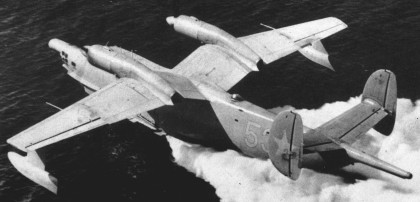
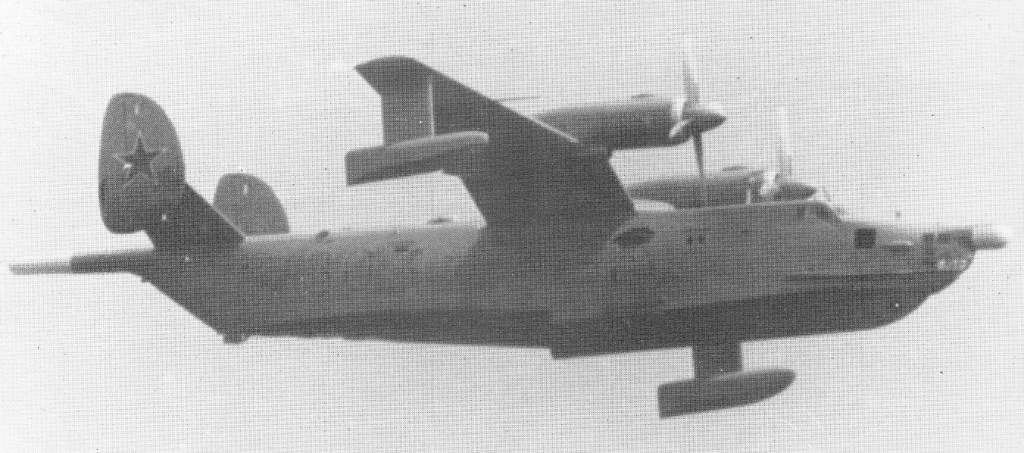
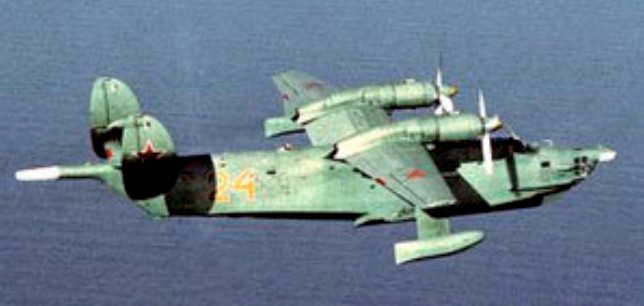
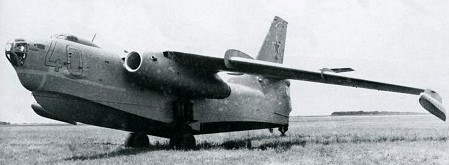
Developed from the R-1, the Be-10 flew for the first time on 20 July 1956 and was first seen in public on the 1961 Soviet Aviation Day, when four of the type flew past in formation.
The Beriev Be-10 ‘Mallow’ has the distinction of being the only turbojet-powered flying-boat in the world to have attained true production status. During 1961, and under the designation M-10, the type established 12 world class records. Among them were a speed record over a 15/25km course of 912km/h, piloted by Nikolai Andrievskii, and a speed of 875.86km/h over a 1000km closed circuit with a payload of 5000kg and an altitude record of 12733m with a 10000kg payload, with Georgi Buryanov at the controls.
The all-metal Be-10 was a high-wing monoplane with sharply sweptback wings; these had considerable anhedral, and incorporated two wing fences and a fixed wing-tip stabilising float on each wing. Armament comprised two 23mm NS-23 cannon in the nose, plus two more operated under radar control in a tail barbette.
Engines: 2 x Lyulka AL-7PB turbojets, 6500kg each. Take-off weight: 46500 kg / 102515 lb Empty weight: 24100 kg / 53132 lb Wingspan: 22.3 m / 73 ft 2 in Length: 31.1 m / 102 ft 0 in Wing area: 111.8 sqm / 1203.40 sq ft Max. speed: 912 km/h / 567 mph Ceiling: 14962 m / 49100 ft Range: 4800 km / 2983 miles Armament: 4 x 23mm cannon, 2000kg of weapons