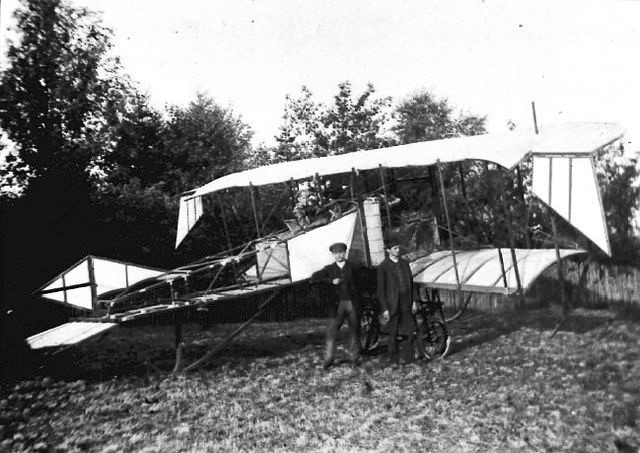
Wanke 1912 biplane

Carl Wanke of Coswig/Anhalt, Germany, started in 1912 to build aircraft. He set up a small workshop and with help of local carpenters, technicians and other enthusiasts he constructed his first aircraft. That was said to have been projected as monoplane, but it was only able to move some 30 metres on the ground. Then Wanke rebuilt the wings and apparently created the biplane shown above. It was tested with some hops, but after a somersault during the first public trial flight it was wrecked.

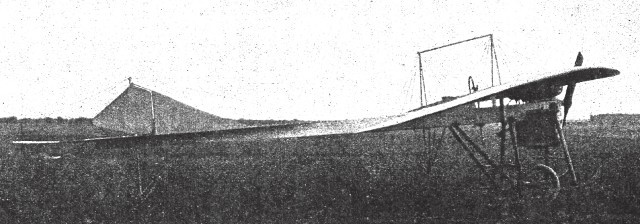
Walter Stein Aeroplanbau Eindecker 1911

The Walter Stein Aeroplanbau in Teltow/Berlin built two or three disserent designs, depending on how you count. The first was built by Rumpler in the spring of 1910. It was followed by a distinct reconstruction by Stein himself. The machine retained the Aeolus engine but got a sturdier undercarriage and new Taube-like wings. As with his first design, Stein was struggling to get the machine in the air during Autumn 1910. In 1911 Stein built a second Eindecker, fitted at first with a Rumpler Aeolus engine and later modified with a Gregoire-Gyp-Motor. This was the challenge machine. It was later modified, probably in 1912, with a tailwheel and an additional strut to the lower king-post.

Walter Scolar

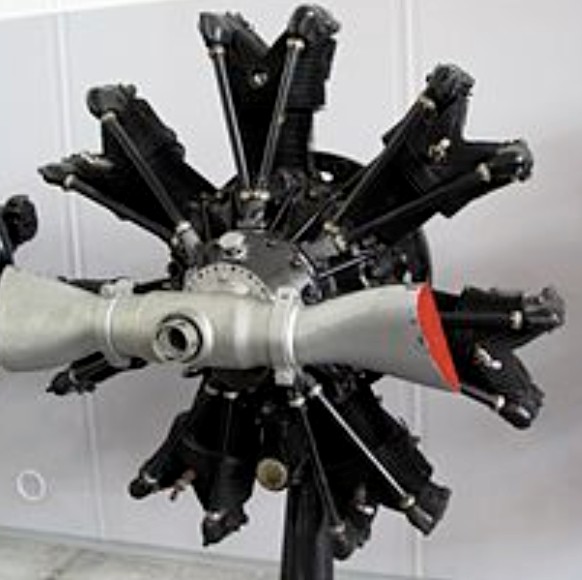
The Walter Scolar was a Czechoslovakian nine-cylinder, aircooled, radial engine for powering light aircraft that first ran in 1936. With a displacement of 8 litres (490 cu in), it produced 132 kW (180 hp) at 2,500 rpm.

Applications:
Beneš-Mráz Beta-Scolar

Specifications:
Scolar
Type: 9-cylinder radial piston engine
Bore: 105 mm (4.13 in)
Stroke: 100 mm (3.94 in)
Displacement: 7.8 L (488 cu in)
Dry weight: 155 kg (342 lb)
Valvetrain: One intake and one exhaust valve per cylinder
Fuel system: Carburettor
Fuel type: Petrol
Cooling system: Air-cooled
Power output: 132 kW (180 hp) at 2,500 rpm
Compression ratio: 5.4:1
Power-to-weight ratio: 0.85 kW/kg (0.52 hp/lb)

Walter Venus

The Walter Venus was a seven-cylinder, air-cooled, radial engine for aircraft use built in Czechoslovakia and first run in 1929.

Applications:
Aero A.34
ANBO V
Savoia-Marchetti S.56A

Specifications:
Type: 7-cylinder radial engine
Bore: 105 mm (4.1 in)
Stroke: 120 mm (4.7 in)
Dry weight: 178 kg (393 lb)
Valvetrain: Overhead valve, one inlet and one exhaust valve per cylinder
Fuel system: Zenith Type 50J carburettor
Fuel type: Petrol
Oil system: Pressure and scavenge pump
Cooling system: Air-cooled
Reduction gear: Direct-drive
Power output: 82 kW (110 hp) at 1,750 rpm
Compression ratio: 5.15:1
Power-to-weight ratio: 0.46 kW/kg (0.28 hp/lb)

Walter Castor / Super Castor

Walter Castor III

The Walter Castor was a Czechoslovakian seven-cylinder, aircooled, radial engine for powering aircraft that was first run in 1929. The Super Castor was a nine-cylinder development.

Applications:
Aero A.35
Aero A.304 (Super Castor)
Airspeed Envoy
Breda Ba.25
Dornier Do K
Fizir F1V
Hopfner HV-6/28
Letov Š-28
Rogozarski AZR
Savoia-Marchetti S.71

Specifications:
Castor
Type: 7-cylinder radial piston engine
Bore: 135 mm (5.3 in)
Stroke: 170 mm (6.7 in)
Dry weight: 248 kg (547 lb)
Valvetrain: One intake and one exhaust valve per cylinder
Fuel system: Zenith carburettor
Fuel type: Petrol
Cooling system: Air-cooled
Power output: 194 kW (260 hp) at 1,850 rpm (maximum power)
Compression ratio: 6:1
Power-to-weight ratio: 0.78 kW/kg (0.48 hp/lb)

Walter Sagitta

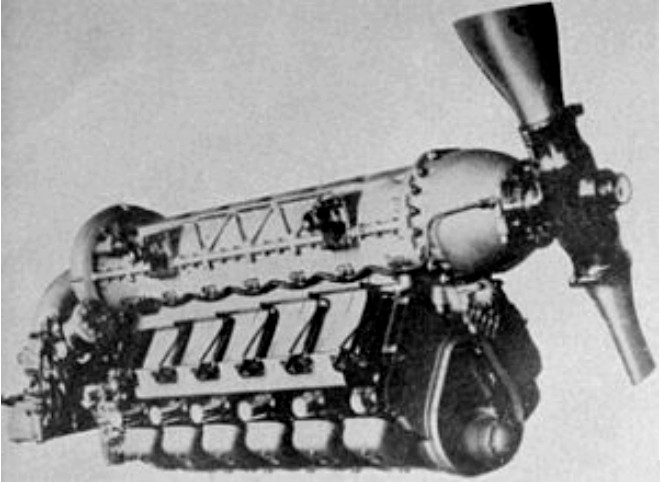
The Walter Sagitta was a Czechoslovakian, air-cooled, inverted V-12 engine that first ran in 1937. With a displacement of 18.4 litres (1,123 cu in), it produced up to 373 kW (550 hp) at 2,500 rpm.

Variants:
Sagitta I-MR
550 hp (410 kW) at 2,500rpm at 2,500 m (8,202 ft) – rated height

Sagitta I-SR
535 hp (399 kW) at 2,500rpm at 3,800 m (12,467 ft) – rated height

Sagitta II R.C.
Fully supercharged, 388 kW (520 hp).

Applications:
Fokker D.XXIII
Rogožarski R-313
Savoia-Marchetti SM.86
VEF I-16

Specifications:
Sagitta I-SR
Type: 12-cylinder inverted vee piston engine
Bore: 118 mm (4.65 in)
Stroke: 140 mm (5.51 in)
Displacement: 18.4 l (1,122.84 cu in)
Length: 19,140 mm (753.54 in)
Width: 725 mm (28.54 in)
Height: 796 mm (31.34 in)
Dry weight: 372 kg (820 lb) – Direct drive, 385 kg (849 lb) – Geared 2:3
Valvetrain: enclosed push-rod operated rockers, two valves per cylinder closed by triple springs
Supercharger: 8.7 times crankshaft speed
Fuel system: Automatic boost and mixture control by a horizontal carburrettor
Fuel type: 85 Octane Aviation Gasoline
Oil system: Dry sump, one pressure pump and two scavenge pumps
Cooling system: Air-cooled
Power output:
Take-off: 460 hp (343 kW) at 2,500rpm
Rated power: 535 hp (399 kW) at 2,500rpm at 3,800 m (12,467 ft)
Maximum Power: 540 hp (403 kW) at 2,600rpm at 4,000 m (13,123 ft)
Specific power: 24.29 kW/l (0.534 hp/cu.in)
Compression ratio: 6.25:1
Specific fuel consumption: 0.315 – 0.328 kg/kW/hr (0.525 – 0.548 lb/hp/hr)
Oil consumption: 0.004 – 0.0067 kg/kW hr (0.0067 – 0.11 lb/hp hour)
Power-to-weight ratio: 1.046 kW/kg (0.636 hp/lb)
Sagitta I-MR
Type: 12-cylinder inverted vee piston engine
Bore: 118 mm (4.65 in)
Stroke: 140 mm (5.51 in)
Displacement: 18.4 l (1,122.84 cu in)
Length: 19,140 mm (753.54 in)
Width: 725 mm (28.54 in)
Height: 796 mm (31.34 in)
Dry weight: 372 kg (820 lb) – Direct drive, 385 kg (849 lb) – Geared 2:3
Valvetrain: enclosed push-rod operated rockers, two valves per cylinder closed by triple springs
Supercharger: 10.2 times crankshaft speed
Fuel system: Automatic boost and mixture control by a horizontal carburrettor
Fuel type: 85 Octane Aviation Gasoline
Oil system: Dry sump, one pressure pump and two scavenge pumps
Cooling system: Air-cooled
Power output:
Take-off: 560 hp (418 kW) at 2,500rpm
Rated power: 550 hp (410 kW) at 2,500rpm at 2,300 m (7,546 ft)
Maximum Power: 600 hp (447 kW) at 2,500rpm at 1,750 m (5,741 ft)
Specific power: 24.29 kW/l (0.534 hp/cu.in)
Compression ratio: 6.25:1
Specific fuel consumption: 0.315 – 0.328 kg/kW/hr (0.525 – 0.548 lb/hp/hr)
Oil consumption: 0.004 – 0.0067 kg/kW hr (0.0067 – 0.11 lb/hp hour)
Power-to-weight ratio: 1.046 kW/kg (0.636 hp/lb)
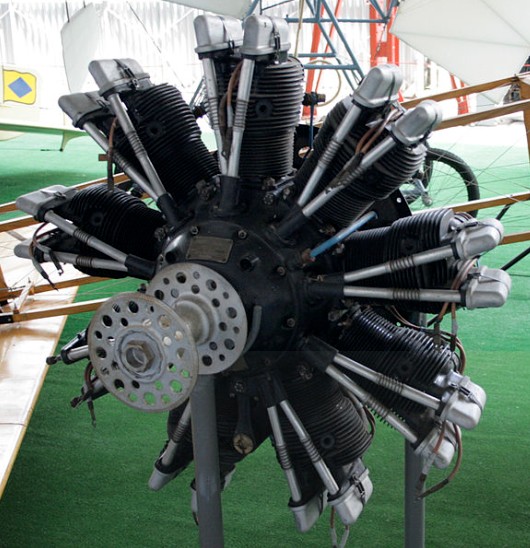
Walter Regulus

Walter Regulus II

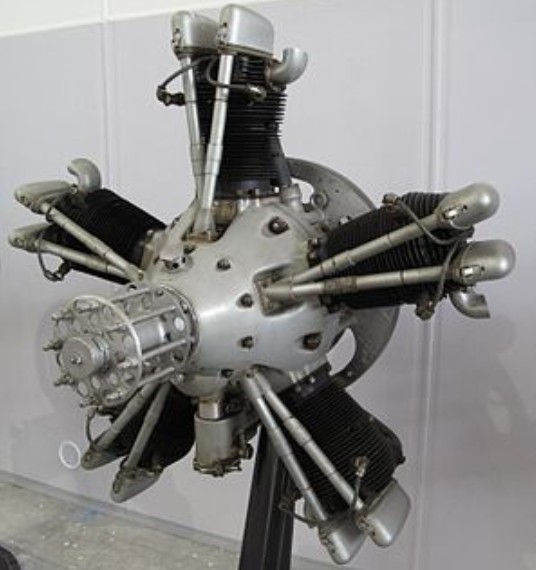
The Walter Regulus was a Czechoslovakian five-cylinder, aircooled, radial engine for powering light aircraft that first ran in 1934. The engine produced 186 kW (250 hp).

Regulus
Type: 5-cylinder radial piston engine
Valvetrain: One intake and one exhaust valve per cylinder
Fuel system: Carburettor
Fuel type: Petrol
Cooling system: Air-cooled
Power output: 186 kW (250 hp)

Walter Polaris

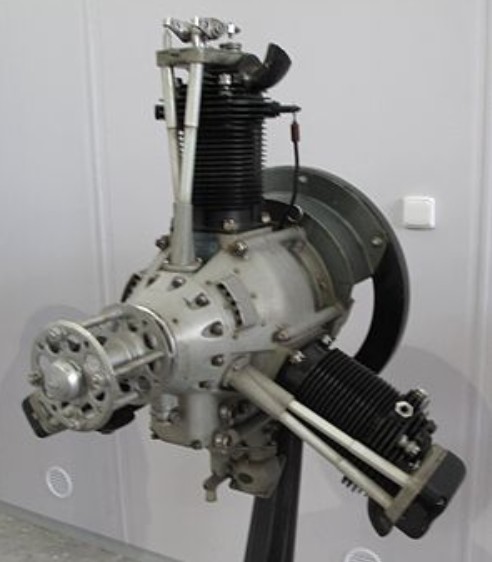
The Walter Polaris was a Czechoslovakian three-cylinder, aircooled, radial engine for powering light aircraft that was developed in the 1930s.

Applications:
Letov Š-39

Specifications
Polaris
Type: 3-cylinder radial piston engine
Valvetrain: One intake and one exhaust valve per cylinder
Fuel system: Carburettor
Fuel type: Petrol
Cooling system: Air-cooled