Brooklyn
NY
USA
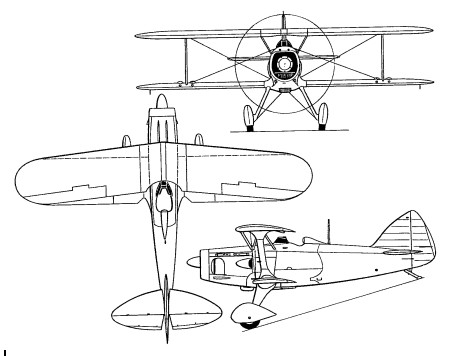
Circa 1920s built the Bliss Jupiter
Brooklyn
NY
USA
Circa 1920s built the Bliss Jupiter
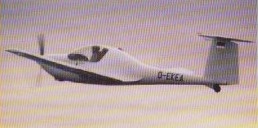
A plans built two-seat composites monoplane. Built without moulds, the wings and tailplane can be detached like a glider.
Engine: Limbach L2400, 90 hp
Wing span: 10 m
Wing area: 12 sq.m
MAUW: 720 kg
Empty weight: 440 kg
Fuel capacity: 100 lt
Max speed: 270 kph
Cruise speed: 245 kph
Minimum speed: 85 kph
Climb rate: 5 m/s
Seats: 2
Fuel consumption: 13 lt/hr
Plan price (1998): 1500 DM
Provides plans to construct the Hinz BL.1 Kea two-seat composites monoplane.
1998:
Bei der Kirche 17
D-70794 Filderstadt 1
Germany

Built by И. А. Блиндерман, a son of Russian emigrants, and В. В. Майоров, a Russian athlete who learned to fly in France. The “Kassa”, flown by Blinderman at Nice in April 1911, later crashed by Lecomte.
It used a one-piece wing construction with joined bent spars patented by Blinderman.

The 1912 Blinderman-Gilbert monoplane was designed and built by Blinderman and Gilbert in France.
Span: 32′
Length: 28’10”
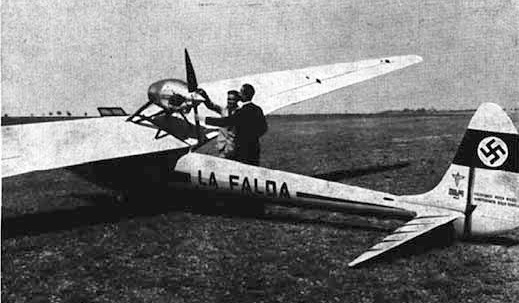
The 1935 Bley Flugzeugbau GmbH M-Condor was an experimental monoplane designed by Heini Dittmar at the request of the pilot Peter Riedel.
The 18 hp Kröber engine was mounted on six uprights and was possibly removable.
Based on a Dittmar Condor, (powered by Bley-Flugzeugbau, Namburg a. S.) the first flight was in mid-May 1935.
Engine: Kröber, 18 hp
Wingspan: 17.24 m
Wing area: 13.2 m2
Length: 7.6 m
Height: 2.6 m
Empty weight: 260 kg
MTOW: 350 kg
Seats: 1
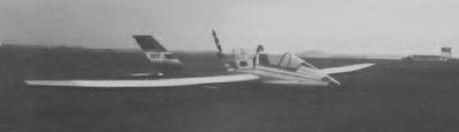
Designed and built by Herr Gerhard Blessing of Hamburg, this single-seat homebuilt motor glider has provision for carrying a second occupant, and the wings can, at the choice of the builder, be made in two, three or four parts. To assist the amateur constructor further, no component of the aircraft is more than 3.5m (11ft 5.75in) long, and the fuel tank and several other components are standard car items obtainable from the motor industry.
The Rebell is a mid-wing monoplane of basically steel tube construction with wood covering; the wings can be
folded for storage and the vertical tail surfaces are swept back, with a dorsal fin. Landing gear consists of a non-retractable semi-recessed monowheel supplemented by a balancer wheel under each wing about halfway along the semi-span, plus a tailwheel.
The prototype Rebell, registered D-KEBO, first flew on 3 June 1973 powered by a 54hp Hirth M28 two cylinder engine driving a Hoffman two-blade pusher propeller that could be feathered for soaring flight.
In 1975 a modified Volkswagen engine was fitted which had a slightly larger air intake.
The fuselage has been redesigned to take a 62hp Limbach SL 1700 engine in the nose, and the Rebell was expected to fly again in this form early in 1980.
Engine: Hirth M28
Span:49 ft 2.5 in
Length: 24 ft 7.25 in
Wing area: 182.0 sqft
Aspect ratio: 13.2
Empty weight: 926 lb
Max weight: 1,366 lb
Max speed: 124 mph
Economical cruising speed: 93 mph
Best glide ratio: 24:1

The Bleriot-Zappata 110 was ordered by the French Air Ministry for record breaking flights. In December 1930, piloted by Bossoutrot and Rossi, it raised the world duration record to 67 hrs 53 min. Fifteen months later the same crew set a closed circuit distance record of 6703 miles. Over 5-7 August 1933 Codos and Rossi flew non-stop from New York to Rayak, Syria, establishing a straight line distance record of 5654 miles.


The last fighter design of Andre Herbemont to bear the SPAD designation, and intended to participate in the 1934 fighter competition, the Bleriot SPAD 710 was a single-seat, single-bay biplane of all-metal construction with a duralumin monocoque fuselage and an 860hp Hispano- Suiza 12Ycrs 12-cylinder Vee liquid-cooled engine. It had a proposed armament of one engine-mounted 20mm cannon, four wing-mounted 7.5mm machine guns and one aft-firing 7.5mm gun in the rear fuselage.
The Bleriot SPAD 710 embodied inward-retracting main undercarriage members, a completely enclosed cockpit with aft-sliding canopy and a V-type or “butterfly” tail assembly. The initial flight took place in April 1937, and, on 8 June, 300km/h was exceeded in level flight with the undercarriage extended. A week later, on 15 June, tail flutter developed at an altitude of only 200m and the aircraft crashed, killing the pilot, Louis Massotte. Further development was then abandoned.
Wingspan: 8.84 m / 29 ft 0 in
Length: 6.50 m / 21 ft 4 in
Height: 3.20 m / 11 ft 6 in
Wing area: 22.0 sq.m / 236.81 sq ft
Max. speed: 470 km/h / 292 mph

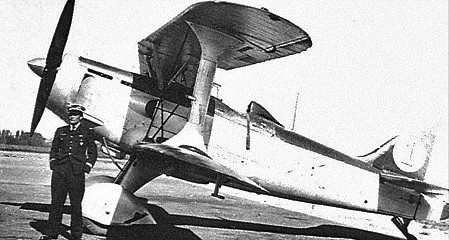
To meet the requirements of the French 1930 fighter programme, Andre Herbemont evolved the Bleriot SPAD 510. The Type 510, which was ordered as a single prototype to participate in the programme, was of all metal construction with a duralumin monocoque rear fuselage, and fabric-covered wings and tail assembly. Powered by a Hispano-Suiza 12Xbrs 12-cylinder Vee liquid-cooled engine rated at 690hp 4000m, the Bleriot SPAD 510 was flown for the first time on 6 January 1933.
After protracted evaluation, during which the centre fuselage was lengthened by 40cm to rectify a shortcoming in longitudinal stability and the vertical tail surfaces were enlarged to improve yaw characteristics, the type was ordered into production in August 1935. The first of 60 production examples were delivered early in the following year, the final two aircraft being accepted with the HS 12Xcrs engine and a 20mm Hispano-Suiza motor cannon. The standard armament comprised four wing-mounted MAC 1934 7.5mm guns. The Type 510 proved to be the last fighter biplane to be ordered for the Armee de l’Air.
S.510
Engine: 1 x 690hp Hispano-Suiza 12Xbrs
Take-off weight: 1677 kg / 3697 lb
Empty weight: 1250 kg / 2756 lb
Wingspan: 8.84 m / 29 ft 0 in
Length: 7.46 m / 25 ft 6 in
Height: 3.41 m / 11 ft 2 in
Wing area: 22.00 sq.m / 236.81 sq ft
Max. speed: 372 km/h / 231 mph
Cruise speed: 324 km/h / 201 mph
Ceiling: 10500 m / 34450 ft
Rate of climb: 890 m/min / 2900 ft/min
Range: 875 km / 544 miles
Crew: 1
Armament: 4 x 7.5mm