Brandner E-300 / Egyptian General Aero OrganisationE-300

The Austrian engineer, Ferdinand Brandner, who had previously worked as a prisoner of the Soviet Union on the development of the Kuznetsov NK-12 turboprop that was the powerplant of the Tupolev Tu-95 bomber, moved to Egypt to lead a team to design an engine to power the Helwan HA-300 jet fighter that was simultaneously being designed by a team of Germans led by Willy Messerschmitt.
The new turbojet engine underwent bench testing in 1963, and was flight tested under the wing of an Antonov An-12, before being installed in a HAL HF-24 Marut for high speed testing, in which form it flew on 29 March 1967. The E-300 was installed in the third prototype HA-300 (the first two powered by Bristol Siddeley Orpheus engines), it flew at least one time and successfully, but the programme of HA-300 being abandoned in May 1969.

Variants:

E-300-A
Military version for HA-300

E-300-C1
Civil version of E-300-A, proposed for Project 206 three-engined airliner.

E-300-C2
Proposed growth version of E-300-C1.

E-300-AF
Projected turbofan development.

Specifications:
Type: Afterburning turbojet
Length: 4,300 mm (169.3 in)
Diameter: 840 mm (33 in)
Dry weight: 860 kg (1,896 lb)
Compressor: nine-stage axial compressor
Combustors: can-annular combustion chamber
Turbine: two-stage axial turbine
Maximum thrust: 32.4kN (6,275 lbf) dry, 47.2 kN (10,582 lbf) with reheat
Overall pressure ratio: 6:1

Brantly-Hynes 305 / H-5

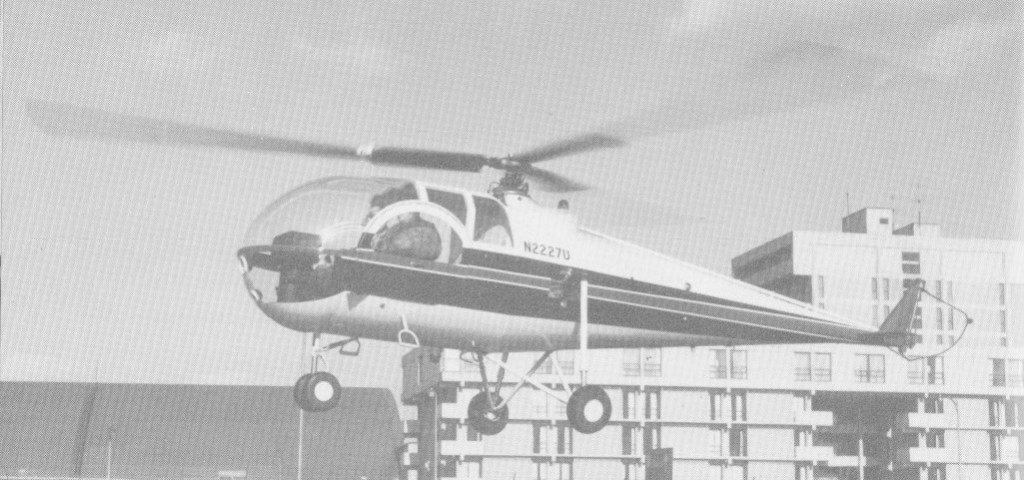
Brantly produced an enlarged B-2, named the Model 305 which had a longer forward fuselage providing a rear 3-passenger bench seat. The new five seater (N2200U) made its first flight in January 1964, powered by a 305hp Lycoming IVO-540-A1A engine and received its type certificate on 29 July 1965. The cabin has two bucket seats forward, seating for three aft, capacity for 200 lb of baggage, can fly 120 mph and sold for $48,900.

Brantly immediately commenced production but the Model 305 suffered from persistent ground resonance problems and they only built 45 examples.

It differs from the B2B externally by having a small variable-incidence tail-plane, and an enlarged cabin accommodates a total of five persons on two side-by-side forward seats, and an aft bench seat for three.
The rotor system and airframe was the same as the B-2B, but enlarged and conventional direct mechanical flying controls.

The landing gear was a choice of skid, wheel or float gear. Skid type has four oleo struts, two on each side, and small retractable ground handling wheels. Wheel gear has single mainwheels and twin nosewheels, all with oleo-pneumatic shock-absorbers of Brantly manufacture. Goodyear mainwheels and tyres size 5.00-5, pressure 1.93 bars. Goodyear single-disc hydraulic brakes on mainwheels.

The 227.4kW Textron Lycoming IVO-540-B1A flat-six engine, was mounted vertically, with dual cooling fans. One rubber fuel cell under engine, capacity 163 litres. Refuelling point in port side of fuselage. Oil capacity 9.5 litres.

A rear compartment for 113kg of baggage, with downward hinged door on starboard side.

Model 305

44 were built during the 1960s and another four built by Hynes Aviation in 1985 as the H-5. Michael K. Hynes, owner of the type certificates, established Brantly-Hynes Helicopter Inc. on 1 January 1975, initially to provide product support for the large number of Brantly helicopters in use. He subsequently started up a production line for the B-2B, and also the larger Model 305.

Improved prototype with redesigned rotor head and new blade aerofoil completed about 30 hours flying by mid-January 1990. New main rotor bearing fitted. Cabin streamlined. New production was to begin 1993, but none built.

Engines: Lycoming IVO-540-B1A, 305 hp, 227kW
Main rotor diameter: 8.74m
Fuselage length: 7.44m
Height: 2.44m
Disc loading: 4.5 lb/sq.ft.
Pwr loading: 9.5 lb/hp.
Max TO wt: 1315kg, 2900 lb.
Empty wt: 816kg, 1732 lb.
Equipped useful load: 1106 lb.
Payload max fuel: 854 lb.
Range max fuel/ cruise: 199 nm/ 1.9 hr.
Range max fuel and payload: 354km
Service ceiling: 3660m, 11,000 ft.
Max speed: 193km/h
Max cruise: 177km/h, 104 kt.
Max range cruise: 95 kt.
ROC: 975 fpm.
HIGE: 4000 ft.
HOGE: 1500 ft.
Max sling load: 800 lb.
Fuel cap: 252 lb.
Seats: 5.

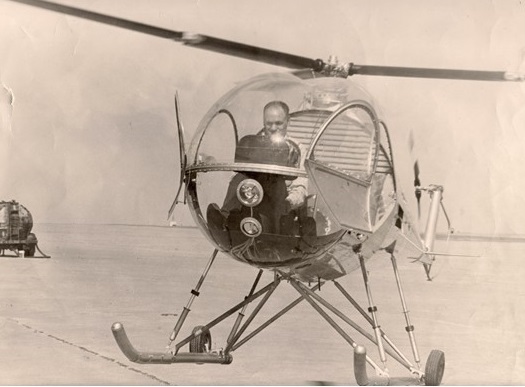
Brantly-Hynes B-2 / B2B / YHO-3 / H-2

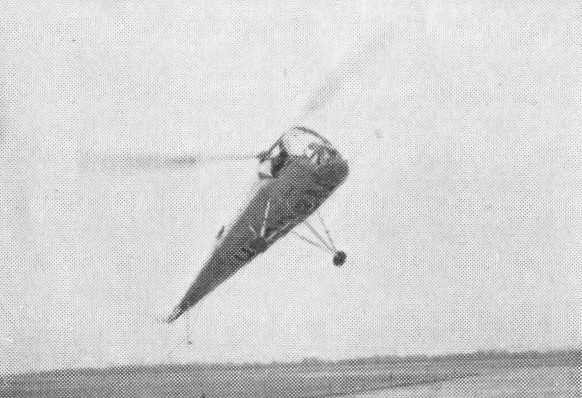
Developed from coaxial twin-rotor B-1 by Newby Brantly, the B-2 with single main rotor and anti-torque tail rotor configuration first flew on 21 February 1953. An improved second prototype flew on 14 August 1956. This was to enter production in 1958 receiving FAA certification on 27 April 1959.

1955 B-2

A total of 194 B-2s and 18 B-2As (with additional headroom) were produced between 1960 and 1963 and the improved Model B-2B with metal rotor blades and fuel-injected Lycoming IVO-360-A1A engine was certified on 1 July 1963. A total of 165 were built between 1963 and 1967 (the company owned by Gates Learjet from 1966).

B2A

Type certificates for the Brantly Bs were purchased in 1971 by Michael Hynes and revised as the 2 H2/YHO 3BR.
Michael K. Hynes established Brantly-Hynes Helicopter Inc. on 1 January 1975, initially to provide product support for the large number of Brantly helicopters in use.
He subsequently started up a production line for the B-2B and built one (as H-2) in 1975, and also the larger Model 305. James T. Kimura was the third owner of the B-2 type certificate, and delivered his first B-2B on 25 August 1990.
Brantly Helicopter Industries (BHI) took over manufacturing and marketing rights and production facilities in 1989 with three were built under this name, which received the FAA production certificate on 19 July 1996. The first new-build B-2B (N25411 c/n 2001) was flown on 12 April 1991. In 1992, a B-2B cost US$120,000 to US$135,000 depending on equipment fit.
On 23 December 1994, Brantly International obtained the type certificates for the Brantly B-2B and 305 helicopters from Japanese-American businessman James T Kimura’s Brantly Helicopter Industries, which had acquired them in May 1989. In 2002, Brantly employed 40 in its 2,790 ha facility. By 2002, Brantly Helicopter Inc of Vernon, Texas were again producing the B2B.

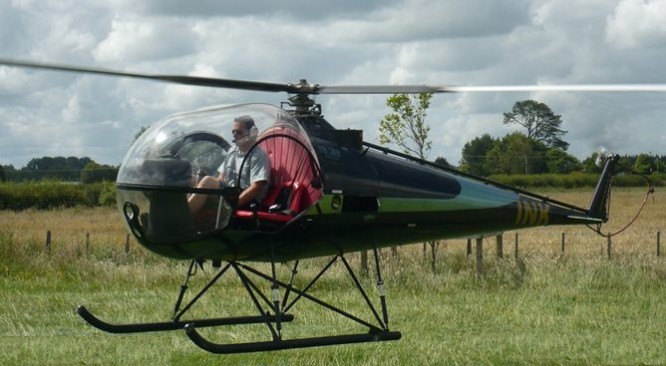
Brantly B2B

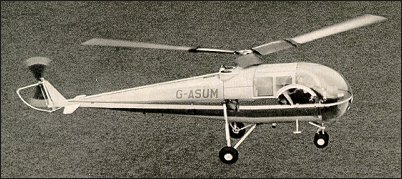
British Executive Air Services had acquired a production licence for the B-2.
In 2003 the cost was US$170,000 basic equipped.

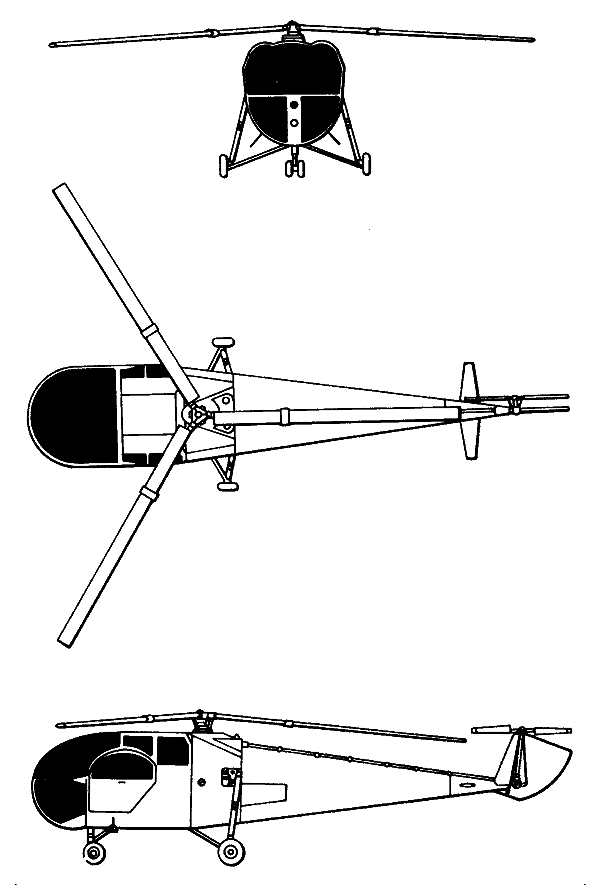
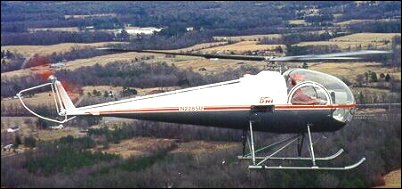
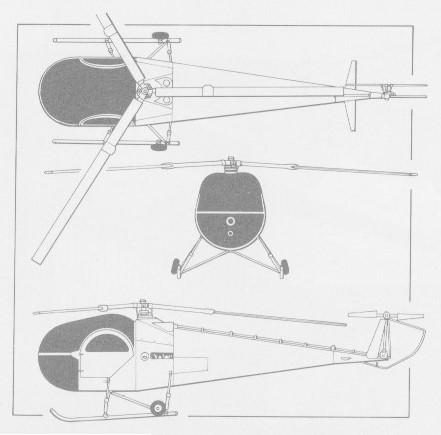
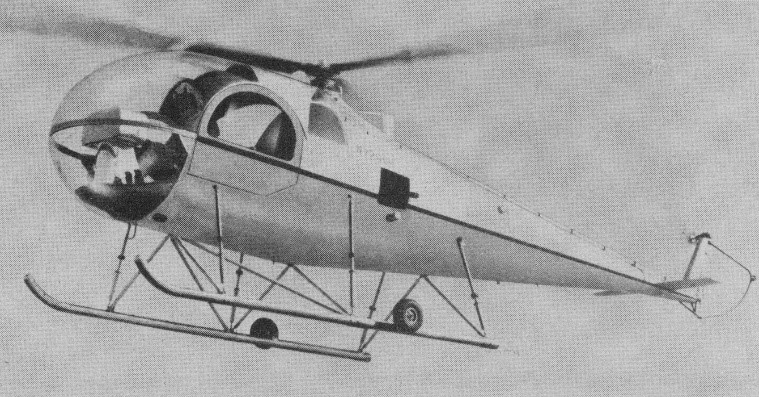
A relatively simple design, with blown main transparency and constant-taper fuselage. Double-articulated three-blade main rotor with pitch-change and flapping hinges close to hub and flap/lag hinges at 40% blade span; symmetrical, rigid, inboard blade section with 29% thickness/chord ratio, outboard section NACA 0012; outer blades quickly removable for compact storage; rotor brake standard; two-blade tail rotor mounted on starboard side, with guard. Transmission through automatic centrifugal clutch and planetary reduction gear. Bevel gear take-off from main transmission, with flexible coupling to tail rotor drive-shaft. Main rotor/engine rpm ratio 1:6.158; tail rotor ratio 1:1. Main rotor minimum speed 400 rpm; maximum 472 rpm.
Conventional and manual controls; small fixed tailplanes on port and starboard sides of tailcone. A semi-monocoque fuselage with alloy-stressed skin. Inboard rotor blades have stainless steel leading-edge spar; outboard blades have extruded aluminium spar; polyurethane core with bonded aluminium envelope riveted to spar. All-metal tail rotor blades. Fixed skid type landing gear with oleo-pneumatic shock-absorbers; small retractable ground handling wheels, size 10×3.5, pressure 4.12 bar; fixed tailskid. Optional inflatable pontoons attach to standard skids for over-water operation. One 134kW Textron Lycoming IVO-360-A1A flat-four air-cooled piston engine, mounted vertically. Fuel contained in two interconnected bladder tanks behind cabin, total capacity 117 litres of which 115 litres are usable. Oil capacity 6.9 litres. Two seats, side by side in enclosed cabin; forward-hinged door on each side. Dual controls and cabin heater standard. Ground accessible baggage compartment, maximum capacity 22.7kg in forward end of tailcone.

In 1959 the Army procured five examples of the Brantly Model B-2 light helicopter for evaluation in the observation role. The five machines obtained by the Army (serials 58-1492 through -1496) were designated YHO-3 and tested at both Fort Rucker and the Naval Air Test Center at Patuxant River, Maryland. The aircraft was ultimately judged to be too small to be of practical military use and all five examples were eventually returned to the manufacturer.

Brantly B-2B

B-2
Engine: Lycoming 135 hp
Rotors: 3-blade main 2-blade tail
Rotor diameter: 23 ft
Loaded weight: 1,250 lb
Seats: 2

B2B
Engines: Lycoming IVO-360-A1A, 180 hp,134kW.
Main rotor diameter: 7.24m
Fuselage length: 6.63m
Height: 2.06m
Disc loading: 3.7 lb/sq.ft.
Pwr loading: 9.3 lb/hp.
Max TO wt: 1670 lb / 757kg
Empty wt: 1032 lb / 463kg
Equipped useful load: 576 lb.
Payload max fuel: 390 lb.
Range max fuel/ cruise: 152 nm/1.8 hr.
Range max fuel / range: 196 nm/ 2.3 hr.
Service ceiling: 12,500 ft / 3290m
Max speed: 161km/h
Max cruise: 87 kt / 145km/h
Max range cruise: 87 kt.
ROC: 1400 fpm.
HIGE: 4300 ft.
HOGE: 2500 ft.
Max sling load: 400 lb.
Fuel cap: 186 lb.
Seats: 2.

2 H2/YHO 3BR
Engine: Lycoming IVO-360-A1A, 180 hp.
TBO: 900 hrs.
Main rotor: 23.7 ft.
Length: 28 ft.
Height: 6.8 ft.
Max ramp weight: 1670 lbs.
Max takeoff weight: 1670 lbs.
Standard empty weight: 1069 lbs.
Max useful load: 601 lbs.
Zero fuel weight: 1490 lbs.
Max landing weight: 1670 lbs.
Max sling load: 400 lbs.
Disc loading: 3.7 lbs/sq.ft.
Power loading: 9.3 lbs/hp.
Max usable fuel: 183 lbs.
Max rate of climb: 1330 fpm.
Service ceiling: 12,500 ft.
Hover in ground effect: 4,300 ft.
Hover out of ground effect: 2500 ft.
Max speed: 87 kts.
Normal cruise @ 3000 ft: 78 kts.
Fuel flow @ normal cruise: 72 pph.
Endurance @ normal cruise: 2.4 hr.
Seats: 2.

Brantly B-2B
Engine: Lycoming IVO-360, 180 hp
Rotor span: 7.24 m
Blade area: 0.203 sq.m
MAUW: 757 kg
Empty weight: 463 kg
Max speed: 161 kph
Cruise speed: 145 kph
Climb rate: 9.6 m/s
Seats: 2

Brantly-Hynes B-1

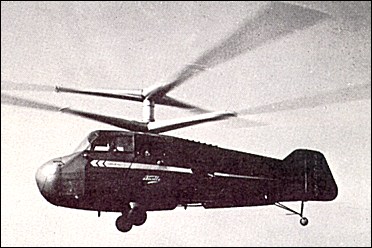
In 1943, N. P. Brantly began the design of a lightweight helicopter, built and flown in 1946 under the designation Brantly B-1. The B-1 was constructed by his employer, the Pennsylvania Elastic Company. Brantly used a coaxial twin-rotor configuration but the design was too heavy and complicated to appeal.
With two co-axial contra-rotating three-bladed rotors, neither push rods nor cranks were visible in the rotary wing assembly. The collective, cyclic and differential controls were completely enclosed in the hubs and ran in an oil-bath.
The three-blade rotors had a fixed pitch central “star” and a universal joint combining two hinges was 1.8 metres from the root of the blades. The radius of the non-flapping part of the blades was 1.8 metres. Each blade weighed only 5.5 kilos and the rotors normally turned at 320 r.p.m.
The B-1 prototype (NX69125) was powered by a 150hp Franklin engine in the tube and fabric fuselage and had a fixed tailwheel undercarriage and directional control was achieved through a small rudder on the sternpost – because the twin main rotors were expected to neutralise the normal torque effect.

B-1
Number of seats: 2
Engine: 1 x Franklin 335, 150hp
Rotor diameter: 9m
Length: 5.33m
Height: 2.36m
Weight fully loaded: 907kg
Empty weight: 601kg
Cruising speed: 182km/h
Range: 640km

Brandenburg 269 / C.1

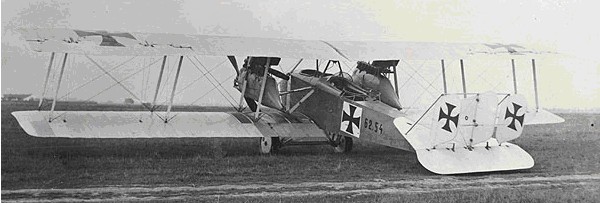
Since 1921, some 120 examples of the Austro¬Hungarian Brandenburg C.1 reconnaissance and light bomber aircraft, series 269, were manufactured at the first Romanian aircraft factory, Arsenalul Aeronauticii, in Bucharest. These airframes were equipped with 220hp (164kW) and 250hp (186kW) Daimler Benz, MARTA Benz and NAG engines, captured in 1919 from Hungary.

Bramo Sh.14 / Siemens-Halske 7 / Sh 14

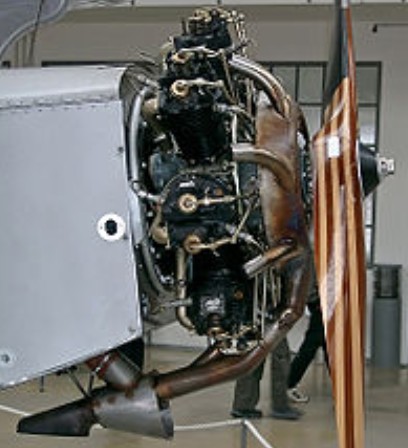
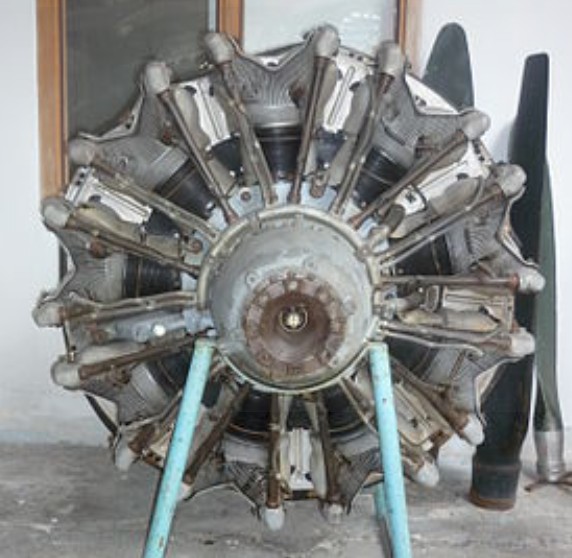
The Siemens-Halske Sh 14 was a seven-cylinder air-cooled radial engine for aircraft produced in Germany in the 1920s and 30s. First run in 1928, it was rated at 93 kW (125 hp).

The Sh 14 is low pressure due to the engine being completely ball bearings. Cylinders are all of steel barrel with aluminium alloy ribs being cast on by special process, with aluminium alloy heads held down by six studs and are removable.

Intake pots are at the rear and exhaust ports on the side. The crankshaft assembly is composed of two major castings and front and rear cover plates all of aluminium alloy.

The crankshaft is a two piee single throw and all connecting rods are tubular. The master rod is on two ball bearings. The aluminium alloy pistons have two compression ringa and two oil rings in each. Both the exhaust and intake valves are tulip shaped.

Applications:
Albatros L 82
Ambrosini SAI.3
Ambrosini SAI.10
BFW M.23
BFW M.29
BFW M.35
Bücker Bü 133 Jungmeister
Flettner Fl 185
Flettner Fl 265
Flettner Fl 282
Focke-Wulf C.20
Focke-Wulf C.30 Heuschrecke
Focke-Wulf Fw 44
Focke-Wulf Fw 61
Heinkel He 72
LWD Szpak
LWD Zuch
Nuri Demirağ Nu D.38
RWD-17W
Rogozarski SIM-VIII
Rogozarski SIM-XI
SIM-II
VL Viima

Specifications:

Type: 7 cylinder air cooled radial
Dept Commerce Approved Type Certificate
Military Rating: 113 hp at 1720 rpm
Commercial Rating: 113 hp at 1720 rpm
Displacement: 443 cu.in
Compression ratio: 5.3
Bore: 4.133 in
Stroke: 4.724 in
Length: 32 in
Diameter: 39 1/4 in
Weight: 308 lb
Fuel consumption: not more than .52 lb/hp/hr
Oil consumption: not more than .027 lb/hp/hr
Lubrication: Dry sump, force feed, low pressure
Ignition: 2 Siemens or Scintilla magnetos
Carburation: 2 Sum or Special Low Sum Carburetor
Spark plugs: 2 per cylinder Siemens
Price: $2100

Sh 14A
Type: seven-cylinder air-cooled radial engine
Bore: 108mm (4.25 in)
Stroke: 120mm (4.72 in)
Displacement: 7.69 L (469.6 cu in)
Length: 975mm (38.39 in)
Diameter: 936mm (36.85 in)
Width: mm (in)
Height: 936mm (36.85 in)
Dry weight: 135 kg (297.6 lb)
Valvetrain: 1 inlet and 1 exhaust valve per cylinder
Fuel type: 80 octane
Cooling system: air
Power output: 160 hp at 2,200 RPM
Compression ratio: 6.0:1

Bramo 323 Fafnir / BMW 323 / Siemens Bramo 323 Fafnir 

Development of the 323 was the end result of a series of modifications to the original Jupiter design, which Siemens licensed in 1929. The first modifications were to “Germanize” the dimensions, producing the Sh.20 and Sh.21. The design was then bored out to produce the 950 hp (708 kW) Sh.22 in 1930. Like the Jupiter, the 9-cylinder radial Sh.22 featured prominent valve pushrods on the front of the engine. In the mid-1930s the Reich Air Ministry (RLM) rationalized engine naming, and Bramo was given the 300-block of numbers, the Sh.14 and Sh.22 becoming the Bramo 314 and 322 respectively. The 322 never matured and remained unreliable.

The team continued work on the basic design, adding fuel injection and a new supercharger. The resulting 323 was just under 27 l in displacement, and produced 900 PS at 2,500 rpm for takeoff, improving slightly to 1,000 PS at 10,200 ft. The reduced power at sea level was inevitable for engines with one-speed mechanically driven superchargers when they were regulated to a constant maximum boost pressure below their critical altitude.

The Fafnir powered a number of German pre-war designs, including the Focke-Wulf Fw 200, Henschel Hs 126, Dornier Do 24 and Dornier Do 17, as well as the Focke Achgelis Fa 223 Drache helicopter. Its fairly poor fuel economy kept it from more widespread use, and most designs chose the similar BMW 132 instead, whose specific fuel consumption varied between 0.50 and 0.54 lb/(hp·h) depending on model, whereas the early versions of the Fafnir got about 0.57 lb/(hp·h), a poor figure for the era. The C/Ds, where the supercharger used less power, improved this to 0.51 lb/(hp·h), but were only useful at lower altitudes.

BMW bought Bramo in 1939 and continued production to supply the small number of designs that already used it, notably the Do 17. The naming at this point becomes somewhat confusing, with BMW, Bramo and Fafnir being used almost interchangeably. 5,500 were produced before the lines were shut down in 1944.

The original 323 design was produced in A and B models, differing in the direction they turned. The engines were intended to be installed in A/B pairs, thereby eliminating engine torque across a twin-engine aircraft. The similar C and D models featured a lower supercharger gearing for better performance at lower altitudes, improving takeoff power to 1,000 PS, but reducing the critical altitude.

The final versions, P, R and T, featured a two-speed supercharger for better all-round performance. This allowed it to generate 1,000 PS at sea level as in the C/D models, but improved altitude performance considerably, delivering 940 PS at 13,120 ft (4,570 m). The R-2 subtype added MW 50 water-methanol injection for added low-altitude performance, boosting power to 1,200 PS at 2,600 rpm. Approximately 5500 were built in total.

Applications:
Arado Ar 196
Arado Ar 232
Dornier Do 17
Dornier Do 24
Focke Achgelis Fa 223
Focke-Wulf Fw 200
Henschel Hs 126
Junkers Ju 252
Junkers Ju 352

Specifications:

BMW 323A
Type: 9-cylinder supercharged air-cooled radial engine
Bore: 154 mm (6.06 in)
Stroke: 160 mm (6.30 in)
Displacement: 26.82 litres (1,636.8 in³)
Length: 1,420 mm (55.9 in)
Diameter: 1,388 mm (54.6 in)
Dry weight: 550 kg (1,210 lb)
Valvetrain: Pushrod-actuated overhead valve
Supercharger: Gear-driven
Fuel system: Fuel injection
Fuel type: 87 Octane petrol
Cooling system: Air-cooled
Power output:
670 kW (900 PS) at 2,500 rpm at sea level for take-off
745 kW (1,000 PS) at 3,100 m (10,200 ft)
Specific power: 27.8 kW/L (0.61 hp/in³)
Compression ratio: 6.4:1
Specific fuel consumption: 0.348 kg/(kW·h) (0.572 lb/(hp·h))
Power-to-weight ratio: 1.36 kW/kg (0.83 hp/lb)
Bramo 322 / Siemens-Halske Sh 22 / SAM 22

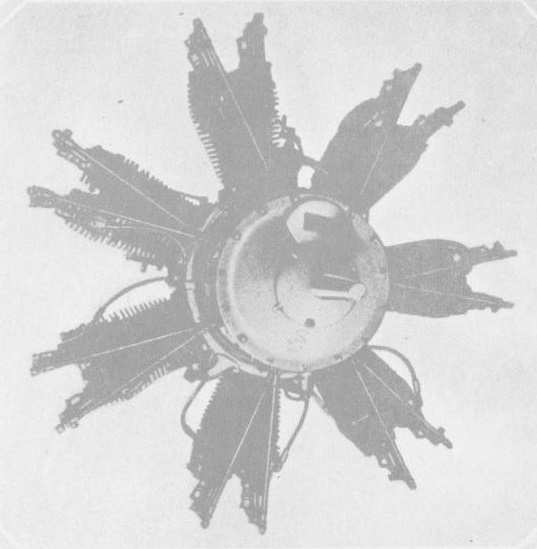
The Siemens-Halske Sh 22 (also known as SAM 22) was a nine-cylinder aircraft radial engine manufactured by Siemens & Halske in Germany in the 1930s. Following the reorganization of its manufacturer and change in military nomenclature, the engine became known as the Bramo 322.
It was a result of a series of modifications to the original Bristol Jupiter IV design, which Siemens licensed in 1929. The first modifications were to “Germanize” the dimensions, producing the Sh.20 and Sh.21. The design was then bored out to produce the 950 hp (708 kW) Sh.22 in 1930. Like the Jupiter, the Sh.22 featured a rather “old” looking arrangement with rather prominent valve pushrods on the front of the engine. In the mid-1930s the Reich Air Ministry (RLM) rationalized engine naming, and Bramo was given the 300-block of numbers, the Sh.14 and Sh.22 becoming the Bramo 314 and 322 respectively. The 322 never matured and remained unreliable. It became a base for the more successful Bramo 323.

Applications:
Dornier Do 19 (proposed)
Fieseler Fi 98
Heinkel He 46
Henschel Hs 122
Junkers W 34
Junkers Ju 86ab1 prototype

Specifications:

SAM 22B
Type: Nine-cylinder single-row supercharged air-cooled radial engine
Bore: 154 mm (6.06 in)
Stroke: 160 mm (6.3 in)
Displacement: 26.82 l (1,636.8 in³)
Length: 1,285 mm (50.59 in)
Diameter: 1,324 mm (52.13 in)
Dry weight: 465 kg (1,025 lb)
Valvetrain: Two overhead valves per cylinder
Supercharger: Single-speed centrifugal type supercharger
Fuel system: Carburetor
Fuel type: 80 octane rating gasoline
Cooling system: Air-cooled
Reduction gear: Farman epicyclic gearing, 1.6:1
Power output: 442 kW (592 hp) at 2,100 rpm for takeoff
Specific power: 16.49 kW/l (0.36 hp/in³)
Compression ratio: 5.2:1
Power-to-weight ratio: 0.95 kW/kg (0.58 hp/lb)

Bradshaw Star

A man who became well-known in the automobile and motorcycle field, Granville Bradshaw, was responsible for the design and construction of the Star mono-plane.

It was based on the Antoinette, and of similar dimesions, both machines having a span of 42 feet.

However the French machine had a much larger wing area of 538 square feet compared to 290 square feet for the Star, and the Antoinette was something like 5 feet longer at 37ft 7inches and 200lbs heavier than the British machine.

The Star power plant was a 4-cylinder water-cooled 30/40hp unit, very similar to their car engine

The Star was listed to sell at less than half the £1,000 asked for the Antoinette.