The Breda A.14 is a 1928 trimotor biplane bomber, with a 23m Warren truss wingspan. One prototype was built. Similar to the A.8 but with 3 x 410hp Alfa Romeo Jupiter 9-cyl radials.
The prototype rebuilt as an airliner with an enclosed cabin, as the Ba.14.
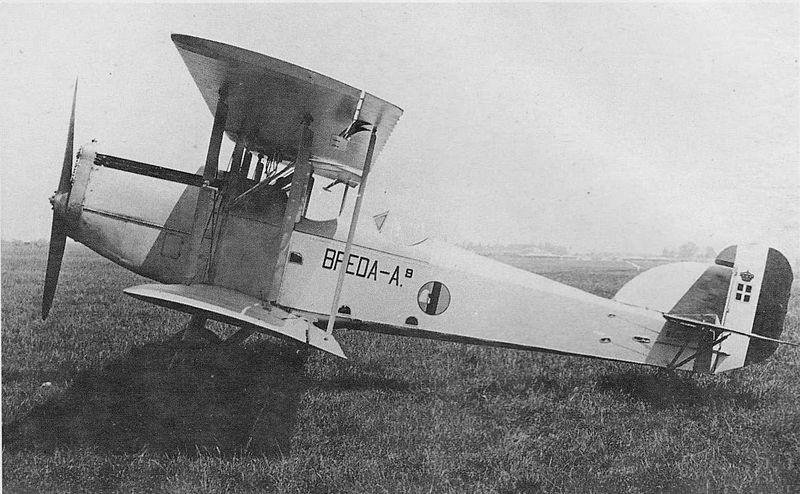
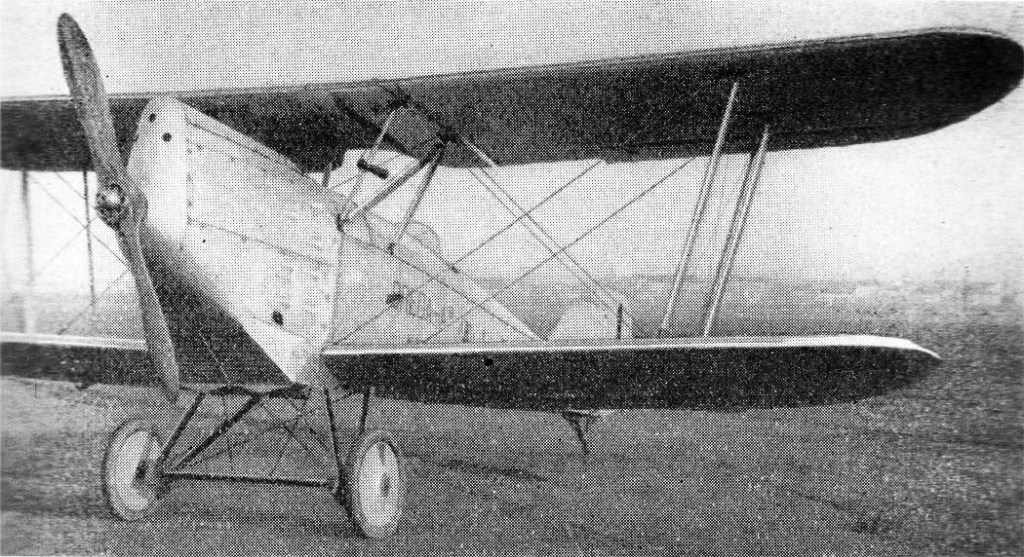
The Breda A.9 was a biplane trainer produced in Italy in 1928 for the Regia Aeronautica. Conventional in design, it featured a single-bay, unstaggered wing cellule and fixed tailskid undercarriage. The student and instructor sat in tandem, open cockpits.
A.9 I-BAZP was registered in 1927, before flying in 1928.
A slightly smaller version, designated A.9-bis was developed for use in Italy’s aeroclubs. The A.9 bis of 1930 was a reduced span (8.72 m) single-seat aerobatics trainer.
In 1973 aircraft manufacturer Heinrich Brditschka and an engineer with the Graupner model-building company, Fred Militky, enlisted the collaboration of Bosch (propulsion motor) and Varta (nickel-cadmium battery technology) to study the feasibility of an all-electric aircraft.
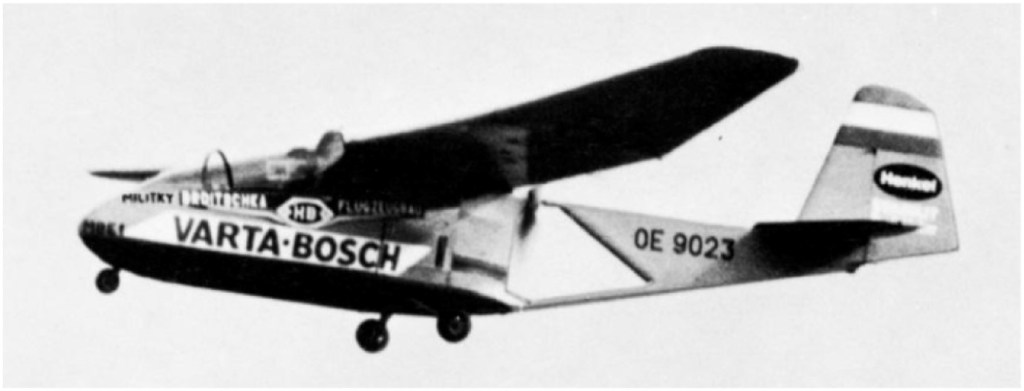
They converted an HB-3A motor glider into the first electric manned airplane: the MB-E1 (Militky-Brditschka Elektroflieger No. 1).
On 21 October 1973, the MB-E1 took to the skies in Wels, Austria with Heinrich’s son, Heino Brditschka, at the controls. The maiden flight lasted for about 9 min and achieved an altitude of 300 m. However, further advancement in battery and motor technology would be required to achieve practical electric flight.