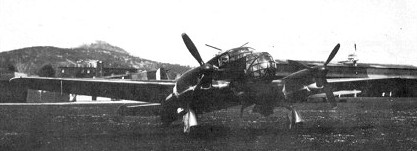
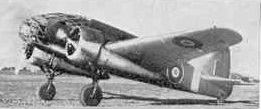
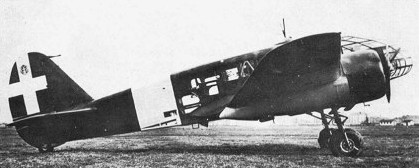
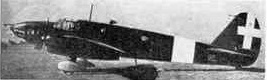
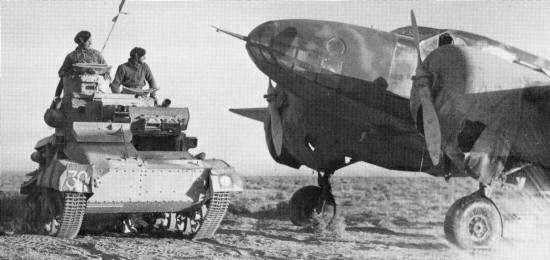
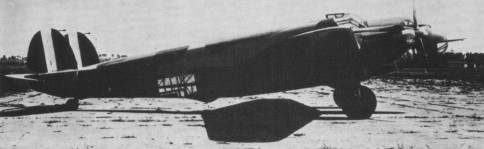
The Ca 311 differed from its predecessor in having the “stepped” windscreen replaced by a more extensively glazed Blenheim I-style dose section (although the second production series, the Ca 311M (Modificato) reverted to a stepped canopy rather like that later adopted for the Ca 314), and the Ca 312 was a version with 630-h.p. Piaggio P.XVI R.C.35 radials.
Caproni Ca.311M
Defensive armament was a Caproni Lanciani turret with a single 7.7mm machine-gun, and one machine-gun in the port wing root and another firing aft through a ventral hatch.
Caproni Ca.311
The Ca 312M possessed a similar nose to that of the Ca 311, the Ca 312bis was a twin-float seaplane variant, and the Ca 312-1S was an experimental torpedo floatplane. The Ca 313 was a further development of the Ca 311 with two 650-h.p. Isotta-Fraschini Delta R.C.35 engines which was used in limited numbers on the Russian Front.
(SABCA) made a marketing agreement with the Italian company Caproni, with SABCA selling some of Caproni’s military aircraft in certain markets, including the Caproni Ca.135, Ca.310 and the Ca.312, which were to be designated SABCA S.45bis, S.46 and S.48 respectively.
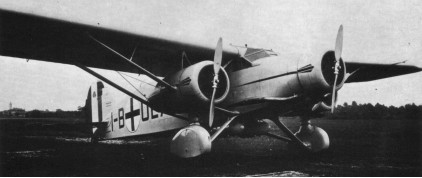
Developed in parallel with the Ca.309 Ghibli, the Ca.310 Libeccio (south west wind) reconnaissance / transport aircraft was structurally similar, but had retractable landing gear and was powered by two 460hp/350kW Piaggio P.VII C.35 radial engines. Export deliveries went to Norway, Peru and Yugoslavia. Yugoslavia also acquired 12 more under the designation Ca.310bis; this variant differed primarily by having an unstepped extensively glazed nose. The Caproni C.310 World War 2 to be retired by the Italians in 1948. The prototype of the Ca.310bis served as a development aircraft for the following Ca.311.
(SABCA) made a marketing agreement with the Italian company Caproni, with SABCA selling some of Caproni’s military aircraft in certain markets, including the Caproni Ca.135, Ca.310 and the Ca.312, which were to be designated SABCA S.45bis, S.46 and S.48 respectively.
Caproni Ca.310 (Libeccio) Engines: 2 x Piaggio P.VIII C.35, 470 hp Length: 40.03ft (12.2m) Width: 53.15ft (16.20m) Height: 11.55ft (3.52m) Maximum Speed: 227mph (365kmh; 197kts) Maximum Range: 1,050miles (1,690km) Service Ceiling: 22,966ft (7,000m; 4.3miles) Armament: 1 x 7.7mm Breda SAFAT machine gun in dorsal turret. 2 x 7.7mm Breda SAFAT machine guns in fixed-firing forward wingroot locations. Up to 992lbs of internal ordnance. Accommodation: 3 Hardpoints: 0 Empty Weight: 6,724lbs (3,050kg) Maximum Take-Off Weight: 10,251lbs (4,650kg)
The prototype of the six-passenger low-wing transport Caproni Bergamaschi Ca.306 Borea (north wind) appeared at the 1935 Milan Exhibition. The Borea was first of a range of light twin-engine aircraft manufactured for a variety of roles.
The first of these was the mixed wood and metal construction Ca.309 Ghibli (desert wind) of 1936, 78 of which were built for use in Libya. The military versions were used as light transports or reconnaissance bombers with a lengthened glazed nose, bomb racks, cameras, and with armament comprising three 7.7mm machine-guns. Powered by two Alfa Romeo 115 in-line engines, of 185hp each and having a fixed, spatted undercarriage, the Ghibli had a maximum speed of about 150mph.
Caproni Ca.309 Ghibli
Seven squadrons equipped with Ghiblis were operational when Italy entered the war in 1940. The Ghibli was used for police duties by the Aviazione Presidio Coloniale and the Aviozione Sahariana as a light reconnaissance-bomber and transport (carrying two crew members and six passengers).
Several production series were produced, the final versions of the Ghibli to Ibe produced in quantity being the Series V and VI, the latter having a forward-firing 20-mm. cannon mounted in the nose.
Caproni Bergamaschi Ca 309 Ghibli Engine: 2 x 200hp Alfa Romeo 115-II Max take-off weight: 2695 kg / 5941 lb Empty weight: 1745 kg / 3847 lb Wing load: 14.35 lb/sq.ft / 70.00 kg/sq.m Wingspan: 16.20 m / 53 ft 2 in Length: 13.30 m / 43 ft 8 in Height: 3.25 m / 10 ft 8 in Wing area: 38.70 sq.m / 416.56 sq ft Max. speed: 250 km/h / 155 mph Cruise speed: 210 km/h / 130 mph Service ceiling: 14764 ft / 4500 m Range: 670 km / 416 miles Armament: 3x MG 7,7mm, 335kg Bomb. Undercarriage: fixed.
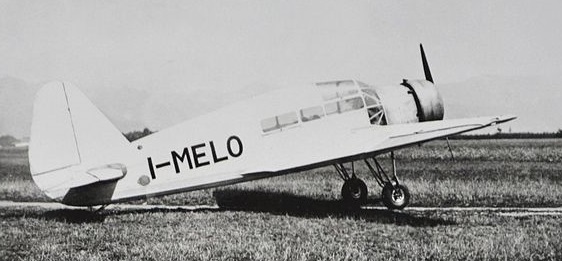
The Caproni PS.1, also known as the Pallavicino PS-1 and Caproni Ca.303, was an Italian four-seater sportsplane, designed and built specifically to compete in Challenge 1934, the European touring plane championships.
The wartime Caproni Ca 225 was a two-seat low-wing attack bomber powered by two 800-h.p. Isotta-Fraschini Delta R.C.1750 engines. The Ca 225 was not tested.
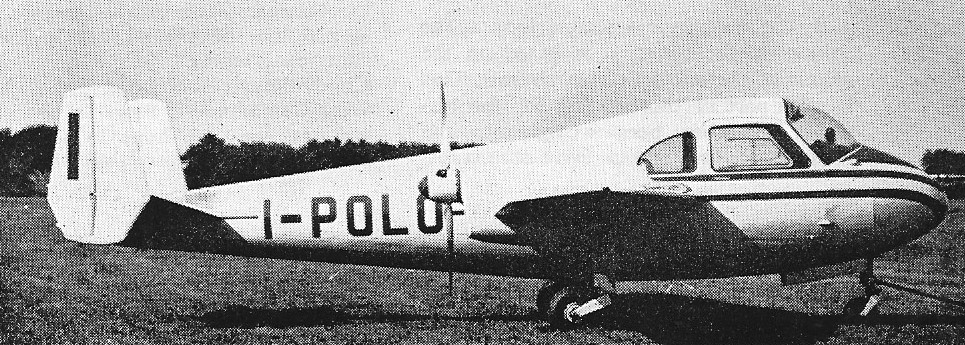
The 1948 Caproni Ca.193 is a cantilever mid-wing monoplane powered by two 155 hp Blackburn Cirrus Major 3 engines driving two blade fixed pitch pusher propellers. The cabin is forward of the main spar, giving appreciable sweep-back to the wing leading edge. Construction is all-metal, the wing monospar with stressed skin covering. The fuselage is a monocoque and the dihedral tailplane has twin fins and rudders at the tip with statically and aerodynamically balanced trim tabs mounted in the movable surfaces. The designer was considering a single fin. The cabin provides accommodation for five.
The only Caproni Ca.193 built was flown for the first time on 1947. The five/six seat pusher aircraft was displayed at the Venice Exposition.
Engines: 2 x Blackburn Cirrus Major III, 155 hp Wingspan: 45 ft 3 in Wing area: 205 sq.ft Length: 29 ft 6 in Height: 8 ft 2 in Empty weight: 2685 lb Loaded weight: 4185 lb Useful load: 1500 kb Max speed: 186 mph at SL Max speed 9840 ft: 164 mph Min speed no flap: 65 mph Climb to 9840 ft: 14 min Service ceiling: 17,700 ft
The wartime Caproni Ca 183bis high-altitude fighter was under construction in 1943 and powered by a DB 605 engine and a 700-h.p. Fiat A.3D engine, the latter buried in the fuselage aft of the pilot’s cockpit driving a compressor for a Campini ducted-fan type unit. The Ca 183bis was not tested.
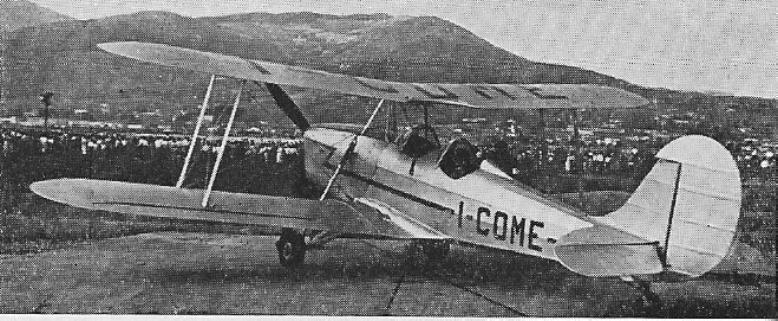
The Caproni Ca.164 was produced by Aeronautic Pedappio S.A., a division of the Caproni Group in 1937.
Powered by a 185 hp Alfa 115-1 engine, the Ca,164 was employed by the Regia Aeronautica during the war years.
Engine: 185 hp Alfa 115-1 Wingspan: 30 ft 10 in Length: 22 ft 10 in Height: 8 ft 6 in Empty weight: 1873 lb Loaded weight: 2600 lb Max speed: 13 mph Cruising speed: 115 mph Range: 330 mi Seats: 2
Designed in mid¬ 1934 by Ing Cesare Pallavicino, the Ca 135 was a mid wing, twin tailed monoplane. The prototype, powered by two 836 hp Isotta-Fraschini Asso XI RC 40 engines, was built by Caproni Bergamaschi and flew for the first time on April 1, 1936. Carrying a four man crew, the Ca 135 was armed with a single 12.7 mm (0.5 in) Breda-SAFAT machine gun in the nose, another in a ventral position, and one or two similiar guns in a Breda dorsal turret. The Isotta-Fraschini Asso XI RC 40 was retained for the initial production version, and 32 were delivered to the Regia Aeronautica’s 330 and 340 Gruppi Bombardied from June 1938, and a further six (known as Tipo Peru) to the Peruvian air force in 1938 39. The Regia Aeronautica Ca 135s were employed chiefly as bombing trainers, but those of the Hungarian air force (delivered in 1940 41) were used for bombing attacks in the Balkan campaign during the latter part of 1941, and on the southern part of the Eastern Front during the following year. The maximum bombload, carried internally, amounted to 1862 kg (4105 lb) on the Ca 135 Asso, reducing to 1600 kg (3527 lb) on the Fiat and Piaggio engined versions. Two torpedoes could be carried instead of bombs. Eight examples were completed of the Ca 135 S (Tipo Spagna), which differed in having 1000 hp Fiat A.80 RC 41 engines. These were intended for the Italian Legion fighting in the Spanish Civil War, but the first three were lost during delivery and the remaining five were delivered to the Regia Aeronautica. The principal production version was the Ca 135 bis, of which 68 were ordered with 1000 hp Piaggio P.Xl RC 40 radial engines: 32 for the Regia Aeronautica and 36 (designated Ca 135 bis U) for the Hungarian air force. All 68 went to Hungary, the Regia Aeronautica making good the defi¬ciency by having 32 Asso engined Ca 135s refitted with the Piaggio engines. Total pro¬duction amounted to 115, includ¬ing the prototype.
(SABCA) made a marketing agreement with the Italian company Caproni, with SABCA selling some of Caproni’s military aircraft in certain markets, including the Caproni Ca.135, Ca.310 and the Ca.312, which were to be designated SABCA S.45bis, S.46 and S.48 respectively.
Ca.135 bis Span: 18.80 m (61 ft 8.25 in) Length: 13.70 m (44 ft 11.5 in) Gross weight: 9500 kg (20944 lb) Maximum speed: 428 km/h (266 mph)
An improved version of the Ca.101, the Ca.133 introduced a number of drag-reducing features, including long-chord engine cowlings, faired undercarriage legs and spatted wheels. The design of the tail unit was also improved. The Ca 133 used three 450‑hp Piaggio Stella, RVII C 14 radial engines, installed in NACA cowlings and driving two‑blade metal propellers.
The transport payload (it was built for both civil and military transport use) was increased eventually to 18 passengers, compared with only eight in the Ca 101. In the bomber role, the maximum internal/external bombload was still restricted to 500 kg (1102 lb), and the defensive armament of 4 7.7‑mm (0.303‑in) machine‑guns remained basically unaltered.
The Ca 133 made its operational debut in Ethiopia in 1936. On 6 March 1936, a Ca.133 made the first photo-reconnaissance sortie over the Ethiopian capital, Addis Ababa, in support of Italian operations. About 10 served with the Nationalist forces in the Spanish Civil War, and others were used as paratroop transports when Albania was invaded in 1939. Several squadrons of the Regia Aeronautica remained equipped with these aircraft when Italy entered the Second World War, but after early heavy losses in North Africa they were mostly removed to the Eastern Front or allocated to ambulance or other transport duties, designated respectively as Ca 133 S (Sanitaria) and Ca 133 T (Trasporto). Less official designations, bestowed as a result of the aircraft’s flying qualities, included the nicknames Caprona (she‑goat) or Vacca (cow). Nevertheless, some Ca 133s survived to serve, after the Italian surrender in 1943, with both the Co‑Belligerent Air Force and the Aviazione della RSI.
Out of 419 Ca.133s produced for the Regia Aeronautica, 329 were Ca.133T transports and 21 Ca.133S ambulance aircraft.
One additional example was built with retractable landing gear, the Ca 142.
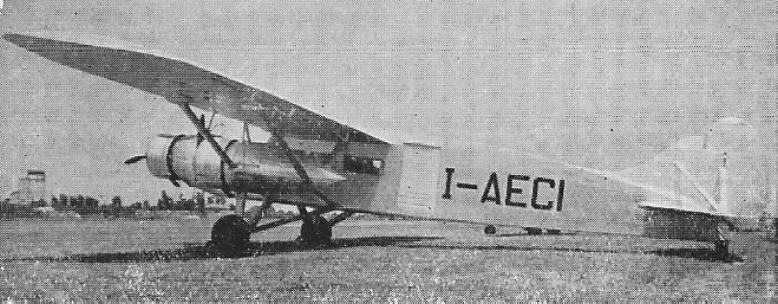
The 18‑passenger civil transport version, the Ca 148 (106 built), had a number of improvements including a modified fuselage and a strengthened landing gear for operation in East Africa. The Ca.148 differed from the Ca.133 in having Piaggio d’Ascanio variable-pitch propeller. Loaded weight was increased to allow a normal load of 7716 lb. The cabin can accommodate 16 passengers, and a crew of two. The structure is of welded steel-tube with metal and fabric covering. Many of these were impressed for war service, operating also with Luftwaffe transport units; and several survived to serve with the post-war Italian air force.
Ca.148
Engines: 3 x 460hp Piaggio Stella P.VII C.16 7-cylinder radial engines Max take-off weight: 6700 kg / 14771 lb Wingspan: 21.24 m / 69 ft 8 in Length: 15.36 m / 50 ft 5 in Height: 4.00 m / 13 ft 1 in Max. speed: 265 km/h / 165 mph Ceiling: 5500 m / 18050 ft Range: 1350 km / 839 miles Crew: 3 Armament: 4 x 7.7mm machine guns, 1200kg of bombs
Ca.148 Engines: 3 x Piaggio Stella VII R.C, 460 hp Wing span: 69 ft 8 in Wing area: 700 sq.ft Length: 50 ft 4 in Height: 13 ft 1 in Empty weight: 8580 lb Loaded weight: 14,700 lb Max speed: 174 mph at 5575 ft Ceiling: 21,320 ft Range: 838 mi