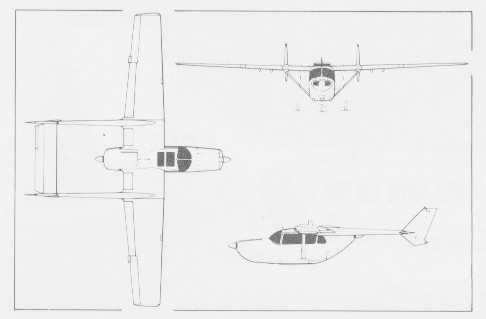
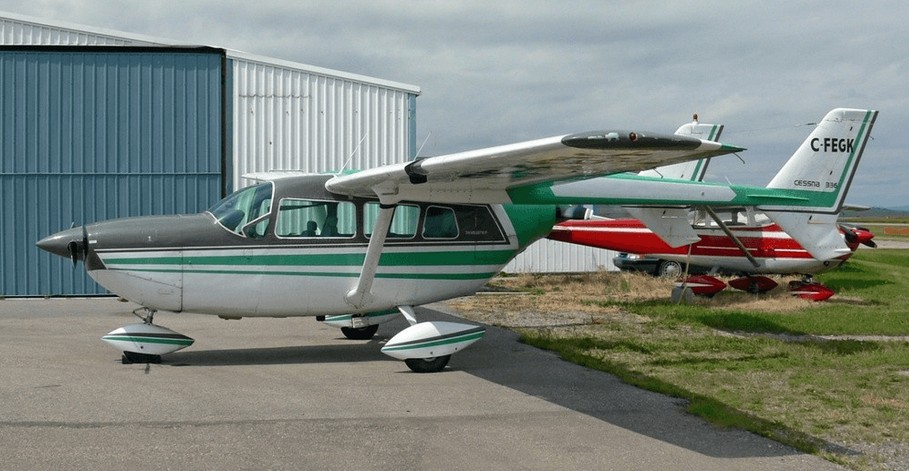
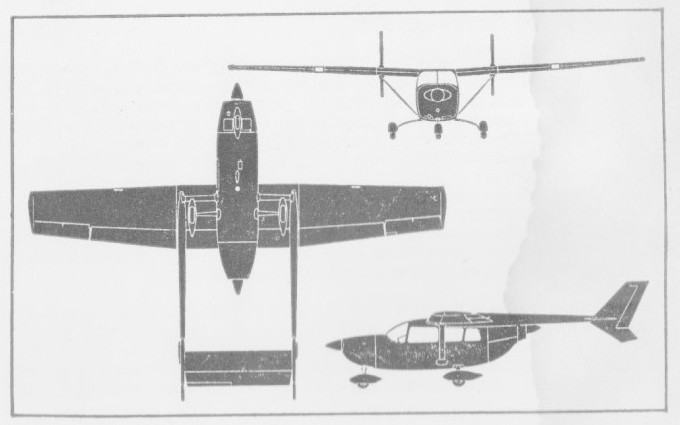
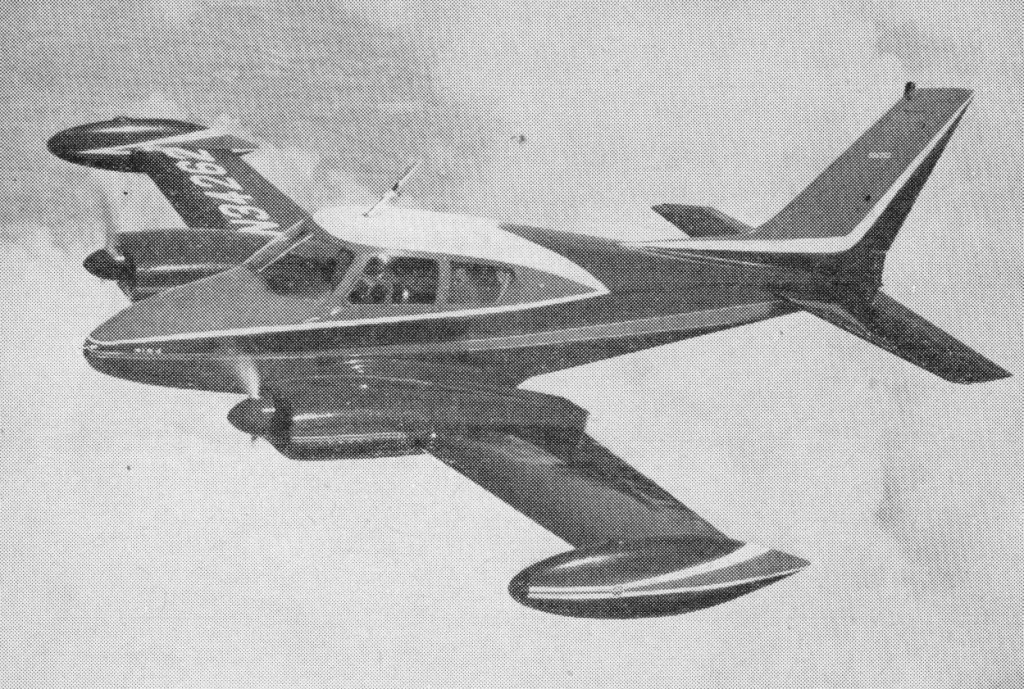
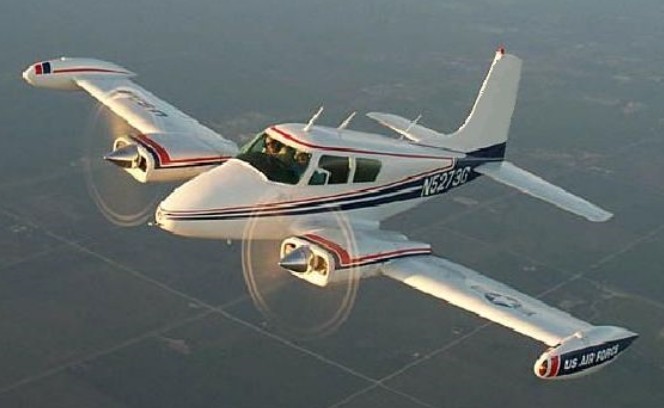
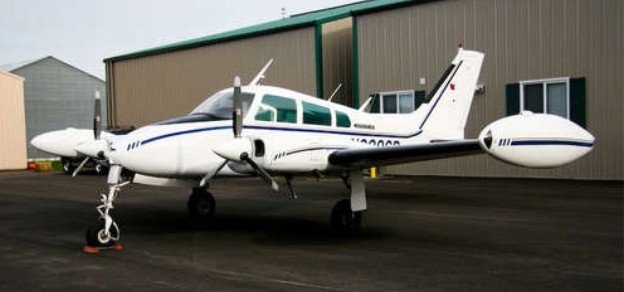
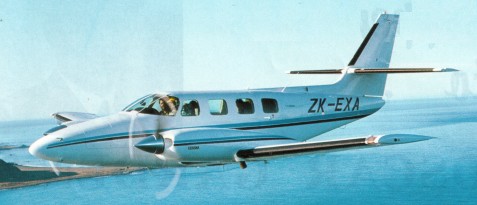
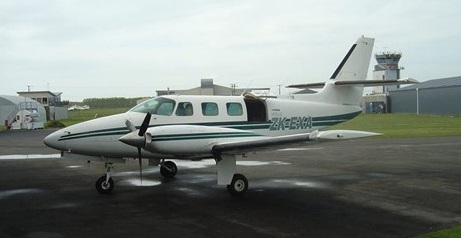
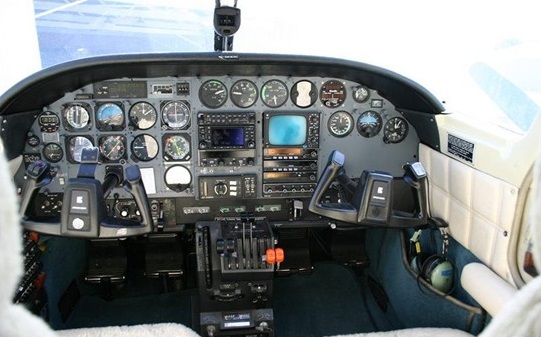
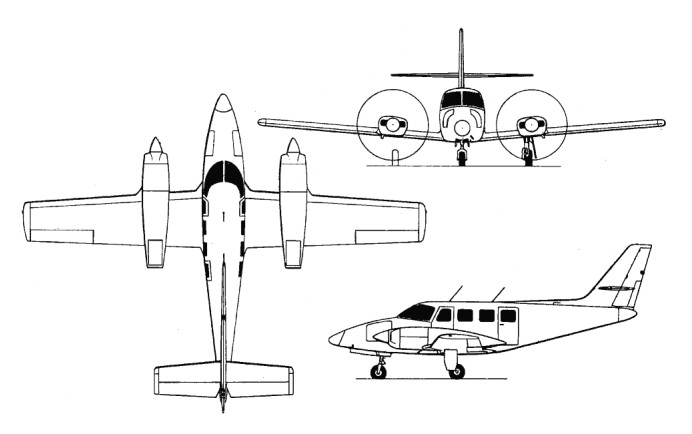
The model 337 Skymaster (originally Super Skymaster) was developed from the fixed gear model 336 and introduced in 1965. Successive refinements include increased gross weight (1968 337C), improved instrumentation (1969 337D), further increased gross weight and conical-cambered glassfibre wingtips (1970), seat belts and other safety features (1971), improved cabin layout (1972), and detail airframe improvements (1973).
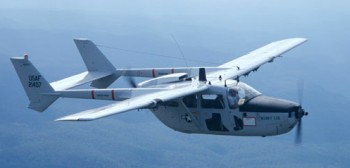
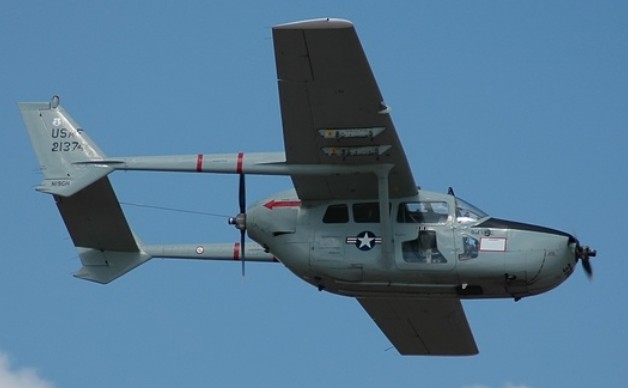
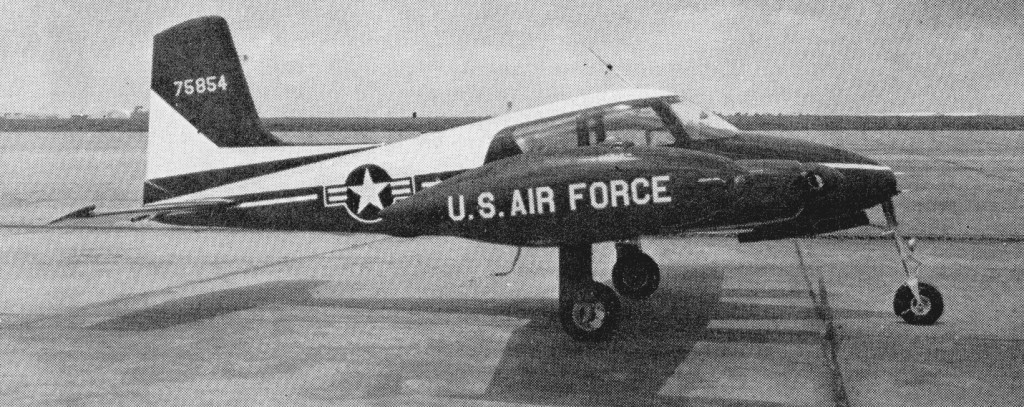
In 1966, the United States Air Force (USAF) realised it needed a replacement for its O-1 Bird Dogs in Vietnam. The Cessna 337 was selected and, with relatively minor modifications to incorporate four under wing weapons mounts and weapon release systems, was sent to war in Vietnam designated O-2A. The Cessna O-2A is an all metal, high wing, retractable gear aircraft incorporating twin tail booms and an engine mounted at the front and rear of its fuselage pod. The first Cessna 0-2A was delivered to the 20th Tactical Air Support Squadron at Da Nang on 2 July 1967. 501 were supplied to the USAF designated O-2A. In addition, a version equipped for psychological warfare missions entered USAF service under the designation O-2B This carried an air-to-ground broadcasting system using three 600-watt amplifiers and a battery of highly directional speakers. Total procurement of O-2B aircraft amounted to 31. Twelve O-2As were supplied to the Imperial Iranian air force in early 1970. A twin-turboprop O-2T/O-2TT did not proceed beyond USAF evaluation.
O-2A
Detail improvements continued each year, and a turbocharged version, the Model T337 Super Skymaster, was introduced in 1970, but the prototype of a pressurised T337G Skymaster, powered by 168kW Continental TSIO-360 engines, flew in July 1971 (the word Super had then been dropped), and deliveries began in 1973.
Only 356 were produced by 1980, when production ceased.
In 1969, Reims Aviation in France began licence assembly of the Model 337, with primary structures supplied by Cessna and Continental engines built in the UK under licence by Rolls-Royce. The US and French production lines continued in parallel, the French versions being classified Reims F337. The name Milirole was applied to the basic unpressurised F337 for a short time. Since 1974 Reims have developed a special unpressurised STOL version, designated FTB337, which can be provided with a wide range of equipment to make it suitable for such duties as maritime or overland patrol and rescue, and the military FTMA Milirole with wing strongpoints and enlarged flaps. Production of the Model 337 series by Cessna ended in mid-1980 by which time 1,821 Model 337s, 313 pressurised Model 337s and 544 military O-2s had been delivered. French production by Reims Aviation totalled 66 Model F337s, 27 F337Ps and 61 FTB337s. US Basler Flight Service modified a CE-337 with a P&W PT6 at the rear, replacing both piston engines, and stretched the fuselage 2.1m to accommodate 10 passengers or freight. The Summit Aviation Sentry O-2-337 Sentry is a military conversion of the Cessna T337 push-pull twin-piston-engined light aircraft with uprated 225 hp Continental TSI0-360 engines, similar in configuration and role to the O-2. Four underwing Nato-standard pylons can carry up to 160kg of stores including gun and rocket pods, and a combined search radar and speaker system pod. The Royal Thai Navy has taken delivery of ten O-2-337s.
337 Engines: 2 x Continental IO-360-C, 210 hp Wingspan: 38 ft 2 in / 11.63 m Length: 29 ft 9 in / 9.07 m Range max cruise no res: 677 nm / 780 mi / 1255 km Seats: 4-6 Cabin length: 9 ft 11 in / 3.02 m Cabin max width: 3 ft 8.25 in / 1.12 m Cabin mas height: 4 ft 3.25 in / 1.30 m Cabin volume: 138 cu.ft / 3.91 cu.m Cabin baggage – 4 seat: 365 lb / 165 kg Cargo pack under fuselage: 300 lb / 136 kg
Cessna 337 Engine: 2 x Continental IO-360-GB, 157kW, 210 hp Max Take-off weight: 2100 kg / 4630 lb Empty weight: 1264 kg / 2787 lb Wingspan: 11.63 m / 38 ft 2 in Length: 9.07 m / 29 ft 9 in Height: 2.79 m / 9 ft 2 in Wing area: 18.81 sq.m / 202.47 sq ft Max. speed: 332 km/h / 206 mph Cruise speed: 315 km/h / 196 mph Ceiling: 5485 m / 18000 ft Range: 1235 nm / 2288 km / 1422 miles Crew : 2 + 4
Cessna 337 Super Skymaster Engines: 2 x Continental IO 360 C, 310 hp Length: 29 ft 9 in. Wingspan: 38 ft 2 in. Speed: 199 mph. Ceiling: 18,000 ft. Range: 755 mls. Landing speed: 63 mph. Landing dist: 575 ft. Pax cap: 6. Payload: 1,610 lb.
1977 CE-337 Skymaster Engines: 2 x Continental IO-360-G, 210 hp. Seats: 4/6. Wing loading: 22.9 lb/sq.ft. Pwr loading: 11 lb/hp. Gross wt: 4630 lb. Empty wt: 2786 lb. Equipped useful load: 1730 lb. Payload max fuel: 842 lb. Range max fuel/75% pwr: 986 nm/5.8 hr. Range max fuel / 55% pwr: 1199 nm/ 8.1 hr. Service ceiling: 18,000 ft. 75% cruise: 169 kt. 55% cruise: 149 kt. Stall: 61-69 kt. 1.3 Vso: 79 kt. ROC: 1100 fpm. SE ROC: 320 fpm @ 88 kt. SE Service ceiling: 7100 ft. Min field length: 1675 ft. Fuel cap: 528/888 lb. Undercarriage: retractable.
1979 Skymaster Engine: 2 x Continental IO 360 G, 210 hp. Max speed: 171 kts. Max cruise speed: 169 kts. Max range: 1155 nm. Max usable fuel: 148 USG. ROC: 925 fpm. ROC SE: 300 fpm. Service Ceiling: 16,100ft. Service ceiling SE: 6900 ft. Takeoff dist 50 ft obstacle: 1,675 ft. Landing dist 50 ft obstacle: 1,650 ft. Max ramp wt: 4648 lb. Max useful load: 1848 lbs. Seats: 6.
CE-T337G Engine: 2 x 225 hp Continental TSIO-360-C, 210 hp. Vne: 197 kts. Max cruise: 205 kts. Econ cruise: 147 kts. ROC: 1100 fpm @ 110 kts. SE ROC (87kts): (Front eng.) 400 fpm, (rear eng) 500 fpm. Operational ceiling: 20,000 ft. Range, no res @ 16,000ft: 1308 nm. Empty wt: 3184 lbs. MTOW: 4700 lbs. Wing span: 38 ft 2 in. Length: 29 ft 9 in. Height: 9 ft 4 in. Wing area: 202.5 sq.ft. Seats: 6. Stall: clean: 57 kts, Flap, u/c dn: 50 kts.
CE-P337 Engines: 2 x Continental TSIO 360 C, 225 hp. TBO: 1,400 hrs. Propellers: constant speed, full feathering, two blade. Length: 29 ft. 10 in. Height: 9 ft. 2 in. Wingspan: 38 ft. 2 in. Wing area: 202.5 sq.ft. Wing loading: 23.2 lb/sq.ft. Power loading: 10.4 lb/hp. Gross weight: 4,700 lbs. Empty weight: 3,311 lbs. Useful load: 1,389 lbs. Max ramp wt: 4,724 lbs. Payload with full fuel: 511 lbs. Rate of climb: 1,250 fpm. Single engine rate of climb: 375 fpm. Single engine climb gradient at 89 knots (Vyse): 253 ft./nm. Service ceiling: 20,000 ft. Single engine service ceiling: 18,700 ft. Certificated ceiling: 20,000 ft. Max speed: 217 kts. Maximum cruise (75 % @ 20,000 ft.): 205 knots. Intermediate cruise (75% @ 10,000ft): 186 knots. Duration @ maximum cruise: 5.8 hrs. Maneuvering speed: 139 knots. Stall speed (clean): 70 knots. Stall speed (gear, flaps down): 62 knots. Pressurization differential: 3.35 psi. 10,000 foot cabin at 20,000 ft. Usable fuel capacity: 148 USG/888 lbs. Maximum takeoff weight: 4,700 lbs. Maximum landing weight: 4,465 lbs. Takeoff dist 50 ft obstacle: 1,500 ft. Landing dist 50 ft obstacle: 1,675 ft. Seats: 5. Max range: 1,155 nm.
Turbo-System Super Skymaster Engines: Continental TSIO-360-A/B, 210 hp
T337 Pressurised Skymaster Engines: Continental TSIO-360, 225 hp
Reims Cessna FT.337G Turbo Super Skymaster
Cessna 0-2A Engine: Two Continental IO-360-D, 210HP (158 kW) Propeller: Two McCauley Constant Speed, Full Feathering 2 blade Prop Diameter: 6 ft 6 in (1.95m) Fuel: Aviation Gasoline 100 Octane Wing Tank Capacity: 37 Imperial Gallons / 167 Litres / 44 U.S. Gallons Reserve Tank Capacity (2): 15 Imperial Gallons / 68 Litres / 18 U.S. Gallons Wingspan: 38 ft 0 in / 11.58 m Length: 29 ft 2 in / 8.90 m Wing Area: 201 sq. ft / 18.67 sq. m Height: 9 ft 5 in / 2.87 m Empty: 3,226 lb / 1,463 kg Maximum Takeoff weight: 4,850 lb / 2,200 kg Maximum Speed: 192 knots / 221 mph / 356 km/h Cruise Speed: 140 knots / 161 mph / 261 km/h
O2-337 Engines: 2 x 225 hp Continental TSI0-360 Hardpoints: Four underwing Hardpoint load: 160kg . Basler 337 Engine: 1 x P&W PT6. Pax cap: 10.
The push-pull concept, with engines driving one tractor and one pusher propeller, was adopted by Cessna in the late 1950s for a light, low cost, easy-to-fly twin, and one obvious advantage over a normal twin layout was that, in the event of an engine failure, there would be no asymmetric thrust problems. First flew on February 18, 1961, but significant improvements to the design were made before production aircraft were delivered. Changes included more powerful engines, a larger fuselage, and revised wing, tail and rear engine cowling. The first pre-production prototype was flown in August 1962 followed by the first production aircraft completed in November 1962. FAA certification took 15 months, with deliveries of the first production 336 beginning in May 1963. A total of 140 were sold that year. Powered by two 157kW Continental IO-360-A engines, the new aeroplane was a four-seater with fixed tricycle landing gear, although alternative seating arrangements for up to six were available. Additional baggage space was available in an optional glassfibre pack with a capacity of 136kg, which could be carried beneath the fuselage. However, fixed landing gear on light twins was becoming passe, and after 195 Model 336s had been built the type was replaced on the production line in early 1965 by the Model 337 Super Skymaster with retractable landing gear.
Engine: 2 x 195 hp Continental IO-360-A. Max speed: 160 kts. Max cruise: 150 kts. Econ cruise: 107 kts. ROC: 1340 fpm. Service ceiling: 19,000 ft. Range, no res, std fuel: 820 nm. Range optional fuel: 1143 nm. Empty wt: 2320 lbs. MTOW: 3900 lbs. Wing span: 38 ft. Length: 29 ft 7 in. Height: 9 ft 6 in. Wing area: 201 sq.ft. Seats: 6
336 Skymaster Engines: 2 x Teledyne Continental IO-360-G, 210 hp @ 2800 rpm. Props; 2x Constant Speed, Full Feathering Diameter; Front; 78 in, Rear; 76 Max Sea Level speed; 179 kts Cruise, 75% Power at 5500 ft; 169 kts. Range 75% power at 5500 ft: 545 nm Endurance; 3.3 hrs. Max range 10,000ft; 670 nm (528 lbs usable fuel), Rate of Climb at Sea Level; Twin Engine; 1100 fpm. Front Engine Only ROC; 270 fpm. Rear Engine Only; 320 fpm. Service Ceiling; Twin Engine; 18,000 ft. Ceiling Front Engine Only; 6,100 ft. Ceiling Rear Egine Only; 7,100 ft. Take-off; Ground Roll; 1000 ft. Total Distance Over 50 ft Obstacle; 1675 ft. Landing; Ground Roll; 700 ft. Over 50 ft Obstacle; 1650 ft. Stall Speed; Flaps up, Power off; 70 kts Flaps Down, Power off; 61 kts. Max Take-off; 4630 lbs. Max Landing; 4400 lbs. Standard Empty; 2786 lbs . Max Useful Load; 1844 lbs. Baggage Allowance; 365 lbs. Wing Loading; 22.9 lbs/sq.ft. Power Loading; 11.0 lbs/hp. Fuel Capacity; Standard; 90.6 US Gal. Opyion al Long Range; 150.6 US Gal.
336 Skymaster II Engines; 2 x Teledyne Continental IO-360-G, 210 hp @ 2800 rpm. Props; 2x Constant Speed, Full Feathering. Diameter; Front; 78 in, Rear; 76 in. Max Sea Level speed; 179 kts. Cruise, 75% Power at 5500 ft; 169 kts. Cruise; 75% power at 5500 ft – Range; 545 nm, Endurance; 3.3 hrs. Max range 10,000ft; 670 nm (528 lbs usable fuel) Rate of Climb at Sea Level; Twin Engine; 1100 fpm. ROC Front Engine Only; 270 fpm. ROC Rear Engine Only; 320 fpm. Service Ceiling; Twin Engine; 18,000 ft. Ceiling Front Engine Only; 6,100 ft. Ceiling Rear Egine Only; 7,100 ft. Take-off; Ground Roll; 1000 ft. Total Distance Over 50 ft Obstacle; 1675 ft. Landing; Ground Roll; 700 ft. Landing Over 50 ft Obstacle; 1650 ft. Stall Speed; Flaps up, Power off; 70 kts, Flaps Down, Power off; 61 kts. Max Take-off; 4630 lbs. Max Landing; 4400 lbs. Standard Empty; 2911 lbs. Max Useful Load; 1719 lbs. Baggage Allowance; 365 lbs. Wing Loading; 22.9 lbs/sq.ft. Power Loading; 11.0 lbs/hp. Fuel Capacity; Standard; 90.6 US Gal. Optional Long Range Fuel; 150.6 US Gal.
A lightweight unpressurised version of the Model 340 was offered to the market in 1979 as the Model 335, later available as the improved Model 335 II version, but production ended in 1980 after only 45 had been built.
1980 Cessna 335 Engine: Continental IO-520-EB, 300 hp@SL to 13,000 ft TBO (hrs.): 1400 Fuel type: 100/100LL Propeller type: 3-Blade/constant speed Landing gear type: Tri./Retr. Max ramp weight w/VGs (lbs): 6290 Gross weight w/VGs (lbs.): 6290 Landing weight (lbs.) 5990 Empty weight, std. (lbs.): 4240 Useful load, std. (lbs.): 2050 Useful fuel, std (USgals.): 183 Payload, full std. fuel (lbs.): 952 Wingspan: 38 ft. 1 in. Overall length: 34 ft. 4 in. Height: 12 ft. 7 in. Wing area (sq. ft.): 185 Wing loading (lbs./sq.ft.): 32.6 Power loading (lbs./hp): 9.98 Wheel size (in.): 6.00 x 6 Seating capacity: 6 Cabin doors: 1 Cabin width: 46.5 in. Cabin height: 49 in. Cruise speed (kts.) 75% power: 211 Fuel consumption (USgph.): 75% power: 34 Vso (kts.): 71 Vso w/VGs (kts.): 64 Best rate of climb, SL (fpm): 1400 S/E rate of climb, SL (fpm): 200 Service ceiling (ft.): 26,800 S/E service ceiling (ft.): 11,500 Takeoff ground roll (ft.): 1850 Takeoff over 50-ft. obstacle (ft.): 2365 Landing ground roll (ft.): 770 Landing over 50-ft. obstacle (ft.): 1850
Cessna model 325 was essentially a 305 Bird Dog powered by a 230-hp engine and fitted with a CSU, a hopper in the rear of the cockpit, and under-wing spray bars.
In 1965 Cessna announced an improved twin-engined turbocharged Skynight. It has a larger cabin, more baggage area, easier access to aircraft systems for servicing and complete new interior styling. Top speed: 271 mph. It carries six persions, full fuel and 231 lb of baggage.
The 320 has essentially the same structure as the twin engine retractable Cessna 310, but with two 285-hp, six cylinder, turbocharged Continental IO-520s.
The 310, 320 and 402 all share virtually the same wing and the 320 and 402 the same engines, with the only real difference being is that the 6 seat 320 is “derated” such that full throttle produces 32 inches of boost (285 hp). The fuel selectors are found on the cabin floor directly between the two front seats and these control, by cable, the selectors in each wing. As there is some “give” in the cable system, selecting the fuel on requires the pilot to “feel” for the indent. Each engine has its own separate fuel system, but the two are interconnected with a crossfeed tube and each engine can be fed from either tan (necessary is you wish to balance the fuel in the two tanks, for example).
The tip tanks are, in fact, the main tanks, each holding 190 litres (50 gallons) usable fuel. The auxiliary tanks are slightly inboard and hold about 78 litres (20.5 gallons) each. There is space for additional fuel behind the engines.
Cessna 320E
Introduced as the premier model 310 version for the businessman, the turbo-charged 320 Skynight was never a big seller. Apart from the extra side windows the 320E is nearly identical to the non-turbo 310L. Only 575 model 320s were built.
The US Navy Cessna 319A, an experimental Boundary Layer Control wing version of the OE-2, intended for investigation of STOL characteristics. The BLC ‘suction/ejection’ system reduced the stalling speed from 43 mph to 32 mph, and the take-off to 50ft from 600 ft to 450 ft.
The Cessna 319A carried no military markings other than the fuselage inscription ‘U.S. Naval Research Aircraft’.
With the stepdown rear fuselage of the OE-1 (L-19A) Bird Dog, the OE-2 posed the longer nose and more angular tail assembly of the Model 180.
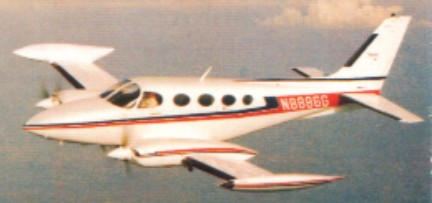
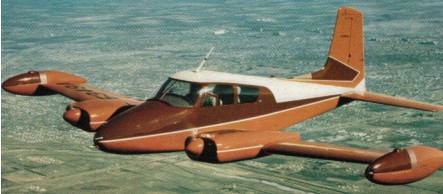
In 1952, Cessna initiated the design of a new five/six-seat twin-engined light monoplane designated Cessna Model 310. The prototype flew for the first time on 3 January 1953, proving in production form to be a popular twin. Of low-wing configuration and with tricycle landing gear, the prototype was powered by the 168kW Continental O-470, an engine developed originally for military use under the designation E225. Its use to power the Cessna Model 310 was one of its first civil applications, early production aircraft having the more powerful 194kW IO-470. An identification feature of the design at that time were the two wingtip fuel tanks, then representing the entire fuel tankage.
Production deliveries began in 1954, with steady product improvement continuing year by year. The swept tail came in 1960, the extra rear window in 1961, and now the slanted, sharpened tip tanks giving the 310G a totally updated appearance. The cabin was capable of seating five. It has a loaded weight of 4,830 lb., and cruises at 220 miles over a range of 825 miles.
1960 Cessna 310D
The 1964 310I Skynight had weather-proof compartments at the rear of both engine nacelles for an additional 120 lb of baggage, the same engines as the 310H, new light-weight props, redesigned control system, and an old price of $62,950.
A deluxe version with turbocharged engines, air-conditioning and an oxygen system as standard was introduced in 1966. This was then named the Turbo-System Executive Skyknight being known also for a short period as the Model 320, but later marketed as the Turbo T310.
Final versions were the basic Model 310 with 213kW Continental IO-520-MB engines, the structurally identical Model 310II which incorporated a factory installed avionics/equipment package, the Turbo T310 with TSIO-520-BB powerplants and the Turbo T310 II with the same additional equipment fit as the Model 310 II.
L-27A
In the mid-1950s, following competitive selection, a slightly modified version of the Model 310 was ordered for light cargo-liaison duties with the US Air Force under the designation L-27A, subsequently redesignated U-3A A total of 160 were built followed by 36 U-3Bs equipped for all-weather operation, and all were nicknamed ‘Blue Canoes’.
Cessna L-27 (U-3A) Blue Canoe
The Turbo-System T310 was introduced in 1969 as Turbo-System 310P replaced the model 320 Skyknight in production.
The 1972 Cessna 310 had an Omni-Vision rear window installed in a slightly enlarged rear fuselage to provide more room for back seat passengers, together with a bigger front windshield, new easier-to read instruments, cleaner panels and detail refinements common to the entire line. On some 310s, with extra wing locker tanks, the aircraft can carry 203 USG. The Cessna 310 had well over 3,000 marketed by 1972. The B55 Barons and the Cessna 310s are powered by 260 hp Continental IO 470 series engines, which have 1,500 hour TBOs, provided their exhaust valves are either nickel coated or ni¬monic; otherwise a 1,200 hour TBO applies. With a wingspan of 36 ft 11 in (11.24 m), and two 260 hp engines, the Model 310 can fly safely on only one engine, and has a maximum range of about 1,700 miles (2,735 km). The final development of the 1953 design came in 1975 when a longer nose was fitted as well as an overhead window for the rear seat passengers.
In the late 1980s Neil Armstrong sold his Cessna 310.
When production finished in May 1981, 5,241 commercial examples of the Model 310 had been built, including a small number for the French air force, plus the 196 delivered to the USAF.
Variations: Riley Rocket Riley Turbostream / Super 310/320
310 1954 CE-310 Engines: 2 x Continental O-470-B, 240 hp Wingspan: 36 ft Length: 27 ft Height: 10 ft 6 in Empty weight: 2850 lb Max loaded weight: 4600 lb Fuel capacity: 2 x 41.6 ImpG tip tanks Max speed: 220 mph at SL Cruise: 205 mph at 8000 ft Range 60%: 875 mi at 10,000 ft ROC: 1700 fpm Service ceiling: 20,000 ft Seats: 5
1977 CE-310 Engines: 2 x Continental IO-520-M, 285 hp. Seats: 4/6. Wing loading: 30.73 lb/sq.ft. Pwr loading: 9.65 lb/hp. Gross wt: 5500 lb. Empty wt: 3337 lb. Equipped useful load: 2049 lb. Payload max fuel: 831 lb. Range max fuel/75% pwr: 1129 nm/5.8 hr. Range max fuel / 55% pwr: 1382 nm/ 7.9 hr. Service ceiling: 19,750 ft. 75% cruise: 194 kt. 55% cruise: 176 kt. Vmc: 81 kt. Stall: 72-79 kt. 1.3 Vso: 94 kt. ROC: 1662 fpm. SE ROC: 370 fpm @ 106 kt. SE Service ceiling: 7400 ft. Min field length: 1790 ft. Fuel cap: 600/1218 lb. Undercarriage: retractable.
1979 Cessna 310 Engines: 2 x Continental IO 520 MB, 285 hp, 213kW. Wingspan: 11.25 m / 36 ft 11 in Length: 9.74 m / 31 ft 11 in Height: 3.25 m / 10 ft 8 in Wing area: 16.63 sq.m / 179.00 sq ft Max speed: 207 kts. / 383 km/h / 238 mph Max cruise speed: 195 kts. Max range: 1,511 nm. Max usable fuel: 203 USG. ROC: 1,662 fpm. ROC SE: 370 fpm. Service ceiling: 6020 m / 19,750 ft. Service ceiling SE: 7,400 ft. Takeoff dist 50 ft obstacle: 1,700 ft. Landing dist 50 ft obstacle: 1,790 ft. Take-off weight: 2495 kg / 5501 lb Empty weight: 1523 kg / 3358 lb Max ramp wt: 5,535 lbs. Max zero fuel wt: 4,900 lbs. Max useful load: 2,182 lbs. Seats: 6.
1979 Turbo Cessna 310 Engines: 2 x Continental TS10 520 BB, 285 hp. Max speed: 237 kts. Max cruise speed: 223 kts. Max range: 1,440 nm. Max usable fuel: 203 USG. ROC: 1,700 fpm. ROC SE: 390 fpm. Service ceiling: 27,400 ft. Service ceiling SE: 17,200 ft. Takeoff dist 50 ft obstacle: 1,662 ft. Landing Dist 50 ft obstacle: 1,790 ft. Max ramp wt: 5,535 lbs. Max zero fuel wt: 5,015 lbs. Max useful load: 2,062 lbs. Seats: 6.
Turbo 310 Engines: 2 x Continental TSIO-520-B, 285 hp. Seats: 4/6. Wing loading: 30.73 lb/sq.ft. Pwr loading: 9.65 lb/hp. Gross wt: 5500 lb. Empty wt: 3453 lb. Equipped useful load: 1933 lb. Payload max fuel: 715 lb. Range max fuel/75% pwr: 1293 nm/5.7 hr. Range max fuel / 55% pwr: 1316 nm/ 7.4 hr. Service ceiling: 27,400 ft. 75% cruise: 223 kt. 55% cruise: 179 kt. Vmc: 81 kt. Stall: 72-79 kt. 1.3 Vso: 94 kt. ROC: 1700 fpm. SE ROC: 390 fpm @ 106 kt. SE Service ceiling: 17,200 ft. Min field length: 1790 ft. Take-off dist, 50ft: 1670 ft. Ldg dist 50 ft: 1795 ft. Fuel cap: 600/1218 lb. Undercarriage: retractable.
1979 Cessna Turbo 310-R Engine: 2 x Continental TSIO-520-MB, 285 hp@2700 rpm TBO hrs.: 1400 Fuel Type:100/100LL Propeller: McCauley three-blade, full feathering/78 in Landing Gear type: Tri./Retr. Max ramp weight (lbs.): 5535 Gross weight (lbs.): 5500 Landing weight (lbs.): 5400 Zero-fuel weight (lbs.): 5015 Empty weight, std. (lbs.): 3723 Useful load, std. (lbs.): 1777 Payload, full std. fuel (lbs.): 1165 Usable fuel (USgals.): 100 Optional fuel (USgals.): 143 / 166 / 207 Oil capacity (qts.): 13 per engine Wingspan: 36 ft. 11 in. Overall length: 31 ft. 11.5 in. Height: 10 ft. 8 in. Wing area (sq. ft.): 179 Wing loading (lbs./sq. ft.): 30.73 Power loading (lbs./hp.): 9.65 Wheel track (in.): 6.50 x 10 Wheel size (in.): 6.50 x 6 Seating capacity: 6 Cabin doors: 1 Cabin width (in.): 48.5 Cabin height (in.): 50 Baggage capacity (lbs.): 950 Cruise speed (kts.) 75% power @ 20,000/10,000 ft.: 223/201 Cruise speed (kts.) 65% power @ 20,000/10,000 ft.: 204/185 Cruise speed (kts.) 55% power @ 20,000/10,000 ft.: 195/177 Max range @ 20,000 ft. (w/ reserve) (nm) 75% power 100/203 gals. usable: 519/1242 Max range @ 20,000 ft. (w/ reserve) (nm) 65% power 100/203 gals. usable: 545/1290 Max range @ 20,000 ft. (w/ reserve) (nm) 55% power 100/203 gals. usable: 570/1360 Max range @ 10,000 ft. (w/ reserve) (nm): 75% power 100/203 gals. usable: 491/1140 Max range @ 10,000 ft. (w/ reserve) (nm): 65% power 100/203 gals. usable: 515/1200 Max range @ 10,000 ft. (w/ reserve) (nm): 55% power 100/203 gals. usable: 540/1270 Stall speed (gear, flaps up) (knots): 78 Stall speed (gear, flaps down) (knots): 70 Best rate of climb (2 engines) (fpm): 1700 Single-engine rate of climb, SL (fpm): 390 Service ceiling (ft.): 27,400 Service-engine sevice ceiling (ft.): 17,200 Takeoff ground roll (ft.): 1306 Takeoff over 50-ft. obstacle (ft.): 1662 Landing ground roll (ft.): 640 Landing over 50-ft. obstacle (ft.): 1790
Colemill Executive 600 / Cessna 310 Engines: 2 x Continental IO-520-E, 300 hp. Seats: 6. Wing loading: 29.1 lb/sq.ft. Pwr loading: 8.7 lb/hp. Max TO wt: 5200 lb. Empty wt: 3125 lb. Equipped useful load: 1952 lb. Payload max fuel: 1112 lb. Range max fuel/ 75% cruise: 990 nm/4.3 hr. Service ceiling: 19,500 ft. 75% cruise: 198 kt. Vmc: 64 kt. Stall: 64 kt. 1.3 Vso: 83 kt. ROC: 2500 fpm. SE ROC: 400 fpm @ 101 kt. SE ceiling: 11,500 ft. Min field length: 1795 ft. Fuel cap: 840 lb.
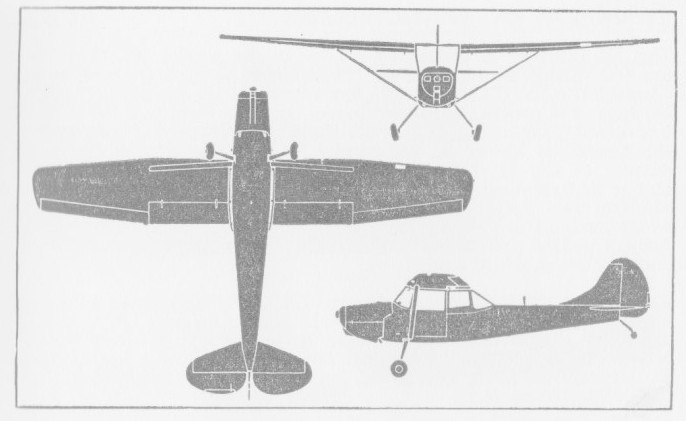
In 1950 five manufacturers entered a competition to replace the fleet of L-4 and L-5 observation planes. The specifications included takeoff and land within 600 feet, cruise at 89 mph, have an observation speed of 49 mph, climb at 800 fpm, three hour endurance, service ceiling of 16,000 ft, and weigh 1000 lb empty.
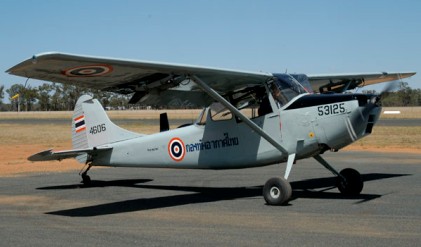
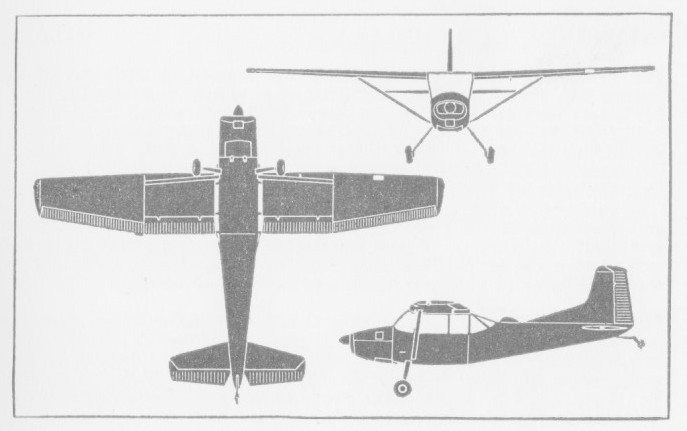
The Cessna engineers put together the wings from the 170, a tail from the 195 and a new fuselage with transparent panels in the roof and a wider access door and new landing gear, to make the Cessna 305. Cessna’s design was a light-weight strut-braced high-wing monoplane, which provided accommodation for a pilot and three passengers.
Power was from a Continental O-470 of 213hp / 108kW and fixed pitch prop. The fixed pitch prop limited the cruise to 30% power so as not to overspeed the engine. The Birddog moved from design sketches to first flight in just 90 days. The landing requirement required 60 degrees of flap and a full stall, three-point landing technique with a high rate of sink. The O-1 is not cleared for aerobatics.
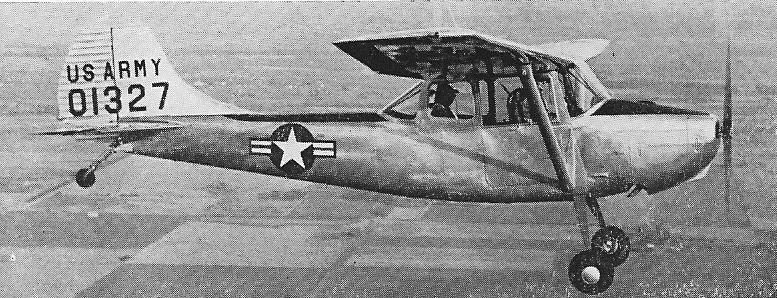
Cessna was awarded the contract with an initial order of 418 aircraft on 29 May 1950. The first military designated L-19s were delivered in December 1951 and sent to Korea, arriving there on 16 February 1951.
L-19A
The Model 305A differed from the 170 by having the aft fuselage redesigned to give a clear view to the rear and by the provision of transparent panels in the wing centre-section, which formed the cabin roof. A wider access door gave room to load a standard stretcher, for which support brackets were installed. Spring steel landing gear and slotted high lift flaps were fitted along the trailing edge of each wing.
By June 1951 there were 166 L-16s in Korea, and they had amassed about 20,000 hours.
Deliveries of production aircraft began in December 1950, under the designation L-19A and with the name Bird Dog, and by October 1954, 2,486 had been delivered, of which 60 were diverted to the US Marine Corps which designated them OE-1.
An L-19A-IT instrument trainer version was developed in 1953. By 1954 a total of 2486 had been delivered, of which 60 were diverted to the US Marine Corp where they were e-designated OE-1.
In 1956, the Army ordered 100 TL-19D instrument trainers. This was a growth version of the original instrument trainer with a constant-speed prop and a higher gross weight — 2,400 pounds. The next year, the order was expanded by another 207 TL-l9Ds and an uprated version of the basic L-19 was ordered —the “E” model which boosted the higher gross weight and “some minor improvements.”
Sixty Bird Dogs were delivered to the USMC as the O-1B, and the TO-1D is a dual control training version of the O-1A.
The L-19E was the final version to bring total production of Bird Dogs to 3,431. With redesignation in 1962, the US Army’s L-19A, TL-19D and L-19E aircraft became O-1A, TO-1D and O-1E respectively. The US Marines’ OE-1 became O-1B and this service also acquired 25 of the higher-powered O-1C. US Army trainers, derived from standard production aircraft, had the designations TO-1A and TO-1E.
Some O-1 were manufactured by Fuji Heavy Industries for the Japanese Ground Self-Defence Force.
The model 321, or O-1C was an extensively redesigned version of the O-1B Bird Dog for the USMC. The prototype of the O-1C was first flown in 1955 and twenty-five were built. Pilot and observer were protected by flak curtains and seat armour, and all fuel tanks are self-sealing. A 250 lb bomb or three air to surface rockets may be carried beneath each wing. The structure of the O-1C is similar to the O-1B apart from some strengthening for the more powerful engine.
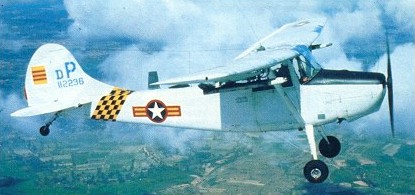
The US Air Force acquired many of the US Army’s O-1s for use by forward air controllers in Vietnam; former TO-1Ds and O-1As were redesignated O-1F and O-1G respectively when equipped for this role.
The O-1Fs were TO-1Ds modified to O-1D standard by deleting the dual controls and rear seat instrument panel and the modified to -F standard by fitting under-wing hard points and army communication gear.
The US Navy ordered 25 of a progressive development designated OE-2. These differ principally in having a longer nose to house a 260 hp Continental SO-370 engine, and taller, more angular tail surfaces.
Cessna had delivered 3,431 examples by the time production ceased including 126 for the French – the bulk of these had been built as O-1s (L-19As), with later variants introducing uprated equipment and the ability to carry wing stores like target marking rockets
Of these, one was a civil prototype and four were evaluation models for civilian use. These were put into service in aerial application and although they got high marks with the dusters, Cessna could not see enough of a market for the aircraft and never put it into production. As far as FAA is concerned, the Birddog is the Cessna 305A and all those converted to civilian use are so designated in FAA records.
O-1s were also built under licence by Fuji in Japan.
Ector Aircraft Co., of Odessa, Texas produced (until stocks of new parts are exhausted) the Ector L-19 Mountaineer and the standard Ector (Cessna) 305. The basic aircraft is delivered with a majored Continental 0-470-11 and the McCauley fixed-pitch prop or with a Continental 0-470-13 or Lycoming 0-540-A4B5, a constant-speed prop and manifold pressure gauge.
Although long since retired from USAF service, a modest number of O-1’s continue to thrive with a handful of air arms across the globe, whilst surplus Bird Dogs have recently enjoyed a renaissance across North America and Australia.
O-1C Engine: 265 hp Continental O-470-2 Wingspan: 36 ft 0 in Length: 26 ft 3 in Height: 7 ft 10 in Wing area: 174 sq.ft Empty weight: 1853 lb Max loaded weight: 2650 lb Max speed: 185 mph Econ cruise: 122 mph ROC: 1300 fpm Time to 20,000ft: 22.6 min Range: 575 mi at 10,000 ft
CE-305A Engine: Continental O-470-11, 213 hp. Empty wt: 1700 lbs. MTOW: 2100 lbs (optional): 2300 lbs. Height: 7 ft 6 in. Length: 25 ft 9.5 in. Wing span: 36 ft. Cruise: (@ 2300 rpm): 78 kts. Stall: 42 kts.
Cessna L-19E / O-1E Bird Dog Engine: 1 x Continental O-470-11, 213 hp, 159kW Wingspan: 10.97 m / 35 ft 12 in Length: 7.85 m / 25 ft 9 in Height: 2.22 m / 7 ft 3 in Wing area: 16.16 sq.m / 173.94 sq ft Maximum Speed: 130mph (209kmh; 113kts) Maximum Range: 530miles (853km) Rate-of-Climb: 1,040ft/min (317m/min) Service Ceiling: 20,341ft (6,200m; 3.9miles) Accommodation: 2 Hardpoints: 2 Empty Weight: 1,614lbs (732kg) Maximum Take-Off Weight: 2,401lbs (1,089kg)
L-19 Engine: Continental O-470-11B, 213 hp Prop: McCauley 2 blade 90 in fixed pitch Wingspan: 36 ft Wing area: 174 sq.ft. Length: 25 ft 9 in Height: 7 ft 6 in Seats: 2 Max gross wt: 2400 lb Empty wt: 1480 lb Useful load: 920 lb Wing loading: 13.79 lb/sq.ft. Power loading: 11.26 lb/hp Toatl fuel cap: 42 USG Useable fuel cap: 36 USG Baggage cap: 100 lb Max speed: 179 mph Cruise 2300 rpm: 104 mph Stall clean: 44 mph Stall with flap: 40 mph ROC SL: 1350 fpm Service ceiling: 21,300 ft Takeoff ground roll: 355 ft Landing ground roll: 320 ft
Cessna L-19A Bird-Dog Engine: 213 h.p. Continental O-470-11 Span: 36 ft Length: 25 ft Height: 7 ft 6 in Wing area: 174 sq.ft Empty weight: 1400 lb Loaded weight: 2200 lb Max speed: 146 mph at 5000 ft Cruise: 115 mph ROC: 1290 fpm Service ceiling: 21,200 ft Range: 620 mi Seats: 2
Cessna O-1G Birddog Engine: 213hp / 158 kW Continental O-470-11 Fuel: 100 Octane Wingspan: 36 ft / 10.97 m Length: 25 ft 9 in / 7.85 m Height: 7 ft 6 in / 2.29 m Empty weight: 1,400lbs / 635 kg Maximum Take-off weight: 2,200lbs / 998 kg Max speed: 115 mph / 185 kph Service ceiling: 18,500 ft / 5638.8 m Max range: 530 mi / 742.08 km Armament: Eight 2.75 inch (70mm) smoke rockets Maximum Speed: 131 knots / 151 mph / 243 km/h
Cessna’s light twin, the Model 303 (N303PD), flew for the first time in February 1978. A top speed of 140 knots was reached on the Valentine’s Day flight, which lasted 54 minutes. It then designated Cessna Model 303 Clipper
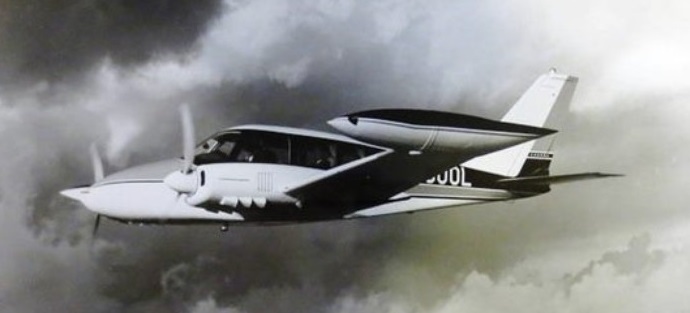
In this prototype form it was a four-seat aircraft of low-wing monoplane configuration with the wing incorporating a super-critical aerofoil section. Other features included retractable tricycle landing gear, swept vertical tail surfaces with a long dorsal fin, extensive use of bonded construction and power-plant comprising two 119kW engines. Before the certification programme began it was superseded by a new Model T303 which reverted to conventional construction, had six-seat accommodation, was powered by two turbocharged engines of increased output, and had acquired the new name Crusader because the earlier title of Clipper infringed a US trademark.
Cessna’s Crusader had its keel laid in 1977, the airplane first flew in 1978 and was quickly laid to rest. The highly touted GAW 1 airfoil apparently was not talented enough in this application, and Cessna felt it would not be able to compete in a market that turned out to be small and overpopulated. That proved to be a good decision. So did the next one: to reinvent the light twin in a new form. The cabin class design was popular, so the target airplane became a basic size cabin class twin with good performance, excellent handling qualities and a big look. The result was an all new design called the Crusader (or T303, turbochargers having been added).
Cessna claimed the Crusader was the first lightweight twin of its class to have full IFR avionics and equipment as standard, and that handling of the aircraft benefited from the high set tailplane, coupled with unusually, counter rotating engines, which minimise engine torque effect. Production model Crusaders were certificated in August 1981, and first deliveries followed in October. When production ceased in 1986 297 had been delivered. Although it replaced the model 337, sales didn’t improve much and only a relatively small number were made.
T303 Crusader Engines: Continental TSIO-520-AE, 250 hp, 186kW and 1 x Continental LTSIO-520-AE. TBO: 2,000 hrs. Props: McCauley 3-blade, 74-in. Length: 30ft 5in. / 9.27 m Height: 13ft 2in. / 4.06 m Wingspan: 11.9 m / 39 ft 1 in Wing area: 189.2 sq.ft. / 17.58 sq.m Maximum ramp weight: 5,175 lbs. Maximum takeoff weight: 5,150 lbs / 2336 kg Standard empty weight: 3,305 lb / 1499 kg. Maximum useful load: 1,870 lbs. Zero-fuel weight: 4,850 lbs. Maximum landing weight: 5,000 lbs (5,150 lbs. with optional heavy-duty wheels and brakes). Wing loading: 27.2 lbs/sq.ft. Power loading: 10.3 lbs/hp. Maximum usable fuel 153 gals/918 lbs. Best rate of climb: 1,480 fpm @ 103 kts. Climb gradient: 871 ft/nm. Rate of climb @ 8,000 ft: 1375 fpm. Certificated ceiling: 25,000 ft / 7620 m. Maximum single-engine rate of climb: 220 fpm @ 97 kts. Single-engine climb gradient: 135 ft/nm. Single-engine service ceiling: 13,000 ft. Maximum speed: 2l6 kts. Cruise @ 65% pwr @ 8,000ft: 167 kts. Cruise @ 72% power @ 10,000ft 180 kts. Cruise @ 65% pwr @ 18,000 ft: 181 kts. Cruise @ 72% power @ 20,000 ft: 197 kts. Fuel flow @ 65% pwr @ 18,000 ft: 147 pph. Fuel flow @ 72% power @ 20,000 ft: 31.3 gph. Endurance at 72 % power, no reserve: 4.9 hrs: Stalling speed clean: 68 kts. Stalling speed gear/flaps down: 62 kts. Turbulent-air penetration speed: 148 kts. Range: 1889 km / 1174 miles
Cessna engineers fitted a retractable undercarriage to a model 182B resulting in the 210. The first 210s were flown in January 1957, and the airplane has always been a 160 knot cruiser that can go 175 knots. When its hydraulically activated landing gear is retracted, the gear doors seal it completely within the fuselage. (The 1979 model no longer has the all covering doors; the main gear nestles up into open wheel wells. As a result, the gear extension speeds have been raised 25 knots, and a more simple design has been obtained without any loss in performance.) The first in the Cessna range to introduce the swept vertical tail surfaces and a fully-retractable undercarriage.
The first production aircraft flew in December 1959 powered by a 194kW Continental IO-470-E engine. The initial 210s carried four people; then in 1964, two seats were added. The four seat 210s were made from 1960 to 1963, with wing struts, two windows per side and no rear window. The early models are powered by the 260 horsepower, fuel-injected Continental with a 1,200 hour TBO. Those 210s carried 65 USG of fuel, but in 1962, when the option was first offered, most buyers chose the 84 gallon long range tanks. The early 210s gross at 2,900 pounds, with a standard useful load of about 1,165 pounds.
An example of the Model 210 was first demonstrated in Britain early in 1960.
The 1961 210A model introduced two more cabin windows, additional headroom and an improved heating and ventilating system, and by 1963 an autopilot was offered as an option. The 1962 210B introduced a re-designed fuselage with all-round cabin vision and a simplified hydraulic system. The 1963 210C differed only in its restyled cabin, but the 1964 210D Centurion has a 285 hp engine in place of the 260 hp Continental IO-470-S. In January 1965 the Model 210E Centurion had supplanted earlier versions and was powered by a 213kW Continental IO-520-A. The Model 210F followed in 1966.
The Centurion, a heavier, bigger, more powerful 210, was introduced in 1964. The first Centurion had a 285 hp Continental, still fuel injected, still with a 1,200 hour TBO. The gross weight was increased to 3,100 pounds, which raised the useful load by 105 pounds. The cabin was expanded to seat six with the addition of two tiny rear seats that can be folded flush with the baggage compartment floor.
In 1966 the first turbocharged model became available in the form of the T210F Turbo-System Centurion with a 213kW Continental TSIO-520C; the extra power conferred a useful increase in performance, particularly in altitude. A new wing, first flown on a T210 in June 1965, was later introduced on production aircraft, and eliminated the need for external bracing struts. The turbocharged version eventually outsold the basic model two to one. In 1967, the Centurion lost its wing struts, took on two standard 45 gallon fuel tanks and gained 100 pounds, for a gross of 3,400. With a 1,960 pound empty weight, the full fuel payload went to about 905 pounds. In 1969, the TBO on the engine went up to 1,500 hours. The following year, the cabin was enlarged and the rear seats expanded to make the airplane an honest six seater. The gross weight went up again, this time to 3,800 pounds, and the useful load rose to 1,720, for a full fuel payload of about 1,186 pounds. At the same time, the old, square passenger windows were replaced by a three foot long window on each side, aft of the doors. The engine, still rated at 285 hp, was allowed to develop 300 hp for takeoff and five minutes of climb out. By 1970 Cessna had dropped its suffix letter system from model numbers and in that year introduced two new versions, the Centurion II and Turbo Centurion II which incorporated a factory-installed package of avionics and equipment as standard, these being produced alongside the Centurion and Turbo Centurion. By then the Centurions were of six-seat capacity and offered powerplant options of a 224kW Continental IO-520-L for the Centurion and a 213kW TSIO-520H for the Turbo Centurion. In 1975, the three blade prop became standard. The 210L models featured larger picture windows which greatly im¬proved the visibility for the rear seat passengers. The Turbo Centurion was first built with strutted wings. That was remedied in 1967 with a center section to make the Turbo Centurion’s wing full cantilever, eliminating the struts. A new airfoil was incorporated at the same time. Gone was the classic Cessna wing, swapped for a new laminar flow section. The strutless wing arrangement added 95 pounds to the empty weight, increased the stalling speed six knots, resulted in a 154 fpm decrease in rate of climb (largely from a 100 pound gross weight increase to preserve useful load) and improved the cruising speed but two knots. The first strutless Turbo Centurion almost had too much dihedral in the wings but that was quickly remedied. The Centurion’s performance has been greatly improved, too, through a series of small but important aerodynamic refinements. The 1975 Centurion is basically the same airframe as that used since 1970, when six full size seats were first offered. It uses the same engine, also, but incorporates such features as a retractable cabin step which gives it 10 knots additional cruise at maximum power settings. In November 1977 a new pressurised version of the Model 210, the Pressurized Centurion, was announced. Generally similar to the standard Centurion, it differed by having a pressure cabin and a 231kW Continental TSIO-520-P which incorporated a high-capacity turbocharger to support the pressurisation system, and like the earlier models was available in standard and Pressurized Centurion II versions.
Cessna P210N Pressurized Centurion II
The 210R model, with a longer span stabiliser and cambered wingtips, was produced for the 1986 sales year and only 112 were produced in the final year of production. All six versions remained available until 1986 when sales slowed down and at the end of 1987 when production ceased, a total of 8,453 Model 210s and Centurions had rolled off the line together with 851 Pressurized Centurions. Turbocharged Centurions established several world records in their class: including time-to-height records, a round the world speed record of 204km/h, and an altitude record of 12905m established on 13 May 1967.
210D 1964 Engine: Continental IO-520-A, 285 hp Wingspan: 36 ft 7 in Length: 27 ft 9 in Height: 9 ft 9 in Wing area: 173.5 sq.ft Empty weight: 1830 lb Loaded weight: 3100 lb Max speed: 199 mph Cruise 75%: 191 mph at 6500 ft ROC: 1210 fpm Max range: 1305 mph
1973 Cessna Centurion T210L Base price: US$544,295 Engine: Continental TSIO-520H, 285 hp to 17,000 ft TBO (hrs.): 1400 Fuel type: 100/100LL Propeller type: McCauley CS/3-blade Landing gear type: Tri./Retr. Max ramp weight (lbs): 3800 Gross weight (lbs.): 3800 Landing weight (lbs.) 3800 Empty weight, std. (lbs.): 2195 Useful load, std. (lbs.): 1605 Useful fuel, std (gals.): 89 Payload, full std. fuel (lbs.): 1071 Wingspan: 36 ft. 9 in. Overall length: 28 ft. 3 in. Height: 9 ft. 7 in. Wing area (sq. ft.): 175.1 Wing loading (lbs./sq.ft.): 21.7 Wheel size (in.): 6.00 x 6 Power loading (lbs./hp):12.3 Seating capacity: 6 Cabin doors: 2 Cabin width (in.): 45.5 Cabin height (in.): 48 Cruise speed (kts.) 80% power: 198@20,000 ft. Cruise speed (kts.) 70% power: 190@20,000 ft. Fuel consumption (USgph.) 80% power: 17.2 Fuel consumption (USgph.) 70% power: 15.5 Range (plus reserve, nm) 80% power: 830 Range (plus reserve, nm) 70% power: 880 Vso (kts.): 57 Best rate of climb, SL (fpm): 1115 Service ceiling (ft.): 28,500 Takeoff distance (ft.): 1170 Takeoff over 50 ft. obstacle (ft.): 2030 Landing distance (ft.): 765 Landing over 50 ft. obstacle (ft.): 1500
1977 Cessna T210M Engine: Continental TSIO-520H, 310 hp TBO hr: 1400 Propeller type: Const. spd. Landing gear type: Tri/Retr. Gross weight (lbs.): 3800 Empty weight, std. (lbs.): 2324 Useful load, std. (lbs.): 1476 Fuel (USgals.): 89 Wingspan: 36 ft. 9 in. Overall length: 28 ft. 2 in. Height: 9 ft. 5 in. Wing area (sq. ft.):175 Seating capacity: 6 Cabin width (in.): 42.5 Cabin height (in.): 48 Baggage capacity (lbs.): 240 Cruise speed (kt) 75% power @ 24,000 ft: 198 Cruise speed (kt) 65% power @ 6,500 ft.: 168 Max range (w/ reserve) (nm) 75% power: 870 Max range (w/ reserve) (nm) 65% power: 880 Fuel consumption (USgph) 70% power: 17.8 Fuel consumption (USgph) 65% power: 14.0 Estimated endurance (65% power with 1-hr. reserve): 5 hrs. 30 mins. Stall speed (gear, flaps down) (knots): 56 Best rate of climb (fpm): 1030 Service ceiling (ft.): 28,500 Takeoff ground roll (ft.): 1150 Landing ground roll (ft.): 765
CE-210N Engine: 1 x Continental IO-520-L, 300 hp. TBO: 1700 hrs. Prop: McCauley 3 blade, constant speed 80 in. Seats: 6. Length: 28.2 ft. Height: 9.7 ft. Wingspan: 36.8 ft. Wing area: 175 sq.ft. Wing aspect ratio: 7.7. Max ramp wt: 3812 lbs. Max take off wt: 3800 lbs. Standard empty wt: 2153 lbs. Max useful load: 1659 lbs. Max landing wt: 3800 lbs. Wing loading: 21.7 lbs/sq.ft. Power loading: 12.7 lbs/hp. Max useable fuel: 522 lbs. Climb rate: 950 fpm @ 96 kts. Climb gradient: 597 ft/nm. Rate of climb @ 8000 ft: 560 fpm. Service ceiling: 17,300 ft. Max speed: 175 kts. Cruise @ 65% power @ 8,000ft: 160 kts. Fuel flow @ 65% power @ 8,000ft: 82 pph. Endurance @ 65% power @ 8,000ft: 6.2 hr. Stalling speed clean: 65 kts. Stall speed gear/flaps down: 56 kts. Turbulent air penetration speed: 125 kts. Retractable nose wheel undercarriage.
1983 Cessna Turbo 210N Centurion II Engine: Continental TSIO-520-R Takeoff power: 310 hp @2700 rpm / 36.5-in manifold pressure Max continuous power: 285 hp @2600 rpm / 35-in. manifold pressure TBO hrs.: 1600 Fuel Type:100/100LL Propeller type/diameter: McCauley CS/80 in Landing Gear type: Tri./Retr. Max ramp weight (lbs.): 4016 Gross weight (lbs.): 4000 Landing weight (lbs.): 3800 Empty weight, std. (lbs.): 2303 Useful load, std. (lbs.): 1697 Payload (lbs.): 896 with 120-USgallon auxillary tanks Usable fuel, std. (USgals.): 90 Oil capacity (qts.): 11 Wingspan: 39 ft. 9 in With Flint Tip Tanks Overall length: 28 ft. 2 in. Height: 9 ft. 8 in. Wing area (sq. ft.):181 Wing loading (lbs./sq. ft.): 22.9 Power loading (lbs./hp.): 12.9 Wheel base (in.): 72 Seating capacity: 6 Cabin doors: 2 Cabin width (in.): 41.8 Cabin height (in.): 48 Baggage capacity (lbs.): 370 Cruise speed (kt) 75% power @ 2000/24,000 ft.: 157/192 Cruise speed (kt) 65% power @ 2000/24,000 ft.: 150/175 Cruise speed (kt) 45% power @ 2000/24,000 ft.: 135/154 Range (w/45-min. reserve) (nm) 75% power @ 2000/24,000 ft.: 1000/1075 Range (w/45-min. reserve) (nm) 65% power @ 2000/24,000 ft.: 1200/1125 Range (w/45-min. reserve) (nm) 45% power @ 2000/24,000 ft.: 1350/1200 Fuel consumption (est. @ .44 lbs./hp/hr. sfc gph) 75% power: 17 Fuel consumption (est. @ .44 lbs./hp/hr. sfc gph) 65% power: 15 Fuel consumption (est. @ .44 lbs./hp/hr. sfc gph) 45% power: 12 Estimated endurance (65%) (hrs): 8.0 Vso (kts.): 58 Best rate of climb (fpm): 930 Best rate of climb, 8,000 ft. (fpm): 850 Service ceiling (ft.): 27,000 Takeoff ground roll (ft.): 1300 Takeoff over 50-ft. obstacle (ft.): 2160 Landing ground roll (ft.): 765 Landing over 50-ft. obstacle (ft.): 1500
CE-P210N Engine: 1 x Continental TSIO-520-AF, 310 hp. TBO: 1600 hrs. Prop: McCauley 3 blade, constant speed 80 in. Seats: 6. Length: 28.2 ft. Height: 9.6 ft. Wingspan: 36.8 ft. Wing area: 175 sq.ft. Wing aspect ratio: 7.7. Max ramp wt: 4016 lbs. Max take off wt: 4000 lbs. Standard empty wt: 2426lbs. Max useful load: 1590 lbs. Max landing wt: 3800 lbs. Wing loading: 22.9 lbs/sq.ft. Power loading: 12.9 lbs/hp. Max useable fuel: 522 lbs. Climb rate: 945 fpm @ 100 kts. Climb gradient: 567 ft/nm. Rate of climb @ 8000 ft: 860 fpm. Certificated ceiling: 23,000 ft. 8000ft cabin altitude at 17,350 ft. Max speed: 201 kts. Cruise @ 65% power @ 8,000ft: 154 kts. Cruise @ 65% pwr @ 18,000 ft: 166 kts. Fuel flow @ 65% power @ 18,000ft: 88 pph. Endurance @ 65% power @ 18,000ft: 5.7 hr. Stalling speed clean: 67 kts. Stall speed gear/flaps down: 58 kts. Turbulent air penetration speed: 130 kts. Retractable nose wheel undercarriage and pressurised.
1985 Cessna P210R Engine: Continental TSIO-520CF, 325 TBO hr: 1600 Propeller type: CS Landing Gear type: Tri./Retr. Gross weight (lbs.): 4100 Empty weight, std. (lbs.): 2471 Useful load, std. (lbs.): 1629 Fuel (lbs.): 115 Wingspan: 33 ft. 5 in. Overall length: 28 ft. 4 in. Height: 9 ft. 8 in. Seating capacity: 6 Cabin width (in.): 42 Cabin height (in.): 48 Baggage capacity (lbs.):200 Cruise speed (kt) 75% power: 210 Cruise speed (kt) 65% power: 196 Max range (w/ reserve) (nm) 75% power: 1045 Max range (w/ reserve) (nm) 65% power: 1137 Fuel consumption (USgph) 75% power: 18.2 Fuel consumption (USgph) 65% power: 15.8 Estimated endurance (65% power with 1-hr. reserve) (hrs): 6 hrs. Stall speed (gear, flaps down) (knots): 55 Best rate of climb (fpm): 1150 Service ceiling (ft.): 23,000 Takeoff ground roll (ft.): 1325 Landing ground roll (ft.): 840
CE-T210N Engine: 1 x Continental TSIO-520-R, 310 hp. turbo charged TBO: 1400-1500 hrs. Fuel Type:100LL Prop: McCauley 3 blade Q-Tip , constant speed 80 in. Seats: 6. Length: 28.2 ft. Height: 9.8 ft. Wingspan: 36.8 ft. Wing area: 175 sq.ft. Wingspan (ft.): 39.7, Flint wingtip tanks Wing aspect ratio: 7.7. Max ramp wt: 4016 lbs. Max take off wt: 4000 lbs. Standard empty wt: 2237 lbs. Max useful load: 1779 lbs. Payload, full std. fuel: 718lb Max landing wt: 3800 lbs. Wing loading: 22.9 lbs/sq.ft. Power loading: 12.9 lbs/hp. Usable fuel, std. (gals.): 88 main, 123 w/aux. tanks Max useable fuel: 522 lbs. Best rate of climb (SL fpm): 1035 Best rate of climb, 8,000 ft. (fpm): 840 Best climb speed: 100 kt Climb gradient: 558 ft/nm. Rate of climb @ 8000 ft: 845 fpm. Service ceiling: 27,000 ft. Max speed: 204 kts. Cruise @ 65% power @ 8,000ft: 156 kts. Cruise @ 65% pwr @ 18,000 ft: 167 kts. Cruise speed (kts.) @ 10,000 ft 75% power: 174 Cruise speed (kts.) @ 10,000 ft 65% power: 164 Cruise speed (kts.) @ 10,000 ft 55% power: 157 Fuel consumption (lb) 75% power: 94 pph Fuel flow @ 65% power @ 18,000ft: 86 pph. Fuel consumption (lb) 55% power: 73 pph Endurance @ 65% power @ 18,000ft: 5.9 hr. Max range (w/reserve, 75% power) (nm): 1235 Stalling speed clean: 67 kts. Stall speed gear/flaps down: 58 kts. Turbulent air penetration speed: 130 kts. Undercarriage: Retractable / nose wheel Wheel track (ft.): 8.8 Cabin width (in.): 43 Cabin height (in.): 48 Baggage capacity (lbs.): 200 Takeoff ground roll (ft.): 1300 Takeoff over 50-ft. obstacle (ft.): 2160 Landing ground roll (ft.): 765 Landing over 50-ft. obstacle (ft.): 1500
1978 Pressurized Centurion Engine: Continental TSIO 520 P, 310hp for takeoff, 285 maximum continuous. TBO: 1,500 hrs. Prop: three blade, constant speed, 80 in. diameter. Length: 28 ft. 2 in. Height: 9 ft. 5 in. Wingspan: 36 ft. 9 in. Wing area: 174.6 sq.ft. Wing loading: 22.9 lb/sq.ft. Power loading: 12.9 lb/hp. Seats: 6. Empty weight: 2588 lb. Useful load: 1412 lb. Payload with full fuel: 878 lb. Gross wt: 4000 lb. Useable fuel: 89 USG/534 lb. Maximum landing weight 3,800 lbs. Max ramp wt: 4,016 lbs. Maximum rate of climb 930 fpm. Certificated ceiling 23,000 ft. Maximum speed 206 kts. Max cruise, 79% power at 20,000 ft: 195kts. Econ cruise, 55% power at 20,000 ft: 158 kts. Duration at max cruise 4.7 hrs. Duration at econ cruise (leaned to peak EGT) 7.3 hrs. Stalling speed, clean, forward CG 73 kts. Stalling speed, full flaps, forward CG 58 kts. Pressurization differential 3.35 psi. 10,000 ft. cabin at 20,000 ft. Max range: 926 nm. ROC: 930 fpm. Takeoff dist 50 ft obstacle: 2,160 ft. Landing dist 50 ft obstacle: 1,500 ft.
O&N Aircraft Modifications Cessna 210 Silver Eagle Engine: Allison 250-B17F/2, 450 shp TBO hrs.: 3500 Fuel Type: Jet A, Jet A1, JP 8, limited avgas Propeller make/type: 90-inch CS three-blade full-feather reversing Landing Gear type: Tri./Retr. Max ramp weight (lbs.): 4016 Gross weight (lbs.): 4000 Max landing weight (lbs.): 3800 Empty weight (lbs.): 2470 Useful load (lbs.): 1530 Payload, full fuel (lbs.): 1545 Usable fuel (USgals.): 114 Oil capacity (qts.): 12 Wingspan: 36 ft. 11 in. Overall length: 29 ft. 6 in. Height: 9 ft. 6 in. Wing area (sq. ft.): 175 Wing loading (lbs./sq. ft.): 22.9 Power loading (lbs./hp.): 8.89 Wheel track (in.): 8 ft. 7 in. Wheel size (in.): 6.00 x 6 main; 5.00 x 5 nose Seating capacity: 6 Cabin doors: 1 Cabin width (in.): 41.75 Cabin height (in.): 57 Baggage capacity (lbs.): 181.5 Cruise speed (kts.): 215 Cruise speed (kt) @ 12,000 ft.: 200 Cruise speed (kt) @ 17,500 ft.: 215 Cruise speed (kt) @ 23,000 ft.: 208 Max range (w/ reserve) @ 12,000 ft: 570 nm Max range (w/ reserve) @ 17,500 ft.: 860 nm Max range (w/ reserve) @ 23,000 ft.: 910 nm Fuel consumption (USgph): @ 12,000 ft.: 24.0 Fuel consumption (USgph): @ 17,500 ft.: 22.7 Fuel consumption (USgph): @ 23,000 ft.: 19.5 Estimated endurance (standard fuel)(hrs): 5.0 Stall speed (flaps up) (knots): 76 Stall speed (flaps down) (knots): 61 Best rate of climb (SL fpm): 2200 Service ceiling (ft.): 23,000 Takeoff ground roll (ft.): 600 Takeoff over 50 ft. obstacle (ft.): 900 Landing ground roll (ft.): 500 Landing over 50 ft obstacle (ft.): 1000