The Cri Cri was superseded by prototypes of the D57 Phryganet (first flight 7 November 1950) of similar general layout and D21T-4 Super Phryganet (first flown July 30,1951). All three designed by Paul J. Deville of Salmson.
The D.57 Phryganet is basically a two-seat side-by-side adaptation of the D.7 Cri-Cri Major. The width of the fuselage was increased and a number od design refinements were included.
Engine: 85 hp Salmson 5 AQ Wingspan: 35 ft 11 in Height: 8 ft 6 in Length: 23 ft 3 in Wing area: 200 sq.ft Empty weight: 1034 lb Loaded weight: 1625 lb Max speed: 99 mph Cruise: 87 mph Range: 310 mi
Compagnie Française d’Aviation (usually known as CFA) was established in 1936 as a division of the Salmson engine company to handle the mass-production of the Salmson D-6 Cri Cri light aircraft.
The CFA D.7 Cricri Major was a postwar-built light high-wing monoplane development of the Salmson D-6 Cri Cri with enclosed two-seat tandem glazed cabin and a fixed tail-wheel undercarriage, powered by a Salmson 5Aq-01 radial engine.
First flying on 15 March 1949, an initial series of ten Cricri (Cricket) Majors was completed and these were bought by aero clubs and private pilots. The design was rather outdated and no further examples were completed.
D.7 Cri-Cri
Four D.7s remained in service in 1956 and one, F-BFNG remained airworthy in 1967. This aircraft has been restored to airworthiness and was operational in 2005.
Engine: 1 × Salmson 5Aq-01, 90 hp (67 kW) Wingspan: 35 ft 11 in (10.95 m) Wing area: 200 ft2 (18.58 m2) Length: 23 ft 3 in (7.09 m) Height: 8 ft 6 in (2.59 m) Empty weight: 1,023 lb (464 kg) Gross weight: 1,585 lb (719 kg) Maximum speed: 93 mph (150 km/h) Cruise speed: 80 mph (129 km/h) Range: 312 miles (500 km) Service ceiling: 13,120 ft (4,000 m) Crew: 1 Capacity: 1 passenger
Compagnie Française d’Aviation (usually known as CFA) was established in 1936 as a division of the Salmson engine company to handle the mass-production of the Salmson D-6 Cri Cri light aircraft.
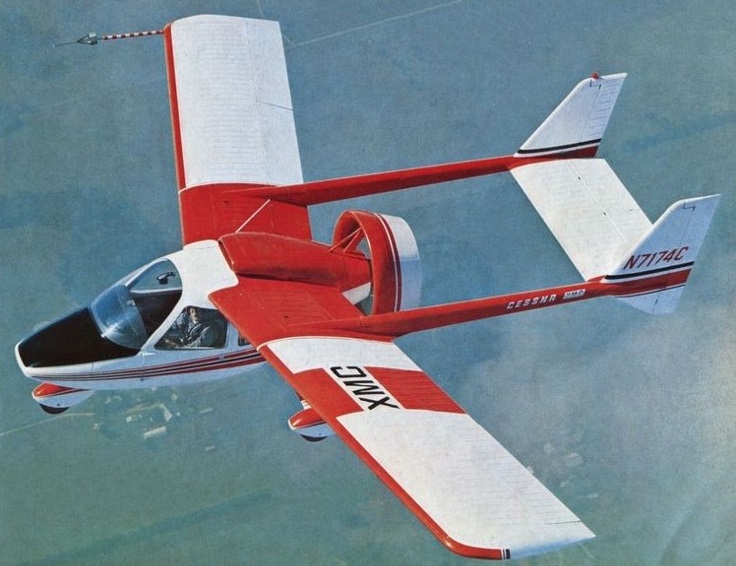
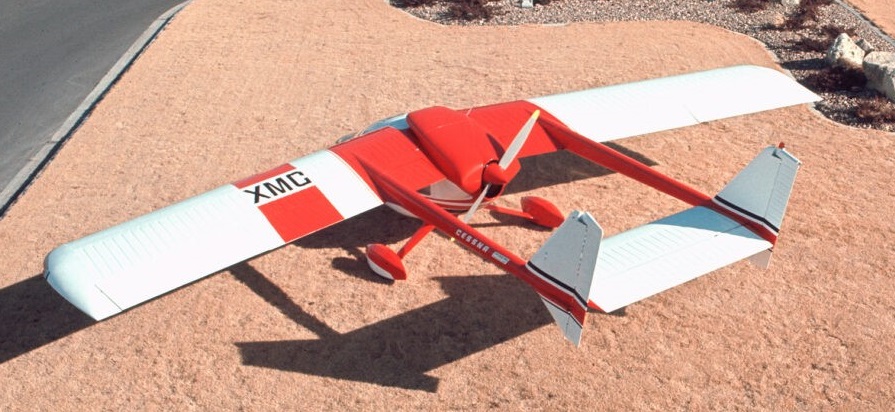
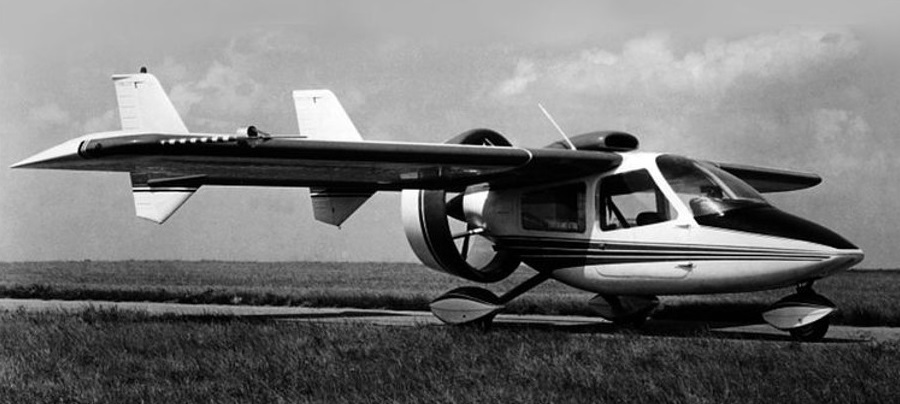
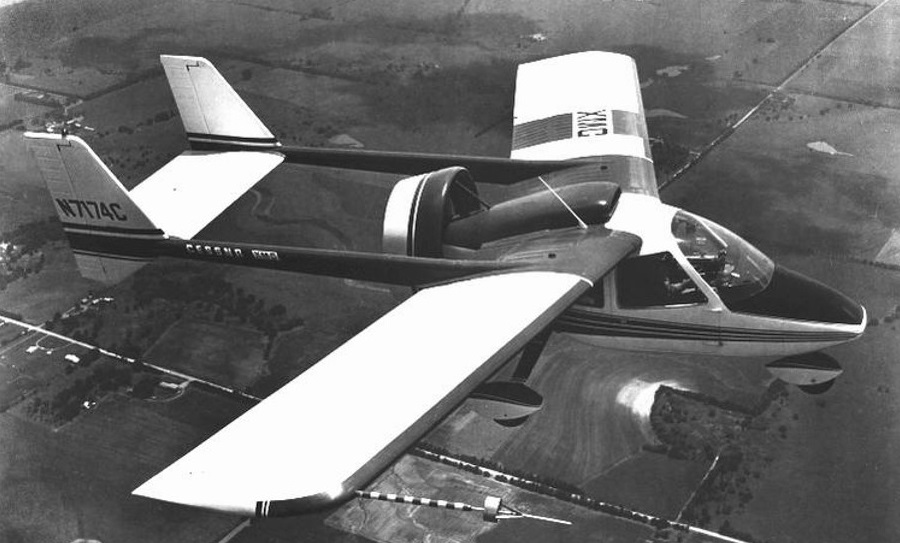
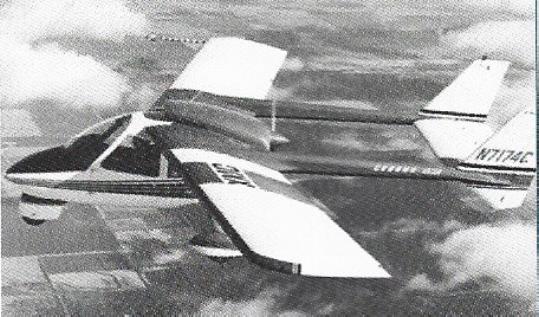
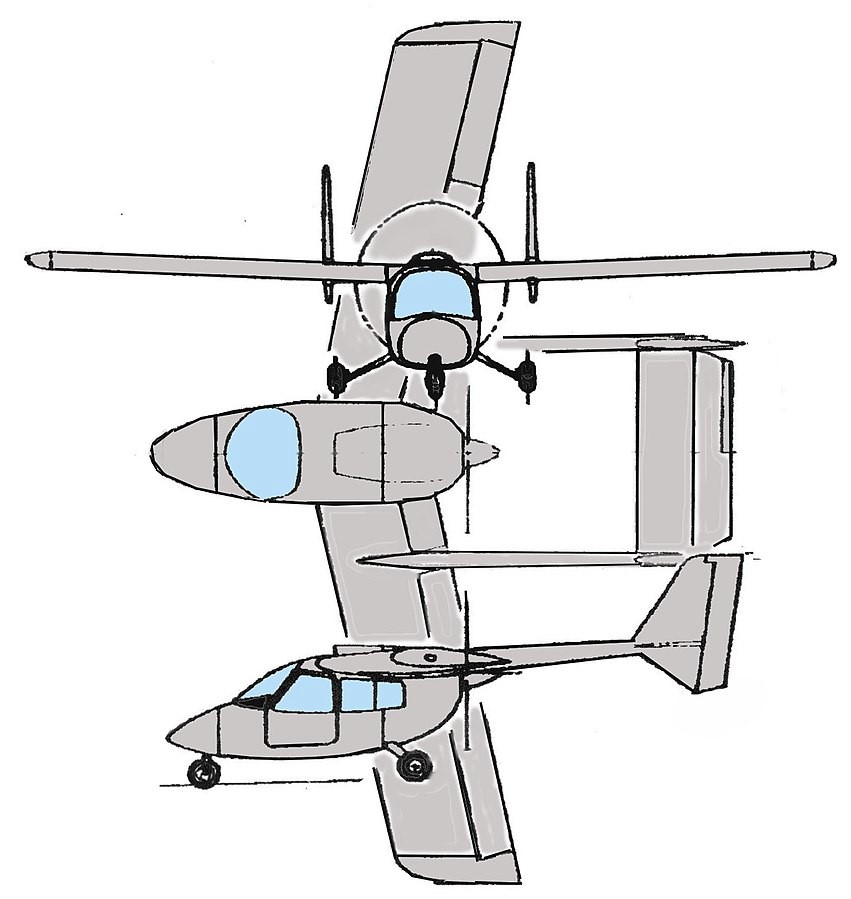
The two-seat Cessna XMC prototype technology demonstrator was built to test several concepts in light aircraft design including a ducted propeller and swept cantilever wing. The XMC employed metal-to-metal bonding, allowing for experimentation in expanded use for bonding in other types in the Cessna commercial product line. Additional stress testing was also conducted as necessary as the aircraft entered further testing and modification.
The sole prototype was registered as N7174C and given Cessna serial number 674. It was powered by a Continental O-200 100 hp (75 kW) engine mounted in pusher configuration. This was the same powerplant used in the then-current production Cessna 150. The tail boom was similar in design to that used on the Cessna Skymaster.
The first flight of the 1014 model was made on January 22, 1971 by Cessna test pilot Bruce Barrett. Then testing ground handling, flying characteristics and visibility.
Phase II testing began in May 1971, exploring methods of reducing weight and production costs for single and twin-engine Cessnas.
The aircraft was modified in 1972 and given a new model number, 1034. In this configuration it was first flown June 1, 1972, again with Bruce Barrett at the controls, using a shrouded propeller to test improvements in propeller efficiency and reduction of noise in Phase III. The spatted nose gear was replaced by a wheel fairing, as was the main gear. An increased vertical stabilizer area and revised wing tips were also tested.
The XMC project ended in 1972. The aircraft configuration proved to have higher cabin noise levels than the production Cessna 150 and offered no performance advantages over the older design.
Cessna XMC prototype Powerplant: 1 × Continental O-200, 100 hp (75 kW) Wingspan: 32 ft 0 in (9.75 m) Length: 23 ft 0 in (7.01 m) Seats: 2
On November 28, 2017, Textron Aviation unveiled a new large utility turboprop designated as Model 408. The aircraft’s configuration was built to fit FedEx Express requirements. FedEx Express has signed on as the launch customer for up to one hundred aircraft, with an initial fleet order of fifty cargo aircraft and options for an additional fifty.
The SkyCourier is a twin-engine, high-wing, large utility turboprop built for high utilization operations. It will be offered in a 19-passenger version incorporating large round cabin windows for greater views and separate crew and passenger doors for smooth boarding, or in a cargo version which features a large cargo door and a flat floor cabin sized for three LD3 shipping containers and 6,000 pounds of maximum payload, with a maximum cruise speed of 200 knots and a maximum range of 900 nautical miles. Both versions will provide single-point pressure refueling to allow faster turnarounds.
The clean-sheet design of the SkyCourier will feature improved cabin flexibility and payload capability, excellent performance, and reduced operating costs compared to its rivals. The airframe is constructed from conventional aluminum materials and will be powered by two Pratt and Whitney Canada PT6A-65 turboprop engines with 1,100 horsepower of thrust each. The aircraft is also designed with fixed landing gear and Garmin G1000 avionics.
The Skycourier was expected to enter into service in 2020. In March 2018, initial tests in the wind tunnel were performed and accomplished. The maiden flight was initially set for 2019 and the design will be certified to FAR Part 23 standards.
In December 2019, assembly of the wing and fuselage was completed. In March 2020, initial ground testing was performed, including inspection on the fuel system, engines, avionics interfaces, and electrical systems.
Cessna’s new twin utility turboprop, the SkyCourier made its maiden flight from the company’s east campus Beech Field Airport on 17 May 2020.
The aircraft, piloted by Corey Eckhart, senior test pilot, and Aaron Tobias, chief test pilot, flew for more than two hours on its first flight. The sortie included tests on the aircraft’s performance, stability and control, environmental impact as well as its propulsion and avionics systems.
The prototype aircraft, along with five additional flight and ground test articles, testing programme was focusing on flight controls and aerodynamics.
Powered by two Pratt & Whitney Canada PT6A-65SC engines, it was to be offered in various configurations including a 2,700kg payload freighter, a nineteen seat passenger version or a mixed passenger/freight combination, all based on the common platform.
It was to feature the popular Garmin G1000 NXi avionics suite and have a maximum cruise speed of 200kt (TAS), with a maximum range of 900nm.
Both freighter and passenger variants will include single-point pressure refuelling as standard to enable faster turnarounds.
Cessna 408 Skycourier Engines: 2x Pratt & Whitney Canada PT6A-65SC, 1100 hp Max Cruise Speed: 200 kt / 370 kph Range: 900 nm / 1,667 km Service Ceiling: 25,000 ft Take Off Distance: 1006 m / 3,300 ft
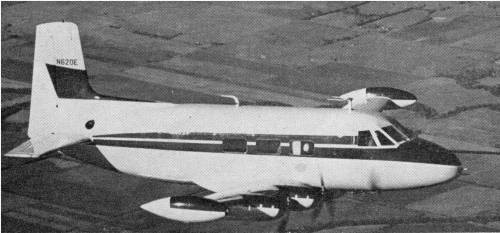
The four-engine, pressurized Cessna Model 620 first flew on August 11, 1956 with Ralph Harmon at the controls. This attempt at a business transport was soon dropped in 1957 as it was apparent that there were too many surplus airplanes on the market for this approach to be a financial success. By all accounts, the airplane did fly nicely. The fuselage was sold as scrap and became a house trailer.
Engines: 4 x Continental GSO-526-A, 320 hp Wing span: 55 ft Length: 31 ft 6 in Height: 16 ft 6 in Cruise: 235 mph Max speed: 269 mph
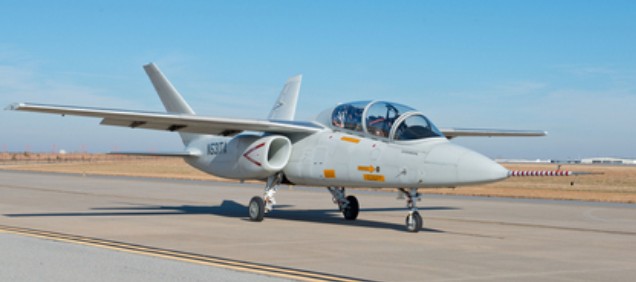
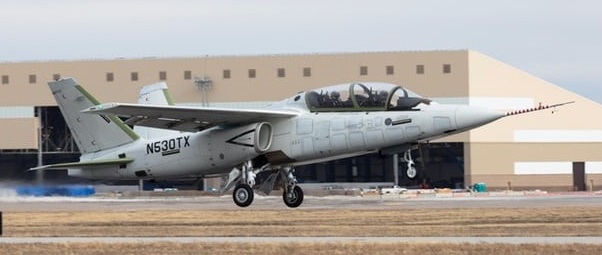
Textron announced the Textron AirLand LLC and Cessna Scorpion ISR/Strike Jet aircraft in September 2013 during the Air Force Association conference.
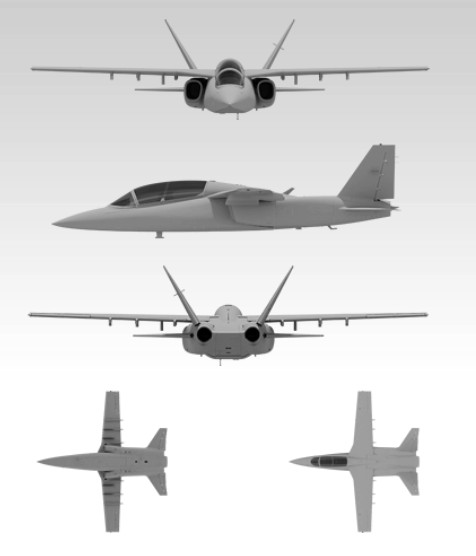
The Scorpion is a twin-engine, low-cost jet designed for particularly areas of border and maritime security where long missions and sustained sortie rates can place a burden on dedicated tactical aircraft which were never designed for that role. The Scorpion benefits from many commercially off-the-shelf components better suited for sustained Intelligence, Surveillance and Reconnaissance (ISR) and Strike operations.
The two-seat jet is powered by twin-turbo fan engines and will be able to carry 3,000 pounds of internal payload. The all composite airframe will have an initial service life of 20,000 hours.
Textron AirLand LLC and Cessna Aircraft completed the first flight of their Scorpion jet prototype and demonstrator on December 12, 2013 from Wichita, Kansas. Textron CEO Scott Donnelly saying “When the design phase began less than two years ago, we were confident that we would deliver a uniquely affordable, versatile tactical aircraft by taking advantage of commercial aviation technologies and best practices.
The Scorpion is powered by two turbofan engines that together produce approximately 8,000 pounds of thrust. The engines are directed by a Digital Electronic Engine Control and supply conditioned bleed air to the pneumatic system. Accessories mounted on the engine gearbox power electrical and hydraulic systems. The engines can operate on Jet-A, JP-5, and JP-8 jet fuels.
The first production conforming version of the Textron AirLand Scorpion light reconnaissance/strike/training aircraft has made a successful maiden flight at McConnell Air Force Base in Wichita, Kansas, in December 2016. Experimental test pilots Don Parker and Dave Sitz carried out a series of tests on the multi-mission, twin-seater, twin-engine jet during the one hour and 42 minute flight to verify the avionics and flight performance of the aircraft as well as other flight systems.
The Textron Scorpion beginning its maiden flight
Textron says the new production version of the Scorpion has been improved based on customer feedback and 800 hours of flight testing, including military training exercises and operations in 10 countries. These upgrades include new avionics, a modified airframe, four degrees of sweep added to the wings, simplified landing gear, a next-generation Heads Up Display (HUD) and Hands-On Throttle And Stick (HOTAS) controls.
In addition, Garmin is now providing the Scorpion with the advanced G3000 integrated flight deck featuring a high-definition display and two high-definition touch-screen controllers, as well as improved navigation systems in the rear cockpit position.
The tandem-seat, twin-engine aircraft was first conceived and developed in secret in 2011 in a project to create the “world’s most affordable tactical jet aircraft.” The modular wing design allows for the wings to be replaced by different designs.
The Scorpion relies on advanced sensors and the ability to operate about 15,000 ft (4,500 m) to avoid ground fire. To keep weight and costs down, the Scorpion has an all-composite fuselage with only the undercarriage, engine fittings and mounts made of metal. Inside, there’s a 3,000-lb (1,400-kg) payload section to carry various munitions and recon gear. To simplify the design, the airframe does not include fly-by-wire systems.
Engines: 2 x Honeywell TFE731 turbo fan, 8000 lb thrust Length: 43 ft 6 in Wingspan: 47 ft 4 in / 14.4 m Height: 14 ft 0 in Empty weight: 11,800 lb MTOW: 21,250 lb Max internal fuel: 6000 lb Max internal payload bay: 3000 lb Max speed: 450 kt / 518 mph / 833 km/h Service ceiling: 45,000 ft / 13,700 m Ferry range: 2400 nm Endurance: 5 hr loiter 150 mi / 241 km from base Hardpoints: 6 Hardpoint capacity: 6,200 lb / 2,800 kg Seats: 2
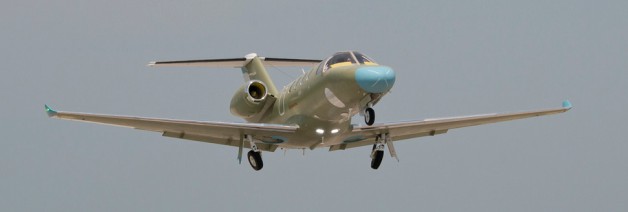
Cessna Aircraft Company successfully made the first maiden flight of their new Citation M2 light business jet in August 2013. The M2 departed on the two-hour flight from the company’s facility in Independence, KS.
“The aircraft performed exceptionally well today,” said Cessna production flight test pilot Terry Martindale. “We departed Independence and proceeded to an altitude of 17,500 feet. Through the almost two hour flight, we completed a large portion of the production test flight procedures. This is the first aircraft equipped with the Garmin G3000 avionics, and the system goes beyond what people might be expecting in terms of familiarity, versatility, situational awareness and ease of use. You can sense that pilots designed the cockpit. Everything is where you need it to be.”
The Citation M2 is the follow-on to the Citation Mustang jet. Offering increased speed, range, payload and avionics upgrades, the Citation M2 also features the new Garmin G3000 avionics suite, featuring high-resolution multi-function displays. Like it’s predecessor, the M2 will be powered by two Williams FJ44 turbo-fan engines.
The Cessna Citation Mustang, Model 510, is a “very light jet” (VLJ) class business jet. In its standard configuration it has four passenger seats in the aft cabin, toilet and seating for two in the cockpit. Like most other very light jets, the Mustang is approved for single-pilot operation.
The Citation Mustang was first announced in 2002 and 23 April 2005 marked the first flight. FAA certification was achieved on 8 September 2006.
Citation Mustang PH-ORJ
It utilises glass cockpit technology, having a central mounted mulitifunction display and dual primary flight display units on the instrument panel. The engines are fully FADEC equipped. April 2007 was the first retail delivery.
Engines: 2 x 660kg Pratt & Whitney Canada PW615F turbofan Take-off weight: 3930 kg / 8664 lb Empty weight: 3062 kg / 6751 lb Wingspan: 13.16 m / 43 ft 2 in Length: 12.37 m / 41 ft 7 in Height: 4.09 m / 13 ft 5 in Cabin height : 4.495 ft / 1.37 m Cabin width : 4.659 ft / 1.42 m Cabin length : 8.99 ft / 2.74 m Max. speed: M0.63 Cruise speed: 340 kts / 630 km/h / 391 mph Ceiling: 12500 m / 41000 ft Rate of climb: 917 m/min / 3000 ft/min Range: 2160 km / 1342 miles Crew: 1-2 Passengers: 4-5 Cost : 2,395,000 USD (2004)