
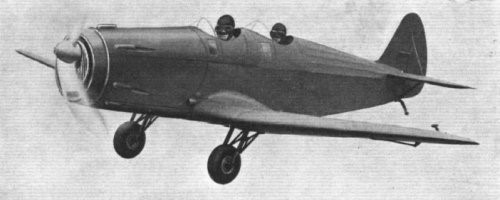
The Comper Streak was a single-engined, single-seat racing monoplane built in the UK in the mid-1930s. It was not successful as a racer and only one was produced.

The Comper Streak was a single-engined, single-seat racing monoplane built in the UK in the mid-1930s. It was not successful as a racer and only one was produced.
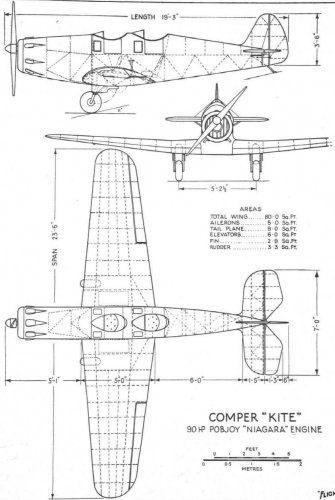
The Comper Kite was a single-engine, two-seat touring monoplane built in the UK, derived from the contemporary Comper Streak racer. Only one was built.
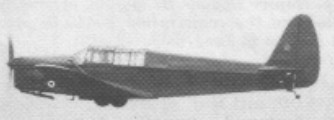
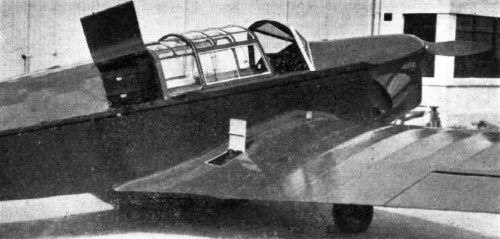
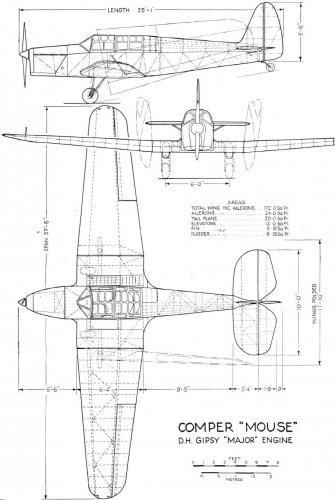
The Comper Mouse was a 1930s British three-seat cabin monoplane designed by Nicholas Comper, and built by the Comper Aircraft Company at Heston Aerodrome in 1933.
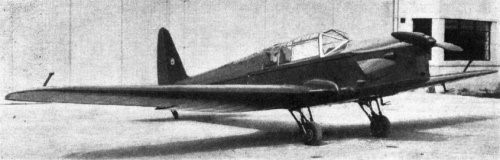
Only one Mouse was built; G-ACIX.
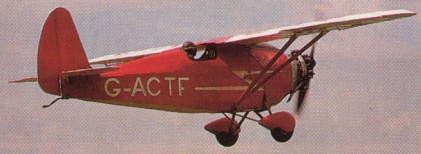
The company’s first product was the C.L.A. 7 Swift, a single-seat high-wing sporting aircraft, which was first flown in spring 1930 and built between 1930 and 1934 (one was owned by the Prince of Wales, later Edward VIII).
Teething problems necessitated fitting early production Swifts with the Salmson A.D.9 radial, the prototype having flown with a 40 hp ABC Scorpion.
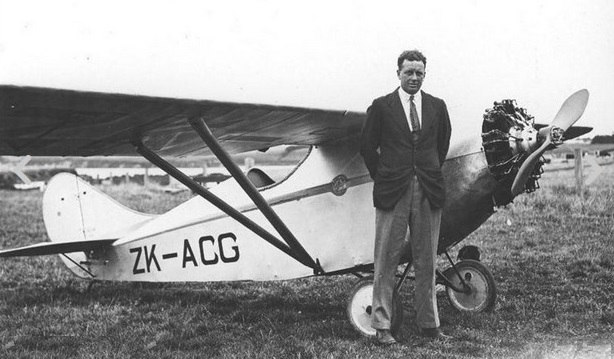
Production commenced in 1930, thirty-seven Swifts being built. The majority powered by the 75 hp Pobjoy R, but three were fitted with 120 hp DH Gipsy III.
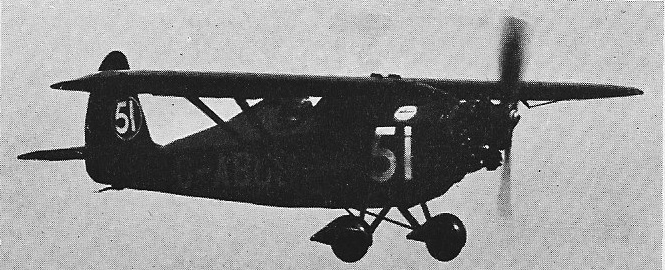
Engine: Pobjoy R, 75 hp
Wingspan: 24 ft
Length: 17 ft 8.5 in
Height: 5 ft 3.5 in
Empty wight: 540 lb
Loaded weight: 985 lb
Max speed: 140 mph
Cruise: 120 mph
ROC: 1400 fpm
Service ceiling: 22,000 ft
Range: 600 mi
Zanzottera Technologies of Italy sold their line two-stroke ultralight aircraft engine line to Compact Radial Engines of Surrey, British Columbia, Canada.
A 60-seat four-turboprop CAC-100 airliner.
CAC designed the R795 Cicada which was intended to be used in the Winjeel. The Cicada was designed to be built using existing tooling that CAC had previously used to produce Pratt & Whitney R-1830 engines. The Cicada was a 7-cylinder geared radial engine of 795 cubic inch (13 litre) capacity; like the Pratt & Whitney R-985 that was eventually fitted to all Winjeels it developed 450 horsepower (340 kW). Because of its lower cubic capacity the Cicada was more complex (and thus significantly heavier) than the R-985 and also had higher fuel consumption. Only two development examples of the Cicada were ever built, one of which was actually fitted to Winjeel prototype (RAAF serial) A85-364. The two engines accumulated about 650 hours before the programme was terminated in September 1953.
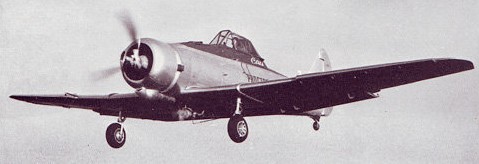
The CA-28 agricultural aircraft was designed around components of the wartime Wirraway. It first flew in the southern summer of 1958. Basically a single-seater, it also had a rear-facing seat behind the pilot for ferrying. There was a 40 cu.ft. hopper forward of the pilot. No hydraulic or electrical systems were fitted. The Ceres did have leading edge slats and manually operated flaps.
Commonwealth Aircraft CA-28 Ceres Article

Fourteen were registered in Australia and five in New Zealand in the early 1960’s.
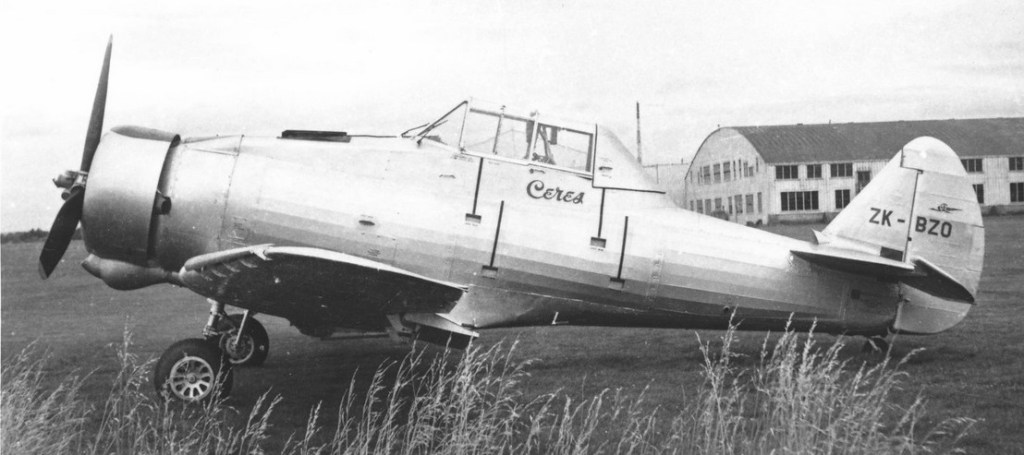
Engine: Pratt & Whitney R-1340-AN-1, 600 hp.
Wingspan: 14.30 m / 47 ft 11 in
Length: 9.36 m / 31 ft 9 in
Height: 2.74 m / 9 ft 0 in
Wing area: 29.0 sq.m / 312.15 sq ft
Take-off weight: 3048 kg / 6720 lb
Empty weight: 1995 kg / 4398 lb
Cruise speed: 179 km/h / 111 mph
Accommodation: 1-2

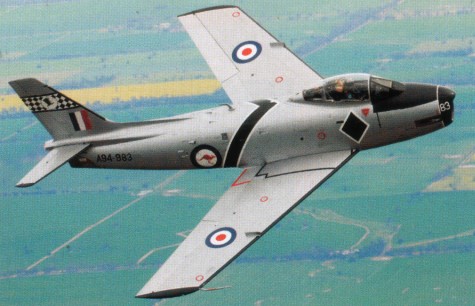
As early as 1949 the RAAF began planning a replacement jet fighter for the locally-built CAC Mustang and DHA Vampire. Gloster Meteors were obtained in 1951 for service with No 77 Squadron in the Korean War. In May of 1951, plans were finalised for CAC to build a locally-redesigned version of the North American F-86F Sabre swept-wing fighter.
Due in part to the technical investigations initiated by CAC Manager, L. J. Wackett, the RAAF decided to install the 7,500 lb thrust Rolls-Royce Avon RA.7 turbojet in place of the 6,100 lb thrust General Electric J-47 engine. Major modifications included a larger nose-intake, positioning the Avon further aft than the J-47, and moving the engine servicing break-point. Other improvements called for increased fuel capacity, a revised cockpit layout, and replacement of the six 0.50″ machine guns with two 30mm Aden cannons. Consequently, CAC had to redesign 60 per cent of the airframe. The resultant aircraft was sometimes called the Avon-Sabre.
The prototype CAC CA-26 Sabre Mk 30 first flew on 3 August 1953, with an imported Avon engine, piloted by Flight Lieutenant W. Scott. As A94-101 it went to Aircraft Research and Development Unit (ARDU) in 1955 and in latter years resided at Wagga as an instructional airframe; in 1960 it was used for ejection seat trials following three fatal Sabre accidents.
The first production CA-27 Sabre, A94-901, flew on 13 July 1954 and was followed by 21 Mk 30s, A94-902/922, with imported Avons, and leading-edge slats. From 1955, the next 20 Sabre Mk 31s, A94-923/942, were powered with the CAC Avon Mk 20, had an extended leading-edge, additional fuel cells, and fitments for drop-tanks, bombs, and rockets. The earlier Mk 30s were then modified to Mk 31 standard. The final version of the CAC Sabre was the Mk 32 of which 69 were built, A94-943/990 and A94-351/371. They carried additional drop-tanks and rockets and, as from 1960, Sidewinder air-to-air missiles. All earlier Sabres were similarly modified, and retrospectively fitted with the CAC Avon Mk 26 engine which was first installed in A94-973. The last CAC Sabre, A94-371, completed acceptance trials on 19 December 1961.
The first production Sabre, A94-901, went to ARDU on 19 August 1954. A Sabre Trials Flight was established at No 2 (Fighter) Operational Training Unit, RAAF Williamtown, on 1 November 1954 and No 75 Squadron became the first Sabre squadron after it reformed on 4 April 1955. No 3 Squadron received its first Sabres on 1 March 1956 and No 77 Squadron on 19 November 1956. In October 1958, No 3 Squadron deployed to RAAF Butterworth and was followed by No 77 Squadron in February 1959. As No 78 (Fighter) Wing, both squadrons used their Sabres against the Communist guerillas until 31 July 1960. No 76 Squadron reformed in January 1960 and joined No 2 (Fighter) Operational Conversion Unit and No 75 Squadron as the Sabre equipped No 81 Wing, RAAF Williamtown. On 1 June 1962, eight Sabres deployed from Butterworth to Ubon, Thailand, to counter communist activity. This detachment became No 79 Squadron until it withdrew and disbanded in August 1968.
From 1964-5, the Mirage III began to replace the Sabre and, on 31 July 1971, the RAAF officially retired the Sabre from service.
CAC Sabre CA-27 Mk 32
Engine: One CAC RA.7 Avon Mk.26 turbojet, 3402 kg (7500 lb)
Wingspan: 11.30 m (37 ft 1 in)
Wing Area: 302.3sq.ft. / 28.1 sq.m
Length 11.43 m (37 ft 6 in)
Height 4.37 m (14 ft 4 in).
Empty weight: 5443 kg (12 000 lb)
Loaded weight: 8038 kg (17 720 lb)
Maximum Takeoff weight: 21,210 lbs 9,621 kg
Max speed 1126 km/h (608 kt, 700 mph) SL
Cruise speed 885 km/h (478 kt, 550 mph)
Range 1850 km (1000 nm)
Service ceiling 52,000 ft (15,850 m)
Rate of climb: 12,000 fpm at SL
Armament: 2 x 30 mm Aden cannon 162 rounds per gun
External load can include two AIM-9B Sidewinder missiles, up to 24 ground rockets, two 500 or 1,000lb bombs or eight practice bombs.
Total internal fuel: 412 imp gal (1,873 litres) in two fuselage tanks, two outer wing panel tanks and tanks in the leading edges.
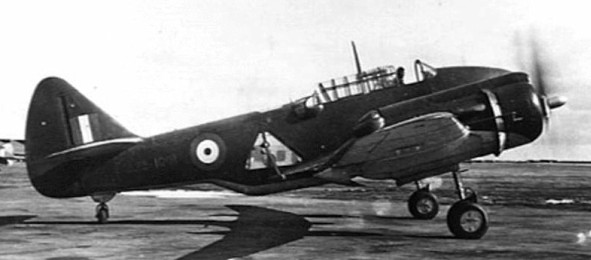
The RAAF order for CAC Woomera bombers were cancelled before the aircraft was cleared for operation.
Engines: 2 x Pratt & Whitney R-1830-S3C3-G Twin Wasp 14-cylinder radial, 1,200 hp
Wingspan: 59.22 ft (18.05m)
Length: 39.60 ft (12.07m)
Height: 18.14 ft (5.53m)
Empty Weight: 12,782lbs (5,798kg)
Maximum Take-Off Weight: 22,932lbs (10,402kg)
Maximum Speed: 282 mph (454kmh; 245kts)
Maximum Range: 2,225 miles (3,580km)
Rate-of-Climb: 2,090 ft/min (637m/min)
Service Ceiling: 23,507 ft (7,165m)
Armament:
2 x 20mm Hispano cannons in nose
2 x 7.7mm machine guns in nose
2 x 7.7mm machine guns in rear-facing barbettes
1 x 7.7mm machine gun in ventral position
4 x 250lb bombs OR 2 x 500lb bombs OR 2 x torpedoes with 4 x 25lb bombs
Accommodation: 3
Hardpoints: 4

