Powered with a 220 hp Wright J-5 engine.
Engines – Power
Consolidated 9 XPY-1 Admiral / 16 Commodore
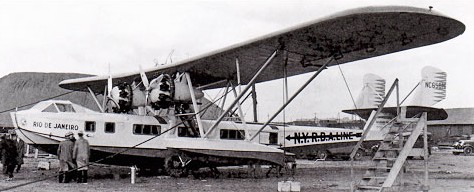
The Commodore twin-engined flying boat were ordered by a US-owned South American-based airline called NYRBA which challenged Pan American’s regional dominance and was later leveraged to sell its assets to Pan Am (circa 1930). Subsequently Pan Am went on to operate Commodores up to and through World War II, and some machines had short careers with successor operators.
A total of 14 were ordered for commercial use.
The Commodore failed to gain military orders in the form of XPY-1.
Model 16-1 Commodore
Engine: 2 x 575hp Pratt & Whitney R-1860 Hornet radial
Take-off weight: 7983 kg / 17600 lb
Wingspan: 30.48 m / 100 ft 0 in
Length: 18.80 m / 61 ft 8 in
Height: 4.76 m / 15 ft 7 in
Max. Speed: 206 km/h / 128 mph
Ceiling: 3430 m / 11250 ft
Range: 1609 km / 1000 miles
Crew: 3
Passengers: 22
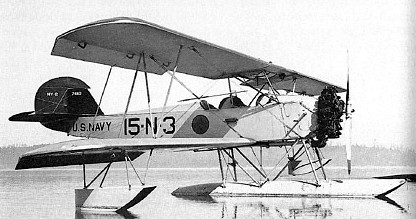
Consolidated PT-2 / PT-3 / NY / O-17
Developments of the PT-1
The O-17 was the PT-3 developed for National Guard as observation aircraft.
NY-2
Engine: 1 x 220 hp Wright R-790-8.
Take-off weight: 1193 kg / 2630 lb
Empty weight: 817 kg / 1801 lb
Wingspan: 12.19 m / 39 ft 12 in
Length: 8.51 m / 27 ft 11 in
Height: 3.02 m / 9 ft 11 in
Wing area: 34.37 sq.m / 369.96 sq ft
Max. Speed: 158 km/h / 98 mph
Consolidated TW-8 / PT-1 Trusty
Improvements to the Dayton-Wright Company TW-3 design continued and included the removal of the engine cowling (for improved forward cockpit visibility) and a redesigned fuselage in a slimmer form with tandem instructor/student seating (this model being known as the “Camel” for the visible bump appearing between the two seating areas). The Camel was evaluated under the (unofficial) designation TW-8 and accepted into service as the PT-1 with 221 being delivered beginning 1924 and replacing the TW-3’s in service. The PT-1 represented the first aircraft purchase of the Army Air Service since the closing shots of World War One.
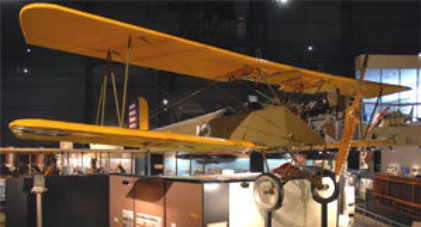
The PT-1 was a biplane aircraft with a simple two-wheel undercarriage, an engine mounted at the front of the design, a traditional tail section and twin side-by-side seating for instructor and student. The aircraft featured a choice of a Clerget or Le Rhone engines. The PT 1 basic trainer included innovations like a fuselage framework from welded chrome molybdenum steel. Because of it was so sturdy and dependable, it was nicknamed “Trusty”.
The PT-1 would eventually be replaced itself by the Consolidated PT-3 from 1928 onwards.
Hollywood’s Paul Mantz owned PT-1E A.C.26-233 two-seater which appeared in the film ‘One Man Mutiny’.
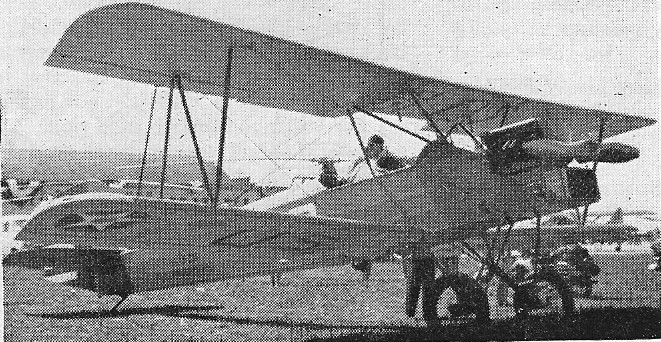
Consolidated PT-1 Trusty
Engine: 1 x Wright-Hispano E 8-cylinder water-cooled Vee, 180hp.
Length: 27.76ft (8.46m)
Width: 34.45ft (10.50m)
Height: 9.84ft (3.00m)
Empty Weight: 1,806lbs (819kg)
Maximum Take-Off Weight: 2,577lbs (1,169kg)
Maximum Speed: 92mph (148kmh; 80kts)
Cruising speed: 68 kt / 126 km/h
Maximum Range: 350miles (563km)
Rate-of-Climb: 690ft/min (210m/min)
Service Ceiling: 13,448ft (4,099m; 2.5miles)
Accommodation: 2
PT-1E
Engine: Wright V-720, 180 hp
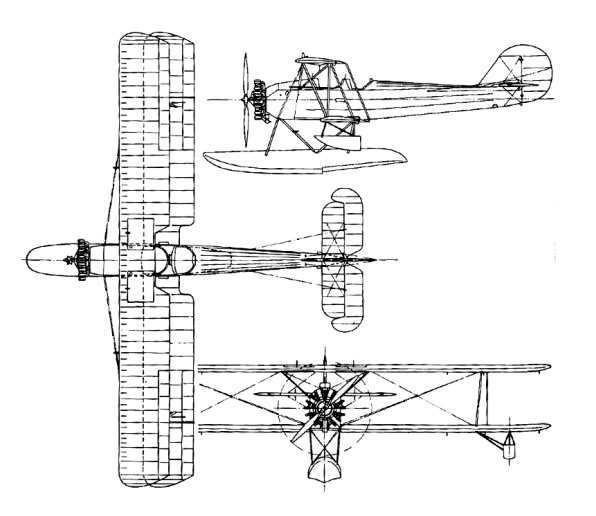
Consolidated TW-3
The Dayton-Wright Company TA-3 (designated with an “A” for its air-cooled engine operation) was delivered by request with an uprated Le Rhone engine of 110 horsepower. Still further evaluation models were ordered, this time with the requested Wright-Hispano I V-8, 150 horsepower engine of increased power (designated TW-3 with the “W” standing for its water-cooled engine process) finally culminating in an official order by the USAAS.
Production rights for the trainer were secured by the newly-created Consolidated Aircraft Company (established by Reuben Fleet of the Gallaudet firm) as General Motors was reviewing their commitment to aircraft production in a post-war world and would eventually shut down operations at Dayton-Wright altogether. The TW-3 was delivered by 1923 and became the first notable variant of the “Trusty” production line.
Conroy Stolifter
A single-turboprop conversion of Cessna Super Skymaster flown 1969, with upward-opening aft fuselage.
Conroy CL-44-O Guppy
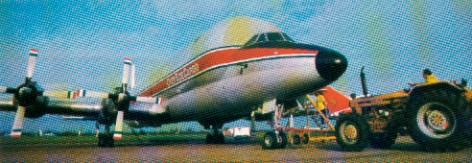
California-based Conroy Aircraft converted at least one CL-44 to an over sized ‘Guppy’.
Condor Flugzeugwerft 1912 biplane
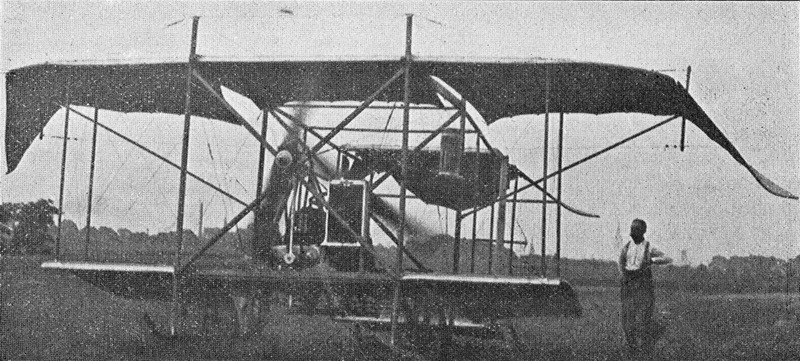
This 1912 design is claimed as the third design of Kommissar Hans von Klösterlein from Cologne (Cöln).
The design was built by the Condor Flugzeugwerft and according to Flugsport a 60 PS Basse & Salve engine was fitted. This is a single engine machine, where the engine drive two propeller – set on a rod fore and aft – via a chain.
The machine hopped or flew a little on the military exercise field on the Merheimer Heide in Köln-Merheim.
Condor Flugzeugwerft Pteranodon
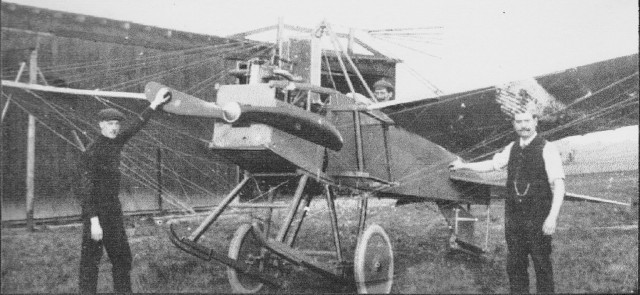
This was the last aeroplane designed by the Polizeikommissar von Klosterlein at the Condor-Flugzeugwerft in Köln-Niehl. The Pteranodon, named after a flying dinosaur, was built in 1912 or 1913 and was powered by a 55 hp Basse & Selve engine.
Condor Aircraft Condor
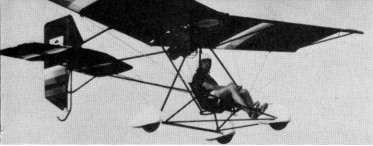
The Condor II is a single seat single engined high wing mono¬plane with conventional three axis control. Wing has unswept leading and trailing edges, and constant chord; cruciform tall. Pitch control by elevator on tail; yaw control by fully flying rudder; roll control by one third span spoilerons; control inputs through stick for pitch/roll and pedals for yaw. Wing braced from above by kingpost and cables, from below by cables; wing profile; single¬ surface. Undercarriage has three wheels in tricycle formation; torsion bar suspension on nosewheel. No ground steering. No brakes. Aluminium¬ tube framework, with optional pod. Engine mounted below wing driving pusher propeller.
All rigging wires are stainless steel with a vinyl coating and double swaging, and the aluminium tubing is ano¬dized clear and ‘covered with stabilised Dacron’.
Lift off and landing speeds are quoted as 20 24 mph (32 39 kph) and 20 25 mph (32¬40kph) respectively.
Options include floats, ballistically de¬ployed parachute, strobe, pod and electric start; normally, starting is by recoil, with an in flight restart facility. Price in 1982 of $5245.
Condor Aircraft describe the Condor III as a beefed up version of the Condor II, designed for heavier payloads, and accordingly the company quotes a much higher maximum take off weight for this side by side two seater with single centre stick.
The Condor III+2 is a two-seat version. Dual stick and rudder three-axis controls, dual throttle.
Condor II
Engine: Kawasaki TA440, 40 hp at 6000 rpm.
Prop¬eller diameter and pitch 56×36 inch, 1.42×0.91m.
Toothed belt reduction, ratio 2.0/1.
Max static thrust 238 lb, 108 kg.
Power per unit area 0.24hp/sq.ft, 2.6 hp/sq.m .
Fuel capacity 5.0 US gal, 4.2 Imp gal, 18.9 litre.
Length overall 10.0 ft, 3.05 m.
Height overall 9.7ft, 2.96m.
Wing span 32.0ft, 9.75m.
Constant chord 5.3 ft, 1.60 m.
Sweepback 0 deg.
Total wing area 168 sq.ft, 15.6sq.m.
Wing aspect ratio 6.3/1.
Empty weight 240 lb, 109kg.
Max take off weight 545 lb, 247kg.
Payload 305 lb, 138kg.
Max wing loading 3.24 lb/sq.ft, 15.7 kg/sq.m.
Max power loading 13.6 lb/hp, 6.2 kg/hp.
Load factors +5.0, 3.0 design.
Max level speed 55 mph, 88 kph.
Never exceed speed 60 mph, 97kph.
Max cruising speed 55mph, 88kph.
Economic cruising speed 42mph, 68kph.
Stalling speed 19 mph, 31 kph.
Max climb rate at sea level 775 ft/min, 3.9 m/s.
Best glide ratio with power off 7/1.
Take off distance 40 ft, 12 m. Landing distance 75 ft, 23 m.
Condor III
Engine: Kawasaki 440 A or B, 40 or 50 hp.
2:1 reduction drive to 56×36 prop.
Wing span 33.0ft, 10.06m.
Constant chord 5.1 ft, 1.55 m.
Total wing area 168 sq.ft, 15.6sq.m.
Wing aspect ratio 6.5/1.
Empty weight 252 lb, 114kg.
Max take off weight 657 lb, 298kg.
Payload 405 lb, 184kg.
Max wing loading 3.91 lb/sq.ft, 19.1kg/sq.m.
Max power loading 16.4 lb/hp, 7.5kg/hp.
Never exceed speed 65 mph, 105 kph.
Max cruising speed 51 mph, 82 kph.
Economic cruising speed 38 mph, 61 kph.
Stalling speed 24 mph, 39 kph.
Max climb rate at sea level 600ft/min, 3.0m/s.
Take off distance 60ft, 18m.
Landing dis¬tance 90 ft, 27 m.
Condor III+2
Wingspan 32’.
Wing area 168 sq.ft.
Length 10’.
Empty weight 286 lbs.
Gross weight 684 lbs.
Cruise speed 45 mph.
Stall speed 25 mph.
Vmax 55 mph.
Vne 75 mph.
Takeoff roll 90’.
Landing roll 90-120’.
Fuel capacity 5 USG.
Engine: Kawasaki 440
2:1 reduction drive to 56×36 wood prop.
50- or 75-hp version was available.

