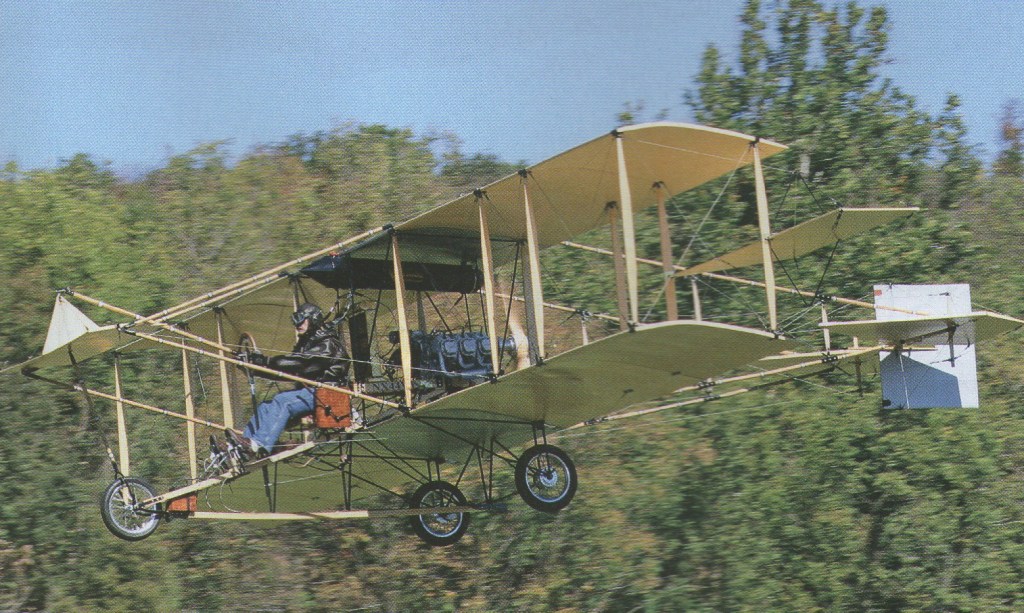
On 8 October 2010 Dave Coolbaugh first flew his replica Curtiss-Ely 1911 Pusher for the first time. The retired Navy/airline pilot spent more than 6000 hs building the craft since beginning in the Summer of 2008.
Engine: Continental C-125, 125 hp
On 8 October 2010 Dave Coolbaugh first flew his replica Curtiss-Ely 1911 Pusher for the first time. The retired Navy/airline pilot spent more than 6000 hs building the craft since beginning in the Summer of 2008.
Engine: Continental C-125, 125 hp
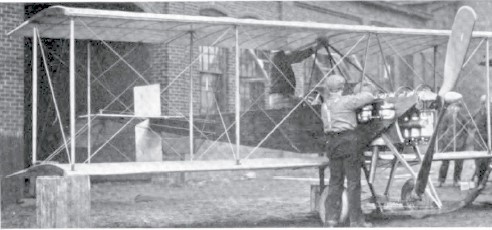
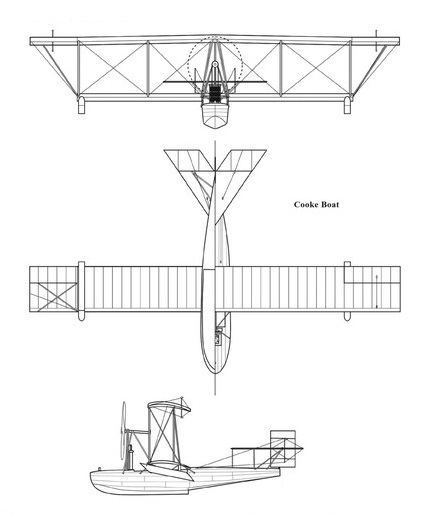
Weldon B. Cooke from Pittsburgh – Sandusky designed and built this tandem biplane aircraft in the winter of 1912-1913. Cooke, who was a well-known exhibition pilot, designed this aircraft with racing and exhibition flying in mind.
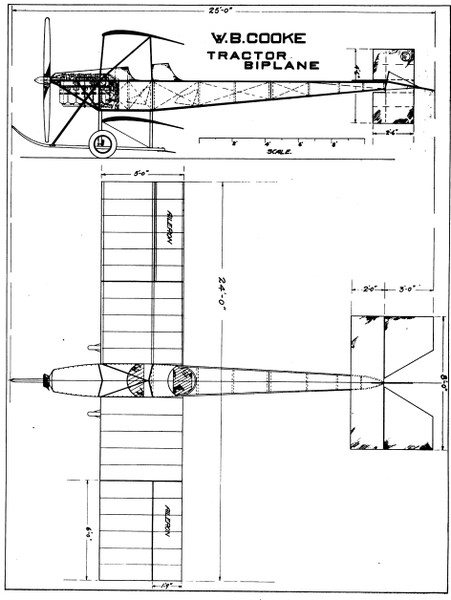
Cooke designed the aircraft for a 75 mph (121 km/h) top speed. For the time it was designed, it was a very modern aircraft, incorporating features that wouldn’t become commonplace on aircraft until towards the end of the Great War. The layout of the aircraft itself, a tandem two seat biplane with a tractor motor, was very unusual in 1912. Most of the aircraft being built and flying in North America at the time being some variation of a Curtiss type pusher biplane where the pilot and passengers would sit exposed in front of the leading edge of the lower wing.
Another unusual feature of the aircraft was the inverted installation of the Roberts inline 6 cylinder engine. When the early direct drive inline motors were mounted upright in a tractor installation, the cylinders would be almost completely exposed above fuselage deck. This type of mount would add aerodynamic drag to the aircraft, as well as presenting a substantial visual barrier for the pilot. By inverting the motor, the engine could be contained within the fuselage profile and the pilot had an unobstructed forward view. This may have been the first recorded inverted motor installation in an aircraft. The undercarriage consisted of a central skid with two flexible wheels at right / left with no connection to the fuselage (only to the central skid).

Because of the inability of period aircraft to be able to fly to and from the exhibition, the logistics of flying in the 1910s involved shipping the aircraft by train from one event to the next. To facilitate this, Cooke designed the aircraft to be quick and easy to take apart and re-assemble. The wings, which have a span of 24 feet, are made up of four detachable six foot sections. The fuselage is built in three detachable sections. The front section contains the engine and the passenger’s seat with all controls and their connections. The second section contains the pilot’s seat and the third, the tail and the square rudder. The skin of the fuselage was made up of a thin ply veneer to give it additional stiffness.
Used for exhibition flying and air racing, this biplane is sometimes identified as the ‘Sandusky Biplane’. Only the one was built.
Engine: 1 × Roberts two-stroke 6 cylinder, 75 hp (56 kW)
Propeller: 2-blade
Wingspan: 24 ft (7.3 m)
Length: 25 ft (7.6 m)
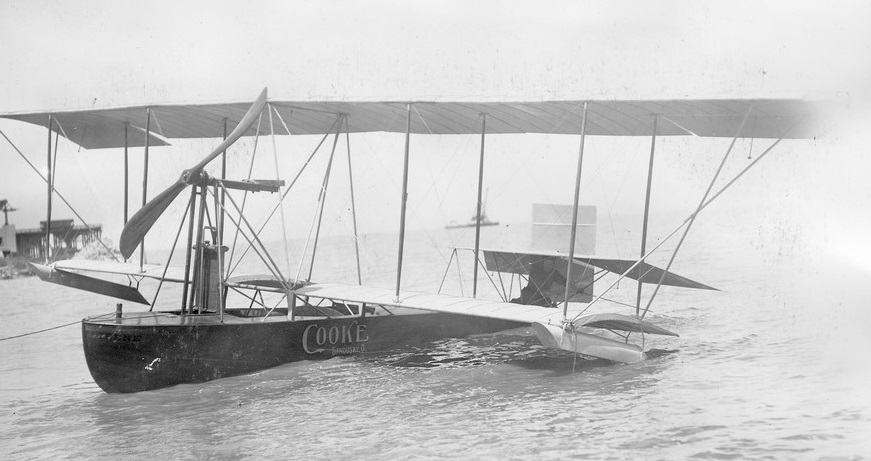
Weldon B. Cooke, an early pioneer who taught himself to fly in a Curtiss pusher, started construction of a flying boat project in California.
The craft’s biplane wings rested on a full length boat hull that ended in a tail group supported by struts. Its single tractor propeller, mounted forward of the wing, was driven by a belt running from a 75-hp Roberts engine. Sometime in 1913, Cooke shipped the parts by rail to Sandusky, Ohio, where the aircraft was completed and flown.
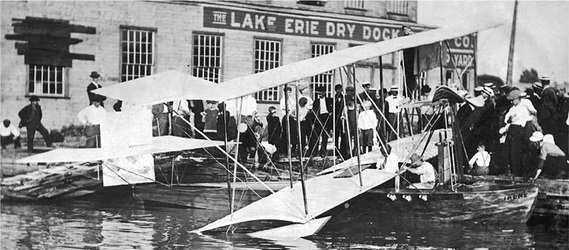
Although the “Irene,” depicted in this image, suffered from design and construction flaws, she became famous locally when Cooke raced her against C. B. Lockwood’s motorboat “Chinook.” Cooke attained speeds of 35 miles per hour in the water and 50 miles per hour in the air. Lockwood’s fast motor boat reached a speed of 23 miles per hour.
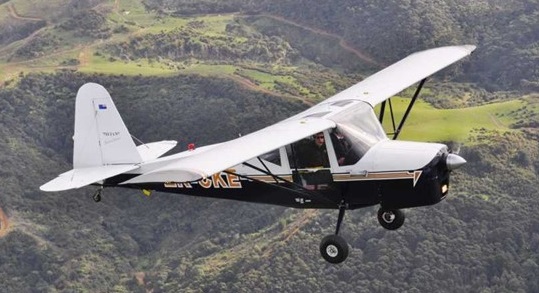
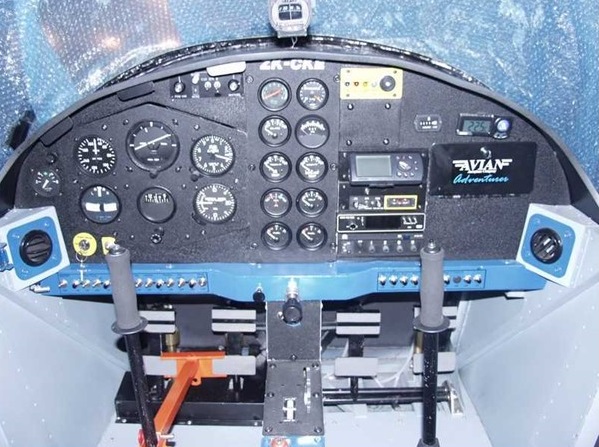
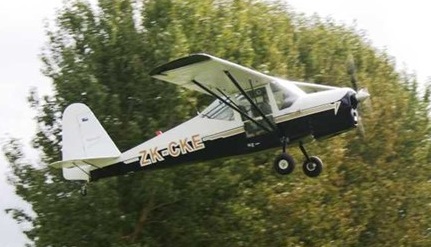
The Cooke Avian Adventurer is a one-off design constructed of riveted alloy extrusions, and fabric covered. Design and built by Bruce Cooke of Cambridge, New Zealand, construction was over 10 years and the approximate cost to build was NZ$10000-$20000. A two seat side by side plus large baggage bay, ultralight, there are full dual controls.
The aircraft is influenced by the classic taildraggers such as the Piper Cub, Cessna Bird Dog and the Auster series. Construction is of rivetted interlocking aluminium extrusions. This construction method results in a high component count but it avoids the necessity for expensive sheetmetal tooling. The outward sloping cabin sides reduce the amount of bending required for the bottom longerons while allowing very generous shoulder room for the two side by side occupants and giving an almost directly down view through the fully glazed upward opening doors. The airframe is covered with Stits Polyfiber fabric.
The engine is Subaru EJ 20 “Matariki” (Subaru and Matariki both refer to the cluster of 6 stars in the Taurus constellation named Pleiades by the ancient Greeks), which produces 140 HP Nominal and drives a 3 bladed electrically variable Ivoprop through a Neil Hintz gearbox.
Bruce Cooke’s Avian Adventurer ZK-CKE c/n AV08-1 was first registered on 19/11/08, although it did not fly until March 2011.
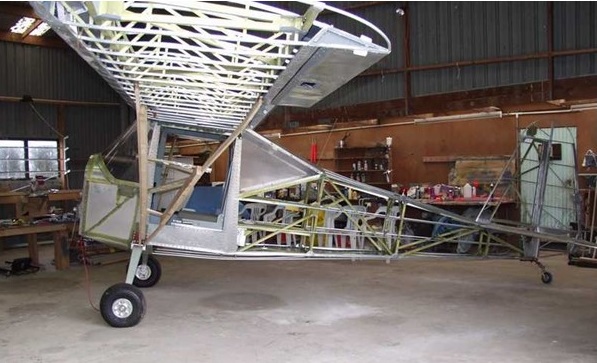
The first flight in March 2011 was at Hamilton with test pilot Bob Monds.
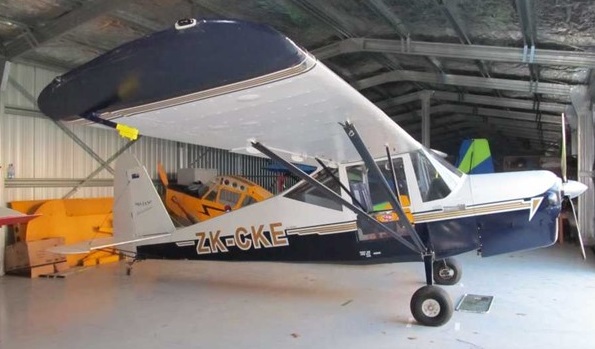
Engine: Subaru EJ20 Matariki, 140 hp
Prop: Ivoprop 3 bladed electrically variable
Wingspan: 10.23 metres
Length: 7.63 metres
Empty Weight 640kg
MAUW 850kg
Cruise: 90-95 knots
Stall speed: 35 knots
Fuel burn at cruise: 27 lt/hr

John Cook was trained in England and emigrated to the US to work on aircraft when the UK industry imploded in the 60’s. After stints at several companies including Helio, he went to work for Northrop on the 747 (Northrop designed and built the center and aft fuselage) and after work in the evenings and on weekends, several co-workers went down to Torrance and helped production design this plane in return for stock in the company. They built a prototype and a static test article, intending to obtain an FAA Type Certificate. The aircraft first flew in May 1969 and performed well; it passed static tests with very minor fixes. During a spin test, the FAA pilot kept the power on during the first turn of the spin – we had always closed the throttle as it stalled – and the plane entered an unrecoverable spin mode. John and the FAA pilot parachuted to safety, but the plane N21CA fell into the LA Harbor.
They built a second prototype, N72CA first flying in November 1971, and John Cook and John Parker test flew it to determine a safe aft CG limit. During one of these tests in January 1972 they got into the same situation and bailed out. JP was fine but Cook’s parachute was hit by the spinning plane and he was killed.
The company continued for a while and a third prototype was first flown in 1972 (N123CA) and an attempt was made to market the project as a homebuilt. This was not successful, the company folded and the plane was sold.


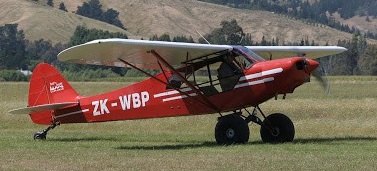
The Westland Bush Plane was built by Russell Cook of Kaihinu, north of Hokitika, New Zealand, around 2008. It may look like a Cub, but the only original bit of a Cub is one wing. The dimensions are all bigger than the standard PA-18, and the whole lot is built from scratch. The tundra tyres are for landing in the West Coast river beds.
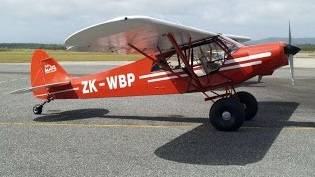
Registered ZK-WBP (c/n 0017251) the Westland Bush Plane has an extra side door to the luggage area behind the rear seat.
It received some minor damage on 23 July 2011 whilst landing on a river bed.
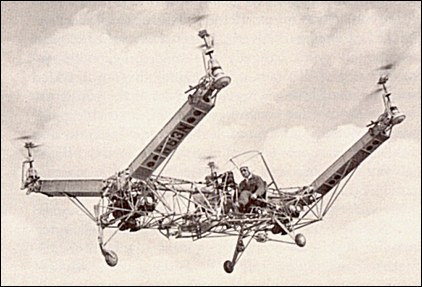
As the result of Convertawings’ further developmental work on this four rotor configuration, a first prototype was completed in 1955 and it has flown successfully.
The four rotors of this helicopter are mounted laterally on outriggers in two tandem pairs. The four rotors were positioned in an “H” configuration, and the design incorporated simplified hubs with strap-mounted blades, a form of “hinge-less” rotor. The control mechanism is extremely simplified and obtained by differential change of thrust between the rotors. There is no cyclic control, but only collective control. In the experimental prototype the fuselage was of tubular steel, the booms supporting the rotors in aluminium alloy. Power is provided by two engines connected to the rotor drive system by multiple vee belts. Shafting and transmission cases ensure inter-connection between the four rotors, so that either engine can drive all of them. There is a tricycle undercarriage with two wheels in the rear section and a nose wheel which can swivel.
The first flights took place in March 1956, flown by its designer and test pilot, D.H.Kaplan. Despite successful testing and development, military support for the Quadrotor ceased after cutbacks in defense spending.
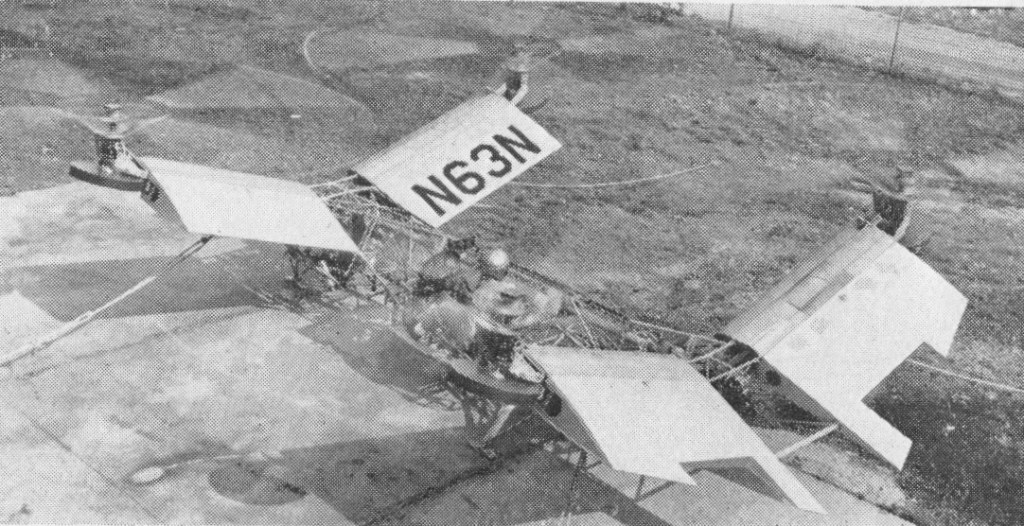
The Quadarotor A was a small test vehicle for the Projecled 60-76 passenger Model E Quadrotor on the same general lines. The Model E is intended to have four R-1820 piston-engines or Dart turboprops, mounted directly under the rotors.
However, the design – particularly its control system – was a precursor of future experimental vertical-rising aircraft.
Model A
Engines: 2 x Continental 0-90, 90hp
Rotor diameter: 5.92m / 15 ft
Gross weight: 998kg / 1,950 lb
Number of seats: 1
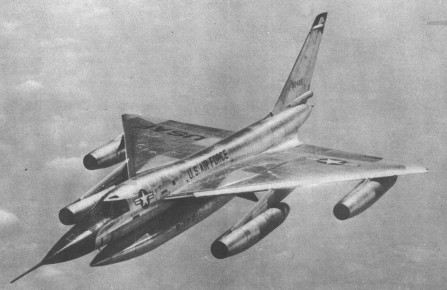
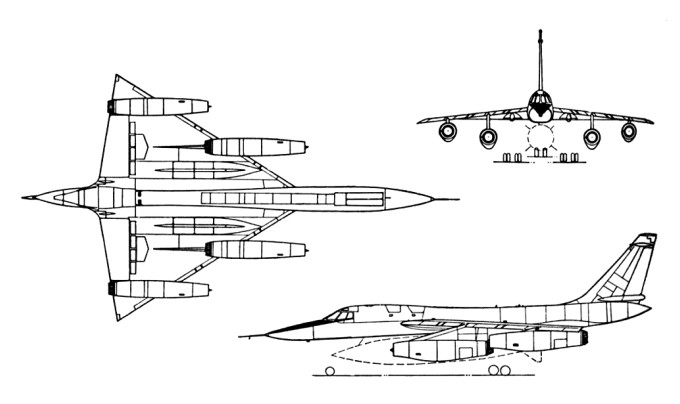
In March 1949 the US Air Force’s Air Research and Development Command (ARDC) invited proposals for a supersonic bomber, and after submissions had been reduced to two, from Boeing and Consolidated-Vultee’s Fort Worth Division, the latter was selected in August 1952 to develop its Convair Model 4 designed to the hardware stage under contract MX-1964. On 10 December 1952 the designation B-58 was allocated and late in that year Convair received a contract for 18 aircraft, to be powered by a new J79 engine for which General Electric received a development contract at the same time. The performance requirement for the new aircraft demanded considerable advances in aerodynamics, structures and materials. The resulting design, one of the first to incorporate the NACA/ Whitcomb-developed area-rule concept, was a delta-winged aircraft with four engines in underslung pods, a slim fuselage and, an under-fuselage pod. The thin fuselage provided some engineering issues early on as it prevented internal carriage of bombs and the required amount of fuel to power the four turbojet engines and allow for any reasonable operating radius to be achieved. As a result, a large external droppable two-component 18.90m long pod was affixed to the underside of the fuselage. This pod contained extra fuel and a nuclear weapon along with other mission-specific specialized gear. The three-man crew, in individual tandem cockpits, were provided with jettisonable escape capsules.
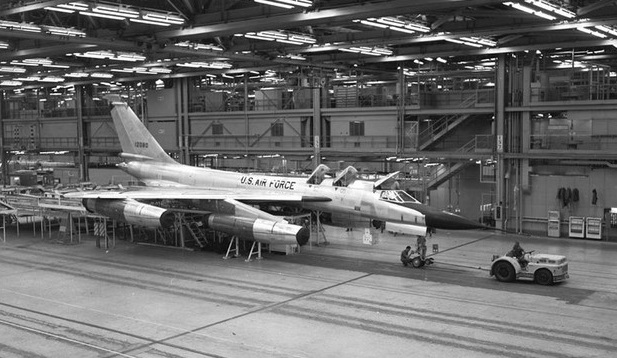
Distinctive features of the B-58 included sophisticated inertial guidance navigation and bombing systems. Extensive use of heat-resistant honeycomb sandwich skin panels were integrated into the construction of the wings and fuselage for high altitude-high velocity flight.
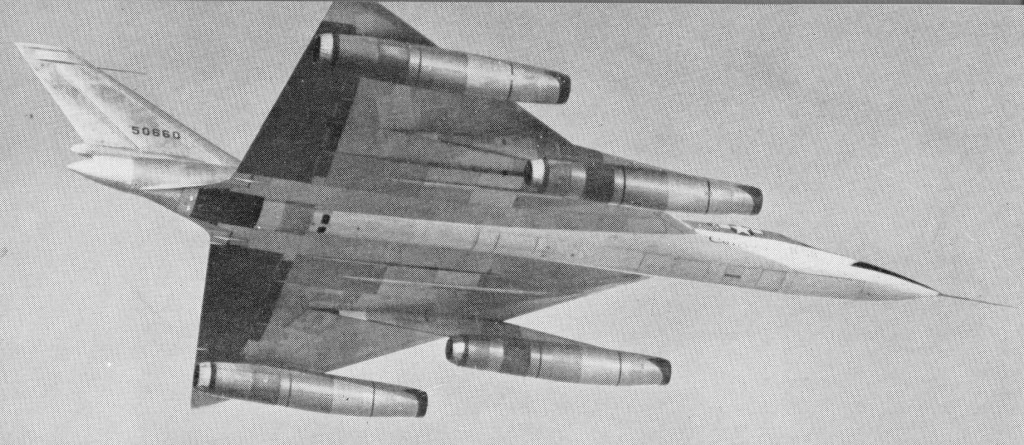
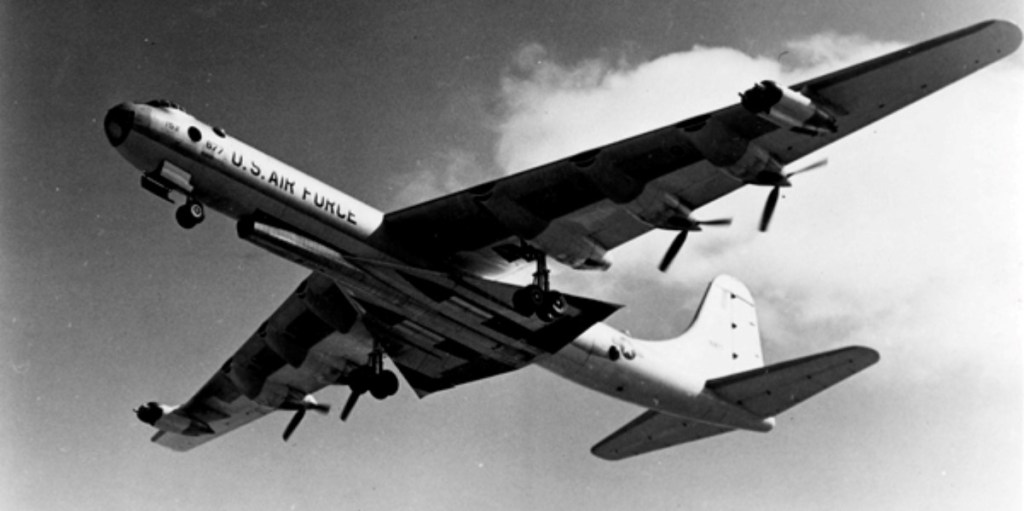
Convair easily transported the XB-58 prototype by air from Ft. Worth TX to Wright-Patterson Air Force Base (AFB) in Ohio for testing with the use of a modified Peacemaker bomber.
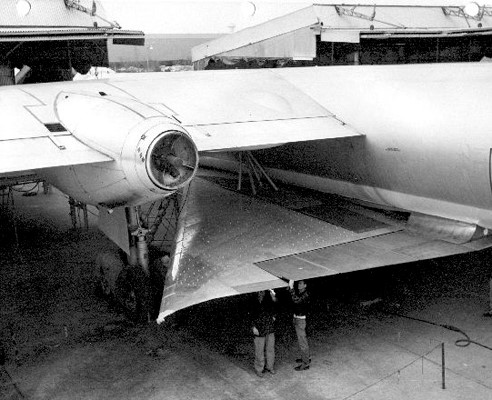
The left and right inboard engines had their propellers removed, along with the bomb bay doors since they did not clear the wings of the XB-58 which was mounted underneath the bomber.
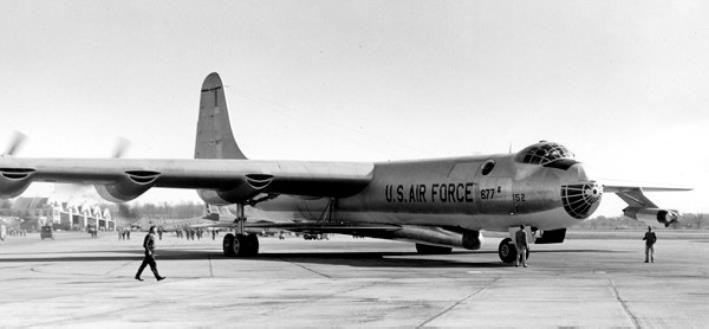
Since the airframe was the subject of testing the XB-58 did not have the engines attached and the vertical fin assembly was left off, as well.
In June 1954 the 18-aircraft order was reduced to two XB-58 prototypes and 11 YB-58A pre-production examples, together with 31 pods. The first of these was rolled out at Fort Worth on 31 August 1956, making its first flight on 11 November 1956 piloted by B. A. Erikson. On 30 December, still without a pod, the XB-58 became the first bomber to exceed Mach 1.
A further 17 YB-58As were ordered on 14 February 1958, together with 35 MB-1 bomb pods, to bring to 30 the number of aircraft available for the manufacturer’s test programme and ARDC service trials with the 6592nd Test Squadron and the 3958th Operational Test and Evaluation Squadron at Carswell AFB.
The United States Air Force ordered between September 1958 and 1960 86 total Hustlers, which were operational in the Strategic Air Command (SAC) between 1960 and 1970.
The 86 production B-58A Hustlers were supplemented by 10 YB-58As which were brought up to production standard to equip the 43rd Bomb Wing, initially at Carswell but later assigned to Little Rock AFB, Arkansas, and the 305th Bomb Wing at Bunker Hill AFB, Indiana. The first was handed over to the 65th Combat Crew Training Squadron at Carswell on 1 December 1959 and the 43rd Bomb Wing, activated as the first B-58 unit on 15 March 1960, became operational on 1 August 1960. The 116th and last B-58A was delivered on 26 October 1962, the 116 having cost $3.2 billion.
By 1964 80 were reported as still operational. The type was withdrawn from Strategic Air Command service on 31 January 1970.
B-58s as a whole set 19 world speed and altitude records and won five different aviation trophies during their operational run – a vast engineering achievement realized. Despite these performance successes, the B-58 still suffered from limitations in operating range, payload capacity and overall series growth potential.
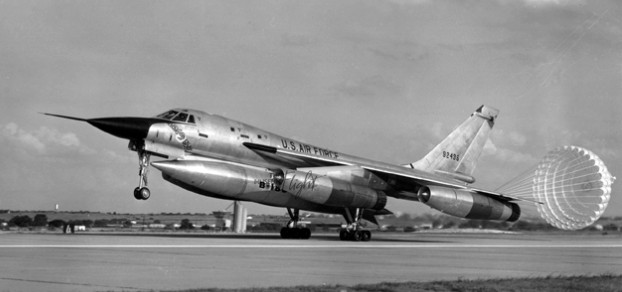
With such outstanding performance it was clear that the B-58A had record-breaking potential. On 12 January 1961 Major Henry Deutschendorf and his crew secured the 2000km closed-circuit record at 1708.8km/h and on 14 January Major Harold E. Confer’s aircraft raised the 1000km record to 2067.57km/h. On 10 May Major Elmer Murphy won the trophy presented by Louis Bleriot in 1930 for the first pilot to exceed 2000km/h for a continuous period of 30 minutes. Sixteen days later Major William Payne and his crew flew from Carswell to Paris setting, en route, record times of 3 hours 39 minutes 49 seconds from Washington and 3 hours 19 minutes 51 seconds from New York. The Hustler crashed at the Paris Air Show on 3 June with the loss of the crew. Other flights included a supersonic endurance record of 8 hours 35 minutes from Haneda, Tokyo to London, on 16 October 1963.
Convair built 86 standard B 58A bombers as well as 11 development aircraft later brought up to production standard and 17 YB 58A pre-production aircraft which were modified as RB 58A reconnaissance machines, Eight aircraft were converted into TB 58A trainers with a tandem pair of pilot stations. The regular bomber seated pilot, nav/bomb aimer and defensive systems operator in tandem cockpits containing special escape capsules which, in emergency, could close around the occupant, seat and controls and be ejected as a sealed package.
In 1970 the 43rd and its partner, the 305th Wing at Grissom AFB, were disbanded because of high operating cost. The last B-58 would be officially retired in January 1970.
Convair B-58A Hustler
Engines: 4 x General Electric J79-GE 5A, -5B or 5C turbojet, 69.3kN / 15,600lbs thrust with reheat capability
Length: 96 ft. 10 in (29.49m)
Wingspan: 56 ft 10 in (17.32m)
Wing area: 143.25 sq.m / 1541.93 sq ft
Height: 31 ft 5 in (9.60m)
Empty Weight: 55,561lbs (25,202kg)
Maximum Take-Off Weight: 163,000 lb (73,936kg)
Fuel capavity, wing & pod: 12,500+ gal
Weight after inflight refuelling: 80237 kg (176,890 lb)
Maximum Speed: 1,321mph (2,126kmh / 1,148kts / Mach 2.1)
Cruising speed: 610 mph.
Maximum Range: 4,400 miles without aerial refueling
Service Ceiling: 62,999ft (19,202m; 11.9miles)
Armament: 1 x 20mm Vulcan cannon in tail
1 x Under-fuselage pod carrying up to 19,450lb ordnance
Crew: 3
Hardpoints: 1
Cost: US$12,442,000
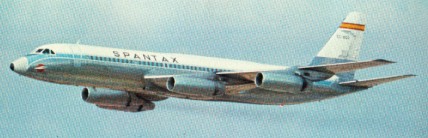
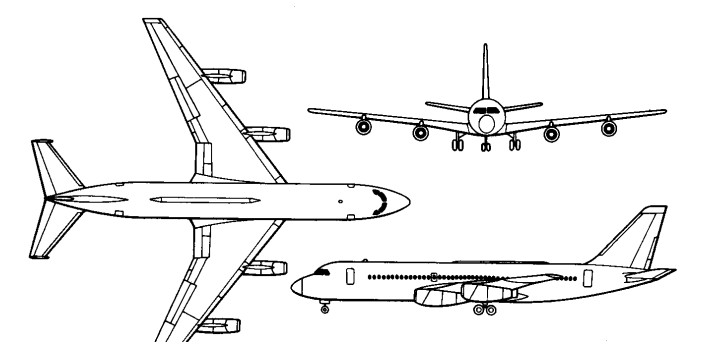
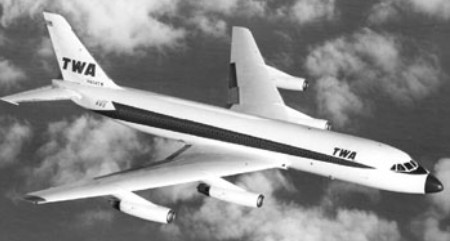
Development of the Convair 990 began when the company lost a vital United Airlines order for 30 aircraft. To attract American Airlines, Convair designed an aircraft with transcontinental range and higher speed and on 30 July 1958 Convair announced the Model 30. This was a natural growth version of the 880 and used a turbofan of 16,050 lb. Originally known simply as the Convair 880M, the new aircraft was much more than a ‘slight modification’ contrary to what the General Dynamics’ board was told. The new variant used a redesigned engine (the CJ 805 23), with a rear mounted fan and a higher bypass ratio. This required a new engine nacelle, while the need to reduce drag led to the addition of Whitcomb bodies on the wing trailing edge to ‘area rule’ the aircraft. The new aircraft also included a new proportional anti skid system, a modified undercarriage and a hydraulically powered rudder. The rest of the aircraft was strengthened to accommodate much more fuel, and the fuselage was stretched 10 ft to house 106 passengers (foreign customers later fitted in over 140) and the tailplane was increased in area.
Howard Hughes initially refused to allow Convair to give the new aircraft a designator ‘higher’ than 880, so the new aircraft was instead initially known as the Convair 600. Convair guaranteed a speed of 550kts (1021 km/h) (agreeing to financial penalties if it failed to deliver) and charged American only $100m for its 25 aircraft (later reduced to 20), taking $22.8m of the money in the form of 25 over valued DC 7s (worth $10m at most). Swissair converted its order for five 880s to an order for seven 990s. The Convair 990 originally failed to meet its guaranteed performance and the prices to American and Swissair were reduced. The airlines initially operated their aircraft without making progress or engine payments while Convair sorted out the problems. The problems were solved in the Convair 990A, but Convair’s chance to dominate the jetliner market vanished when Boeing re engined its 707s with Pratt & Whitney’s new JT3D turbofan, which could be produced by conversion of existing JT3C engines. Thus the fan engined 990 lost its unique selling point. Swissair and American began scheduled revenue services during March 1962. Other Convair 990 operators included Aerolineas Peruanas, Garuda, SAS, Thai International Airways and VARIG.
Models built for Swissair and VARIG differed slightly from standard 990s. Powered by CJ 805 23B engines, they carried slightly more fuel and had higher operating weights. They were officially known as Coronados, a name later used to describe all Convair 990s.
The announcement of the new jet was accompanied by a launch order for 20 from American Air¬lines. The aircraft was renamed Convair 990. The first off the production line flew on 24 January 1961, and by this time the programme was in deep trouble. Drag was well overestimate, and it took two years of extremely costly modifications to get near the guaranteed performance.
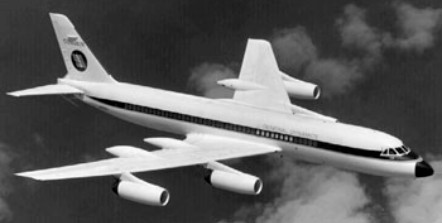
In addition to four large anti¬shock bodies above the trailing edge (sometimes called Küche¬mann carrots, these also served as fuel tanks) Kruger flaps were added under the wing and a com¬plex series of extensions, bumps and fairings added to the engine pods and pylons. The aircraft’s long range came about by using the four wing pods as fuel tanks. The 24-foot-long pods, known as “antishock bodies,” reduce the intensity of shock waves generated when an airplane reaches the speed of sound. In essence, they control the air flowing over the wing and therefore reduce drag. Payload, at 26,440 lb, was widely considered inadequate. The cabin was criti¬cised, as were the lack of customer options, and in the end, in addition to the launch order, only 17 aircraft were sold. American accepted the first (unmodified) 990 on 8 January 1963, and fully modified 990As en¬tered service late that year.
Lebanese International Airways and MEA operated Coronados during the late 1960s and early 1970s. LIA went into liquidation after its two Coronados were destroyed on the ground by Israeli commandos in 1968, while MEA phased out its aircraft in favour of Boeing 707s and 720s in 1972.
Following their retirement from major airlines, many Coronados found employment with travel clubs and minor airlines. Modern Air Transport obtained eight Convair 990s between January 4, 1967 and January 1971 and operated these primarily on charter work. These were often unorthodox, including polar flights landing at McMurdo Sound (the first commercial jets to do so) and even a unique 1970 Father’s Day ‘Get Away from Mama’ Busenvogel (Bosom flight) from Berlin to Paris and back, in which the stewardesses wore uniforms with transparent bodices. The company fitted new slim line seats which allowed capacity to increase to 149, without reducing leg room.
The last major operator of the Coronado was the Spanish charter airline Spantax. Spantax delib¬erately collected used examples and retired the last of 14 aircraft in March 1987. One Spantax 990 survived a mid air collision with a DC 9 over France. Ten of the surviving airframes were scrapped at Palma between 1991 and 1993, but one was retained for preservation.
In 1988 an ex Ports of Call 990 was sold to Ciskei International Airways, but this flew only a single pre inaugural flight when it could not acquire the necessary permits. The aircraft was eventually ferried to EI Paso in 1991.
NASA had been a long term operator of the Coronado, using a succession of three aircraft for atmospheric, astronomical, meteorological and solar experiments and support duties. The final aircraft was reactivated in 1980 for three years, then again in 1988 for use as a landing systems research aircraft, testing the Space Shuttle undercarriage to expand the vehicle’s landing envelope and to allow increased use of the landing site at the Kennedy Space Center Every time a Shuttle landed at Edwards, it required a piggy back ride back to Kennedy atop a Boeing 747, costing $1m per time, all because Kennedy might have been just outside the Shuttle’s crosswind limits. The tests encompassed 155 test flights ending in August 1995. Two CV 990s remained in store at Mojave.
990 Coronado
Engines: 4 x General Electric turbofan, 16,050 lb.
Cruising speed 494kts (917km/h) at 35,000ft (10,668m).
Range 7,741km (4,172nm).
Weight empty 54,686kg (120,560 lb).
Gross weight 115,668kg (255,000 lb).
Payload: 26,440 lbs.
Span 36.5m (120ft 0in).
Length 42.49m (139ft 5in).
Wing area 209sq.m (2,250 sq.ft).
Pax cap: 104-140.
990A
Engine : 4 x General Electric CJ-805-23B, 71613 N / 7300 kp
Wing span: 120 ft 0 in (36.58 m).
Length: 139 ft 5 in (42.5 m).
Height: 39 ft 6 in (12.04 m).
Max TO wt: 244,200 lb (110,765 kg).
Max level speed: 540 kts / 625 mph (1006 kph).
Service ceiling : 41011 ft / 12500 m
Range : 2646 nm / 4900 km
Crew : 9+116
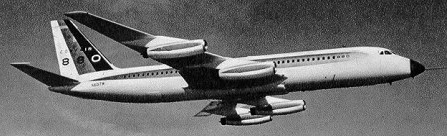
In 1955 Convair went ahead with the Model 22 Skylark, seating 80-108 passengers over sectors up to about 2,500 miles. It was announced in September 1956. During construction the aircraft was renamed Golden Arrow, and it was proposed to anodise the external skins gold. Then, because it was to cruise at 600 mph, the type became the Convair 600, and finally this was changed to Convair 880, because 600 mph is 880ft per second. The aircraft grew slightly in weight, the 880M weighing 193,000lb with 11,650-lb thrust CJ805-3B engines. Designed at the request of Howard Hughes, the owner of TWA, the first 880 made its maiden flight on January 27, 1959 and was technically a very advanced aircraft. Powered by four 49.8kN (11,2001b) st CJ 805 3s it had a boldly swept (35 degrees) wing and was a very fast aircraft indeed, justifying the much hyped claim that it was ‘the fastest airliner in the world’.
At the time of the first flight, 78 Convair 880 variants were on order.
The second aircraft off the line flew on 31 March 1959.
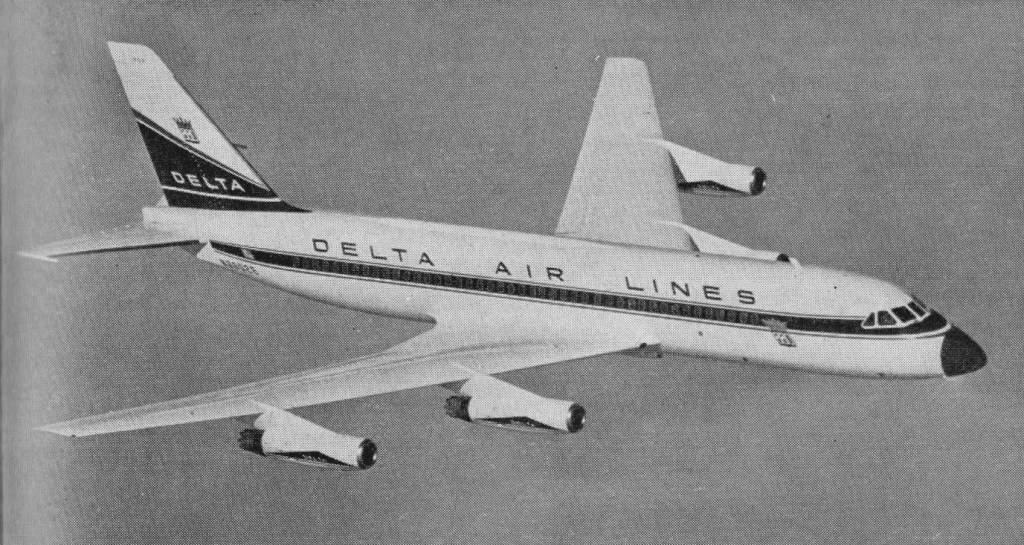
The FAA certified the 880 for airline use on 1 May 1960, and 15 days later Delta Airlines put the liner into commercial service.
It was built in two versions: the 880 Model 22 basic model with 49.8kN General Electric CJ-805-3 turbojet engines, flown for the first time on 27 January 1959; and the 880 Model 22-M with 51.8kN CJ-805-3B turbojets, power-boosted rudder and four leading-edge slats. The first 880 Model 22-M flew on 3 October 1960.
The first aircraft completed to full airline standards (number 7) actually broke a transcontinental speed record on delivery from San Diego to Miami. TWAs aircraft were stored while the airline’s ownership was hotly disputed and Delta gained the honour of initiating the first services on 16 May 1960.
TWA became the largest operator of the type, with deliveries beginning two days after Howard Hughes relinquished control of the airline, on December 30, 1960. Subsequently, Convair 880s were also delivered to Northeast Airlines, though a massive, once nearly firm order from United, was lost to Boeing.
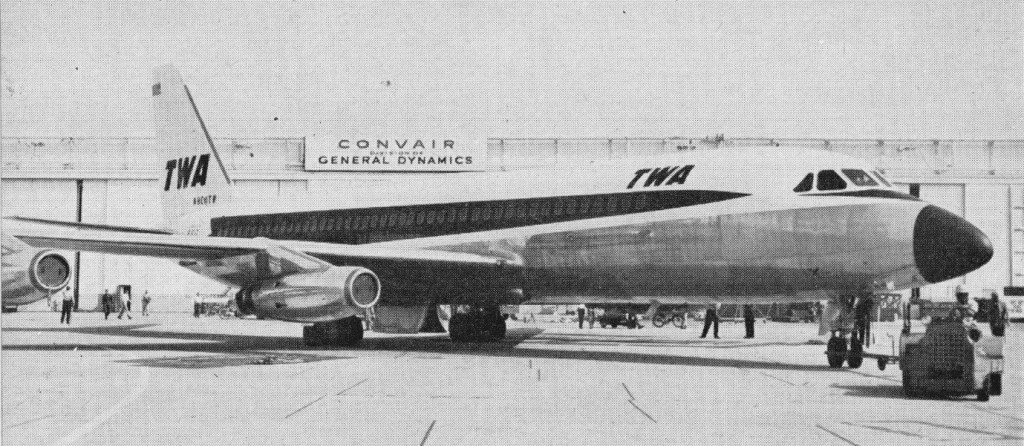
TWA was taking delivery of 20 Convair 990 during 1960 and 1961.
Some 17 Convair 880Ms were built, these having four leading edge slats on each wing, a larger fin and powered rudder, a retractable tailskid, provision for pre loaded baggage containers and a 7,094 lit (1,560 Imp gal) centre section tank. The aircraft also had a strengthened undercarriage and CJ 805 313 engines.
The oil crisis of the early 1970s made the Convair 880 particularly uneconomical to operate and Delta retired its aircraft at the end of 1973, followed by TWA in June 1974. New operators included LANICA in Nicaragua, a number of travel clubs and even Elvis Presley, whose aircraft, named Lisa Marie after his daughter, and callsign Hound Dog One is now part of the Graceland museum. Airtrust Singapore operated three Convair 880Ms until 1979, latterly operating services for Air Malta. Another aircraft was sold to the Ciskei Government.
A number of Convair 880s were briefly used as freighters. Monarch Aviation converted about seven with a cargo door and more without the door. American Jet Industries (later part of Gulfstream American) worked closely with Convair to convert some 20 Model 880s as Airlifters, but the company completed only two aircraft and the remainder were stored at Mojave, many with unused cargo doors installed. Attempts to market the aircraft in the mid 1980s foundered because they were not hush kitted. General Air Services converted one more Convair as a freighter. The last freighter flying was probably retired (in about 1986) in Haiti.
The last aircraft in regular service was the US Navy’s sole UC 880, ‘Old Smokey’, equipped as a tanker, and for missile test control and telemetry. This was retired at the NATC, Patuxent River, in September 1993 and in 1995 was used for ground based tests simulating high-altitude bomb explosions. Some 15 aircraft remained in storage at Mojave in 1998.
Total sales were 65.
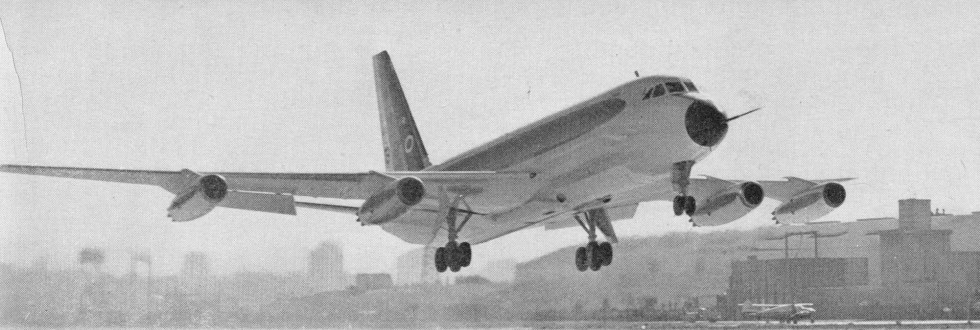
880 Model 22
Engines: 4 x General Electric CJ805-3 turbojet, 5080 kg / 49.8kN / 11,200 lb thrust.
Max level speed: 615 mph (990 kph).
Cruising speed 482kts (895km/h) at 35,000ft (10,668m).
Range 6,518km (3,513nm).
Weight empty 42,185kg (93,000 lb).
Gross weight 87,772kg (193,500 lb).
Span 36.5m (120ft 0m).
Length 39.4 m (129ft 4in).
Height: 36 ft 0 in (10.97 m).
Wing area 185.8sq.m (2,000 sq.ft).
880 Model 22-M
Engines: 4 x General Electric CJ805-3B turbojet, 5285 kg / 51.8kN / 11,650-lb thrust.
MTOW: 87410 kg / 184,500 lb.
Empty wt. 88,615 lb
Top speed 615 mph.
Cruise 501 mph.
Stall 121 mph.
Initial climb rate 3,565 fpm.
Range 3,995 miles.
Ceiling 41,000 ft.
Takeoff run 8,050 ft.
Landing roll 6,150 ft.
Pax cap: 110.
Crew: 5.
Max fuel cap: 47445 lt / 12,534 USG