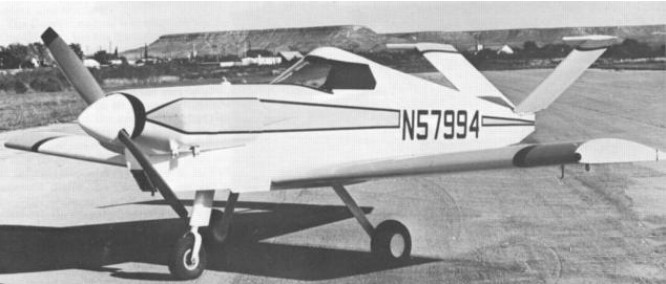
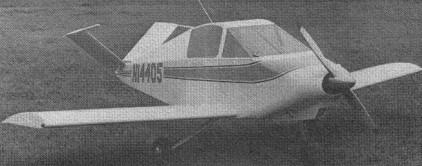
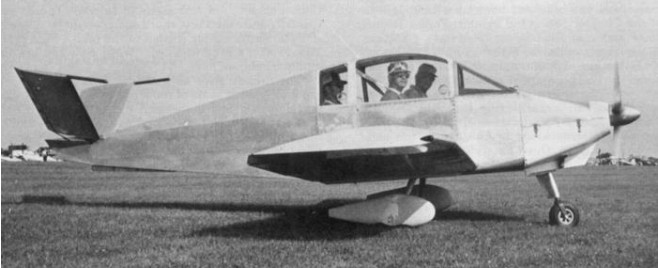
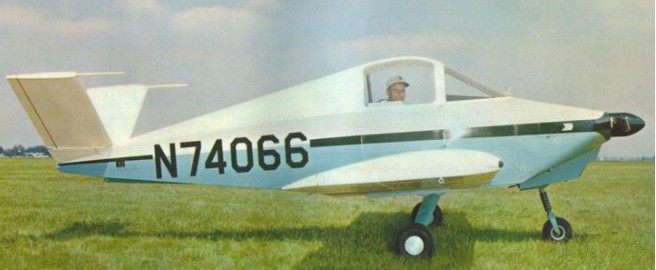
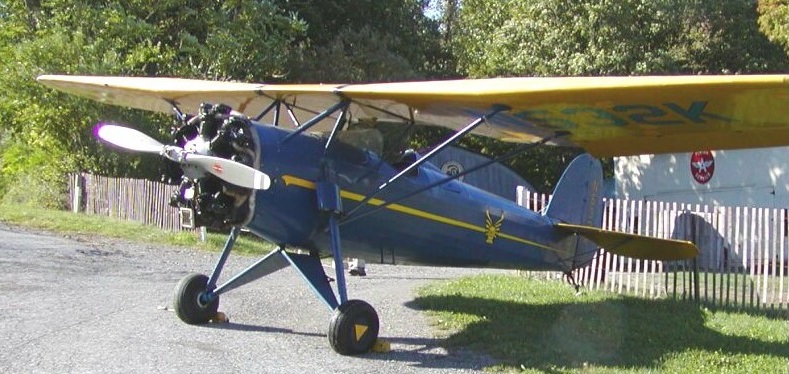
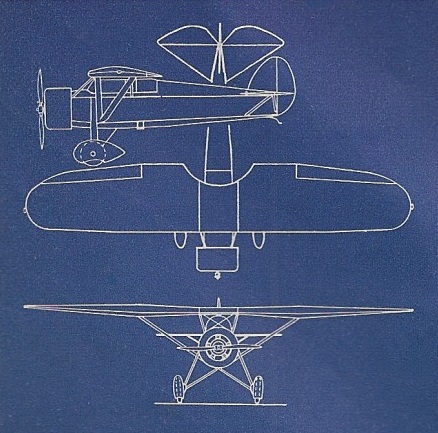
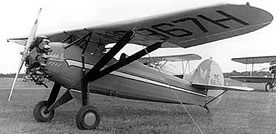
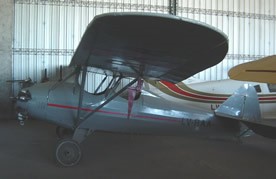
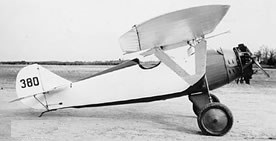
The DA-5A single-seat, low-wing monoplane makes use of the same V-type tail as the DA-2A. The pilot sits inside an enclosed canopy behind a 65-hp Continental turning a fixed-pitch prop. Both the wings and fuselage are alight alloy structure with stressed skins, and the landing gear is the non-retractable tricycle type.
Many DA-5 and DA-5A aircraft have been built from plans. DA-1 through DA-5 used the Clark Y airfoil.
In 1966, the Davis all-metal design was voted the most popular at the Rockford EAA Fly-in. It requires little work on the part of the builder because of its simple construction, with no compound curves or ex-pensive fittings. The Davis design uses the 100-hp Continental and is one of the few do-it-yourself planes with a V-tail. Of low-wing, two seat side-by-side and nose undercarriage. The prototype DA-2 nosegear used a spring instead of rubber doughnuts. Engine range 65-100 hp.
Many DA-2A and DA-2B aircraft have been built from plans. DA-2A scratchbuilding plans describe both DA-2A and DA-2B versions. DA-1 through DA-5 used the Clark Y airfoil.
The DA-4 was completed as DA-2C. The DA-4 was intended as the production version of the DA-2, but was sold unfinished. Brent Hughes finished it as DA-2C N26146. This should not be confused with the D2C “Bandit” mods.
DA-2A Engine: Cont A-65 Wingspan 19’3”. Length 17’l0”. Gross Wt. 1125 lbs. Empty Wt. 610 lbs. Fuel capacity 20 USG. Top speed 120 mph. Cruise 115 mph. Stall 62 mph. Climb rate 400 fpm. Takeoff run 800 ft. Landing roll 700 ft. Range 450 sm. Seats: 2
The Davis DA-1 was a light aircraft designed in the United States in the 1950s which never progressed beyond the prototype stage.
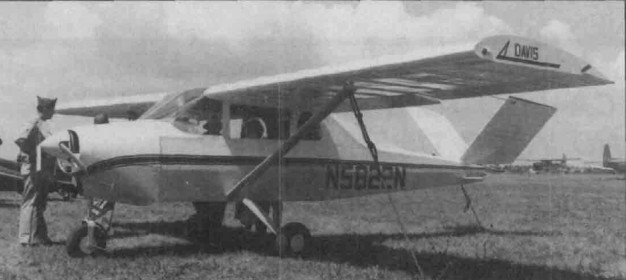
Leeon D. Davis constructed his DA-1 starting on 24 April 1957. It was a strut-braced high-wing single-engine all-aluminum airplane designed around the new Lycoming O-360 engine. The fixed-nosegear-equipped piston-engine DA-1 was of otherwise conventional configuration, but a V-tail.
Wings and tail surfaces of the DA-1 used external heat treated ribs; those surfaces were of constant chord. DA-1 through DA-5 used the Clark Y airfoil.
Power for the DA-1 was a horizontally-opposed Lycoming O-360 of 180 hp (134 kW), which gave a top speed of 125 mph (201 km/h).
Registered N5822N, it was first flown on 24 May 1958, initial test flights showed that there was not enough elevator authority with full flaps, and the plane was very loud. Soundprofing, and aerodynamic modifications were applied. Davis tried to bring the plane to market as a certified aircraft (his goal was a selling price of under $10,000), but was not successful.
DA-1 Powerplant: 1 × Lycoming O-360, 180 hp (134 kW) Length: 22 ft 3 in ( m) Wingspan: 32 ft 0 in (9.76 m) Wing area: 167 ft2 ( m2) Empty weight: 1,200 lb (545 kg) Gross weight: 2,370 lb (1,080 kg) Maximum speed: 125 mph (201 km/h) Range: 475 miles Crew: One pilot Capacity: 4 passengers Number built 1
Walter C. Davis was a former WWI pilot who had been working in his family’s business, the Davis Automobile Company of Richmond, Indiana, when it was sold in 1928. Redirecting his talents back to flying, he purchased the production rights to the Vulcan V-3 and began work on the first Davis aircraft in March 1929. He hired Vulcan test pilot, Pat Love, and engineer Dwight Huntington and opened his factory in Richmond, Indiana.
Huntington’s slight re-design of the aircraft included adding the gently curved leading edge to the vertical stabilizer. Davis then set up dealers in California, Dayton, Boston, Seattle, Salt Lake City and Pittsburgh. Air racing success continued in 1929 and all seemed well. The advent of the Great Depression ultimately led to the demise of Davis Aircraft, but the company struggled on.
Davis D-166 – N647N
In December 1929, two new models were engineered with different engines, the D-1 with a 65 hp LeBlond and the D-1K with the 100 hp Kinner K-5. Both models were certificated, but sales lagged. Davis countered by aggressively pursuing direct sales to buyers and attended trade shows in St. Louis, Detroit and New York. He added the D-1-66 (later D-1-85) with an 85 hp LeBlond engine and cut prices, but then lost the entire finished inventory of planes to a fire.
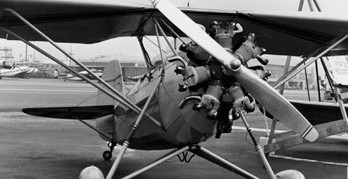
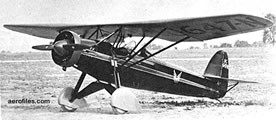
The D-1 is a parasol-winged aircraft of mixed construction with a two-spar wing and a rectangular welded steel-tube fuselage, the whole being covered by fabric. There are tandem open cockpits and it is fitted with a fixed tailwheel undercarriage which is attached by struts to the fuselage top and bottom. The wing is braced by struts from the lower fuselage. Various engines of between 60 to 125 hp (45 to 93 kW) have been fitted.
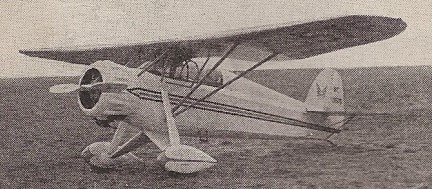
Produced 1929-1930, the D-1 was used by sporting pilots and by private pilot owners for leisure flying. Davis Aircraft Corp. produced three models of the D4 series. The first two models were the D-1-85 with an 85 hp Le Blond engine and the D-1-K with a 100 hp Kinner engine. The third model, the D1-W was equipped with a 125 hp Warner Scarab seven-cylinder radial air-cooled engine. The Dl-W features complete dual controls for its tandem seats.
In September 1930, Art Chester bought a Davis D-1-85 parasol, and flew it to victory in the 25 mile event at the September 1930 National Air Races. A late model D-1W “The Whistler II” was built in 1933 for Davis with a canopy. It was raced in the 1934 Miami air race by Art Davis winning the category at 133.478 mph. NC150Y which was destroyed in a crash at the 1932 Nationals. It was later owned by movie star Richard Arlen, and restored to become a Grand Champion antique.
D-1-W
Unfortunately, the commercial market for airplanes just wasn’t there and in 1932 Davis turned to the production of lawn mowers. A few additional planes left the factory in 1933 but they were apparently made up from existing parts inventory or airframes returned to the factory for various reasons. They received new serial and registration numbers. Most Davis aircraft were sold ($2,965 with a 60hp LeBlond in 1929) in the United States but at least one went to Argentina. Fourteen examples remained in 2001 in various states of airworthiness and several were still airworthy in 2011.
D-1 23 built Engine: 60 hp (45 kW) LeBlond 5D Span: 30 ft 2 in Length (overall): 19 ft 10 in Gross Weight: 1,334 lb Useful Load: 495 lb Baggage: 20 lb Fuel: 20 gal Oil: 2 gal High Speed: 101 mph Cruise Speed: 85 mph Landing Speed: 38 mph Range: 350 sm Type Data: ATC 256 Year of Introduction: 1929 Price (1929): $3,285 Price (1930): $2,995
D-1 Engine: LeBlond 70 5DE, 70 hp Span: 30 ft 2 in Length (overall): 19 ft 10 in Gross Weight: 1,334 lb Useful Load: 495 lb Baggage: 20 lb Fuel: 20 gal Oil: 2 gal High Speed: 101 mph Cruise Speed: 85 mph Landing Speed: 38 mph Range: 350 sm Type Data: ATC 256 Year of Introduction: 1929 Price (1929): $3,285 Price (1930): $2,995
D-1 Engine: LeBlond 70 DE, 70 hp Span: 30 ft 2 in Length (overall): 19 ft 10 in Gross Weight: 1,334 lb Useful Load: 495 lb Baggage: 20 lb Fuel: 20 gal Oil: 2 gal High Speed: 101 mph Cruise Speed: 85 mph Landing Speed: 38 mph Range: 350 sm Type Data: ATC 256 Year of Introduction: 1929 Price (1929): $3,285 Price (1930): $2,995
D-1-66 4 built Engine: 85 hp (63 kW) LeBlond 5DF Span: 30 ft 3 in Length (overall): 21 ft 6 in Gross Weight: 1,380 lb Useful Load: 526 lb Baggage: 47 lb Fuel: 20 USgal Oil: 2-1/2 USgal High Speed: 112 mph Cruise Speed: 97 mph Landing Speed: 40 mph Range: 360 sm Type Data: ATC 317 Year of Introduction: 1930 Total Production: 4 Price (1930): $3,395 Price (1931): $2,795
D-1-85 Engine: 1 × LeBlond, 85 hp
D-1-K 11 built Engine: 100 hp (75 kW) Kinner K-5 Span: 30 ft 3 in Length (overall): 19 ft 10 in Gross Weight: 1,461 lb Useful Load: 536 lb Baggage: 27 lb Fuel: 25 USgal Oil: 2-1/2 USgal High Speed: 130 mph Cruise Speed: 100 mph Landing Speed: 40 mph Range: 400 sm Type Data: ATC 272 Year of Introduction: 1930 Total Production: 11 Price (1930): $3,995 to $4,185 Price (1932): $2,295
D-1-L prototype of the D-1-166 (1 built) Engine: 90 hp (67 kW) Lambert R-266
D-1-W (8 converted from D-1-K) Engine: Warner Scarab, 125 hp (93 kW) Length: 20 ft 4 in (6.20 m) Wingspan: 30 ft 2 in (9.19 m) Height: 7 ft 3 in (2.21 m) Empty weight: 925 lb (420 kg) Gross weight: 1,461 lb (663 kg) Maximum speed: 142 mph (229 km/h; 123 kn) Cruise speed: 122 mph (106 kn; 196 km/h) Stall speed: 46 mph (40 kn; 74 km/h) Initial climb rate 1,360 fpm. Range: 480 mi (417 nmi; 772 km) Service ceiling: 14,800 ft (4,511 m) Crew: one Capacity: one passenger
D-1-W Engine: Warner Super Scarab SS-50A, 145 hp Propeller: Sensenich Model 86CA-69 Wing span: 30 ft. 3 in Wing area: 145 sq. ft Airfoil: Goettigen 387 modified Length: 21 ft. 6 in Height: 7 ft. 3 in Empty weight: 1134 lb Weight loaded: 1471 lb Baggage: None Fuel: 30 USgal Oil: 3 USgal Maximum speed: 142 mph Cruising speed: 123 mph Landing speed: 46 mph Initial rate of climb: 1,270 fpm Service ceiling: 19,000 ft Normal range: 480 mi Starter: Eclipse Y-150 Type Data: Memo 2-394
Vulcan Aircraft updated the engine of the American Moth from a 60 hp Detroit Air-Cat to a Warner radial and the aircraft became the Vulcan V-3. It finished second in the National Air Races “A” Division, New York to Los Angeles Derby. Later it took first in the Los Angeles to Cincinnati race at 90.3 mph. Shortly after these achievements, William Burke died leaving the company’s future in doubt.
Davis V3 – LV-RAA
Walter C. Davis was a former WWI pilot who had been working in his family’s business, the Davis Automobile Company of Richmond, Indiana, when it was sold in 1928. Redirecting his talents back to flying, he purchased the production rights to the Vulcan V-3 and began work on the first Davis aircraft in March 1929.
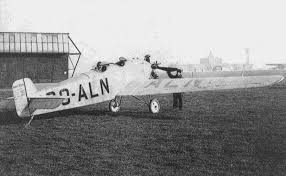
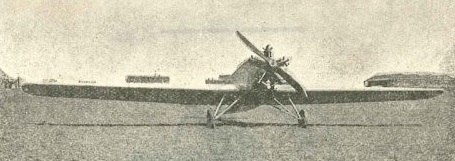
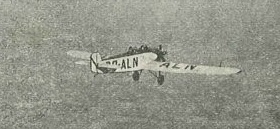
In 1929 Georges Dassy built a low wing monoplane designed by Glymes who also worked at SABCA (Belgian Public Limited Company of Aeronautical Constructions). G. Dassy, like many other Belgian manufacturers, made their prototype in the context of the so-called “subsidy” program to encourage a national aeronautical industry.
This prototype – the Dassy DA 1 – performed its first flight in August 1930 registered OO-ALN.
The Dassy DA1 was powered with a Renard engine and entirely made of spruce wood coated with plywood
OO-ALN was sold to the pilot builder and director of the national aviation school, Jef Guldentops, in September 1930, which used it either at Haren or at its Leefdaal aerodrome (Tervuren) until 1940.
The registration was cancelled in April 1946, because presumed destroyed during the war.
The DA 1 allowed the development of the Dassy DA 2 two-seater tandem monoplane, adaptable easily into a three-seater.
Dassy DA 1 Engine: Renard 5-cyl, 120 hp at 1580 rpm Engine weight: 130 kg Wingspan: 11.50 m Wing area: 14 m² Length: 6.40 m Height: 2.30 m Empty weight: 420 kg Maximum weight: 725 k Maximum speed: 194 km / h Cruising speed (80% of power): 175 km / h ROC: 250 m / min Ceiling: 7,000 m Range: 1,000 km
On 10 July 1969 a project called Alpha Jet was started by the governments of Germany and France to cooperatively create a light aircraft for advanced jet training and for the tactical support role. The contenders were the following: Dassault-Brequet joined up with Dornier with the TA-501, Aérospatiale with MBB with the E-650 Eurotrainer and VFW with their own T-291 project. On 23 July 1970, the TA-501 project from Dassault-Dornier was selected, a tandem seat twin-engined jet trainer and light attack aircraft.
Dassault-Brequet was responsible for building the front fuselage and assembly of the trainer variant as well as the export orders. Dornier in Germany produced the rear fuselage, the tail, wings and assembled the attack variants. The Alpha Jet is power by two Larzac jet engines, which were designed by Turbomecca, SNECMA, MTU and KHD. On 30 November 1972 the first mock up was accepted by both governments and a contract for the production of four prototypes. On 26 October 1973 prototype 01 made the first flight, sixth months ahead of the contract scheduled date. The official presentation flight was flown on 23 November in 1973 at Isres, France. On 9 January 1974, the second prototype made its maiden flight, followed by prototype 03 on 4 May and prototype 04 on October 11th. Alpha Jet E entered production in 1977. The first production Alpha Jet E 1 was flown at Istres, France, on 4 November 1977. The aircraft features a DEFA 30mm cannon.
The German Alpha Jet A entered production a year later. Production aircraft were delivered starting in 1978, with French aircraft operating as pure trainer aircraft, while German aircraft were employed as light attack aircraft. The two types can be distinguished visually by the rounded nose of the French aircraft compared with the pointed nose of German aircraft. The aircraft feature a simple but sophisticated design, utilizing fixed leading edges and air intakes, and an area ruled fuselage to minimize transonic drag. The Alpha Jet was also designed to be turned between sorties quickly, and features single-point refueling, and no required ground-support equipment. Alpha Jet A was the light attack variant for the Luftwaffe designed to replace the Fiat G.91R/3s in the light attack and close air support role. The A is therefor equipped with a more advanced nav/attack system including HUD, Doppler navigation radar and twin-gyro INS. The German versions were equipped with a 27mm Mauser cannon, replacing the French DEFA. Alternatively a Super Cyclone recce pod could be carried on the centeline station.
Principal customers were the air arms of the partner countries, the French Air Force taking 176 between 1978 and 1985, and the Luftwaffe 175 between 1979 and 1983.
The Alpha Jet E was produced for the French Air Force and several export customers, including Egypt, where it is known as the MS1.
Alpha Jet E
The Arab Organisation for Industrialisation’s Helwan factory assembled 37 Alpha Jets from CKD kits between 1982 and 1985, and also produced some components under licence. The Egyptian Air Force also received eight aircraft assembled in France. The close-support version (Alpha Jet A) was built for the West German Air Force; while the alternative close support version, with a new navigation/attack system, was sold to the Cameroon and Egypt as the M52. The Alpha Jet Nouvelle Generation pur l’Ecole et l’Appui (NGEA), now known as the Alpha Jet 2, incorporates the navigation/attack system of the M52 together with uprated Larzac 04-C20 engines and Magic 2 AAMs. No NGEA sales have been achieved, but Egyptian M52s are to be upgraded to NGEA standard. The fifth version, announced in 1985, is the Alpha Jet Lancier. Derived from the NGEA, the Lancier is intended for day/night ground attack, anti-shipping strikes, and anti-helicopter duties. In addition to the NGEA systems it has a Flir, Thomson-CSF Agave multimode radar, active and passive ECM, anti-shipping missiles, and laser guided bombs. No orders for the Lancier have been achieved to date. The Alpha Jet 3 is an advanced training version for use with FLIR, laser and ECM systems.
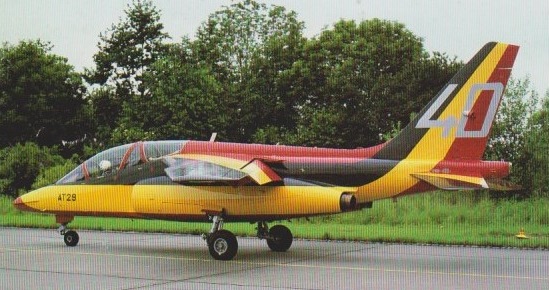
Alpha Jet AT-29, June 1987
Under an independent programme, the Luftwaffe is retrofitting more powerful Larzac 04-C20 engines to boost performance. A limited armament and avionics upgrade had been approved for the Luftwaffe’s Alpha jet fleet for service from 1992. By early 1986 more than 480 Alpha Jets had been delivered, against orders for 501 for ten customers. The German Luftwaffe was the sole operator of the Alpha Jet A light attack version until the 1990s. The first production aircraft flew in 1979 and three years later Dornier closed the production line. The 175 Luftwaffe Alpha Jets replaced the Fiat/Aeritalia G.91R, of which 300 were operated in the tactical support and light attack role. In the 1990s the Alpha Jet was slowly withdrawn from service, the last example being officially retired on 31 December 1998. A large number of aircraft was sold to other nations and about 40 aircraft were put into storage at Fürstenfeldbruck. Two examples have been bought and restored for flying with the Flying Bulls, a display team sponsored by Red Bull.
The Alpha Jet E trainer version for France entered service with the Armée de l’Air replacing the Fouga Magister, Lockheed T-33 and the Dassault Mystère IVA.
The Belgian Air Force needed an advanced trainer and was interested in the development of the Alpha Jet since the start of the project. Belgium operated 28 aircraft, which have been upgraded prolonging their service life until at least 2015. The upgrade was carrier out by SABCA (Société Anonyme Belge de Constructions Aéronautiques), the first upgraded example being delivered back to the air force on 21 April in 2000. The upgrade features a new flightstick, advanced HUD, GPS, ILS and a multi function display in the rear cockpit. In 1994 50 ex-Luftwaffe Alpha Jets were sold to the Portuguese Air Force. In service with Squadrons 103 Caracóis (Snails) for complementary flying training and operational conversion training and with Squadron 301 Jaguares (Jaguars) on the offensive air support role, both squadrons operated from Beja airbase.
In 2017 Alpha Jets were still in service with the militaries of France, Belgium, Egypt, Portugal, Thailand, and are operated by EPNER and Empire Test Pilot School.
Breguet Alpha Jet Engines: 2 x SNECMA / Turboméca Larzac 04-C5, 13244 N Length: 40.322 ft / 12.29 m Height: 13.747 ft / 4.19 m Wingspan: 29.888 ft / 9.11 m Wing area: 188.37 sqft / 17.5 sqm Max take off weight: 13230.0 lb / 6000.0 kg Weight empty: 6945.8 lb/ 3150.0 kg Max. speed: 535 kts / 991 km/h Initial climb rate: 11614.17 ft/min / 59.00 m/s Service ceiling: 44948 ft / 13700 m Wing load: 70.32 lb/sq.ft / 343.00 kg/sq.m Range: 680 nm / 1260 km Range (max. weight): 432 nm / 800 km Crew: 2 Armament: 1x MK 30mm, 2500kg ext.
Alpha Jet Engine: 2 x Snecma/Turbomeca Larzac 04-C6. Installed thrust: 26.5 kN. Span: 9.1 m. Length: 12.3 m. Wing area: 17.5 sq.m. Empty wt: 3855 kg. MTOW: 7940 kg. Warload: 2720 kg. Max speed: 1000 kph. Initial ROC: 3420 m / min. Ceiling: 14,600+ m. T/O run: 410 m. Ldg run: 610 m. Fuel internal: 1900 lt. Range/Endurance: 1230 km / 3.5 hr. Combat radius: 350-1075 km. Armament: 1 x 27/30 mm, 2 x AAM. Hardpoints: 4/5.
Alpha Jet Max Speed: 550 KIAS / .95 M Ceiling: 47,000 ft G-Limits: +8 / -5 Payload: 1,360 lb on each inner pylon, 635 lb on each outer pylon EW: Wired for ALQ-167 and ALQ-188 Endurance: 2.5+ hr with 2 drop tanks Empty Weight: 7,850 lb Useful load: 8,600 lb
Alpha Jet E Engines: two 13.24 kN (2,976 lb st) SNECMA/Turbomecca Larzac 04-C6 non-afterburning turbofan Wing span 9.11 m (29 ft 10¼ in) Wing area: 188,4 sq,ft / 17,50 sq m Length 11.75m (38 ft 6½ in) Height 4.19m (13 ft 9 in) Empty weight 3345 kg (7,374 lb) Max Take-Off Weight 8.000 kg (17,637 lb) Max level speed at sea level 1000 km/h (621 mph) Service ceiling 14,630m (48,000 ft) Climb to 30,000ft/9145m: 7 min 0 sec Radius: 764 mi / 1230 km Armament: one Mauser 27mm or DEFA 30mm ventral cannon pod with 125 rpg Ordnance: 2500 kg (5,511 lb) Hardpoints: 4
France originally was part of the EFA (European Fighter Aircraft) project, which would result in the Eurofighter. In 1985 France left the project and started its own development of a fighter, which led to the ACX or Rafale A.
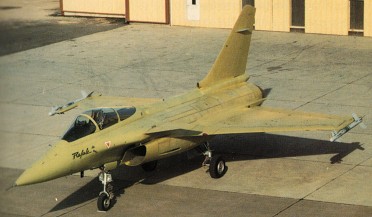
The Rafale (‘Squall’) was originally conceived to demonstrate technologies applicable to a French air force Jaguar replacement (ACT= Avions Combat Tactique) and a French navy Crusader and Super Etendard replacement (ACM= Avion de Combat Marine). It is a single-seat aircraft with a compound-sweep delta wing, an all-moving canard, a single fin, and semi-vented intakes. It incorporates digital fly-by-wire, relaxed stability, a reclined pilot’s seat, a wide-angle headup display, and composite components are used extensively in the airframe. Provision has been made for the introduction of fibre-optics, voice command, and voice warning systems. Equipped with the multi-mode RBE2 radar which has full air-to-air and air-to-ground capability, it can carry a wide range of weapons, including the APACHE stand-off munitions dispenser and the ASMP nuclear missile. The Rafale A technology demonstrator, A 01, powered by two General Electric F404 turbofans, was rolled out of the Saint-Cloud factory on 14 December 1985, First flying on 4 July 1986, Mach 1.3 was exceeded during the flight. In May 1987 the Rafale A prototype successfully completed a series of approaches to the carrier Clemenceau to establish the feasibility of carrier operations. In April 1989 the aircraft was laid-up for the substitution of a SNECMA M88-2 augmented turbofan in the port engine bay and flew in this configuration on 27 February 1990. The M88 is the selected engine for production versions of the Rafale. Developed from the Rafale A was the single seat Rafale C that first flew on 19 May 1991.
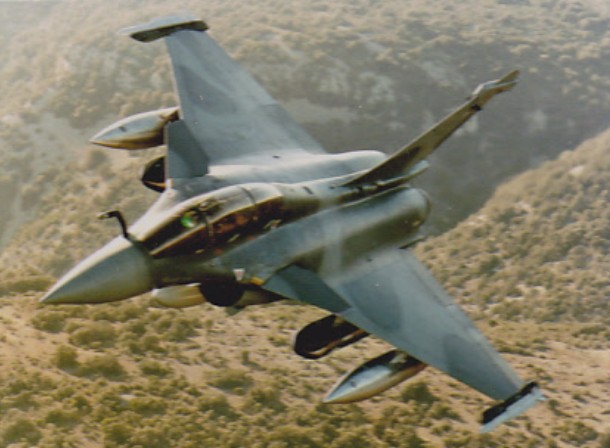
The two-seat Rafale B was designed as a dual control conversion trainer for the single seat Rafale C. But the Rafale B has developed as a fully operational variant with full combat capability. Either an instructor, a second pilot or a WSO can assist the pilot from the rear seat. The Rafale B and C aircraft were planned to enter Armée de l’Air (French Air Force) service from 2002 onwards to replace its older Mirage variants and Jaguars. The first production aircraft Rafale B1 flew for the first time on 4 December 1998 and was delivered to the French Air Force. On April 20, 2001, a Rafale B fitted with conformal fuel tanks made its first flight.
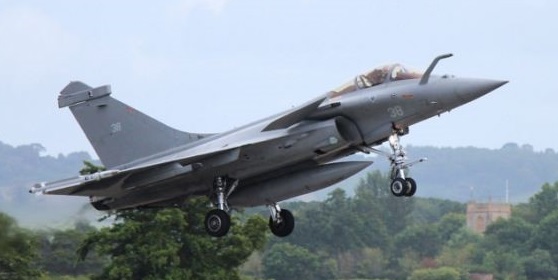
Designed especially for the Aeronavale (French Navy Air Arm) is the carrier capable Rafale M. A fully navilised version first flying on 12 December 1991. The Rafale M has for 80% the same structural design and for 95% the same systems as the Rafale C. It has strengthened main undercarriage, extended nosewheel suitable for catapult launch, hydraulically operated arrester hook, but has no folding wings. The centreline pylon has to be removed because of the longer nosewheel undercarriage. The first production Rafale M aircraft replaced the remaining F-8E(FN) Crusaders in the fighter role. Subsequent deliveries were to replace the Super Etendard and Etendard IVP in the attack and recconnaissance roles.
Dassault Rafale-M
A fourth variant developed for the French Navy, is the two-seat Rafale N to enter service in 2008. The Rafale will become the only combat aircraft in the French Navy when all aircraft are delivered. The original plan was to order a total of 94 Cs, 78 Ms and 140 Bs. On December 1, 2001, the French carrier Charles de Gaulle departed to support the war on terrorism with on board seven Rafale M fighters. Although the aircraft did not take part in the large-scale air combat operation over Afghanistan, they flew combat air patrols and were able to practise and test out new tactics.
Rafale A Engine: 2 x General Electric GE F404-GE-100, 69847 N Length : 51.837 ft / 15.8 m Height: 17.06 ft / 5.2 m Wingspan: 36.745 ft / 11.2 m Wing area: 505.908 sq.ft. / 47.0 sq.m Max take off weight: 44100.0 lb / 20000.0 kg Weight empty: 20947.5 lb / 9500.0 kg Max. weight carried: 23152.5 lb / 10500.0 kg Max. speed: 1147 kt / 2124 km/h Landing speed: 120 kt / 223 km/h Wing load: 87.33 lb/sq.ft / 426.0 kg/sq.m Fuel capacity: 1123 gal / 4250 lt Crew: 1 Armament: 1x MK 30mm DEFA 554, max 12x AIM.
Rafale C Engines: 2 x SNECMA M88-2 turbofans, 7500kg, 16,500 lb Max take-off weight: 19500 kg / 42990 lb Empty weight: 9060 kg / 19974 lb Wingspan: 10.9 m / 35 ft 9 in Length: 15.3 m / 50 ft 2 in Height: 5.34 m / 17 ft 6 in Max. speed: 2070 km/h / 1286 mph Armament: 1 x 30mm cannon Hardpoints: 14
Rafale M Engines: 2 x SNECMA M88-3 afterburning turbofans, 86.98 kN (19,555 lb st) Length 15.30m (50 ft 2½ in) Height 5.34m (17 ft 6¼ in) Wing span (over AAMs) 10.90m (35 ft 9¼ in) Empty weight equipped 9670 kg (21,319 lb) Max Take-Off Weight 21.500 kg (47,399 lb) Max level speed at 11.000m (36,069 ft) Mach 2.0 or 2125 km/h (1,321 mph) Service ceiling 16,460m (54,000 ft) Armament: one DEFA 791 B 30mm cannon; up to 6000 kg (13,228 lb) ordnance Hardpoints: 13
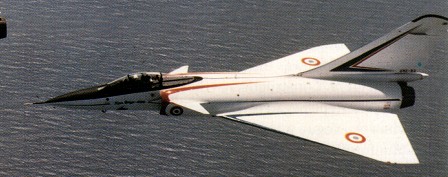
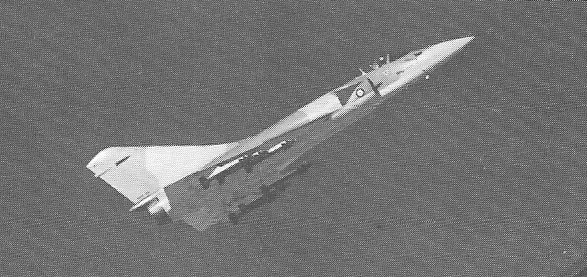
Intended as a multi¬role fighter, the private venture Mirage 4000 prototype was originally known as the Super Mirage 4000. Powered initially by two SNECMA M53-2 turbofans with afterburning thrust of 8500kg, the Mirage 4000 introduced extensive use of boron and carbonfibre composites for structures, and computer-derived aerodynamics and a fly-by-wire active control system making possible a rearward CG. Built-in armament consisted of two 30mm cannon and external ordnance loads in excess of 8000kg could be distributed between 11 external stations.
First flown on 9 March 1979, the Mirage 4000 achieved Mach=1.6 during its first flight and Mach=2.2 five weeks later, on 11 April, during its sixth flight. The single prototype was re-engined with M53-5 turbofans with afterburning thrust of 8790kg during the course of its flight test programme. No production contract was placed for the Mirage 4000, but in 1986, the prototype was re-engined with M53-P2 engines and participated in the Rafale programme.
Mirage 4000 Engine: 2 x SNECMA M53 turbofans, 10000kg Wingspan: 12.0 m / 39 ft 4.5 in Length: 18.7 m / 61 ft 4 in Wing area: 73.0 sq.m / 785.76 sq ft Max. speed: 2333 km/h / 1450 mph Ceiling: 20000 m / 65600 ft Range w/max.fuel: 3700 km / 2299 miles Armament: 2 x 30mm cannons Hardpoints: ten