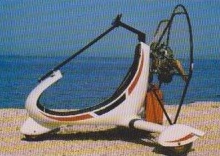
Calazzo Salvatore designed the Deadalo 2000 trike unit for paragliders and hang gliders. Engine options are Hirth, Zanzottera, and Vittorazi.
Empty weight: 40 kg
Fuel capacity: 20 lt
Engine: Hirth F-33, 28 hp
Seats: 1
Price (1998): 7 000 000 L
Calazzo Salvatore designed the Deadalo 2000 trike unit for paragliders and hang gliders. Engine options are Hirth, Zanzottera, and Vittorazi.
Empty weight: 40 kg
Fuel capacity: 20 lt
Engine: Hirth F-33, 28 hp
Seats: 1
Price (1998): 7 000 000 L
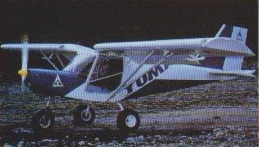
Manufactured in Italy, the Yuma is of all metal construction..
Engine: Rotax 912, 80 hp
Wing span: 8.2 m
Wing area: 12.5 sq.m
MAUW: 450 kg
Empty weight: 282 kg
Fuel capacity: 87 lt
Max speed: 175 kph
Cruise speed: 150 kph
Minimum speed: 40 kph
Climb rate: 4.5 m/s
Seats: 2
Fuel consumption: 16 lt/hr
Certification: Italy
Price (1998): 73,000,000 L
Kit price (1998): 40,000,000 L
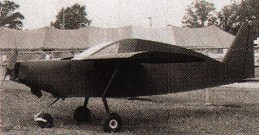
Circa 2008
Engine: Lycoming O-290, 108 hp
Cruise: 160 mph
Stall: 50 mph
Range: 500 sm
Rate of climb: 800 fpm
Takeoff dist: 500 ft
Landing dist: 550 ft
HP range: 85-160 hp
Fuel capacity: 26 USG
Empty weight: 600 lb
Gross weight: 1200 lb
Length: 18 ft
Wing span: 21 ft
Wing area: 60 sq.ft
Seats: 2
Cockpit width: 38 in
Landing gear: nose
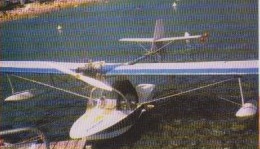
Appearing at the 1997 show at Blois the Termerair featres a fuselage in tube and fabric with laminated floats.
Engine: Rotax 582, 64 hp
Wing span: 10.50 m
Wing area: 16 sq.m
MAUW: 495 kg
Empty weight: 235 kg
Fuel capacity: 55 lt
Max speed: 140 kph
Cruise speed: 110 kph
Minimum speed: 60 kph
Climb rate: 3.5 m/s
Seats: 2
Fuel consumption: 12 lt/hr
Price (1998): 192,000 Fttc
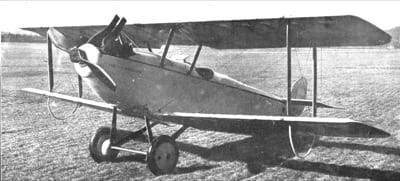
The Dayton-Wright Messenger biplane was designed by Oliver Thomas in 1918. It was powered by a 37-hp DePalma V-4 engine. Dayton-Wright hoped to get an Army contract. Failing that, it was planned to sell on the civil market, but only one was built.
Engine: 37-hp DePalma V-4
Span: 19 ft 3 in
Length: 17 ft 6 in
Empty weight: 476 lb
Loaded weight: 636 lb
Speed: 85 mph
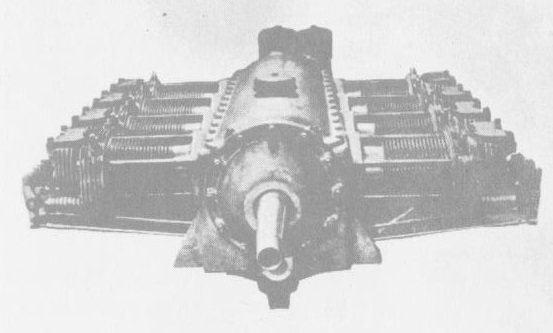
The 1929 Dayton Grant featured steel cylinders with detachable aluminium heads, with bronze valve seats shrunk in the heads. There is a special tulip valve design of special steel, one exhaust valve and one intake valve per cylinder.
The aluminium alloy pistons have full floating hollow piston pins. The crankshaft is one piece, with five bearings.
Equipment was an instruction book, tool kit, and exhaust flanges.
Available at extra cost were C-5 fuel pump, hub for a wooden or steel propeller, and starter.
Type: 8 cylinder horizontal opposed
Military Rating: 225 hp at 1800 rpm
Commercial Rating: 240 hp at 2000 rpm
Displacement: 764 cu.in
Compression ratio: 5.3-1
Bore: 4 1/2 in
Stroke: 6 in
Length: 56 in
Width: 44 in
Height: 20 in
Weight: 500 lb
Fuel consumption: not more than 1.05 lb/hp/hr
Oil consumption: not more than .025 lb/hp/hr
Lubrication: Force feed
Ignition: Dual spark magneto or generator for battery ignition
Carburation: 2 Zenith or Stromberg
Spark plugs: 2 B.G. per cylinder 1 XA
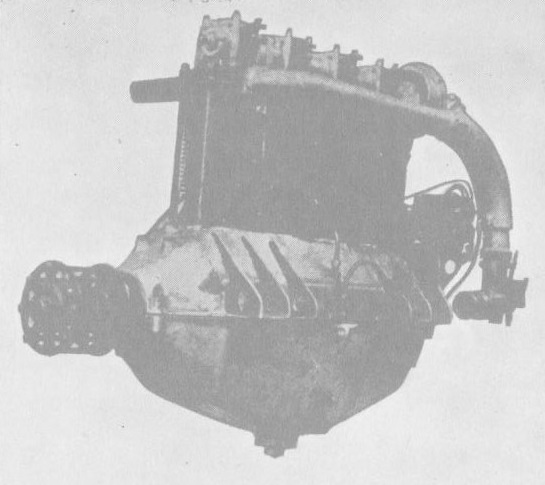
The 1928 Dayton Bear was a modified Hall-Scott A-7 engine. Equipment included a hub for a wooden propeller, exhaust flanges. Instruction book, and tool kit.
Accessories available at extra cost were a fuel pump drive, C-5 fuel pump, starter, and hub for a steel propeller.
Type: 4 cylinder inline, air cooled
Approved Type Certificate No.11
Military Rating: 110 hp at 1500 rpm
Rating: 120 hp at 1850 rpm
Displacement: 445 cu.in
Compression ratio: 5.1-1
Bore: 4 1/2 in
Stroke: 7 in
Length: 50 3/32 in
Width: 18 1/4 in
Height: 38 27/32 in
Weight: 375 lb
Fuel consumption: not more than .525 lb/hp/hr
Oil consumption: not more than .0125 lb/hp/hr
Lubrication: Force feed
Ignition: 2 Dual Bosch magnetos
Carburation: Zenith L-8
Spark plugs: 2 per cylinder B.G. 1 XA.
Price: $1450
Circa 1920s engine builder
Dayton
Ohio
USA
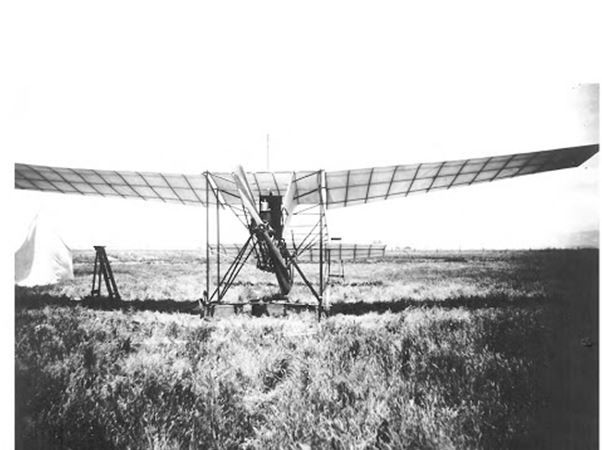
Glenn L Martin and Charles H Day built their first aircraft in 1909, in Long Beach, California. When they took the machine out for testing, the engine stopped while it was being taxied. The individual taxiing it decided to try to re-start the engine himself and was successful, but with no one in the cockpit the machine went off by itself and ran around the field until it hit something and was totally wrecked.
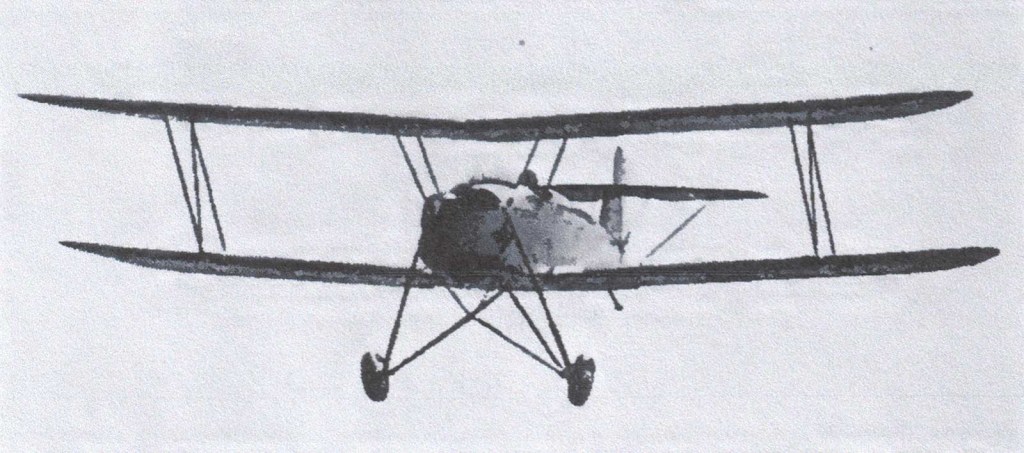
The Day Model A Special was planned originally for pilots with limited experience by offering them a safe, easy to fly aircraft. An early light plane around-the-world-flight was successfully achieved by Charles Healy Day with his wife Gladys in 1931. They completed a 24,000 mile global tour in an open cockpit, side by side biplane he designed.
Day was a highly respected aeronautic engineer. He designed the Standard J-1 in 1914 which was used to teach World War I cadets to fly. It was also a favorite of barnstormers during the 1920’s. He also designed the later five-place New Standard GD-24 and D-25.
The 34 foot span airplane was powered with a 120 hp Martin D-333 engine. Their seven month tour included flights over 20 countries with visits to 74 cities and covered 16,000 miles flown over land and 8,000 miles with their aircraft loaded aboard ship for crossing the Atlantic and Pacific oceans.
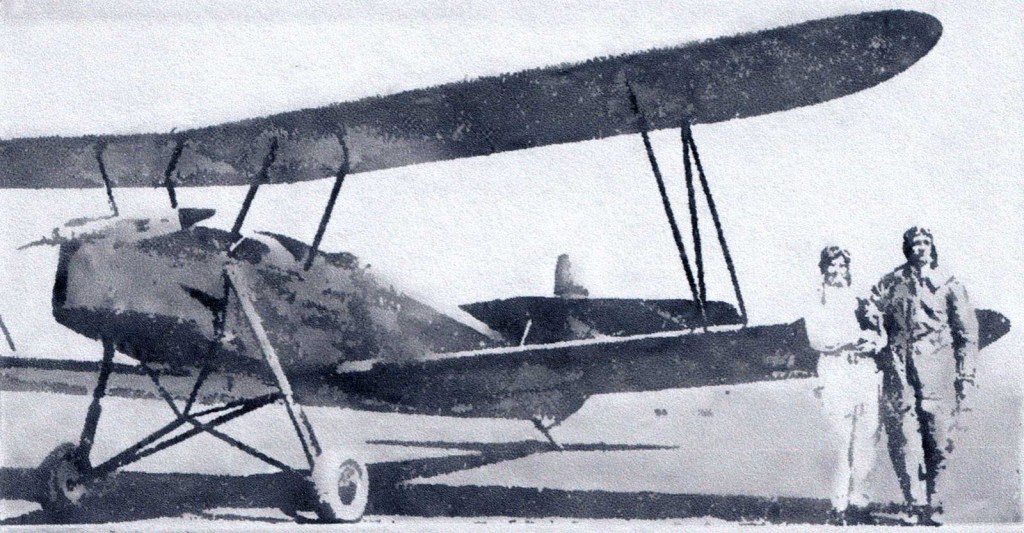
The only damage this aircraft suffered throughout the world tour was a bent tail skid mount caused by ground-looping across a ditch in Foo-Chow, China.
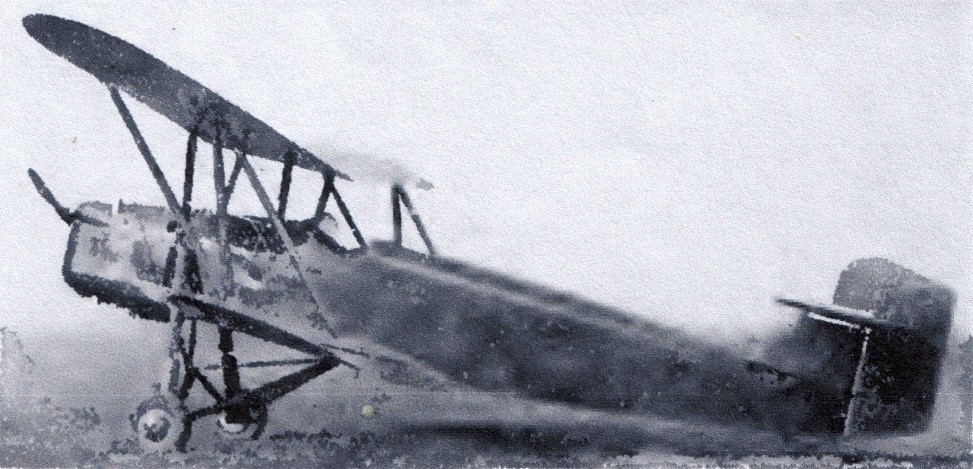
Fuel capacity was only 24 gallons. An additional 24 gallon tank was installed for the world flight. This extended range for over land flights but 48 gallons was insufficient for flying over the oceans.

