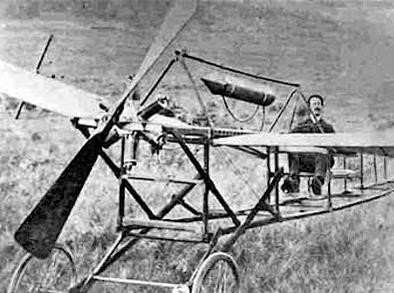
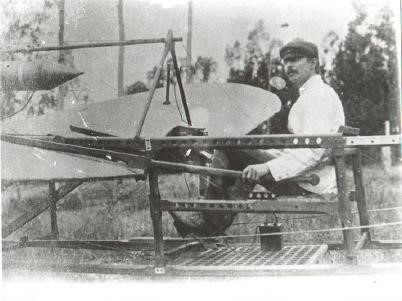
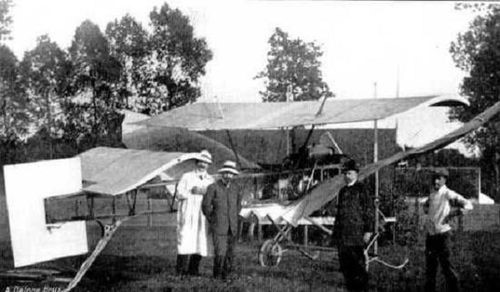
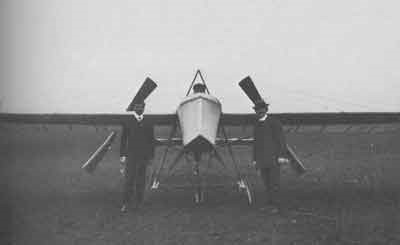
On the 7th January 1910, the first airplane constructed and designed in Brazil took off for its maiden flight in Osasco, São Paulo. The aircraft was conceived by the Frenchman Demetre Sensaud de Lavaud and was very similar to the Bleriot designs. The first flight was only 6-sec long. Afterwards, several other flights followed and the airplane, known as São Paulo, attracted huge crowds during its flights exhibitions. The aircraft was 100% Brazilian-made (even the propellers and the engine were manufactured by Mr. Lavaud). It was the first of several other designs developed in Brazil and the event took place long before the country could see aircraft serial manufacturing.
The flying platforms grew out of research conduction by the US National Advisory Committee on Aeronautics in the early 1950s on the feasibility of one-man flying platforms for combat use. The tests involved pilots “flying” tethered platforms, at first lifted by compressed air, and then by rotors.
The concepts investigated in the tests were based on thinking by NACA engineer Charles H. Zimmerman, who proposed that if the rotors of a helicopter were placed on the bottom of the aircraft, a pilot would be able to steer it just by shifting his or her weight, a concept Zimmerman called “kinesthetic control”. It was hoped that kinesthetic control would allow a pilot to fly such platforms with little training. The tests demonstrated the technical validity of the concept. The NACA results were released to the public, resulting in flying platform prototypes from three companies: de Lackner, Bensen, and Hiller.
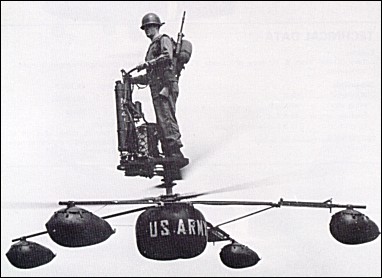
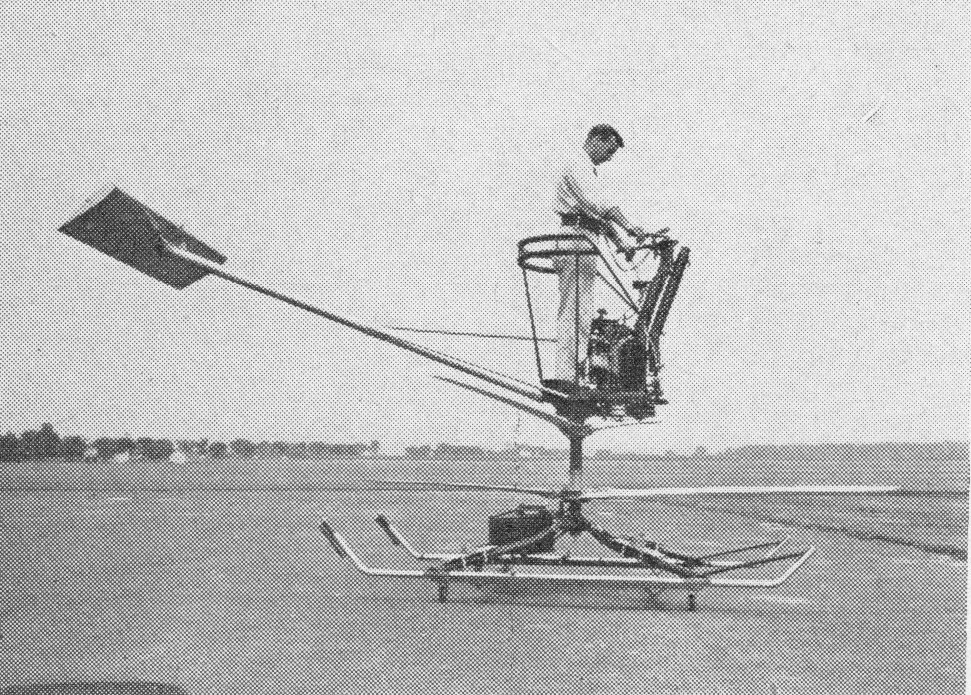
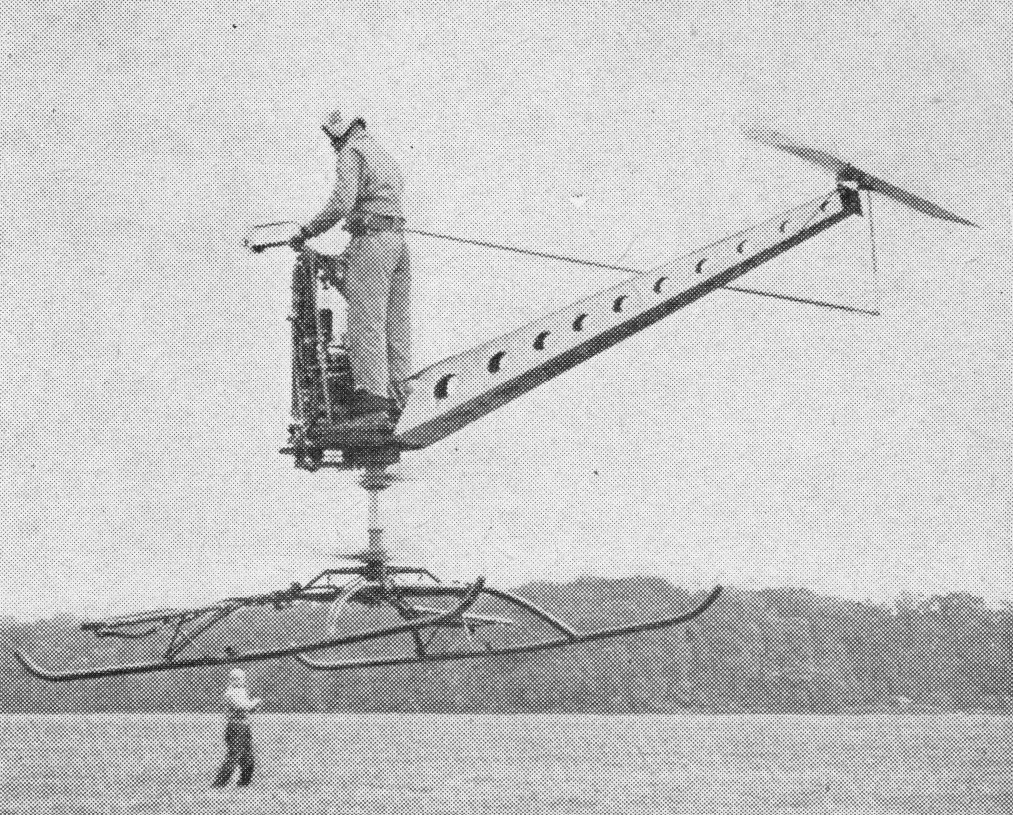
de Lackner company privately developed a rotorcraft named the “DH-4 Helivector”, later renamed the HZ-1 Aerocycle. The de Lackner machine consisted of a frame that supported the engine of a 30 kW (40 HP) Mercury outboard motor, with landing gear consisting of an arrangement of airbags on the ends of spars. The airbags were later replaced by metal skids. The engine drove a pair of 4.6 meter (15 foot) contra-rotating rotors directly beneath it, while the pilot stood vertically on a platform above the engine, protected from falling into the rotors by a safety harness, and hanging on motorcycle handlebars with it a twist-grip throttle. He used kinesthetic control to fly the machine.
Aerocycle, 1958
The Helivector / Aerocycle first flew in January 1955, and the Army ordered twelve examples ‘off-the-shelf’ shortly after. The aircraft was initially designated YHO-2 (a designation which was later also applied to five Hughes H-55 helicopter prototypes), though this was subsequently changed to HZ-1. De Lackner claimed the machines could fly at up to 105 kph (65 mph), carry up to 55 kilograms (120 pounds) payload besides the pilot, and fly for an hour. However, while the thing looked like it would have been a lot of fun to fly, it was also dangerous. Not only did the pilot stand above the whirling rotors, but the rotors were wide and close to the ground, making them a hazard on landings and takeoffs since they could easily kick up rocks and other debris.
The Aerocycle carried its single pilot and 32kW engine on a circular platform located just above two belt-driven, contra-rotating fifteen-foot propellers. The engine throttle and a few basic instruments were attached to bicycle-type handlebars fixed to a three-foot tall pedestal atop the main platform. The pilot stood to the rear of the pedestal and was secured to it by safety belts, and guided his craft by simply leaning in the desired direction of travel. The machine’s landing gear initially consisted of a single large air bag placed directly beneath the propellers and augmented by four smaller air bags fixed to outrigger bars, though this system was ultimately abandoned in favor of helicopter-type metal skids. The HZ-1 was surprisingly stable despite its appearance, and its top speed of more than 110kph made it considerably faster than most of the other unconventional one-man flying machines evaluated by the Army.
The Army’s research was to explore the feasibility of inexpensive, safe, and easily operated personal aircraft. The Aerocycle was especially successful in the ease of operation category, for during the service tests soldiers required only about twenty minutes of instruction before flying the aircraft.
Under test at the Forrestal Research Centre
Some sources claim that the Helivector / Aerocycle was easy to fly, others state that the test pilot insisted that novices could not pilot it safely. After two flight accidents in which the contra-rotating rotors flexed and collided, the project was abandoned as impractical. At least one survives as a museum display.
De Lackner HZ-1 Engine: 1 x Kieckhaefer Mercury Mark 55, 32kW Main rotor diameter: 4.57m Height: 2.13m Take-off weight: 206kg Empty weight: 78kg Max speed: 120km/h Cruising speed: 90km/h Service ceiling: 1520m Range: 24km Crew: 1
In 1908, at the workshops of Julius Miess in Brussels, De la Hault built a lemniscate paddle-wing ornithopter, his No.1, which was tested with encouraging yet unsuccessful results. This was followed by his second attempt in 1910. In the photograph, De la Hault stands second from the right, while helicopter pioneer Henri Villard is seen on the far left.
A high-wing monoplane with two pusher propellers powered by a RAW engine. Probably the 1911 typ C, although possibly the typ B. Deicke was quite prolific; he built 10 types from 1908 until 1933, when he introduced a “Volksflugzeug”, the Deicke ADM 11.
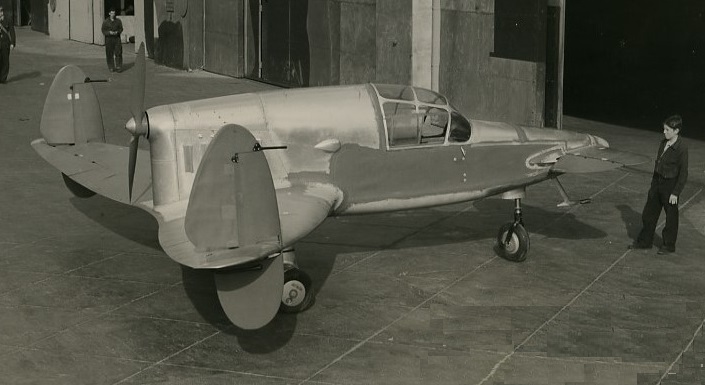
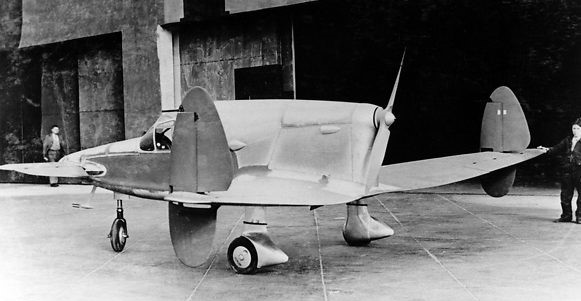
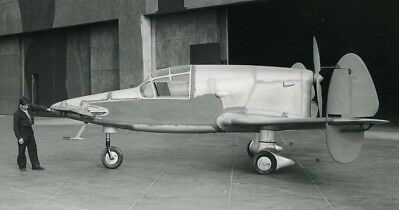
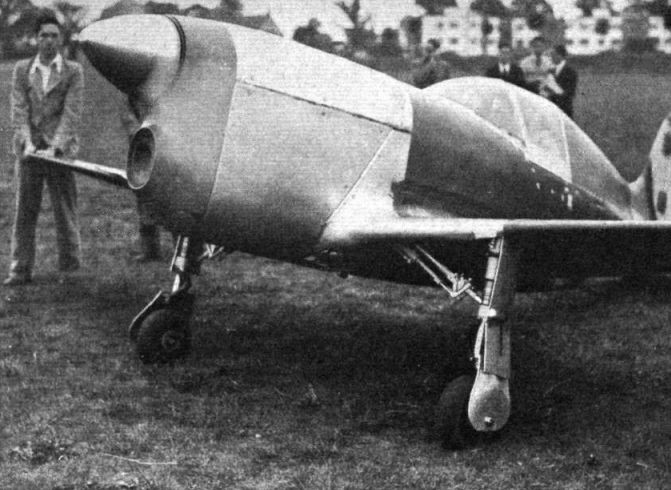
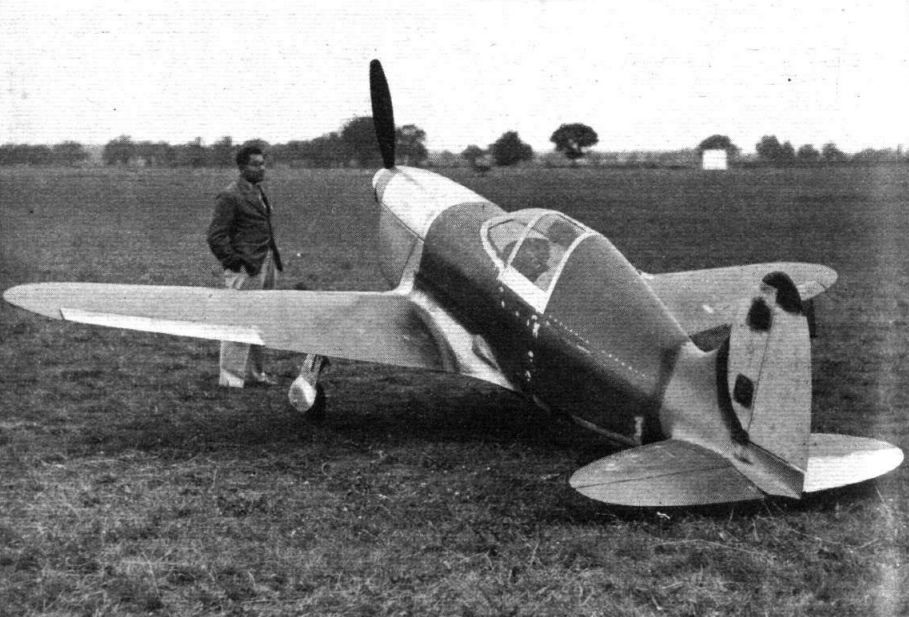
The de Havilland T.K.5 was an unflown British single-seat canard research aircraft designed and built by students of the de Havilland Technical School between 1938 and 1939.
It was a low-wing monoplane with a 140 hp (104 kW) de Havilland Gipsy Major IC piston engine driving a pusher propeller.
The only T.K.5, registered G-AFTK, was tested by Geoffrey de Havilland in 1939 but it refused to leave the ground and was scrapped.
Engine: 1 × de Havilland Gipsy Major IC, 140 hp (104 kW) Wingspan: 19 ft 8 in (7.83 m) Length: 18 ft 3 in (5.56 m) Gross weight: 1366 lb (620 kg) Crew: 1
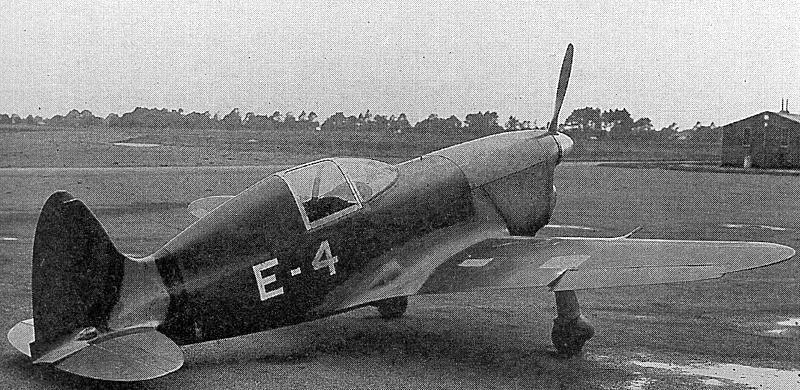
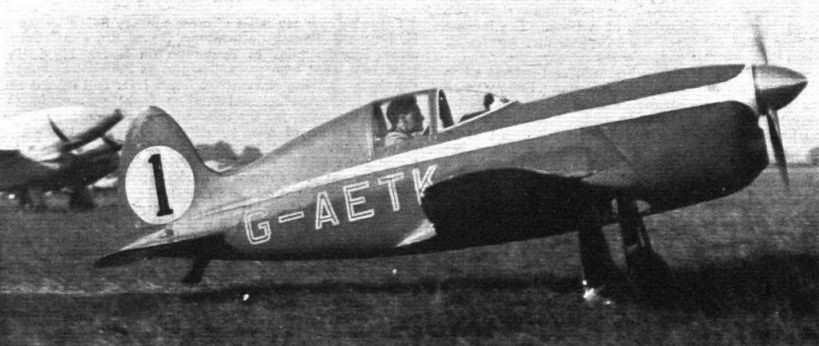
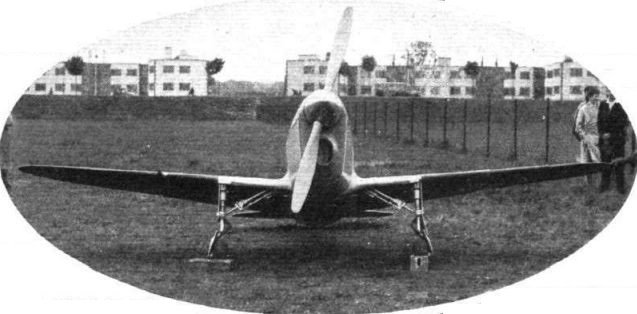
The T.K.4 single-seat racing monoplane was designed and built by students of the de Havilland Technical School at Stag Lane Aerodrome in 1937 with the aim of building the smallest possible aircraft around the 140 hp (104 kW) de Havilland Gipsy Major II.
It was a low-wing monoplane with a conventional retractable landing gear and had a variable-pitch propeller and was fitted with slots and flaps.
The only T.K.4, registered G-AETK, was first flown on 30 July 1937.
It was 9th in the 1937 Kings Cup Race at a speed of 230.5 mph. The aircraft crashed on 1 October 1937 killing the pilot R.J. Waight while he was attempting a 100 km class record.
Engine: 1 × de Havilland Gipsy Major II, 140 hp (104 kW) Wingspan: 19 ft 8 in (6 m) Length: 15 ft 6 in (4.73 m) Empty weight: 928 lb (421 kg) Gross weight: 1450 lb (616 kg) Maximum speed: 230 mph (369 km/h) Range: 500 miles (311 km) Service ceiling: 21,000 ft (6,400 m) Rate of climb: 1,350 ft/min (6.9 m/s) Crew: 1
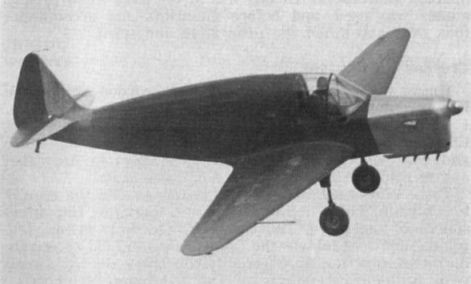
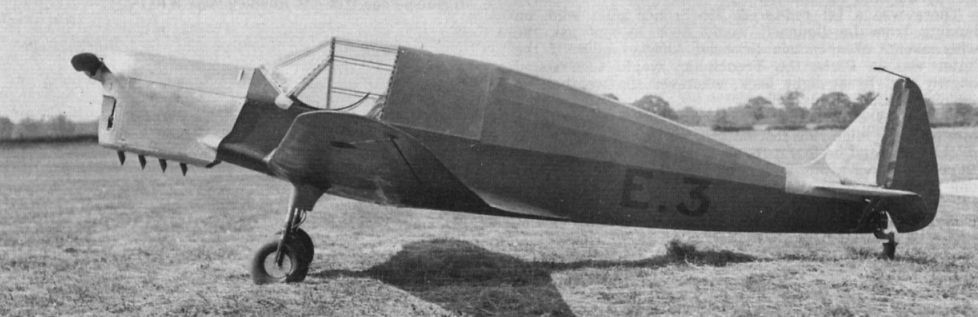
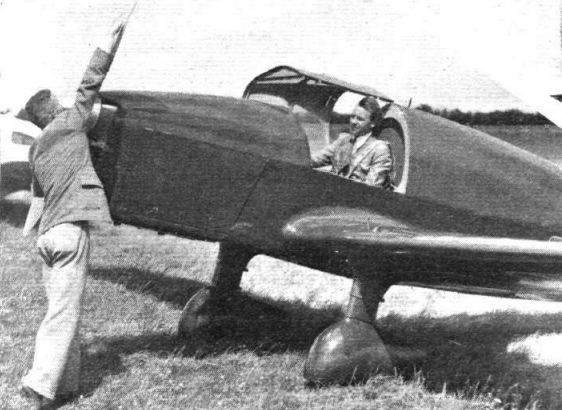
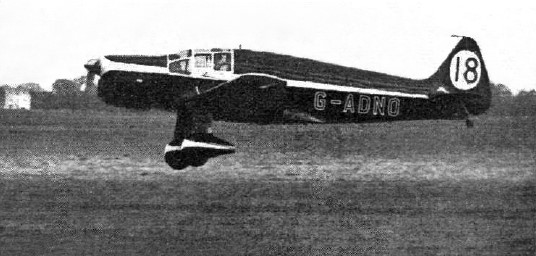
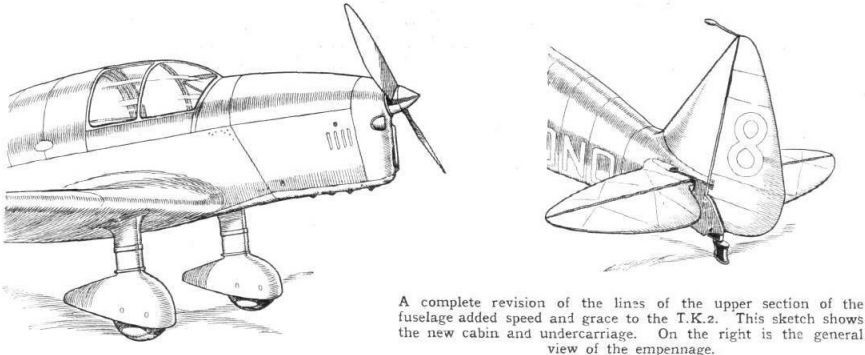
The T.K.2 was designed by students of the de Havilland Aeronautical Technical School as a high speed tourer, under the leadership of Marcus Langley, the school’s instructor in design. It was a single-engined, two-seat low cantilever wing monoplane, with an enclosed cockpit and fixed spatted undercarriage.
It first flew on 16 August 1935 at Hatfield Aerodrome, piloted by Hubert S. Broad, and powered by a 147 hp (110 kW) de Havilland Gipsy Major inverted inline engine. Subsequently, for racing purposes, the passenger seat was usually replaced with an additional fuel tank.
It won two races before World War II, and afterwards set a class closed circuit speed record.
In late 1935 or early 1936, it received a more aerodynamically refined canopy, and spats extended rearwards. In 1938, it flew with wings clipped by 4 ft (1.22 m) to 28 ft 0 in (8.53 m) and re-engined with a 140 hp (104 kW) de Havilland Gipsy Major II. At the same time, the forward canopy section was revised again, its sides extended downwards below the rear cockpit rim. Post-WWII, it flew with a Gipsy Major 10 engine. The aircraft was not intended for production, and only one T.K.2 was built. It was test flown on various occasions under ‘B conditions’ with identities E-3, E-5 and E-0235, but otherwise carried the official registration G-ADNO.
Engine: 1 × de Havilland Gipsy Major, 147 hp (110 kW) Wingspan: 32 ft 0 in (9.75 m) Wing area: 125 sq.ft (11.6 sq.m) Length: 22 ft 5 in (6.83 m) Empty weight: 1,049 lb (476 kg) Gross weight: 1,600 lb (726 kg) Maximum speed: 182 mph (293 km/h) Crew: 2
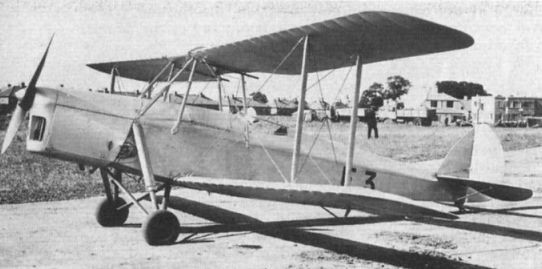
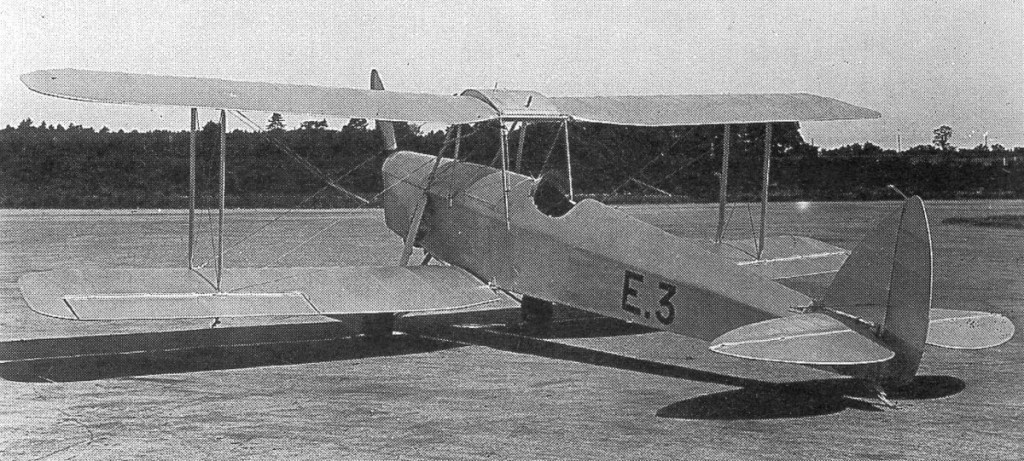
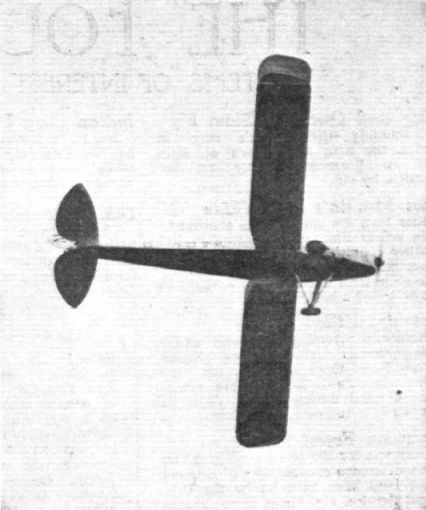
The de Havilland T.K.1 was a two-seat biplane and the first design built by students of the de Havilland Technical School. The T.K.1 was built by students under the direction of Marcus Langley at Stag Lane Aerodrome in 1934.
It was based on converting the de Havilland Swallow Moth monoplane to a biplane. It was a conventional two-seat biplane powered by a 120 hp (90Kw) de Havilland Gipsy III and first flown in June 1934.
It was flown by Geoffrey de Havilland to 5th place in the 1934 Kings Cup Race with a speed of 124.4 mph. It was sold onto a private owner in 1936 who flew it for a short time as a single-seater before it was scrapped.
Engine: 1 × de Havilland Gipsy III, 120 hp (90 kW) Wingspan: 27 ft 0 in (8.23 m) Length: 24 ft 0 in (7.32 m) Empty weight: 950 lb (431 kg) Gross weight: 1450 lb (658 kg) Maximum speed: 118 mph (189 km/h) Cruise speed: 100 mph (160 km/h) Crew: 2
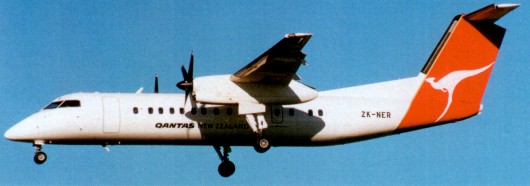
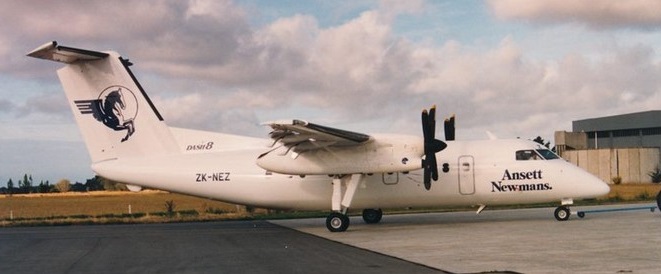
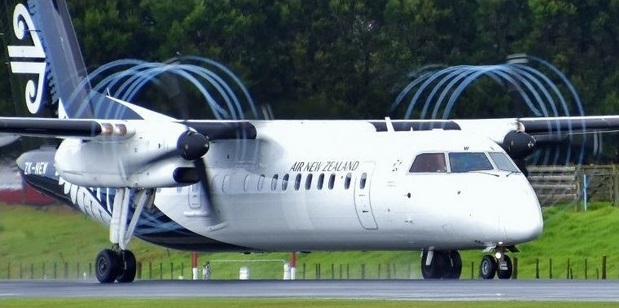
The Dash 8, of high wing monoplane configuration powered with two P&W 120s, was announced by de Havilland Canada in 1979 as a complement to the larger four engined STOL capable Dash 7. The company’s first transport not optimised for short take-off and landing. The go-ahead to cut metal was announced in September 1980 and the prototype Dash 8 series 100 rolled out in Downsview, Ontario, in April 1983.
The fuselage cargo-loading door is standard, and other features include a retractable tricycle landing gear with twin-wheel units, large-span T-tail, and a high-mounted wing carrying two fuel-efficient Pratt & Whitney PW120 advanced turboprop engines driving large-diameter slow-turning four-bladed propellers (originally the PT7A) ensuring very low noise levels. These engines also have safety features which ensure that if one fails the other automatically increases its output to 1492kW.
The prototype of the 36-seat Series 100 flew for the first time on 20 June 1983. Canadian certification followed on 28 September 1984. The first customer was to be norOntair of Canada on 23 October 1984. Orders for the initial 100 series production version had reached 230 by 1990. The -100A series followed in 1990. The -100A model had a revised interior with more headroom and enhanced PWI20A engines and in 1992 was offered with the more powerful PW121 engines. In 1992 the production switched to the Dash 8-200 and the first deliveries began in April 1995. The Dash 8-200 has PW123C engines, which gave the -200 series an increase in top speed of 30 knots over the 100 series. The -200B series has the PW123Bs for better ‘hot and high” performance. From April 1996 all Dash 8 aircraft delivered were fitted with a computer-controlled noise and vibration suppression system (NVS). To reflect this the name was changed to Dash 8Q (for “quiet”). In 1998 this was changed again to Dash 8-Q200 when the new interior was introduced. The Dash 8-Q200 holds 37 passengers. Boeing, within a month of purchasing DHC, signalled their commitment to the enterprise by announcing mid-1985 the development of a stretched 50/56 passenger Dash 8 Series 300 for a first flight on 15 May 1987 (modified Series 100 prototype). This became the -300 series and the first aircraft was an earlier prototype Dash 8 converted to the new length of 25.68 metres. It first flew on 15 May 1987. Canadian certification followed on 15 February 1989 and the first deliveries were to Time Air later on 27 February 1989, FAA type approval on 8 Tune 1989. The stretch for the series -300 was effected with a “plug,” forward and aft of the wing. of 3.43 metres. The wings also have a greater span of 27.43 metres over 25.91 metres. Other smaller changes were a larger toilet, a repositioned galley and a new galley door, an additional wardrobe, dual air conditioning packs and the option for an APU. Orders for the Srs 300 were in excess of 100 by 1990, deliveries starting in February 1989. The Dash 8-300 provides a very good single engine performance, being able to climb to 14,000 feet at maximum all up weight or descend to 16,000 feet on one engine. Further variants of the 300 series were offered with the first, the -300A, being in 1990 with increased higher gross weights, interior improvements and the standard PW123A engines. The -300B was introduced in 1992 with PW123B engines as standard. All Dash 8-300 aircraft built since April 1996 have also been fitted with NVS and throughout the ’90s Boeing Canada worked on variants for both military and civil applications. Two transport versions are in service with the Canadian Department of National Defence as CC 142s and four navigation trainers are on order as CT-142. The USAF has two on inventory as E¬9As for range control on the Gulf Missile Test range.
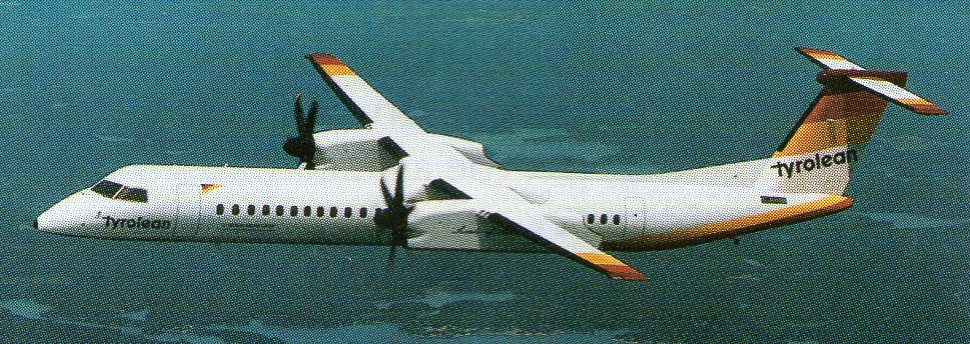
In 1986 de Havilland Canada, by then part of Bombardier, started development of a larger 50-seat regional airliner. 1998 the aircraft where renamed Dash 8Q-300s when the new interior was introduced. Six twin-turboprop Dash 8s ordered by the Canadian Armed Forces have long-range fuel tanks, rough-field landing gear, strengthened floors, and other equipment changes. Designated Dash 8Ms by DHC, four will be used as navigation trainers, while the other two will be allocated to transport duties in Europe, replacing Dash 7s. The 1987 commercial variant was the stretched 50-56-seat Series 300. The 37-seat Dash 8 Series 200 and 50-seat Series 300 turboprops were being produced at the rate of two per month in 1998. Launched in June 1995 as stretch of Series 300, the -Q400, can hold 70 passengers, equipped with a computer-controlled noise and vibration suppression system, indicated by the “Q” (standing for quiet) before the model/number designator. First flown on 31 January 1998, FAA FAR Pt 25 approval was received on 8 February 2000. First delivery was to SAS Commuter 20 January 2000, followed by service entry 7 February on the Copenhagen, Denmark, to Poznan, Poland route.
The low-noise Dash 8 Q became the standard version from 1996
By January 1991 the Dash 8 order book stood at 361 aircraft, comprising 251 Series 100s and 110 Series 300s, with around 230 delivered. A Q300 delivered to Air Nippon on 6 March 2001 was the 600th Dash 8.
Bombardier Dash 8-400
In June 2009 Bombardier sold the Q400 aircraft program to Longview, the company that owns Viking Air. A separate company called DeHavilland Aircraft of Canada was created to build and support the Q400.
In 2025 a used Q400 plane can be purchased for about $5 million and can be retrofitted for firefighting for an additional $5 million.
Variants:
CC-142: designation of two Series 100s bought by the Canadian. Department of National Defence but operated since March 1987 by the Canadian Forces at Lahr, Germany. Used as passenger/cargo transports, the aircraft are equipped with long-range fuel tanks, rough field landing gear,, high strength floors and a special-mission-related avionics fit.
CT-142: designation of four Series 100s, acquired by the Canadian DND, and operated as specially configured navigation trainers by the Canadian Forces. Otherwise equipped similarly to the CC-142, the trainers are distinguished by their extended noses.
Dash 8M-100: two specially-equipped Series 100s used by the Canadian Department of Transport to calibrate ILS, VOR and MLS systems at Canadian airports.
Dash 8M-300ASW Triton: designation of a proposed maritime patrol or anti-submarine warfare version of the Series 300 equipped with Harpoon or Exocet-type anti-shipping missiles mounted on lower side fuselage sponson hardpoints, and four underwing pylons, outboard of the engines, capable of carrying missiles, torpedoes, mines, sonobuoys or searchlights. With a full range of ASW sensors including FLIR, MAD and search radar operated by a six-man crew, maximum endurance is over 11 hours.
E-9A: designation of two standard Series 100 aircraft acquired by the US Air Force in 1985 as airborne platforms to perform telemetry and data link duties in connection with drone and missile testing at Tyndall AFB, Florida. Modified by the Sierra Research division of LTV, the E-9A carries a large fuselage fairing containing a steerable phased-array antenna, underfuselage search radar and special avionics. Both aircraft were delivered in 1988.
Dash 8 Series 100 Engines: 2 x Pratt & Whitney Canada PW120A turboprops, 1491kW Take-off weight: 15650 kg / 34503 lb Empty weight: 9979 kg / 22000 lb Wingspan: 25.91 m / 85 ft 0 in Length: 22.25 m / 73 ft 0 in Height: 7.49 m / 25 ft 7 in Wing area: 54.35 sq.m / 585.02 sq ft Cruise speed: 497 km/h / 309 mph Ceiling: 7620 m / 25000 ft Range w/max.payload: 2010 km / 1249 miles
Dash 8 Series 200 Engines: 2 x Pratt & Whitney Canada PW120A turboprops, 1491kW Take-off weight: 15650 kg / 34503 lb Empty weight: 9979 kg / 22000 lb Wingspan: 25.91 m / 85 ft 0 in Length: 22.25 m / 73 ft 0 in Height: 7.49 m / 25 ft 7 in Wing area: 54.35 sq.m / 585.02 sq ft Cruise speed: 497 km/h / 309 mph Ceiling: 7620 m / 25000 ft Range w/max.payload: 2010 km / 1249 miles
Dash 8 Series Q200 Engines: 2 x Pratt & Whitney Canada PW120A turboprops, 1491kW Take-off weight: 15650 kg / 34503 lb Empty weight: 9979 kg / 22000 lb Wingspan: 25.91 m / 85 ft 0 in Length: 22.25 m / 73 ft 0 in Height: 7.49 m / 25 ft 7 in Wing area: 54.35 sq.m / 585.02 sq ft Cruise speed: 497 km/h / 309 mph Ceiling: 7620 m / 25000 ft Range w/max.payload: 2010 km / 1249 miles
DHC 8 Dash 8-300 Length: 84.318 ft / 25.7 m Height: 24.606 ft / 7.5 m Wingspan: 89.895 ft / 27.4 m Wing area: 604.937 sqft / 56.2 sq.m Max take off weight: 41101.2 lb / 18640.0 kg Weight empty: 24696.0 lb / 11200.0 kg Max. weight carried: 16405.2 lb / 7440.0 kg Max. speed: 286 kts / 530 km/h Landing speed: 76 kts / 141 km/h Cruising speed: 270 kts / 500 km/h Initial climb rate: 1771.65 ft/min / 9.00 m/s Service ceiling: 25098 ft / 7650 m Wing load: 68.06 lb/sq.ft / 332.00 kg/sq.m Range: 891 nm / 1650 km Engine: 2 x Pratt & Whitney 123, 1751 shp Crew: 2 Payload: 50-56pax
Dash 8-300A Payload: 6272kg
Dash 8-311 Engines: 2 x Pratt & Whitney of Canada PW123 turboprops, 2,380-shp. Props: four bladed Hamilton Standard 14SF-23. Max cruise: 287 kts. Initial ROC: 1800 ft/ min. Empty wt: 11.657 kg. MTOW: 19,505 kg. Cruise 92%: 276 kts. Fuel flow @ 92%: 360 kg/hr each. Seats: 56.