Dewoitine D 1 / Ansaldo AC 2

C.1bis

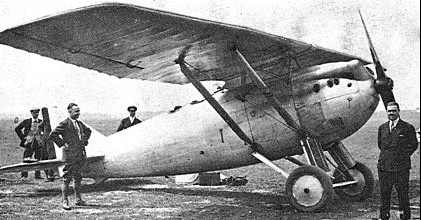
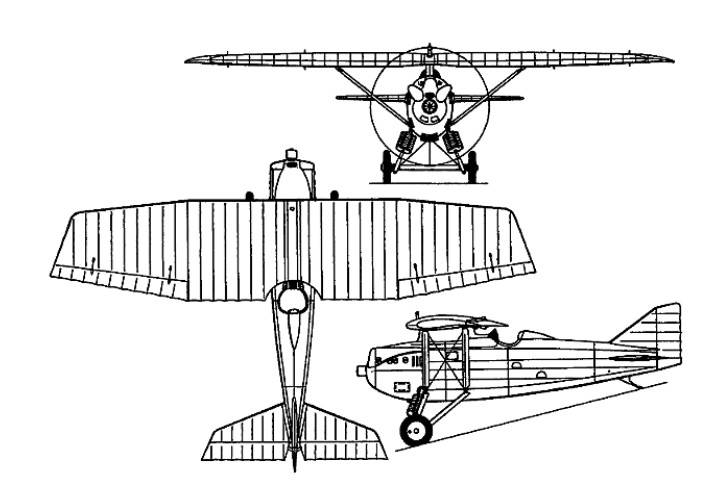
Designed by Emile Dewoitine to compete in the French C1 single ¬seat fighter competition of 1921, the prototype D 1 flew for the first time on November 18 1922.
A high-wing monoplane with fabric-covered metal wings and an oval-section metal fuselage covered by duralumin sheet. Armament was two 7.7mm synchronised Vickers guns and power was provided by a 300hp Hispano-Suiza 8Fb (HS 42) eight-cylinder water-cooled engine.
The principal criticism being the poor forward visibility. A 120mm pylon was therefore inserted between wing and fuselage, the fighter, now referred to as the D.1bis, becoming a parasol monoplane. This modification was completed in August 1923, by which time the first three (of 10) pre-series aircraft had been supplied for official evaluation in the initial configuration. Two of these were lost in accidents and the third was modified to D.1bis parasol form.
After prolonged evaluation of all the 1921 contenders, the Dewoitine D 1 and Spad 80 each received a contract in 1924 for 80 aircraft, the two types being intended to replace Spad XIIIs and XXs in Aviation Militaire squadrons. A further 29 D 1 s were ordered subsequently f or the Aeronavale.
Dewoitine’s chief test pilot, Marcel Doret, set speed records (with and without payload) of 233.10 km/h (144.84 mph) on December 23, 1924, and the D 1 could climb to 5000 m (16404 ft) in 15.1 minutes.
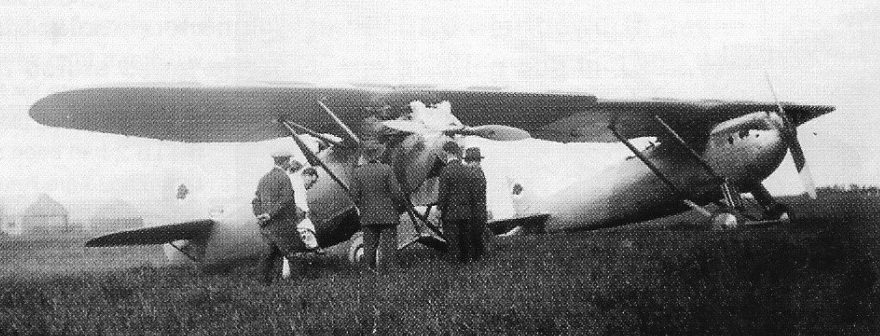
Union des Pilotes Civils festival, Orly, Paris 18 May 1930
Dewoitine D1ter No.3 F-AHAZ of Marcel Doret

The next five pre-series. aircraft (the fourth, fifth and sixth having been ordered by Czechoslovakia, Japan and Italy respectively, and the seventh and eighth by Switzerland) were all completed to D 1bis standard, but continuing criticism of forward view led to replacement of the shallow pylon between wing and fuselage by a cabane of inverted-vee struts on the prototype which thus became the D 1ter. The two pre-series aircraft for Switzerland were modified to this standard prior to delivery, the two lost during official trials) were completed as D 1ter fighters, the cabane struts being standardised for production D 1s. A contract had been placed in November 1923 on behalf of the Aeronautique Navale for 44 D 1s, with the government providing guarantees for 150 aircraft.
The production contract was placed with the SECM (Societe d’Emboutissage et de Constructions Mecaniques) which flew its first series D 1 on 18 January 1925. The production aircraft required several successive structural reinforcements, and did not gain acceptance by the Aviation Militaire until 1929. The D 1 was of mixed construction, with an open cockpit and two 7.5 mm (0.295 in) machine guns in the engine upper decking. The final version, the D 1 ter, had a more conventional strut type centre section cabane.
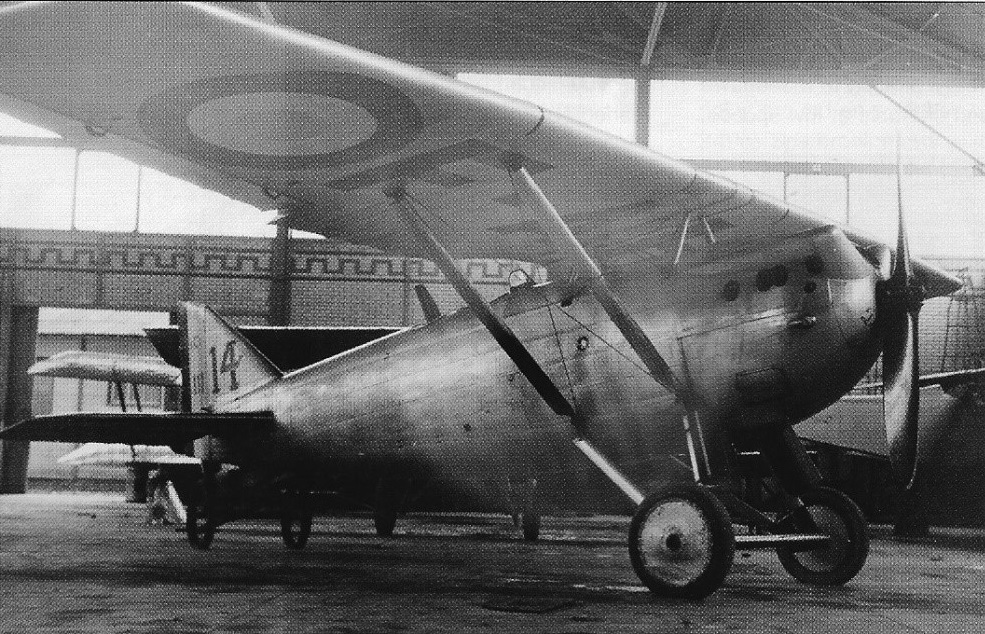
Dewoitine D1C1 300hp Hispano

Most Aviation Militaire D ls were soon transferred to the Aeronavale units, including 3C2, 4C1, 7C1 and 7C3; by mid 1931 these units had re equipped with the Nieuport-¬Delage 62. The Aeronautique Navale took delivery of its D 1s from early 1925, and in the previous year an order for 20 had been placed on behalf of the Forces Aeriennes Terrestres, although these were never to equip a service unit.
Dewoitine D ls were exported to Japan (one), Switzerland (two) and Yugo¬slavia (79), and a further 126 were built (with modifications) by Ansaldo at Turin for the Regia Aeronautica, with the designation AC 2.

Engine: 300hp Hispano-Suiza 8Fb (HS 42)
Max take-off weight: 1240 kg / 2734 lb
Empty weight: 820 kg / 1808 lb
Wingspan: 11.50 m / 37 ft 8.75 in
Length: 7.50 m / 24 ft 7 in
Height: 2.75 m / 9 ft 0 in
Wing area: 20.00 sq.m / 215.28 sq ft
Max. speed: 247 km/h / 153 mph
Range: 400 km / 249 miles
Armament: two 7.7 mm (0.30 in) Vickers machine gun
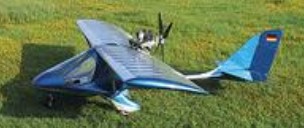
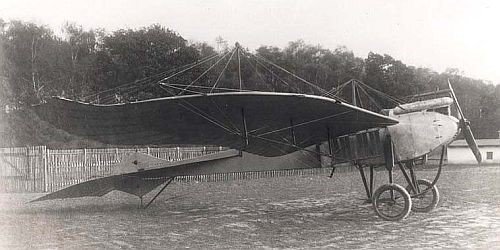
DFW Stahltaub

The D.F.W. Stahltaube was a licence built version of the Jeannin Stahltaube reconnaissance and training aircraft of 1913.

The Deutsche Flugzeug-Werke G.m.b.H. firm at Lindenthal, Leipzig received an order for 18 of these copies but delivered only two.

Engine: Mercedes G 4 F, 94 hp
Length: 37.73 ft / 11.5 m
Wingspan: 45.932 ft / 14.0 m
Wing area: 322.92 sq.ft / 30.0 sq.m
Max take off weight: 1896.3 lb / 860.0 kg
Weight empty: 1323.0 lb / 600.0 kg
Max weight carried: 573.3 lb / 260.0 kg
Max speed: 59 kt / 109 km/h
Cruising speed: 51 kt / 95 km/h
Wing load: 5.95 lb/sq.ft / 29.0 kg/sq.m
Range: 205 nm / 380 km
Crew: 2

DFW Mars Eindecker

Reconnaissance aircraft, Germany, 1912

Engine : NAG 100 PS, 99 hp
Length : 31.824 ft / 9.7 m
Wingspan : 55.118 ft / 16.8 m
Wing area : 376.74 sq.ft / 35.0 sq.m
Max take off weight : 1808.1 lb / 820.0 kg
Weight empty : 1234.8 lb / 560.0 kg
Max. weight carried : 573.3 lb / 260.0 kg
Max. speed : 65 kts / 120 km/h
Cruising speed : 57 kts / 105 km/h
Wing load : 4.72 lb/sq.ft / 23.0 kg/sq.m
Range : 243 nm / 450 km
Crew : 2

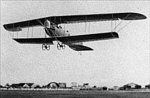
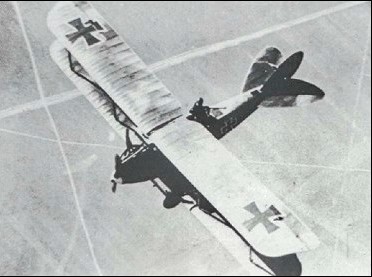
DFW C.V

With the power of a 200hp Benz Bz IV, the top level speed was 155km/h at 1000m, while the C.V’s operational ceiling was 5000m. Built not just by DFW, but by four other sub-contractors. Just under 1,000 were in operation on every front at the end of September 1917. Armament comprised the standard 7.92mm guns, one fixed forward-firing and one mounted in the rear cockpit, plus light bombs.

Max. speed: 155 km/h / 96 mph
Ceiling: 5000 m / 16400 ft

Development Technology Aero / DTA Dynamic

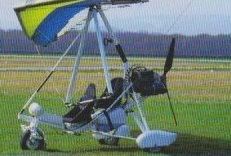
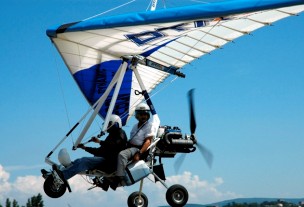
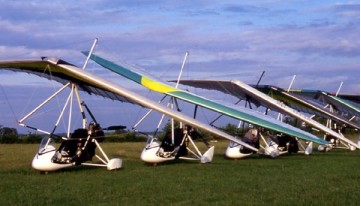
Dynamic 503 16

The Dynamic wings were designed by DTA and Jean Marc Rousellet and are manufactured exclusively for DTA by the Ellipse company in France.

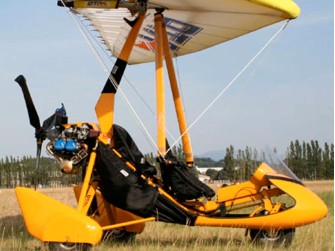
The Dynamic 503 16 is based on a stainless steel spaceframe. This trike has an articulated monopole under the seat for easy rigging of the wing, which is a Dynamic 16 produced by llipse on the company’s behalf.

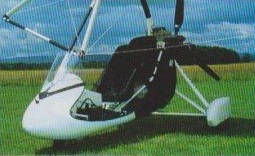
The Dynamic 582 Feeling is a higher performance version of the 16. The same structure is fitted with a Rotax 582, a fairing and smaller Dynamic 15 wing. A four stroke 912 is an option.

They feature individual composite seas.

Dynamic 582 Feeling

Dynamic 503 16
Empty weight: 152 kg
Wing span: 10.30 m
Wing area: 14.50 sq.m
Fuel capacity: 50 lt
Engine: Rotax 503, 50 hp
MAUW: 400 kg
Seats: 2
Max speed: 115 kph
Cruise speed: 80 kph
Minimum speed: 50 kph
Climb rate: 3.6 m/s
Fuel consumption: 11.5 lt/hr
Price (1998): 93 540 F

Dynamic 582 Feeling
Empty weight: 180 kg
Wing span: 9.90 m
Wing area: 15 sq.m
Fuel capacity: 50 lt
Engine: Rotax 582, 64 hp
MAUW: 400 kg
Seats: 2
Max speed: 136 kph
Cruise speed: 100 kph
Minimum speed: 56 kph
Climb rate: 4.5 m/s
Fuel consumption: 11 lt/hr
Price (1998): 28 000 Fttc

Dynamic 15/430
Max take-off weight: 430 kg / 946 lbs
Maximum speed: 86 mph
Minimum speed: 32 mph
Double surface: Yes

Dynamic 16
Max take-off weight: 400 kg / 880 lbs
Maximum speed: 75 mph
Minimum speed: 31 mph
Double surface: Yes

Dynamic 450
Max take-off weight: 450 kg / 990 lbs
Maximum speed: 85 mph
Minimum speed: 31 mph
Double surface: Yes

Development Technology Aero / DTA Combo

Available with the Rotax 503 and 582 as well as the Rotax 912 and 912S, this machine gives you performance capabilities and robust strength not normally found in an affordable and easy to inspect/maintain aircraft. With the available option of the Voyageur-II’s cantilever mast, this machine can be flown with no front strut.

Stall: 27 kt / 31 mph / 50 kmh
Cruise: 54 kt / 62 mph / 100 kmh
VNE: 86 kt / 99 mph / 160 kmh
Climb Ratio: 1000 ft/min / 5 m/s
Glide Ratio: 8

Development Technology Aero / DTA Voyager

Voyageur 912 XP15

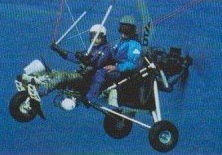
The Voyageur 912 XP15 is a large trike with a topless wing, designed for aerial work or long rallies. It features individual composite seats.

The basic design is an aluminum sandwich with extra reinforcing structure. It also has a safety cable running through the sandwich. The sandwich is riveted and also bonded with aeronautical Araldite structural epoxy.
The Voyageur 912 was created for this purpose and became the first trike to be fitted with the 4-stroke 80HP Rotax 912 engine.
With the available option of the Voyageur-II’s cantilever mast, this machine can be flown with no front strut, just like its big brother.
The Voyageur II trike features a cantilever mast that is structurally strong enough to eliminate the need for the standard front tube. The basic design is an aluminum sandwich with extra reinforcing structure. It also has a safety cable running through the sandwich. The sandwich is riveted and also bonded with aeronautical Araldite structural epoxy.
The Voyageur trike utilizes only 4130 chromoly steel, a primarily stainless steel frame and aircraft grade aluminium, and is made in France.
Features that come standard on the Voyageur II include:
Full front and rear shock absorbers (rear gas shocks)
3-wheel brakes with parking brake
Cruise throttle
Large aviation tires
Padded seat covers
Rear seat head rest
Side luggage bags
Large capacity fuel tank with fuel level gauge
Instrument panel
RPM gauge, hourmeter, water temp gauge
Full electrical system
Assembled pitot system

Voyageur II / Dynamic 16
Engine: Rotax 582

Voyageur II / Dynamic 15/430
Engine: Rotax 582
Engine: Rotax 912 UL
Engine: Rotax 912S ULFR

Voyageur II / Dynamic 450
Engine: Rotax 582
Empty Weight: 407 lbs
Gross Weight: 992 lbs
Useful load (582): 585 lbs
Useful load (912/S): 532 lbs
Wingspan: 33’ 5” (10.2 m)
Wing Area: 167 sq. ft (15.5 sq.m)
Length: 9’ 9” inches
Height: 12’ 5”
Fuel Capacity: 18 gallons
Cruise Speed: 56 mph
Vne: 90 mph
Rate of Climb: 700 fpm
Takeoff distance at gross weight: 262 feet
Takeoff distance over a 50′ obstacle:n 590 feet
Landing distance at gross weight: 165 feet
Landing distance over a 50′ obstacle: 560 feet

Voyageur 912 XP15
Empty weight: 225 kg
Wing span: 10 m
Wing area: 15.50 sq.m
Fuel capacity: 80 lt
Engine: Rotax 912, 80 hp
MAUW: 450 kg
Seats: 2
Max speed: 135 kph
Cruise speed: 100 kph
Minimum speed: 63 kph
Climb rate: 5 m/s
Fuel consumption: 10 lt/hr
Price (1998): 220 950 Fttc

Engine: Rotax 912S ULFR
Empty Weight: 460 lbs

Development Technology Aero / DTA Feeling

Dynamic 15-430
Engine: Rotax 582
Max take-off weight (lbs): 946
Empty weight (lbs): 398
Useful Load (lbs): 548
Wing surface : 13.6 sq.m
Max speed (mph): 85
Min speed (mph): 34
Max rate of climb at 45 mph (ft/min): 866

Dynamic 16
Engine: Rotax 582
Max take-off weight (lbs): 880
Empty weight (lbs): 400
Useful Load (lbs): 480
Wing surface : 14.5 sq.m
Max speed (mph): 75
Min speed (mph): 32
Max rate of climb at 45 mph (ft/min): 905

Dynamic 450
Engine: Rotax 582
Max take-off weight (lbs): 990
Empty weight (lbs): 416
Useful Load (lbs): 574
Wing surface : 15.5 sq.m
Max speed (mph): 84
Min speed (mph): 31
Max rate of climb at 45 mph (ft/min): 945

Dynamic 450
Engine: Rotax 912
Max take-off weight (lbs): 990
Empty weight (lbs): 469
Useful Load (lbs): 521
Wing surface : 15.5 sq.m
Max speed (mph): 85
Min speed (mph): 39
Max rate of climb at 45 mph (ft/min): 984

Dynamic 450
Engine: Rotax 912S
Max take-off weight (lbs): 990
Empty weight (lbs): 469
Useful Load (lbs): 521
Wing surface : 15.5 sq.m
Max speed (mph): 87
Min speed (mph): 39
Max rate of climb at 45 mph (ft/min): 1181