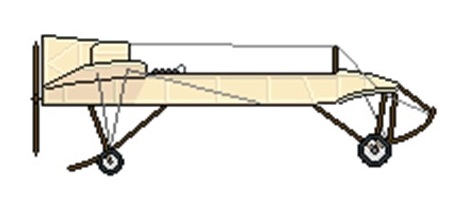
Dudek Synthesis

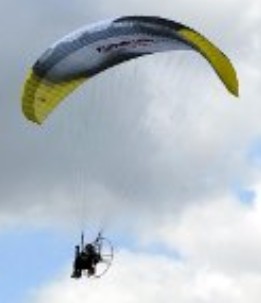
After successful experiments with Action and Reaction models, Piotr Dudek committed to a model that would allow pilots of any level security and efficiency with a simple classic.
The reflex profile has max speed of 61 km/h and trim speeds of 37-49 kph.
It is also suitable for training.

25
Certificate CEN: C
Number of cells: 50
Area: 25 sq.m
Area projected: 21,46 sq.m
Wingspan: 11,29 m
Wingspan projected: 9,01 m
Aspect ratio (flat/projected): 5,10/3,78
Sink rate: trim=1,2-2,2 m/s
Speed: 23 -61 km/h
Chord: 274 cm
Line and riser length: 724 cm
Weight: 5,7 kg
Weight range: 70-90 kg

27
Certificate CEN: C
Number of cells: 50
Area: 27 sq.m
Area projected: 23,17 sq.m
Wingspan: 11,73 m
Wingspan projected: 9,36 m
Aspect ratio (flat/projected): 5,10/3,78
Sink rate: trim=1,2-2,2 m/s
Speed: 23 -61 km/h
Chord: 285 cm
Line and riser length: 753 cm
Weight: 6,7 kg
Weight range: 80-105 kg

29
Certificate CEN: C
Number of cells: 50
Area: 29 sq.m
Area projected: 24,89 sq.m
Wingspan: 12,16 m
Wingspan projected: 9,70 m
Aspect ratio (flat/projected): 5,10/3,78
Sink rate: trim=1,2-2,2 m/s
Speed: 23 -61 km/h
Chord: 295 cm
Line and riser length: 780 cm
Weight: 7,2 kg
Weight range: 95-120 kg

31
Certificate CEN: C
Number of cells: 50
Area: 31 sq.m
Area projected: 26,61 sq.m
Wingspan: 12,57 m
Wingspan projected: 10,03 m
Aspect ratio (flat/projected): 5,10/3,78
Sink rate: trim=1,2-2,2 m/s
Speed: 23 -61 km/h
Chord: 305 cm
Line and riser length: 806 cm
Weight: 7,6 kg
Weight range: 110-135 kg

34
Certificate CEN: C
Number of cells: 50
Area: 34 sq.m
Area projected: 29,18 sq.m
Wingspan: 13,17 m
Wingspan projected: 10,50 m
Aspect ratio (flat/projected): 5,10/3,78
Sink rate: trim=1,2-2,2 m/s
Speed: 23 -61 km/h
Chord: 320 cm
Line and riser length: 845 cm
Weight: 8,2 kg
Weight range: 135-165 kg
Dudek Reaction Paramotor

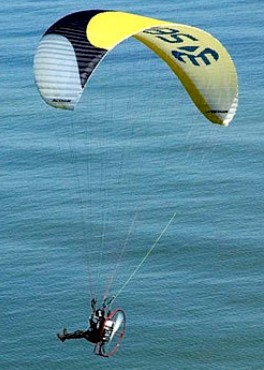
Based on the same proven reflex-wing concept of the popular PPG wing Action (from Dudek and Paramania), the ReAction is a technically improved and graphically renewed version aimed at advanced pilots. In comparison to its predecessor, the ReAction is a bit faster, inflates easier and has improved wing durability and ease of use. Like its ancestor, the Reaction features a self-stabilizing wing section that, in the case of a decrease in its angle of attack, automatically responds to compensate. “In other words it always stays neutral with regard to its load, so it’s tuck-resistant. The risers now have two suspension points (low and high) to adjust to the pilot’s harness/engine setup, and come with new trimmer buckles and exchangeable trimmer tapes. It has partially closed leading edge with 65 cells, an aspect ratio of 5,43, and top speed is 60 k/h, with 42-46 k/h trim speed, according to Dudek. It is also available in an ‘S’ version, equipped with non-sheathed lines in the upper rigging, and a trike version called “Reaction Cabrio” for a weight range of 150 to 300 kg. For foot-launch flight there are 4 sizes to choose from.

Afnor/CEN Performance

Dube Aerocruiser

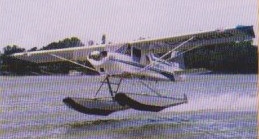
The Aerocruiser 2+2 has the same shape as the two seat version, with has identical dimensions but a redesigned cabin layout in which the rear bench seat folds back. The fuselage is fabric covered and the wings are all aluminium.

Aerocruiser 2+2
Engine: Lycoming O-360, 180 hp
Wing span: 9.75 m
Wing area: 16 sq.m
MAUW: 997 kg
Empty weight: 494 kg
Fuel capacity: 265 lt
Max speed: 260 kph
Cruise speed: 195 kph
Minimum speed: 65 kph
Climb rate: 5 m/s
Seats: 4
Fuel consumption: 38 lt/hr
Price (1998): Can$95,000

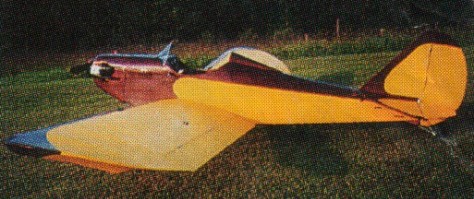
Duane’s Hanger Ultrababy

A 75% scale Fly Baby replica.

Engine: ½ VW, 48 hp.
HP range: 30-50.
Speed max: 75 mph.
Cruise: 60 mph.
Range: 150 sm.
Stall: 35 mph.
ROC: 650 fpm.
Take-off dist: 200 ft.
Landing dist: 400 ft.
Service ceiling: 10,000 ft.
Fuel cap: 5 USG.
Weight empty: 300 lbs.
Gross: 600 lbs.
Height: 4.75 ft.
Length: 16 ft.
Wing span: 27.5 ft.
Wing area: 121.5 sq.ft.
Seats: 1.
Landing gear: tail wheel.

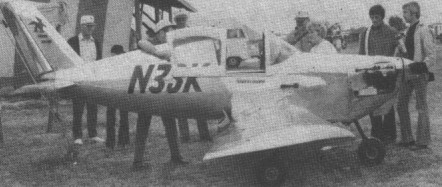
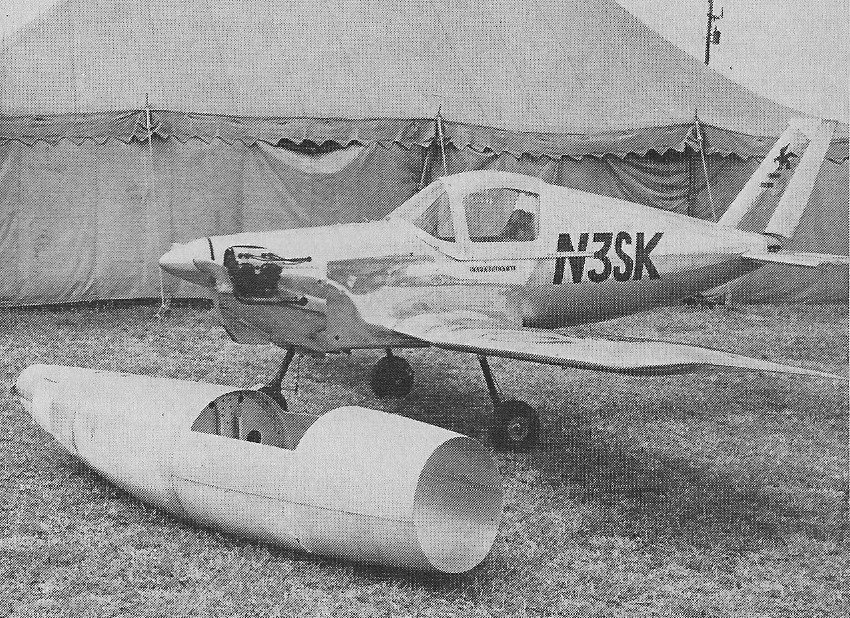
DSK Airmotive Hawk

The Hawk is a single-seat, low-wing monoplane stressed to 9G’s. Originally it was designed by Dick Killingsworth to be built around a surplus 200-gal drop-tank, but plans also provide for a bulkhead and stressed skin structure, The wings are built with twin light-alley spars and the landing gear is the non-retractable tricycle type. Fuel is carried in a forward tank with the capacity of nine gallons, but an optional 14-gallon tank can be added in the aft section.

Powered by a Lycoming O-145B-2, the Hawk was designed to be built with ordinary hand tools, pop rivets and very little welding or machine work. By 1974 over 250 sets of plans had been sold, at $50 each.

Gross Wt. 893 lbs.
Empty Wt. 525 lbs.
Fuel capacity 9-23 USG.
Wingspan 20’4”.
Length 15’.
Engine 65-hp Lycoming.
Top speed 156 mph.
Cruise 141 mph.
Stall 50 mph.
Climb rate 1500 fpm.
Ceiling 12,000 ft.
Takeoff run 600 ft.
Landing roll 550 ft.
Range (14 gals) 480 sm.

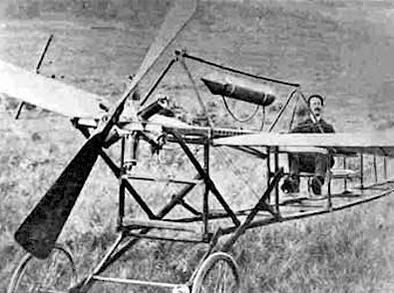
Drzewiecki Canard

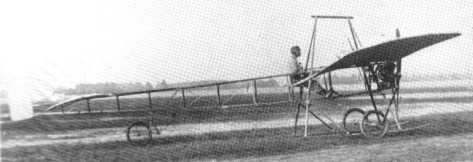
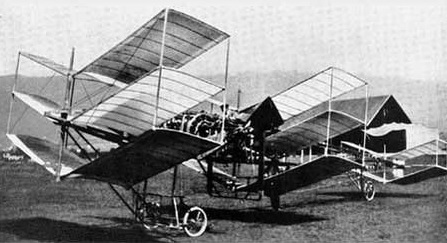
Aeronautics was also among Stefan Drzewiecki’s interests. His works regarding aircraft stability led to building in 1911-1912 a “self-stable” aircraft in canard layout. Interesting feature of the plane was lack of typical steering areas – altitude was adjusted by changing engine power while turning was done by adjusting AoA of either half of the nose wing. First flight was made in 1913, but because of this unusual steering feature pilots were reluctant to fly. Eventually Drzewiecki designed improved version, but outbreak of World War I stopped further development.