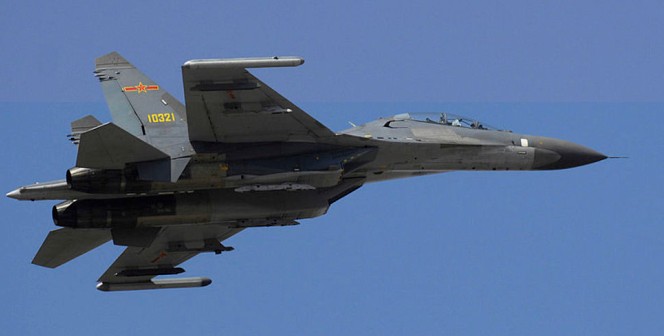
Chengdu J-11
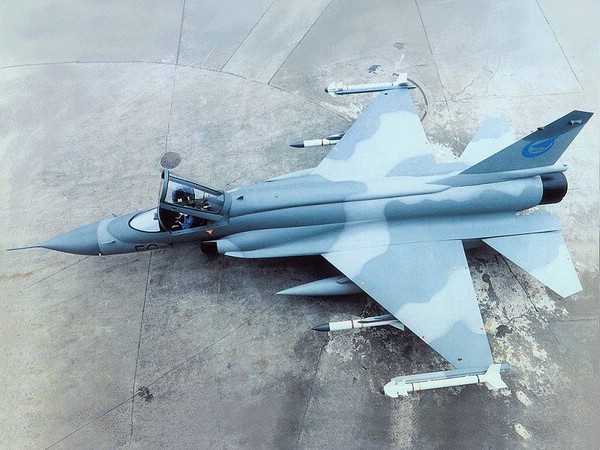
The origins of the ‘Super-7’ can be traced back to 1986 when Pakistan and China wanted to modernise the J-7 with western avionics and engine. The project was named ‘Saber II’ by the PAF and would replace its F-6s. In January 1987, Grumman Aerospace was seleted as primary contractor and several other western firms competed to provide the engine and avionics. By 1989 the projected costs had significantly increased (some sources say 40%) and was deemed a highly financial risk by the Pakistan Air Force. On top of that, Chinese relations with the west broke down. Subsequently the contract was cancelled.
Chengdu continued the development under the new designation FC-1 (Fighter China-1) aimed at creating an affordable fighter for the export market. In 1995 Pakistan regained interest in a joint development with China. The 1993 US sanctions prevented the PAF from acquiring Western technology or weapons. In June 1999, China and Pakistan signed the joint development and production agreement to co-develop the FC-1. Chengdu was selected as primary contractor and the Russian Mikoyan Aero-Science Production Group (MASPG) was contracted to provide the Klimov RD-93 turbofan engine and design assistance too.
The FC-1 design has little in common with the J-7 and is believed to be based on Mikoyan’s concept for a single-engine fighter based on the MiG-29. The FC-1 also shows features from the F-16 design, although the layout is somewhat more conventional.
The FC-1/JF-17 multirole combat fighter platform was developed jointly by the Chengdu Aircraft Industry Corporation and the Pakistan Aeronautical Complex to produce a cost-effective, multi-faceted airframe to use modern avionics and weapons packages for the Pakistani Air Force – essentially a modernized “budget fighter”.
As such, the FC-1 Xiaolong (“Fierce Dragon”)/JF-17 Urdu (“Thunder”) was begun – the former being the Chinese designation while the latter being the Pakistani designation. The joint program began loosely in 1998 and became a formalized agreement in 1999. The initial prototype was available and made airborne by 2003. Follow-up testing and revisions ensued and a newer prototype form flew in 2006. All testing was handled in China until 2007 saw deliveries of examples for evaluation by the Pakistani Air Force. Evaluation proved favorable and the Pakistani Air Force officially accepted the aircraft into service under the designation of JF-17 “Urdu”. The first operational squadron was formed in February of 2010.
At least 150 examples were on order and the total PAF inventory may grow to 250 total aircraft in service.
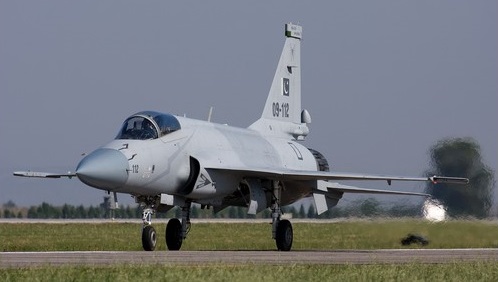
The FC-1/JF-17 was initially conceived in three single-seat prototypes known simply as the PT-01, PT-02 and the PT-03. The first FC-1 was rolled out on 31 May 2003. It made its first flight on 24 August 2003, although some say 2 or 3 September 2003. It was quickly followed by a second airframe (PT-2) for static tests and two more flying prototypes. The third prototype PT-3 has joined PT-1 in the flight testing program on 9 April 2004. These were followed into development by the revised single-seat prototypes encompassing the PT-04, PT-05 and the PT-06. From the PT-04 prototype, the single-seat production form was born and is now known under two distinct designations as the “JF-17 Urdu” (in Pakistan service) and the “FC-1 Xiaolong” (in Chinese service). To follow will be a two-seat mount that will double as both a pilot trainer (fitting the student in the forward cockpit with the instructor in the aft cockpit) that will make use of less internal fuel stores and a dedicated strike fighter.
The Chengdu FC-1/JF-17 makes use of a cylindrical fuselage with the cockpit set well-ahead on the airframe. The front of the fuselage was capped by a nose cone assembly housing the radar. The cockpit is covered over in a single piece canopy with a forward piece. Intakes feed a single powerplant buried within the fuselage. An intake is mounted to either side of the airframe just below and aft of the cockpit with small bulges ahead of each opening to help induce airflow. Wings are mid-set along the sides of the aircraft and feature highly-swept leading edge surfaces. The wings have underwing pylon hardpoints and wingtip missile launchers. The fuselage spine conforms to become the base of the single vertical tail fin atop the empennage. All-moving horizontal tailplanes are set to either side of the empennage. The engine exhausts at the extreme rear. Some of the integrated avionics are set in a rear package, appearing as a rounded protrusion just above the jet exhaust ring and at the base of the vertical tail fin. A pair of ventral strakes can clearly be seen at the base of the empennage. The FC-1/JF-17 makes use of a fully-retractable tricycle landing gear featuring two single-wheeled main landing gear legs as well as a single-wheeled nose landing gear leg. Construction of the airframe is of semi-monocoque format and made up of aluminum alloys as well as utilizing titanium allows and steel in certain high-stress areas. Control surfaces are under the control of a digital flight control system while the pilot has HOTAS configuration (Hands On Throttle and Stick).
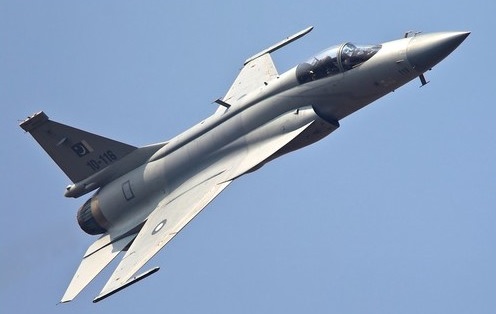
The Chengdu FC-1/JF-17 makes use of a single Klimov RD-93 turbofan engine delivering 11,106lbf of standard thrust and up to 18,973lbf of thrust when utilizing afterburner. Maximum speed is listed at approximately March 1.8 or about 2,205 kilometers per hour. The FC-1/JF-17 has a ferry range of up to 2,175 miles with a combat radius of 840 miles. Service ceiling is listed at 54,790 feet.
Standard armament is a fixed, forward-firing 23mm GSh-23-2 twin-barrel cannon of Russian origin. This can be replaced with the larger-caliber 30mm GSh-30-2 series cannon at the expense of ammunition. The FC-1/JF-17 has seven hardpoints. Hardpoints include the wingtip launchers (reserved for short-ranged air-to-air missiles), four underwing stations (the two innermost plumbed for fuel stores) and a single fuselage centerline location, this also plumbed for external fuel stores. The FC-1/JF-17 can sport an underfuselage tank of 800 liters while the two underwing stations can carry either 800 liter or 1,000 liter fuel.
The FC-1/JF-17 makes use of a NRIET KLJ-7 series multi-mode fire-control radar that handles tracking and engagement of targets, even at beyond visual ranges. Range is approximately up to 75 kilometers on its X-band frequency.
In February of 2010, the Pakistan Air Force had at least fourteen JF-17 “Thunder” operational examples, these with the 36th Tactical Attack Wing out of PAF Base in Peshawar. These Thunders are under ownership of the No. 26 Squadron known as the “Black Spiders”.
In late 2009, the FC-1 was known to have passed a procurement hurdle in China that seems to indicate that the Xiaolong will, at some point, arm the People’s Liberation Army Air Force in the near future.
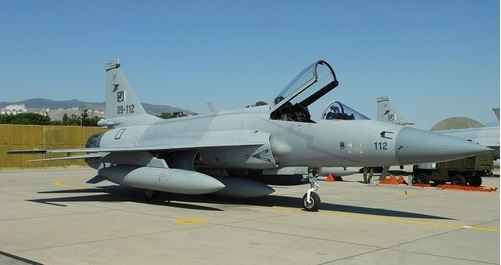
The JF-17 began small-batch deliveries to China in 2006. Pakistan received their first aircraft six months later, reaching operational status in 2010. Pakistan has already put the type to use, flying it against targets in South Waziristan. The Chinese seem to be operating fewer JF-17s than the Pakistanis, but development is already underway for an improved Block 2 variant, intending to incorporate more composites into the structure, as well as newer avionics and an IRST. Many countries, particularly in Africa and the Middle East, have expressed interest in the JF-17. While there have been tentative talks with Zimbabwe, Argentina, and Egypt to procure the aircraft, however, no purchases have materialized. More recently, Nigeria has looked into buying several JF-17s from Pakistan, but an actual order has yet to occur. According to the chief designer of the JF-17, this is due to a combination of political factors and the fact that the JF-17 just can’t compete with contemporary Gen 4 fighters. It is a great budget replacement for the MiG-21 (unit price of ~$20 million), it lacks the capabilities that countries are looking for in a fighter.
PAC Kamra has delivered nearly 120 JF-17 Block I and II fighter jets to the PAF since 2009. Since its induction in the PAF in 2007, the JF-17 has been upgraded several times. The JF-17, with a service ceiling of 50,000 feet and a peak speed of around 1,200 mph, can carry out a variety of tasks, including aerial intercept and ground assault. It can hold around 7,000 pounds of ordnance on seven hardpoints and is equipped with a single twin-barrel 23 mm autocannon.
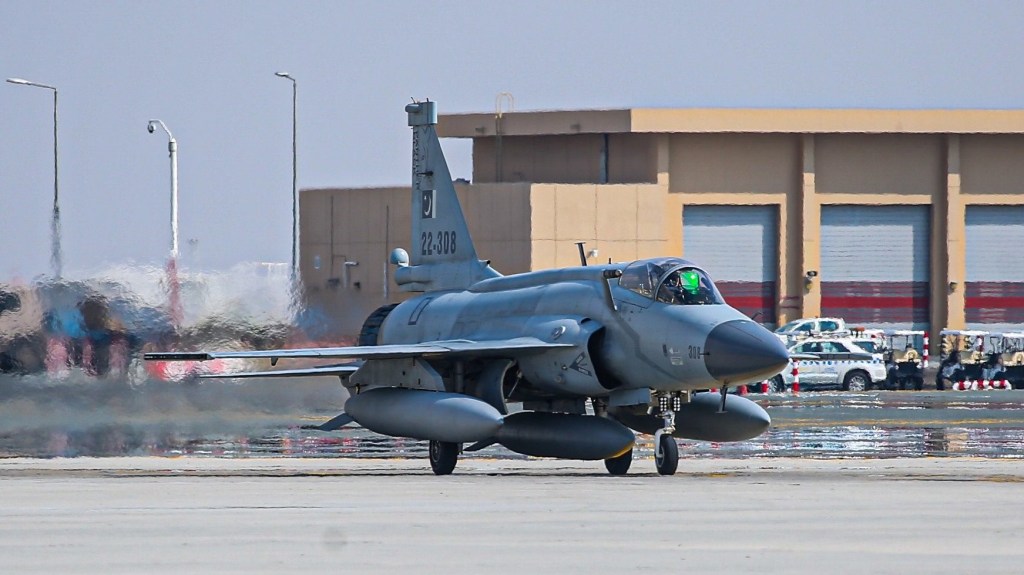
The JF-17 is only in service with three countries — Pakistan, Myanmar, and Nigeria. In December 2023, PAF inducted the latest Block III variant into its fleet.
Chegdu FC-1 Xiaolong / JF-17 Thunder
Engine: 1 x Klimov RD-93 turbofan, 49.4 kN (11,103 lb st) dry or 84.4 kN (18,969 lb st) with afterburner
Length 14.97 m (49 ft 1.5 in)
Height 4.77 m (15 ft 8 in)
Wing span 9.46 m (31 ft 0.5 in)
Maximum Speed: 1,370mph (2,205kmh; 1,191kts)
Maximum Range: 1,864miles (3,000km)
Service Ceiling: 54,790ft (16,700m; 10.4miles)
Armament: 1 x 23mm GSh-23-2 twin-barreled cannon OR 1 x 30mm GSh-30-2 cannon
Hardpoints: 7 (including wingtip)
External ordnance: Up to 8,000lbs / 3,629 kg
Accommodation: 1
Empty Weight: 14,134lbs (6,411kg)
Maximum Take-Off Weight: 20,062lbs (9,100kg)
Normal Take-Off Weight: 9,072 kg (20,000 lb)
G-limit: +8.5
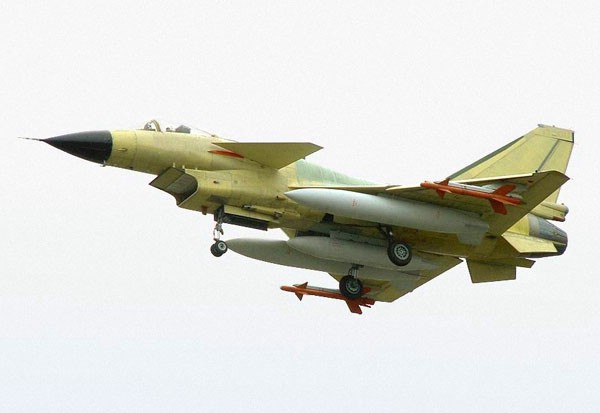
With funding in place several years before actual development of the aircraft began, the official call came in the form of Project 8610 – the requirement for an indigenous Chinese air superiority fighter to combat similar fourth generation systems in Russia and the West.
The J-10 program increased in 1986 under the guise of the Chengdu Aircraft Design Institute. Designed by 611 Aircraft Design Institute, Chengdu, the J-10 (Jian-10 meaning Fighter-10) built by Chengdu Aircraft Industry Corporation (CAC) is a multi-role fighter for the China’s Peoples Liberation Army Air Force (PLAAF). The J-10 is to replace the older J-7 and Q-5 attack aircraft.
The Project 8610 aircraft development was launched by No.611 Research Institute in October 1988, following approval the previous month. The Chengdu J-10 started as a development of the IAI Lavi, although little of the original Lavi design remains, and features a compound delta-wing design with canards placed higher in front of the main wing and behind the canopy. The light weight airframe is powered by the Russian built AL-31FN engine, which is a modification of the Su-27 and Su-30 AL-31F power plant. The J-10’s AL-31FN engine is not equipped with thrust vectoring. According to Russian reports, China ordered 100 AL-31FN engines to support J-10 production in July 2005, having received 54 engines between 2002 and 2004 for the initial production batch. The main engine intake is located on the belly and has a rectangular shape.
The J-10 was originally designed around an indigenous Chinese powerplant designated as the WP-15, a turbojet type engine. Support for the engine project was eventually dropped so the Chinese found a solution in the Russian-made Salyut AL-31F turbofan as a comparable replacement. The Russian engine featured a thrust output of up to 27,557 with full afterburning and was essentially a specially-modified version of the AL-31F series that has powered the Sukhoi Flanker family.
While the Russian engine selection has proven successful for early J-10s, the Chinese have once-again taken to develop their own in-house engine with the WS-10A. Though a little larger and lower-rated than the Russian AL-31 series, the 24,729lb thrust (with full afterburn) is a capable propulsion system that makes marketing the J-10 to foreign air forces that much easier for the Chinese (as opposed to receiving clearance from the Russians in re-selling the J-10 with Russian technology).
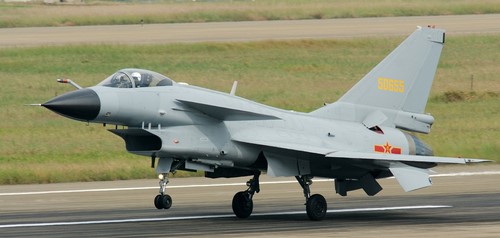
The J-10 makes use of a “tail-less” delta wing configuration (with forward situated canards). The delta wings are low-mounted monoplanes with gradual sweep back that run along more than half the length of the fuselage sides. Ventral strake-type fins are added at the main wing bases to the extreme end of the fuselage. The fuselage itself is quite tubular in appearance when view in forward profile and comes with a conical nose (housing the radar array) assembly fitted just forward and below the high-mounted cockpit.
The cockpit features a two-piece curved canopy hinged at the rear. Entry to the cockpit is standardized from the portside via a ground-based step ladder. In the two-seat J-10, an instructor occupies a raised rear cockpit position seeing over and past the student’s forward cockpit position. The entire cockpit area is therefore lengthened and both crew sit under a longer, two-piece canopy hinged at rear with a heightened dorsal spine for the additional avionics needed in the second cockpit. The pilot controls the J-10 through a conventional HOTAS (Hands-On Throttle and Stick) arrangement and sits in a “zero-zero” ejection seat – allowing for powered ejections at “zero” speeds and at “zero” altitudes for ultimate safety. The cockpit is dominated by three large liquid crystal multi-function displays (MFD) that help de-cluster the instrument panel while aiding in the pilot’s workload.
Canards are fitted to either side, aft and below the cockpit- and add forward stability. The forward fuselage elegantly contours into the base of the single large-area vertical tail fin adorning the empennage. The lack of horizontal planes on the tail mean that the main wing assemblies straddle either side of the engine exhaust at rear. A static fuel probe is situated to the forward starboard side of the fuselage. Construction of the fuselage includes use of composite materials throughout.
One of the more distinct design elements of the J-10 is the rectangular under-fuselage intake opening feeding the single engine. The undercarriage is of a conventional tricycle arrangement made up of two single-wheeled main legs and a two-wheeled nose leg. The nose landing gear is fitted under and aft of the intake opening and retracts backwards in a housing. The main landing gear legs retract in a forward fashion along the sides of the fuselage at about amidships.
The aerodynamically unstable design is controlled by a digital fly-by-wire system. The cockpit is fitted with three multifunctional displays (MFD) and a wide-angle HUD. Also there is evidence that a Helmet Mounted Sight (HMS) will be incorporated.
Standard armament for the J-10 is a twin-barrel Type 23-3 23mm cannon (offset to port under the intake near the nose landing gear) and eleven hardpoints made up of six underwing (three to a wing) and five under-fuselage positions. The five underfuselage positions include a centerline hardpoint, a pair of forward-mounted hardpoints (near the intake opening) and a pair of aft-mounted hardpoints (about mid-fuselage) all centered around the external structure that makes up the intake assembly. Total munitions load has a reported limitation of up to 9,900lbs.
The J-10 can sport up to 3 x external jettisonable fuel tanks for increased operational ranges. One such implement is carried along the centerline fuselage (about 450 gallons) whilst the other two can be fitted on cleared underwing hardpoints (212 gallons each).
The J-10 can be armed with the Russian R-73 and R-77 or Chinese PL-8, PL-10, and PL-11 air-to-air missiles as well as a wide variety of air-to-ground weapons. Also it was reported in June 2005, that the J-10 has completed integration testing of China’s new PL-12 (SD-10) active guided air-to-air missile. Although the J-10 development program started with the aim for creating a fighter, after selection of the J-11 the main focus has been on increasing its air-to-ground capability. The J-10 will also be able to carry Chinese developed anti-ship and anti-radiation missiles.
The first prototype ‘1001’ made its first flight on 22/23 March 1998 by test pilot Lei Quiang. The flight lasted all but 20 minutes. Following the first prototype another 8 prototypes have appeared. The second prototype ‘1002’ was lost in a fatal accident in late 1997, and also the third prototype ‘1003’ had crashed in a fly-by-wire incident.
Six production examples soon followed the prototypes, in 2002 the first pre-production aircraft making its maiden flight. From there, after some 18 years of total development time, the J-10 culminated in an official clearance for operational service and was delivered to the PLAAF on 23 February 2003 when the first 10 J-10s joined the 13th Operational Trials Regiment of the Flight Test and Training Centre at Cangzhou-Cangxian.
The type was declared operational in December 2003. The PLAAF’s 3rd Test Flight Regiment started operating the J-10A from the Chengdu factory airfield at Wenjiang in 2004. The 44th Air Division’s 131st Fighter Regiment at Mengzi, Yunnan, became the first operational J-10A unit on July 13, 2004, and had received 32 J-10As by 2005. Also the division’s 130th Fighter Regiment is reportedly being equipped with the J-10. A third fighter regiment was equipped with the J-10 in early 2006.
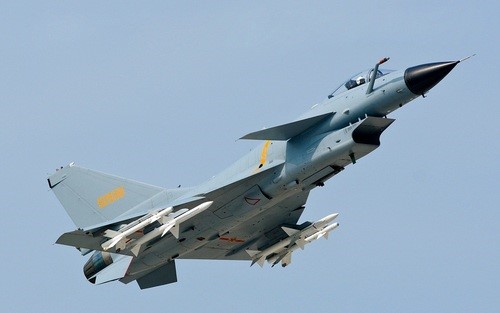
The J-10 would be declassified at the Zhukai Air Show in November 2006, but the aircraft’s appearance was cancelled reportedly due to safety concerns. On December 29, 2006, however, China’s state-run Xinhua News Agency officially confirmed that the Chengdu J-10 is in operational service with the PLAAF. The same day, China Central Television (CCTY) broadcasted footage of the aircraft firing air-to-air missiles, air-to-ground weapons and undertaking aerial refuelling with a Xian H-6 tanker.
The aircraft was officially introduced in 2005, unveiling nearly two decades of secrecy and denials by the Chinese government, and solidified the Chinese nation as a premier developer of air arms for the foreseeable future. Some 100 production examples were delivered to the People’s Liberation Army Air Force from 2004 into 2006 and current totals of this aircraft in the Chinese inventory range from 120 to 160 examples with some 300 believed to be required. Production has been handled by the Chengdu Aircraft Industry Corporation (CAIC), overseers of the firm that designed the J-10.
The J-10 is rated as a Mach 2.2-capable fighter platform and the airframe can sustain up to 9 positive and -3 Gs. Maximum range is limited to 2,113 miles without droptanks or in-flight refueling (accomplished via a probe) while a service ceiling of 65,600 feet is reported.
The J-10 has been developed into a handful of variants. The J-10A remains the principle single-seat multirole aircraft platform and is marketed under the designation of F-10A for export.
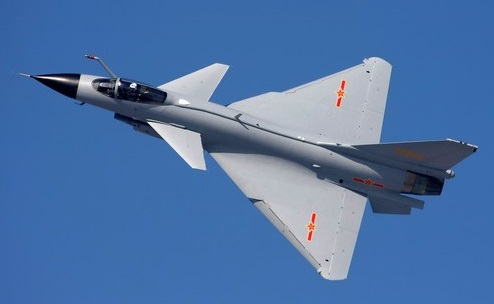
Further developments include a two-seat trainer, twin engine variant, and a dedicated air-to-ground version with a redesigned nose section. In November 2004 Air Forces Monthly published a recent photograph of the what is believed to be the first two-seat J-10 (believed to be designated J-10B, but J-10S has also been reported) that had begun test-flying. It is believed development of the two-seat trainer was started in 2000 and that the first flight of the two-seat J-10B took place on December 26, 2003. The forward fuselage of the aircraft was stretched to accommodate the additional cockpit. Reportedly the J-10B is combat capable and can be used as airborne command & control aircraft with the formation commander occupying the rear seat.
The J-10S is the two-seat version suitable for training J-10 pilots-to-be yet they retain the full ground strike capabilities of the base J-10A multirole fighter. The J-10B is thought to be an upgraded version of the base J-10 and feature a distinctly redesigned intake opening, revised ventral fins and a redesigned vertical tail as well as an integrated infra-red search and track sensor. A new nose assembly is also reportedly housing an all-new radar suite.
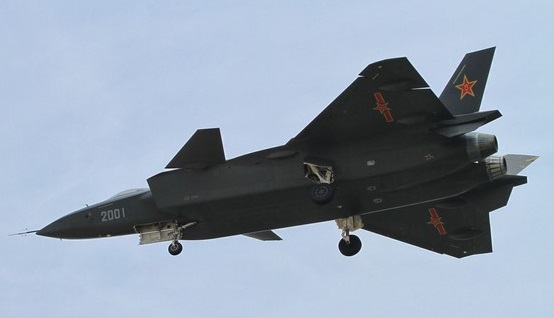
It is also reported a more advanced version is under development. The new J-10 version is reportedly called the Super-10, and has a more powerful engine, thrust-vector control, stronger airframe and passive phased-array radar.
China is believed to have a requirement of 300 aircraft of the type. On April 12, 2006 the Pakistani cabinet approved the purchase of at least 36 J-10s under the designation “FC-10” (FighterChina-10).
The Pakistani Air Force remain the only other (presumed) operators of the J-10 and designate their systems as the F-10A/B Vanguards. At least 32 to 40 J-10s are known to have been purchased with deliveries beginning in 2009. Pakistan has already made clear their intent to purchase more FC-20s in the future.
The J-10C was inducted in Pakistan’s Air Force in March 2022 to counterbalance India’s procurement of French-built Rafale fighter jets. Pakistan has been calling the Chinese jet the “Dragon from the East.” The omni-role aircraft is armed with an advanced electronics warfare suite. The J-10C’ Vigorous Dragon’ all-weather fighter aircraft and can be equipped with a variety of 4th-generation air-to-air missiles, including the Chinese PL-10 short-range missile and the PL-15 beyond visual range missile.
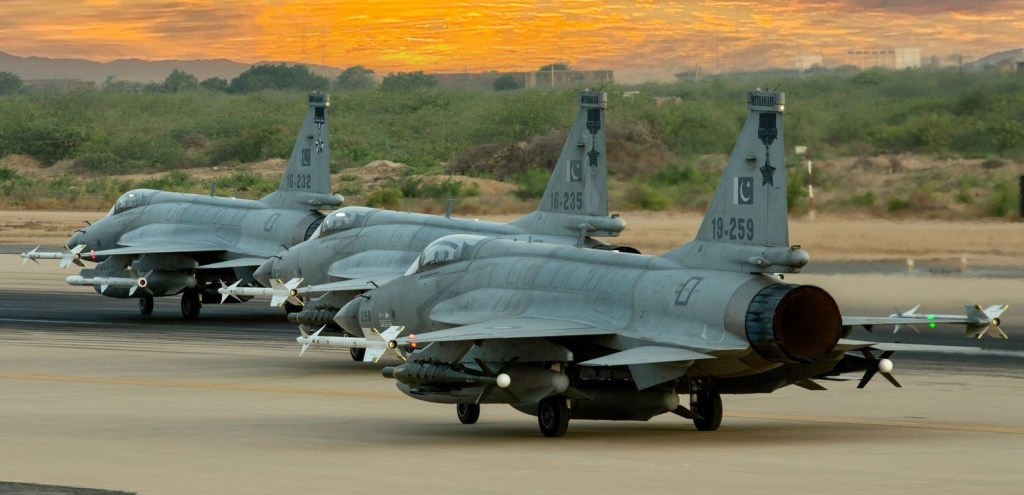
The J-10C in Chinese service has notable features like an infrared search and track and laser rangefinder dome in front of the cockpit, as well as a glass cockpit with a wide-angle holographic head-up display. It is also equipped with an Active Electronically-Scanned Array (AESA) radar.
Chengdu J-10A (Vigorous Dragon)
Engine: 1 x Woshan WS-10A Taihang OR Saturn Lyulka AL-31FN afterburning turbofan, 29,101 lbs thrust with afterburning.
Length: 50.85ft (15.5m)
Width: 31.82ft (9.70m)
Height: 15.68ft (4.78m)
Wing area: 39sqm
Maximum Speed: 1,452mph (2,336kmh; 1,261kts)
Maximum Range: 1,118miles (1,800km)
Service Ceiling: 65,617ft (20,000m; 12.4miles)
Armament: 1 x 23mm Type 23-2 double-barreled cannon
Up to 9,900lbs of external ordnance
Hardpoints: 11 (six underwing, five underfuselage).
Accommodation: 1
Empty Weight: 21,451lbs (9,730kg)
Maximum Take-Off Weight: 40,786lbs (18,500kg)
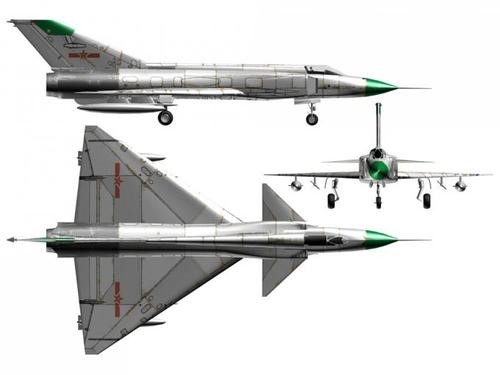
The J-9 used a completely new single-engined design. It was to have a top speed of Mach 2.4, necessitating the use of variable geometry inlets and a high-power turbofan engine. Four configurations were considered, all incorporating delta wings. However, each proposed configuration was found to lack agility and experience stability issues at certain speeds. A new configuration was devised, resembling the canard layout of the Saab Viggen. However, just as this major change was made, the Cultural Revolution hit the project, bringing work to a standstill. Meanwhile, Chinese involvement in Vietnam led to rapidly changing requirements, calling for unrealistic range and top speeds higher than originally specified. Work resumed in the 70’s, with a prototype reportedly making a flight. However, the WS-6 turbofan that was to power the aircraft proved a failure, and the competing Shenyang J-8 was not only entering service but was more promising. In 1978 the J-9 was finally cancelled.
The CAIC WZ-10 (Changhe Aircraft Industries Corporation / Wuzhuang Zhisheng) is an attack helicopter, with this particular model being produced for use by the People’s Republic of China.
The two crew members sit in tandem with the pilot in the rear and seated higher than his gunner at front. Wing stubs provide the ability for the system to wield munitions of various sorts and center around anti-tank missiles. Additionally the WZ-10 is believed to possess anti-aircraft abilities. Standard armament includes a chin-mounted 23mm cannon.
Power is derived from twin turboshafts centering on the Pratt & Whitney Canada PT6C-67C series. These two engines produce 1,531 horsepower each. The systems drive a five-blade main rotor and a four-blade tail unit. The transmission development is based on help from Agusta Westland. In all, the helicopter is believed to be in the same class as modern systems such as the Denel Rooivalk and Eurocopter Tiger and is slated for operational service beginning 2008.
CAIC WZ-10
Engines: 2 x Pratt & Whitney Canada PT6C-67C turboshaft, 1,531hp
Main rotor: five-blade
Tail rotor: four-blade
Length: 46.26ft (14.1m)
Height: 12.63ft (3.85m)
Maximum Speed: 168mph (270kmh; 146kts)
Maximum Range: 497miles (800km)
Service Ceiling: 19,685ft (6,000m; 3.7miles)
Armament: 1 x 23mm cannon in undernose position
Accommodation: 2
Hardpoints: 4
Empty Weight: 12,214lbs (5,540kg)
Maximum Take-Off Weight: 13,228lbs (6,000kg)

Development by Chinese Helicopter R&D Institute began in 1991, the Z-11 (Zhishengji-11 / Vertical take-off aircraft 11) appears identical externally to Eurocopter AS 350B Ecureuil except for nose contours, but CHAIG publicity in mid-2001, stated that “China owns its independent intellectual property rights”. Eurocopter (which sold eight Ecureuils to China in 1996) declines to comment on its provenance.
First details officially released at China Air Show in Zhuhai November 1996, together with photographs showing one or two Z-11s in flight, the quoted first flight date of 22 December 1994 is thought to refer to re-engined modification of two secondhand ex-US AStars (Ecureuils) acquired earlier that year. In early 1997, a Chinese government agency announced that the Z-11 had flown for the first time on 26 December 1996.
Technical appraisal was completed in 1996, and small batch production began in 1997. Test programme included flights totalling 1332km in temperatures from —43 to +6°C, including a 2-hour sortie cruising at -38°C. Design was finalised in December 2000, and the Z-11 received CAAC certification in April 2001. CAAC approval for series production for civilian use was announced on 23 December 2002. Power was one 510kW WZ8D turboshaft (licence-built Turbomeca Arriel ID), reportedly produced by Liming engine factory.
Eight said to have been completed by late 1996, of which four had been delivered. All photographs released before late 1998 showed Z-11 in military camouflage with PLA insignia. One report from Aviation Expo China in October 1997 stated that the PLA had ordered 20 military Z-11s, these apparently going to Army Aviation’s training school. Production amounted to ‘several dozen’ by mid-2001, at which time some 10,000 hours flown and 50,000 take-offs and landings. Chongqing Three Gorges General Aviation Airlines (one ordered) reported as first civil customer in mid-2001; China Central Television of Jiangxi Province received one on 25 August 2002.
An armed version, equipped with cannon, ATMs, unguided rockets and a roof-mounted low-light/infra-red sight, has been reported. Later version to be announced is the Z11-MB1, which made its first flight on 7 Match 2003 powered by a 632kW Turbomeca Arriel 2B1A turboshaft.
CHAIG Z-11
Engine: WZ8D turboshaft, 510kW
Main rotor diameter: 10.69m
Tail rotor diameter: 1.86m
Length overall, rotors turning: 13.01m
Fuselage length: 11.24m
Height over tailfin: 3.02m
Height to top of rotor hub: 3.14m
Empty weight: 1120kg
Max take-off weight: 2200kg
Max level speed: 278km/h
Cruising speed: 240km/h
Hovering ceiling IGE: 5240m
Hovering ceiling OGE: 4500m
Max range: 600km
Endurance: 3 h 54 min
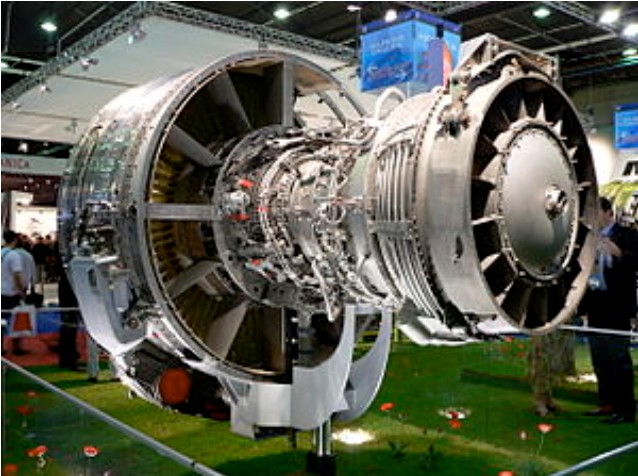
Research into the high-bypass ratio turbofans in the “10-ton” (20,000 lbf; 89 kN) thrust class, began in the late 1960s. SNECMA, who had mostly built military engines until then, was the first company to seek entrance into the market by searching for a partner with commercial experience to design and build an engine in this class. They considered Pratt & Whitney, Rolls-Royce, and GE Aviation as potential partners, but it was not until after two company executives, Gerhard Neumann from GE and René Ravaud from SNECMA, introduced themselves at the 1971 Paris Air Show that a decision was made. The two companies saw mutual benefit in the collaboration and met several more times, fleshing out the basics of the joint project.
Pratt & Whitney dominated the commercial market at this point in time. GE needed an engine in this market class, and SNECMA had previous experience of working with them, collaborating on the production of the CF6-50 turbofan for the Airbus A300. Pratt & Whitney was considering upgrading their JT8D to compete in the same class as the CFM56 as a sole venture, while Rolls-Royce dealt with financial issues that precluded them from starting new projects; this situation caused GE to gain the title of best partner for the program.
A major reason for GE’s interest in the collaboration, rather than building a 10-ton engine on their own, was that the SNECMA project was the only source of development funds for an engine in this class at this particular time. GE was initially considering only contributing technology from its CF6 engine rather than its much more advanced F101 engine, developed for the B-1 Lancer supersonic bomber. However, the company was faced with a dilemma when the United States Air Force (USAF) announced its Advanced Medium STOL Transport (AMST) project in 1972 which included funding for the development of a 10-ton engine – either to build a “limited” technology 10-ton engine with SNECMA, or a similar engine with “advanced” technology on their own. Concerned that the company would be left with only the “limited” engine in its portfolio if it did not win the Air Force contract (for which it was competing with Pratt & Whitney and a General Motors division with its “advanced” engine), GE decided to apply for an export license for the F101 core technology.
GE applied for the export license in 1972 as their primary contribution to the 10-ton engine project. However, the United States Department of State’s Office of Munitions Control recommended the rejection of the application on national security grounds; specifically because the core technology was an aspect of a strategic national defense system (the B-1 bomber), it was built with Department of Defense (and therefore American taxpayer) money, and that exporting the technology to France would limit the number of American workers on the project. The official decision was made in a National Security Decision Memorandum signed by the National Security Advisor Henry Kissinger on 19 September 1972.
While national security concerns were cited as the grounds for rejection, reportedly high-level politics played an important role as well. The project, and the export issue associated with it, was considered so important that French President Georges Pompidou appealed directly to U.S. President Richard Nixon in 1971 to approve the deal, and that Henry Kissinger brought the issue up with President Pompidou in a 1972 meeting. GE reportedly argued at the highest levels that having half of the market was better than having none of it, which they believed would happen if SNECMA pursued the engine on their own without GE’s contribution. However, Nixon administration officials feared that this project could be the beginning of the end of American aerospace leadership.
There was also speculation that the rejection may have been, in part, retaliation for French involvement in convincing the Swiss not to purchase American-made A-7 Corsair II aircraft that had been competing against a French design, the Dassault Milan. In the end, the Swiss did not purchase either aircraft, opting for the Northrop F-5E Tiger II instead.
Despite the export license being rejected, both the French and GE continued to push the Nixon Administration for permission to export the F101 technology. Efforts continued throughout the months following the rejection, culminating in the engine becoming an agenda topic during the 1973 meeting of Presidents Nixon and Pompidou in Reykjavík. Discussions at this meeting resulted in an agreement that allowed the development of the CFM56 to proceed. Contemporary reports state that the agreement was based on assurances that the core of the engine, the part that GE was developing from the military F101, would be built in the U.S. and then transported to France in order to protect the sensitive technologies. The joint venture also agreed to pay the U.S. an $80 million royalty fee (calculated at $20,000 per engine predicted to be built) as repayment for the development money provided by the government for the F101 engine core. Documents declassified in 2007 revealed that a key aspect of the CFM56 export agreement was that the French government agreed not to seek tariffs against American aircraft being imported into Europe.
With the export issue settled, GE and SNECMA finalized the agreement that formed CFM International (CFMI), a 50–50 joint company that would be responsible for producing and marketing the 10-ton engine, the CFM56. The venture was officially founded in 1974. The two primary roles for CFMI were to manage the program between GE and SNECMA, and to market, sell and service the engine at a single point of contact for the customer. CFMI was made responsible for the day-to-day decision making for the project, while major decisions (developing a new variant, for example) required the go-ahead from GE and SNECMA management.
The CFMI board of directors is currently split evenly between SNECMA and GE (five members each). There are two vice presidents, one from each company, who support the President of CFMI. The president tends to be drawn from SNECMA and sits at CFMI’s headquarters near GE in Cincinnati, Ohio.
The work split between the two companies gave GE responsibility for the high-pressure compressor (HPC), the combustor, and the high-pressure turbine (HPT); while SNECMA was responsible for the fan, the low-pressure compressor (LPC), and the low-pressure turbine (LPT). SNECMA was also responsible for the initial airframe integration engineering, mostly involving the nacelle design, and was initially responsible for the gearbox, but shifted that work to GE when it became apparent that it would be more efficient for GE to assemble that component along with their other parts.
Development work on the CFM56 began before CFMI was formally created. While work proceeded smoothly, the international arrangement led to unique working conditions. For example, both companies had assembly lines, some engines were assembled and tested in the U.S. and others in France. Engines assembled in France were subject to the initially strict export agreement, which meant that GE’s core was built in the U.S., then shipped to the SNECMA plant in France where it was placed in a locked room into which even the President of SNECMA was not allowed. The SNECMA components (the fore and aft sections of the engine) were brought into the room, GE employees mounted them to the core, and then the assembled engine was taken out to be finished.
The first completed CFM56 engine first ran at GE in June 1974 with the second running in October 1974. The second engine was then shipped to France and first ran there on 13 December 1974. These first engines were considered “production hardware” as opposed to test examples and were designated as the CFM56-2, the first variant of the CFM56.
The engine flew for the first time in February 1977 when it replaced one of the four Pratt & Whitney JT8D engines on the McDonnell Douglas YC-15, an entrant in the Air Force’s Advanced Medium STOL Transport (AMST) competition. Soon after, the second CFM56 was mounted on a Sud Aviation Caravelle at the SNECMA flight test center in France. This engine had a slightly different configuration with a long bypass duct and mixed exhaust flow, rather than a short bypass duct with unmixed exhaust flow. It was the first to include a “Thrust Management System” to maintain engine trim.
After testing the engine for several years, both in the air and on the ground, CFMI searched for customers outside of a possible AMST contract. The main targets were re-engine contracts for the Douglas DC-8 and the Boeing 707 airliners, including the related military tanker, the KC-135 Stratotanker. There was little initial interest in the engine, but Boeing realized that the CFM56 might be a solution to upcoming noise regulations. After announcing that a 707 would be configured with the CFM56 engine for flight tests in 1977, Boeing officially offered the 707-320 with the CFM56 engine as an option in 1978. The new variant was listed as the 707-700. However, due to limited interest from the airlines in a re-engined 707, Boeing ended the 707-700 program in 1980 without selling any aircraft. Despite the lack of sales, having the commercial 707 available with the CFM56 helped the engine’s competitiveness for the KC-135 re-engine contract.
Winning the contract to re-engine the KC-135 tanker fleet for the USAF would be a huge boon to the CFM56 project (with more than 600 aircraft available to re-engine), and CFMI aggressively pursued that goal as soon as the Request For Proposals (RFP) was announced in 1977. Like other aspects of the program, international politics played their part in this contract. In efforts to boost the CFM56’s chances versus its competitors, the Pratt & Whitney TF33 and an updated Pratt & Whitney JT8D, the French government announced in 1978 that they would upgrade their 11 KC-135s with the CFM56, providing one of the first orders for the engine.
The USAF announced the CFM56 as the winner of the re-engine contract in January 1980. Officials indicated that they were excited at the prospect of replacing the Pratt & Whitney J57 engines currently flying on the KC-135A aircraft, calling them “…the noisiest, dirtiest, [and] most fuel inefficient powerplant still flying” at the time. The re-engined aircraft was designated the KC-135R. The CFM56 brought many benefits to the KC-135, decreasing takeoff distance by as much as 3,500 ft (1,100 m), decreasing overall fuel usage by 25%, greatly reducing noise (24 dB lower) and lowering total life cycle cost. With those benefits in mind, the United States Navy selected the CFM56-2 to power their variant of the Boeing 707, the E-6 Mercury, in 1982. Additionally, in 1984 the Royal Saudi Air Force selected the CFM56-2 to power their E-3 Sentry aircraft (also related to the 707 airframe). The CFM56-2-powered E-3 also became the standard configuration for aircraft purchased by the British and French.
By the end of the 1970s, airlines were considering upgrading their aging Douglas DC-8 aircraft as an alternative to buying new quieter and more efficient aircraft. Following the French KC-135 order in 1978, the April 1979 decision by United Airlines to upgrade 30 of their DC-8-61 aircraft with the CFM56-2 was important for securing the development of the CFM56; GE and SNECMA were two weeks away from freezing development had that order not materialized. This decision marked the first commercial purchase (rather than government/military) of the engine, and Delta Air Lines and Flying Tiger Line soon followed suit, giving the CFM56 a firm footing in both the military and commercial realms.
In the early 1980s Boeing selected the CFM56-3 to exclusively power the latest Boeing 737 variant, the 737-300. The 737 wings were closer to the ground than previous applications for the CFM56, necessitating several modifications to the engine. The fan diameter was reduced, which reduced the bypass ratio, and the engine accessory gearbox was moved from the bottom of the engine (the 6 o’clock position) to the 9 o’clock position, giving the engine nacelle its distinctive flat-bottomed shape. The overall thrust was also reduced, from 24,000 to 20,000 lbf (110 to 89 kN), mostly due to the reduction in bypass ratio.
Since the small initial launch order for twenty 737-300s split between two airlines, over 5,000 Boeing 737 aircraft had been delivered with CFM56 turbofans by April 2010, resounding proof of the engine’s adaptability.
Once the CFM56 was well established in both military and commercial applications, CFMI continued to improve the engine and market it for new aircraft, such as the Airbus A320 and the Airbus A340. As of 2010, there are four major variants of the engine, each with multiple sub-variants.
In 1998, CFMI launched the “Tech56” development and demonstration program to create an engine for the new single-aisle aircraft that were expected to be built by Airbus and Boeing. The program focused on developing a large number of new technologies for the theoretical future engine, not necessarily creating an all-new design. However, when it became clear that Boeing and Airbus were not going to build all-new aircraft to replace the 737 and A320, CFMI decided to apply some of those Tech56 technologies to the CFM56 in the form of the “Tech Insertion” program which focused on three areas: fuel efficiency, maintenance costs and emissions. Launched in 2004, the package included redesigned high-pressure compressor blades, an improved combustor, and improved high- and low-pressure turbine components which resulted in better fuel efficiency and lower nitrogen oxides (NOx) emissions. The new components also reduced engine wear, lowering maintenance costs by about 5%. The engines entered service in 2007, and all new CFM56-5B and CFM56-7B engines were being built with the Tech Insertion components. CFMI also offers the components as an upgrade kit for existing engines.
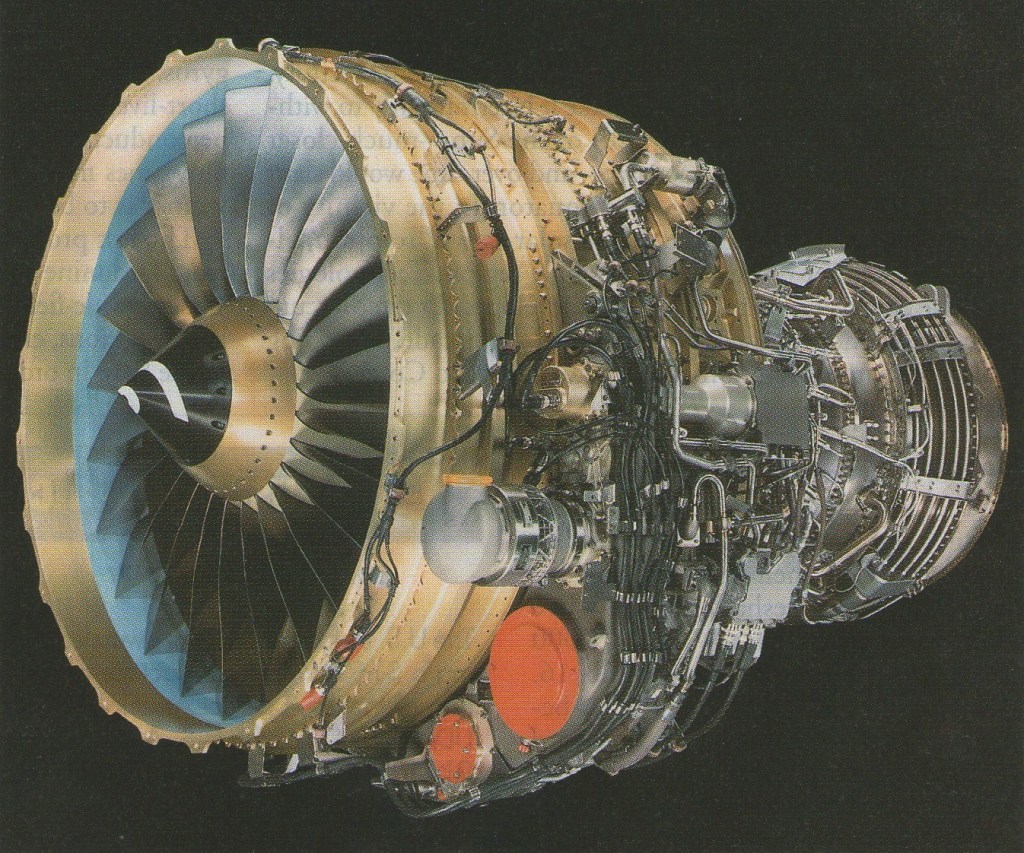
By 2000, General Electric hds established a moving line, similar in concept to the classic automobile assembly line, to reduce the time it takes to manufacture CFM International powerplants.
The line focused on cutting CFM engine manufacturing time to seven days, from 11, by about June 2000, Ken Foley, CFM56-5 project general manager, said. CFM56 engine production has grown from 380 engines delivered in 1995 to about 1,080 in 1999, and about 1,050 engines scheduled for delivery in 2000.
GE and Snecma said that none of their CFM56 engines have been delivered late since production started skyrocketing. CFM production at GE is centered on producing core engines for the entire CFM stable, as well as delivering completed CFM56-7 powerplants. Snecma production is grouped around producing fans for all CFM products, as well as assembling complete CFM56-family engines.
According to Snecina executives, the 35 -hr. workweek, which was implemented in France on Feb. 1 2000, was not expected to increase the companys production costs. Additional productivity gains, sustained by the CFM56’s production rate, should counterbalance the shortened workweek, they added.
1999 was the joint companys fourth best year ever for sales. More than 1,000 CFM engines worth about $5 billion were ordered, and a new application was found for the CFM56-513, the Airbus A318.
Dispatch reliability for CFM56s was running above 99.9%, and inflight shutdown rates were low – about 0.001 incidents per 1,000 engine flight hours for the -5B powerplant and about 0.006 for the -7 version. The company has seen five CFM56-3 and three CFM56-5C engines remain on wing for above 30,000 flight hours. For the -3 powerplant, that translates to about eight years of service before removal.
CFMI signed an agreement with llyushin to explore reengining Il-76 transports with CFM56-5C4 engines. The program would be launched if orders for five reengined aircraft were concluded.
CFM56 components are already manufactured in China (2000).
In 2009, CFMI announced the latest upgrade to the CFM56 engine, the “CFM56-7B Evolution” or CFM56-7BE. This upgrade, announced alongside Boeing’s newest 737 variant, further enhances the high- and low-pressure turbines with better aerodynamics, as well as improving engine cooling, and aims to reduce overall part count. CFMI expected the changes to result in a 4% reduction in maintenance costs and a 1% improvement in fuel consumption (2% improvement including the airframe changes for the new 737); however, flight and ground tests completed in May 2010 revealed that the fuel burn improvement was better than expected at 1.6%. Following 450 hours of testing, the CFM56-7BE engine was certified by FAA and EASA on 30 July 2010.
While the CFM56-7BE engine is designed specifically for Boeing’s new 737, CFMI have proposed a similar Evolution upgrade for the CFM56-5B engines that power Airbus’s A320. As of May 2010, Airbus has not made any commitment to a new engine.
The CFM56 is a high-bypass turbofan engine with several variants having bypass ratios ranging from 5:1 to 6:1, generating 18,500 to 34,000 lbf (80 kN to 150 kN) of thrust. The variants share a common design, but the details differ. The CFM56 is a two-shaft (or two-spool) engine, meaning that there are two rotating shafts, one high-pressure and one low-pressure. Each is powered by its own turbine section (the high-pressure and low-pressure turbines, respectively). The fan and booster (low pressure compressor) evolved over the different iterations of the engine, as did the compressor, combustor and turbine sections.
Most variants of the CFM56 feature a single-annular combustor. An annular combustor is a continuous ring where fuel is injected into the airflow and ignited, raising the pressure and temperature of the flow. Other types of combustors include can combustors, where each combustion chamber is separate, and canannular which is a hybrid of the two.
In 1989, CFMI began work on a new, double-annular combustor. Instead of having just one combustion zone, the double-annular combustor has a second combustion zone that is used at high thrust levels. This design lowers the emissions of both nitrogen oxides (NOx) and carbon dioxide (CO2). The first CFM56 engine with the double-annular combustor entered service in 1995, and the combustor is used on “Tech Insertion” CFM56-5B and CFM56-7B variants.
GE started developing and testing a new type of combustor called the Twin Annular Premixing Swirler combustor, or “TAPS”, during the Tech 56 program. This design is similar to the double-annular combustor in that it has two combustion zones; however, this combustor “swirls” the flow, creating an ideal fuel–air mixture. This difference allows the combustor to generate much less NOx than other combustors. Tests on a CFM56-7B engine demonstrated an improvement of 46% over single-annular combustors and 22% over double-annular combustors. The analytical tools developed for TAPS have also been used to improve other combustors, notably the single-annular combustors in some CFM56-5B and -7B engines.
The high-pressure compressor-HPC, is at the center of the original export controversy features 9stages in each variants of the CFM56. The compressor stages has been developed from GE`s “GE1/9 core” (namely a single-turbine, nine-compressor stage design) which was designed in a compact core rotor. The small span of the compressor radius meant that the entire engine could be lighter and smaller,as the accessory units in the system (bearings,oiling systems) could be merged to the main fueling system running on aviation fuel. As design evolved HPC design improved through better airfoil design. As part of the Tech-56 improvement program CFMI has tested the new CFM-56 model with six-stage high-pressure compressor stages (discs that make up the compressor system) that was designed to deliver same pressure ratios (pressure gain 30) similar to the old nine-stages compressor design. While the new one was not fully replacing the old one, it offered an upgrade in HPC, thanks to improved blade dynamics, as a part of their “Tech Insertion” management plan from 2007.
Although CFMI tested both a mixed and unmixed exhaust design at the beginning of development, most variants of the engine feature an unmixed exhaust nozzle. Only the high-power CFM56-5C, designed for the Airbus A340, has a mixed-flow exhaust nozzle.
Additionally, GE and SNECMA tested the effectiveness of chevrons on reducing jet noise. After examining configurations in the wind tunnel, CFMI chose to flight-test chevrons built into the core exhaust nozzle. The chevrons reduced jet noise by 1.3 perceived loudness decibels during takeoff conditions, and were offered as an option with the CFM56 for the Airbus A321.
The CFM56 became one of the most common turbofan aircraft engines in the world, with more 22,208 having been built in four major variants by June 2011. It is the only engine (CFM56-5C) used to power the Airbus A340-200 and 300 series. The engine (CFM56-5A and 5B) is also fitted to Airbus A320 series aircraft.
The CFM56 features a single-stage fan, and most variants have a three-stage booster on the low-pressure shaft, with four stages in the -5B and -5C variants. The booster is also commonly called the “low-pressure compressor” (LPC) as it sits on the low-pressure shaft and compresses the flow initially before reaching the high-pressure compressor. The original CFM56-2 variant featured 44 tip-shrouded fan blades, although the number of fan blades was reduced in later variants as wide-chord blade technology developed, down to 22 blades in the latest variant, the CFM56-7.
The CFM56 fan features dovetailed fan blades which allows them to be replaced without removing the entire engine, and GE/SNECMA claim that the CFM56 was the first engine to have that capability. This attachment method is useful for circumstances where only a few fan blades need to be repaired or replaced, such as following bird strikes.
The fan diameter varies with the different models of the CFM56, and that change has a direct impact on the engine performance. For example, the low-pressure shaft rotates at the same speed for both the CFM56-2 and the CFM56-3 models; however, the fan diameter is smaller on the -3, which lowers the tip speed of the fan blades. The lower speed allows the fan blades to operate more efficiently (5.5% more in this case), which increases the overall fuel efficiency of the engine (improving specific fuel consumption nearly 3%).
The CFM56 is designed to support several reverse thrust systems. The variants built for the Boeing 737, the CFM56-3 and the CFM56-7, use a cascade type of thrust reverser. This type of thrust reverse consists of sleeves that slide back to expose mesh-like cascades and blocker doors that block the bypass air flow. The blocked bypass air is forced through the cascades, reducing the thrust of the engine and slowing the aircraft down.
The CFM56 also supports pivoting-door type thrust reversers. This type is used on the CFM56-5 engines that power many Airbus aircraft. They work by actuating a door that pivots down into the bypass duct, both blocking the bypass air and deflecting the flow outward, creating the reverse thrust.
All variants of the CFM56 feature a single-stage high-pressure turbine (HPT). In some variants, the HPT blades are “grown” from a single crystal superalloy, giving them high strength and creep resistance. The low-pressure turbine (LPT) features four stages in most variants of the engine, but the CFM56-5C has a five-stage LPT. This change was implemented to drive the larger fan on this variant. Improvements to the turbine section were examined during the Tech56 program, and one development was an aerodynamically optimized low-pressure turbine blade design, which would have used 20% fewer blades for the whole low-pressure turbine, saving weight. Some of those Tech56 improvements made their way into the Tech Insertion package, where the turbine section was updated. The turbine section was updated again in the “Evolution” upgrade.
The high-pressure turbine stages in the CFM56 are internally cooled by air from the high-pressure compressor. The air passes through internal channels in each blade and ejects at the leading and trailing edges.
Several fan blade failure incidents were experienced during the CFM56’s early service, including one failure that was noted as a cause of the Kegworth air disaster, while some variants of the engine experienced problems caused by flight through rain and hail. However, both these issues were resolved with engine modifications.
Although the CFM56 is a very reliable engine (CFMI state that there is only one in-flight shutdown every 333,333 hours), there have been several engine failures throughout the life of the CFM56 family which were serious enough to either ground the fleet or require aspects of the engine to be redesigned.
There are several recorded incidents of CFM56 engines flaming out in heavy rain and/or hail conditions, beginning early in the CFM56’s career. In 1987, a double flameout occurred in hail conditions (the pilots managed to relight the engines), followed by the TACA Flight 110 incident in 1988. Both CFM56 engines on the TACA 737 flamed out while passing through hail and heavy rain, and the crew was forced to land without engines on a grassy levee near New Orleans, Louisiana. CFMI modified the engines by adding a sensor to force the combustor to continuously ignite under those conditions.
In 2002, Garuda Indonesia Flight 421 had to ditch into a river because of hail-induced engine flameouts, killing a flight attendant and injuring dozens of passengers. Prior to this accident, there were several other incidents of single or dual flameouts due to these weather conditions. After three incidents through 1998, CFMI made modifications to the engine to improve the way in which the engine handled hail ingestion. The major changes included a modification to the fan/booster splitter (making it more difficult for hail to be ingested by the core of the engine) and the use of an elliptical, rather than conical, spinner at the intake. While these changes did not prevent the 2002 accident, the investigation board found that the pilots did not follow the proper procedures for attempting to restart the engine, which contributed to the final result. Recommendations were made to better educate pilots on how to handle these conditions, as well as to revisit FAA rain and hail testing procedures. No further engine modifications were recommended.
One issue that led to accidents with the CFM56-3C engine was the failure of fan blades. This mode of failure led to the Kegworth air disaster in 1989, which killed 47 people and injured 74 more. After the fan blade failed, the pilots mistakenly shut down the wrong engine, resulting in the damaged engine failing completely when powered up after descent. Following the Kegworth accident, CFM56 engines fitted to a Dan-Air 737-400 and a British Midland 737-400 suffered fan blade failures under similar conditions, although neither incident resulted in a crash or injuries. After the second incident, the 737-400 fleet was grounded.
At the time it was not mandatory to flight test new variants of existing engines, and certification testing failed to reveal vibration modes that the fan experienced during the regularly performed power climbs at high altitude. Analysis revealed that the fan was being subjected to worse than expected high-cycle fatigue stresses, causing the blade to fracture; and more severe than tested for certification. Less than a month after grounding, the fleet was allowed to resume operations once the fan blades and fan disc were replaced and the electronic engine controls were modified to reduce maximum engine thrust to 22,000 lbf (98 kN) from 23,500 lbf (105 kN). The redesigned fan blades were installed on all CFM56-3C1 and CFM56-3B2 engines, including over 1,800 engines that had already been delivered to customers.
By January 2010, the CFM56 had flown more than 470 million cumulative hours (the equivalent of more than 53,000 years).
Variants:
CFM56-2 series / F108
The CFM56-2 series is the original variant of the CFM56. It is most widely used in military applications where it is known as the F108; specifically in the KC-135, the E-6 Mercury and some E-3 Sentry aircraft. The CFM56-2 comprises a single-stage fan with 44 blades, with a three-stage LP compressor driven by a four-stage LP turbine, and a nine-stage HP compressor driven by a single-stage HP turbine. The combustor is annular.
Applications
CFM56-2A-2 (-3)
E-3 Sentry, E-6 Mercury
CFM56-2B1
KC-135R Stratotanker, Boeing RC-135
CFM56-2C1
Douglas DC-8-70
CFM56-3 series
The first derivative of the CFM56 series, the CFM56-3 is designed for Boeing 737-300/-400/-500 series aircraft, with static thrust ratings from 18,500 to 23,500 lbf (82.3 to 105 kN). A “cropped fan” derivative of the -2, the -3 engine has a smaller fan diameter at 60 in (1.5 m) but retains the original basic engine layout. The new fan is primarily derived from GE’s CF6-80 turbofan rather than the CFM56-2, and the booster was redesigned to match the new fan.
A significant challenge for this series was achieving ground clearance for the wing-mounted engine. This was overcome by reducing the intake fan diameter and relocating the gearbox and other accessories from beneath the engine to the sides. The resulting flattened nacelle bottom and intake lip yielded the distinctive appearance of the Boeing 737 with CFM56 engines.
Applications:
CFM56-3B-1
Boeing 737-300, Boeing 737-500
CFM56-3B-2
Boeing 737-300, Boeing 737-400
CFM56-3C-1
Boeing 737-300, Boeing 737-400, Boeing 737-500
CFM56-4 series
The CFM56-4 series was a proposed improved version of the CFM56-2 designed for the Airbus A320 family of aircraft. Competing with the RJ500 engine being developed by Rolls-Royce, the -4 series was designed to produce 25,000 lbf (110 kN) and was to feature a new 68 in (1.73 m) fan, a new low-pressure compressor and a Full Authority Digital Engine Controller (FADEC). However, soon after the upgrade project was launched in 1984, International Aero Engines offered their new V2500 engine for the A320. CFMI realized that the CFM56-4 did not compare favorably with the new engine and scrapped the project to begin working on the CFM56-5 series.
CFM56-5 series
CFM56-5 at Airbus A320-200The CFM56-5 series is designed for the Airbus aircraft and has a very wide thrust rating of between 22,000 and 34,000 lbf (97.9 and 151 kN). It has three distinct sub-variants; the CFM56-5A, CFM56-5B and CFM56-5C, and differs from its Boeing-fitted cousins by featuring a FADEC and incorporating further aerodynamic design improvements.
CFM56-5A series
The CFM56-5A series is the initial CFM56-5 series, designed to power the short-to-medium range Airbus A320 family. Derived from the CFM56-2 and CFM56-3 families, the -5A series produces thrusts between 22,000 and 26,500 lbf (98 kN and 118 kN). Aerodynamic improvements such as an updated fan, low-pressure compressor, high-pressure compressor and combustor make this variant 10–11% more fuel efficient than its predecessors.
Applications:
CFM56-5A1
Airbus A320
CFM56-5A3
Airbus A320
CFM56-5A4
Airbus A319
CFM56-5A5
Airbus A319
CFM56-5B series
An improvement of the CFM56-5A series, it was originally designed to power the A321. With a thrust range between 22,000 and 33,000 lbf (98 kN and 147 kN) it can power every model in the A320 family (A318/A319/A320/A321) and has superseded the CFM56-5A series. Among the changes from the CFM56-5A is the option of a double-annular combustor that reduces emissions (particularly NOx), a new fan in a longer fan case, and a new low-pressure compressor with a fourth stage (up from three in earlier variants). It is the most numerous engine supplied to Airbus.
Applications:
CFM56-5B1
Airbus A321
CFM56-5B2
Airbus A321
CFM56-5B3
Airbus A321
CFM56-5B4
Airbus A320
CFM56-5B5
Airbus A319
CFM56-5B6
Airbus A319
CFM56-5B7
Airbus A319, A319CJ
CFM56-5B8
Airbus A318
CFM56-5B9
Airbus A318
CFM56-5C series
With a thrust rating of between 31,200 and 34,000 lbf (139 kN and 151 kN), the CFM56-5C series is the most powerful of the CFM56 family. It powers Airbus’ long-range A340-200 and -300 airliners, and entered service in 1993. The major changes are a larger fan, a fifth low-pressure turbine stage, and the same four-stage low-pressure compressor found in the -5B variant.
Unlike every other variant of the CFM56, the -5C features a mixed-exhaust nozzle, which offers slightly higher efficiency.
Applications:
CFM56-5C2
Airbus A340-200/-300
CFM56-5C3
Airbus A340-200/-300
CFM56-5C4
Airbus A340-200/-300
CFM56-7 series
The CFM56-7 powers the Boeing 737 Next Generation series (737-600/-700/-800/-900). The CFM56-7 is rated with takeoff thrust from 19,500 to 27,300 lbf (86.7 kN to 121 kN). It has higher thrust ranges, improved efficiency, and lower maintenance costs than its predecessor, the CFM56-3 series. It incorporates features from the CFM56-5 series such as FADEC, double-annular combustor (as an option), and improved internal design. The basic mechanical arrangement is as the -3 series, but all aspects were aerodynamically improved from that model. For example, the improved wide-chord fan blades allowed the total number of fan blades to be reduced from 38 to 24. Other improvements came from material advances, such as the use of single-crystal turbine blades in the high-pressure turbine.
The CFM56-7-powered 737 was granted 180-minute Extended-Range, Twin-Engine Operations (ETOPS) approval by the U.S. Federal Aviation Administration. It also powers the military versions of the Next-Generation 737, the C-40 Clipper, the P-8 Poseidon, and Boeing 737 AEW&C.
Applications:
CFM56-7B18
Boeing 737-600
CFM56-7B20
Boeing 737-600, Boeing 737-700
CFM56-7B22
Boeing 737-600, Boeing 737-700
CFM56-7B24
Boeing 737-700, Boeing 737-800, Boeing 737-900
CFM56-7B26
Boeing 737-700, Boeing 737-800, Boeing 737-900
CFM56-7B27
Boeing 737-800, Boeing 737-900, Boeing Business Jet
Specifications:
CFM56-2A-2 (-3)
Thrust: 24,000 lbf (110 kN)
Bypass Ratio: 5.9
Pressure Ratio: 31.8
Dry Weight: 4,820 lb / 2,190 kg
CFM56-2B1
Thrust: 22,000 lbf (98 kN)
Bypass Ratio: 6.0
Pressure Ratio: 30.5
Dry Weight: 4,671 lb / 2,120 kg
CFM56-2C1
Thrust: 22,000 lbf (98 kN)
Bypass Ratio: 6.0
Pressure Ratio: 31.3
Dry Weight: 4,653 lb / 2,110 kg
CFM56-3B-1
Thrust: 20,000 lbf (89 kN)
Bypass Ratio: 6.0
Pressure Ratio: 27.5
Dry Weight: 4,276 lb / 1,940 kg
CFM56-3B-2
Thrust: 22,000 lbf (98 kN)
Bypass Ratio: 5.9
Pressure Ratio: 28.8
Dry Weight: 4,301 lb / 1,950 kg
CFM56-3C-1
Thrust: 23,500 lbf (100 kN)
Bypass Ratio: 6.0
Pressure Ratio: 30.6
Dry Weight: 4,301 lb / 1,950 kg
CFM56-5A1
Thrust: 25,000 lbf (111 kN)
Bypass Ratio: 6.0
Pressure Ratio: 31.3
Dry Weight: 4,995 lb / 2,270 kg
CFM56-5A3
Thrust: 26,500 lbf (118 kN)
Bypass Ratio: 6.0
Pressure Ratio: 31.3
Dry Weight: 4,995 lb (2,270 kg)
CFM56-5A4
Thrust: 22,000 lbf (97.9 kN)
Bypass Ratio: 6.2
Pressure Ratio: 31.3
Dry Weight: 4,995 lb (2,270 kg)
CFM56-5A5
Thrust: 23,500 lbf (105 kN)
Bypass Ratio: 6.2
Pressure Ratio: 31.3
Dry Weight: 4,995 lb (2,270 kg)
CFM56-5B1
Thrust: 30,000 lbf (130 kN)
Bypass Ratio: 5.5
Pressure Ratio: 35.4
Dry Weight: 5,250 lb (2,380 kg)
CFM56-5B2
Thrust: 31,000 lbf (140 kN)
Bypass Ratio: 5.5
Pressure Ratio: 35.4
Dry Weight: 5,250 lb (2,380 kg)
CFM56-5B3
Thrust: 33,000 lbf (150 kN)
Bypass Ratio: 5.4
Pressure Ratio: 35.5
Dry Weight: 5,250 lb (2,380 kg)
CFM56-5B4
Thrust: 27,000 lbf (120 kN)
Bypass Ratio: 5.7
Pressure Ratio: 32.6
Dry Weight: 5,250 lb (2,380 kg)
CFM56-5B5
Thrust: 22,000 lbf (98 kN)
Bypass Ratio: 6.0
Pressure Ratio: 32.6
Dry Weight: 5,250 lb (2,380 kg)
CFM56-5B6
Thrust: 23,500 lbf (100 kN)
Bypass Ratio: 5.9
Pressure Ratio: 32.6
Dry Weight: 5,250 lb (2,380 kg)
CFM56-5B7
Thrust: 27,000 lbf (120 kN)
Bypass Ratio: 5.7
Pressure Ratio: 35.5
Dry Weight: 5,250 lb (2,380 kg)
CFM56-5B8
Thrust: 21,600 lbf (96 kN)
Bypass Ratio: 6.0
Pressure Ratio: 32.6
Dry Weight: 5,250 lb (2,380 kg)
CFM56-5B9
Thrust: 23,300 lbf (100 kN)
Bypass Ratio: 5.9
Pressure Ratio: 32.6
Dry Weight: 5,250 lb (2,380 kg)
CFM56-5C2
Thrust: 31,200 lbf (139 kN)
Bypass Ratio: 6.6
Pressure Ratio: 37.4
Dry Weight: 8,796 lb (3,990 kg)
CFM56-5C3
Thrust: 32,500 lbf (145 kN)
Bypass Ratio: 6.5
Pressure Ratio: 37.4
Dry Weight: 8,796 lb (3,990 kg)
CFM56-5C4
Thrust: 34,000 lbf (151 kN)
Bypass Ratio: 6.4
Pressure Ratio: 38.3
Dry Weight: 8,796 lb (3,990 kg)
CFM56-7B18
Type: Twin-spool, high-bypass turbofan
Length: 98.7 in (2.5 m)
Diameter: 61 in (1.55 m) (fan)
Dry weight: 5,216 lb (2,366 kg) (dry)
ComponentsCompressor: Single-stage fan, 3-stage low-pressure compressor, 9-stage high-pressure compressor
Combustors: annular
Turbine: Single-stage high-pressure turbine, 4-stage low-pressure turbine
Maximum thrust: 19,500 lbf (86.7 kN)
Overall pressure ratio: 32.8:1
Bypass ratio: 5.5:1
Thrust-to-weight ratio: 3.7:1
CFM56-7B20
Thrust: 20,600 lbf (91.6 kN)
Bypass Ratio: 5.5
Pressure Ratio: 32.8
Dry Weight: 5,216 lb (2,370 kg)
CFM56-7B22
Thrust: 22,700 lbf (101 kN)
Bypass Ratio: 5.3
Pressure Ratio: 32.8
Dry Weight: 5,216 lb (2,370 kg)
CFM56-7B24
Thrust: 24,200 lbf (108 kN)
Bypass Ratio: 5.3
Pressure Ratio: 32.8
Dry Weight: 5,216 lb (2,370 kg)
CFM56-7B26
Thrust: 26,300 lbf (117 kN)
Bypass Ratio: 5.1
Pressure Ratio: 32.8
Dry Weight: 5,216 lb (2,370 kg)
CFM56-7B27
Thrust: 27,300 lbf (121 kN)
Bypass Ratio: 5.1
Pressure Ratio: 32.8
Dry Weight: 5,216 lb (2,370 kg)
Jet engine manufacturer
Including spare parts, CFMI had $6.7 billion in revenues in 1999.

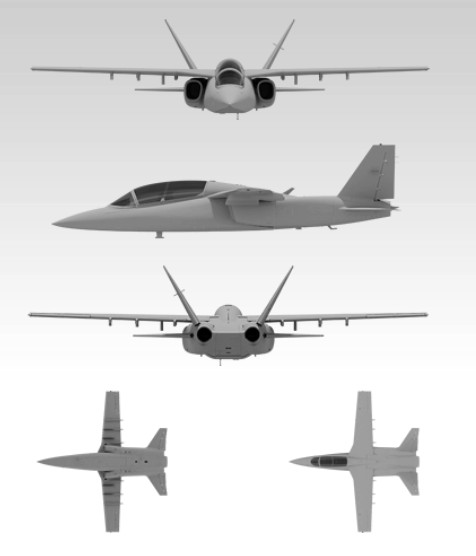
Textron announced the Textron AirLand LLC and Cessna Scorpion ISR/Strike Jet aircraft in September 2013 during the Air Force Association conference.
The Scorpion is a twin-engine, low-cost jet designed for particularly areas of border and maritime security where long missions and sustained sortie rates can place a burden on dedicated tactical aircraft which were never designed for that role. The Scorpion benefits from many commercially off-the-shelf components better suited for sustained Intelligence, Surveillance and Reconnaissance (ISR) and Strike operations.
The two-seat jet is powered by twin-turbo fan engines and will be able to carry 3,000 pounds of internal payload. The all composite airframe will have an initial service life of 20,000 hours.
Textron AirLand LLC and Cessna Aircraft completed the first flight of their Scorpion jet prototype and demonstrator on December 12, 2013 from Wichita, Kansas. Textron CEO Scott Donnelly saying “When the design phase began less than two years ago, we were confident that we would deliver a uniquely affordable, versatile tactical aircraft by taking advantage of commercial aviation technologies and best practices.
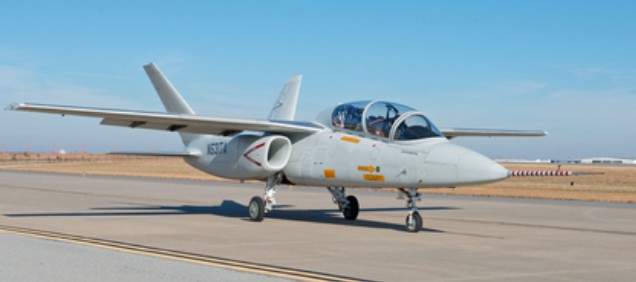
The Scorpion is powered by two turbofan engines that together produce approximately 8,000 pounds of thrust. The engines are directed by a Digital Electronic Engine Control and supply conditioned bleed air to the pneumatic system. Accessories mounted on the engine gearbox power electrical and hydraulic systems. The engines can operate on Jet-A, JP-5, and JP-8 jet fuels.
The first production conforming version of the Textron AirLand Scorpion light reconnaissance/strike/training aircraft has made a successful maiden flight at McConnell Air Force Base in Wichita, Kansas, in December 2016. Experimental test pilots Don Parker and Dave Sitz carried out a series of tests on the multi-mission, twin-seater, twin-engine jet during the one hour and 42 minute flight to verify the avionics and flight performance of the aircraft as well as other flight systems.
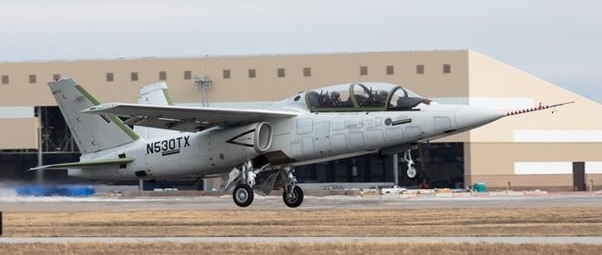
Textron says the new production version of the Scorpion has been improved based on customer feedback and 800 hours of flight testing, including military training exercises and operations in 10 countries. These upgrades include new avionics, a modified airframe, four degrees of sweep added to the wings, simplified landing gear, a next-generation Heads Up Display (HUD) and Hands-On Throttle And Stick (HOTAS) controls.
In addition, Garmin is now providing the Scorpion with the advanced G3000 integrated flight deck featuring a high-definition display and two high-definition touch-screen controllers, as well as improved navigation systems in the rear cockpit position.
The tandem-seat, twin-engine aircraft was first conceived and developed in secret in 2011 in a project to create the “world’s most affordable tactical jet aircraft.” The modular wing design allows for the wings to be replaced by different designs.
The Scorpion relies on advanced sensors and the ability to operate about 15,000 ft (4,500 m) to avoid ground fire. To keep weight and costs down, the Scorpion has an all-composite fuselage with only the undercarriage, engine fittings and mounts made of metal. Inside, there’s a 3,000-lb (1,400-kg) payload section to carry various munitions and recon gear. To simplify the design, the airframe does not include fly-by-wire systems.
Engines: 2 x Honeywell TFE731 turbo fan, 8000 lb thrust
Length: 43 ft 6 in
Wingspan: 47 ft 4 in / 14.4 m
Height: 14 ft 0 in
Empty weight: 11,800 lb
MTOW: 21,250 lb
Max internal fuel: 6000 lb
Max internal payload bay: 3000 lb
Max speed: 450 kt / 518 mph / 833 km/h
Service ceiling: 45,000 ft / 13,700 m
Ferry range: 2400 nm
Endurance: 5 hr loiter 150 mi / 241 km from base
Hardpoints: 6
Hardpoint capacity: 6,200 lb / 2,800 kg
Seats: 2
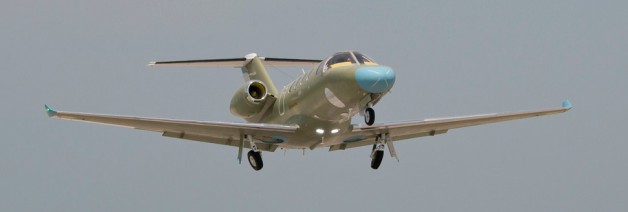
Cessna Aircraft Company successfully made the first maiden flight of their new Citation M2 light business jet in August 2013. The M2 departed on the two-hour flight from the company’s facility in Independence, KS.
“The aircraft performed exceptionally well today,” said Cessna production flight test pilot Terry Martindale. “We departed Independence and proceeded to an altitude of 17,500 feet. Through the almost two hour flight, we completed a large portion of the production test flight procedures. This is the first aircraft equipped with the Garmin G3000 avionics, and the system goes beyond what people might be expecting in terms of familiarity, versatility, situational awareness and ease of use. You can sense that pilots designed the cockpit. Everything is where you need it to be.”
The Citation M2 is the follow-on to the Citation Mustang jet. Offering increased speed, range, payload and avionics upgrades, the Citation M2 also features the new Garmin G3000 avionics suite, featuring high-resolution multi-function displays. Like it’s predecessor, the M2 will be powered by two Williams FJ44 turbo-fan engines.
 All Aero