A pressurized business and commuter rear-winged turbojet aircraft, as triple-engined 11 to 19 passenger Contender 303
Jet
Contender 202
A pressurized business and commuter rear-winged turbojet aircraft, as twin-jet Contender 202 for seven to 19 passengers, triple-engined 11 to 19 passenger Contender 303
Commonwealth Aircraft Corp / CAC CA-26 / CA-27 Sabre
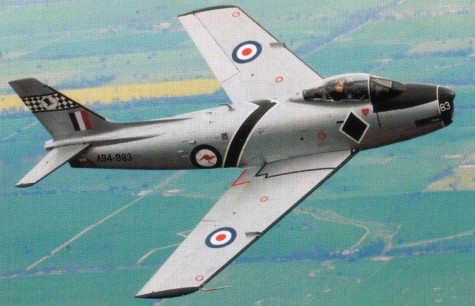
As early as 1949 the RAAF began planning a replacement jet fighter for the locally-built CAC Mustang and DHA Vampire. Gloster Meteors were obtained in 1951 for service with No 77 Squadron in the Korean War. In May of 1951, plans were finalised for CAC to build a locally-redesigned version of the North American F-86F Sabre swept-wing fighter.
Due in part to the technical investigations initiated by CAC Manager, L. J. Wackett, the RAAF decided to install the 7,500 lb thrust Rolls-Royce Avon RA.7 turbojet in place of the 6,100 lb thrust General Electric J-47 engine. Major modifications included a larger nose-intake, positioning the Avon further aft than the J-47, and moving the engine servicing break-point. Other improvements called for increased fuel capacity, a revised cockpit layout, and replacement of the six 0.50″ machine guns with two 30mm Aden cannons. Consequently, CAC had to redesign 60 per cent of the airframe. The resultant aircraft was sometimes called the Avon-Sabre.
The prototype CAC CA-26 Sabre Mk 30 first flew on 3 August 1953, with an imported Avon engine, piloted by Flight Lieutenant W. Scott. As A94-101 it went to Aircraft Research and Development Unit (ARDU) in 1955 and in latter years resided at Wagga as an instructional airframe; in 1960 it was used for ejection seat trials following three fatal Sabre accidents.
The first production CA-27 Sabre, A94-901, flew on 13 July 1954 and was followed by 21 Mk 30s, A94-902/922, with imported Avons, and leading-edge slats. From 1955, the next 20 Sabre Mk 31s, A94-923/942, were powered with the CAC Avon Mk 20, had an extended leading-edge, additional fuel cells, and fitments for drop-tanks, bombs, and rockets. The earlier Mk 30s were then modified to Mk 31 standard. The final version of the CAC Sabre was the Mk 32 of which 69 were built, A94-943/990 and A94-351/371. They carried additional drop-tanks and rockets and, as from 1960, Sidewinder air-to-air missiles. All earlier Sabres were similarly modified, and retrospectively fitted with the CAC Avon Mk 26 engine which was first installed in A94-973. The last CAC Sabre, A94-371, completed acceptance trials on 19 December 1961.
The first production Sabre, A94-901, went to ARDU on 19 August 1954. A Sabre Trials Flight was established at No 2 (Fighter) Operational Training Unit, RAAF Williamtown, on 1 November 1954 and No 75 Squadron became the first Sabre squadron after it reformed on 4 April 1955. No 3 Squadron received its first Sabres on 1 March 1956 and No 77 Squadron on 19 November 1956. In October 1958, No 3 Squadron deployed to RAAF Butterworth and was followed by No 77 Squadron in February 1959. As No 78 (Fighter) Wing, both squadrons used their Sabres against the Communist guerillas until 31 July 1960. No 76 Squadron reformed in January 1960 and joined No 2 (Fighter) Operational Conversion Unit and No 75 Squadron as the Sabre equipped No 81 Wing, RAAF Williamtown. On 1 June 1962, eight Sabres deployed from Butterworth to Ubon, Thailand, to counter communist activity. This detachment became No 79 Squadron until it withdrew and disbanded in August 1968.
From 1964-5, the Mirage III began to replace the Sabre and, on 31 July 1971, the RAAF officially retired the Sabre from service.
CAC Sabre CA-27 Mk 32
Engine: One CAC RA.7 Avon Mk.26 turbojet, 3402 kg (7500 lb)
Wingspan: 11.30 m (37 ft 1 in)
Wing Area: 302.3sq.ft. / 28.1 sq.m
Length 11.43 m (37 ft 6 in)
Height 4.37 m (14 ft 4 in).
Empty weight: 5443 kg (12 000 lb)
Loaded weight: 8038 kg (17 720 lb)
Maximum Takeoff weight: 21,210 lbs 9,621 kg
Max speed 1126 km/h (608 kt, 700 mph) SL
Cruise speed 885 km/h (478 kt, 550 mph)
Range 1850 km (1000 nm)
Service ceiling 52,000 ft (15,850 m)
Rate of climb: 12,000 fpm at SL
Armament: 2 x 30 mm Aden cannon 162 rounds per gun
External load can include two AIM-9B Sidewinder missiles, up to 24 ground rockets, two 500 or 1,000lb bombs or eight practice bombs.
Total internal fuel: 412 imp gal (1,873 litres) in two fuselage tanks, two outer wing panel tanks and tanks in the leading edges.
Comac C-919
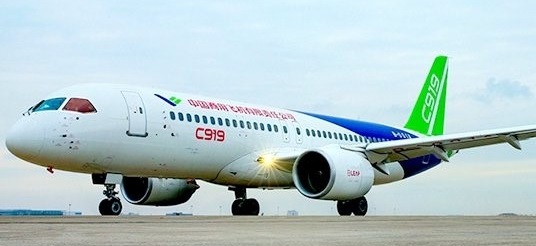
Designed to compete with the Airbus 320 and Boeing 737, the C-919 aircraft was made by the Commercial Aircraft Corporation of China, Comac; founded in 2008 with the purpose of producing the first commercially functioning aircraft for passengers – something the state-run company had previously failed to succeed in doing in the 1970s. The C stands for “COMAC” and “China”, 9 means “forever” while 19 refers to its capacity of 190 passengers. The C also has the implication that forms an “ABC” parallel situation with Airbus and Boeing. In Mandarin Chinese, 9 (Chinese: 九; pinyin: jiǔ) is a homophone of 久, meaning “forever” as a Chengyu in Chinese: 天长地久; pinyin: tiān cháng dì jiǔ.
Several components from the plane were imported, including the landing gear of German origin, Austrian interior and Franco-American engines. The aircraft, primarily constructed with aluminium alloys, is to be powered by either CFM International LEAP or ACAE CJ-1000A turbofan engines, and can carry 156 to 168 passengers in a normal operating configuration up to 5,555 km (3000 nmi).
The center wing box, outer wing box, wing panels, flaps, and ailerons are planned to be built in Xi’an, China; the center fuselage sections are planned to be built in Hongdu, China. Aluminium-lithium alloys account for 8.8% of the structure and composite materials for 12%. The air frame will be made largely of aluminum alloy. Aircraft design and assembly is performed in Shanghai.
The wing is supercritical, increasing aerodynamic efficiency by 20% and reducing drag by 8% compared to a non-supercritical one. The center wing box was originally intended to use carbon fibre composites. It was changed later to an aluminum design to reduce design complications.
Both Pratt & Whitney and CFM International offered to provide the engines for the aircraft, the former offering the PW1000G and the latter the LEAP-1C; the latter was ultimately selected.
The engine’s nacelle, thrust reverser and exhaust system will be provided by Nexcelle, with such features as an advanced inlet configuration, the extensive use of composites and acoustic treatment and an electrically operated thrust reverser. Michelin will supply Air X radial tyres. Its integrated modular avionics architecture is based on Ethernet.
Comac applied for a type certificate for the aircraft from the Civil Aviation Authority of China on 28 October 2010. In June 2011, COMAC and Irish low-cost airline Ryanair signed an agreement to co-operate on the development of the C919. The production of the prototype began on 9 December 2011.
Canada’s Bombardier Aerospace has been collaborating since March 2012 on supply chain services, electrical systems, human interface and cockpit; and on flight training, flight-test support, and sales and marketing, from June 2013.
In 2012 the C919 order book stood at 380 units worth US$26 billion, and averaging $68.4 million. In June 2015, the China National Radio predicted a $50 million price, cheaper than the B737 or A320 list prices.
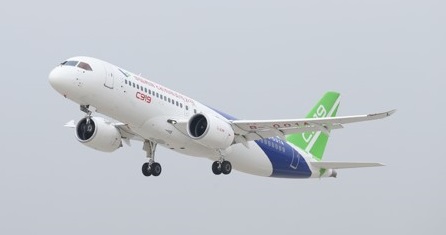
It rolled out on 2 November 2015 and first flew on 5 May 2017. The C-919’s maiden voyage lasted 79 minutes, taking off and returning to the Shanghai Pudong International airport. The flight was a particularly symbolic moment for China, as a sign of their entrance and rise into the aviation world, and was broadcast live on state-controlled television.
Comac powered on its second prototype on 28 July 2017. The first has not flown since the maiden flight but no major issues have surfaced while small improvements were being made. On September 28, it made its second flight at 10,000 ft (3,000 m), which lasted 2 hours 46 minutes, although it was supposed to last one more hour. On November 3, it made its third flight in 3h 45min, reaching 3,000 m (9,800 ft). It was then transferred on 10 November from Shanghai to Xian to continue its flight test campaign, a 2h 24min, 1,300 km (700 nmi) flight reaching 7,800 m (25,600 ft) and Mach 0.74 (825 km/h; 445 kn). The second prototype made its first flight on 17 December 2017.
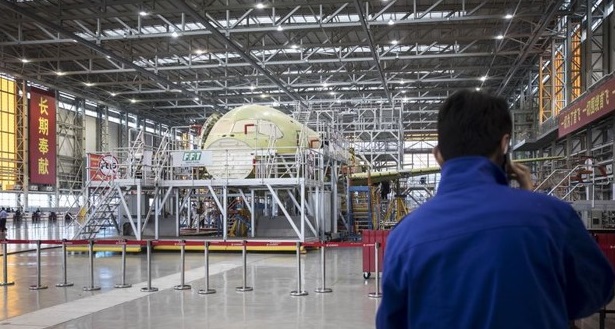
The delay between first and subsequent flights underline the program immaturity by maiden flight: flying early at low speed and altitude is possible but faster and higher is limited by aeroelastic flutter needing ground vibration testing and aircraft instrumentation which were not ready in May. Due to flight testing problems, the 2020 introduction previous schedule was delayed to 2021, for China Eastern Airlines. In February 2018, the first prototype was flying more than once a week.
Part of the problem is that Comac’s home base is Shanghai Pudong International Airport, one of the busiest airports in the country. The company decided to transfer its first test aircraft in November to Yanliang in Xi’an, a city in western China. That should make for a better base to conduct tests.
At the November 2010 Zhuhai Airshow, Comac announced orders for 55 C919 aircraft from six airlines, with an additional 45 options. The purchasing airlines or lessors included China Eastern Airlines, Air China, Hainan Airlines, China Southern Airlines, CDB Leasing Company, and GE Capital Aviation Services. On 19 October 2011, Chinese ICBC Leasing ordered 45 C919s and agreed to be the launch customer. On 11 November 2014, Comac announced at the 2014 Zhuhai Airshow that China Merchants Bank’s aircraft leasing division made a firm commitment for 30 C919s, and that total orders were now up to 450 aircraft.
At the June 2015 Paris Air Show, Ping An Leasing signed a letter of intent for 50 C919s, becoming one of Comac’s largest customers, and Puren Group signed a letter of intent for seven C919s and seven ARJ21s, intended for the start-up Puren Airlines. In November 2016 COMAC has received an order for 20 C919s including 5 firm from Shanghai Pudong Development Bank Financial Leasing and for 36 C919s from CITIC Group Financial Leasing including 18 firm. While no down payments were needed before its maiden flight, 500,000 yuan ($76,000) were deposited subsequently for each firm order. The last ICBC Leasing order for 55 on 5 December 2017 brought the order book to 785. In February 2018, its total order book was for 815, before the order for 200 from HNA Group in June 2018, along with 100 ARJ-21s.
In February 2018, Comac had 815 orders mostly from Chinese leasing companies or airlines with the exception of GE, before the order for 200 from HNA group.
In June 2018, Aviation Week reported the flight-test aircraft grounding for modifications, extending the schedule by three months but maintaining a 2020 certification target. The two prototypes were having their flaps and tailplanes modified, due to delamination of the carbon-fiber reinforced plastic elevators. Fuel tanks were also modified. The third test aircraft was also being modified and maximum-rate pressurization was tested.
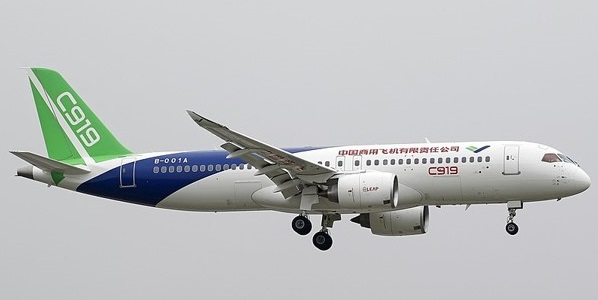
C919
Engines: 2 x CFM LEAP-1C, 31,000 lbf (137.9 kN)
Wingspan: 35.8 m / 117.5 ft
Length: 38.9 m / 127.6 ft
Height: 95 m / 39.2 ft
Empty weight: 42,100 kg / 92,815 lb
MTOW: 72,500 kg / 159,835 lb
Maximum payload: 20,400 kg / 45,000 lb
Maximum fuel: 19,560 kg / 43,122 lb
Cruise: Mach 0.785 (450 kn; 834 km/h)
Range: 4,075 km / 2,200 nm
Approach speed: 135 kn (250 km/h)
Takeoff dist: 2,000 m (6,600 ft)
Landing dist: 1,600 m (5,200 ft)
Seats: 188-168
C919
Wingspan: 33.6 m / 110 ft
Wingspan with winglets: 35.4 metres / 116 ft
Fuselage width: 3.96 m / 13.0 ft
Fuselage height: 4.166 m / 13.67 ft
Fuselage cross-section: 12.915 sq.m / 139.02 sq ft
Payload capacity: 20.4 tonnes
Cruise: Mach 0.785 / 450 kn / 834 km/h
Operating ceiling: 12,200 m / 39,800 ft
Range std: 4,075 km / 2,200 nmi
Range ER: 5,555 km / 2,999 nmi
Comac ARJ21
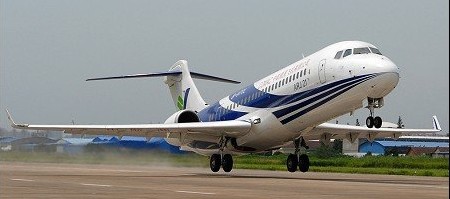
The Comac (formerly ACAC) ARJ21 Xiangfeng (Soaring Phoenix in Chines) is a 2008 twin-engined regional airliner. It is the first passenger jet to be developed and indigenously produced by the People’s Republic of China.
ARJ21-700
Engines: 2 x 6954kg General Electric CF34-10A
Take-off weight: 43500 kg / 95902 lb
Empty weight: 24955 kg / 55017 lb
Wingspan: 27.29 m / 90 ft 6 in
Length: 33.46 m / 110 ft 9 in
Height: 8.44 m / 28 ft 8 in
Wing area: 79.86 sq.m / 859.61 sq ft
Max. speed: 876 km/h / 544 mph
Cruise speed: 724 km/h / 450 mph
Ceiling: 11900 m / 39050 ft
Range: 3700 km / 2299 miles
Crew: 2
Passengers: 90
Colomban MC10 / MC12 / MC15 Cri-Cri (Cricket)
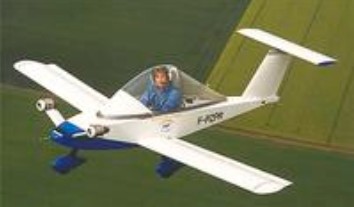
It was in 1971, when aircraft designer Michel Colomban started work on this small aircraft Cri Cri with two engines. His target was to build small, economic plane with two engines, which would be able to flying also some aerobatic maneuvers. Colomban originally planned the Cri-Cri in wood and fabric.
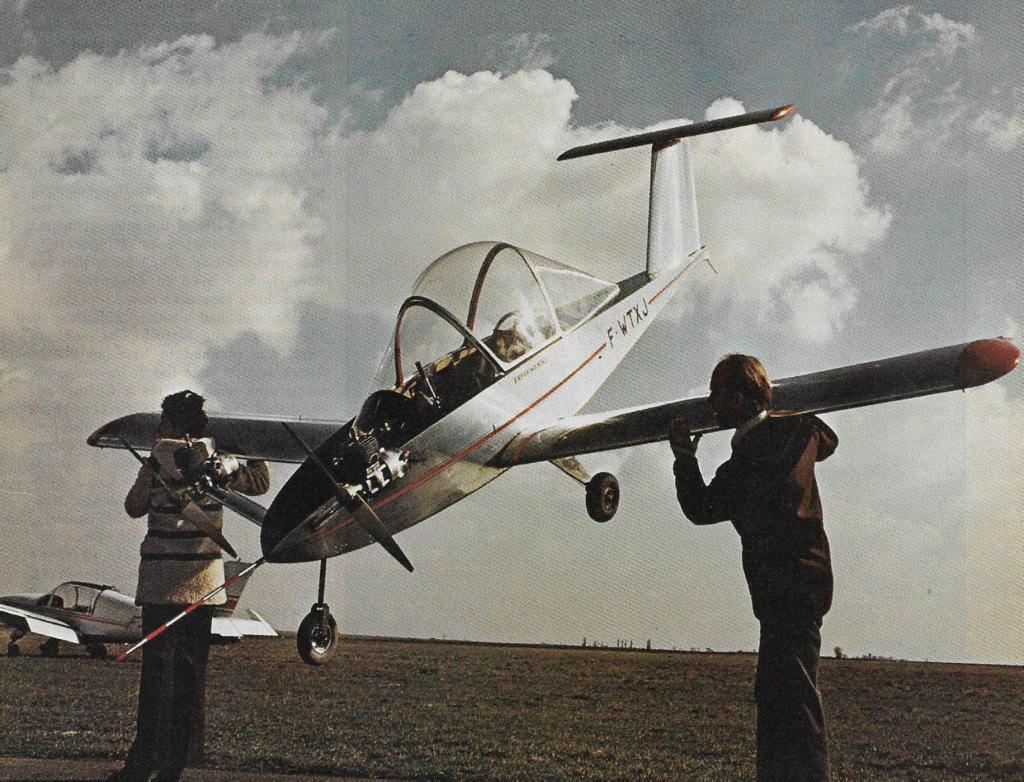
A spar was made with a thin plywood web, but with alloy caps glued on. The bonding was so effective, and the alloy so quick and easy to use, Colomban decided to go toward metal construction, using a lighter material than aluminium for the non-stressed parts of the inner structure. In time he settled on Klegecell, a polyvinyl-chloride (PVC) foam.
The wooden wing was planned to have an NACA 23012 section, but the foam/metal wing used a Colomban-modified Wortman 19% thick design. This changed to 21.7% later. The par is AU 4 G-1 alloy with an I-beam section. The ribs, 32 per panel in the prototype, were sawed out of a stack of Klegecell sheets.
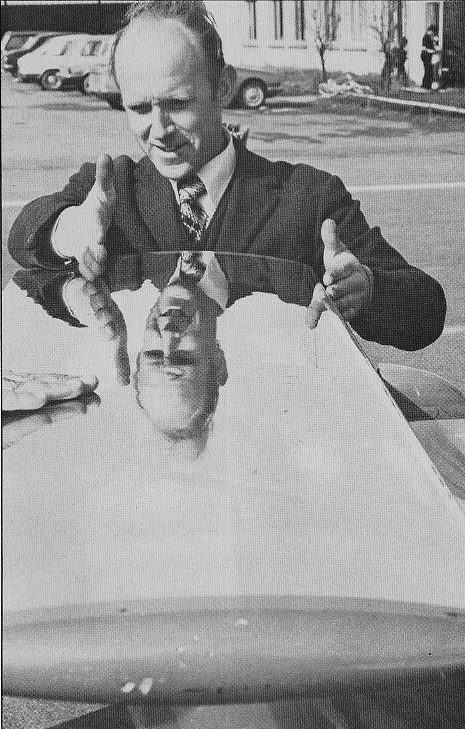
Price of this plane shouldn’t exceed 1000 USD, including two engines – these prices are from 1970. Construction took around 1500 working hours for the Cri-Cri plane, which name is after nickname of Michel’s daughter, prepared for it’s first flight. The prototype was first flown in 1973, with two 9 hp engines.
The Cri-Cri features brakes, flaps, full harness, nosewheel steering and inflight adjustable rudder pedals. The prototype had ground adjustable variable pitch 68cm / 26.75in in diameter.
Cricket is fully aerobatic (at 170 kg) and was built in France under the approval of the French EAA, the Fleseau du Sport de LAir (RSA).
CriCri is the world’s smallest twin-engine airplane at 16 feet and 160 pounds. Powered with two 12-hp Swedish snowmobile Valmet engines, the tiny twin was first shown at the 1981 Oshkosh Fly-In.
With trhe help of a Canadian businessman, worldwide marketing was established. Development of a kit to accompany the plans soon followed.
The kit product diverged from the original design in a few critical areas, notably, the flaperon torque tube. The new company elected to replace the aluminium tube with a steel one of smaller diameter. The steel tube had some torsional flexibility that harmonised with the flaps themselves and a few crashes resulted from severe flutter problems.
Unaccustomed to huge damages sought in the US lawsuits ($10,000,000) Colomban, whose relationship with the Canadian company had cooled considerably, pulled the airplane from all markets in the Western hemisphere. The company was forbidden to sell kits for the Cri-Cri and spare parts suddenly disappeared.
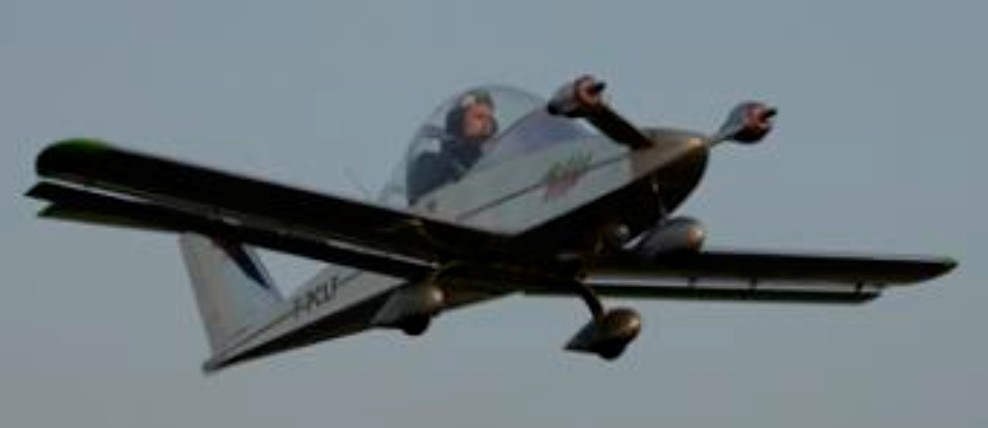
After those Yves Duval and Nicolas Charmont, a third Cricri jet was flying in France. Dominique Bonnaire made him his first flight in this configuration on May 5, 2011. The engine selected was 2 Jetcat P200SX giving a thrust of about 45 kg.
Dominique Bonnaire was the builder and owner of this Cricri, flying since 1996.
MC-10 Cri-Cri
Stall: 39 kt / 45 mph / 72 kmh
Cruise: 108 kt / 124 mph / 200 kmh
VNE: 159 kt / 183 mph / 295 kmh
Empty Weight: 80 kg / 176 lbs
MTOW Weight: 170 kg / 375 lbs
Climb Ratio: 600 ft/min / 3 m/s
Take-off distance (50ft obstacle): 330 ft / 101 m
Landing distance (50ft obstacle): 495 ft / 151 m
MC12
Gross Wt. 380 lbs.
Empty Wt. 160 lbs.
Fuel capacity 6 USG.
Wingspan 16’.
Length 12’10”.
Wing area: 33 sq.ft.
Engine 2 x 12-hp Vlamet.
Vne: 160 mph.
Top mph 127.
Cruise mph 110.
Stall mph 42.
Climb rate 850.
Takeoff run 480.
Seats: 1.
Design load: +9 / -4G.
Rate of roll: 180o/sec.
MC-15
Engine: 2 x JPX 212, 15 hp
Wing span: 4.9 m
Wing area: 3.1 sq.m
MAUW: 170 kg
Empty weight: 80 kg
Fuel capacity: 23 lt
Max speed: 220 kph
Cruise speed: 190 kph
Minimum speed: 72 kph
Climb rate: 6.5 m/s
Seats: 1
Fuel consumption: 8.6 lt/hr
Plan price (1998): 2650 F
Bonnaire Cricri jet
Engines: 2 Jetcat P200SX, 45 kg thrust
Wingspan: 4.90 m
Length: 3.90 m
Height: 1.22 m
Empty weight: 78 kg
MAUW: 175 kg
Fuel capacity: 24 litres
Cruise speed: 240 Km / h
Maxi speed: 270 Km / h
Maxi load: +6 /-3G
IAR IAR-99 Soim
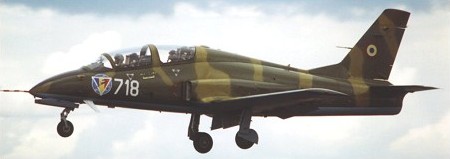
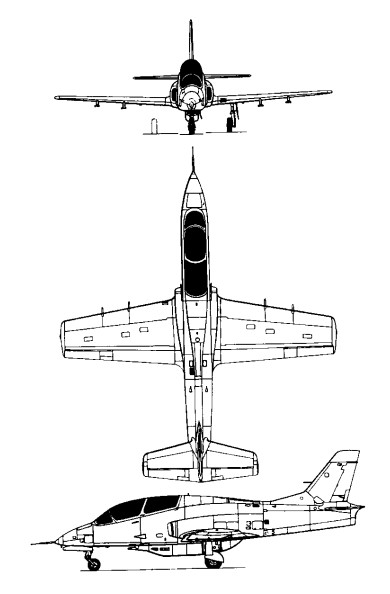
Making its first flight in December 1985, the IAR-99 Soim (Falcon) is designed as a basic jet trainer/light ground attack aircraft, the Soim has lateral intakes for the single 4,000 lb st (17,8 kN) R-R Viper Mk 632-41 turbojet. The wings are unswept, with provision for up to four attachment points, as well as a gun pod on the fuselage centreline. Maximum take-off weight is in the 5,500kg class, with a maximum level speed of 865km/hr (467kt) and a service ceiling of 13,900m (46,000ft).
The first prototype flew on December 21, 1985. The aircraft was in production for the Romanian Air Force to replace the L-29 Delfin in Romanian Air Force service.
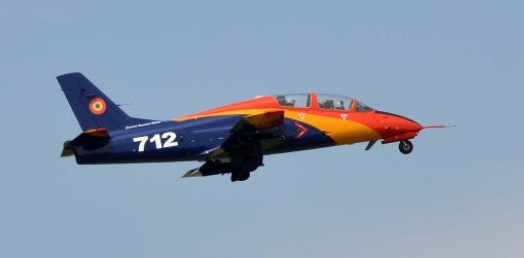
IAR 99 Soim
Engine: 1 x Rolls-Royce “Viper” Mk.632-41M, 1820kg
Take-Off Weight: 4400-5560 kg / 9700 – 12258 lb
Empty Weight: 3200 kg / 7055 lb
Wingspan: 9.85 m / 32 ft 4 in
Length: 11.01 m / 36 ft 1 in
Height: 3.90 m / 12 ft 10 in
Wing Area: 18.71 sq.m / 201.39 sq ft
Max. Speed: 865 km/h / 538 mph
Ceiling: 12900 m / 42300 ft
Initial ROC: 2190 m / min.
T/O run: 790 m.
Ldg run: 750 m.
Hardpoints: 4.
Range: 970-1100 km / 603 – 684 miles
Crew: 2
Armament: 1 x 23mm cannon, up to 800kg of weapons
Cicaré CH-14 Aguilucho
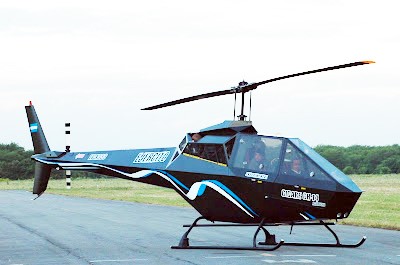
The Augusto Cicare CH-14 light two-seat tandem helicopter development began in January 2005 under an Argentine Army request in conjunction with CITEFA, La Plata University and Army Aviation Maintenance Batallion.
First revealed Nov 23, 2007 during the Army Aviation Day and is intended to be used in both civilian and military applications.
Powerplant: Rolls Royce Allison 250-C20-B, 420 hp
Maximum Continuous Power: 370 hp
MTOW: 1450 kg
Empty Weight: 750 kg
Useable Load: 700 kg
Vne: 240 km/h
Cruise Speed: 210 km/h
Range: 630 km
Climb Rate: 8 m/s
Service Ceiling: 4500 m
Chichester-Miles CMC Leopard
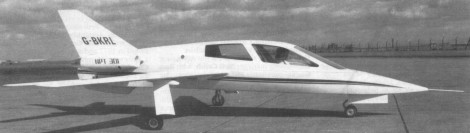
Ian Chichester-Miles, formerly Chief Research engineer of British Aerospace Aircraft Division at Hatfield, Hertfordshire, established Chichester-Miles Consultants (CMC) to develop a high performance light business jet.
Design of the four-seat Leopard started in January 1981 and was sufficiently advanced for a mockup to be completed in early 1982. Detail design and construction of a prototype by Designability Ltd of Dilton Marsh, Wiltshire, began in July 1982, under contract to CMC.
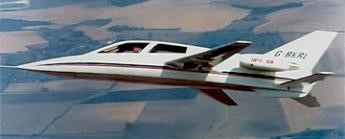
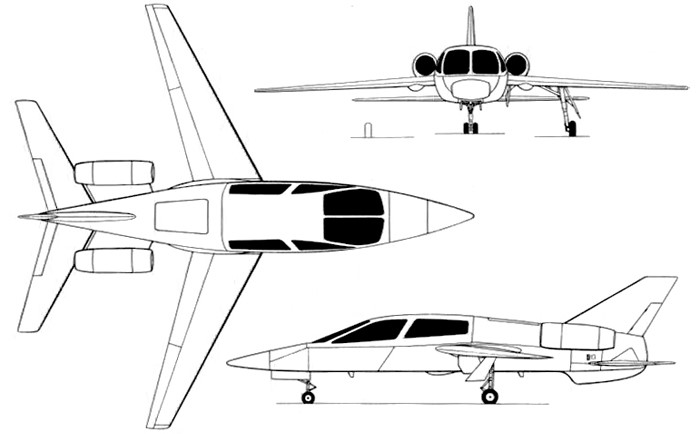
A four-seat light business jet aircraft, the wings are two-spar structure, primarily of GFRP, with some carbonfibre reinforcement. Full span electrically actuated trailing-edge flaps of carbonfibre, with deflections of +/- 45° for high drag landing and air-braking/lift dumping. No ailerons or spoilers. Thickness/chord ratio 14% at root, 11% at tip. Sweepback at quarter-chord 25°.
The Leopard airframe has an all-moving fin and tailplane and wings that combine laminar flow with supercritical technology.
Cantiler mid-wing monoplane. ARA designed wing section and 3D profiles combining laminar flow and super critical wing technology.
The fuselage is built in three sections: Unpressurised nose section accomodating avionics and nosewheel gear when retract, pressurised cabin section (production aircraft only) and unpressurised rear section providing a baggage bay, with fuel tanks below and equipment bays to rear.
Basic monocoque structure, primarily of GFRP with some carbonfibre reinforcement; fore and aft cabin bulkheads, engine and tailplane axle frames moulded in.
Pressure cabin section divided approximately along aircraft horizontal datum, with upper section formed by electrically actuated upward opening canopy hinged at windscreen leading-edge. Multiple latches around canopy lower-edge. Bonded-in acrylic side windows carry pressurisation tension. Nose opens for access to avionics.
Powered by two NPT 301 engines developing 300-350 lb thrust, this glass-fibre composite mini business jet is designed to keep pace with Learjets and Jumbos. Complete with a glass cockpit, the Leopard will carry four passengers and baggage over 1500 nm at around 500 mph at 41,000-45,000 feet.
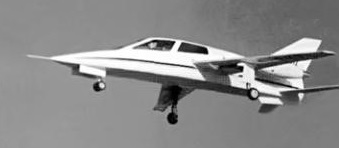
First shown statically at Farnborough in 1986, the first flight of the prototype (G-BKRL) took place on 12 December I988 at RAE Bedford, piloted by Cranfield test pilot Angus McVitie for a 27min flight.
CMC has limited the aircraft to 130kt and a maximum altitude of 3,500ft. The Leopard prototype was tested from speeds as low as 75kt with maximum 41° flap. Minimum zero-flap speed was less than 90kt. Undercarriage cycling was proved during this flight.
The prototype flying in the 1990 Farnborough display.
The converted missile NPT301 turbojet engines were intended solely for the 001, and NPT was slated to develop new engines for the final version of the aircraft. But when NPT went bankrupt, the entire Leopard project was delayed for one year until CMC teamed up with Williams International Corp., Walled Lake, Michigan.
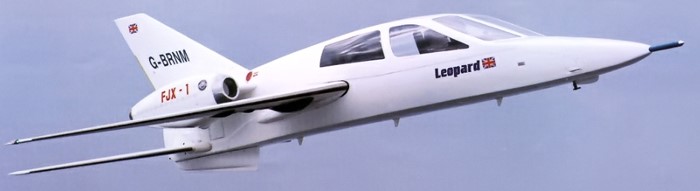
Williams developed the FJX-1 engine for CMC’s first production-configured aircraft, the 002, built at the Designability R&D Center in Dilton Marsh, England. Rated at 680 lb-thrust, the FJX-1 had more than twice the power of the NPT301. That was okay for the 002, but it was not quite enough for the final aircraft.
Engines: 2 x Noel Penny NPT 301 turbofan, 300-350 lb.
Seats: 4.
Cruise: 800+ kph.
Range: 2775+ km.
Chengdu J-20 / Xian J-20
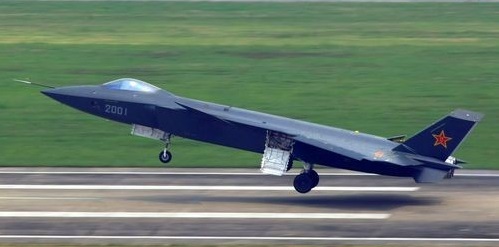
In the late 1990s, China initiated the J-XX program, aimed at developing a fifth-generation fighter. The Chinese revealed the first product of the J-XX program, the J-20, to the world in 2011. It is designed for high-alpha control and supercruise performance.
It uses internal weapons bays capable of carrying both short and long-range AAMs, and an advanced HUD and glass cockpit has been mounted on the aircraft. The prototypes were flying with Saturn AL-31F engines, allowing for flight testing to proceed while the planned WS-15 engines were under development.
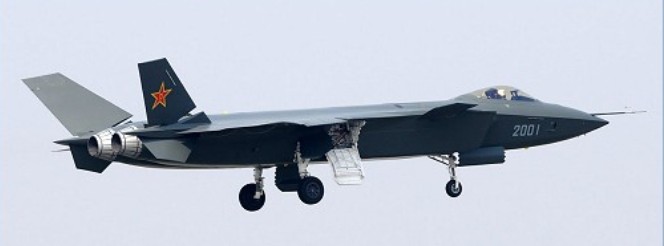
The Chengdu J-20 is a fifth generation stealth, twin-engine fighter aircraft prototype developed by Chengdu Aircraft Industry Group for the Chinese People’s Liberation Army Air Force. The J-20 made its first flight on 11 January 2011.

Unlike the F-22 and F-35, which prioritise all-aspect stealth, the J-20 employs a more selective approach to low observability, with emphasis on frontal aspect stealth to enable long-range penetration of enemy air defence networks.
Initially powered by Russian AL-31 derivatives, newer J-20s feature indigenous WS-10C engines, with the definitive WS-15 engines under development to enable sustained supercruise capability. These powerplants push the J-20 to speeds of Mach 2 (2,470 km/h).
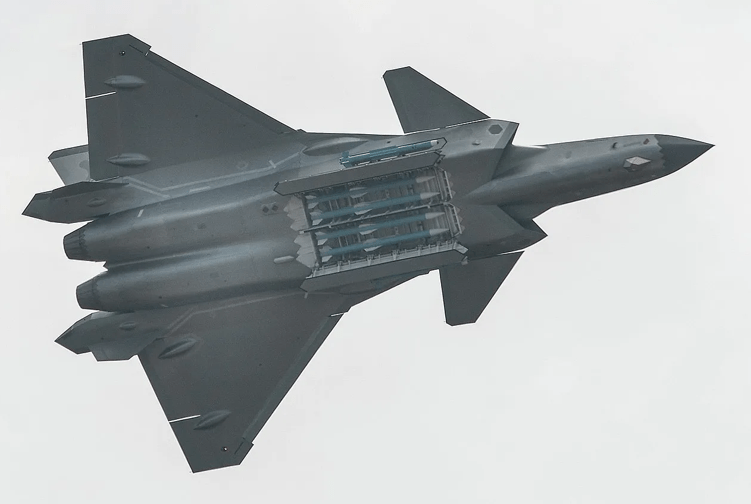
With over 200 units already operational and continuous evolution through multiple variants, the $100 million J-20 represents China’s commitment to challenging American air superiority in the Western Pacific.
Wingspan: 14 m / 46 ft 11 in
Length: 23 m / 75 ft 6 in
Crew: 1
 All Aero