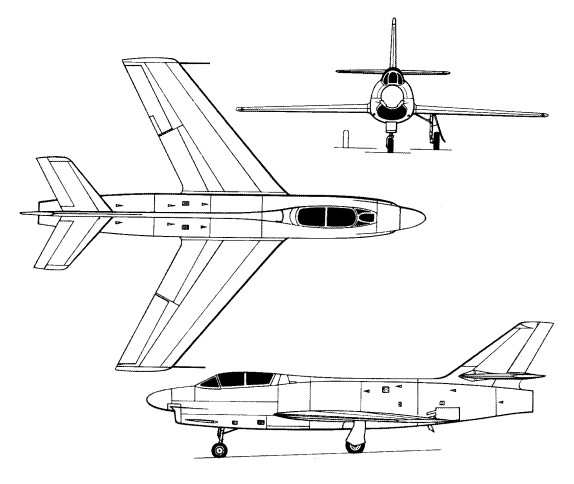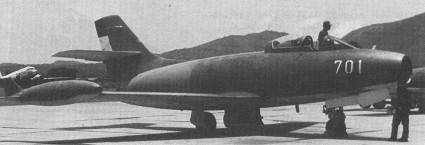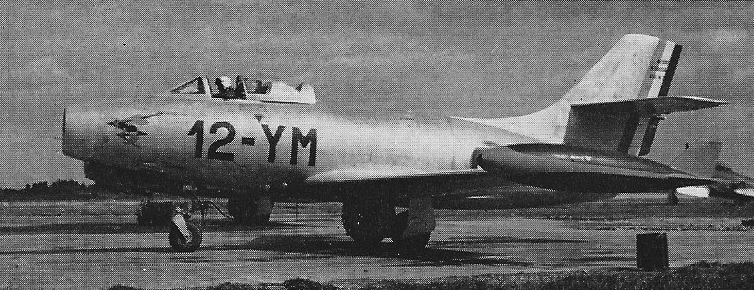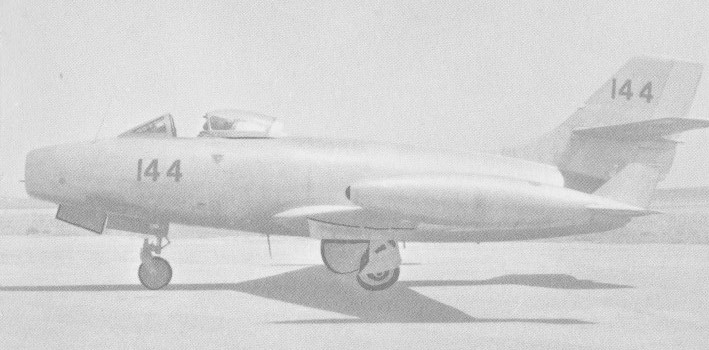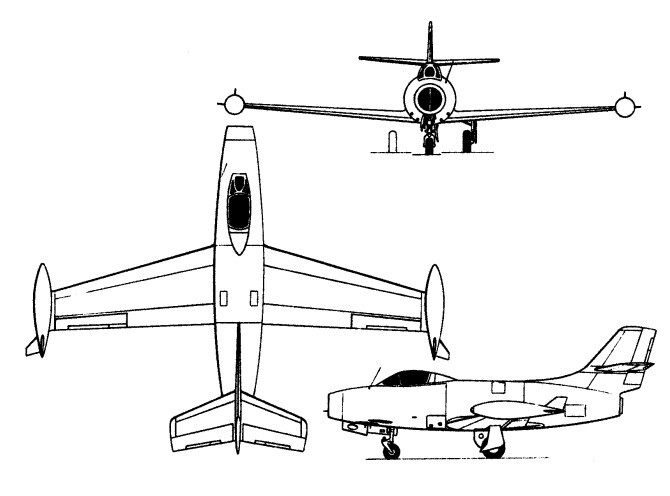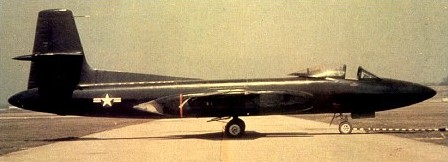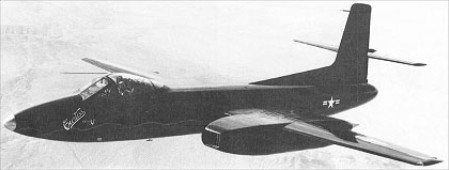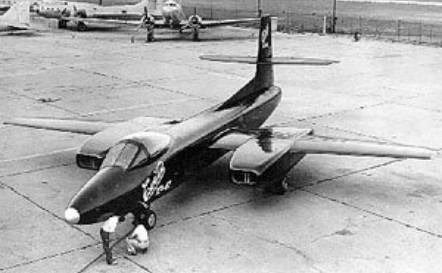
Dassault Mystère I / MD 452 Mystère II / MD.452 Mystère IV

MD 452 Mystère II

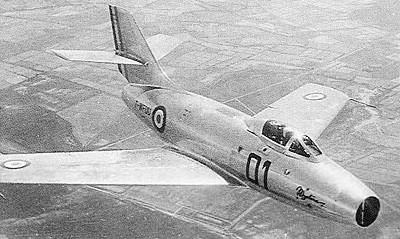
From the Ouragan evolved the swept-wing Mystere I that first flew in February 1951 with a Nene 104B turbojet.
A progressive development of the basic MD.450 Ouragan, the first prototype, the Mystere I, first flew on 23 February 1951. It retained the fuselage, Nene engine and armament of the MD.450, with a new, sweptback (30 deg) wing and redesigned tail surfaces. Wing thickness chord ratio 9%.

Dassault Mystère I / MD 452 Mystère II / MD.452 Mystère IV Article

Three more prototypes followed, differing primarily in power plant, two having the 2850kg Hispano-Suiza Tay 250 and the third having a 2500kg Atar 101C. Eleven (later reduced to 10) pre-series Mystere IIs had been ordered in September 1951, and, of these, the first three and fifth were completed to the Tay-engined IIB standard, the third with twin 30mm cannon. The sixth and subsequent received a similar armament, SNECMA Atar 101C-1, -3, and later D-1 or -2 engine with revised intake trunking and rearranged fuel tanks as Mystere IICs.
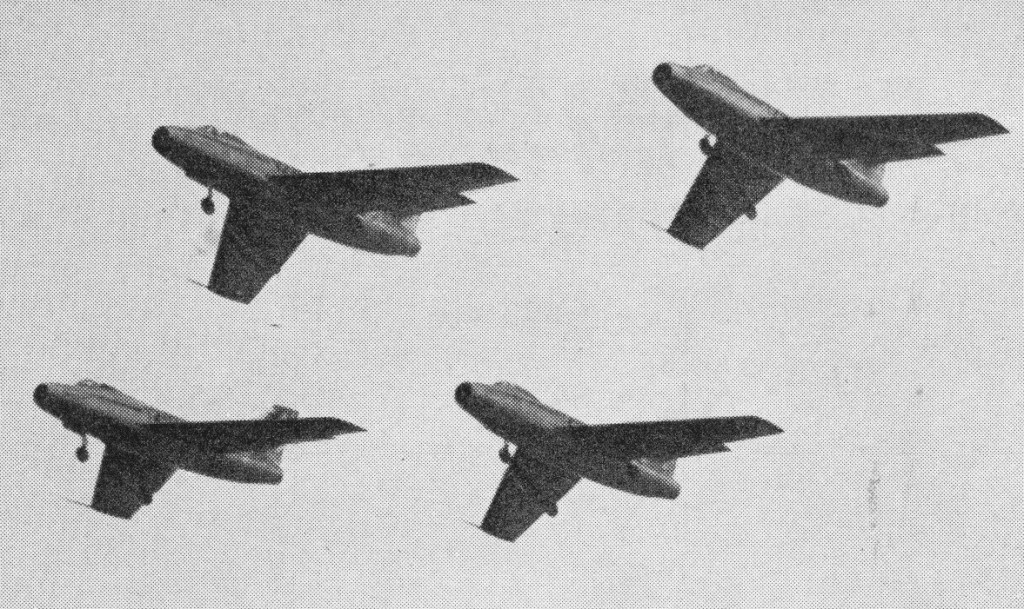
The first six of the initial order for 40 was added to the pre-series, the final two of these receiving the afterburning Atar 101F-2 of 3800kg.

Production of an additional 90 Mystere IIC fighters was ordered for the Armee de l’Air, the last flying in January 1957. The series model featured increased tail sweepback, twin 30mm cannon and 2800kg Atar 101D-2 or D-3 turbojet.
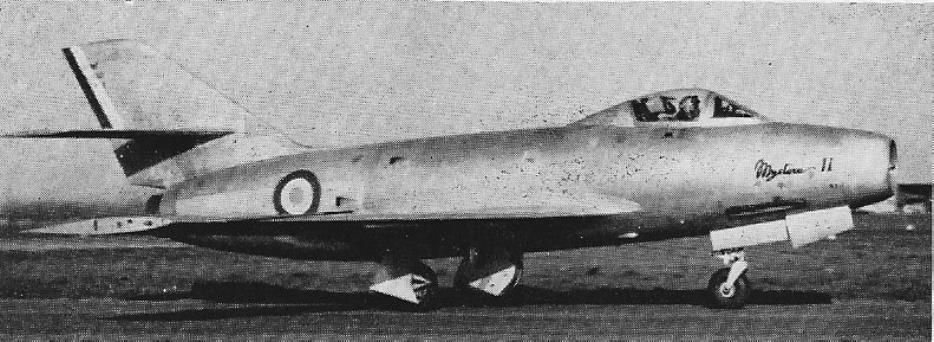
Mystere IIC

Flown in prototype form for the first time on 28 September 1952, the Mystère IVA was in fact largely funded by the United States, being subject to two large offshore procurement orders covering the manufacture of 325 aircraft in all.

The prototype was powered by a Tay 250A turbojet as used in the Mystere IIA and IIB. The low-mid wings were swept at 40 degrees 57 minutes, and an all-moving tailplane. Wing thickness chord ratio 7.5%. The tricycle undercarriage has single wheels on each unit, the main wheels retracting inwards and the nosewheel retracting forward. Airbrakes are on each side of the rear fuselage.

In the following April, an offshore procurement contract (as part of US support for NATO nations) was placed for 225 Mystere IVAs. This was subsequently supplemented with a contract from the French government for a further 100 aircraft.
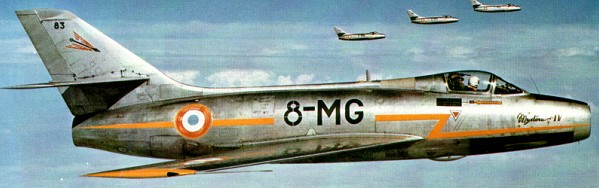
Dassault Mystère IVa

Initial production versions were powered by the Hispano-¬Suiza Tay 250A turbojet engine rated at 2850-kg (6,283-lb) thrust, but this was fairly soon supplanted by the rather more powerful Verdon 350. Differences between the Mystère IIC and Mystère IVA models centred around the wing and fuselage structure, the wing featuring increased sweep and reduced thickness/chord ratio while the fuselage was much more robust. Integral armament consisted of a pair of 30-mm DEFA cannon in the forward fuselage below the cockpit but external ordnance such as 227-kg (500-lb) or 454-kg (1,000-lb) bombs and rocket pods could be car¬ried when the type was operating in the tactical role.

The first series Mystere IVA was flown on 29 May 1954, the initial batch of 50 retaining the Tay 250A engine of the prototype, all subsequent aircraft having the 3500kg Hispano-Suiza Verdon 350 (licence-built Tay). Basic armament comprised two 30-mm cannon.
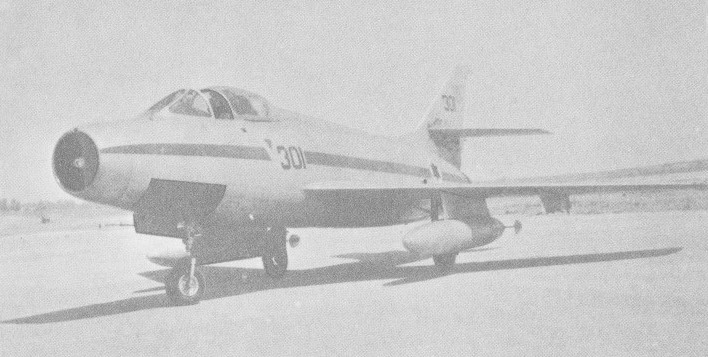
Mystere IVA

Introduction to the operational in¬ventory came during 1955 when the Mystère IVA began to enter service with the 12e Escadre at Cambrai. However, the advent of the Mirage in the early 1960s resulted in the Mystère IVA being progressively relegated to second-line training duties during that decade.

Of the 275 Verdon-powered Mystere IVAs produced, 60 were supplied to Israel, with deliveries commencing April 1956, and a further contract for 110 was placed by India with deliveries commencing in 1957. The Mystère IVA saw combat action with both of these nations.

A process of aerodynamic refinement of the Mystere IVA led to the Mystere IVB, which, in fact, shared only wings, horizontal tail surfaces and main undercarriage members with the earlier model. The Mystere IVB was intended for an afterburning SNECMA Atar 101G axial-flow engine in place of the non-afterburning centrifugal- flow Tay or Verdon. It featured an entirely redesigned fuselage of increased fineness ratio, an upper engine air intake lip for the radar ranging aerial in place of the splitter-plate conical body and a lower-mounted horizontal tail. The first prototype was flown on 16 December 1953 with a Rolls-Royce Avon RA 7R engine developing a maximum afterburning thrust of 4330kg. Two additional prototypes followed, the first of these, powered by the Avon RA 7R, flying on 18 June 1954, and the second, with an Atar 101F-12, flying on 31 March 1955. Of seven pre-series Mystere IVBs completed, the first two each had a SEPR 66 bi-fuel rocket motor to augment the thrust of the Atar 101F engine, and the final two had the Atar 101G-2 engine developing an afterburning thrust of 4500kg. The series Mystere IVB was to have been powered by an Atar 101G-31 rated at 4700kg with maximum afterburning, but the programme was cancelled owing to the superior performance potential of the Super-Mystere B2.

Developed in parallel with the Mystere IVB as a tandem two-seat night and all-weather interceptor, the Mystere IVN differed from the single-seat fighter in several respects. A 1.4m section was added to the forward fuselage to accommodate a second crew member; internal fuel capacity was substantially increased and provision was made for an APG 33 intercept radar with the scanner above the engine air intake. Powered by a Rolls-Royce Avon RA 7R rated at 4330kg with maximum afterburning, the Mystere IVN had provision for an armament of two 30mm cannon and a retractable rocket pack for 52 unguided air-air rockets of 68mm calibre. The sole prototype was flown on 19 July 1954, by which time it had been decided to discontinue the development programme owing to France’s inability to finance the simultaneous development of two night fighters (the other being the Vautour), the insufficient endurance of the Mystere IVN, and the unsuitability of the proposed APG 33 radar.

Having almost completed all Ouragan contracts for the Armde de PAir, for the Indian Air Force (where 71 are in service under the name Toofani), and against off -shore orders, Dassault were beginning to turn out Tay- and Atar-powered Mystere 2s in 1955. These were be followed by the RA.7R-powered Mystere 4B and the 4N. The first prototype 4N was being assembled; it looks much like a Sabre F-86D with two tandem seats and has a single-piece “all-flying” tailplane and full radar interception fire-control.

Total production numbered 421 by the time the assembly line closed in late 1958 and, since they were funded by American money, most of the survivors have been re¬turned to USAF control for disposal.

Gallery

MD 452 Mystère II
Max take-off weight: 7460 kg / 16447 lb
Loaded weight: 5730 kg / 12633 lb
Wingspan: 11.33 m / 37 ft 2 in
Length: 12.24 m / 40 ft 2 in
Height: 4.5 m / 14 ft 9 in
Wing area: 30.28 sq.m / 325.93 sq ft
Max. speed: 1030 km/h / 640 mph

Mystere IIC
Engine: SNECMA Atar 101D-1, 6600 lb
Wingspan: 38 ft 1.5 in
Wing area: 326.15 sq.ft
Length: 38 ft 4 in
Empty weight: 11,511 lb
Loaded weight: 16,442 lb
Max speed: 658 mph at SL / 581 mph at 39,270 ft
ROC: 8460 fpm
Endurance: 1 hr 30 min
Armament: 2 x 30 mm DEFA cannon

Mystere IVA
Engine: 1 x Hispano-Suiza Verdon 350 turbojet, 3500kg / 7,716-lb
Wingspan: 11.12 m / 36 ft 6 in
Length: 12.85 m / 42 ft 2 in
Height: 4.6 m / 15 ft 1 in
Wing area: 32.0 sq.m / 344.44 sq ft
Wheel track: 10 ft 8 in
Max take-off weight: 9500 kg / 20944 lb
Loaded weight: 5870 kg / 12941 lb
Empty weight: 5870 kg / 12,941 lb
Fuel capacity: 572 fal
Drop tank fuel capacity: 275 Gal
Max. speed: 1120 km/h / 696 mph at sea level
Service ceiling: 15000 m / 49200 ft
Initial climb rate: 2700 m / 8,860 ft/min
Range, clean: 915 km / 569 miles
Ferry range: 1690 km / 1,050 miles
Normal endurance: 70 min
Crew: 1
Armament: two 30-mm DEFA cannon
Bombload: two 454-kg (l,000-lb) or four 227-kg (500-lb) bombs, or two pods each containing 3637-mm (1.46-in) rockets.

Mystere IVB
Take-off weight: 8300 kg / 18298 lb
Empty weight: 6170 kg / 13603 lb
Wingspan: 11.12 m / 36 ft 6 in
Length: 13.75 m / 45 ft 1 in
Height: 4.55 m / 14 ft 11 in
Wing area: 32.0 sq.m / 344.44 sq ft
Max. speed: 1180 km/h / 733 mph

MD 452 Mystère IVN
Take-off weight: 10320 kg / 22752 lb
Empty weight: 7140 kg / 15741 lb
Wingspan: 11.12 m / 36 ft 6 in
Length: 14.92 m / 48 ft 11 in
Height: 4.60 m / 15 ft 1 in
Wing area: 32.0 sq.m / 344.44 sq ft
Max. speed: 1030 km/h / 640 mph
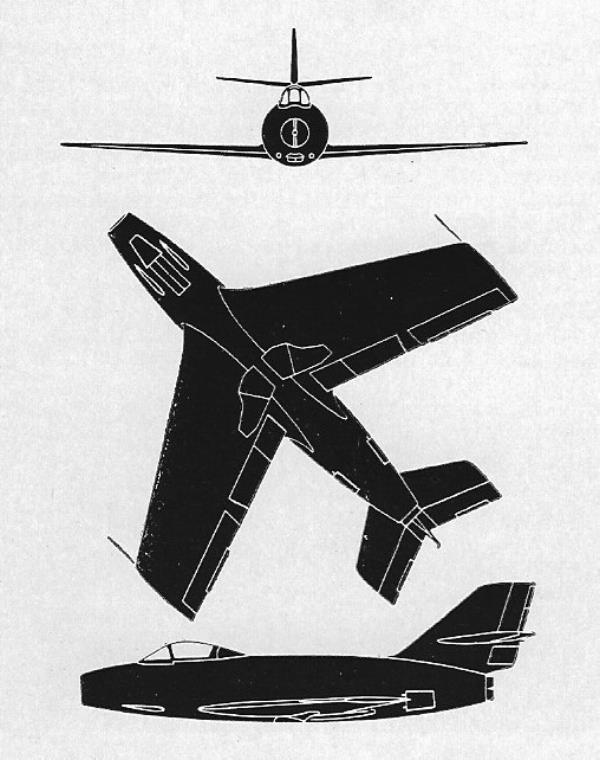
Mystere IIC
Dassault Mystere IVA
Dassault Mystere IVN

Dassault MD.450 Ouragan

The MD.450 Ouragan (Hurricane) was designed by engineers Deplant, Cabriere and Rouault as the first fighter developed by Avions Marcel Dassault and the first jet fighter of French design to attain series production.
The Ouragan began full-scale development after the end of World War II, a prototype flying for the first time on 28 February 1949 powered by a 2267kg Rolls-Royce Nene Mk 102. The second and third following on 20 July and 2 June. Twelve (later increased to 14) pre-series aircraft were followed by 350 production Ouragans.

Dassault MD.450 Ouragan Article

The Ouragan has a low wing, swept back at 14 degrees, and slightly swept tail surfaces, with the tailplane mounted part-way up the fin. Conventional ailerons, elevators, rudder, and split flaps are fitted. Airbrakes are on each side of the rear fuselage. A tricycle undercarriage has a single wheel on each unit. The mains retracting inwards into the fuselage, and nose wheel retracts forward.

Of the production Ouragans, the first 50 were completed to an interim standard as MD.450As, subsequent aircraft embodying modifications and equipment changes as MD.450Bs. Changes included replacement of the Nene 102 by the lighter Nene 104B of 2300kg. Armament was four 20mm cannon which could be augmented by 16 Matra T-10 rockets externally.

The 352 produced for the Armêe de l’Air, mainly serving as a fighter-bomber, were superceeded by the Dassault Mystêre IVA in the later 1950s.

An Indian Air Force order for 71 MD.450Bs was placed on 25 July 1953, these having the Nene 105A of 2350kg and British Mk V versions of the French 20mm Hispano-Suiza cannon. Named Toofani in Indian service (the Hindi equivalent of Ouragan), the Dassault fighter remained in first-line use until 1967, a further 33 having been procured from the Armee de l’Air (including 20 unused machines from storage) in March 1957.

Twenty-four MD.450BS were ordered by Israel in January 1955, these being supplied from Armee de l’Air stocks in the following October-November and a further 46 (including one MD.450A) being delivered subsequently. Eighteen ex-Israeli Ouragans were delivered to El Salvador in 1975, remaining in service into the late 1980s.

Engine: 1 x Hispano-built Rolls-Royce Nene Mk104B turbojet, 2270kg / 5,000-lb
Wingspan: 13.16 m / 43 ft 2 in
Length: 10.74 m / 35 ft 3 in
Height: 4.14 m / 13 ft 7 in
Wing area: 23.8 sq. m / 256.18 sq ft
Max take-off weight: 7900 kg / 17417 lb
Empty weight: 4140 kg / 9127 lb
Max. speed: 940 km/h / 584 mph at SL
Initial climb rate: 2400 m (7,874 ft) /min
Ceiling: 13000 m / 42650 ft
Absolute ceiling: 49,213 ft
Range w/max.fuel: 920 km / 572 miles
Endurance: 72 min
Armament: 4 x Hispano 404 20mm canon
Hardpoint capacity: 2 x 434kg
Seats: 1

Toofan
Engine: 5070 lb Hispano-Suiza Nene 105
Wingspan: 40 ft 3.5 in
Length: 35 ft 2.25 in
Height: 13 ft
Wing area: 256.18 sq.ft
Armament: 4 x 20 mm Hispano 404 model 50 canon
Seats: 1
Bombload: 2 x 1100 lb

Daimler-Benz DB 007 / DB 670 / ZTL 109-007 / ZTL6001

After initial studies on gas turbines in the late 1920s, Daimler-Benz lost interest in them until 1939 with the arrival of Karl Leist. Work began immediately on the DB 670 (aka ZTL 5000), a ducted fan with compressor feeding an afterburner, driven by a DB 604 X-24 engine delivering 1,864 kW (2,500 hp). At a weight of 3,748 lb (1,700 kg), with an expected thrust of 6 kN (1,323 lbf) at a speed of 900 km/h (559 mph) and altitude of 19,685 ft (6,000 m) the DB 670 was abandoned due to the very low power/weight ratio. After a brief interlude studying pulse-jets Leist began work on what was to become the DB007.

Previous design efforts in Germany had investigated ducted fans (turbofans / by-pass turbojets) and contra-rotating compressor spools, but Leist incorporated both into the ZTL6000 (precursor to the ZTL 6001 / DB 007), resulting in a very complex design. Another novel feature was a turbine which passed alternately through the combustion chamber efflux and cooling air tapped from the bypass flow. By the Summer of 1942 design goals had been revised down and the new engine was given the designations ZTL6001(company) and DB 007 / ZTL 109-007 (RLM), ZTL being an acronym for Zweikreiststurbinen-Luftstrahltriebwerk (two-circuit turbojet engine).

Air entered the engine through a conventional air intake, flow splitting after the initial guide vanes to the compressor inside and the ducted fan outside, with a by-pass ratio of approximately 2.45:1. The compressor consisted of seventeen stages of blading, eight carried on the inner drum, rotating at full engine speed, and nine on the outer drum which rotated in the opposite direction at 0.5:1 engine speed. Although extremely complicated mechanically, a compressor efficiency of 80% was expected with a very credible pressure ratio of 8:1. For comparison, typical engines of the era offered pressure ratios on the order of 3.5:1.

Further complication arose from the ducted fan which consisted of three stages of blading attached to the outside of the rotating compressor casing, with stators attached to the inside of the engine outer casing. Calculated efficiency of the fan section was 84%.

Air from the compressor passed to the four linked tubular combustion chambers, spaced evenly around the circumference with gaps to allow cool bypass air tapped from the by-pass duct to cool the turbine directly. Although this resulted in relatively poor turbine efficiency, at 74%, the cooling allowed a far higher Turbine Inlet Temperature (TIT) increasing the overall efficiency of combustion.

The turbine consisted of hollow nickel steel blading on a forged steel turbine wheel which drove the compressor via a hollow shaft and flexible coupling. The inner compressor drum was driven directly but a reduction gearbox drove the outer drum at half speed.

Structural materials comprised mainly of cast aluminium alloys forward of the combustion chamber and welded sheet steel from the combustion chambers aft.

Only bench testing began on a test-bed on 27 May 1943 before the program was cancelled in May 1944 by order of the RLM.

DB 007 / ZTL 6001
Type: Axial flow turbofan
Length: 4,998.7 mm (196.8 in)
Diameter: 899.2 mm (35.4 in)
Dry weight: 1,300.0 kg (2,866 lb)
Compressor: 17-stage contra-rotating axial compressor + 3-stage ducted fan
Combustors: 4 inter-connected tubular can combustion chambers, with cooling air gaps at the turbine
Turbine: Single-stage axial flow turbine with cooling air flow over 30% of the circumference.
Fuel type: J-2 diesel fuel (started with gasoline)
Oil system: Pressure feed to main bearings, dry sump, oil grade 163 S.U. secs (35 cs) (Intavia 7106) at 38 °C (100 °F)
Maximum thrust: 12.50 kN (2,811 lbf) at 12,000 rpm at sea level
Overall pressure ratio: 8:1
Bypass ratio: 71%
Specific fuel consumption: 137.6 kg/kN/hr (1.35 lb/lbf/hr)
Thrust-to-weight ratio: 0.0095 kN/kg (0.974 2.04 lbf/lb)
Normal, flight: 5.87 kN (1,320 lbf) at 12,000 rpm at altitude

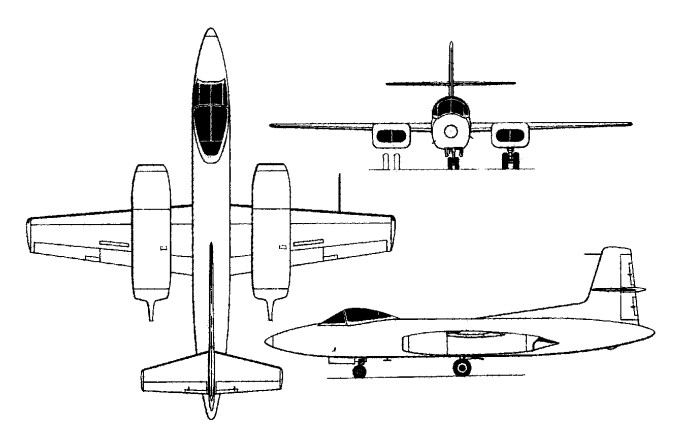
Curtiss CW-29 / XF-87 Blackhawk / Nighthawk

Curtiss had obtained tentative approval to build a twin-jet ground-attack aircraft, the XA-43. On 21 November 1945, this project was redirected towards completion of the Blackhawk fighter, mid-wing, four-engine craft with a two-man crew in side-by-side seating and with large fuel capacity. Powered by four 1360kg thrust Westinghouse XJ34-WE-7 turbojets, the sole XF-87 was flown at Muroc Dry Lake, California, on 1 March 1948 following long delays in its development and shipment from the company’s plant (later sold to North American) in Columbus, Ohio.
The two prototypes were S/N identifiers as the 45-59600 and the 46-522. The 46-522 was modified to become the single XF-87A production aircraft.

The XF-87 proved to be underpowered. In the expectation that a different powerplant arrangement would make the Blackhawk more competitive, the twin-engine scheme was resurrected. On 10 June 1948, the USAF awarded a contract to Curtiss for 57 production F-87As to be powered by two 2722kg thrust each General Electric J47-GE-7 engines located in pairs on each wing. A further order was placed for 30 RF-87A reconnaissance aircraft.

The design featured four 20-mm cannon in a fixed nose installation and would have been fitted with a nose turret developed by the Glenn L. Martin Company which revolved in a 60-degree arc enabling four 20mm guns to be fired at any angle from zero to 90 degrees from the centre-line.
Though the Blackhawk was able to overcome teething troubles in flight tests and seemed to offer promise as an all-weather interceptor, Curtiss was suffering from management difficulties and Northrop was developing an interceptor with solid potential, the F-89 Scorpion. On 18 October 1948, the USAF cancelled the F-87 Blackhawk programme in favour of the F-89. A second prototype which would have evaluated the twin J47 installation was never completed. It was to be the last Curtiss fighter.

The first aeroplane was known as the Nighthawk and powered by four Westinghouse J34-WE-7 engines, while the second was known as the Blackhawk and powered by four General Electric J47-GE-15 engines, the XP-87 Nighthawk flew.
The Nighthawk and its Blackhawk counterpart were later be scrapped.

Curtiss-Wright XP-87 / XF-87 Nighthawk
Engines: 4 x Westinghouse XJ34-WE-7 turbojet, 3,000lbs thrust
Wingspan: 18.29 m / 60 ft 0 in
Length: 19.15 m / 62 ft 10 in
Height: 6.1 m / 20 ft 0 in
Wing area: 55.74 sq.m / 599.98 sq ft
Maximum Speed: 585mph (941kmh; 508kts)
Maximum Range: 1,000miles (1,609km)
Service Ceiling: 40,000ft (12,200m)
Proposed armament:
4 x 20mm cannons in remote-controlled nose turret.
2 x 12.7mm machine guns
Crew: 2
Empty weight: 11760 kg / 25926 lb
Maximum Take-Off Weight: 49,833lbs (22,604kg)

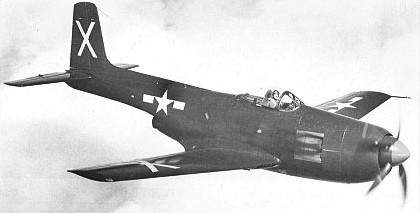
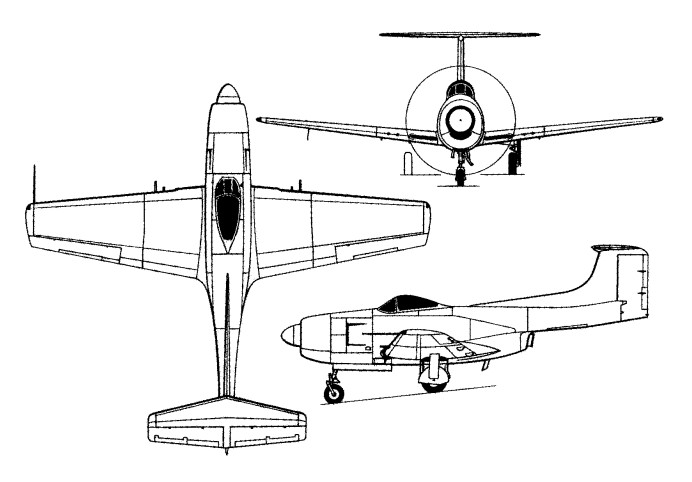
Curtiss 99 / XF15C

US Navy interest in the mixed-power concept for shipboard fighters had resulted in orders for three prototypes of the Ryan XFR-1, and 100 production FR-1s.
Taken a stage further, on 7 April 1944 a contract for three prototypes of the more powerful XF15C-1 was placed with Curtiss. This was to be powered by a 2,100hp Pratt & Whitney R-2800-34W 18-cylinder two row radial in the front with a four-bladed propeller and a 1226kgp Allison-Chalmers J36 (Halford H-1B) turbojet in the belly. Armament was to comprise four wing-mounted 20mm cannon.
The first XF15C-1 was flown on 27 February 1945, without the turbojet installed, this fitted by April, but the aircraft was lost on 8 May when it crashed during a landing approach. The second XF15C-1 flew on 9 July 1945, and was joined soon after by the third, both subsequently having their low-set horizontal tail surfaces replaced by a T-tail arrangement. The flight test programme continued until October 1946, by which time the US Navy had lost interest in the mixed power arrangement and cancelled further development.

Engines: 1 x Pratt & Whitney R-2800-34W 18-cylinder two row radial, 2,100hp / 1566 kW
and 1 x Allison-Chalmers J36 (Halford H-1B) turbojet, 1226kgp / 2700-lb
Max take-off weight: 7543 kg / 16630 lb
Empty weight: 5 737 kg
Wingspan: 14.63 m / 47 ft 12 in
Length: 13.41 m / 43 ft 12 in
Height: 4.65 m / 15 ft 3 in
Wing area: 37.16 sq.m / 399.99 sq ft
Max. speed: 469 mph / 755 km/h
Range: 2228 km / 1384 miles

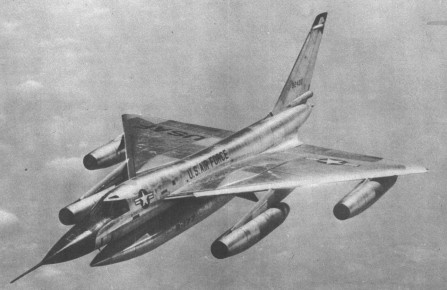
Convair B-58 Hustler

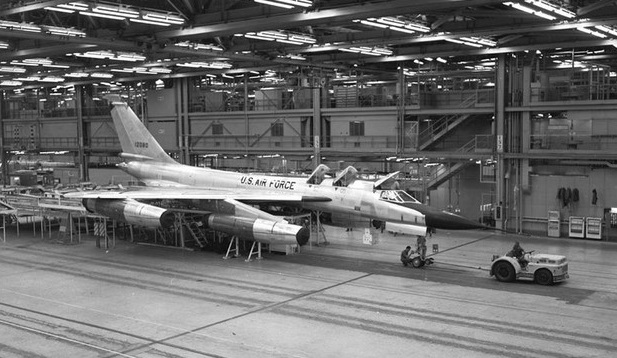
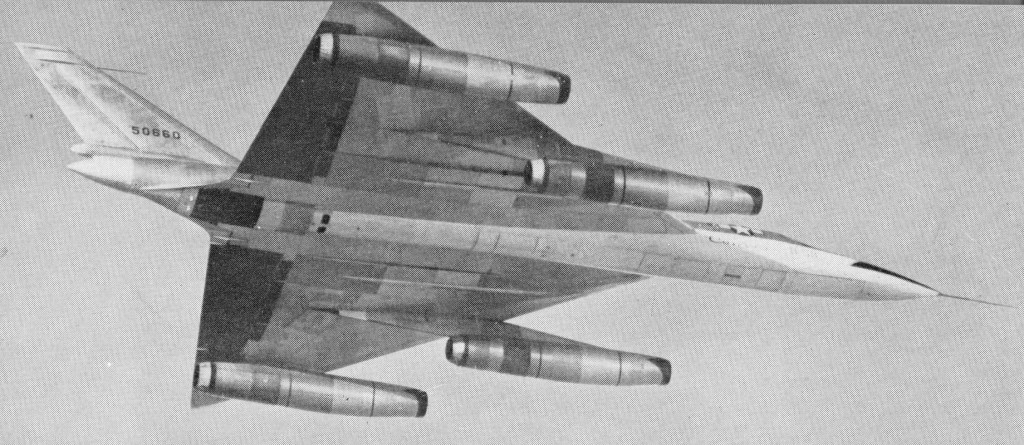
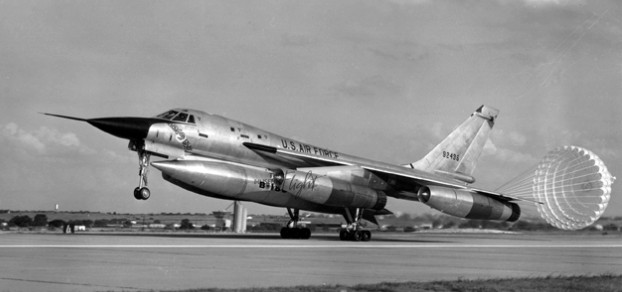
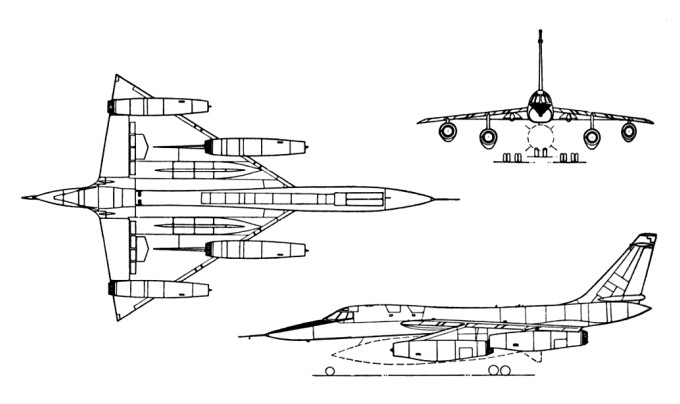
In March 1949 the US Air Force’s Air Research and Development Command (ARDC) invited proposals for a supersonic bomber, and after submissions had been reduced to two, from Boeing and Consolidated-Vultee’s Fort Worth Division, the latter was selected in August 1952 to develop its Convair Model 4 designed to the hardware stage under contract MX-1964. On 10 December 1952 the designation B-58 was allocated and late in that year Convair received a contract for 18 aircraft, to be powered by a new J79 engine for which General Electric received a development contract at the same time. The performance requirement for the new aircraft demanded considerable advances in aerodynamics, structures and materials. The resulting design, one of the first to incorporate the NACA/ Whitcomb-developed area-rule concept, was a delta-winged aircraft with four engines in underslung pods, a slim fuselage and, an under-fuselage pod. The thin fuselage provided some engineering issues early on as it prevented internal carriage of bombs and the required amount of fuel to power the four turbojet engines and allow for any reasonable operating radius to be achieved. As a result, a large external droppable two-component 18.90m long pod was affixed to the underside of the fuselage. This pod contained extra fuel and a nuclear weapon along with other mission-specific specialized gear. The three-man crew, in individual tandem cockpits, were provided with jettisonable escape capsules.

Distinctive features of the B-58 included sophisticated inertial guidance navigation and bombing systems. Extensive use of heat-resistant honeycomb sandwich skin panels were integrated into the construction of the wings and fuselage for high altitude-high velocity flight.

XB-58
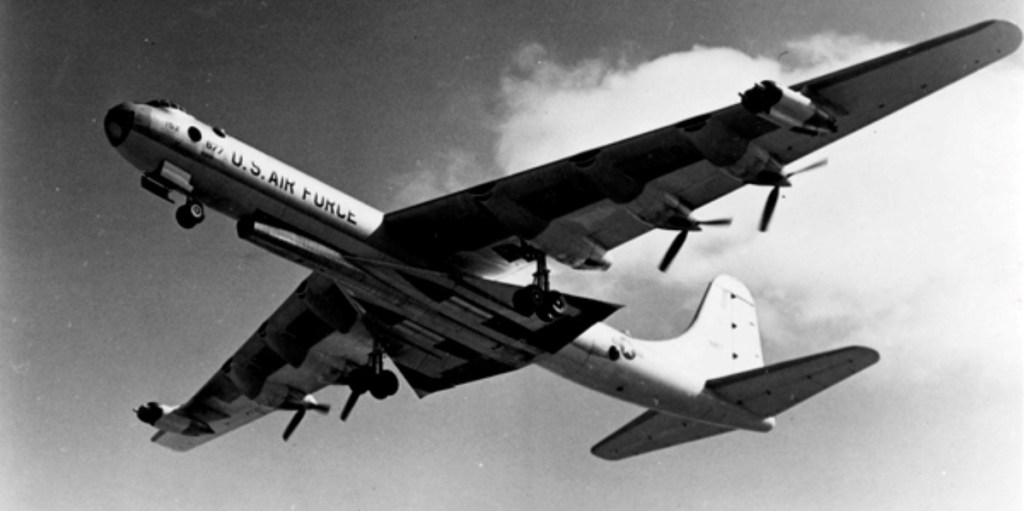
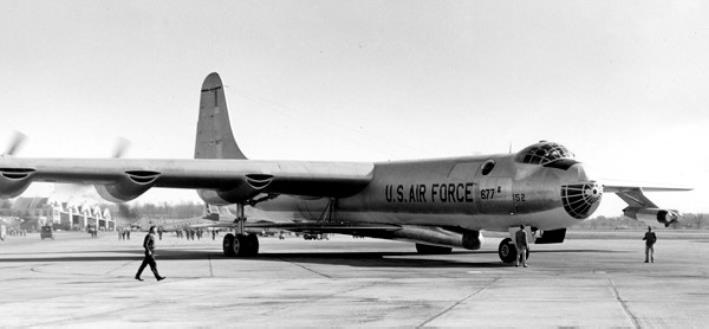
B-36 transporting the XB-58 airframe using eight of ten engines (note both of the inboard propellers have been removed for this flight)

Convair easily transported the XB-58 prototype by air from Ft. Worth TX to Wright-Patterson Air Force Base (AFB) in Ohio for testing with the use of a modified Peacemaker bomber.

B-36 and XB-58 airframe mating, note the propeller has been removed from the wing’s inboard engine as well as the strut assembly joining the two wings together.

The left and right inboard engines had their propellers removed, along with the bomb bay doors since they did not clear the wings of the XB-58 which was mounted underneath the bomber.

Since the airframe was the subject of testing the XB-58 did not have the engines attached and the vertical fin assembly was left off, as well.

In June 1954 the 18-aircraft order was reduced to two XB-58 prototypes and 11 YB-58A pre-production examples, together with 31 pods. The first of these was rolled out at Fort Worth on 31 August 1956, making its first flight on 11 November 1956 piloted by B. A. Erikson. On 30 December, still without a pod, the XB-58 became the first bomber to exceed Mach 1.

A further 17 YB-58As were ordered on 14 February 1958, together with 35 MB-1 bomb pods, to bring to 30 the number of aircraft available for the manufacturer’s test programme and ARDC service trials with the 6592nd Test Squadron and the 3958th Operational Test and Evaluation Squadron at Carswell AFB.

Convair B-58 Hustler Article

The United States Air Force ordered between September 1958 and 1960 86 total Hustlers, which were operational in the Strategic Air Command (SAC) between 1960 and 1970.

The 86 production B-58A Hustlers were supplemented by 10 YB-58As which were brought up to production standard to equip the 43rd Bomb Wing, initially at Carswell but later assigned to Little Rock AFB, Arkansas, and the 305th Bomb Wing at Bunker Hill AFB, Indiana. The first was handed over to the 65th Combat Crew Training Squadron at Carswell on 1 December 1959 and the 43rd Bomb Wing, activated as the first B-58 unit on 15 March 1960, became operational on 1 August 1960. The 116th and last B-58A was delivered on 26 October 1962, the 116 having cost $3.2 billion.

By 1964 80 were reported as still operational. The type was withdrawn from Strategic Air Command service on 31 January 1970.

B-58s as a whole set 19 world speed and altitude records and won five different aviation trophies during their operational run – a vast engineering achievement realized. Despite these performance successes, the B-58 still suffered from limitations in operating range, payload capacity and overall series growth potential.

With such outstanding performance it was clear that the B-58A had record-breaking potential. On 12 January 1961 Major Henry Deutschendorf and his crew secured the 2000km closed-circuit record at 1708.8km/h and on 14 January Major Harold E. Confer’s aircraft raised the 1000km record to 2067.57km/h. On 10 May Major Elmer Murphy won the trophy presented by Louis Bleriot in 1930 for the first pilot to exceed 2000km/h for a continuous period of 30 minutes. Sixteen days later Major William Payne and his crew flew from Carswell to Paris setting, en route, record times of 3 hours 39 minutes 49 seconds from Washington and 3 hours 19 minutes 51 seconds from New York. The Hustler crashed at the Paris Air Show on 3 June with the loss of the crew. Other flights included a supersonic endurance record of 8 hours 35 minutes from Haneda, Tokyo to London, on 16 October 1963.

Convair built 86 standard B 58A bombers as well as 11 development aircraft later brought up to production standard and 17 YB 58A pre-production aircraft which were modified as RB 58A reconnaissance machines, Eight aircraft were converted into TB 58A trainers with a tandem pair of pilot stations. The regular bomber seated pilot, nav/bomb aimer and defensive systems operator in tandem cockpits containing special escape capsules which, in emergency, could close around the occupant, seat and controls and be ejected as a sealed package.

In 1970 the 43rd and its partner, the 305th Wing at Grissom AFB, were disbanded because of high operating cost. The last B-58 would be officially retired in January 1970.

Gallery

Convair B-58A Hustler
Engines: 4 x General Electric J79-GE 5A, -5B or 5C turbojet, 69.3kN / 15,600lbs thrust with reheat capability
Length: 96 ft. 10 in (29.49m)
Wingspan: 56 ft 10 in (17.32m)
Wing area: 143.25 sq.m / 1541.93 sq ft
Height: 31 ft 5 in (9.60m)
Empty Weight: 55,561lbs (25,202kg)
Maximum Take-Off Weight: 163,000 lb (73,936kg)
Fuel capavity, wing & pod: 12,500+ gal
Weight after inflight refuelling: 80237 kg (176,890 lb)
Maximum Speed: 1,321mph (2,126kmh / 1,148kts / Mach 2.1)
Cruising speed: 610 mph.
Maximum Range: 4,400 miles without aerial refueling
Service Ceiling: 62,999ft (19,202m; 11.9miles)
Armament: 1 x 20mm Vulcan cannon in tail
1 x Under-fuselage pod carrying up to 19,450lb ordnance
Crew: 3
Hardpoints: 1
Cost: US$12,442,000

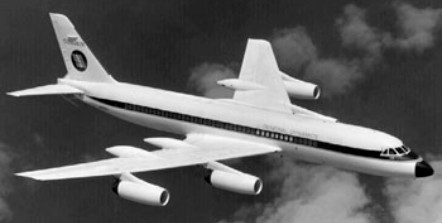
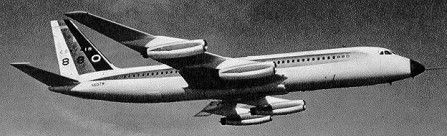
Convair 990 Coronado

CV 990 Coronado

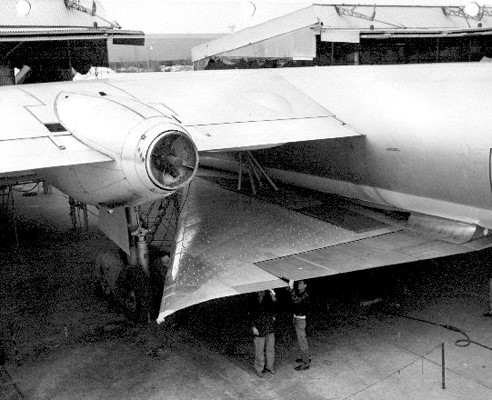
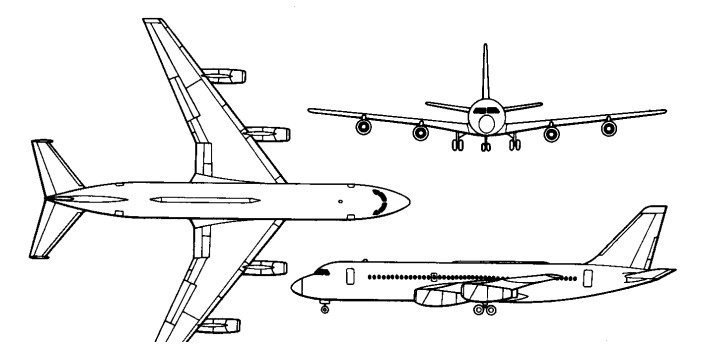
Development of the Convair 990 began when the company lost a vital United Airlines order for 30 aircraft. To attract American Airlines, Convair designed an aircraft with transcontinental range and higher speed and on 30 July 1958 Convair announced the Model 30. This was a natural growth version of the 880 and used a turbofan of 16,050 lb. Originally known simply as the Convair 880M, the new aircraft was much more than a ‘slight modification’ contrary to what the General Dynamics’ board was told. The new variant used a redesigned engine (the CJ 805 23), with a rear mounted fan and a higher bypass ratio. This required a new engine nacelle, while the need to reduce drag led to the addition of Whitcomb bodies on the wing trailing edge to ‘area rule’ the aircraft. The new aircraft also included a new proportional anti skid system, a modified undercarriage and a hydraulically powered rudder. The rest of the aircraft was strengthened to accommodate much more fuel, and the fuselage was stretched 10 ft to house 106 passengers (foreign customers later fitted in over 140) and the tailplane was increased in area.
Howard Hughes initially refused to allow Convair to give the new aircraft a designator ‘higher’ than 880, so the new aircraft was instead initially known as the Convair 600. Convair guaranteed a speed of 550kts (1021 km/h) (agreeing to financial penalties if it failed to deliver) and charged American only $100m for its 25 aircraft (later reduced to 20), taking $22.8m of the money in the form of 25 over valued DC 7s (worth $10m at most). Swissair converted its order for five 880s to an order for seven 990s. The Convair 990 originally failed to meet its guaranteed performance and the prices to American and Swissair were reduced. The airlines initially operated their aircraft without making progress or engine payments while Convair sorted out the problems. The problems were solved in the Convair 990A, but Convair’s chance to dominate the jetliner market vanished when Boeing re engined its 707s with Pratt & Whitney’s new JT3D turbofan, which could be produced by conversion of existing JT3C engines. Thus the fan engined 990 lost its unique selling point. Swissair and American began scheduled revenue services during March 1962. Other Convair 990 operators included Aerolineas Peruanas, Garuda, SAS, Thai International Airways and VARIG.
Models built for Swissair and VARIG differed slightly from standard 990s. Powered by CJ 805 23B engines, they carried slightly more fuel and had higher operating weights. They were officially known as Coronados, a name later used to describe all Convair 990s.
The announcement of the new jet was accompanied by a launch order for 20 from American Air¬lines. The aircraft was renamed Convair 990. The first off the production line flew on 24 January 1961, and by this time the programme was in deep trouble. Drag was well overestimate, and it took two years of extremely costly modifications to get near the guaranteed performance.

In addition to four large anti¬shock bodies above the trailing edge (sometimes called Küche¬mann carrots, these also served as fuel tanks) Kruger flaps were added under the wing and a com¬plex series of extensions, bumps and fairings added to the engine pods and pylons. The aircraft’s long range came about by using the four wing pods as fuel tanks. The 24-foot-long pods, known as “antishock bodies,” reduce the intensity of shock waves generated when an airplane reaches the speed of sound. In essence, they control the air flowing over the wing and therefore reduce drag. Payload, at 26,440 lb, was widely considered inadequate. The cabin was criti¬cised, as were the lack of customer options, and in the end, in addition to the launch order, only 17 aircraft were sold. American accepted the first (unmodified) 990 on 8 January 1963, and fully modified 990As en¬tered service late that year.
Lebanese International Airways and MEA operated Coronados during the late 1960s and early 1970s. LIA went into liquidation after its two Coronados were destroyed on the ground by Israeli commandos in 1968, while MEA phased out its aircraft in favour of Boeing 707s and 720s in 1972.
Following their retirement from major airlines, many Coronados found employment with travel clubs and minor airlines. Modern Air Transport obtained eight Convair 990s between January 4, 1967 and January 1971 and operated these primarily on charter work. These were often unorthodox, including polar flights landing at McMurdo Sound (the first commercial jets to do so) and even a unique 1970 Father’s Day ‘Get Away from Mama’ Busenvogel (Bosom flight) from Berlin to Paris and back, in which the stewardesses wore uniforms with transparent bodices. The company fitted new slim line seats which allowed capacity to increase to 149, without reducing leg room.
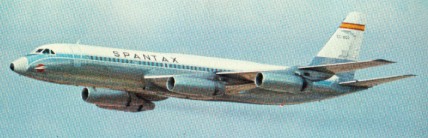
The last major operator of the Coronado was the Spanish charter airline Spantax. Spantax delib¬erately collected used examples and retired the last of 14 aircraft in March 1987. One Spantax 990 survived a mid air collision with a DC 9 over France. Ten of the surviving airframes were scrapped at Palma between 1991 and 1993, but one was retained for preservation.
In 1988 an ex Ports of Call 990 was sold to Ciskei International Airways, but this flew only a single pre inaugural flight when it could not acquire the necessary permits. The aircraft was eventually ferried to EI Paso in 1991.
NASA had been a long term operator of the Coronado, using a succession of three aircraft for atmospheric, astronomical, meteorological and solar experiments and support duties. The final aircraft was reactivated in 1980 for three years, then again in 1988 for use as a landing systems research aircraft, testing the Space Shuttle undercarriage to expand the vehicle’s landing envelope and to allow increased use of the landing site at the Kennedy Space Center Every time a Shuttle landed at Edwards, it required a piggy back ride back to Kennedy atop a Boeing 747, costing $1m per time, all because Kennedy might have been just outside the Shuttle’s crosswind limits. The tests encompassed 155 test flights ending in August 1995. Two CV 990s remained in store at Mojave.

Gallery

990 Coronado
Engines: 4 x General Electric turbofan, 16,050 lb.
Cruising speed 494kts (917km/h) at 35,000ft (10,668m).
Range 7,741km (4,172nm).
Weight empty 54,686kg (120,560 lb).
Gross weight 115,668kg (255,000 lb).
Payload: 26,440 lbs.
Span 36.5m (120ft 0in).
Length 42.49m (139ft 5in).
Wing area 209sq.m (2,250 sq.ft).
Pax cap: 104-140.

990A
Engine : 4 x General Electric CJ-805-23B, 71613 N / 7300 kp
Wing span: 120 ft 0 in (36.58 m).
Length: 139 ft 5 in (42.5 m).
Height: 39 ft 6 in (12.04 m).
Max TO wt: 244,200 lb (110,765 kg).
Max level speed: 540 kts / 625 mph (1006 kph).
Service ceiling : 41011 ft / 12500 m
Range : 2646 nm / 4900 km
Crew : 9+116

Convair 880

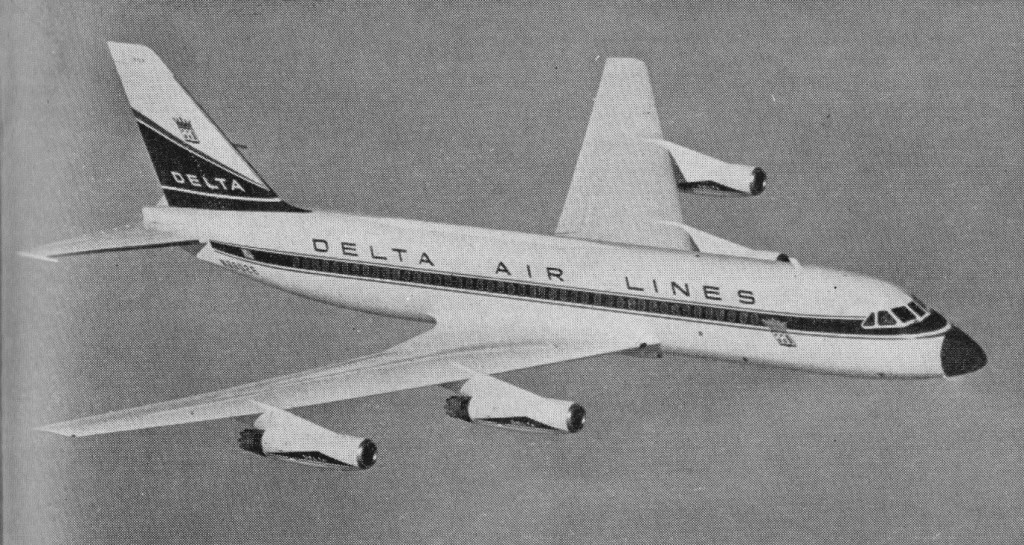
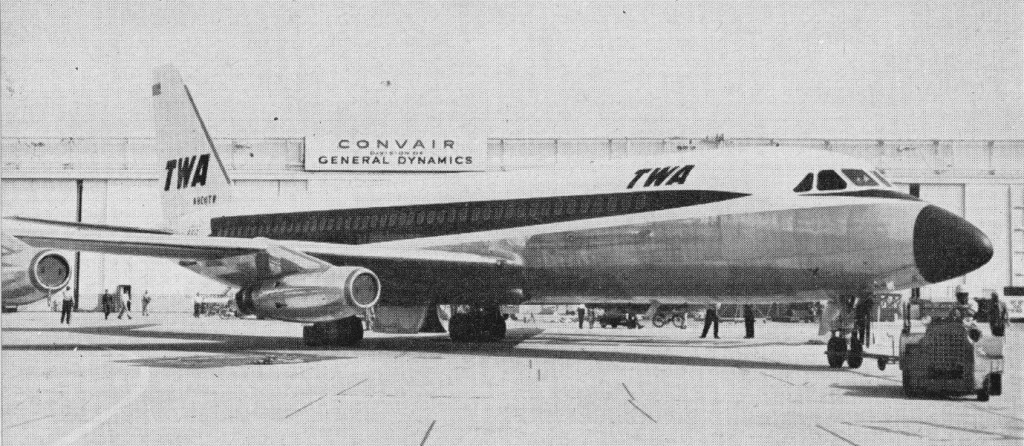
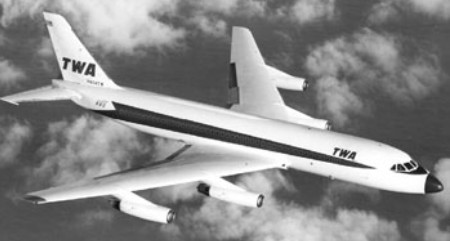
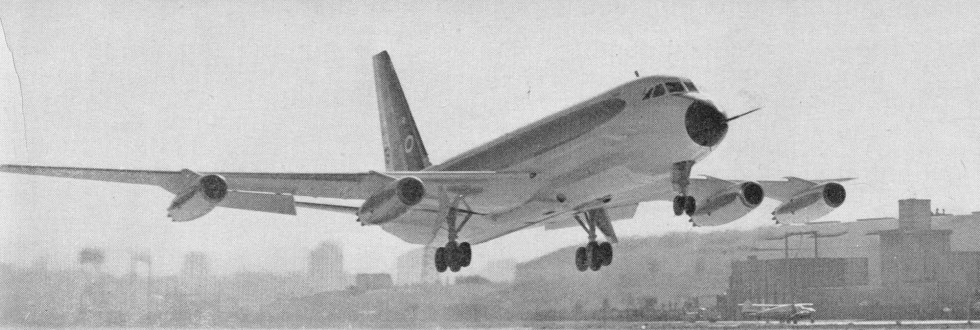
In 1955 Convair went ahead with the Model 22 Skylark, seating 80-108 passengers over sectors up to about 2,500 miles. It was announced in September 1956. During construction the aircraft was renamed Golden Arrow, and it was proposed to anodise the external skins gold. Then, because it was to cruise at 600 mph, the type became the Convair 600, and finally this was changed to Convair 880, because 600 mph is 880ft per second. The aircraft grew slightly in weight, the 880M weighing 193,000lb with 11,650-lb thrust CJ805-3B engines. Designed at the request of Howard Hughes, the owner of TWA, the first 880 made its maiden flight on January 27, 1959 and was technically a very advanced aircraft. Powered by four 49.8kN (11,2001b) st CJ 805 3s it had a boldly swept (35 degrees) wing and was a very fast aircraft indeed, justifying the much hyped claim that it was ‘the fastest airliner in the world’.
Convair 880 Article

At the time of the first flight, 78 Convair 880 variants were on order.

The second aircraft off the line flew on 31 March 1959.

The FAA certified the 880 for airline use on 1 May 1960, and 15 days later Delta Airlines put the liner into commercial service.

It was built in two versions: the 880 Model 22 basic model with 49.8kN General Electric CJ-805-3 turbojet engines, flown for the first time on 27 January 1959; and the 880 Model 22-M with 51.8kN CJ-805-3B turbojets, power-boosted rudder and four leading-edge slats. The first 880 Model 22-M flew on 3 October 1960.
The first aircraft completed to full airline standards (number 7) actually broke a transcontinental speed record on delivery from San Diego to Miami. TWAs aircraft were stored while the airline’s ownership was hotly disputed and Delta gained the honour of initiating the first services on 16 May 1960.

TWA became the largest operator of the type, with deliveries beginning two days after Howard Hughes relinquished control of the airline, on December 30, 1960. Subsequently, Convair 880s were also delivered to Northeast Airlines, though a massive, once nearly firm order from United, was lost to Boeing.

TWA was taking delivery of 20 Convair 990 during 1960 and 1961.

Some 17 Convair 880Ms were built, these having four leading edge slats on each wing, a larger fin and powered rudder, a retractable tailskid, provision for pre loaded baggage containers and a 7,094 lit (1,560 Imp gal) centre section tank. The aircraft also had a strengthened undercarriage and CJ 805 313 engines.

The oil crisis of the early 1970s made the Convair 880 particularly uneconomical to operate and Delta retired its aircraft at the end of 1973, followed by TWA in June 1974. New operators included LANICA in Nicaragua, a number of travel clubs and even Elvis Presley, whose aircraft, named Lisa Marie after his daughter, and callsign Hound Dog One is now part of the Graceland museum. Airtrust Singapore operated three Convair 880Ms until 1979, latterly operating services for Air Malta. Another aircraft was sold to the Ciskei Government.

A number of Convair 880s were briefly used as freighters. Monarch Aviation converted about seven with a cargo door and more without the door. American Jet Industries (later part of Gulfstream American) worked closely with Convair to convert some 20 Model 880s as Airlifters, but the company completed only two aircraft and the remainder were stored at Mojave, many with unused cargo doors installed. Attempts to market the aircraft in the mid 1980s foundered because they were not hush kitted. General Air Services converted one more Convair as a freighter. The last freighter flying was probably retired (in about 1986) in Haiti.

The last aircraft in regular service was the US Navy’s sole UC 880, ‘Old Smokey’, equipped as a tanker, and for missile test control and telemetry. This was retired at the NATC, Patuxent River, in September 1993 and in 1995 was used for ground based tests simulating high-altitude bomb explosions. Some 15 aircraft remained in storage at Mojave in 1998.
Total sales were 65.

Gallery

880 Model 22
Engines: 4 x General Electric CJ805-3 turbojet, 5080 kg / 49.8kN / 11,200 lb thrust.
Max level speed: 615 mph (990 kph).
Cruising speed 482kts (895km/h) at 35,000ft (10,668m).
Range 6,518km (3,513nm).
Weight empty 42,185kg (93,000 lb).
Gross weight 87,772kg (193,500 lb).
Span 36.5m (120ft 0m).
Length 39.4 m (129ft 4in).
Height: 36 ft 0 in (10.97 m).
Wing area 185.8sq.m (2,000 sq.ft).

880 Model 22-M
Engines: 4 x General Electric CJ805-3B turbojet, 5285 kg / 51.8kN / 11,650-lb thrust.
MTOW: 87410 kg / 184,500 lb.
Empty wt. 88,615 lb
Top speed 615 mph.
Cruise 501 mph.
Stall 121 mph.
Initial climb rate 3,565 fpm.
Range 3,995 miles.
Ceiling 41,000 ft.
Takeoff run 8,050 ft.
Landing roll 6,150 ft.
Pax cap: 110.
Crew: 5.
Max fuel cap: 47445 lt / 12,534 USG

Convair 8-24 / F-106 Delta Dart

F-106A

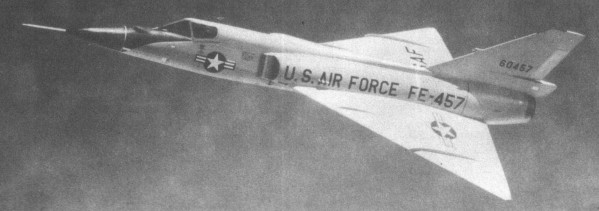
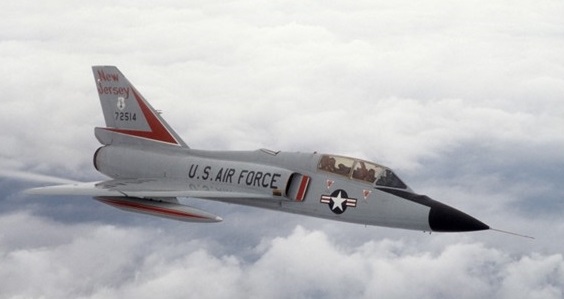
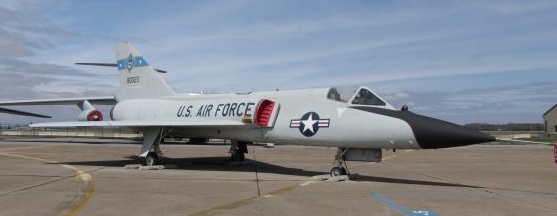
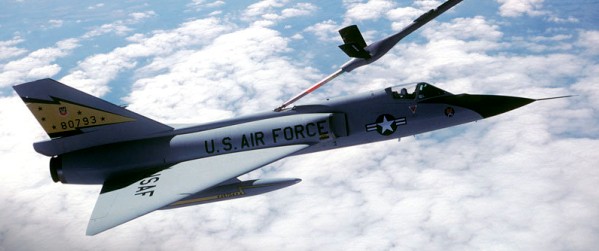
The Convair F-106 Delta Dart began its production life as a direct successor to the interim F-102 Delta Dagger, as the F-102B, built around the advanced Hughes-produced MA-1 fire control system. The F-106 retained many design elements of the F-102 including a small internal bomb bay. Nuclear capability with twin Genie nuclear-tipped missiles was a standard design initiative. An internal 20mm cannon would not be fitted to the system until 1973, when it was found throughout engagements in the Vietnam conflict that close-range fighting was still involved.

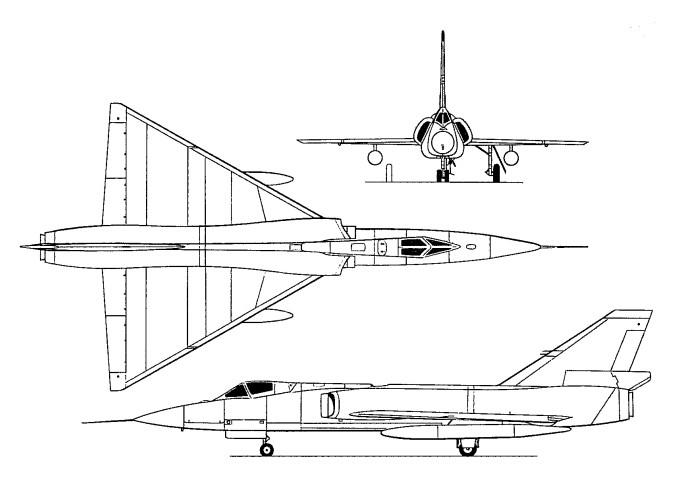
The F-106 has mid-set delta wings, with 60 degrees sweepback, no tailplane, and square-top fin and rudder.
Engine air intakes are on each side of the fuselage just forward of the wing leading edges.

The tricycle undercarriage has a single wheel on each main unit and twin nose-wheels. The nosewheels retract forward.

Convair F-106 Article

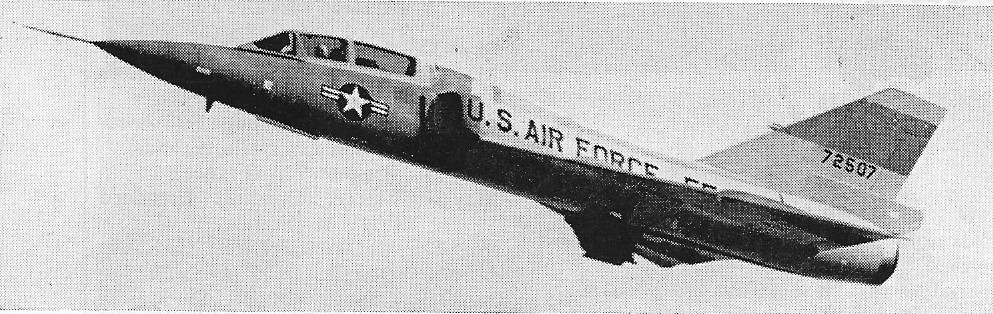
While development of the earlier fighter was delayed by various teething troubles in 1955-6, progress with the later machine became possible with the development of the Hughes MA-1 integrated fire-control system. In November 1955, the USAF placed an order for 17 F-102Bs and in December, a mock-up of the proposed cockpit with radically new equipment and pilot displays was completed. On 17 June 1956, the F-102B was redesignated F-106.

The first of two YF-106A service-test aircraft (56-451/452) flew on 26 December 1956 at Edwards AFB, California. Like most new fighter types in the ‘century series’, the F-106 was initially a disappointment. Maximum speed, rate of climb and overall acceleration were significantly below Air Defense Command expectations with the Pratt & Whitney J57-P-9 turbojet employed in the initial machines and the Wright J67, licence-built Olympus, being contemplated. When the latter powerplant failed to materialise, the USAF reduced its requirement from 1,000 to 360 of the new interceptors.

The first flight of the F-106B two-seat trainer was made in April 1958.

F-106B

An F-106A held the world speed record of 1525.05 mph from 15 December 1959 until the autumn of 1961.
Performance was improved with the installation of the 7800kg thrust Pratt & Whitney J75-P-17 turbojet which could provide 11100kg thrust with afterburning.

F-106A

The F-106A attained its initial operating capability with the 498th Fighter-Interceptor Squadron at Geiger AFB, Washington, in October 1959 and subsequently served with 15 ADC and eight Air National Guard squadrons. Except for brief deployments to Europe and to Korea in 1968, the type served exclusively in North America. Totals of 277 F-106A single-seat interceptors served in company with 63 F-106B two-seat combat trainers, 340 machines actually being completed, and the types remained on active duty until 1982.

Gallery

Convair F-106A Delta Dart
Engine: 1 x Pratt & Whitney J75-P-17 turbojet, 17,500 lb / 24,500 lb with afterburner.
Length: 70 ft 10 in (21.55m)
Wingspan: 38 ft 5 in (11.67m)
Wing area: 64.8 sq.m / 697.50 sq ft
Wing load: 55.76 lb/sq.ft / 272.00 kg/sq.m
Height: 20 ft 4 in (6.18m)
Wheel track: 15 ft 5.5 in
Wheelbase: 24 ft 1.5 in
Empty Weight: 24,859lbs (11,276kg)
Maximum Take-Off Weight: 41,831lbs (18,974kg)
Maximum Speed: 1,487mph (2,393kmh; 1,292kts)
Cruising speed: 529 kts / 980 km/h
Cruising altitude: 41011 ft / 12500 m
Maximum Range: 1,950miles (3,138km)
Rate-of-Climb: 30,000ft/min (9,144m/min)
Service Ceiling: 58,005ft (17,680m; 11.0miles)
Armament: 1 x 20mm cannon
Hardpoints: 4 for:
2 x AIR-2A Genie Nuclear Rockets or
4 x AIM-4 Falcon Air-to-Air Missiles
Accommodation: 1

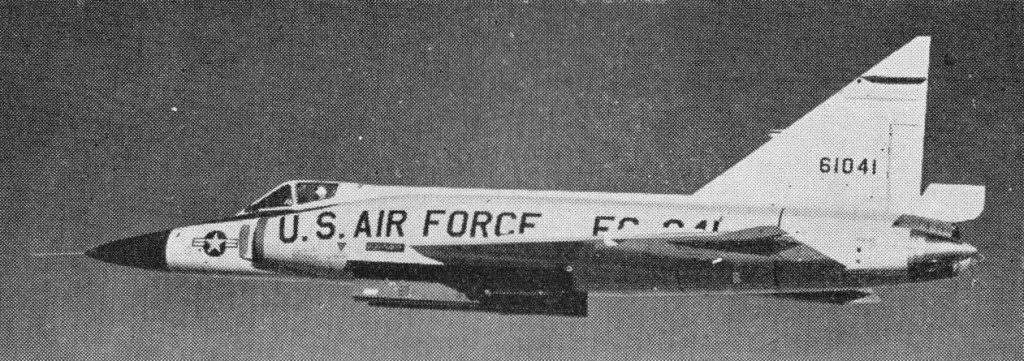
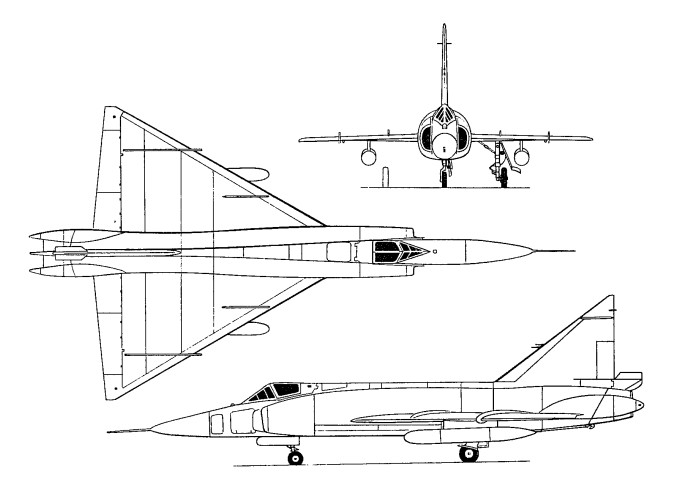
Convair 8 / F-102 Delta Dagger

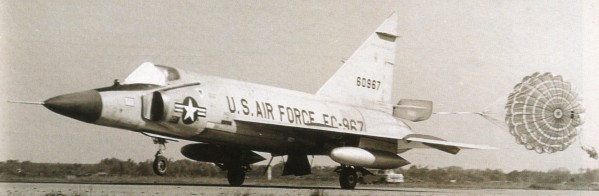
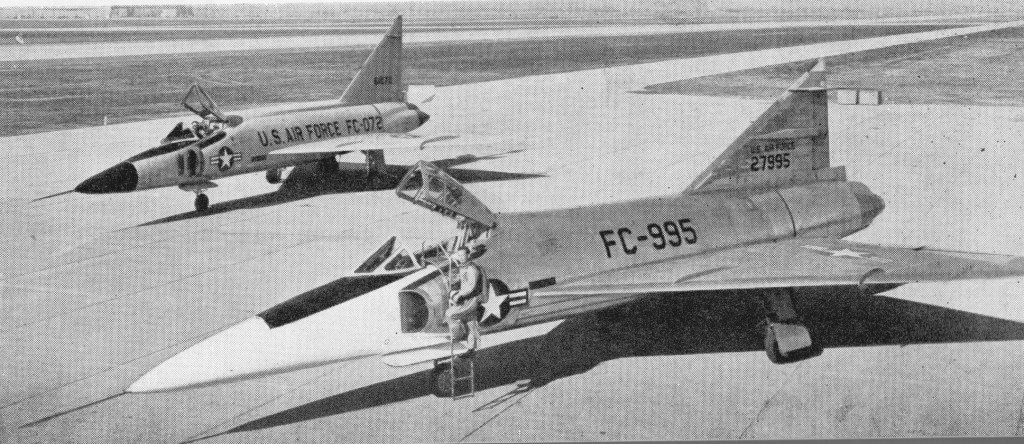
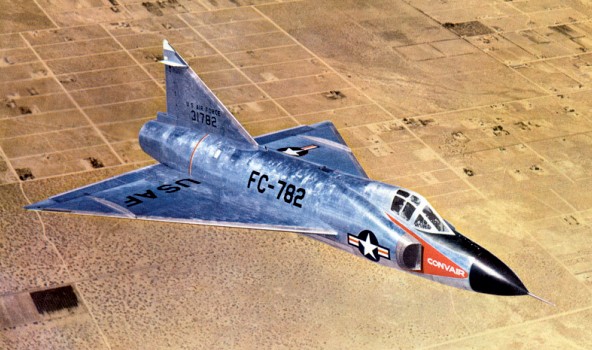
The Convair F-102 Delta Dagger resulted from a 1950 USAF design competition for an integral all-weather interceptor weapon system. Combining the Hughes Falcon air-to-air missile, the 60 degree sweep delta wing platform first flown on the XF-92A, and the 4944kg thrust Pratt & Whitney J57-P-11 turbojet, the first of 10 YF-102s (52-7994/7995 and 53-1779/1786) flew at Edwards AFB, California, on 24 October 1953, piloted by Dick Johnson. The prototype was lost in a mishap nine days later.

YF-102 (nearest), F-102 (rear)

The YF-102 was not a success, proving unable to maintan supersonic speeds in level flight. The fuselage was completely redesigned into a ‘coke bottle’ shape using the area rule concept, and a more powerful engine installed. The indented fuselage or ‘area rule’ configuration was developed by NACA’s Richard Whitcomb was introduced in the much-altered YF-102A, which was assembled in 117 days.

The first of four YF-102As (53-1787/1790) flew at Edwards AFB on 20 December 1954, again piloted by Dick Johnson, not merely with ‘area rule’ but with cambered wing, new canopy (except on 53-1788) and 5443kg thrust Pratt & Whitney J57-P-23. The new design was supersonic and met USAF expectations.

Development included the introduction pf a larger fin from the 23rd production aircraft.

Convair F-102 Delta Dagger Article

The primary weapon was the Hughes AIM-4 Falcon air-to-air missile, coupled with the Hughes MG-10 fire control system. Introduced later was the AIM-26, some nuclear tipped.

YF-102

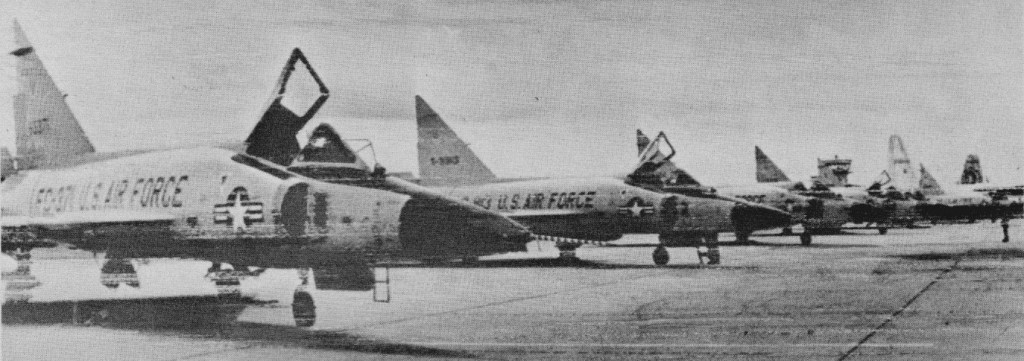
The production F-102A began to reach Air Defense Command squadrons in June 1955. The first two-seat TF-102A combat proficiency trainer (54-1351) flew at Edwards AFB 8 November 1955 and operated alongside F-102As in ADC service.

Service entry began with the first examples delivered in April 1956 to the 327th Fighter Interceptor Squadron (FIS) at George, California.
The F-102B designation was briefly assigned to a new aircraft completed as the F-106. The little-known YF-102C (53-1806), a converted F-102A model, tested change in the internal fire control system, but these were not adopted.

The F-102A eventually served with 32 ADC and 21 States ANG squadrons. Air Defense Command machines went through several modernisation programmes before being relegated to the ANG, the internal provision for rockets being eventually omitted. A few F-102As went to Greece (20 F-102A and 4 TF-102A) and Turkey (40 F-102A and 9 TF-102A).

1964 on arrival at Saigon, Vietnam

A few camouflaged F-102As were deployed to South East Asia in 1964-6, and to Korea in 1968 but, while they flew a few missions over North Vietnam, they are not thought to have actually been in combat. No air-to-air kills were achieved but one F-102A was shot down by a MiG-21 on 5 February 1968.

F-102A

Most F-102A squadrons had converted to other types by the end of 1971. The last US operational user was the Hawaii Air National Guard’s 199th FIS which received its first F-4C Phantom replacement in October 1975.
Greece retired their F-102As in 1979, with Turkey withdrawing its last 13 fighters and five trainers on 5 June 1979.
In March 1973, the USAF awarded Sperry a contract to convert an initial 6 F-102As as a fully manoeuvrable manned or unmanned target drones under the Pave Deuce programme as PQM-102As. Over 200 were eventually converted, operating until 1986.
Numerous F-102A airframes have been saved, the 199th Fighter Interceptor Squadron of the Hawaii Air National Guard having retained no fewer than four non-flyable F-102As for display purposes after transitioning to the F-4C Phantom.

Total Delta Dagger production was exactly 1000 airplanes built at San Diego’s Lindbergh Field, comprising 10 YF-102, 4 YF-102A, 875 F-102A and 111 TF-102A trainers.

Gallery

Convair F-102A Delta Dagger
Engines: 1 x Pratt & Whitney J57-P-23 turbojet, 17,200 lb (5307/7802kp) thrust.
Length: 68 ft 4.5 in (20.84m)
Wingspan: 38 ft 1.5 in (11.62m)
Wing area: 695.031 sqft / 64.57 sq.m
Wing loading: 45.31 lb/sq.ft / 221.0 kg/sq.m
Height: 21 ft 2.5 in (6.46m)
Empty Weight: 19,026lbs (8,630kg)
Maximum Take-Off Weight: 31,500lbs (14,288kg)
Maximum Speed: 825mph (1,328kmh; 717kts) at 36,000 ft
Cruising speed: 469 kts / 869 km/h
Cruising altitude: 34449 ft / 10500 m
Maximum Range: 1,350miles (2,173km)
Rate-of-Climb: 17,400ft/min (5,304m/min)
Service Ceiling: 54,003ft (16,460m)
Armament:
6 x AIM-4A / AIM-4C Falcon Air-to-Air Missiles
2 x 2.75″ Rocket Pods (24-shot, unguided rockets)
Nuclear Capable munitions as needed.
Accommodation: 1
Hardpoints: 6

Convair F-102A Delta Dagger
Engine: 1 x Pratt & Whitney J57-P-35 turbojet, 10,900 dry, 17,000 lb afterburner
Wingspan: 38 ft 1.5 in (11.62m)
Wing area: 661.5 sq.ft
Length: 68 ft 4.5 in (20.84m)
Height: 21 ft 2.5 in (6.46m)
Wheel track: 14 ft 2.25 in
Wheelbase: 22 ft 4.5 in
Maximum Take-Off Weight: 27,000 lbs
Maximum Speed: 825 mph (1,328kmh; 717kts, M1.25) at 36,000 ft
Service Ceiling: 54,000 ft (16,460m)
Armament:
6 x AIM-4A / AIM-4C Falcon Air-to-Air Missiles
2 x 2.75″ Rocket Pods (24-shot, unguided rockets)
Nuclear Capable munitions as needed.
Accommodation: 1
Hardpoints: 6