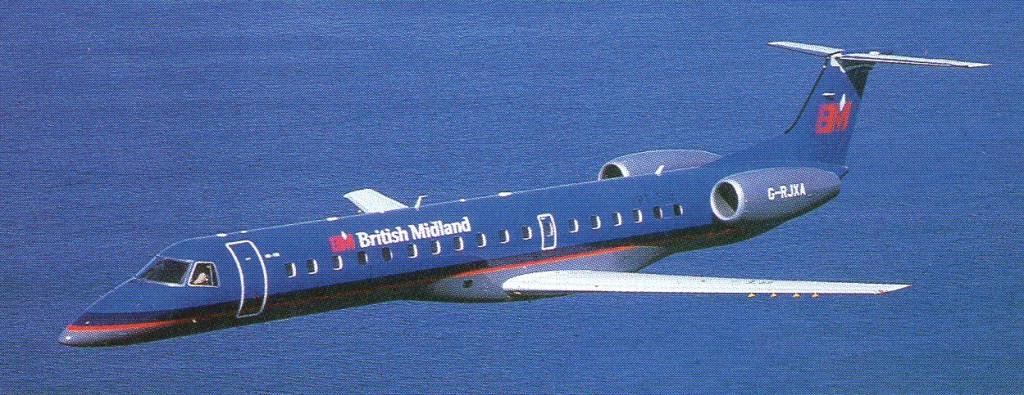
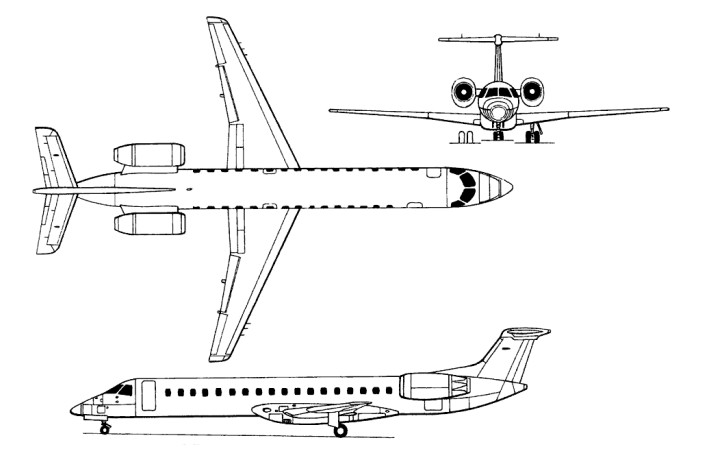
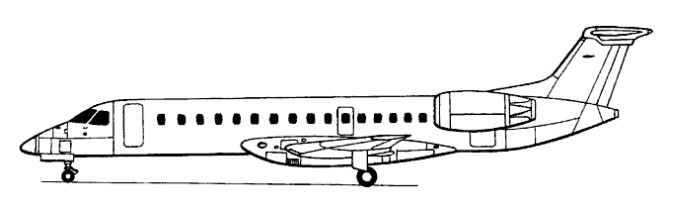
Embraer began working on a 50 seat short-haul feeder-liner jet concept in the late 1980s, revealed 12 June 1989, aimed at first flight late 1991 and first deliveries mid-1993. The programme was delayed by company cutbacks, complete redesign of wing and other changes, but this Embraer EMB145 was flown first on 11 August 1995. The original Embraer EMB145 concept used the straight-wings of the EMB-120 as well as a stretched version of the EMB-120 Brasilia fuselage. Later redesigns evolved to include swept wings with supercritical airfoils allowing improved performance. The engine location also moved from above the wings to below the wings and finally to the tail before the design was finally frozen.
The first flight was ahead of formal roll-out and “official” first flight a week later. The first of three pre-series aircraft was flown on 17 November 1995, the second flew on 14 February and third 2 April 1996. The single prototype and three pre-series aircraft undertook a 1,600 hour, 13 month development flight testing and certification programme. FAA and Brazilian CTA certification was achieved 10 December 1996. Deliveries began on 19 December 1996 with two aircraft to US launch customer Continental Express. The designation was changed from EMB-145 to ERJ-145 in October 1997 to reflect ‘Regional Jet’ terminology, although EMB-145 is retained for corporate and military variants. It has a range of about 2500 km. Three basic versions of the ERJ145 were available: Extended Range (ER), Long Range (LR) and Extra Long Range (XR) versions. By September 1998, the ERJ-145 was certified by the aviation authorities of 27 countries.
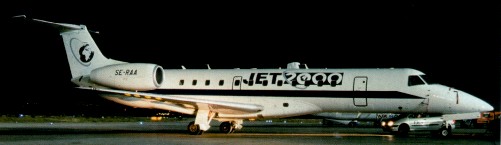
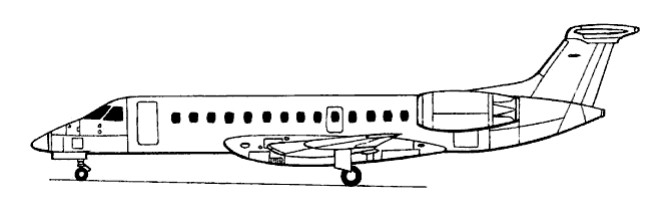
Embraer launched the ERJ-135 on 16 September 1997 as a 37-seat development of the ERJ-145 benefits from more than 95% of parts commonality with the ERJ 145: engines, main systems, cockpit, wing and tail. The fuselage cross section is the same, only 3,6 metres shorter. Rolled-out on 12 May 1998, the ERJ-135 made its first flight on 4 July 1998. A second prototype was flown on 24 September 1998, for systems testing before conversion to production standard in March 1999. Both prototypes were converted from ERJ-145 prototypes. The public debut was at Farnborough Air Show in September 1998. Brazilian CTA certification was achieved in June 1999 and FAA certification on 15 July 1999. The first customer delivery was on 23 July 1999 to Continental Express, followed by American Eagle.
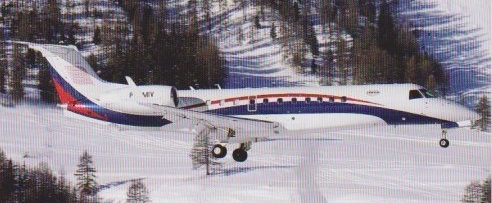
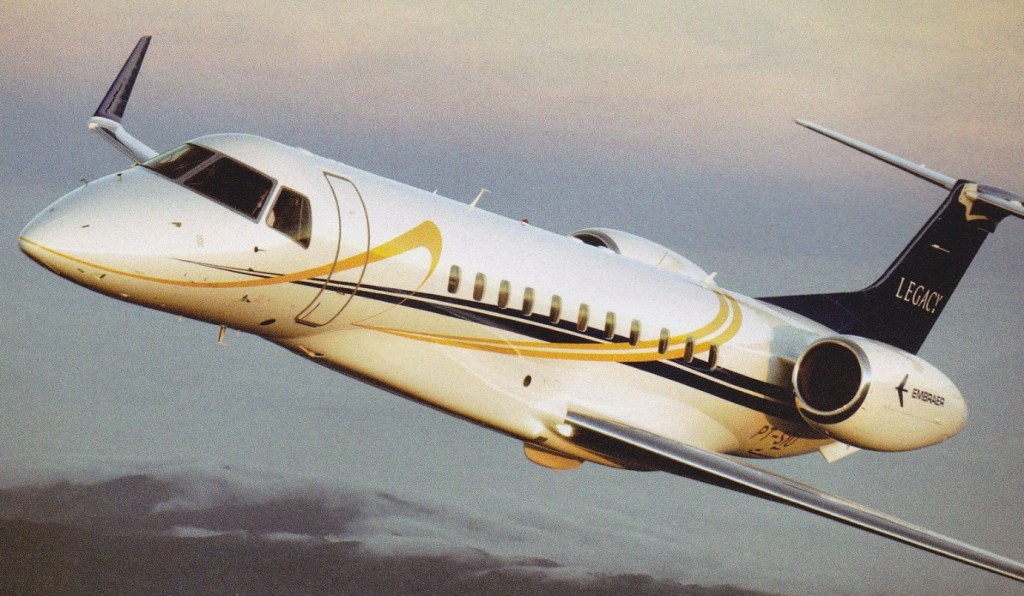
Embraer ERJ-135BJ Legacy P4-MIV
Two basic versions of the ERJ135 were available. The Extended Range (ER) and Long Range (LR). The ERJ135ER is powered by two Rolls Royce Allison AE3007A3 high-bypass ratio turbofans, while the ERJ135LR features an additional fuel tank and slightly more powerful AE 3007A4 turbofans. This ERJ135LR has a range of 3.241 km and a maximum cruise speed of Mach .78 (833 km/h).
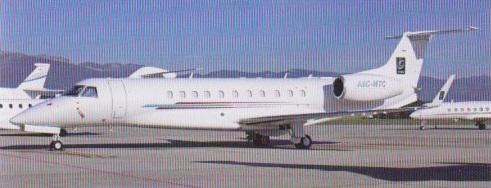
In 2000, Embraer started with the development of the Legacy. The Embraer EMB-135BJ Legacy 600 is a twin-engine corporate jet for up to 16 passengers. The Legacy first flew on 31 March 2001. Compared to the commercial versions, the Legacy has more thrust, a new fuel system, increased cabin headroom, new winglets, additional avionics, and a higher service ceiling. The Legacy features additional fuel giving a range with 10 passengers of 5930km (3200nm). The EMB135BJ Legacy is powered by two Rolls Royce Allison AE3007 A1E high-bypass ratio turbofans. The Legacy 600 has a range of 6.019 km and a maximum cruise speed of Mach 0.80. By 2008 over 70 aircraft of the Legacy has sold to operators around the world.
Legacy
The Legacy was available in 10-16 seat Executive, 16-25 seat Shuttle and 37-seat Shuttle HC versions. Additional fuel housed in extended under-fuselage fairings provided a range of up to 3200 nm / 5925 km. While building the Legacy 600, some 80 had been delivered.
The Embraer Legacy 650 first flew on 23 September 2009.
Embraer’s ERJ-140 were flying a year and a half after the ERJ-135. Upgraded versions of each model have followed. The ERJ-145LR came in 1998 and the XR came in 2002, both with larger and more efficient engines, an increased takeoff weight and more fuel capacity for extended range.
Total of 122 firm commercial orders and seven options by 1 January 2004. Additionally, one VIP-configured ERJ-135LR handed over to Greek Air Force on 7 January 2000 and two, also in VIP configuration, to the Belgian Air Force on 4 June and in August 2001, for operation by No. 21 Squadron at Melsbroek with two similarly configured ERJ-145s. Deliveries have been 16 in 1999, 45 in 2000, 27 in 2001, three in 2002 and 14 in 2003.
Embraer ERJ-135BJ Legacy A9C-MTC
The ERJ-140 was launched on 30 September 1999 at the European Regional Airline Association annual meeting in Paris, and the first flight of the prototype, modified from the prototype ERJ-135, was on 27 June 2000. The public debut was at Farnborough International Air Show July 2000. Brazilian CTA and FAA certification was achieved in June and 26 July 2001 respectively, with the first delivery to American Eagle late July 2001.
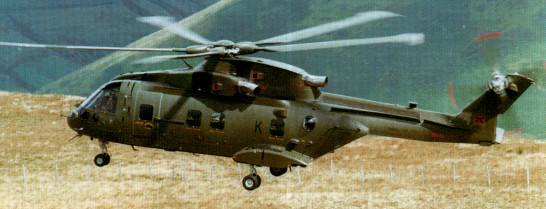
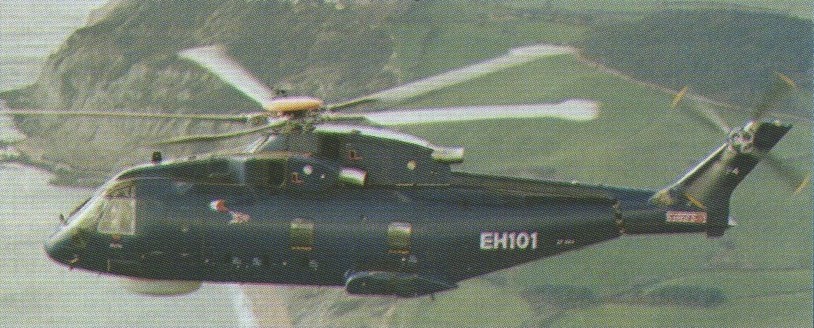
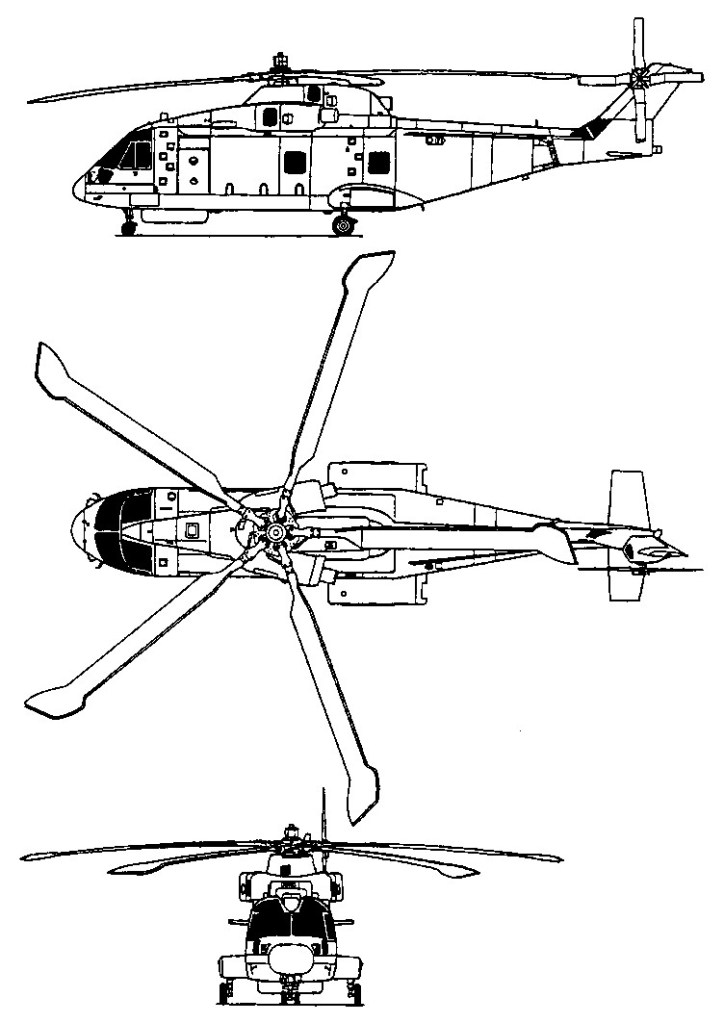
The EH 101 has its genesis in an SKR (Sea King Replacement) study by the British MoD (Navy) in 1977. Westland responded with a proposal designated WG.34, but meanwhile the Italian navy had come up with a similar requirement, though one with the accent on shore basing rather than operations from warships. Westland and Agusta decided to collaborate, formed EHI (Elicotteri Helicopter Industries Ltd) in June 1980 and drew up the design for the EH 101 as the next generation helicopter for the British and Italian navies. The same basic machine is also being developed as a civil passenger and utility cargo trans¬port whose engines, rotor systems, airframe and main systems are common with those of the naval variant. The main cabin is 6.5 m (21 ft 4 in) long, 2.5 m (8 ft 2½ in) wide and, allowing for interior soundproofing, 1, 82 m (5 ft 11½ in) high, all dimensions exactly tailored to the missions, as are the folded dimen¬sions for easy shipboard stowage. The maritime roles for which the EH 101 has been designed are ASW, anti ship surveillance, anti surface vessel strike, amphibious operations, SAR, AEW and vertrep (vertical replenishment). The main five blade rotor has composite blades with extended chord tips of the BERP type, while the tail carries a four blade rotor and can be power folded, like the main rotor blades, for reduced overall dimensions.
The EH.101 prototype, with few of the features of the final aircraft, flew on 9 October 1987. There were nine EH-101 pre-production aircraft, starting with PP.1 which first flew on 9 October 1987 at Yeovil. The nine pre-production EH-101s are flying over 4000 hours of flight development and a 6000 hours maturity and reliability programme to ensure that EH-101 enters service as a fully proven helicopter.
On 15 June 1989 the fourth EH.101 prototype (PP4, ZF644) made its first flight. 1989 included the first flights of PP5 ZF649 and PP6, the UK Merlin and Italian anti-submarine version respectively.
EH.101 prototype PP4, ZF644
The first of nine pre-production prototypes made its first flight on 9 October 1987, followed by the second on 26 November. All nine EH 101s were flying by 1990.
PP.3, the first civil variant, flew in September 1988 followed by PP.6, the Italian Navy variant in May 1989. PP.4, the basic naval development aircraft, first flew at Yeovil in June 1989 and was later fitted with Rolls-Royce RTM322 engines. PP.4 was destroyed in a crash on 7 April 1995 during high-altitude trials. PP.5, the Royal Navy Merlin variant first flew in October 1989 followed by PP.7, the rear ramp basic military utility variant, which flew in Italy in December 1989. PP.8, the pre-production Heliliner, first flew in April 1990, followed by the last pre-production aircraft PP.9, which first flew in December 1990. PP.9 is fitted with a rear ramp and has been engaged in a variety of flight development trials including undertaking the civil certification, along with PP.8 who will undertake an extensive maturity programme.
The advanced five-bladed rotor system, and newly-designed rotor head, is built around a titanium hub surrounded by composites allowing multiple load paths for greater safety and damage tolerance. The helicopter has a full computerised fuel management system, triple hydraulic systems, two MIL-STD 1553B multi-plex databuses and includes a comprehensive Health and Usage Monitoring System (HUMS).
EH-101 has an advanced ergonomically designed “glass cockpit” with six high definition, full colour displays making for reduced pilot workload and an all weather operational capability. The digital automatic flight control system (AFCS) incorporates dual, duplex architecture providing automatic stabilisation and autopilot facilities, allowing single pilot operations in both VFR and IFR conditions.
The first production EH101 civil utility version first flew on 17 June 1997 at the Agusta Vergiate aeesmbly plant.
In the civil version, avionics also include two air data computers, AHRS, VOR/ILS, Marker Beacon System, Weather Radar, RAD ALT, ADF, ATCST, DME, Standby Compass, Artificial Horizon, Flight Management System, Hyperbolic Navigation and a Global Positioning System (GPS).
Early examples were to be powered by three General Electric CT7-2A turboshafts, although later production aircraft may have the Rolls-Royce/Turbomeca RTM.322. Three versions are currently planned: a naval EH.101 for land- or ship-based ASW/ASV operations, equipped with a 360 degree scan search radar (Ferranti Blue Kestrel for the Royal Navy) in a chin radome, dipping sonar and/or sonobuoys, Racal ESM, up to four homing torpedoes and anti-shipping missiles; a utility version to carry 28 troops or cargo; and a 30-seat commercial variant for civil use. The airframe is structurally similar for all versions, with a high degree of commonality, although the naval EH.101 features a folding tail section for shipboard stowage and the utility variant has a rear loading ramp. Westland rolled out the prototype triple-turbine EH.101 on April 7 1987, and the first flight was originally scheduled for late May. In September 1991, the Royal Navy ordered 44 maritime EH-101/Merlins. 42 being ordered by the Italian Navy. Canada has also selected the ASW variant by 1990. Other variants are a tactical transport and the civil Heliliner. Engines will be either three 2,100 shp (1 566 kW) R-R Turbomeca RTM 322 turboshafts (in the Merlin) or 1,682 shp (1 254 kW) GE T700-401As. First Civil variant went to the Tokyo Police in 1998.
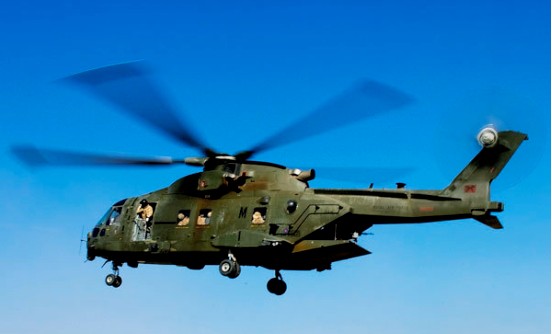
In the Utility/Support Helicopter role EH-101 can carry 30 combat troops, or lift internal freight weighing 4350kg or external loads up to 5000kg. The cabin can accommodate light vehicles, a light gun, crew and ammunition or 16 stretcher cases. On 9 March 1995 the UK Government confirmed an order for 22 EH-101 Support Helicopters/Utility variants for the Royal Air Force. The Merlin HC3 contract was awarded in June 1995 and entered service on 17 July 2001, a troop carrying variant. There are five main rotor blades, with advanced aerofoil section and BERP (British Experimental Rotor Programme) high speed tips. The tail rotor is slightly offset to port and has a four-bladed assembly. The Naval variant has a folding tail pylon and main rotor blades. The RAF utility variant has a folding rear ramp and has provision for pintle-mounted machine guns in the door or on the ramp, a chin turret for 12.7mm machine gun and stub wings for rocket pods. There is also provision for rapid installation of a FLIR turret which is carried beneath the nose, an in-flight refuelling (IFR) probe positioned beneath the nose offset to starboard, and for an SAR hoist on the starboard side. The utility Merlin is fully night vision goggles compatible and also carries infra-red countermeasures and radar warning receivers.
The airframe is constructed largely from composite materials with parts of the structure being manufactured in Italy and the UK and with final assembly on the production line at Yeovil. The helo’s state-of-the-art “glass cockpit” looks exceptionally modern and is easily comprehensible for the two flight crew. A third crew member, the loadmaster, assists in looking after those in the cabin, or the on-board load, plus acts as a handy lookout during field landings or take-offs and during low-level flying. Designated CH-149 Cormorant with the Canadian military. Four EH.101 HEW (heliborne early warning) variant were to be delivered to the Italian Navy along with 16 other anti-submarine/amphibious variants.
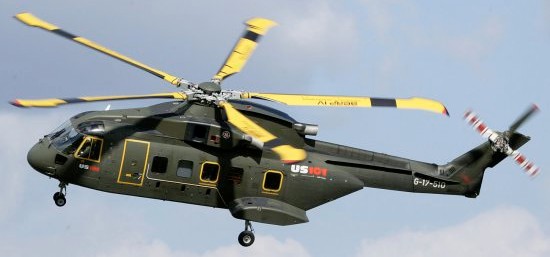
EH US 101
On December 18 2003, the US Department of Defense (DoD) issued a Request for Proposals to replace eleven VH-3D Sea King and eight VH-60N Whitehawk in the Marine One role. The US101 variant of the EH101 was selected on January 2005 and awarded a $1.7 billion contract. More than 200 suppliers in 41 states support Team US101, led by Lockheed Martin with team-mates Agusta Westland and Bell Helicopter Textron. Suppliers include some of America’s leading aerospace companies, such as General Electric, ITT, Northrop Grumman, Kaman Aerospace and Palomar Products. 80 Percent of the US101 was to be made in the USA and the rest made in England and Italy. However, on June 2009, the US Navy formally terminated the VH-71A Kestrel contract. The first VH-71 made its initial flight on for delivery to NAS Patuxent River, Maryland.
EH 101 Merlin Length : 62.664 ft / 19.1 m Height : 21.982 ft / 6.7 m Rotor diameter : 61.024 ft / 18.6 m Max take off weight : 28665.0 lb / 13000.0 kg Weight empty : 20506.5 lb / 9300.0 kg Max. speed : 160 kts / 296 km/h Cruising speed : 140 kts / 259 km/h Initial climb rate : 1673.23 ft/min / 8.50 m/s Service ceiling : 14108 ft / 4300 m Range : 500 nm / 926 km Engine : 3 x General Electric T 700 GE-401A, 1260 shp Fuel capacity : 1136 gal / 4300 lt Crew : 2 Payload : 30-35 pax
EH-101 Engine: 3 x Rolls-Royce Turbomeca RTM 332 turboshaft, 1724kW at take-off Main rotor diameter: 18.59m Length with rotors turning: 22.81m Height with rotors turning: 6.65m Max take-off weight: 13530kg Empty weight: 7121kg Cruising speed: 278km/h Range: 555km
Heliliner Engine: 2 x GE CT7-6 or R-RTM RTM322. Instant pwr: 1500 or 1565 kW. Rotor dia: 18.6 m. MTOW: 14,290 kg. Useful load: 5350 kg. Max cruise: 150 kts. Max range: 740+ km. Seats: 33.
Naval Engine: 3 x GE T700-T6A. Instant pwr: 1278 kW. Rotor dia: 18.6 m. Length (folded) 15.9 m. No blades: 5. Empty wt: 8620 kg. MTOW: 13,000 kg. Payload: 6095 kg. Max speed: 167 kts. Max range: 926 km. Service ceiling: 15,000 ft. Crew: 1/2. Pax: 45. Endurance: 5 hr.
Utility Engine: 3 x GE CT7-6. Instant pwr: 1432 kW. MTOW: 14,288 kg. Payload: 7010 kg. Max speed: 167 kts. Max range (aux fuel): 2093 km. HOGE: 15,000 ft. Service ceiling: 15,000 ft.
Merlin Engine: 3 x R-RTM RTM322. Instant pwr: 1724 kW. MTOW: 13,000 kg. Payload: 3900 kg. Max speed: 167 kts Max range: 926 km. Service ceiling: 15,000 ft. Crew: 1/2. Pax: 45.
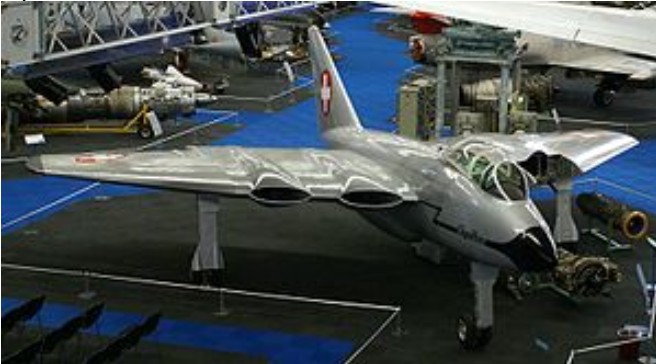
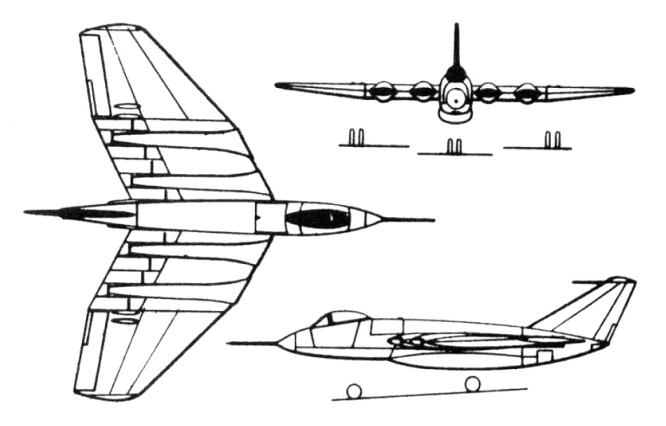
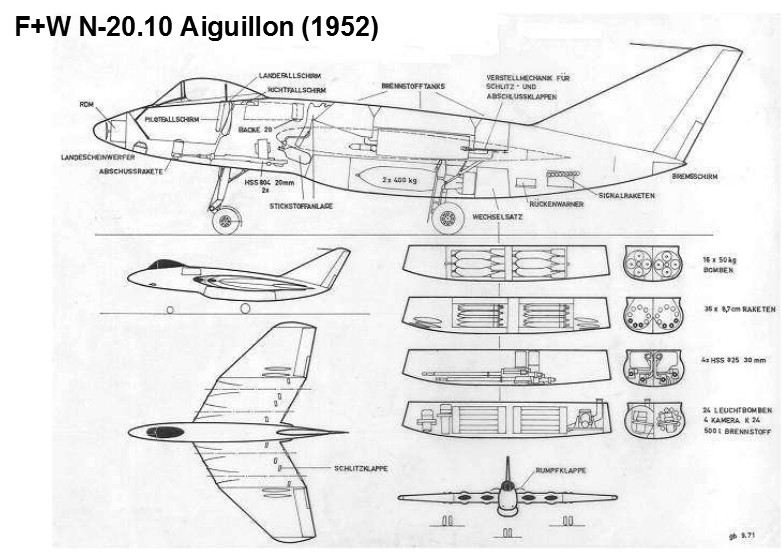
The EFW N-20 “Aiguillon” (English: Stinger) was Switzerland’s first jet fighter aircraft. The Swiss Federal Aircraft Factory developed a design for a four-engined swept winged fighter following the end of the Second World War. The aircraft was to be powered by four turbofan engines buried in the wings, with the bypass air feeding cold-air pipes each side of the engine, being routed through a combustion chamber where additional fuel could be burned as a form of reheat, or deflected though large slots on the upper and lower wings to act as aerodynamic flaps or thrust reversers. Two engines could be shut down in flight to increase range. It was planned that the N-20 would carry its armament in a detachable weapons bay, capable of carrying large loads of cannons, rockets or bombs.
It was initially planned that the aircraft’s engines would be designed and built by the Swiss company Sulzer, but they abandoned this project in 1947, so the British Armstrong Siddeley Mamba turboprop was chosen as the basis for the N-20’s engines, with the propeller reduction gear replaced by a low pressure compressor.
A 3/5 scale wooden glider, the EFW N-20.01 was built to allow testing of novel wing shape, this flying on 17 April 1948. Although the glider was destroyed in a landing accident, it had successfully proven the design, and was followed by a similar sized powered test aircraft, the EFW N-20.02 Arbalète (Crossbow), powered by four 0.98 kN (220 lbf) Turboméca Piméné, mounted above and below the wings, this flying on 16 November 1951. It proved to have good manoeuvrability and reached a maximum speed of 750 km/h (466 mph).
The full scaled aircraft was estimated to have a maximum speed of 1,095 km (680 mph), but the initial converted Mamba, the SM-1, which was test-flown under a de Havilland Mosquito in 1948 and was the first turbofan to fly, did not generate adequate thrust. Considerable further work was required for the definitive two-shaft SM-5 engine, which was meant to generate 14.7 kN (3,300 lbf) thrust. The prototype was completed in 1952 and, fitted with four SM-1 engines, flew briefly during a taxi test on 8 April 1952, but the development of the engine and the N-20 aircraft was cancelled soon afterwards.
N-20 Powerplant: 4 × Armstrong Siddeley Mamba turbofan, 6.2 kN (1,400 lbf) thrust each Length: 12 m (41 ft) Wingspan: 12.60 m (41 ft 4 in) Height: 4 m (12 ft) Wing area: 53 m2 (570 sq ft) Gross weight: 8,709 kg (19,200 lb) Crew: 1
F+W N-20-2 Arbalète Engines: 4 x Turbomèca Piméné jet, 100 kp thrust Length: 7.53 m Span: 7.56 m Height: 2.30 m Wing area: 12.63 m² Empty weight: 1540 Kg MAUW: 1800 Kg Useful load: 190 Kg Max. speed: 720 km/h ROC: 5m / s Ceiling: 8000 m Range: 250 Km
F+W N-20.10 Aiguillon Engines: 4 x Swiss Mamba SM-01 turbofan with plenum chamber burners and thrust reversers, Thrust: 620 kp Length: 12.5 m / 41 ft 0 in Wingspan: 12.6 m / 41 ft 4 in Height: 3.13 m / 10 ft 3 in Wing area: 54.0 sq.m / 581.25 sq ft Max. speed: 1000 km/h / 621 mph T/O weight: 9000 kg Max. speed: 1000 km/h Ceiling: 14000 m
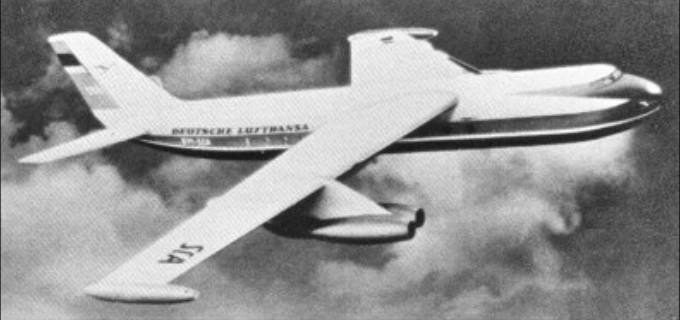
The political ambition of the East German politburo and the cancellation of the Alekseyev 150 Soviet bomber project led to the return to East Germany in 1953 of a group of German engineers and scientists deported to Russia in 1945. They were sponsored to proceed with one of the many commercial designs that they had formulated while in Russia.
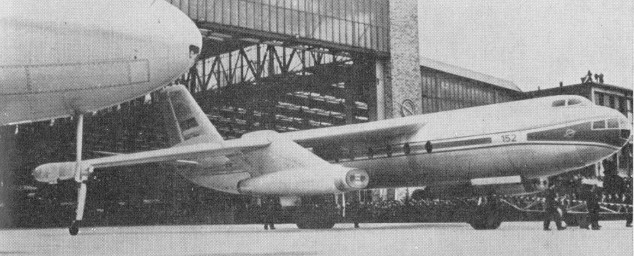
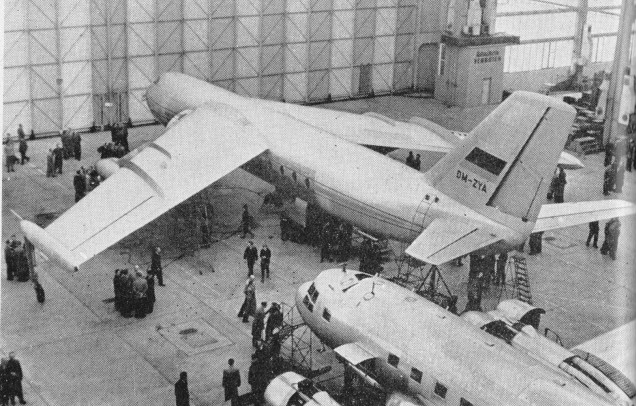
One of these was the 72 seat 152 airliner, which was based on their experience with the Alekseyev 150 and would be powered by a development of the Junkers Jumo turbojet engine named Pirna 014. The design team was led by Brunolf Baade, a former Junkers designer, and the 152 descended from a bomber design started by Junkers during WW2.
The prototype had a glazed nose and an unusual undercarriage arrangement featuring a single central gear assisted by wingtip pod-mounted outriggers, and was completed in May 1958. Late availability of the Pirna engines meant the prototype first flew with Tumansky Rd-9b engines. On its second flight, while rehearsing for the Leipzig trade fair, the prototype 152 crashed due to pressure equalization problems between the multifarious tanks and the inadequate engines. The second heavily modified (152A) model (with modified tanks, conventional undercarriage and a glazed nose) flew twice more before the project was cancelled in 1961 due to national economic crises which were exacerbated by the defection of key design team members.
VEB 152 Engines: 4 x 3165kg VDL Pirna 014A-1 turbojets Max take-off weight: 46500 kg / 102515 lb Wingspan: 25.40 m / 83 ft 4 in Length: 31.30 m / 103 ft 8 in Height: 9.70 m / 32 ft 10 in Max. speed: 920 km/h / 572 mph Range: 2500 km / 1553 miles Crew: 4-5 Passengers: 58
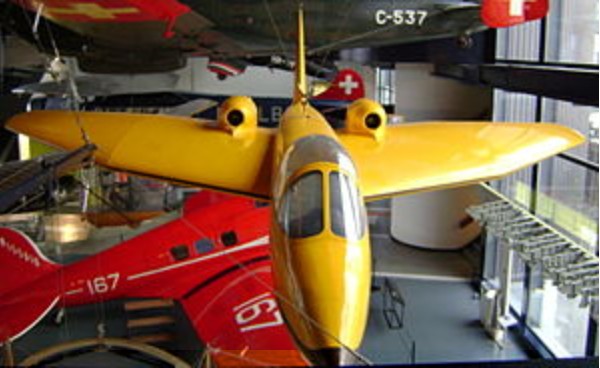
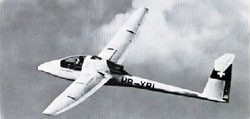
The Prometheus is a production of EFF / Entwicklungsgemeinschaft für Flugzeugbau / Association for the development project and airplane building. It is is a high performance side-by-side glider with two Microturbo 90 kp thrust engines. A self-launching glider, its engines can be stopped and reset running at will.
One was built, registered in 1978 as HB-YBI, and the name Prometheus PV.
With a wingspan of 19.4 m, it weighs 707 kg unladen and 900 at full load. Its radius of action powered flight exceeds 500 Km
In 1980, the manufacturer reported a radio navigation facility and a transponder allowing it to integrate seamlessly restriction in controlled airspace and major airport.
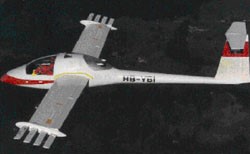
The Prometheus II is linked to an engineer in Switzerland, Ulrich La Roche , who sought to reproduce with WINGGRID, some aerodynamic effect on birds. This work began in the first wind tunnel at Emmen between 1993 and 1994. In 1996, an encounter with Prof . Dr. – Ing. Hans -Reinhard Meyer- Piening would offer the opportunity to validate the concept of a real WINGGRID demonstrator.
In 1997, the Prometheus was chosen for this experiment. To this end, the size was reduced to 12 m. They hoped a glide ratio of 15 to 17, but experience showed that it was 25. The Prometheus II is a high performance glider with a fineness approaching 40, but with a high wing loading.
One Aviation successfully flew an aircraft carrying the proof of concept wing shape of the new EA700 Project Canada from the company’s Albuquerque headquarters.
The first flight lasted 1.3 hours and the aircraft, N990NE climbed as high as 15,000 feet to evaluate aircraft handling qualities with the landing gear up down, as well as retracted and also in all flap configurations. Jerry Chambers, Director, Flight Test/Chief Test Pilot was PIC for the flight.
The modified wing included the four-foot wing span extension with the original EA550’s tip tanks removed to match the shape of the wing to be used on the new EA700 still under development. The final shaping of the wing tips for the EA700 was not included on this test aircraft although the wing did include a reshaped inboard wing airfoil and planform.
The flight used a modified EA550 airframe that retained the original fuselage, engines and stabilizers. The production EA700 will feature a 14-inch cabin stretch making room for a fourth cabin window, a Garmin G3000 cockpit and additional fuel capacity. One Aviation is the parent company to Eclipse Aerospace.
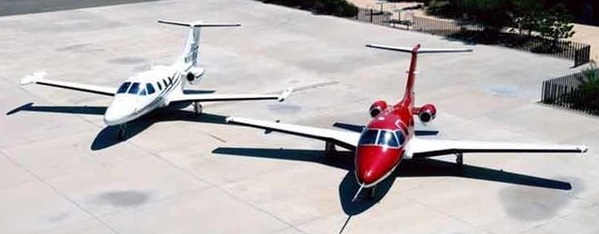
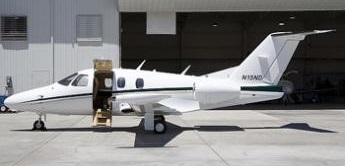
The Eclipse 500 was a project that was to build a lightweight, economical, fast jet, for both private and commercial use. The whole project was based primarily on the use of new EJ22 William jet engine.
The Eclipse 500’s price tag was promised at $837,500 and brought in deposits for more than 2,000 airplanes.
The Eclipse 500 business jet programme was temporarily suspended in 2002 because of problems with the starters and fuel-metering equipment on the aircraft’s compact Williams EJ22 engines. On August 26, 2002, at Albuquerque International Sunport, prototype N500EA first flew with test pilot Bill Bubb. The acceleration is lethargic, especially for an airplane loaded so lightly. In the hot, thin, mile-high air, the EJ22s can generate barely half their rated thrust. After a leisurely takeoff roll of more than 3,000 feet, the airplane lifts off and begins a gentle climb, paralleling the Sangre de Cristo mountains off its left wing. For about an hour, Bubb flies the planned test routine, checking out general handling qualities and systems operation. Overall, the flight is free of major glitches. The Eclipse 500 never again flew with EJ22s.
Three months later, Eclipse Aviation announced: “The EJ22 is not a viable solution for the Eclipse 500 aircraft, and Williams International has not met its contractual obligations.” Williams conceded that it had run into “a number of challenges” with the EJ22 but insisted it had satisfied the contract, implying that the airplane had simply grown too heavy.
Eclipse signed a deal with Pratt & Whitney to develop a smaller version of a more conventional engine. The PW610F would develop 900 pounds of thrust, but it would weigh 260 pounds—triple the weight of the EJ22. The extra power would give the Eclipse 500 a bit better speed and climb, but there was a big downside: an empty-weight gain of 700 pounds and a 20 percent increase in fuel consumption. The price and cost projections eventually ballooned to $1.3 million and 89 cents a mile.
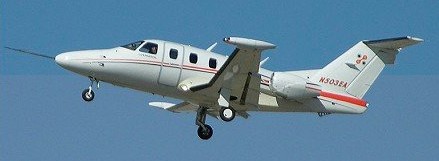
First flight with Pratt & Whitney Canada PW610F turbofan engines was in December 2004. Three years later, flight tests of the P&W-powered Eclipse 500 were proceeding smoothly. The Eclipse 500 became the first of a new class of Very Light Jets (VLJ) when the first jet was delivered in late 2006. The engines are in aft fuselage-mounted nacelles.
Production of the Eclipse 500 was halted in mid-2008 due to lack of funding and the company entered bankruptcy.
Engines; 2 Pratt & Whitney Canada PW610F turbofans Takeoff Thrust at Sea Level ISA+15°C (86°F) 900 lb (each) 4.00 kn (each) Length 33.5 ft 10.2 m Wingspan 37.9 ft 11.6 m Height 11.0 ft 3.4 m Maximum Ramp weight 6,034 lb / 2,737 kg Maximum Takeoff weight 6,000 lb / 2,722 kg Maximum Landing weight 5,600 lb / 2,540 kg Empty weight 3,634 lb / 1,648 kg Fuel Capacity 1,698 lb/251 gal / 770 kg/950 l Useful Load 2,400 lb / 1,089 kg Sea Level Cabin to; 21,500 ft 6,533 m Cabin Altitude at 41,000 ft; 8,000 ft 2,438 m Takeoff Distance Sea Level, ISA to 50 ft (15 m) @ MGTOW 2,345 ft 715 m Landing Distance Sea Level, ISA @ 4,600-lb (2,087-kg) landing weight 2,250 ft 686 m Rate of Climb – 2 engines 3,424 ft / min 1,044 m / min Rate of Climb – 1 engine 989 ft / min 301 m / min Time to Climb – 35,000 ft (10,688 m) 22 min Takeoff at 5,000 ft (1,524 m) At ISA + 15°C; 3,881 ft 1,183 m Single Engine Takeoff Climb at 5,000 ft (1,524 m) At ISA + 15°C; 705 fpm / 215 m / min Max Cruise Speed; 370 kt / 685 km / hr Vso; 69 kt / 128 km / hr Vmo; 285 kt / 528 kph / 0.64 Mach Maximum Altitude; 41,000 ft / 12,497 m Single Engine Service Ceiling 25,000 ft / 7,620 m Range 100 nm alternate; 1,125 nm / 2,084 km Range – Max IFR 45-min res, 4 POB; 1,300 nm / 2,408 km Cabin length; 148 in /376 cm Cabin height (max); 50 in / 127 cm Cabin width (max); 56 in / 142 cm Seats 6
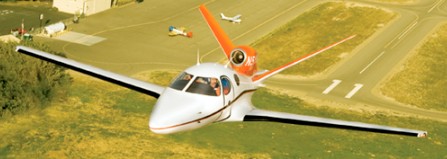
The Eclipse 400 seats four and cruises at 41,000 feet, three miles above its closest competition. Its robust v-tail design provides superior handling and its gold standard Pratt & Whitney Canada PW615F engine produces exceptional thrust and envious fuel economy.
Engines: 1 x Pratt & Whitney Canada PW615F Length; 29.0 ft Height; 8.8 ft Wingspan; 36.0 ft Max cruise speed (FL350); 330 ktas Long range cruise speed (FL400); 290 ktas Max range (FAA IFR + 45-min reserve); 1,250 nm Service Ceiling; 41,000 ft Time to Climb to FL250; 13 min Time to Climb to FL350; 22 min Stall Speed (VSO); 61 kt Takeoff Distance to 50 ft. (Sea level, ISA, MGTOW); 2,045 ft Landing Distance (Sea level, ISA, Max landing weight); 2,100 ft Seats: 1 + 3 Baggage Capacity, Interior; 18 cu ft Baggage Capacity, Exterior; 14 cu ft
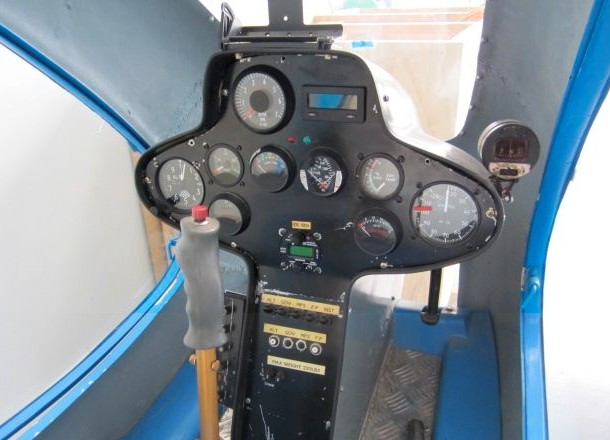
Engine: turbine, 110hp Seats: 1. Endurance: 1.5 hrs. Max air speed: 100 kts.
Engine: Modified Solar T62 turbine, 160 derated to 90 hp Gross Weight: 850 lbs Empty Weight: 500 lbs Fuel Capacity: 21 (16 + 5 reserve) US gal Range with reserve: 160 miles Rate of Climb: 900 fpm Hover IGE: 9,500 ft Service ceiling: 11,000 ft Normal cruise with doors: 95 mph Max airspeed at sea level: 110 mph Seats: 1 Max pilot weight: 220 lb


 All Aero