When the French government placed an embargo on export of strategic items to Israel in 1967, including a batch of 50 Mirage 5 fighter/attack aircraft built to Israel’s specification and already paid for, the Israeli government realized it had to seek self sufficiency in combat aircraft. As a first step it authorized Israel Aircraft Industries (IAI), whose headquarters were at Lod airport, to build a close copy of the Mirage but with IAI and other locally produced equipment and electronics. The first Nesher (Eagle) flew in September 1969.
IAI built 61 Nesher / Daggers, with 51 single-seaters and 10 two-seat Nesher-Ts.
Jet
IAI IAI-1123 / IAI-1124 Westwind / Aero Commander Jet Commander

Originally designed by Ted Smith in 1960 and called the Aero Commander Jet Commander, the design first flew in 1963. When the company was taken over by North American Rockwell in 1967, the Justice Department in¬sisted that the new firm divest itself of Rock¬well’s rights to the Jet Commander. The Gov-ernment apparently felt that common owner¬ship of two bizjet designs the Commander and North American’s existing Sabreliner¬ – would give North American Rockwell a lock on the market. For a variety of public and pri¬vate reasons (the Sabreliner’s origin as a mili¬tary project was mentioned most frequently), the Government decreed that the Command¬er must go.
The project was bought lock, stock and tooling by Israeli Aircraft Industries. The machine the Israelis developed from the basic Commander design was the IAI Westwind 1124 and its successor, the Westwind 1.
The Jet Commander was so easy to control that flight controls are not boosted hydraulically and there is no artificial stall-warning device. In a deliberate stall, the Jet Commander will not fall off either wing. When Israel Aircraft industries began production of the Commander Jet, several improvements were added:
increased takeoff weight, strengthened landing gear, greater fuel capacity, and improved performance. The 1123 Westwind features a longer cabin, auxiliary wingtip fuel tanks, more powerful engines, two additional cabin windows, and modified wing leading edges. The 1124 Westwind is the long-range version utilizing two 3,700-lb. s.t. Garrett turbofans with an 8,620-gallon fuel capacity. The 1123 converted to the 1124 when Garrett TFE731 turbofans were added. That model changed to the 1124A Westwind 2 with improved hot and high performance, better fuel economy and longer range. The Westwind 2 also had a modified wing, winglets, and upgrades to the interior.
Characterised by a mid-fuselage wing, set aft, behind even the rearmost windows, the Westwind is a high versatility, multi-role performer. Israel and Venezuela both have them in use for naval and air-force tracking, while the German air force have three engaged in target towing. As well, Westwinds are to be found perform¬ing fisheries surveillance, anti-submarine reconnisance, air am¬bulance work, VIP carriage, calibration flying, all freight, charter and even, in the case of the Israelis, in the attack role, with missiles attached to fuselage hardpoints. Certified for up to ten passengers and two crew, with seven passengers still air range with mandatory reserves is 2400 nautical miles. An auxilliary fuel tank can be fitted to the rear baggage compartment to give a further 300 nm range. Maximum ramp weight is 23,000 pounds, while a typical Basic Operating Weight runs to 13,200 pounds. Maximum zero fuel weight is 16,500 pounds giving a near 3,500 pound useful load – in the freight configuration this is upped to a 4,000 pound disposable load. Two baggage holds are standard, an 800 pound capacity forward one and a 250 pound rear locker. Both are un¬pressurised though the forward hold is heated. Powered by two Garrett AiResearch TFE 731 engines, each rated at 3,700 pounds static thrust, with clam-shell thrust reversers as standard to minimise brake and tyre wear. Certified under Part 25 of the FAR’s (airline category certification), the Westwind 1 has an excellent balanced-field/range combination. Take-off distance at gross is 5,500 feet, and the aircraft can operate a 2,500 nm sector, with 45 minute reserve, out of a 4,600 foot field carrying four passengers. At the other end of the scale, the same four passengers can be flown a 500 nm trip out of only a 2,550 foot strip. Standard are thrust reversers, antiskid braking, lift dump system, therapeutic oxygen, and single point refuelling.
Israel Aircraft Industries flew the IAI 1124 Westwind development aircraft (4X CJA) on 21 July 1975. An improved ver¬sion of the 1123 Westwind introduc¬ing Garrett TFE731 3 turbofans. The new engines have allowed IAI to increase the Westwind’s ramp weight by one ton and other useful changes have been made as well: the wing leading edge cuff has been blunted and drooped slightly in order to maintain reasonable approach speeds de¬spite the weight increases; the two baggage compartments in the tailcone have been enlarged; and the airplane is being delivered from the factory with a completely new avion¬ics package featuring the Collins NCS 31 mul¬tipurpose digital computer a compact RNAV processor and avionics management system.
Cabin ac¬commodations, standard, includes four swivelling/tracking/reclining club seats, three fixed seats, a fully enclosed lavatory and a hot¬-and cold refreshment center.
A version of the 1124 for the Israeli navy was de¬veloped as the 1124 Sea Scan. A maritime version of the IAI-1124 Westwind corporate jet, the Sea Scan is equipped with a Litton AN/APS 504(V) 360 degree scan search radar, a VLF/Omega naviga¬tion system, and stores pylons on the fuselage sides. Three standard Westwinds, delivered to the Israeli Navy in 1977, have been converted to Sea Scans for maritime patrol and tactical support duties.
Westwind
Seats 10.
Gross wt. 20,700 lb
Empty wt. 9,370 lb
Fuel capacity 1,330 USG.
Engines two 3,109-lb. s.t. General Electric turbojets.
Top speed 428 mph.
Cruise 420 mph.
Stall 112 mph.
Initial climb rate 4,040 fpm.
Range 1,600 sm.
Ceiling 45,000.
Takeoff distance (to 35 ft) 4,100 ft.
Landing distance (to 50 ft) 3,400 ft.
IA-1124 Westwind I
First built: 1976.
Engines: 2 x Garrett TFE 731-3-1G, 3700 lbs thrust.
Seats: 7/10.
Length: 52.3 ft.
Height: 15.8 ft.
Wingspan: 44.8 ft.
Wing area: 308 sq.ft.
Wing aspect ratio: 6.5.
Maximum ramp weight: 23,000 lbs.
Maximum takeoff weight: 22,850 lbs.
Standard empty weight: 12,390 lbs.
Maximum useful load: 10,610 lbs.
Zero-fuel weight: 16,000 lbs.
Maximum landing weight: 19,000 lbs.
Wing loading: 74.1 lbs/sq.ft.
Power loading: 3.1 lbs/lb.
Maximum usable fuel: 8710 lbs.
Best rate of climb: 3200.
Certificated ceiling: 45,000 ft.
Max pressurisation differential: 9 psi.
8000 ft cabin alt @: 45,000 ft.
Maximum single-engine rate of climb: 860 fpm @ 150 kts.
Single-engine climb gradient: 392 ft/nm.
Single-engine ceiling: 25,000 ft.
Max speed: 360 kts./.765 Mach.
High speed cruise @ 39,000ft: 424 kts/.75 Mach.
Fuel flow @ normal cruise: 1048 pph.
Long range cruise at 39,000 ft: 393 kts./.7 Mach.
Stalling speed, clean, at 19,000 lbs: 113 kts.
Stalling speed, flaps 40, at 16,000 lbs: 91 kts.
Turbulent-air penetration speed: 230 kts.
Duration at high speed cruise: 5.9 hrs. (2,466 nm).
Duration at long range cruise: 6.7 hrs (2,640 nm).
IA-1124A Westwind II
First built: 1980.
Engines: 2 x Garrett TFE 731-3-1G, 3700 lbs thrust.
Seats: 9/12.
Length: 52.3 ft.
Height: 14.8 ft.
Wingspan: 44.8 ft.
Wing area: 308 sq.ft.
Wing aspect ratio: 6.5.
Maximum ramp weight: 23,650 lbs.
Maximum takeoff weight: 23,650 lbs.
Standard empty weight: 12,717lbs.
Maximum useful load: 10,933 lbs.
Zero-fuel weight: 16,500 lbs.
Maximum landing weight: 19,000 lbs.
Wing loading: 76.2 lbs/sq.ft.
Power loading: 3.2 lbs/lb.
Maximum usable fuel: 9555 lbs.
Best rate of climb: 3500.
Certificated ceiling: 45,000 ft.
Max pressurisation differential: 9 psi. 8000 ft cabin alt @: 45,000 ft.
Maximum single-engine rate of climb: 900 fpm @ 209 kts.
Single-engine climb gradient: 258 ft/nm.
Single-engine ceiling: 29,000 ft.
Maximum speed: 470 kts.
Normal cruise @ 45,000ft: 425 kts.
Fuel flow @ normal cruise: 992 pph.
Stalling speed clean: 113 kts.
Stalling speed gear/flaps down: 99 kts.
Turbulent-air penetration speed: 230 kts.
Seascan
Engine: 2 x Garrett TFE731 turbofan.
Installed thrust: 33 kN.
Span: 13.65 m.
Length: 15.93 m.
Wing area: 28.6 sq.m.
Empty wt: 6273 kg.
MTOW: 10,952 kg.
Warload: 2182 kg.
Max speed: 872 kph.
Initial ROC: 1524 m / min.
Ceiling: 13,715 m.
T/O run: 1180 m.
Ldg run: 534 m.
Fuel internal: 5390 lt.
Range: 4275 km.
Air refuel: No.
Isotov GTD-350 / Klimov GTD-350 / PZL GTD-350
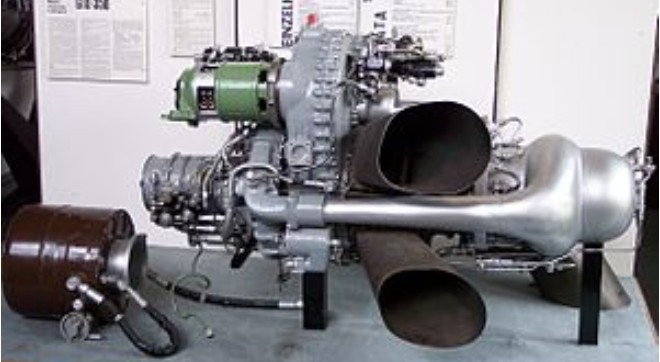
The Klimov GTD-350 (initially Isotov GTD-350) is a Soviet gas-turbine turboshaft engine intended for helicopter use. Designed in the early 1960s by the Isotov Design Bureau the engine, first run in 1963, was later produced by Klimov and PZL, production ending in the late 1990s after more thaan 11,000 were built.
The GTD-350 powers the Mil Mi-2, the first Soviet gas-turbine powered helicopter, and has accumulated over 20 million hours in service.
Type: Turboshaft
Length: 1,350 mm (4.429 ft)
Diameter: 522 mm (1.713 ft)
Dry weight: 135 kg (298 lb)
Compressor: Seven-stage axial flow plus single-stage centrifugal
Combustors: Single-chamber reverse flow
Turbine: Single-stage compressor turbine, two-stage power turbine
Maximum power output: 400 hp (298 kW)
Overall pressure ratio: 6.05:1 at 45,000 rpm
Specific fuel consumption: 365 g/hp/hr
Power-to-weight ratio: 2.2 kW/kg (1.34 hp/lb)
Ishikawajima J3
The original J3-1 version of this simple single-spool axial-flow turbojet was developed by Nippon Jet-Engine Co, which was formed in 1953 by a group of manufacturers including Mitsubishi, Ishikawajima, Kawasaki and Fuji.
The programme was taken over by Ishikawajima-Harima in 1959 and their improved YJ3 prototype engine was flown for the first time in the Fuji T1FI trainer in 1960.
As a result of successful flight tests of this aircraft, a production batch of 20 J3-IHI-3 turbojets was ordered and the first of thes was delivered in April 1962 to power the production version of the T1FA for the JASDF.
The other 19 are scheduled for completion by November.
The J3-IHI-3 has an eight-stage steel compressor, annular combustion chamber with 30 burners and a single-stage turbine.
Its pressure ratio is 4.2:1 and air mass flow 49.51b/sec.
Max dia: 28.35 in
Overall length: 72.85 in
Dry weight: 815 1b
Weight with accessories: 948 lb
Max rating: 2,645 lb thrust
s.f.c: 1.05
Ishikawajima Ne-20
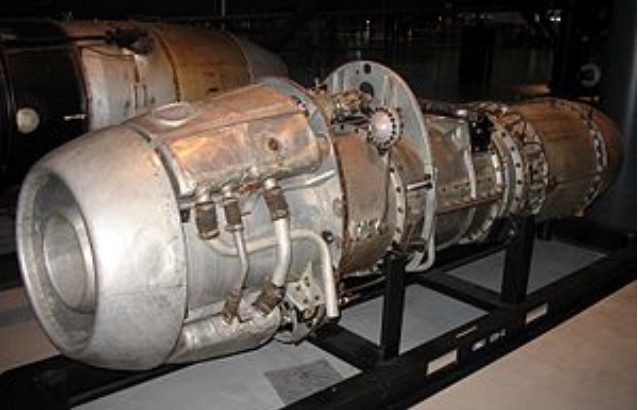
The Ishikawajima Ne-20 (Japanese: 石川島 ネ-20) was Japan’s first turbojet engine. It was developed during World War II in parallel with the nation’s first military jet, the Nakajima Kikka.
The decision to manufacture this engine came about because of the unsuitability of two earlier powerplants selected for the Kikka, the Tsu-11 and the Ne-12. The Ne-20 was made possible by Imperial Japanese Navy engineer Eichi Iwaya obtaining photographs and a single cut-away drawing of the German BMW 003 engine.
In July 1944, the Japanese military attache stationed in Germany returned home with a few photocopies, including a cross-section of the BMW 109-003 turbojet and some general materials concerning the Me-262 fighter and Me-163 interceptor. The important data such as the schematic drawings, however, were being transported by a submarine which was sunk.
When details, breaf as they were, of the BMW 19-003 reached Japan, the Army and Navy held a joint conference at which it was decided that a Japanese version of this turbojet held more promise in the short term than Japanese work still in its early stage. This resulted in 4 projects.
The Ne-20 was the navy project headed by Osamu Nagano assisted by Tanegashima at Kugisho in Yokosuka. The Ne-20 was to become the Japan’s most successul turbojet and the other 3 projects were not fully developped in the time available.
It was the Tokyo Ishikawajima Shipyards that was chosen by the navy to be in charge of trial-manufacture and mass production of jet engines (for commercial use also).
Koichi Ichida, chief of the Business Planning Department, National Aerospace Development Agency, says that reciprocal engines were the main power during the war, but Ishikawajima made steam turbine engines for ships.
It was close to a jet engine because of the rotating mechanism. That is why turbo engines were researched for automobile engines as well.
Only a small number of these engines, perhaps fifty, were produced before the end of the war. Two of them were used to power the Kikka on its only flight on August 7, 1945. Only a few of the engines under construction survived. It was also planned to use the engine to power a version of the Ohka kamikaze weapon, but this was not implemented before the end of the war.
Nakashima Aeroplane and Mitsubishi Heavy Industries also were directed to do trial-manufacture with the same one-page diagram from Germany, but both were unable to realize it.
Everything concerning aircraft, including the Ne-20, was either destroyed by the Allied Powers or brought back to the United States.
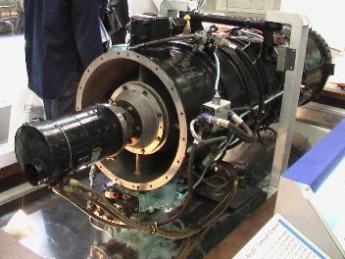
Three Ne-20s have been preserved:
One at Ishikawajima-Harima’s internal company museum in Tanashi,
Two at the National Air and Space Museum in Washington, DC.
Ne-20
Type: Turbojet engine
Length: 2700 mm
Diameter: 620 mm
Dry weight: 470 kg
Compressor: Axial compressor
Maximum thrust: 475 kgf (4.66 kN, 1,047 lbf) at 11,000 rpm
Ishikawajima Tsu-11
The Tsu-11 was a primitive, motorjet-style jet engine produced in small numbers in Japan in the closing stages of World War II. It was principally designed to propel the Japanese Ohka flying bomb, a kamikaze weapon.
The Tsu-11 used a four-cylinder inverted inline Hitachi Hatsukaze Ha 11 piston engine to drive a single-stage compressor. A fuel injection system was fitted behind the compressor. In operation, fuel would be mixed with the compressed air and the resulting mixture ignited, creating thrust.
The engine was designed to overcome the major shortcoming of the Ohka Type 11 weapons, that of limited range. The Type 11 was powered by solid-fuel rocket motors, which provided tremendous acceleration, but had a very short burn time. The upshot of this was that the Ohka’s carrier aircraft would have to fly very close to the target, making it vulnerable to interception. In practice, most Ohka-carrying bombers were shot down before they ever had the opportunity to launch their weapons. It was reasoned that a jet engine would provide high speed as well as enough range to keep the carrier plane safe long enough to release the Ohka and leave the area.
The engine was first tested hung underneath a Yokosuka P1Y bomber sometime in 1944 and was deemed successful enough to order into production. The Ohka was adapted to accommodate the engine in a lengthened fuselage with jet intakes added at the sides. This configuration was designated Ohka Type 22. The Tsu-11 was also selected to power the Yokosuka MXY-9 Shuka (“Autumn Fire”) – a trainer intended to prepare pilots for the Mitsubishi J8M rocket-powered interceptor. Neither of these aircraft entered service, however, as their development took place too late in the war.
A single example of a Tsu-11 engine exists, preserved at the National Air and Space Museum in Washington DC. In 1997 it was installed in the museum’s Ohka 22 during its restoration. Engineering analysis of the engine during the restoration process suggested that the fuel injection and combustion probably contributed little to the power of the engine, with most of the thrust actually being produced by the compressor – in effect, an afterburning ducted fan engine.
Irkut MC-21
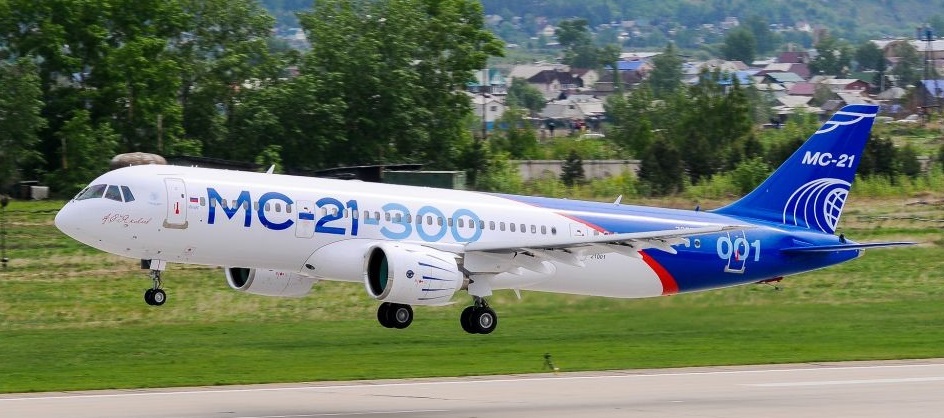
A project of Russian civil aviation was the new-generation narrow-body mid-range airliner MC-21-300. United Aircraft Corporation continued to work on the new civilian aircraft from the very beginning of the COVID-19 pandemic.
IT solutions have made it possible to transfer employees of engineering and corporate centres to remote workstations. The factories also did not stop, shift work was organised to support continuous production processes, on which the implementation of the SDO and MTC programs depended. Strict control over the health status of employees has been introduced, disinfection of territories and premises of UAC enterprises was carried out.
Due to the COVID-19 pandemic, there was a short break, but work resumed. As part of the certification program according to Russian and European standards MC-21-300, a large complex of ground, flight, bench tests was underway.
The MC-21-300 airliner is being created in a wide cooperation of Rostec enterprises. More than half of avionics was developed by the holdings of the State Corporation, and titanium and composite parts are supplied. The first MC-21-300 aircraft is under construction at the Irkutsk Aviation Plant, which will undergo flight tests with PD-14 engines developed by the United Engine Corporation.
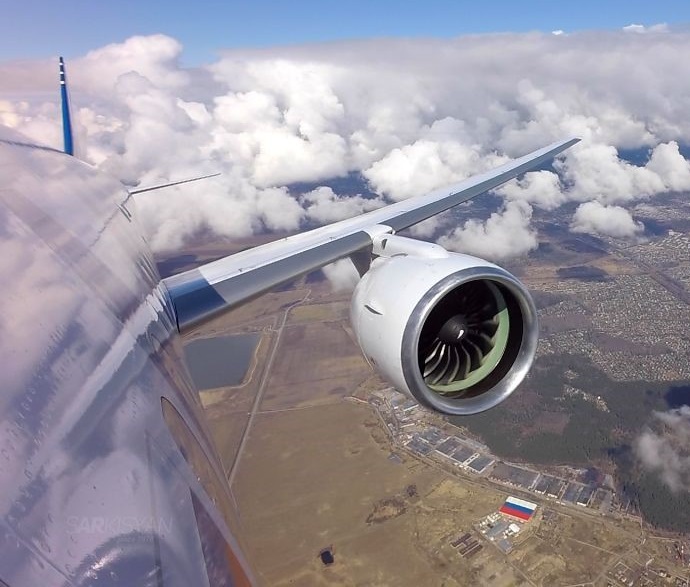
Test flights of the MC-21-300 continued. The program involves four experimental aircraft. Two of them are equipped with passenger cabins. In the case, modifications are being checked with a two-class layout for 163 seats and an ultra-dense layout for 211 seats. Flights are performed by crews of the Irkut Corporation and joint crews: pilots of the corporation and representatives of certification centres. The pace of flight tests is increasing. Often, two aircraft are simultaneously in flight.
During flights, the testing equipment allows recording of about 40 thousand parameters. By 2021 the MC-21-300 was tested for resistance to flutter and at extreme angles of attack. The main engines and auxiliary power unit were tested, including during take-off and landing with a failed engine. The minimum separation speed of the aircraft is determined. The operability of the instrumental landing system and equipment for flying in the dark was confirmed.
The production of MC-21-300 aircraft for delivery to customers had begun by 2021. The start of mass production was allowed by the positive results of flight and ground tests, which proved the correctness of the basic design and technological solutions.
IRGC Shahed 274 / X-5
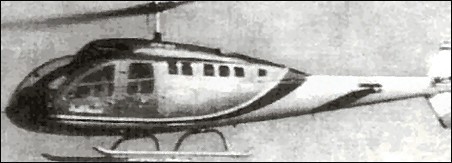
Development of the Shahed 274 light utility helicopter is reported to have been undertaken by the Pasdaran, or Revolutionary Guards. The organisation may also be responsible for a new transport helicopter.
Sponsored (as X-5) by the Institute ol Industrial Research and Development of the IRGC; reportedly due to have made its first flight in 1997.
Power is from one 313kW Roils-Royce 250-C20B turboshaft. Featuring a two-blade main and tail rotors; fully enclosed cabin and tailboom; upper and lower vertical fins. Landing gear is a twin-skid type. Seats for five persons including pilot. Forward-opening crew door and passenger door each side; baggage door aft of latter on port side.
First aircraft (71-832) handed over to IRGC 16 September 1999. International public debut, in Tehran, 30 December 2000. At least two more (74-001 and -002) in service by end of 2001. Further public appearance in air show on Kish Island, October/ November 2002.
A total of 20 (some sources suggest 30) were reportedly planned to be built by end of 2004.
Shahed 274
Engine: 1 x Rolls-Royce 250-C20B, 313kW
Main rotor diameter: 10m
Fuselage length: 9m
Height overall: 3m
Max. take-off weight: 1500kg
Empty weight: 1000kg
Max. level speed: 180km/h
Service ceiling: 5200m
Max range 600km
Ilyushin Il-102
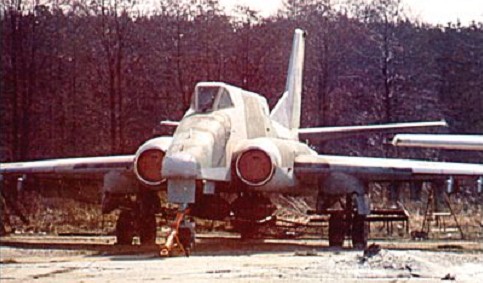
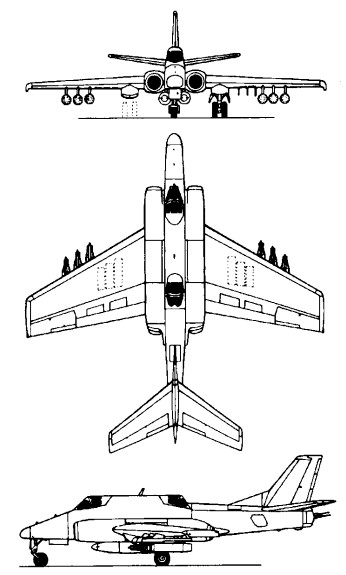
The prototype flew on September 25, 1982. Development canceled.

IL-102
Engine: 2 x Izotov I-88 (RD-33), 5380kg
Max take-off weight: 22000 kg / 48502 lb
Wingspan: 16.98 m / 55 ft 9 in
Length: 17.75 m / 58 ft 3 in
Height: 5.08 m / 16 ft 8 in
Max. Speed: 950 km/h / 590 mph
Cruise speed: 850 km/h / 528 mph
Ceiling: 10000 m / 32800 ft
Range w/max.fuel: 3000 km / 1864 miles
Range w/max.payload: 600 km / 373 miles
Armament: 1 x 30mm cannon, 1 x 23mm cannon, 7200kg weapons
Crew: 2
Ilyushin Il-96

The Ilyushin IL-96 features supercritical wings fitted with winglets, a glass cockpit, and a fly-by-wire control system. It was first flown in December 1988 and certificated in 1992. The IL-96-300 aircraft equipped with modern Russian made avionics which includes six multifunctional color-LCD displays, electro remote management system, inertial navigation system, collision air avoidance system (including mode “S”) and satellite navigation equipment, VHF communication with grid of 8,33/25 kHz frequencies, and equipment permitting executes flights in RVSM conditions. It allows operating the airplane with two crew members. The avionics correspond to modern requirements on international routes in Europe and North America (RNP-1) and allows to navigate and land under ICAO CAT IIIA conditions. The Il-96 came in three main variants: the IL-96-300, IL-96M/T and IL-96-400.
The IL-96M is basically an IL96-300 with a 30 ft fuselage plug and PW engines.
The first PW2337-powered Il-96T RA-96101 was rolled out on 26 April 1997 and first flew on 16 May 1997. Airborne for 21 minutes before returning to Voronezh and on the following dat was flown to Zhukovsky to continue flight testing.

The Il-96T freighter first flew in mid-1993 and the initial production unit rolled out in May 1997, fitted with Pratt & Whitney engines and Rockwell-Collins avionics. This aircraft was used for FAA certification, granted on 2 June 1999. The –96T is a freight version, with a similar –96M passenger version.

The IL-96-400M project was launched in 2017. One of the differences between the deeply modernised version and its predecessor is the longer fuselage, which is increased by 9.35 meters.

In the final assembly workshop of the Voronezh aircraft plant VASO, which is part of the Rostec aviation complex, the assembly of the wide-body, long-range airliner Il-96-400M continued. This wide-body aircraft was a new modification of the IL-96-300.
The IL-96-400M will be equipped with a modern flight-navigation complex and domestic radio communications that meet the requirements of the international aviation authorities for navigation, surveillance and communication systems. Modular integrated avionics for the new airliner is produced by the Rostec Concern Radio-Electronic Technologies.
The aircraft can be presented to the customer in various configurations. In one-class performance, it will accommodate 402 passengers, two-class – 350, and three-class – 305.
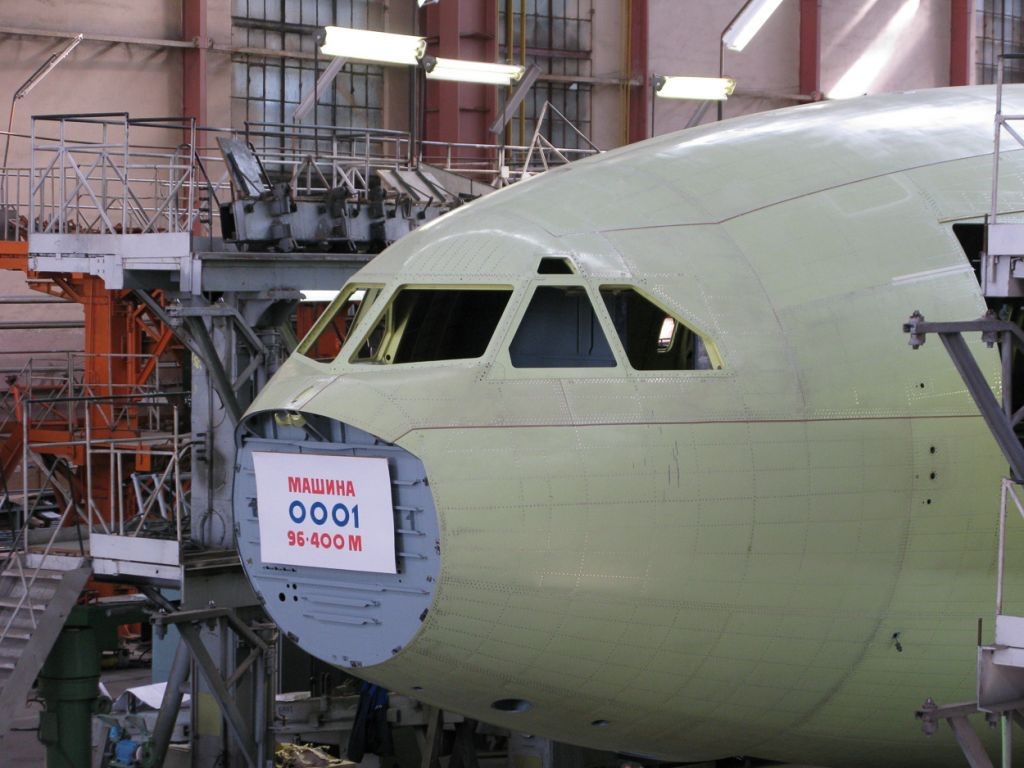
Another important difference between the IL-96-400M will be a more powerful PS-90A1 power-plant compared to the base PS-90A installed on the IL-96-300. This engine has increased maximum thrust, it is equipped with a low-emission combustion chamber and new 2nd generation sound-absorbing structures. The engine is produced at the ODK-Perm Motors plant.
The completion of the assembly of the first prototype IL-96-400M and the transfer of the aircraft for testing were planned at the end of 2021. The plane is completely assembled from Russian components.
IL-96M
Engines: 4 x Pratt & Whitney PW2337 turbofan.
Max take-off weight: 270000 kg / 595251 lb
Wingspan: 64.7 m / 212 ft 3 in
Length: 60.11 m / 197 ft 3 in
Height: 17.5 m
Max range: 11480 km / 7134 miles
Range: (30t load) 6200nm.
Il-96T
Engines: 4 x Pratt & Whitney PW2337 turbofan.
 All Aero