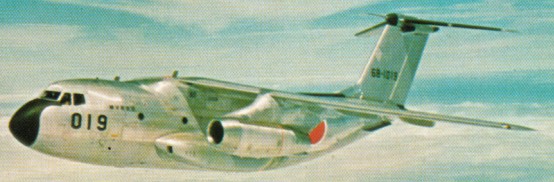
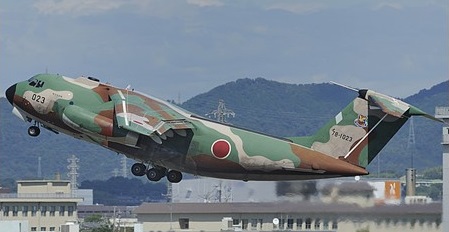
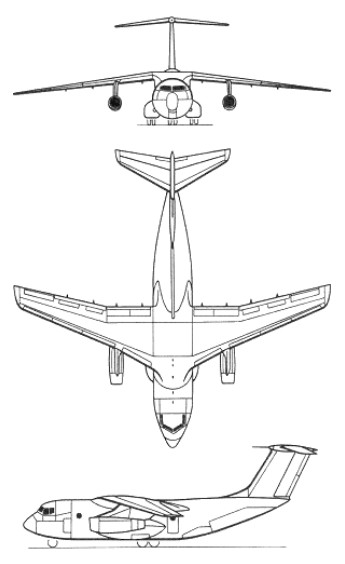
Designed to replace the JASDF’s Curtiss C 46 Commando transport aircraft, the Kawasaki C 1 first flew on 12 November 1970 and was delivered from December 1974.
Power is provided by two 14,500 lb thrust Mitsubishi produced Pratt & Whitney JT8 M 9 turbofan engines and it can carry 60 troops, 45 paratroops, 36 stretchers, or 26,235 lb (11,900 kg) of freight (including vehicles).
Inordinately expensive because of Japan’s relative inexperience in creating this type of airplane, by law the C 1 could not be sold abroad. Production ceased after 31 were built for the Japanese military, by a consortium of companies including Mitsubishi Heavy Industries, Kawasaki Heavy Indus¬tries, Fuji Heavy Industries, Nihon, Shin Meiwa and Sumitomo Precision practically all the companies involved in Japanese aircraft production.
By 1981 the 31 production C-1s had been delivered, including several long-range aircraft with an additional 4,732 litre wing centre-section fuel tank.
Kawasaki has modified a single C-lA twin-jet tactical transport for use in the ECM training role. Serialled 78 1021, the aircraft was fitted with seven radomes. Featuring nose and tail radomes housing elements of the TRDI/Mitsubishi Electrics XJ/ALQ-5 ECM system, the C-1ECM completed trials with the JASDF’s Air Proving Wing in 1986, and is now in service with the Electronic Warfare Training Unit.
Variation: Science & Technology Agency Asuka
C-1 Engines: 2 x P+W JT80D-M-9A, 64.5kN Wingspan: 30.6 m / 100 ft 5 in Length: 29.0 m / 95 ft 2 in Height: 10.0 m / 32 ft 10 in Wing area: 120.5 sq.m / 1297.05 sq ft Max take-off weight: 38600 kg / 85099 lb Empty weight: 23700 kg / 52250 lb Max. speed: 815 km/h / 506 mph Cruise speed: 705 km/h / 438 mph Ceiling: 12200 m / 40050 ft Range w/max.fuel: 3300 km / 2051 miles Range w/max.payload: 1300 km / 808 miles Crew: 5 Passengers: 60
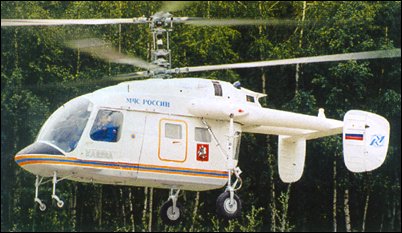
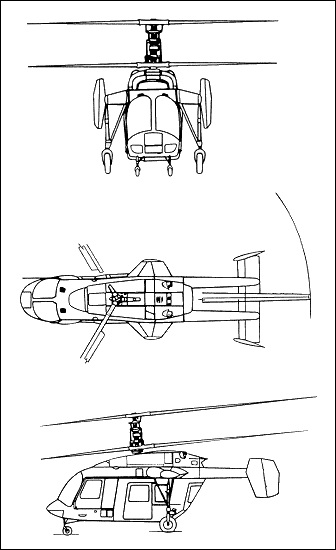
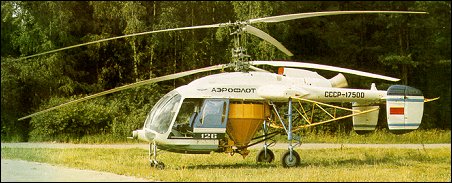
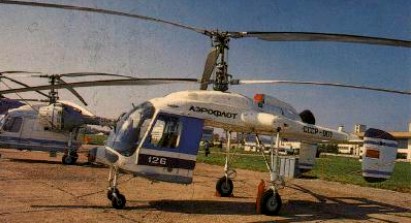
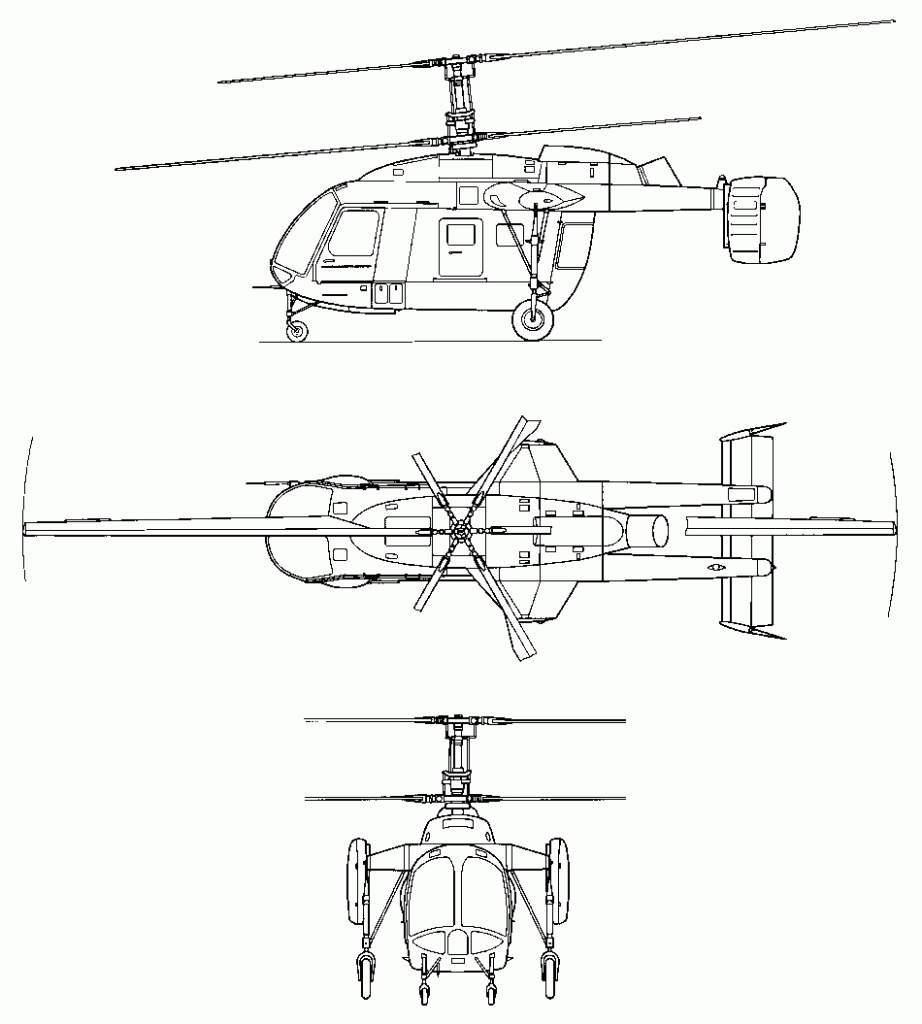
The Ka-226 as a derivative of the Ka-26, has gas turbine engines, installation of new, aerodynamically more perfect, rotors, arrangement of new on-board avionics package and provision for comfortable conditions for the pilot and passengers. The Ka-226 has a coaxial rotor scheme with two three-blade rotors of 13-m diameter. The polymeric composite blade with advanced aerodynamic profile is semi-rigidly attached to the hub by a torsion bar. The helicopter features modular design (detachable transport-passenger cabin) and four-leg non-retractable landing gear. The helicopter is equipped with up-to-date on-board equipment package and complies with the national aviation standards, as well as FAR requirements, categories A and B. The Ka-226 was announced at the 1990 Helicopter Association International convention, Dallas, USA, and developed originally for the Russian TsENTROSPAS disaster relief ministry, which provided significant funding. First flown (RA-00199), at Lyubertsy, on 3 September 1997, the “official” first flight was on the following day. The prototype flew four sorties by 31 December 1997, and began AP-29 certification testing on 28 March 2001. State ground testing of Ka-226 second prototype was completed at Strela’s Orenburg plant on 6 March 2000. KAPP built two prototypes, of which the first was rolled out at Kumertau on 29 May 1998. The first production aircraft from KAPP was due to have flown in the first quarter of 2002 but remained under construction in mid-2002. Planned certification in third quarter of 2002 was not achieved, being reportedly “seriously delayed”. The prototype was destroyed in ground resonance incident in November 2002.
Named Sergei in 1999, honouring politician Sergei Shoigu, the programme was also guided by Sukhoi General Designer, Sergei Mikheev. By mid-2000, Moscow regional government had provided Rb 12 million in development funding and was beginning disbursements under second programme valued at Rb4 million. Initial deliveries due in first half of 2000, but not effected. Prototypes built jointly by Kamov, Strela, KAPP and Ufa Motors, with final assembly by KAPP and Strela for production aircraft.
Strela scheduled to have delivered five preproduction helicopters to Kamov at Lyubertsy by mid-2000; these for MChS Rossii but not supplied until 2003, when one exhibited at MAKS ’03. KAPP designated second production plant; first batch of five under construction by 2001. Motor-Sich of Zaporozhye, Ukraine, negotiated with Kamov in June 2000 to build Ka-226s powered by indigenous ZMKB AI-450 engine; agreement on AI-450 installation signed 15 August 2001. On 19 October 2001, however, Motor Sich announced it would source all Ka-226 components with Ukrainian industry, if decision to proceed were taken. Programme launch was reportedly imminent in late 2002. MoU on use of Turbomeca Arrius 2G signed in August 2001 with NPO Saturn and French manufacturer; collaboration agreement followed on 16 April 2002, with intention of certifying Arrius Ka-226 in September 2004 after trials of three prototypes. Orders by January 2002 totalled 66: Gazprom 50, Moscow City 10, TsENTROSPAS five and Bashkiriya one. Identified requirements include up to 20 for City of Moscow for patrol and medevac; some 250 for MChS Rossii/TsENTROSPAS disaster relief organisation; and up to 75 for Gazprom in gasfield support role. Firm order for 25 reportedly received from TsENTROSPAS by 1997, but quantity had reduced to 10 by 1999; by mid-2000 this quoted as five firm (to be first five production aircraft) and further 15 to be ordered by 2002; manufacture by Strela which had completed first two (including one in medevac configuration) by early 2002. Bashkiriyan local government ordered one Ka-226-50 in September 2001; this accepted 28 December 2001 (when still not cleared for flight) and due for trials at Zhukovsky before service entry. Funds for 22 of initial Gazprom order for 50 had been transferred by 2001, this initial batch, built by Strela, to have been received by 2005 (although formal signing of order for 50 was undertaken at Moscow Salon in August 2001). Moscow city government signed US$1.5 million order for 10 in December 2001, delivery over two years, but later announcement indicated that funds had not been earmarked; Moscow’s helicopters to be built by KAPP. City allocated initial Rb33 million in 2002 and intends to receive three helicopters in 2003, four in 2004 and final three in 2005. Ka-226 was beaten by Kazan Ansat in competition to supply new training helicopter to Russian armed forces, announced September 2001, although small number of Ka-226s required by Russian Navy. To 1999, development cost was Rb108 million. Featuring interchangeable mission pods. Refinements of the Ka-26/126 include a new rotor system with hingeless hubs and glass fibre/carbon fibre blades, changes to the shape of the nose, twin tailfins and rudders. Payload modules include an agricultural systems with a hopper capacity of 1,000 litres.
The Ka-226 features contrarotating coaxial three-blade rotors, a hinge rotor head with ‘rake’-type blade attachment, the Ka-26 blades of the initial series were to be succeeded by GFRP and CFRP blades with twin-contour spar, load-carrying rear section and electrothermal anti-icing. A rotor brake WAS standard, and non-folding blades. There was a three-stage gearbox with planetary gear trains, of alloy steel and aluminium casting, flange mounted with four load-carrying bolts. Accessories included cooling fan, hydraulic pump and AC generator. The engine input was 6,000 rpm. The flying controls were mechanical with irreversible hydraulic actuators. An automatic rotor constant-speed control, with a conventional four-channel control (longitudinal, lateral, cyclic and differential pitch). The two endplate fins and rudders are toed inward 15 degrees, with a non-controllable horizontal stabiliser. Airframe materials are primarily aluminium alloys, steel alloys and composite sandwich panels of GFRP with honeycomb filler. Rotor blade overhaul interval 2,000 hours; total life 6,000 hours, but to be extended by increments to 18,000 hours. The landing gear is a non-retractable four-wheel type. Main units, at rear, are carried by stub-wings. All four units embody oleo-pneumatic shock-absorber, the forward wheels have no brakes. The rear wheels have pneumatic brakes. Mainwheel tyres size 595 x 185 mm, pressure 2.5 bars + 1.0; forward wheel tyres size 300 x 125 mm, pressure 3.43 bars. Skis optional. Provision for large inflatable pontoons, across front of aircraft forward of front wheels and under each mainwheel. Forward units of castoring type, without brakes. Rear wheels have pneumatic brakes.
Two 335kW Rolls-Royce 250- C20R/2 turboshafts are side by side aft of rotor mast, with individual driveshafts to the rotor gearbox. Two 335kW Rolls-Royce 250-C20B engines were in the prototypes. The transmission rating is 626kW. Alternatively, two Progress (ZMKB) AI-450 turboshafts, each 331kW or two Turbomeca Arrius 2G (500 kW) or Klimov VK-800 turboshafts (588kW) may be fitted. Standard fuel capacity is 770 litres, in tanks above and forward of the payload module area. Provision for two external tanks, on sides of fuselage, has a total capacity of 320 litres.
The fully enclosed cabin has a rearward-sliding door each side, and normal operation is by a single pilot. A second seat and dual controls are optional. The cabin is ventilated, and warmed and demisted by air from a combustion heater, which also heats the passenger cabin when fitted. An air filter is fitted on the nose of the agricultural version. Space aft of cabin, between main landing gear legs and under transmission, can accommodate a variety of interchangeable payloads. A cargo/passenger pod accommodates four or six persons on folding sidewall seats, with provision for a seventh passenger beside pilot. Two clamshell doors are at the rear of the pod, with emergency exit each side and a hatch in the floor. An ambulance pod accommodates two stretcher patients, two seated casualties and a medical attendant. For agricultural work, a chemical hopper (capacity 1,000 litres) and dust spreader or spraybars are fitted in this position, on the aircraft’s CG. Flight deck pressurisation protects crew against chemical ingress. The aircraft can also be operated with either an open platform for hauling freight or hook for slinging loads at the end of a cable or in a cargo net. A single hydraulic system, with manual override, is for control actuators. The main electrical system is 27V 3kW DC, with a back-up 40Ah battery. A secondary system is 36/115V AC with two static inverters, and a 115/200V AC system with 16kVA generator (6kVA to power agricultural equipment and rotor anti-icing). Electrothermal rotor blade de-icing; hot air engine air intake anti-icing; alcohol windscreen anti-icing; electrically heated pitot. Pneumatic system for mainwheel brakes, tyre inflation, agricultural equipment control, pressure 39 to 49 bars.
The cost in 2000 for the Ka-226A was US$1.5 million.
The Ka-226-50 is an “improved” version.
Engine: 2 x Allison 250-C20B. Instant pwr: 313 kW. Rotor dia: 13 m. Fuselage length: 8.1m Height: 4.15m MTOW: 3400 kg Payload: 1300 kg Useful load: 1448 kg Max speed: 111 kts Max cruise: 104 kts Max range: 602 km HIGE: 6623 ft HOGE: 4197 ft Rate of climb: 11.7m/s Endurance: 4.6h Service ceiling: 16,557 ft Crew: 1 Pax: 7
Development began 1984 with an early mockup with two small turboshafts above the cabin. A single TVO-100 turboshaft was subsequently adopted. In 1985 a Romanian-Russian agreement of co-operation for manufacturing a utility helicopter derived from the Ka-26 was signed. In 1986 the ICA Brasov factory started development and manufacturing preparation. A ground test vehicle was completed early in 1986. The first flight of the prototype (SSSR-01963) was on 19 October 1988. The first Romanian aircraft was flown on 22 December 1988 and, with a second, was delivered to the USSR for testing.Serial production was started with 15 completed. The first of four Soviet-built preproduction Ka-126s first flew on 19 October 1988. A proposed Ka-128, differing only in a 722shp Turbomeca Arriel 1D1 turboshaft power plant and addition of an intermediate gearbox was abandoned.
Featuring contrarotating coaxial three-blade rotors, a hinge rotor head with ‘rake’-type blade attachment, the Ka-26 blades of the initial series were to be succeeded by GFRP and CFRP blades with twin-contour spar, load-carrying rear section and electrothermal anti-icing. A rotor brake WAS standard, and non-folding blades. There was a three-stage gearbox with planetary gear trains, of alloy steel and aluminium casting, flange mounted with four load-carrying bolts. Accessories included cooling fan, hydraulic pump and AC generator. The engine input was 6,000 rpm. The flying controls were mechanical with irreversible hydraulic actuators. An automatic rotor constant-speed control, with a conventional four-channel control (longitudinal, lateral, cyclic and differential pitch). The two endplate fins and rudders are toed inward 15 degrees, with a non-controllable horizontal stabiliser. Airframe materials are primarily aluminium alloys, steel alloys and composite sandwich panels of GFRP with honeycomb filler. The landing gear is a non-retractable four-wheel type. Main units, at rear, are carried by stub-wings. All four units embody oleo-pneumatic shock-absorber, the forward wheels of castoring type, self-centring, with no brakes. The rear wheels have pneumatic brakes. Mainwheel tyres size 595 x 185 mm, pressure 2.45 bars; forward wheel tyres size 300 x 125 mm, pressure 3.43 bars. Skis optional. Provision for large inflatable pontoons, across front of aircraft forward of front wheels and under each mainwheel. One 522kW Mars (Omsk) TV-O-100 turboshaft is installed centrally in a streamline fairing above the cabin. Electronic-hydraulic automatic two-channel control system, with manual control in case of electronic governor failure, is installed. A front driveshaft has a plate coupling to the gearbox. Fuel is in two forward and one aft tank, with a total capacity of 800 litres. There is provision for two external tanks, on sides of fuselage, total capacity 320 litres. A single-point main tank refuelling is on the port side of aft tank. The fully enclosed cabin has a rearward-sliding door each side, and normal operation is by a single pilot. A second seat and dual controls are optional. The cabin is ventilated, and warmed and demisted by air from a combustion heater, which also heats the passenger cabin when fitted. An air filter is fitted on the nose of the agricultural version. Space aft of cabin, between main landing gear legs and under transmission, can accommodate a variety of interchangeable payloads. A cargo/passenger pod accommodates four or six persons on folding sidewall seats, with provision for a seventh passenger beside pilot. Two clamshell doors are at the rear of the pod, with emergency exit each side and a hatch in the floor. An ambulance pod accommodates two stretcher patients, two seated casualties and a medical attendant. For agricultural work, a chemical hopper (capacity 1,000 litres) and dust spreader or spraybars are fitted in this position, on the aircraft’s CG. The aircraft can also be operated with either an open platform for hauling freight or hook for slinging loads at the end of a cable or in a cargo net. A single hydraulic system, with manual override, is for control actuators. The main electrical system is 27V 3kW DC, with a back-up 40Ah battery. A secondary system is 36/115V AC with two static inverters, and a 115/200V AC system with 16kVA generator (6kVA to power agricultural equipment and rotor anti-icing). Electrothermal rotor blade de-icing; hot air engine air intake anti-icing; alcohol windscreen anti-icing; electrically heated pitot. Pneumatic system for mainwheel brakes, tyre inflation, agricultural equipment control, pressure 39 to 49 bars. After 1989 the project was cancelled.
Ka-126
Engine: 1 x Koptchencko TV-O-100. nstant pwr: 537 kW. Rotor dia: 13 m. MTOW: 4250 kg. Payload: 1000 kg. Useful load: 1335 kg. Max speed: 97 kts. Max cruise: 86 kts. Max range: 713 km. HIGE: 3180 ft. HOGE: 262 ft. Service ceiling: 12,623 ft. Crew: 1. Pax: 7.
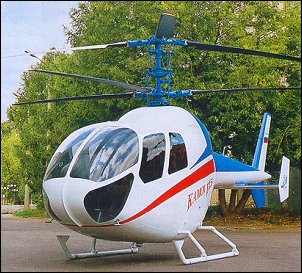
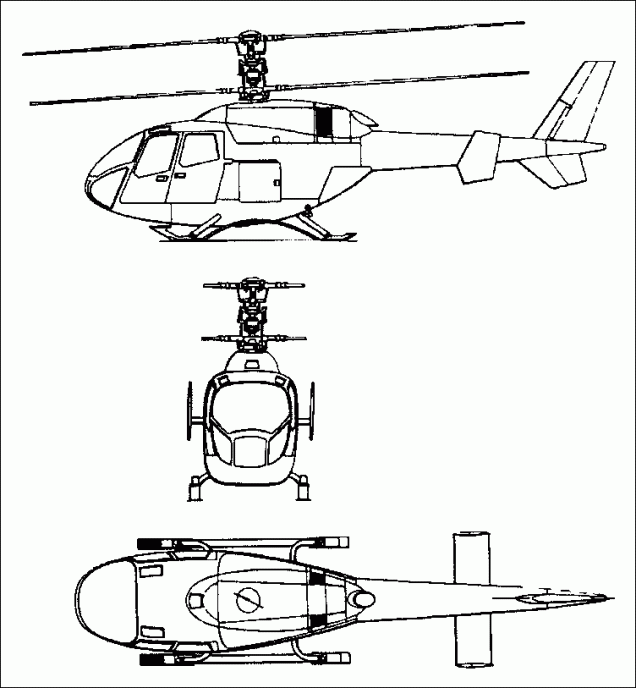
The Ka-115 is a light multi-purpose helicopter equipped with landing skids. It is powered by Pratt & Whitney/Klimov PW 206K/2 engine (Canada/Russia production), and features a large five-door cabin with large windows. In terms of payload-to-weight ratio the helicopter is comparable to its world counterparts. The cabin is fitted with heating and ventilation systems. High rotor system efficiency, absence of power losses for the tail rotor drive, combined with smooth aerodynamic shape of the airframe and economic engine give the helicopter fuel flow characteristic of less than 0.5kg per km at a cruise speed of 230km/h. A de-icing system of the rotor blades, engine inlet particle separator and air conditioning system make the helicopter capable of operating in any climatic region within a 50 degree temperature range. The helicopter complies with international standards on reliability, safety and comfortable conditions for pilot and passengers.
Ka-115 Engines: 1 x PW/K 206D turboshaft, 477kW Rotor diameter: 9.5m Fuselage length: 9.2m Height: 3.6m Width: 2.0m Max take-off weight: 1850kg Max speed: 250km/h Cruising speed: 230km/h Rate of climb: 11.5m/s Service ceiling: 5200m Range: 780km Payload: 700-900kg Crew: 1 Passengers: 5
Ka-115 Engine: 1 x P&W/Klimov PW206K/2. Instant pwr: 410 kW. Rotor dia: 9.5 m. MTOW: 1850 kg. Payload: 600 kg. Useful load: 878 kg. Max speed: 135 kts. Max cruise: 124 kts. Max range: 780 km. HIGE: 10,164 ft. HOGE: 7541 ft. Service ceiling: 17,049 ft. Crew: 1. Pax: 4/5.
Funded under the Russian programme for development of civil aviation for 2000, construction of the prototype Ka-62 (then known as V-62) began early 1990, but apparently was abandoned. One Ka-60 military version and two Ka-62s were intended to undertake flight trials, although the second of the basic type was completed as a Ka-60U, delaying the debut of the civil version. In April 2001, The Turkish Ministry of Public Health was discussing a contract for six Ka-62s, with a total value of US$31.5 million. The Russian government’s 2002-10 aviation plan included Rb62 million to develop the Ka-62 and Rb51 million to launch production at UUAP and, possibly, RSK “MiG” (LAPIK).
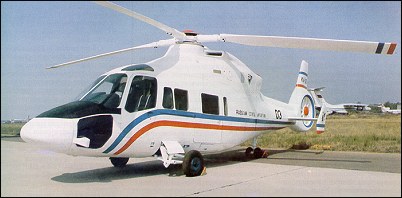
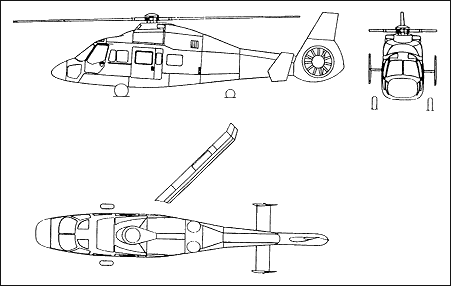
The Ka-62 was developed on the basis of the Ka-60 army helicopter and is intended for carrying passengers and cargo in the transport cabin, and transportation of bulky cargo on external sling. It has a single main rotor with a multi-blade tail rotor in the tail ring. The rotor blades and 60% of the airframe weight are made of polymeric composite materials. The airframe features perfect aerodynamic outlines, large transport-passenger cabin and retractable three-leg landing gear. The power plant is made of modular-design developed by Rybinsk Motor Design Bureau, headed by Mr. A. Novikov, Designer General. The civil derivative has large door openings on both fuselage sides of the cabin. The helicopter is equipped with anti-icing and fire-fighting systems. The Ka-62 is equipped with standard avionics suite of a basic transport version for VFR conditions, or for IFR flying, using the satellite navigational equipment. The export version of the helicopter is supplied with western engines and avionics of the customer’s option.
Originated as a military transport, all main systems and components are duplicated, with main and secondaries routed on opposite sides of airframe. The transmission is resistant to 12.7mm bullets and main blades to 23mm shells. The gearboxes have a run-dry capacity. The main rotor blades have sweptback tips. Yaw control is by 11-blade fan-in-fin. Landing gear is retractable tricycle tailwheel. Composites account for 60%, by weight, of the structure, including blades of main rotor, fuselage sides, doors, floor and roof, tailboom, fin, vertical stabilisers, and fan blades of carbon-reinforced Kevlar.
Retractable reverse tricycle type; Single KT-217 mainwheels retract inward and upward into the bottom of the fuselage and twin rear wheels retract forward into the tailboom. Shock absorbers are in each unit. An option is inflatable pontoons for emergency use on water. The basic Ka-62 has two RKBM Rybinsk RD-600V turboshafts, each 956kW max continuous, 1,140kW emergency rating. Fuel tanks are under the floor, with a 1,450 litres capacity. General Electric T700/ CT7-2D1 engines are offered as an alternative to the RD-600V. The crew of one or two, side by side, have an optional bulkhead divider between the flight deck and the cabin. The cabin holds up to 14 passengers in four rows. A forward-hinged door is on each side of the flight deck, and a large forward-sliding door and small rearward-hinged door are on each side of the cabin. There is a baggage hold to the rear of the cabin. The interior is heated and air conditioned. A thermoelectric de-icing system is optional. An Ivchenko AI-9V APU was originally proposed, but a replacement Aerosila TA-14 was under development.
Ka-62 Passengers: 16 Engines: 2 x Rybinsk RD-600 turboshaft, 955kW Main rotor diameter: 13.5m Fuselage length: 13.25m Height: 4.1m Max take-off weight: 6250kg Empty weight: 3730kg Max speed: 162 kts Cruising speed: 140 kts Rate of climb: 11.7m/s HIGE: 9508 ft. HOGE: 6885 ft. Service ceiling: 5000m / 16,885 ft. Range: 720km Payload: 2000-2500kg Crew: 1-2 Pax: 14
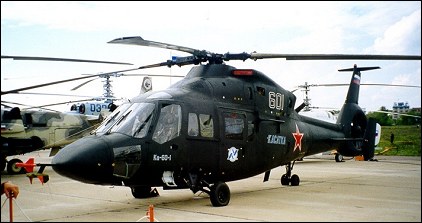
The original coaxial rotor, twin tail, single-engined V-60 won the Soviet Army lightweight helicopter and Mi-8 replacement competition against the twin-engined Mil Mi-36 in 1982. Subsequently the design was considerably modified to achieve greater speed through adoption of a single five-blade main rotor of 13.5-m diameter and Fenestron-type tail rotor with eleven blades. The polymeric composite blade is attached to the hub by a torsion bar. The airframe features large door openings on both fuselage sides, retractable three-leg energy-absorbing landing gear. The seats of the crew and the troopers are energy attenuating seats. The pilot-in-command is on the right-hand seat. The power plant of the helicopter is two modular-design engines developed by Rybinsk Motor Design Bureau, headed by Mr. A. Novikov, Designer General. Particular attention is paid to the increased combat survivability means of the helicopter. All principal systems and units of Ka-60 are duplicated and separated. The composite polymeric materials that make about 60% of the helicopter structural weight add to the survivability of the helicopter being more resistant to the combat damages. The foam polyurethane that filled the tanks prevents the danger of the fuel explosion. The basic avionics suite for all versions is the one for transport assault helicopter. This suite ensures operational missions in daytime and night, in VFR and IFR conditions. All main systems and components are duplicated, with main and secondaries routed on opposite sides of airframe. The transmission is resistant to 12.7mm bullets, the main blades to 23mm shells. The gearboxes will run without oil. The main rotors are advanced technology with sweptback tips. Production versions were to have a slower-turning five-blade rotor. Undercarriage is a reverse tricycle. The Ka-60 has IR- and radar-absorbent coatings. Accommodation is for up to 16 infantry troops or six stretchers and three attendants. The pilot (starboard) and co-pilot/gunner (port) sit side by side. There is provision for dual controls, with the control stick top common with the Ka-50/52. The cockpit has a three-screen EFIS. Avionics include a Pastel RWR and Otklik laser warning system, and an Arbalet MMW radar with an antenna in the nose. The Ka-60 is fitted with a cargo hook. Armament can be carried on a one-piece transverse boom through the cabin, to the rear of the doors, to provide suspension for total of two B-8V-7 seven-round 80mm rocket pods, two 7.62mm or 12.7mm gun pods, or similar armament. The prototype has RKBM Rybinsk RD-600V Turboshafts, as the Ka-62, but the production engine was to be the 1,103kW Klimov VK-1500. RRTM RTM322 or GE CT7 were available in the export versions.
The first flight was originally due 1993, but the programme was slowed by funding shortages, and the priority changed to promotion of a civil variant (the Ka-62). The Ka-60 was officially revealed at Lyubertsy on 29 July 1997, when the prototype was close to completion. The first (601) flew on 10 December 1998, made a second sortie on 21 December, and the first official flight on 24 December. All were hovering flights. The international debut was at MAKS ’99, Moscow, in August 1999. The first ‘forward flight’ was on 24 December 1999. Further testing was intermittent, due to irregular Ministry of Defence funding, but production versions of the RD-600V turboshaft were installed in mid-2002. At this time, it was stated only that the prototype had completed “several” flights, although State Trials were not due to begin until early 2003. Conflicting reports quote both Arsenyev and Ulan Ude as prospective production lines. However, LMZ (later LAPIK, part of RSK “MiG”) was reported in April 2000 to be preparing for production and in mid-2001 was building second prototype, which to be completed as a trainer in Ka-60U configuration. This entered final assembly in July 2002, although RD-600 engines became due to have been received late 2002. Displayed (marked as 602) at MAKS ‘03, Moscow, August 2003. Series production at LAPIK was due to begin in 2003. The Ka-60U cost US$1.7 million in 2000. In August 2002, it was announced that power plant was to be changed to Klimov VK-1500 to increase participation by RSK “MiG” group. A smaller variant of Ka-60 was reported in mid-2001 to have been offered to Russian Navy.
Versions: Ka-60U – Pilot and aircrew training Ka-60K – Utility, shipborne over-the-horizon targeting Ka-60R – Reconnaissance
Ka-60 Crew: 1-2 Engine: 2 x Rybinsk RD-600 turboshaft, 975kW Main rotor diameter: 13.5m Max take-off weight: 6500kg Max speed: 300km/h Cruising speed: 265km/h Hovering ceiling: 2100m Service ceiling: 5150m Range: 700km Payload: 2000-2750kg
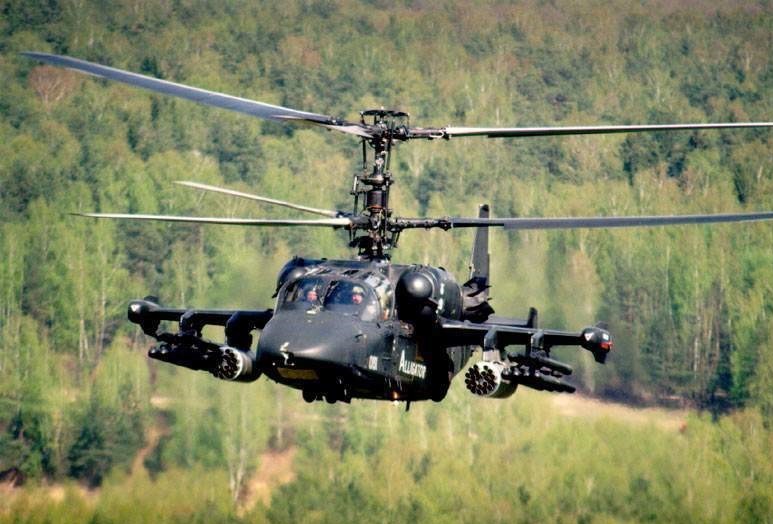
The Ka-50-2 designation applies to three different aircraft. The basic Ka-50-2 is a variant of the Ka-50 single-seater, though the designation is also applied to two twin-seat aircraft; first of these was a version of the Ka-52 Alligator. All Ka-50-2s differ from the baseline Ka-52 in retaining the attack and anti-tank role using 12 laser beam-riding AT-8 Vikhr ATGMs or 16 Rafael NT-D ATGMs. Number 024 was used as demonstrator.
The second variant of Ka-50-2 is another two-seater, intended to have a conventional stepped, tandem cockpits. A further subvariant of the tandem-seat Ka-50-2, the Erdogan (Turkish for Born Fighter) was proposed to Turkey jointly by Kamov and Israel Aircraft Industries. Powered by TV3- 117VMA-02 engines, this would have been fitted with longer-span wings and feature a NATO-compatible Giat 621 turret containing a single 20mm cannon which would fold down below the belly of the helicopter in flight, for a 360 degree arc of fire. It would fold to starboard for landing, and could be fired directly forward, even when folded. Ten Turkish pilots flew Alligator “061” at Antalya, Turkey, in early 1999 as part of evaluation process for a requirement for 145. Named as second choice when the Bell AH-1Z selected, negotiations reopened in mid-2002, following an impasse in negotiations with USA.
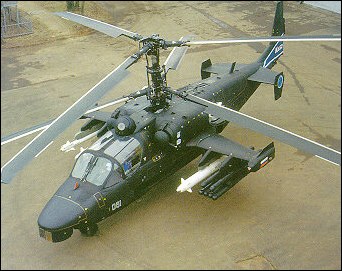
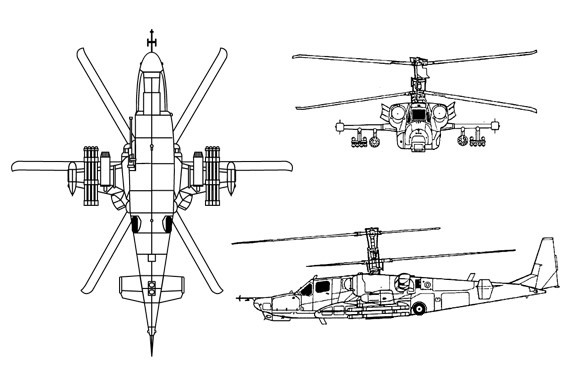
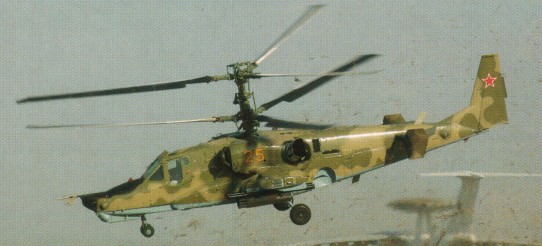
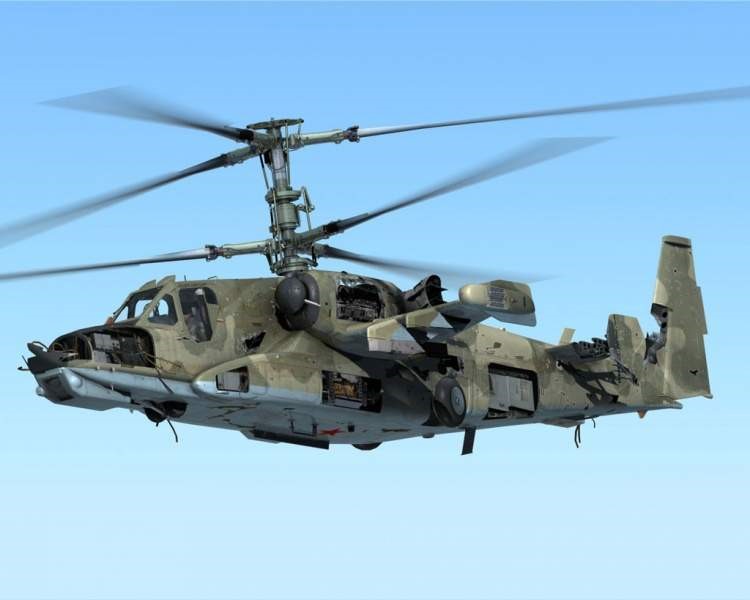
The multi-role all-weather combat Ka-52 “Alligator” coaxial-type helicopter differs from its predecessor by a wider nose part and twin-seat crew cockpit where the pilot ejection seats are arranged side-by-side. Both pilots have full controls of the helicopter without any limitations. The pilot cockpit is armored. Numerous weapons options for the helicopter are achieved by arranging a movable high-speed firing gun starboard of the helicopter, and by six external wing stores. The avionics suite is comprised of a multiplexed, multi-level digital computer-based system having large storage capacity and high speed. Observation, search and targeting systems comprising head-mounted display are used for round-the-clock and all-weather detection of specified targets and their attack using optical, TV, laser, IR and radar equipment. NATO reporting name Hokum-B, the Ka-52 was revealed at the 1995 Paris Air Show, rolled out in December 1996. The first flight was on 25 June 1997, but the first official flight was on 1 July 1997. The Ka-52 is 85% similar to the single-seat Ka-50, but the front fuselage is redesigned to accommodate two crew, side by side. Access is by upward-hinged and bulged gull-wing type transparent canopy doors over each seat. The bottom of nose is recessed on the starboard side to improve the field of fire of the 2A42 gun. Some cockpit armour and a number of rounds for the cannon are omitted to compensate for the increased weight. Power plant for the production models is two uprated 1,863kW Klimov TV3-117VMA-SB3 turboshafts. Two 1,633kW TV3-117VMA turboshafts powered the prototype. The pilot and pupil or navigator/weapons operator have Zvezda K-37-800 ejection systems, for simultaneous emergency escape, similar to that of Ka-50. Full dual controls are standard including two colour and two monochrome SMD 66 multifunction displays. AVIONICS: Integrated by Sextant Avionique, supplier of head-down displays, the Navigation and Attack System for Helicopters (NASH), Topowl helmet-mounted sight display, Nadir 10 navigation system. Radar: Phazotron FH-01 Arbalet MMW radar installed in mast-mounted dome. Flight: Nadir 10 nav system with Stratus laser gyro AHRS and Doppler radar. Instrumentation: Arsenal Shchel-V helmet-mounted sight for weapons operator. Mission: Samshit-E weapons control system above and behind the second cockpit, with TV, FLIR and laser range-finder and target designator. Thomson-CSF FLIR (or optional Russian Khod FLIR) integrated with Shkval electro-optical (TV) sighting system in ball above fuselage aft of canopy. Smaller ball for optical sight under fuselage. Windows for laser range-finder and IR camera in nose turret. Self-defence: Active IR and electronic jamming units; UV-26 flare/chaff dispensers in wingtip fairings. Warning equipment includes Pastel (L150) RWR, Mak (L136) IR and Otklik (L140) laser system.
The Kamov Ka-52 entered series production on October 29, 2008. With deliveries of the first batch of 12 units for the Russian air forcé.
Powered by TV3-117VMA turboshafts of 2,195 unit shp from Kamov the Ka-52 reaches a maximum speed of 310 km/h and a cruise of 270 km/h, able to move backwards up to a maximum speed of 90 km/h or 80 km. /h to the sides. The normal takeoff is around 10,400 kg, the maximum 11,000 kg.
The Ka-52 Kamov cockpit chose the side-by-side seating. Both have a K-37-800 ejection seat which, prior to the exit of the seats, different explosive charges separate the rotor blades to allow both seats come out of the fuselage without inconvenience. The cabin is armored with the capacity to resist impacts of up to 20 mm while the windshields have a resistance to ammunition shots of up to 12.7 mm.
The instrument panel incorporates four multifunction polychrome LCD screens and another two monochrome to which is added an ILS-31 model Head Up Display. Both crew members have GEO-ONV-1 or ONV-1-01 night vision goggles, the entire instrument panel being compatible with them. Within the NAV/COM systems there is an inertial navigator with satellite assistance and digital communications equipment.
The integrated self-defense system known as Vitebsk includes: L-150 Pastel radar warning system L-140 OTKLIK laser warning system Missile approach detector of unknown model Double infrared jammer L-3705 Six UV-26 decoy dispersers
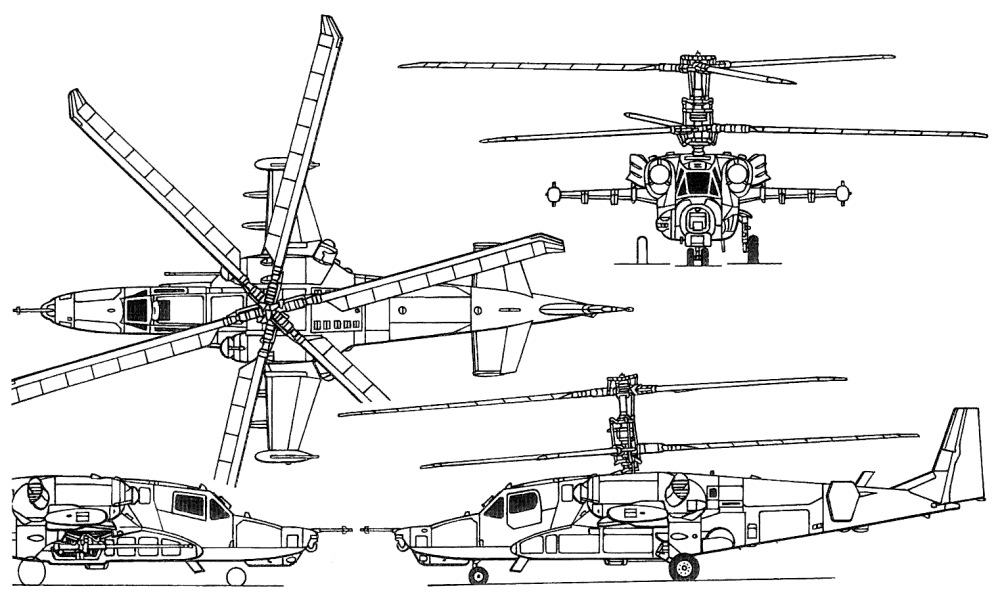
The Ka-50 Akula (Black Shark) is a single-seat attack helicopter. The Ka-50 has two coaxial three-blade rotors of 14.5-m diameter each. The polymeric composite blades are attached to the hub by a torsion bar. The airframe features mid-set stub wing, retractable three-leg landing gear and empennage of a fixed-wing aircraft type. The pilot cockpit is fully armored. The emergency pilot escape system, comprising an ejection seat, operating within the entire flight speed and altitude range. The load factor of 3.5G allows numerous weapons options by arranging a movable high-speed firing gun starboard of the helicopter, and six external wing stores. Total weight of the weapons on the wing stores is 2300kg. The on-board avionics suite uses satellite navigational and the observation, search and sighting systems comprising TV, laser and IR equipment.
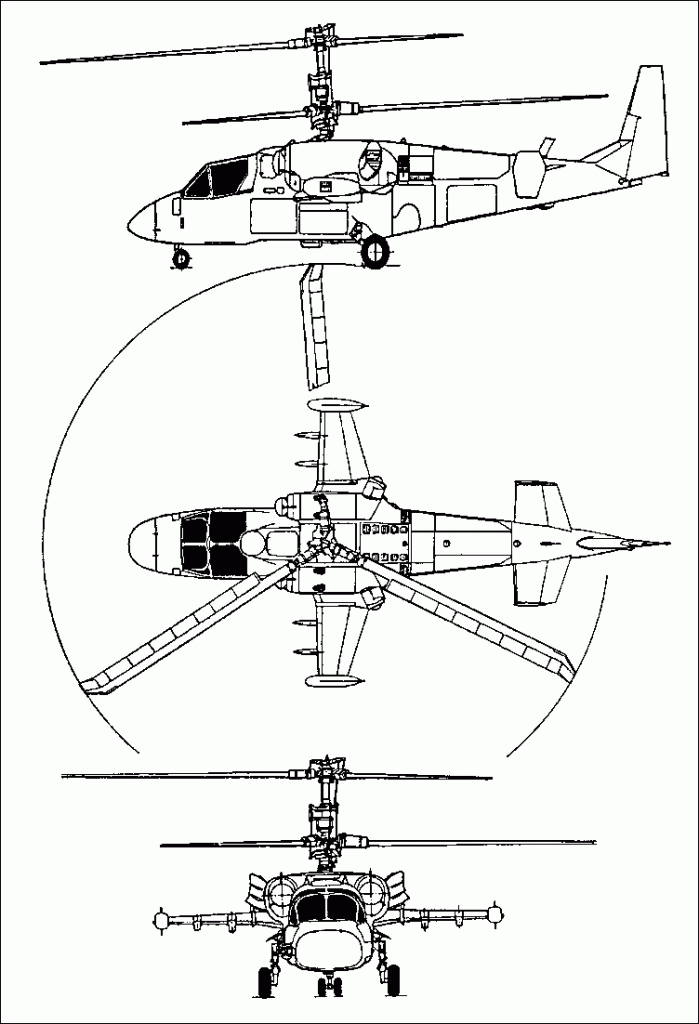
A single-seat close support helicopter, the Ka-50 features a coaxial, contrarotating and widely separated semi-rigid three-blade rotors system with swept blade tip, attached to the hub by steel plates. The fuselage has nose sensors, a flat-screen cockpit, heavily armoured by combined steel/aluminium armour and spaced aluminium plates, with a rearview mirror above the windscreen. A sweptback tailfin has an inset rudder and large tab. A high-set tailplane on rear fuselage has endplate auxiliary fins. With retractable landing gear and mid-set unswept wings, carrying ECM pods at tips and four underwing weapon pylons. The engines are above the wingroots. Partially dismantled, the Ka-50 can be air-ferried in the Il-76 freighter. Much of the fuselage skin is formed by large hinged door panels, providing access to interior equipment from ground level.
The fuselage is built around a steel torsion box beam, of 1.0m square section. The wing centre-section passes through the beam, and the cockpit is mounted at the front of beam, gearbox above and engines to the sides. Carbon-based composites materials constitute 35% by weight of the structure, including the rotors. Approximately 350kg of armour protects the pilot, engines, fuel system and ammunition bay. The canopy and windscreen panels are 55mm thick bulletproof glass. The hydraulically retractable tricycle type landing gear has a twin-wheel steerable nose unit and single mainwheels all semi-exposed when up. All wheels retract rearward, and have low-pressure tyres.
Power is from two 1,633kW Klimov TV3- 117VMA turboshafts with VR-80 main reduction gearbox and two PVR-800 intermediate gearboxes, with air intake dust filters and exhaust heat suppressors. Two primary fuel tanks, filled with reticulated foam, are inside the fuselage box beam. Total internal capacity approximately 1,800 litres. The front tank feeds the port engine, the rear feeds the starboard and APU. Each tank is protected by layers of natural rubber. There is provision for four 500 litre underwing auxiliary fuel tanks. Transmission remains operable for 30 minutes after oil system failure. The double-wall steel armoured cockpit is able to protect pilots from hits by 20 and 23mm gunfire over ranges as close as 100m. The interior is black-painted for use with NVGs. Specially designed Zvezda K-37-800 ejection system, for safe ejection from 100m. Following explosive separation of the rotor blades and opening of the cockpit roof, the pilot is extracted from the cockpit by a rocket; alternatively, he can jettison doors and stores before rolling out of cockpit sideways. All systems are configured for operational deployment away from base for up to 12 days without need for maintenance ground equipment. Refuelling, avionics and weapon servicing are performed from ground level. AI-9V APU for engine starting, and ground supply of hydraulic and electrical power, in top of centre-fuselage. Anti-icing system for engine air intakes, rotors, AoA and yaw sensors; de-icing of windscreen and canopy by liquid spray. PrPNK Rubikon (L-041) piloting, navigation and sighting system based on five computers: four Orbita BLVM-20-751 s for combat and navigation displays and target designation, plus one BCVM-80-30201 for WCS. Incorporates PNK-800 Radian navigation system, with C-061K pitch and heading data, IK-VSP-VI-2 speed and altitude and PA-4-3 automatic position plotting subsystems. Series 3 Tester U3 flight data recorder. Ekran BITE and warning system. KKO-VK-LP oxygen system with 2 litre supply for 90 minutes. Electrical supply from two 400kW generators at 115V 400Hz three-phase AC; 500W converter; rectifiers for 27V DC supply. NATO code name ‘Hokum’, the project was launched in December 1977 as the V-80 (Vertolyet 80: Helicopter 80). The first prototype (010) was built by the Kamov bureau and hovered at Lyubertsy on 17 June 1982, and flew on 23 July 1982. Power was by TV3-117V engines. The second prototype (011) flew on 16 August 1983 with TV3-117VMA engines and a mockup of the Shkval tracking system, Merkury LLLTV, cannon and K-041 sighting system. Both prototypes wore painted ‘windows’ to simulate fictitious rear cockpits. Initially reported in the West in mid-1984, but the first photograph did not appear (US Department of Defense’s Soviet Military Power) until 1989. The first prototype was lost in a fatal accident on 3 April 1985. The first was replaced by the third prototype (012) with Mercury LLTV system for the state comparative test programme against the Mil Mi-28, which was completed in August 1986. Two preproduction V-80Sh-1s (014 and 015) were the first to be built at Arsenyev and introduced UV 26 chaff/flare dispensers. The second had the K-37-800 ejection system and mockup of an LLLTV in an articulated turret. Ordered into production in December 1987, a further three were used for continued development work comprising 018 (first flown at Arsenyev 22 May 1991), 020 “Werewolf” and 021 “Black Shark”. (The export marketing name was originally Werewolf, but had changed to Black Shark by 1996.) State tests of the Ka-50 began in mid-1991 and the type was commissioned into the Russian Army Aviation in August 1993 for trials at the 4th Army Aviation Training Centre, Torzhok. In August 1994, the Ka-50 was included in the Russian Army inventory by Presidential decree, and judged winner of the fly-off against Mi-28. The Mi-28 was nominally terminated on 5 October 1994 but the competition continued. Further army evaluation followed when the first two of four production Ka-50s were funded in 1994 and officially accepted on 28 August 1995. The third and fourth were received in 1996, the four were numbered 20 to 23 (prompting pre-series 021 to be renumbered 024 to avoid confusion). Arsenyev production was to have increased to one per month during 1997, but this did not occur. The original Ka-50 (and rival Mi-28A) were overtaken by the issue of a revised requirement which emphasised night capability – favouring the two-seat Mi-28. The initial order for 15 Ka-50s was reportedly cancelled in September 1998, with procurement postponed until 2003. Three were deployed to Mozdok during 1999 for use in Chechnya, but were not used operationally. Two returned to the theatre in December 2000, with the first firing of weapons against guerrilla forces on 6 January 2001 (operating in conjunction with Mil Mi-24s). The helicopters returned to Torzhok in March 2001. Unspecified modifications, found necessary as a consequence of operational deployment, had been incorporated by November 2002, according to a Kamov announcement.
Customers were the four for Russian Army service trials, plus eight flying prototype and pre-series helicopters; all delivered. A further 10 were ordered in the 1997 budget and six in 1998, of which first three were due for delivery before the end of 1998. The initial helicopter was eventually completed in June 1999, two more were due by mid-2000. By early 2003, it was still unclear if helicopters from the first batch of 10 had been delivered to Army Aviation. Two operational Ka-50s were shown at the Moscow Salon in August 2001 but may have been repainted trials aircraft. One army helicopter lost in accident 17 June 1998; attributed to rotor clash. The unit price of the Ka-50N was quoted as between US$12 million and US$15 million in mid-1999.
The Ka-50N (Nochnoy: Nocturnal) was also reported as the Ka-50Sh. A night-capable attack version, essentially a single-seat Ka-52, the programme began in 1993, originally based on TpSPO-V and Merkury LLLTV systems, which were tested on Ka-50 development aircraft. The Ka-50N was first reported in April 1997 as a conversion of prototype 018 with Thomson-CSF Victor FLIR turret above the nose and Arbalet (crossbow) mast-mounted radar, plus a second TV screen in cockpit. The FLIR was integrated with Uralskyi Optiko-Mekhanicheskyi Zavod (UOMZ) Samshit-50 (Laurel-50) electro-optic sighting system, incorporating a French IR set. First flight variously reported as 4 March or 5 May 1997. Programmed improvements included replacement of the PA-4-3 paper moving map with digital equivalent. By August 1997, the FLIR turret was repositioned below the nose and the Arbalet was removed. By mid-1998, the IT-23 CRT display was replaced by a TV-109, and the HUD removed and replaced by Marconi helmet display. A proposed new cockpit was shown in September 1998, having two Russkaya Avionika 203 x 152mm LCDs and central CRT for sensor imagery. Indigenous avionics were intended for any local production orders, the French systems were an interim solution and standard for export. The Republic of Korea Army evaluated both the Ka-50N and the baseline Ka-50. In 1999, pre-production aircraft 014 was exhibited with a UOMZ GOES sensor turret in place of Shkval.
The Ka-50 Hokum-A was a a single seat helicopter, althougth Israeli Air Industries developed a tandem-seat cockpit version with Kamov known as the Ka-52 Alligator or Hokum-B.
Ka-50 Engine: 2 x Klimov TV3-117VK. Instant pwr: 1642 kW. Rotor dia: 14.5 m. Length with rotors turning: 16.0m Empty weight: 7700kg MTOW: 10,800 kg. Payload: 2500 kg. Max speed: 189 kts / 310km/h Range with max payload: 450km Range with max fuel: 1200km HOGE: 13,115 ft / 4000m Rate of climb: 10.0m/s Crew: 1. ROC: 1500 fpm.
The Ka-27 came in four versions, the Ka-27, 28, 29, and 32. The Ka-32T is a utility transport helicopter, and the 32S is a utility version for operating in adverse weather. The 32K is a flying crane version of the Ka-27.
Development of Ka-27/32 began in 1969 with the first flight of a common prototype in 1973. The first Ka-32 (SSSR-04173) flew on 8 October 1980, and the prototype of a utility version was shown at Paris Air Show June 1985. The Ka-32 claimed several time-to-height and altitude records in 1983. Series production of the Ka-32 has been going on in Kumertau since 1986. New military versions were first exhibited at Moscow Air Show ’95.
Early publicity of the Kamov Ka 32 ‘Helix’ was associated with civil applications, including reconnaissance from the nuclear powered icebreak¬ers Arktika, Lemn, Rossiva and Sibir, and all forms of transport and agri-cultural flying. Photographs were first taken of an Aeroflot (civil) and AVMF (naval air force) examples at sea aboard the new destroyer Udaloy in September 1981, and NATO allocated the reporting name ‘Helix.
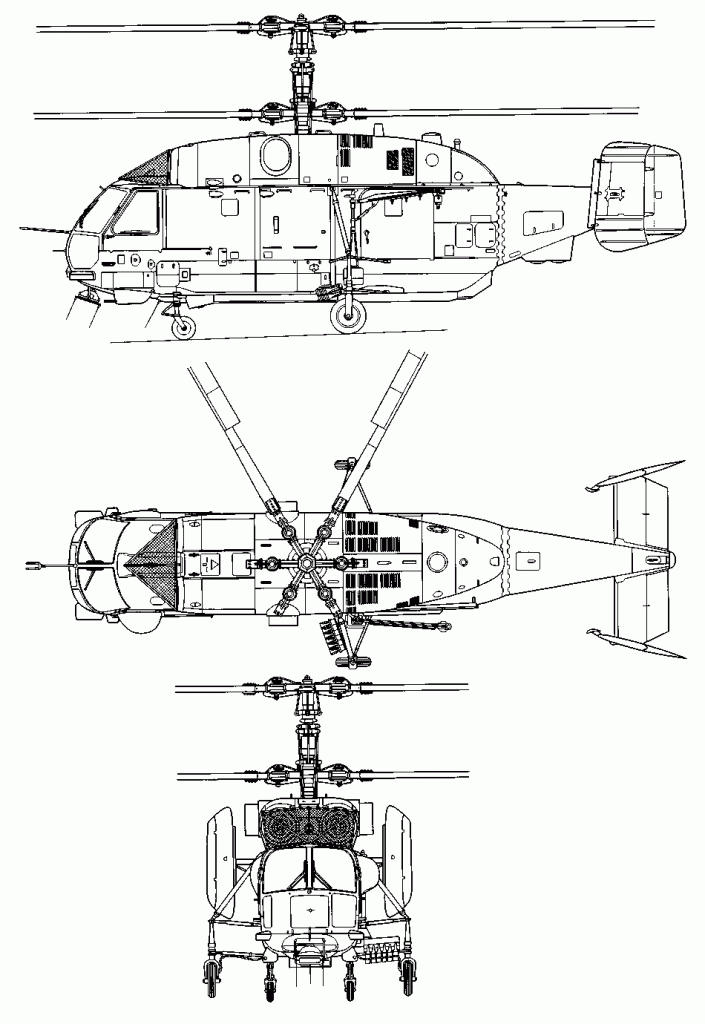
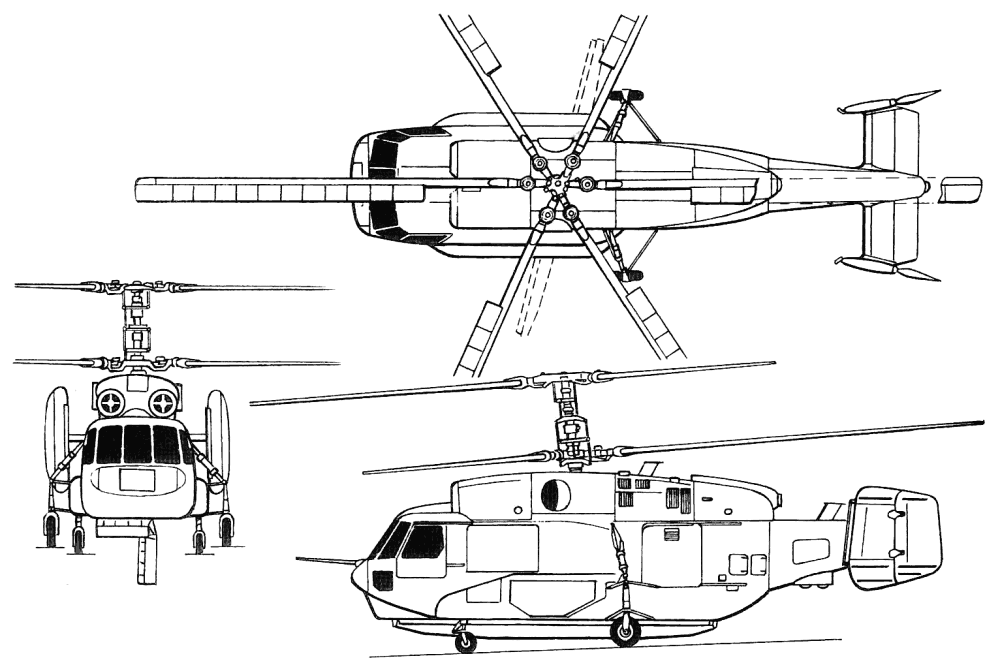
Conceived as completely autonomous ‘compact truck’, to stow in much the same space as Ka-25 with rotors folded, and to operate independently of ground support equipment, operation is by with single pilot. The twin fins are on a short tailboom, the upper rotor turning clockwise, the lower anti-clockwise. The rotor mast is tilted forward 3degrees. The twin turbines and APU are above the cabin, leaving the interior uncluttered, and the lower fuselage is sealed for flotation. Control is by a dual hydraulically powered flight control systems, without manual reversion, spring stick trim. Yaw control is by differential collective pitch applied through the rudder pedals. A mix in the collective system maintains constant total rotor thrust during turns, to reduce pilot workload when landing on pitching deck, and to simplify transition to hover and landing. The twin rudders are intended mainly to improve control in autorotation, but are also effective in coordinating turns. Flight can be maintained on one engine at maximum T-O weight. Titanium and composites are used extensively in the structure, with particular emphasis on corrosion resistance. The fully articulated three-blade coaxial contrarotatmg rotors have all-composites blades with carbon fibre and glass fibre main spars, pockets (13 per blade) of Kevlar-type material, and a filler similar to Nomex. The blades have a non-symmetrical aerofoil section, and each has a ground-adjustable tab. Each lower blade carries an adjustable vibration damper, comprising two dependent weights, on the root section, with further vibration dampers in the fuselage. A tip light is on each upper blade. The blades fold manually outboard of all control mechanisms, to a folded width within the track of the main landing gear. The rotor hub is 50% titaniuin/50% steel, and a rotor brake is standard. The Ka-32 is built with an all-metal fuselage and composite tailcone. The fixed incidence tailplane, elevators, fins and rudders have an aluminium alloy structure and composites skins. The fins toe inward approximately 25 degrees. A fixed leading-edge slat on each fin prevents airflow over the fin stalling in crosswinds or at high yaw angles. The four-wheel type landing gear has oleo-pneumatic shock-absorbers and castoring nosewheels. Mainwheel tyres size 600×180 (Ka-32); 620×180, pressure 10.80 bar (Ka-32A). Nosewheel tyres size 400×150 (Ka-32); 480×200, pressure 5,90 bar (Ka-32A). Skis optional. Power is from two 1,633kW Klimov TV3-117V (Ka-32) or TV3-117VMA (Ka-32A) turboshafts, with automatic synchronisation system, located side by side above the cabin, forward of the rotor driveshaft. A main gearbox brake is standard. An oil cooler fan is aft of the gearbox. Cowlings hinge downward as maintenance platforms, and fuel is in tanks under the cabin floor and inside tanks each side of the center-fuselage. The capacity of the main tanks 2180 litres and maximum capacity with two underfloor auxiliary tanks is 3,450 litres. Single-point pressure refuelling is behind a small forward-hinged door on the port side, where bottom of tailboom meets rear of cabin. The pilot and navigator are side by side in the air conditioned flight deck, in adjustable seats. A rearward-sliding jettisonable door with blister window is each side. A seat behind the navigator, on the starboard side, is for an observer, loadmaster or rescue hoist operator. Windscreen anti-icing uses alcohol. Direct access from the flight deck to the cabin is available. The heated and ventilated main cabin of the Ka-32 can accommodate freight or 16 passengers, on three folding seats at the rear, six along the port side wall and seven along the starboard sidewall (13 passengers in the Ka-32A). Fittings can carry four stretchers. A rearward-sliding door is aft of the main landing gear on the port side, with steps below. An emergency exit door is on the opposite side. A hatch to the avionics compartment is on the port side of the tailboom. There are three hydraulic systems. A main system supplies servos, mainwheel brakes and hydraulic winch when fitted. A standby system supplies only servos after main system failure, and an auxiliary system supplies brakes after a main system failure and adjusts the height of the helicopter fuselage above ground. The auxiliary system can also be connected to main system for checking all functions on the ground. The electrical system includes two independently operating AC generators and two batteries which cut in automatically or manually via inverters after an AC generating system failure. After failure of either generator, the other is switched automatically to supply both circuits. Two rectifiers supply DC power. Electrothermal de-icing of the entire profiled portion of each blade switches on automatically when the helicopter enters icing conditions. Hot air provides engine intake anti-icing. An APU is in the rear of the engine bay fairing on the starboard side, for engine starting and to power all essential hydraulic and electrical services on the ground, eliminating need for a GPU. Flight avionics include an electromechanical flight director controlled from the autopilot panel, Doppler hover indicator, two HSI and air data computer. A fully coupled three-axis autopilot can provide automatic approach and hover at height of 25m over the landing area, on a predetermined course, using Doppler. Radar altimeter. Doppler box under tailboom. The ASW version, known in the West as ‘Helix K, has a large box on each side (probably for sonobuoys), a box under the tail boom (probably for a MAD), a large chin radar and extremely comprehensive avionics including EW installations. ‘Helix B’ is a targeting aircraft for anti¬ship missiles. A firefighting version of the Ka-32T was demonstrated in 1996.
Civil versions of the Ka-27 designated Ka-32T (transport) and Ka-32S (shipboard utility and ice reconnaissance) were developed in the mid-80s to fill Civil Aviation needs. They were optimised for carrying cargo inside the cabin or on a sling, loading and unloading ships both anchored at the roadstead and under way, supporting offshore oil rigs, search-and-rescue operations etc. Development of these aircraft was led by deputy Chief Designer M.A.Kupfer, with leading designer B.Ye.Sokolov as his assistant; Ye.N.Yamshchikov was leading engineer of the test programme. The prototype flew for the first time on October 8, 1980 at the hands of test pilot Ye.I.Laryushin. The Ka-32S differed from the Ka-32T in being fitted with a search radar and a navigation system required for ice-patrol flights. The Ka-32S and Ka-32T versions were in production by KAPP, with other conversions by Kamov at Lyubertsy.
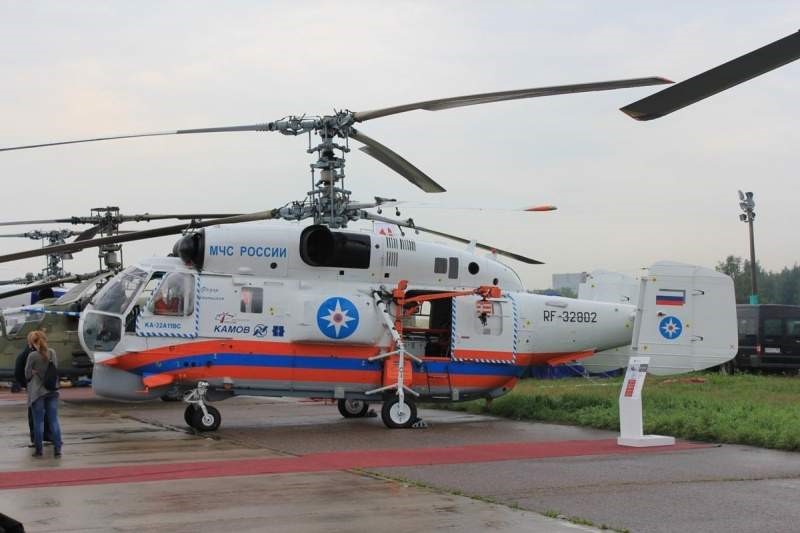
Russian Emergencies Ministry Ka-32A11BC
The civil version is described as able to lift slung loads up to 5000 kg (11, 023 lb), and carry such a load over a range of 185 km (115 miles)
The Klimov VK-3000 turboshaft was to be certified in 2001 as alternative power plant, but no installations have been reported.
Customers included Aeroflot and its successors; operators in Bulgaria (32S), Canada (32A), Laos (air force; six Ka-32T), Papua New Guinea (32A), South Africa (32A), Switzerland (32A), Yemen (32S/T). Estimated 132 Ka-32s in civilian use, of which 50 were abroad in 1998. Between December 1993 and November 2000, 36 imported by LGI of South Korea for operation by Forestry Service (23 Ka-32Ts), National Maritime Police Agency (eight Ka-32Ss), Kyonggi Provincial Fire & Disaster HQ (two Ka-32Ts) and Kyongsang Buk-do Fire Defence Aviation Corps, National Parks and Ulsan Fire Defence HQ (one Ka-32T each); further 20 expected in settlement of Russian debt, of which 10 reportedly ordered in March 2003 and three delivered by end of 2001. Following lease of two (later three) Ka-32s, Cyprus government announced intention, August 2001, to purchase three. Algerian Air Force acquiring unknown number, three of which (two Ka-32T and one Ka-32S) noted at Saint Petersburg in August 2002.
Versions:
Ka-32A Assemblies and systems of basic Ka-32 modified in 1990-93 to meet all requirements of Russian NLG-32-29 and NLG-32-33 and US FAR Pt 29/FAR Pt 33 airworthiness standards in categories A and B. First flight September 1990; Russian type certificates obtained for Ka-32A and its two 2190shp TV3-117VMA engines in June 1993. Production began 1996. Larger tyres. Optional pressure fuelling with reduced fuel capacity. Maximum accommodation for 13 passengers. Advanced avionics available, including Canadian Marconi dual CMA-900 flight management system, with EFIS, AFCS, CMA-2012 Doppler velocity sensor and CMA-3012 GPS sensor. Modification of helicopters to Ka-32A standard started by Kamov 1994. Civil transport version with 16 passenger seats and provision for lifting underslung loads.
Ka-32A1 Firefighting version of Ka-32A, first flown 12 January 1994. Equipped with Canadian or Russian variants of “Bambi Bucket”, capacity 5,000 litres. Two operated by Moscow fire service, with doorway-mounted steerable water cannon and three types of rescue cage, able to lift two, 10 or 20 people from roofs of tall buildings. Other equipment includes searchlights and loudspeakers. Fire service aircraft and others flown by anti-riot police controlled by Aviatika Concern ISC, set up by Moscow city authorities and private investors to develop urban air transport system. Several on lease to South Korean forestry department have Simplex 10900-050 system, including 2,955 litre belly tank which can be refilled in 1.5 minutes, plus 152 litre retardant tank. Ka-32 can also be fitted with 10900- 055 system with two panniers totalling 5,000 litres of water and 250 litres of retardant. One Moscow fire service helicopter (RA-31073) retrofitted with large, forward-facing nose boom for fire suppression in tall buildings; trials completed April 2001; shown statically al Moscow Salon, August 2001. System developed by Soyuz Federal Centre of Double Technologies at Dzerginsk; water supply of 2.800 litres carried in two underslung tanks or helicopter can be connected to fire vehicle on ground for unlimited supply; hose boom movable in vertical plane only.
Ka-32A2 Ka-32A modification for police operations. Police version used by Moscow Militia, first flown 21 March 1995; seen in camouflage finish (RA-06144) at Moscow Air Show ’95. Seats for 11 passengers, two of whom can operate pintle-mounted guns in port-side rear doorway and starboard rear window. Fuel tanks filled with polyurethane foam to prevent explosion after damage or catching fire. Equipped for abseiling from both sides of cabin. Hydraulic hoist; two sets of loudspeakers; L-2AG searchlight under nose. Militia reportedly has 25. Maximum T-O weight 12,700kg.
Ka-32A3 Ordered by Russian Ministry of Emergency Situations (MChS) to carry rescue and salvage equipment to disaster areas and evacuate casualties.
Ka-32A7 Armed export version (alternatively known as Ka-327) of Russian Border Troops’ Ka-27PV developed from military Ka-27PS for frontier and maritime economic zone patrol, with Osrninog (octopus) radar and pairs of Kh-25 ASMs, UPK-23-250 pods each containing a GSh-23L twin-barrel 23mm gun with 250 rounds, or B-8V-20 pods each with twenty 80mm S-8 rockets, on four underwing pylons. Displayed – but not yet integrated – with Kh-35 (AS-20 ‘Kayak’) active radar-homing ASMs. Provision for 30mm Type 2A42 gun above port outrigger. Optional twin searchlights on weapons pylons. Large oblique camera in starboard rear window. Search and rescue equipment standard, with ability to lift up to 10 survivors at a distance of 200km from base. Provision for 13 persons in cabin. Maximum T-O weight 11,000kg. Maximum level speed 260km/h. First flown 1995.
Ka-32-10 Announced 25 May 2001; projected 24-seat civil version with enlarged cabin; internal payload 4,000kg. Target certification date 2004.
Ka-32A11BC Built in accordance with requirements of Transport Canada. FAR Pt 29 certification gained 11 May 1998, but full clearance achieved 26 February 1999, after installation of dual actuators in flight control system; first Russian helicopter to gain Western certification. Two development aircraft delivered to VIH Logging in May 1997; flew 4,000 hours up to February 1999; also used for firefighting; further 15 on order by 1998.
Ka-32A12 Version approved by Aviation Register of Switzerland.
Ka-32K Flying crane (kran) with retractable gondola for second pilot under cabin. Prototype first flew December 1991; operational testing completed 1992. Supplied to Krasnodar Institute of Civil Aviation.
Ka-32M Was under development by Kamov, to increase lifting capability to 7,000kg; retrofit with 1839kW TV3-117VMA-SB3 engines.
Ka-32S (“Helix-C”): Shipborne (sudovoi) version, intended especially for polar use; in production since 1987. More comprehensive avionics, including autonomous navigation system and Osminog (octopus) undernose radar (search radius 200km), for IFR operation from icebreakers in adverse weather and over terrain devoid of landmarks; 300kg electric load hoist standard; additional external fuel tanks available 1994, strapped on each side at top of cabin; duties include ice patrol, guidance of ships through icefields, unloading and loading ships (up to 30 tonnes an hour, 360 tonnes a day). Simplex carbon fibre/epoxy tank, capacity 1,500 litres or 3,000 litres, and 12.0m spraybar can be fitted for maritime anti-pollution work. Spraytime 6 minutes with 1,500 litre tank. In maritime search and rescue role, can loiter for 1 hour anywhere within 480km of base, and return carrying four crew and 5,000kg payload. Maximum fuel capacity 2,650 litres; weight empty 6,997kg; maximum payjoad 3,300kg internally, 4,600kg externally, maximum level and cruising speeds as Ka-32T.
Ka-32T Ka-32 utility model for civil or military use with stripped down equipment and avionics. (‘Helix-C’): Utility transport (transportnyi), ambulance, flying crane and agricultural sprayer; production began in 1987. Limited avionics; for carriage of internal or external freight, and passengers, along airways and over local routes, including support of offshore drilling rigs. Military “Helix-C” similar; no undernose radome, but with dorsal ESM “flower pot” and other military equipment. Several seen on board carriers, operating in SAR and planeguard roles. Military version understood to be designated Ka-27 or Ka-27T.
Specifications:
Ka-32 Engine: 2 x Klimov TV3-117. Instant pwr: 1642 kW. Rotor dia: 15.9 m. Fuselage length: 11.3 m. No. Blades: 2 x 3. MTOW: 12,600 kg. Payload: 4000 kg. Max speed: 146 kts. Max cruise: 124 kts. HOGE: 12,131 ft. Service ceiling: 19,672 ft. Range: 850 km. Crew: 2. Pax: 16. External sling load: 11,000 lb (5 000 kg).
Ka-32A Engine: 2 x Klimov TV3-117VMA Instant pwr: 1640 kW. Rotor dia: 15.9 m. Main rotor disc area 440.0 sq.m (4,736 sq ft). Fuselage length: 12.25m Height: 5.4m Width: 3.8m MTOW: 12,700 kg. Payload: 5850 kg (internal: 4000 kg, external: 5000 kg). Useful load: 6085 kg. Max speed: 140 kts / 260km/h Max cruise: 124 kts / 230km/h Max range: 650 km. HIGE: 14,098 ft. HOGE: 12,131 ft / 3500m Service ceiling: 14,754 ft / 6000m Crew: 1-3 Pax: 14. Seats: 18.
Ka-32MT Engines: 2 x Klimov TV3-117B turboshaft, 2250 shp. Disc area: 356.1 sq.m Max external load: 5000 kg. MAUW: 12,600 kg. Max speed: 230 kph.
Ka-32T Engines: 2 x TV3-117VK turboshaft, 1620kW Rotor diameter: 15.9m Fuselage length: 12.25m Height: 5.4m Width: 3.8m Max take-off weight: 11000kg Internal payload: 3700kg External payload: 4500-5000kg Max speed: 250km/h Hovering ceiling: 3500m Service ceiling: 5000m Range with internal fuel: 800km Crew: 1-3 Passengers: 15
Ka-32S Engines: 2 x TV3-117VK turboshaft, 1620kW Rotor diameter: 15.9m Fuselage length: 12.25m Height: 5.4m Width: 3.8m Max take-off weight: 11000kg Internal payload: 3700kg External payload: 4500-5000kg Max speed: 250km/h Hovering ceiling: 3500m Service ceiling: 5000m Range with internal fuel: 800km Crew: 1-3 Passengers: 15
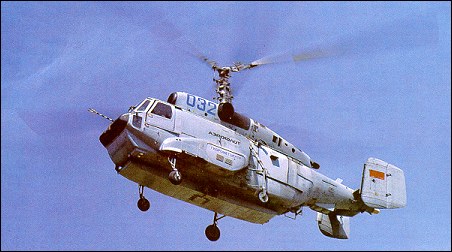
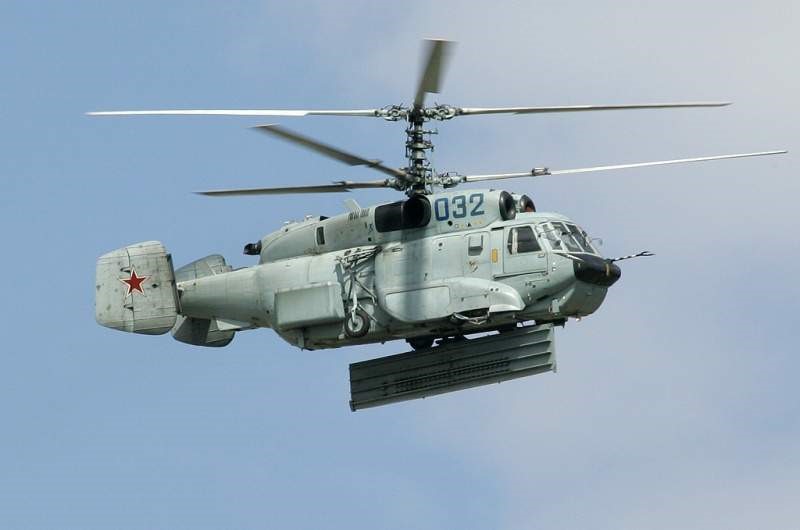
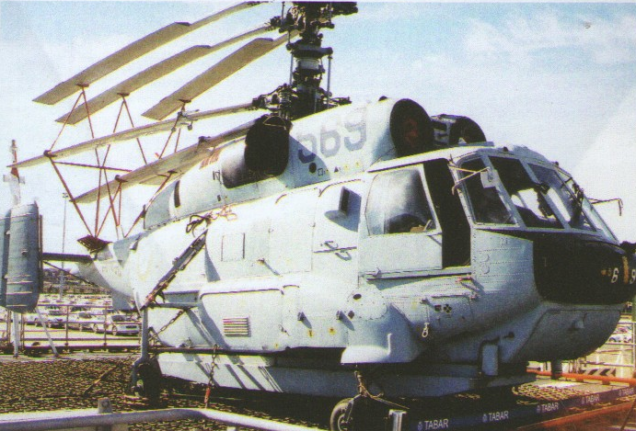
Later variants of the Ka-27 include the Ka-31 airborne early warning helicopter equipped with the E801M Oko (Eye) air and sea surveillance radar The Ka-31 helicopter is intended for long-range detection of air targets of a fixed-wing/helicopter type, including detection at low altitudes, and over-waters ships, their tracking and automatic transmission of their data to the command posts. Under the transport cabin floor there is a compartment housing the support-rotating mechanism of a 6-m span antenna. To prevent the interference in the antenna all-round rotation plane the nose landing gear legs are retracted rearward into the cowlings flight-wise and the main legs are retracted upward. In stowed position the antenna is kept against the fuselage bottom. A radio-electronic suite is installed for radar target detection, targets identification and transmission of the over-water and air situation data to the ship-based and ground-based command posts. The core of the on-board avionics suite is the solid-state radar. The radio-electronic package automatically controls the helicopter flight over the specified route in any weather and climatic conditions. When the radio-electronic package is on, the antenna is extended and the navigator has elected the operational mode, all further operations are performed automatically without operator interference. The navigator role is simply to control the systems operation and to duplicate target observation on the display screen.
Ka-31
Power is from two Klimov TV3-117VMA turboshafts, each 1,633kW, and started by APU. The fuel tanks are filled with reticulated polyurethane foam for fire suppression.
The Ka-31 (formerly Ka-29RLD: radiolokatsyonnogo Dozora: radar picket helicopter) development began in 1980 and was first flown in October 1987. Two examples (031 and 032) completed initial shipboard trials on the Admiral of the Fleet Kuznetsov (then Tbilisi) in 1990, state testing being completed in 1996.
Russian Navy early warning Ka-31
Following a 1996 evaluation, four Ka-31s were ordered in August 1999 by the Indian Navy for delivery in 2001 and basing aboard the the aircraft carriers and ‘Krivak’ class destroyers. A further five were ordered in February 2001. Limited production of the Ka-31 was launched (for Indian Navy) at Kumertau Aircraft Plant, Bashkiriya, in 1999. The Indian aircraft have 12-channel Kronshtadt GPS with Abris digital moving map and a 152x203mm AMLCD screen.
First flight of an Indian Ka-31 was on 16 May 2001, and by October 2001, the first two Indian airframes were delivered from KAPP to Kamov at Moscow for avionics installation. Flight trials were completed of the first two Indian aircraft by September 2002. The Indian Navy batch of was four priced at Rs4 billion (US$92 million) (2000), and the second five cost US$108 million (2001). In October 2002, Kamov reported a second export customer for Ka-31s in addition to Indian Navy.
Ka-31 aboard Indian Navy frigate INS Tabar – June 1988
Ka-31 Crew: 2-3 Rotor diameter: 15.90m Fuselage length: 11.30m Height: 5.60m Max take-off weight: 12500kg Max speed: 255km/h Cruising speed: 220km/h Hovering ceiling: 3700m Range with max fuel: 680km Endurance: 1.5-2h




 All Aero