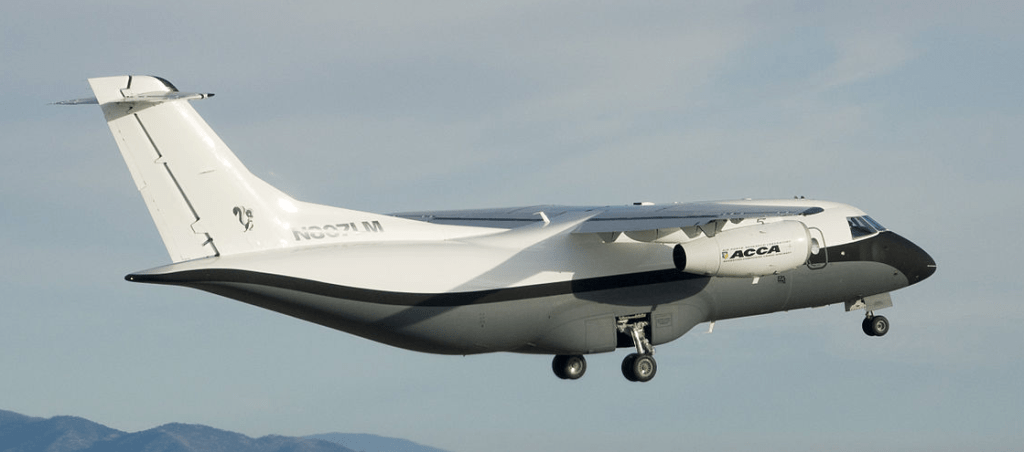
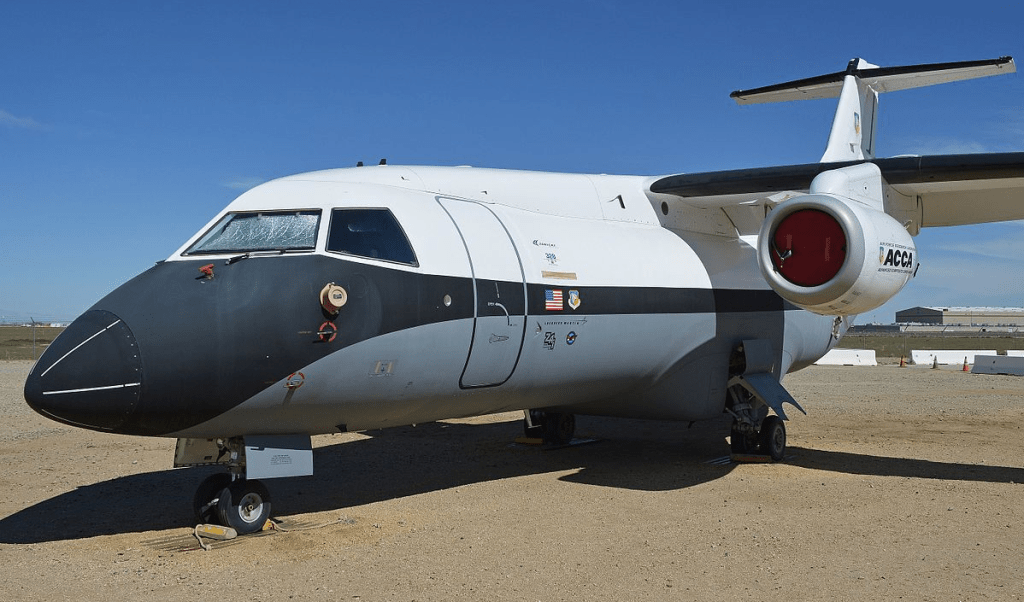
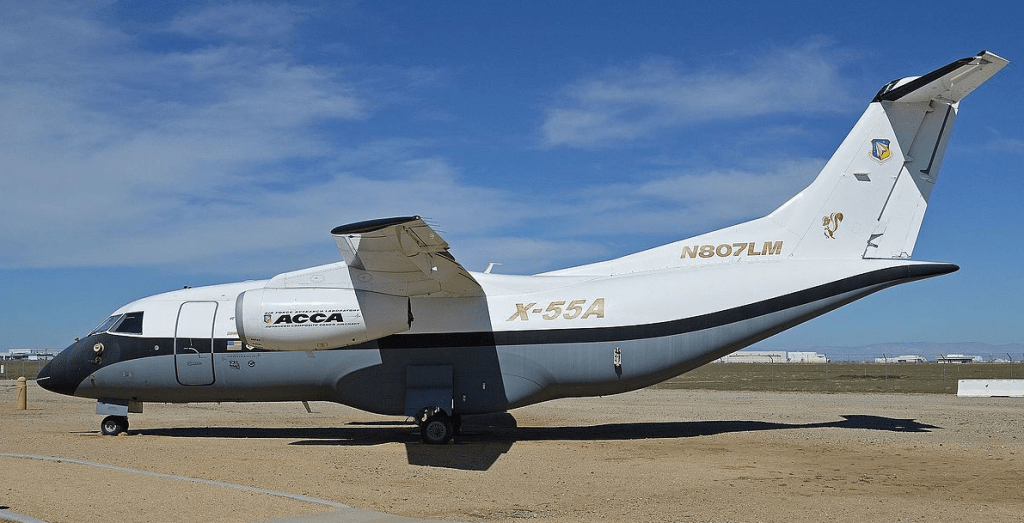
The Lockheed Martin X-55 Advanced Composite Cargo Aircraft (ACCA) is an experimental twinjet transport aircraft. It is intended to demonstrate new air cargo-carrier capabilities using advanced composite materials. A project of the United States Air Force’s Air Force Research Laboratory, it was built by the international aerospace company Lockheed Martin, at its Advanced Development Programs (Skunk Works) facility in Palmdale, California. The X-55 is a one-off aircraft intended to demonstrate the use of advanced composite materials in the fuselage of an otherwise conventional high-wing transport aircraft.
The aircraft is powered by two Pratt & Whitney Canada PW306B turbofans. The X-55 design is based on the existing Fairchild Dornier 328JET. The fuselage of that aircraft, which is constructed of aluminium alloys, was replaced aft of the entrance door with a newly designed fuselage. The new design makes extensive use of advanced composite materials, selected to allow out of autoclave curing at lower temperatures and pressures than previous materials. The new widened fuselage allows the loading of cargo through a rear ramp.
The new fuselage section is constructed as a single large component, including the vertical stabilizer. When attached to the existing nose section, the fuselage is 55 feet (16.8 m) long and 9 feet (2.74 m) diameter. The fuselage has upper and lower halves, each with a roughly-oval shape similar to a canoe. The halves are bonded to circular frames. The fuselage section ahead of the entrance door consists of the existing (metal) 328J component, with fasteners used to bring the forward and new aft sections together.
As of April 2008, the fuselage was being fabricated. The first flight of the modified aircraft was expected during the winter of 2008/2009. However, due to a “glitch” during fabricating the composite fuselage, that schedule slipped. The delay was caused by an unsatisfactory bond of the skin on the lower fuselage, which required a second fuselage to be fabricated.
The first flight was completed at Lockheed Martin’s Advanced Development Programs facility (Air Force Plant 42) in Palmdale, California on June 2, 2009 by the Air Force Research Laboratory in conjunction with Lockheed Martin. In October 2009, the ACCA demonstrator was designated X-55A by the USAF. Over the course of the program, 15 to 20 flights were expected.
As of September 12, 2014, the X-55 aircraft is on display at the Joe Davies Heritage Airpark in Palmdale, California.
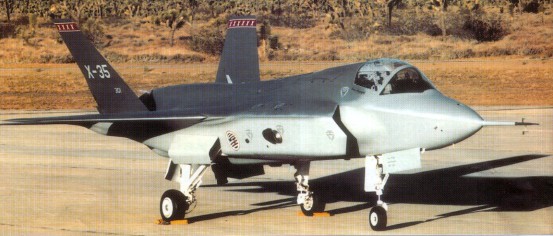
The X-35 was the Lockheed Martin Joint Strike Fighter (JSF) demonstrator, competing with the Boeing X-32. In November 1996 Boeing and Lockheed Martin were awarded contracts to build two Concept Demonstrator Aircraft (CDA)—one Conventional Take-Off and Landing (CTOL) version and one Short Take-Off and Vertical Landing (STOVL) version—each. The aircraft were not intended to be fighter prototypes, but rather to prove that the selected design concepts would work, hence the use of X-series designations.
Lockheed constructed two prototypes for the evaluation. The initial X-35A reflected the basic Air Force CTOL design, and was used for early flights before being modified into the STOVL version, designated X-35B. While Boeing proposed a direct lift STOVL design based on that used in the Harrier, Lockheed opted for a different approach in meeting the vertical flight requirements. Inspired by the Russian Yak-141, the X-35B incorporated a separate lift-fan that was shaft-driven by the F119 engine, allowing cooler exhaust temperatures during hover. While the Boeing design was more conventional, Lockheed argued that their strategy was better in the long term since it offered more room for growth as the aircraft evolves. The second airframe was the X-35C STOVL demonstrator for the Navy. This model featured an enlarged wing of greater span and area for larger fuel capacity as well as enlarged horizontal tails and flaperons for greater control effectiveness during low-speed carrier approaches. The X-35 was selected as the winner of the JSF competition on 26 October 2001.
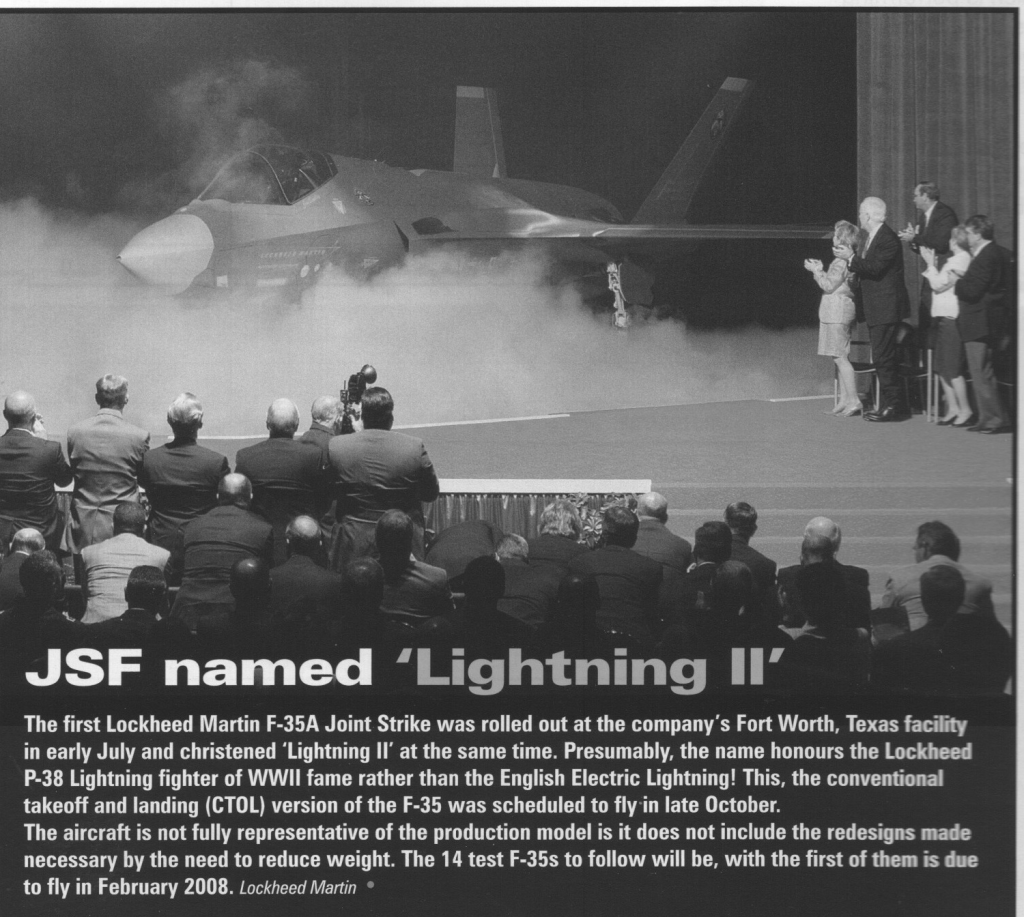
The production aircraft to be designated F-35. The System Development and Demonstration (SDD) phase of the F-35 JSF program started with the signing of the SDD contract in October 2001, and with the delivery of test aircraft scheduled to begin in 2008. During the SDD phase, 22 aircraft (14 flying test aircraft and 8 ground-test aircraft) were to be produced and tested. The JSF program is slated to produce a total of 3,002 aircraft for the United States and United Kingdom armed forces.
Lockheed Martin leads a development team including Northrop Grumman, BAE Systems, and Pratt & Whitney. Lockheed Martin brings in advanced technology experience, stealth technology and other technologies and experience which it has gained during F-22 research and development. Northrop Grumman offers tactical aircraft knowledge, stealth technology and carrier suitability. BAE System provides expertise and experience with short take off and vertical landing (STOVL) technology as well as advanced subcontract management. Pratt & Whitney is the builder of the engine which will power the JSF which is based on the F-119 turbojet from the F-22.
To forfill the demands of the main contractors three different variants are developed. All versions will have a common structure and have the same fuselage and internal weapons bay. They will all three be powered by a F-119 modified engine. All variants will carry the standard designation F-35.
The F-35A is the standard variant with conventional take off and landing developed for the US Air Force, the biggest JSF customer. The F-35A will replace the F-16 and the A-10 aircraft currently operated by the USAF.
X-35B
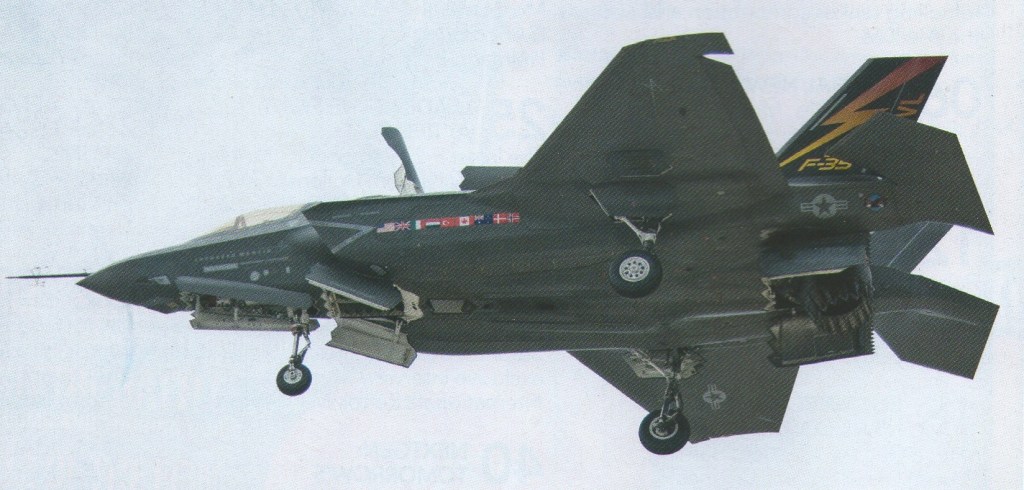
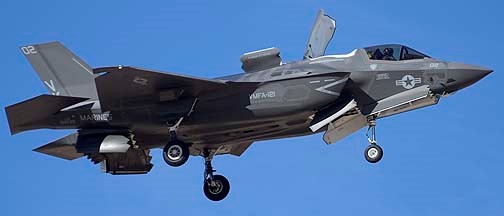
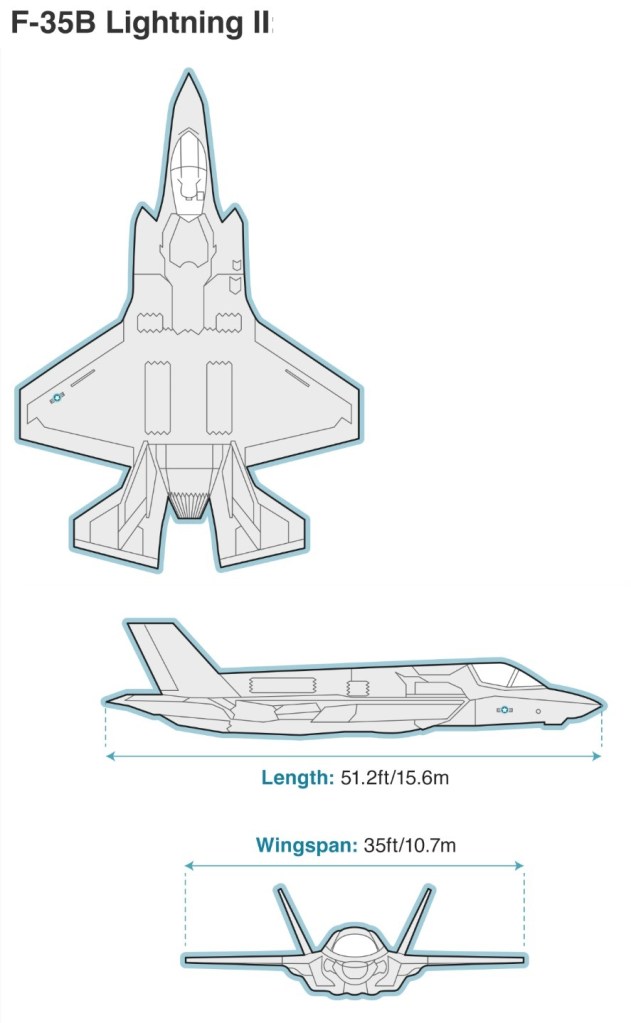
The F-35B is the STOVL variant of the JSF. The F-119 is modified using the experience of BAE Systems based on the Rolls-Royce Pegasus engine from the AV-8 Harrier. Unlike the Air Force variant the F-35B carries no internal gun and the air refuelling probe is located on the right side of the forward fuselage instead of receptacle on the top surface of the aircraft. The main customers for the F-35B will be the USMC to replace the F/A-18 Hornet ands the AV-8B Harrier IIs and the United Kingdom to replace the Royal Air Force/Royal Navy combined Harrier force of Sea Harriers and GR.7s.
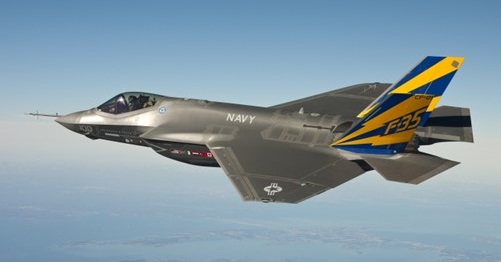
The F-35C is a modified design which enables the JSF to operate from aircraft carriers using conventional carrier landings and catapult take off. The F-35C internal structure and landing gear have been strengthened to handle the loads associated with catapult launches and arrested carrier landings. It has a larger wing area than other JSF types with larger control surfaces for better low speed handling. Like the F-35B is has a refuelling probe instead of a receptacle. The US Navy will be the biggest customer of this variant. The F-35C will complement the US Navy fleet of F/A-18E/F fighters by replacing the F/A-18 A+ and C Hornet in service.
Lockheed Martin F-35B Lightning II BF-3 – the third example of the short takeoff/ vertical landing version – arrived at NAS Patuxent River, Maryland on February 17, 2010. It made its first flight on February 2 at Fort Worth, Texas and was taken from there to the naval air station by F-35 Test Pilot Jeff Knowles. Another two F-35Bs are due to join the three aircraft at Patuxent River for the flight test programme.
The F-35B was about to conduct its first vertical landing which would be a major milestone for the short take-off, vertical landing (STOVL) variant and work has started on the first F-35 lightning II for the UK.
The Lockheed Martin X-35C Joint Strike Fighter (JSF) Navy demonstrator completed medium-speed taxi testing Dec. 14 2000 at Palrndale, California, in preparation for first flight as early as Dec. 16. The aircraft, with a larger wing and control surfaces than the X-35A, will undergo about 20 hr. of flight test at Edwards AFB, before being flown to NAS Patuxent River, Md., for the continuation of demonstrations. Meanwhile, Boeing has completed structural mode interaction testing on the X-32B short takeoff and vertical landing demonstrator, expected to fly during the first quarter of 2001. The Boeing X-32A demonstrator completed government-required Navy demonstrations Dec. 2, 2000.
First flown on 24 October 2000, the JSF X-35A demonstrator aircraft completed a highly successful flight-test programme in August 2001, and the following October the US Government awarded its development contract to Lockheed Martin over the other contender, Boeing. The lift system uses a counter-rotating lift fan, located behind the cockpit and connected to the engine by a drive shaft, as a primary lifting force. The fan produces more than 18,000 lbs of cool thrust in hover flight, with an additional 18,000 lbs coming from the main engine’s vectored aft nozzle and wing roll-posts. The shaft driven Rolls-Royce lift fan amplifies engine thrust and reduces exhaust temperature and velocity during STOVL operations. First flown on 24 June 2001, in 2001 the X-35A, reconfigured as the STVOL X-35B, achieved its first vertical take-off, level supersonic flight, and vertical landing. The X-35C is to evaluate manoeuvering qualities, as a conventional carrier version and first flew on 16 December 2000. This version has larger wing and control surfaces and is stressed for catapult launches and arrested landings. This wing could also be applied to the B or A version.
By March 2010, it appeared that just five F-35s had flown: F-35A AA-01 on December 25, 2006. F-35B BF-0 1 on June 11, 2008. F-35B BF-02 on February 2, 2009 F-35A AF-01 on November 14,2009 F-35B BF-03 on February 2, 2010
The first F-35A has since been retired from flight duty. Two of the three F-35Bs were at Naval Air Station Patuxent River, Maryland, for preliminary STOVL evaluation tests.
The first pre-production F-35A flew on 15 December 2006, about three months behind schedule due to engine integration and ground testing delays.
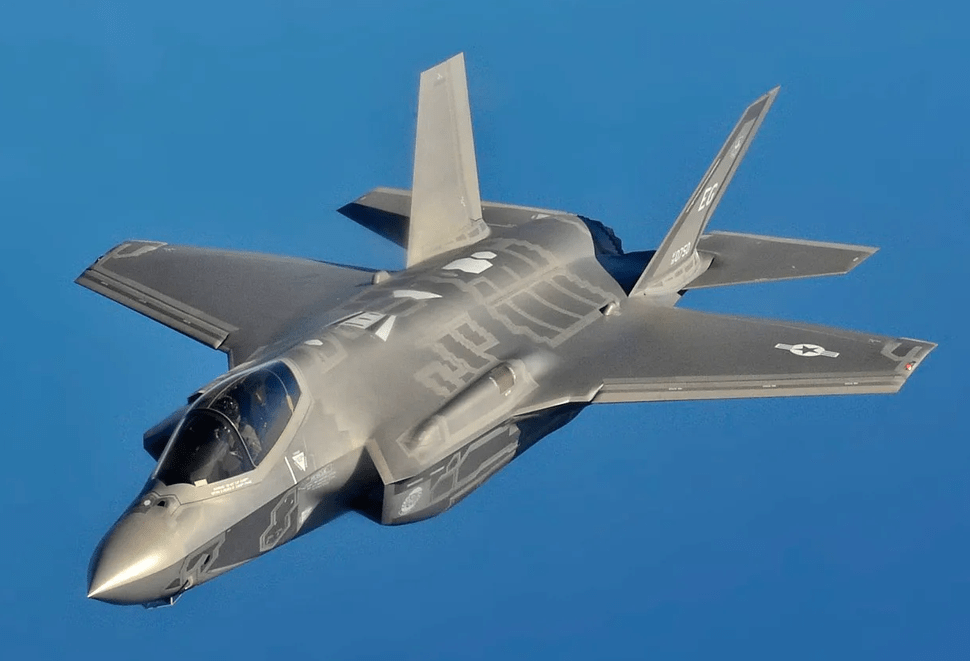
F-35 Lightning II
As of 2014, 115 have been built at $106,000,000 each.
With over 1,000 aircraft delivered to 17 nations, including Australia, Israel, Japan, South Korea, and multiple NATO allies, and production plans exceeding 3,000 units, the F-35 represents the standardisation of fifth-generation technology across Western and allied air forces.
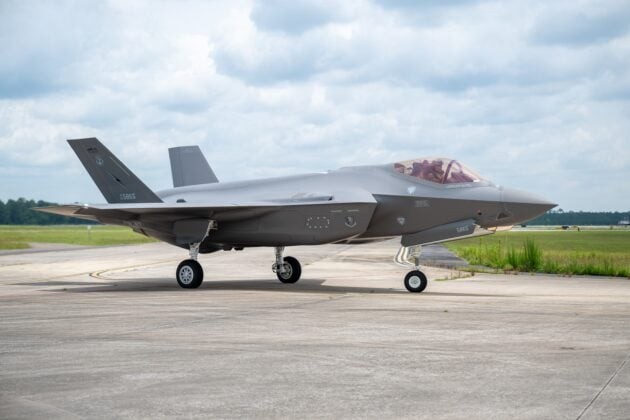
The U.S. Air Force’s 500th F-35A Lightning II fighter jet arrived at the Florida Air National Guard’s 125th Fighter Wing in Jacksonville on July 9, 2025.
500th USAF F-35A Lightning II
The aircraft is one of the first three F-35As permanently assigned to the wing, known as “the Thunder,” and features the unit’s legacy tail flash. By the end of 2024, Lockheed Martin had delivered a total of 1,102 aircraft. That figure included 797 F-35As built for the United States and allied air forces, along with 203 short takeoff and vertical landing F-35Bs built for the U.S. Marine Corps, the Royal Navy, the Royal Air Force, and the Italian Navy. The first examples for Japan’s Navy are also in production and delivery. According to F35.com, more than 1,215 F-35s of all variants have now been delivered worldwide, flown by over 3,000 pilots who have accumulated more than one million flight hours.
In the late 1970s, the US Air Force identified a requirement for 750 examples of an Advanced Tactical Fighter (ATF) to replace the F-15 Eagle. Flown by a single pilot, it must be able to survive in an environment filled with people, both in the air and on the ground, whose sole purpose is to destroy it. To test the concepts that would eventually be combined in the ATF, the US AF initiated a series of parallel research programmes. The first was the YF-16 control-configured vehicle (CCV) which flew in 1976-77 and demonstrated the decoupled control of aircraft flight path and attitude; in other words, the machine could skid sideways, turn without banking, climb or descend without changing its attitude, and point its nose left or right, or up or down, without changing its flight path. Other test vehicles involved in the ATF programme included the Grumman X-29, which flew for the first time in December 1984 and which was designed to investigate forward-sweep technology, and an F-111 fitted with a mission adaptive wing (MAW) – in other words, a wing capable of reconfiguring itself automatically to mission requirements.
Flight testing of all these experimental aircraft came under the umbrella of the USAF’s Advanced Fighter Technology Integration (AFTI) programme. In September 1983, while the AFTI programme was well under way, the USAF awarded ATF concept definition study contracts to six American aerospace companies and, of these, two – Lockheed and Northrop – were selected to build demonstrator prototypes of their respective proposals. Each company produced two prototypes, the Lockheed YF-22 and the Northrop YF-23, and all four aircraft flew in 1990. Two different powerplants, the Pratt & Whitney YF119 and the General Electric YF120, were evaluated, and in April 1991 it was announced that the F-22 and F119 were the winning combination. The F119 advanced technology engine, two of which power the F-22, develops 155kN and is fitted with two-dimensional convergent/ divergent exhaust nozzles with thrust vectoring for enhanced performance and manoeuvrability.
The Raptor is designed and built by Boeing, Lockheed Martin and Pratt & Whitney. Boeing supplies the F-22s 2,000-lb titanium and composite wings and aft fuselage, integrates and tests the advanced avionics and is responsible for the training and life-support systems.
Previously the designation for the Raptor was changed to F/A-22 to indicate the possible air-to-ground role of the aircraft. JDAM bombs can be carried in the internal weapon bay, while the optional external pylons offer a more flexible station for air-to-ground armament. However the U.S. Air Force changed the designation back to F-22 in December 2005, although it will still posses the secondary air-to-ground role.
The F-22 combines many stealth features. Its air-to-air weapons, for example, are stored internally; three internal bays house advanced short-range, medium-range and beyond-visual-range air-to-air missiles. Following an assessment of the aircraft’s combat role in 1993, it was decided to add a ground-attack capability, and the internal weapons bay is also capable of accommodating 454kg GBU-32 precision-guided missiles. The F-22 is the first production aircraft with the ability to super cruise – flying at supersonic speeds without the use of afterburners. The F-22 is designed for a high sortie rate, with a turnaround time of less than 20 minutes, and its avionics are highly integrated to provide rapid reaction in air combat, much of its survivability depending on the pilot’s ability to locate a target very early and take it out with a first shot. The F-22 was designed to meet a specific threat, which at that time was presented by large numbers of highly agile Soviet combat aircraft, its task being to engage them in their own airspace with beyond-visual-range weaponry. It will be a key component in the Global Strike Task Force, formed in 2001 to counter any threat worldwide. The USAF requirement is for 438 aircraft.
The first definitive F-22 prototype was rolled out at the Lockheed Martin plant at Marietta, Georgia, on 9 April 1997.
The planned first flight of the F-22A, scheduled for 29 May 1997, was delayed by a small fuel leak in the F-1A tank just aft of the cockpit, together with an oil problem in the APU/auxiliary generator system area and software troubles.
The first flight was delayed to 7 September 1997. The second prototype first flew on 29 June 1998. The first two Raptor fighters, Nos. 4001 and 4002, have only 80% of the required strength, partly the result of an aggressive weight-cutting program, and the No. 4003 airframe has been strengthened to make it 100% capable. The third F-22 was delivered to Edwards AFB in March 2000. The aircraft was about eight months behind schedule. The empty weight is still low enough to beat the operational requirements. Raptor 4001 has been doing high speed tests such as loads and flutter but could not fully clear the envelope because of the lower strength, although it and ship No. 4002 have both exceeded 7g loads. The Air Force will only say that the required F-22 limit exceeds 7g. Raptor 4003 will provide full high speed clearance for subsequent aircraft, but will first spend several months on the ground at Edwards AFB because the reworked structure requires new ground vibration tests and other evaluations. The nonstop delivery from Marietta, Ga., was the fourth flight of 4003 and lasted 4 hr. 50 min., including four aerial refuelings. By late 2001, there were eight F-22s flying.
A YF-22 being tested at Edwards reacted unexpectedly when a go round initiated a changed in its fly-by-wire control laws. After a few cycles of PIO, the aircraft belly-flopped onto the runway.
In January 2003, the Air Warfare Center at Nellis Air Force Base near Las Vegas, Nevada, received its first Raptor. It was the twelfth F-22 produced. The 422nd Test & Evaluation Squadron took on seven more F-22s for testing and training of the initial cadre of instructor pilots. The 43rd Fighter Squadron became the first F-22 squadron when it received its first F-22 (then designated F/A-22) in the end of September in 2003. The unit of the 325th Fighter Wing carries out the training at Tyndall Air Force Base, Florida. In January 2004, the first pilot qualified at Tyndall AFB.
The 27th Fighter Squadron of the 1st Fighter Wing at Langley AFB became the first operational F-22 squadron when it received its first Raptor in January 2005. The squadron was declared operational (initial operational capability) in December 2005 with 12 F-22A Raptors. Also based at Langley AFB, the 94th Fighter Squadron received its first two Raptors in March 2006. On January 19, 2007, the last of 40 F-22A Raptor for the 1st Fighter Wing was delivered to the 94th FS, equipping both fighter squadrons with 20 Raptors each.
First prototype: N22YF (GE YF120 engines) rolled out at Palmdale 29 August 1990; first flight/ferry to Edwards AFB 29 September 1990; first air refuelling (11th sortie) 26 October 1990; Mach 1.58 supercruise’ (later exceeded) on 3 November 1990; first thrust-vectoring 15 November 1990; anti-spin parachute fitted for high AoA tests with thrust-vectoring; last flight 28 December 1990 — total 43 sorties/52.8hr.
Second prototype: N22YX (P&W F119 engine) first flight Palmdale-Edwards 30 October 1990; launched first AIM-9M Sidewinder on 28 November 1990 and AIM-120 AMRAAM on 20 December 1990; achieved Mach 1.8 26 December 1990; last flight 28 December 1990 — total 31 sorties/38.8 hrs. Summary demonstrated thrust vectoring, including 100deg/sec roll rate at 120kt (222km/h; 138mph); Mach 2 speed with afterburning. Aircraft in storage at Edwards AFB from January 1991.
Despite its $150 million unit cost and production run of only 195 aircraft, terminated early due to post-Cold Its capabilities were partially demonstrated during deployments to Syria, where Raptors operated with impunity even in airspace covered by advanced Russian air defence systems.
The F-22’s main limitation is its age—designed before modern networked warfare concepts were fully developed, it lacks some of the connectivity features of newer aircraft.
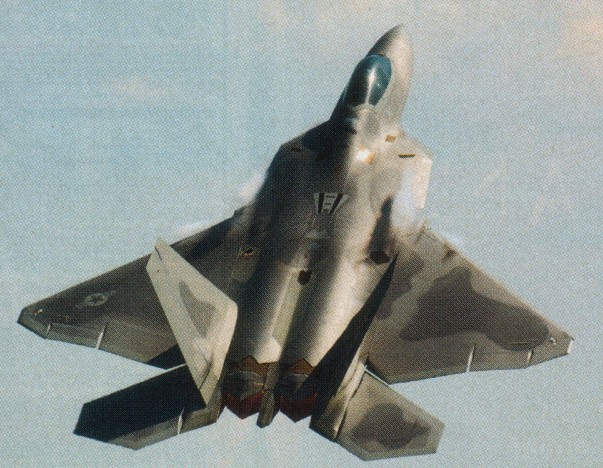
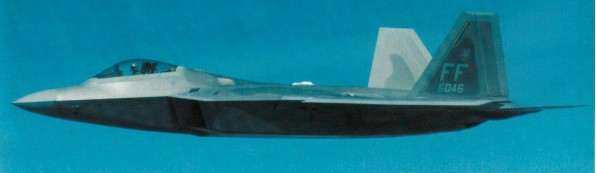
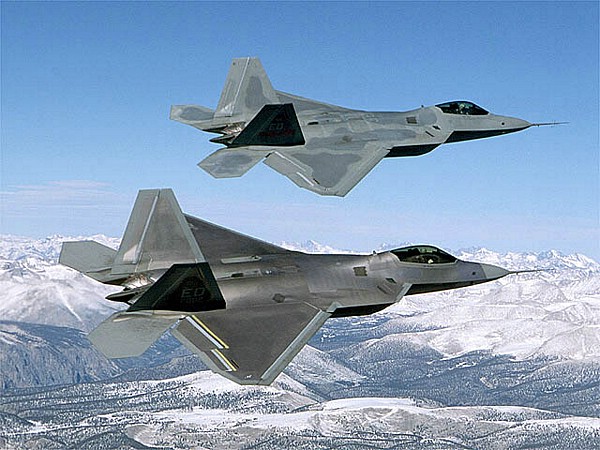
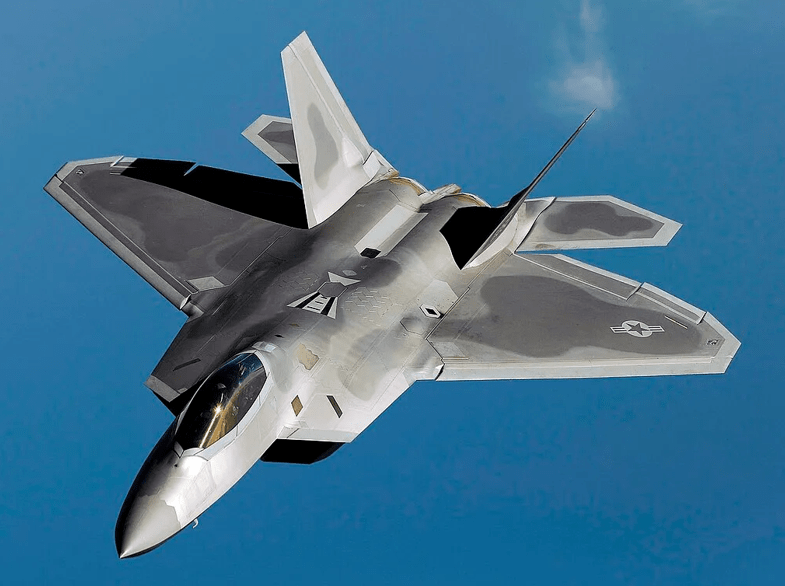
Lockheed Martin F-22 Raptor
However, ongoing modernisation programs including upgraded processors, new datalinks, and integration with the latest AIM-260 long-range missiles will keep the Raptor at the forefront of air combat capability until its planned replacement by the sixth-generation NGAD (Next Generation Air Dominance) fighter.
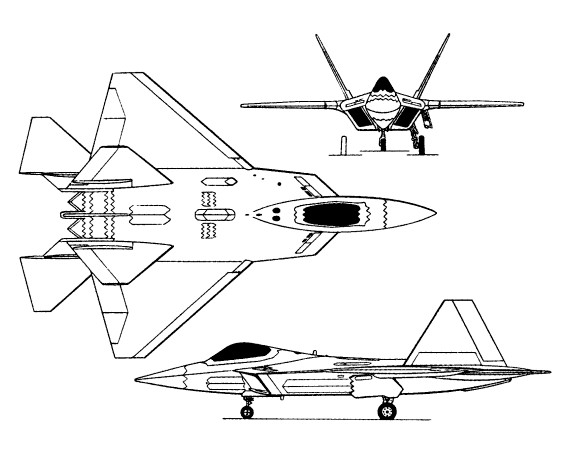
F-22A Engines: two Pratt & Whitney F119-P-100 turbofan, 155.69 kN (35,000 lb st) with afterburning Length 18.92m (62 ft 1 in) Height 5.00m (16 ft 5 in) Wing span 13.56m (44ft 6 in) Empty weight: 13.608+ kg (30,000+ lb) Max Take-Off Weight: 26.308 kg (58,000 lb) Max level speed at optimum altitude: Mach 1.58 in supercruise Max level speed at 30,000 ft (9145m) Mach 1.7 in afterburning mode Service ceiling: 15,240+m (50,000+ ft) G limit: +7.9 Armament: one 20mm M61A2 Vulcan six-barrel gun with 480 rounds; 2 AIM-9X Sidewinder IR-guided missiles in internal side bays. Up to 6 AIM-120C or 4 AIM-120A AMRAAM missiles in internal fuselage weapon bays or 2 AIM-120C AMRAAMs and 2 GBU-32 JDAM bombs or 2 GBU-30 JDAM bombs. Up to four fuel tanks and up to 8 missiles on optional external hardpoints.
Rotor diameter: 20 ft 0 in Height: 6 ft 0 in Gross weight: 450 lb Fuel capacity: 15 USG Vert ROC: 800 fpm Max speed; 80 mph Pwr off sink: 16 ft/sec @ 25 mph
Lockheed began developing its rigid rotor concept with the CL-475 helicopter design in 1959 and the performance of the CL-475 encouraged Lockheed to continue development. Lockheed submitted the CL-475 to the Army as a candidate to replace the Bell OH-13 Sioux and Hiller OH-23 Raven observation helicopters. Lockheed also tested the commercial market waters without success. However, in February 1962, Lockheed’s Model 186, a new design based on the CL-475 rigid rotor, was selected as the winner for a joint Army-Navy program to evaluate the rigid rotor for high-speed flight capability.
Two four-seat, three-bladed XH-51As were ordered and built for the program. Powered by the 550 shp (410 kW) Pratt & Whitney Canada PT6B-9 turboshaft engine, XH-51A (serial number 61-51262) first flew on 2 November 1962. As flight testing progressed, the original three-bladed, rigid rotor system demonstrated instability at higher speed ranges. Lockheed engineers solved the problem by modifying the aircraft with a four-bladed rotor system. In 1963, the Army’s Technology Research and Evaluation Command (TRECOM) contracted with Lockheed to modify one of the XH-51 aircraft into a compound helicopter.
The second XH-51A (serial number 61-51263) was subsequently converted by adding wings with a span of 16.1 ft (4.9 m), and a 2,500 hp (1,864 kW) Pratt & Whitney J60-2 turbojet engine mounted on the left wing to increase performance. The XH-51A Compound first flew without powering up the turbojet on 21 September 1964, while tests were conducted for balance and handling. The aircraft’s first flight as a true compound helicopter took place on 10 April 1965, and on 29 November 1967 achieved a speed of 263 knots (302.6 mph, 486.9 km/h).
In June 1964, NASA ordered a five-seat, three-bladed variant, the XH-51N (NASA 531) as a helicopter test vehicle.
Lockheed built two demonstrator aircraft, designated the Lockheed Model 286, to market to the public (registration numbers N286L and N265LC). These aircraft had the five-seat configuration of the XH-51N with the four-bladed rotor system of the XH-51A. The Model 286 was certificated for civil operation by the FAA on 30 June 1966, but Lockheed never sold any aircraft. Lockheed used the aircraft for several years as executive transports, eventually sold them to a collector where they were destroyed by fire in 1988.
The two XH-51A examples (Serial Numbers 61-51262 and 61-51263) are stored at the United States Army Aviation Museum at Fort Rucker.
Variants:
186 Civil version of 286/XH-51 Rotor dia: 35 ft Length: 32 ft
286 / XH-51A four place, three-bladed rotor Engine: 1 × Pratt & Whitney Canada PT6B-9 turboshaft, 550 hp (410 kW) Length: 40 ft 9 in (12.40 m) Rotor diameter: 35 ft 0 in (10.67 m) Height: 8 ft 2½ in (2.50 m) Disc area: 962 ft² (89.4 m²) Empty weight: 2,790 lb (1,265 kg) Max takeoff weight: 4,100 lb (1,864 kg) Maximum speed: 151 knots (174 mph, 280 km/h) Cruise speed: 139 knots (160mph, 257 km/h) Range: 226 NM (260 mi, 418 km) Service ceiling: 16,000 ft (4,876 m) (hover ceiling (in ground effect)) Rate of climb: 2,000 ft/min (10 m/s) Disc loading: 4.26 lb/sq.ft (20.9 kg/sq.m) Power/mass: 0.27 hp/lb (0.44 kW/kg)
XH-51A Compound modified with a four-bladed rotor and stub wings and an auxiliary 2,900 hp Pratt & Whitney J60-2 engine. Rotor diameter: 31 ft 7 in Length: 31 ft 7 in
Model 286 five place civilian or military light helicopter offered for sale, none were sold.
Model 286 / XH-51N five place, three-bladed rotor modified for NASA test purposes.
In March 1966 Lockheed began development of an advanced armed heli¬copter, designated as the AH 56A Cheyenne. Known as a compound helicopter, being provided with small low set cantilever wings to off load the main rotor in high speed flight, it was designed to have a maximum level speed 244 mph (393 km/h). Army support came to an end in 1969, and economic considerations eventually caused Lock¬heed to end its development programme.
AH-56A Cheyenne Engines: 1 x General Electric T64 GE 16, 3925 shp. Rotor dia: 51 ft 3 in (15.62 m). Length: 60 ft 1 in (18.31 m). Height: 13 ft 8.5 in (4.18 m). Max TO wt: 18,300 lb (8300 kg). Max level speed: 244 mph (393 kph). Range: 1,225 miles. Ceiling: 20,000 ft.
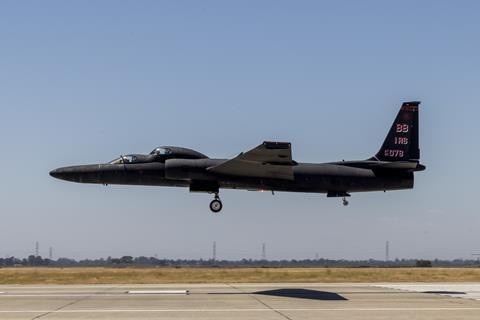
The U 2 was designed by Kelly Johnson to fly high and far. His equation stressed simplicity: flush rivets, high aspect ratio wet wing, ultralight structure, stunning power to weight ratio. Conceived originally to meet a CIA requirement for an aircraft with the potential of operating at extreme altitude and first flown in the mid-1950s, the U-2’s unique capabilities rendered it virtually immune from interception, and made possible repeated overflights of the Soviet Union, as part of the intelligence-gathering efforts of that era.
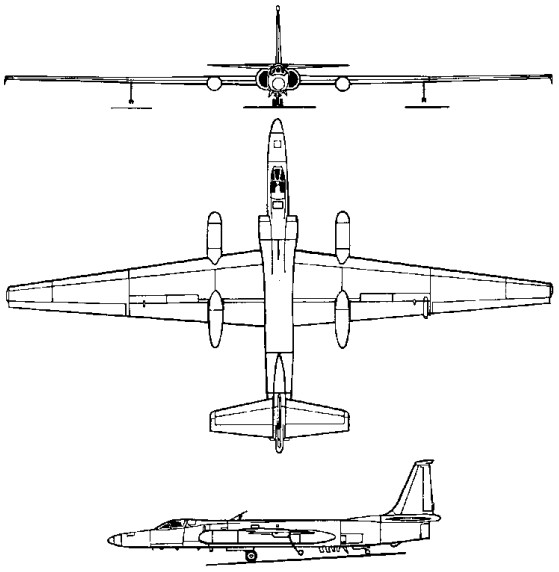
The requirement for high altitude and long range needed an aircraft with low wing loading, the latter large quantities of heavy fuel to confer the necessary range. Therefore the U-2 is of very lightweight construction, dispensing with conventional landing gear and pressurisation to save extra weight, and having wings of large area. Landing gear is of bicycle type with single wheels fore and aft, and balanced on the ground by wing-tip ‘pogos’ – a strut and wheel device which drops away when the U-2 becomes airborne – was selected. The pilot is accommodated on a light-weight seat, dressed in a semi-pressure suit with his head enclosed in an astronaut-type helmet, and forced to breathe pure oxygen for his survival. A medium-powered turbojet is adequate to lift this lightweight aircraft, and long range is possible by shutting it down and gliding for long periods.
Development of the U-2 began in the spring of 1954 to meet a joint CIA/USAF requirement for a high-altitude strategic reconnaissance and special-purpose research aircraft. It took place in the Lockheed ‘Skunk Works’ at Burbank, California, where – after acceptance of the design in late 1954 – two prototypes were hand-built in great secrecy by a small team of engineers. The aircraft’s true purpose was cloaked under the USAF U-for-Utility designation U-2, and the first flight took place on or about 1 August 1955. Once military power is on the engine for takeoff, the throttle was not touched again until ready for descent. Speed is kept fairly constant at Mach 0.715, and excess power was traded for cruise-climb altitude gain.
At about the same time US President Dwight D. Eisenhower was proposing his ‘Open Skies’ policy, one of mutual East/West aerial reconnaissance of territories. President Eisenhower hoped that his policy would reduce tension between East and West, thus preventing the growth of the nuclear arms race. Unfortunately the Soviet Union would have nothing to do with this proposal. Consequently ‘Kelly’ Johnson’s new ‘spy plane’ assumed greater importance. The prototypes were followed by production of about 48 single-seat U-2A and U-2B with differing power plant, and five two-seat U-2D. Some U-2B were converted later to U-2D standard.
By 1960 about 25 U-2s had operated from bases in Japan, Pakistan, Turkey and Europe since 1957 on flights around and over Russian-controlled territory.
An additional batch of 12 U-2R was ordered in 1967. A new version, known as the TR-1, entered production as a tactical-reconnaissance aircraft, equipped with a variety of electronic sensors.
Referred to as just U-2, there has been reference to a U-2B and U-2D, as well as single-seat and two-place versions. Early Lockheeds were powered by a single 11,000-1b thrust P&W J57, later models are reported to have the more powerful J75P-13. Forward landing gear is dual pneumatic type, approximately 20 in diameter, is non-steerable; rear gear is dual hard rubber of approximately 8″ diameter and steerable. A lightly stressed thin skin covers the U-2. Lockheed Martin’s Skunk Works has rewired the U-2s over the years during maintenance checks to make the aircraft compatible in the electro-magnetic interference environment.
The initial U-2As built by Lockheed in the 1950s either have been destroyed by accidents, combat or have been retired. They have been operating from Edwards AFB since 1957. The 40% larger U-2R was developed in the late 1960s, and deliveries to the Air Force started in 1969.
In addition to photo and electronic reconnaissance, U-2 were used for weather reconnaissance, high-altitude research, measurement of radiation levels, and for the tracking and recovery of space capsules. They were used for reconnaissance during the Cuban crisis, in Vietnam and during the Arab-Israeli conflict.
The destruction of the U-2B aircraft being flown by Francis ‘Gary’ Powers on 1 May 1960 brought an abrupt halt to this phase of activities, CIA attentions then focussing on the People’s Republic of China which in the early 1960s was fast emerging as a major nuclear power.
In August 1964 an Air Force U-2 crashed bear Boise, Idaho, the Chinese Nationalist Air Force officer pilot being trained at Davis-Monthan AFB 4080th Wing, parachuted to safety. This was the first indication that Chinese Nationalist pilots were being trained in the US. Three U-2s piloted by Chinese Nationalist pilots from Formosa bases had been shot down over Communist China, the first in September 1962. The US had reported selling only two U-2s the Formosa.
U-2 and TR-1 operations are usually conducted in what is best described as a ‘permissive’ environment on the friendly side of important frontiers.
Powered by the Pratt & Whitney J75, the craft rotates in less than 200 feet as wheeled outriggers fall away. Climbing at 160 knots and 6,000 plus fpm initially, sustaining 45 degrees pitch up. Only to the 45,000 foot physiological limit in the two seat trainer version without pressure suits, but the U 2 will climb to 70,000 plus. Stressed for 1.7 positive Gs and half a G negative, the U 2 demands a gentle hand.
Scrupulous energy management alti¬tude, attitude, airspeed, power setting ¬measures successful landings. Each ex¬cess foot at the threshold puts you 1,000 foot farther to touchdown. Two point land¬ings are essential; touching front wheel first causes ballooning in ground effect.
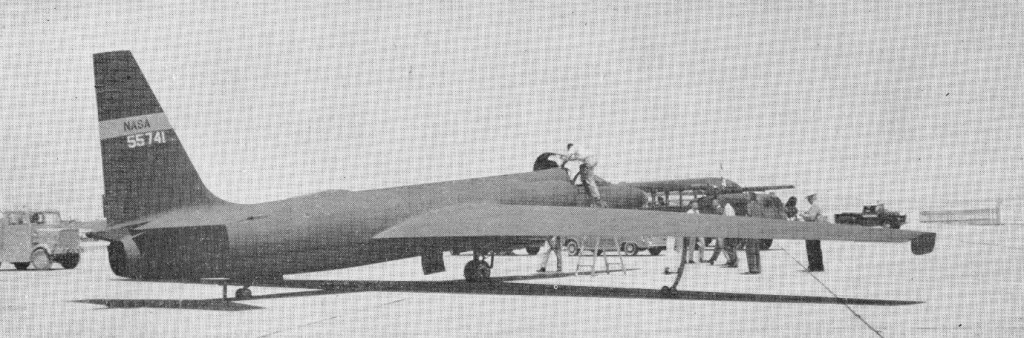
A couple of original production examples were assigned to NASA.
The Strategic Air Command use the U-2R which entered service in the late 1960s and which differs from its predecessors by virtue of greatly increased length and wing span. The U-2R was joined by an increasing number of TR-1s, these externally being very similar although they are intended for tactical rather than strategic missions. At least 25 of these were ordered by the USAF in 1968.
From 2002, Lockheed Martin upgraded the 31 strong U-2 fleet with state of the art glass cockpit displays and controls as the U-2S.
The service bought 37 TR-1 s in the 1980s, with the last one delivered in 1989, and these were the core of the U-2S and U-2STs in operation by the 9th Reconnaissance Wing here. The replacement of the Pratt & Whitney J75 turbine engine by the General Electric F101-GE-F29 turbofan in the 1990s caused the redesignation of the U-2R to the U-2S. The GE engine was later redesignated the F 118-GE-101.
The F 118 fuel consumption is some 16% less than the J75, which allows for a 1,220-naut.-mi. increase in range, or increased time on station. The 1,300-1b. lower weight of the General Electric engine also allows a 3,500-ft. increase in operational altitude and an increased payload. The U-2’s primary defense against both aircraft and surface-to-air missiles is its altitude, although newer variants of air-to-air and surface-to-air missiles can reach the U-2’s altitude. The reconnaissance aircraft is equipped with a radar warning system, but not with active defenses, such as flares or chaff.
The Air Force will still only say that the U-2 will fly above 70,000 ft., but the actual normal operational altitude is below 80,000 ft. and above 75,000 ft.
For descent almost everything possible on the aircraft is extended. The throttle to idle, lowered landing gear, raised spoilers and flaps in the gust-up configuration and extended fuselage-mounted speed brakes. Once stable on descent, the rate is dose to 3,000 fpm. A speed of Mach 0.715 is used to 53,000 ft., when a speed of 160 kt. is established. In the case of either an engine or electrical failure, with the aircraft descending clean, it could easily take longer than an hour to descend from altitude. The battery in the U-2S has a life of about 1 hr. and would run out just about when you needed to talk with the tower about deadstick landing instructions. The pilot also is able to raise the spoilers for landing with a micropump and accumulators, a new feature to the U-2.
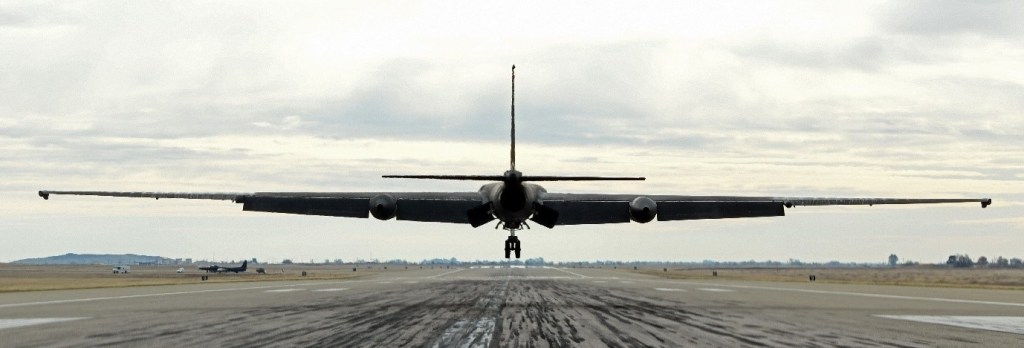
Pilots claim that the U-2 is one of the hardest aircraft to land because of the need to stall the aircraft on landing and touch down rear wheel first, not to mention the effect of wind on the glider-like aircraft.
TR-1A
The U-2 aircraft was ordered back into production in 1979 as a high altitude tactical reconnais¬sance platform, this time as the TR-1A. The TR-1A is designed for tactical reconnaissance primarily in the European theatre, using UPD-X side-looking airborne radar (Slar) for surveillance up to 55km into hostile territory from friendly areas.
The first TR-1A flew on 1 August 1981 and the USAF acquired 26 of these single seaters plus two two-seat TR-1Bs. In 1984 the TR-1A flew with the precision location/strike system (PLSS) and, following successful trials, at least some of the fleet were to be allocated to this role. PLSS involves the use of three TR-lAs to detect and locate emitters and then direct attacks upon them.
In 1982 the USAF began taking delivery. Using the same basic airframe as the U-2R, the TR-1A high altitude battlefield reconnaissance aircraft was operational with the USAF flying from bases in Europe including the UK in 1990. It is equipped with an advanced sideways looking airborne radar (SLAR) and incorporates the latest ECM.
Two examples of a two-seat variant known as the TR-1B were assigned to training duties at Beale AFB, California. The TR-1B trainer has a second, raised cockpit in tandem.
ER-2
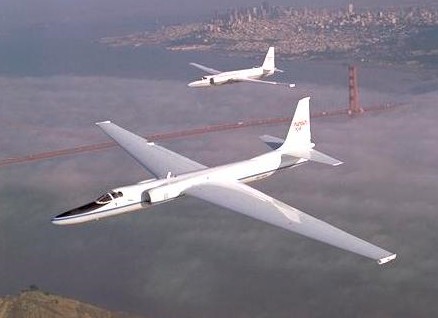
Replacing earlier U 2C’s, NASA took delivery of three ER-¬2’s, (the NASA designation for the TR 1A). The three are 80¬1063 / N706NA, 80 1069 / N708NA and 80 1097 / N709A. The first was delivered in June 1981 and the last (80 1097) was delivered in April 1989. Two are owned by NASA, while the third is leased from the USAF.
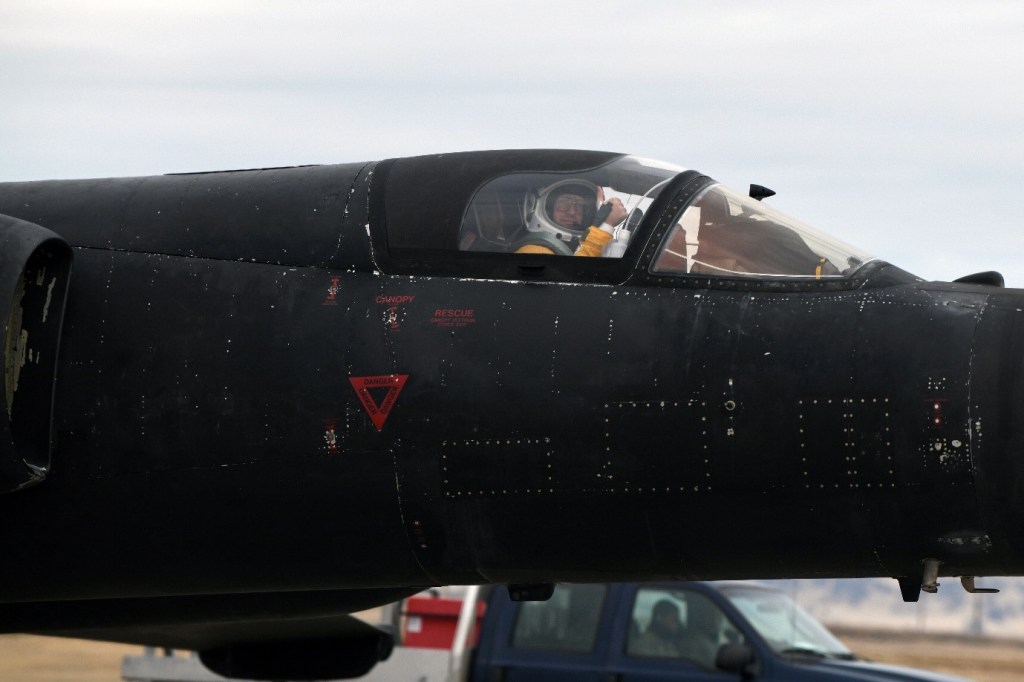
A Lockheed U-2S Dragon Lady, assigned to the 9th Reconnaissance Wing (RW) at Beale Air Force Base (AFB), California, successfully completed a test flight equipped with an AI algorithm under the control of USAF pilot, Maj “Vudu” on December 15, 2020. The first US military aircraft to fly with an artificial intelligence (AI) co-pilot.
Maj “Vudu” USAF U-2S Dragon Lady pilot assigned to the 9th RW on December 15, 2020.
The U-2S, developed by Air Combat Command’s U-2 Federal Laboratory, the algorithm – known as ARTUμ – was named in reference to the fan-favourite droid, R2-D2, from the Star Wars franchise. The system is designed to completed specific in-flight tasks that would otherwise have been completed by the pilot.
During the test flight, ARTUμ took control of the U-2’s sensors and tactical navigation systems, leaving Maj “Vudu” to fly the aircraft and coordinate with the AI on sensor operation. The Dragon Lady flew a reconnaissance mission during a simulated missile strike, in which ARTUμ was responsible for locating enemy launchers, while the pilot looked out for threatening aircraft. Both the human pilot and AI co-pilot shared the U-2’s radar throughout the test sortie.
The USAF adds that the test flight “was part of a precisely constructed scenario, which pitted the AI against another dynamic computer algorithm in order to prove the new technology.” It explained that control of the U-2’s sensors was handed over to ARTUμ after take-off, which then used insight gained from more than half-a-million computer simulated training missions to manipulate the sensors in-flight. Maj “Vudu” and ARTUμ successfully teamed-up during the demonstration to share the Dragon Lady’s sensors and all mission objectives were achieved, the service concluded.
A Lockheed U-2S Dragon Lady high-altitude reconnaissance aircraft, 9th Reconnaissance Wing (RW), Beale AFB, California, on December 15, 2020.
A two-seat TU-2S trainer variant of the U-2 logged a more than 14h flight covering over 6,000nm (11,110km) while overflying the 48 contiguous states of the continental USA setting a new endurance record for the type. The US Air Force (USAF) confirmed the flight on 1 August, noting the long-distance sortie launched from the U-2 fleet’s home base at Beale AFB in California’s Sacramento Valley on 31 July 2025. The success of the long-endurance mission pushed the U-2S “beyond its known limits”, the air force says. “The flight itself maxed out the operational range of the U-2 and placed the pilots at the edge of their physiological limit,” the service notes.
TU-2S
The timing of the record-setting sortie was likely deliberate. The USAF is seeking to retire is fleet of 24 operational U-2S and three TU-2S jets by 2026, while advocates for the Cold War-era platform look for arguments to keep the type flying.
U-2A Engine: 1 x Pratt & Whitney J57 P 37A turbojet, 11,200 lb (5,080 kg) st. Wing span: 80 ft 0 in (24.38 m). Length: 49 ft 7 in (15.11 m). Height: 13 ft 0 in (3.96 m). Gross weight: 15,850 lb (7,190 kg). Max speed: 495 mph (797 km/h) at 40,000 ft (12,200 m). Crew: 1. Armament: None. Typical range: 2,200 miles (3,540 km).
U-2B Engine: 1 x Pratt & Whitney J75. Seats: 1.
U-2C Engine: 1 x Pratt-Whitney J75-P-13B, 7711kg Max take-off weight: 10225 kg / 22542 lb Wingspan: 24.38 m / 80 ft 2 in Length: 15.24 m / 49 ft 8 in Height: 4.57 m / 14 ft 12 in Wing area: 52.49 sq.m / 565.00 sq ft Cruise speed: 740 km/h / 460 mph Op speed: Mach .73 to .80 Ceiling: 27000 m / 88600 ft Range: 4635 km / 2880 miles at 475-mph at 70,000-ft Flight endurance: 7.5 hr Crew: 1 Rate of climb: 8,000 fpm at 160-kt Time to 30,000 ft: 5 min Time to 50,000 ft: 9 min Time to 60,000 ft: 12.5 min Cruise climb to 70,000 ft: 28 min Indicated airspeed (IAS) above 70,000 ft:110 kt Mach buffet speed: 115 kt IAS / 410 kt TAS
U-2D Engine: 1 x Pratt & Whitney J75. Seats: 2.
U-2R Range: 3,000-plus miles (2,609 nautical miles).
U-2S
TR-1A Engine: 1 x Pratt & Whitney J75-PW-13B turbojet, 7711 kg (17,000-lb) thrust Estimated maximum cruise speed at over 21335 m (70,000 ft) 692 km/h (430 mph) (Mach 0.57) Operational ceiling est: 27430 m (90,000 ft) Maximum range: 4825+ km (3,000+ miles). Fuel internal: 4450 lt. Endurance: 12 hr. Air refuel: No. Seats: 1. Empty weight: about 7258 kg (16,000 lb) Maximum take-off 18144 kg (40,000 lb). Wing span 31.39 m (103 ft 0 in) Length 19.20 m (63 ft 0 in) Height 4.88 m (16 ft 0 in) Wing area about 92.90 sq.m (1,000 sq ft).
TR-1B Seats: 2.
ER-2 Engine: 1. Wing span: 105 ft. Op alt: 68,000 ft. Endurance: 8 hr.
A-11 / A-12 In response to a programme for the construction of a high-speed, high-altitude, long-range reconnaissance conventional aircraft, funded by and earmarked for service with the Central Intelligence Agency (CIA), a number of US companies submitted proposals for consideration, Lockheed’s ‘Ox-cart’ from the design team led by C. L. ‘Kelly’ Johnson eventually being adjudged most suitable, and this duly received the go-ahead in the autumn of 1959.
Construction of the prototype (60-5932) single-seat A-12, as the machine was officially known, forged ahead at the ‘Skunk Works’, the virtually complete prototype being taken by road to the remote Groom Lake flight test facility during January 1962 for final assembly and flight testing. The A-12 got airborne for its first official flight on 26 April 1962, this event being preceded by a totally unexpected ‘hop’ during the course of high-speed taxi trials two days earlier.
Construction was largely of titanium to maintain structural integrity, as localised skin temperatures of up to about 427°C could be reached through air friction.
Lockheed A-12
In the early days of the flight test the first A-12 relied upon two Pratt & Whitney J75 turbojet engines for power, the same company’s J58 turbo-ramjet engine not being installed until much later in the year. Almost inevitably, with such a sophisticated machine, the project suffered from many problems during the early stages of flight testing, these being experienced in virtually every area, but despite this the CIA apparently began to take formal delivery of its initial fleet of 10 aircraft (serial numbers 60-6924/6933) shortly before the end of 1962 and these were later joined by a second batch of five A-12s (60-6937/6941). Of these 15 machines, one (60-6927) was completed as a two-seater for training duties, this differing from its counterparts by virtue of having a second, raised, cockpit and featuring conventional J75 engines which bestowed a maximum speed of about Mach 1.2, well below that of the standard A-12 which was apparently capable of approximately 3860 km/h 2,400 mph) or Mach 3.6 at altitudes in the order of 28040 m (92,000 ft), figures which significant exceeded those records established by the YF-12A at the beginning of May 1965.
A-12
In addition, the last two production examples of the A-12 were configured to carry the GTD-21B drone and these also featured a second crew station aft of the pilot’s cockpit, his housing the Launch Control Officer. As far is is known the GTD-2 1 B/A- 12 pairing was not employed operationally but the drone may have undertaken reconnaissance missions after launch from a specially configured Boeing B-52H Stratofortress.
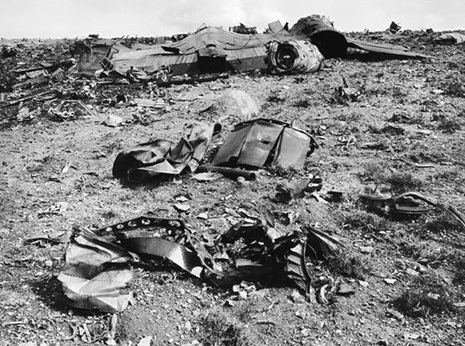
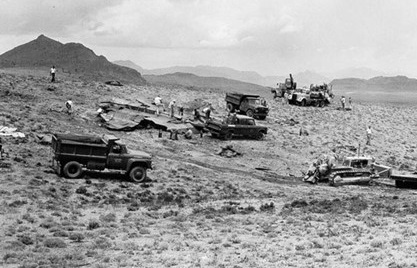
This A-12 crashed near Wendover, Utah in 1963 after entering an unrecoverable flat spin. Pilot Ken Collins managed to eject safely. He then successfully deterred several locals, who had come to his aid with the canopy of the shadowy A-12 on the back of their pickup, from the crash site by telling them the wreck was that of an F-105 Thunderchief with a nuclear weapon onboard. That same day, the CIA administered sodium pentothal to ensure Collins had divulged every last detail of the incident. When the men in black later carried him home, still heavily under the drug’s influence, Collins’ wife angrily assumed he’d been out drinking all day with his friends. Several decades later, the retired A-12 pilot was finally able to reveal the truth. X-Plane hunters continue to find components of the top secret aircraft wreck at the remote site.
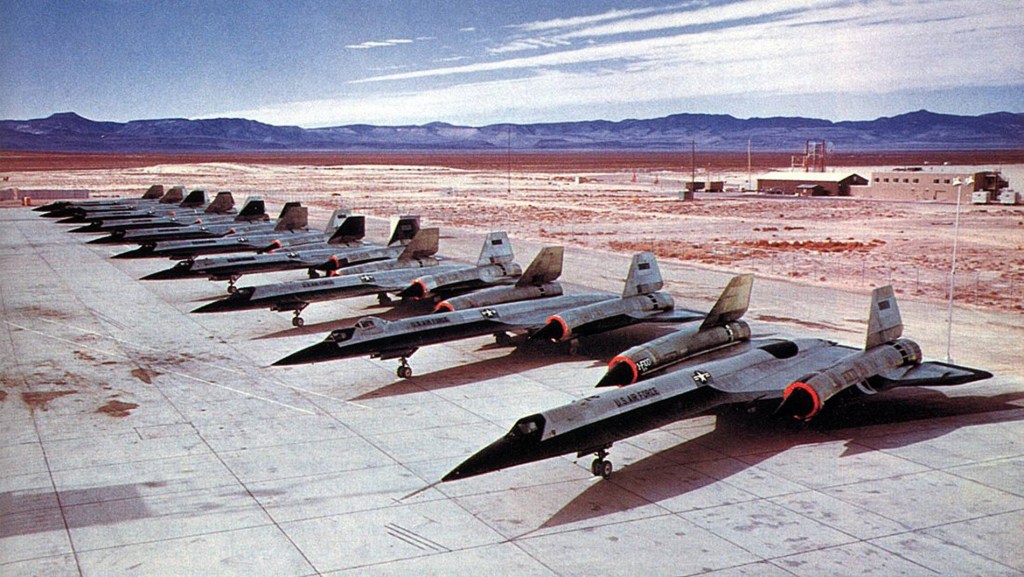
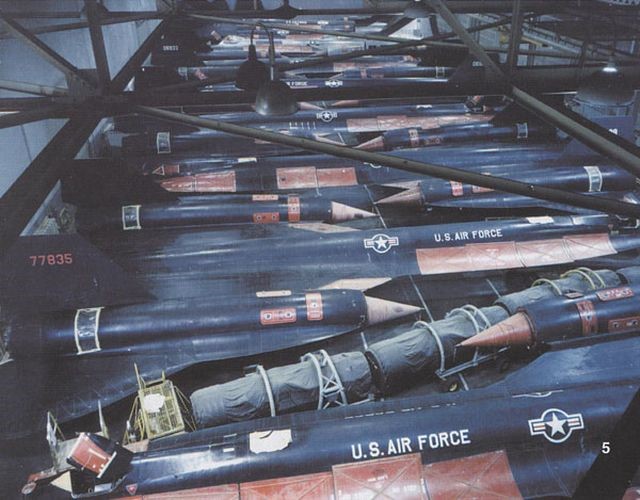
As far as operational employment is concerned, the CIA continues to maintain a tight-lipped silence about the A-12 but the type’s great speed coupled with its capacity for inflight-refuelling made range considerations virtually irrelevant, the major factor in mission scheduling almost certainly being one of crew fatigue. In view of this and the nonstop 24140km. (15,000-mile) missions accomplished by the later SR-71A it would seem reasonable to assume that intelligence-gathering was accomplished from Groom Lake until at least the summer of 1968, which most sources state as marking the cessation of A-12 activity. In addition, Kadena Air Base on the Pacific island of Okinawa has also been linked with A-12 operations as well as those of the SR-71A, and could well have served for some considerable time as a forward operating location for CIA intelligence gathering activities directed against the People’s Republic of China and North Korea. Reliable reports attest that such activity ceased abruptly on 5 June 1968 following the loss of A-12 60-6932, apparently after take-off from Kadena. By then the SR-71A had attained full operational status and the latter type is believed to have assumed responsibility for A-12 missions at about this time. Eight of the 15 A-12s eventually appeared in open storage at Palmdale during October 1977 though where they had spent the intervening nine years remains a mystery.
Lockheed A-12s while in secret storage at Palmdale, CA
In a Presidential announcement of February 1964, Lyndon Johnson formally revealed the existence of the ‘A-11 aircraft’.
YF-12
YF-12A
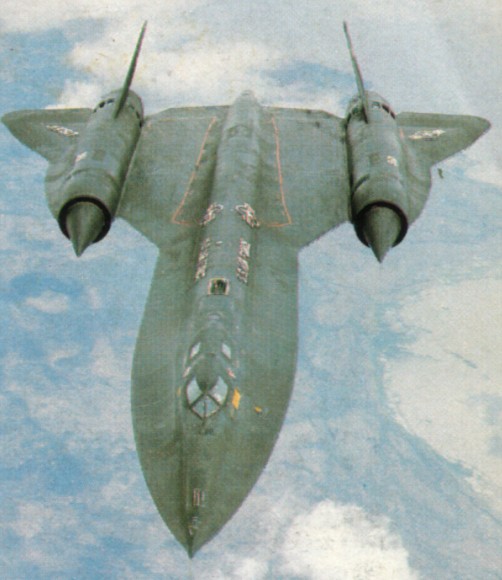
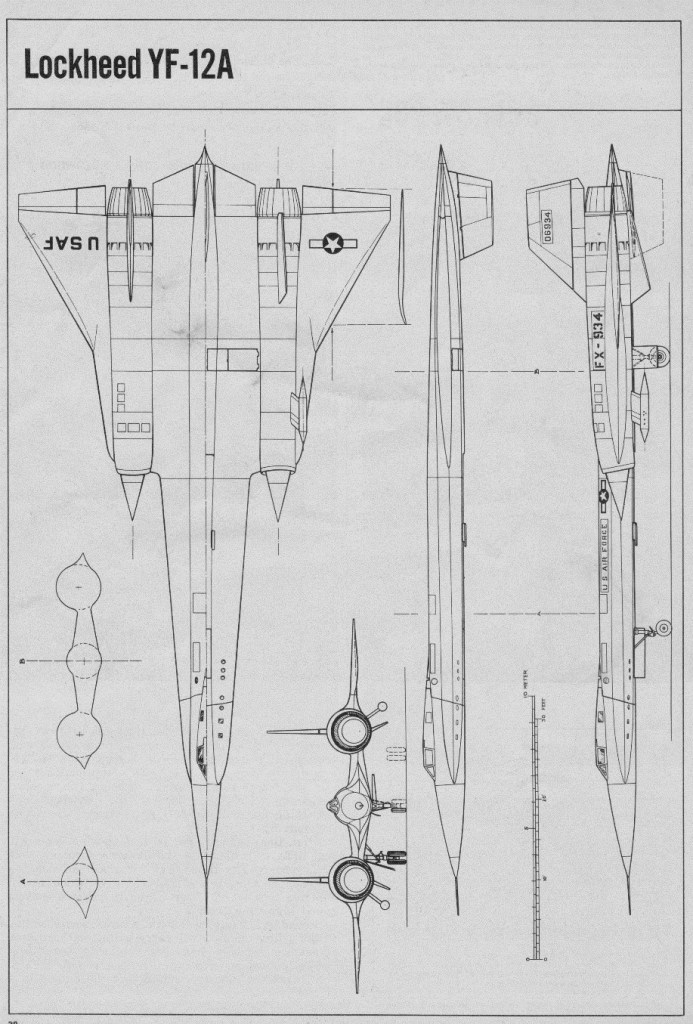
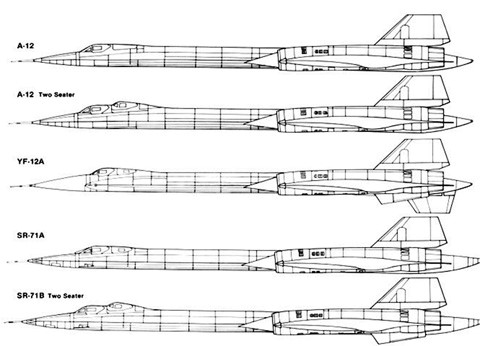
The second major ‘Blackbird’ variant to appear was the YF-12A, and it was this model which formed the basis of the Presidential announcement of February 1964 when Lyndon Johnson formally revealed the existence of the ‘A-11 aircraft’, adding that it was then under test as a long-range interceptor’. Three aircraft (606934/6936) of this type were built, the first example making its maiden flight from Groom Lake on 7 August 1963. Eventually to become the most publicly visible of all the ‘Blackbirds’, the three aircraft all featured significantly different nose contours, the forward fuselage chine having had to be redesigned to permit the installation of the Hughes AN/ASG- 18 long range radar required in the interceptor role. Armament was intended to be the Hughes AIM-47A air-to-air missile, four of which would have been housed internally, occupying space which was presumably given over to reconnaissance sensors and systems on the A-12. The type is based on advanced aerodynamics using a blended fuselage/wing design built largely of titanium alloys and covered in a special heat-radiating paint that led to the type’s nickname. The powerplant comprised a pair of 32,500-lb (14740-kg) afterburning thrust Pratt &Whitney J58 (JT11D-20B) bypass turbojets (or turbo-ramjets) which at high speeds produced their power not only as direct thrust from the exhaust nozzle but also as suction at the inlet. The fighter derivative of the basic model was the experimental YF-l2A, of which at least four were produced with the A-11’s original short fuselage, a Hughes pulse-Doppler fire-control system and, in the fuselage chine bays originally used for the carriage of reconnaissance equipment, four AJM-47A air-to-air missiles. The YF-12A never served operationally, but was important in several evaluation programmes.
The YF-12A programme, seen as important in its own right, distracted attention from the more sinister A-12, the model which mounted an assault on several world records at the beginning of May 1965, capturing the headlines and setting new marks for sustained altitudes and speed with what appeared to be consummate ease. That the A- 12 was able to exceed these figures handsomely was not brought to anyone’s attention.
Subsequently, the YF-12As and a single YF-12C (itself simply the demilitarized second production SR-71A with the bogus serial number (06937) spent most of their flying careers at Edwards AFB, California, eventually being used until 1999 by NASA in a major research effort into high-speed flight. This came to an end during 1979, the sole surviving YF-12A (60-6935) being turned over to the USAF Museum at Wright-Patterson AFB, Ohio, in November while the YF-12C was apparently placed in storage at Palmdale. Of the other two YF-12As, 60-6934 fell victim to a landing accident at Edwards at a fairly early stage, most of the rear fuselage later being used as a basis for the sole SR-71C, while 60-6936 was destroyed Arhen it crashed on approach to Edwards during June 1971.
Crewed by a pilot and flight test engineer, these aircraft flew under NASA for 10 years.
On 1 May 1965, a YF-12A established records including 2062 mph and 80,000 ft sustained horizontal flight. The YF-12As were capable of speeds in excess of Mach 3 and of sustained supersonic flight at heights of up to 24,385m.
The YF-12A paved the way for the SR-71A ‘Blackbird’ strategic reconnaissance platform that was retired from first-line USAF service in 1989, but even so the whole programme is still shrouded in secrecy and uncertainties.
SR-71
SR-71A
On Dec. 28, 1962, Lockheed got the contract to build the first group of SR-71s, which were to become the largest and best known branch of the Blackbird family. Bob Gilliland made the first flight on Dec. 23, 1964. One year after the YF-12, the first SR-71 arrived at Beale Air Force Base, California, operational home of the Black¬bird. First flown on 22 December 1964, the SR-71 is an unarmed strategic reconnaissance aircraft. The SR-71B and SR-71C are training variants.
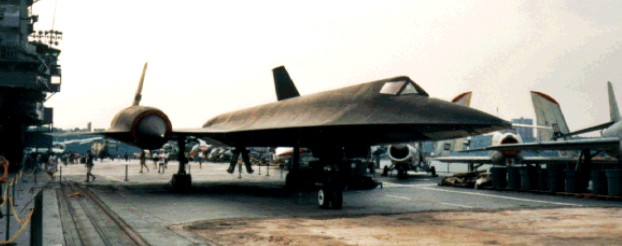
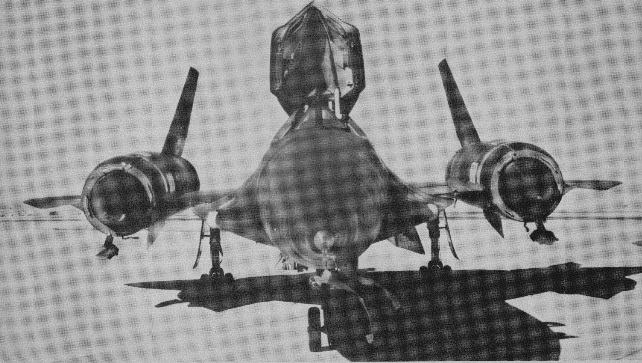
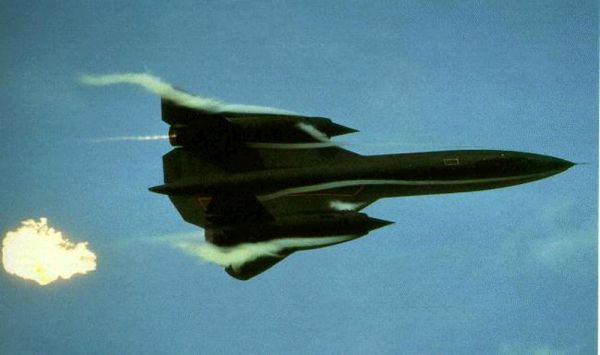
Developed from the A-12 and flown for the first time during December 1964, the Lockheed SR-71A was the world’s fastest operational aircraft, approximately 12 examples being active with the 9th Strategic Reconnaissance Wing at any given time. Possessing the ability to survey 260000 sq.km (100,000 sq miles) of the Earth’s surface in just one hour, the SR-71A routinely cruises at Mach 3 at altitudes in excess of 24385 m (80, 000 ft) during the course of its duties, and is able to gather a variety of data by virtue of highly classified but interchangeable photographic and electronic sensors which are installed to meet specific mission objectives. Deliveries to Strategic Air Command began in January 1966, and it is believed that a total of 32 aircraft was built, this figure including two examples of the two-seat SR-71B plus a single SR-71C, the latter model also being a two-seater for pilot training, built of components taken from crashed aircraft and a structural test specimen.
Unlike the A-12, the SR-71 is a two-seat aircraft with additional accommodation for a Reconnaissance Systems Officer (RSO). Externally, this model also differed from its predecessors in that it has a fully extended chine which is much broader around the nose while the rear fuselage boat-tail was extended by some 1.83 m (6 ft) aft of the trailing edge to improve overall fineness ratio and provide additional fuel capacity. JP-7, the fuel used by the SR-71, is so special due to its properties for operations at the high temperatures caused by Mach 3 cruise that the aircraft has its own fleet of tankers, designated KC-135Q.
The configuration of this aircraft results from extensive wind-tunnel testing to evolve a minimum-drag fuselage providing maximum speed while keeping kinetic heating to the minimum; and to maintain the best possible handling characteristics at supersonic, take-off (about 370km/h) and landing (about 278km/h) speeds. Power plant comprises two 144.6kN Pratt & Whitney turbojets. The 36,287kg of special fuel for these engines – which is contained within upper-fuselage and inner-wing tanks – acts as a heat sink for the entire aircraft, fuel temperature being raised to 320°C before being injected into the engines. Highly complex air intakes with computer-controlled fail-safe systems are essential to ensure that smooth airflow to the engines is maintained over the enormous forward speed range of 0-3,200km/h, at the upper limit of which the engines are virtually operating as turbo-ramjets.
An initial batch of six aircraft formed the subject of the first contract which was placed in December 1962, and the first example took to the air for its maiden flight from Palmdale on 22 December 1964.
Deliveries to the designated operating agency (Strategic Air Command) began on 7 January 1966, the first example assigned actually being the second SR-71B to be produced. SR-71As began to follow during June of the same year to the 9th Strategic Reconnaissance Wing.
Attaining operational status in mid-1967, over 16 years later virtually everything about the SR-71’s usage and mission-related sensor equipment was still the subject of a stringent security blanket, although the USAF has revealed that it can survey 100,000 square miles of the Earth’s surface in one hour’. It seems certain that the intelligence-gathering effort entails unauthorized overflights of potentially hostile territory every now and then. However, since much valuable data can be obtained without recourse to actual overflight, it seems probable that many missions are of a peripheral nature, the SR-71A operating in international air space at extreme altitude whilst going about its duties.
Operations were routinely conducted from two forward operating locations by aircraft detached from the wing’s headquarters at Beale AFB, California. Kadena in Okinawa, normally had three aircraft attached at any time, while Mildenhall in the United Kingdom was the location of the second SR-71 detachment which usually controled the activities of two aircraft. In addition, 9th SRW’s headquarters at Beale served as the centre for crew training. The two-crew members, comprising a pilot and a reconnaissance systems operator, both wear full pressure suits similar to those of astronauts.
Regardless of the equipment fitted, it is apparent that the ‘Blackbird’ was highly regarded as an intelligence-gathering tool, clear evidence of this being provided by the massive expense incurred in supporting just a handful of aircraft. There is the large fleet of Boeing KC- 135Q Stratotankers (specially modified to carry the SR-71A’s unique JP-7 fuel. In addition, the unique aspects of high-altitude flight require the services of a large physiological support division, further 9th SRW infrastructure including a reconnaissance technical squadron with the task of processing data, and an extensive training element which uses several Northrop T-38A Talons as well as a surviving SR-71B.
A total of 31 new-build SR-71 Blackbird aircraft were constructed in addition to the SR-71C. Of the total production, 29 examples (64-17950/17955 and 64-7958/17980) are SR-71As, the two remaining (64-17956/17957) being completed SR-71Bs with a second, raised, cockpit for pilot training duties. 64-17956, was originally built as an SR-71A, but was later converted to an SR-71B trainer by the addition of a second cockpit. Two aircraft were converted.
They have the capability to survey an area of 155,400sq.km within an hour and in 1976 established a closed-circuit speed record of 3,367.221km/h; a world absolute speed record of 3,529.56km/h; and a sustained-altitude record of 25,929.031m.
Including all three members of the ‘Blackbird’ family, production of new airframes totalled just 49, a fiftieth hybrid machine being completed with parts from a wrecked YF-12A and an engineering mockup.
The SR-71 left US Air Force service in January 1990. On a flight from the West Coast to the East Coast, where the aircraft was to retire to permanent static display at the Smithsonian, the Blackbird set a new transcontinental speed record, flying from Los Angeles to Washington D.C. in 1 hour, 4 minutes, and 20 seconds, averaging a speed of 2,124 mph.
SR-71
SR-71
Records Absolute speed: 2193.17 mph / 3529.56 kph – 28 July 1976 1000km / 621.1mi closed circuit speed: 2092.294 mph / 3367.221 kph – 27 July 1976 Sustained flight in horizontal flight: 85,059 ft / 25,939 m – 28 July 1976
Lockheed SR-71A Blackbird Engines: 2 x P&W JT11D, 32,500 lb / 14,742 kg thrust Wingspan: 55 ft 11 in / 16.94 m Length: 107 ft 5 in / 32.74 m Height: 18 ft 6 in / 5.64 m Wing area: app 1000 sq.ft / 92.9 sq.m Empty weight: 60,000 lb / 27,216 kg MTOW: 170,000 lb / 77,111 kg Speed: 2250 mph / 3620 kph Ceiling: 100,000 ft/ 34,800 m Range: 2980 mi / 4850 km Seats: 2
SR-71A Engines: two Pratt & Whitney J58 turbo-ramjet engines, 14742-kg (32,500-1b) afterburning thrust. Wing span 16.94 m (55 ft 7 in) Wing area: 167.2 sq.m / 1799.72 sq ft Length 32.74 m (107 ft 5 in) Height 5.64 m (18 ft 6 in) Wing area 166.76sq.m (1,795 sq ft). Empty weights: 27216 kg (60,000 lb) Maximum take-off 78019 kg (172,000 lb) Fuel capacity 13,000+ USG Maximum speed at 24385 m (80,000 ft) 3661 km/h (2,275 mph) or Mach 3.35 Operational ceiling 26060 m (85,500 ft) Maximum unrefuelled range at Mach 3: 5230 km (3,250 miles). Crew: 2
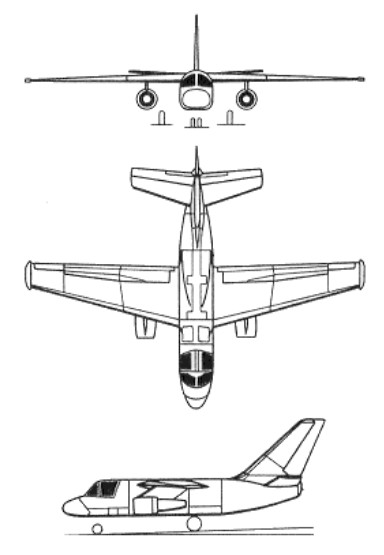
The S-3 is a carrier-based, subsonic, all-weather, long-range, multi-mission aircraft. It operates primarily with carrier battle groups in anti-submarine warfare roles. It carries automated weapon systems and is capable of extended missions with in-flight refueling.
The Viking’s primary flight controls are fully powered and are integrated with the automatic flight control system to relieve the pilot of routine anti submarine warfare manoeuvring. Primary flight controls are servo operated by dual hydraulic systems the loss of either hydraulic system results in the loss of half the available hinge moment. Reversion to manual control is automatic if both hydraulics are lost. In normal powered operation series inputs to the elevator and rudder servos compensate for pitching moments and provide turn co ordination and yaw damping. During autopilot operation parallel inputs to the power servos permit the pilot to, anticipate automatic manoeuvres. The roll axis is controlled by short-span ailerons aug¬mented by differential spoilers mounted on the upper and lower surfaces of each wing. The servo actuators have artificial feel built in to minimise variations in manoeuvring forces throughout the flight envelope. Ailerons and spoilers act together for rolling, with the spoilers acting alone as airbrakes when required. During emergency manual opera¬tion when there is no hydraulic power the spoilers are inhibited and the control column operates only the ailerons. The pitch axis is controlled by a hydraulically powered elevator servo; trim is via an electrically powered actuator. The elevator servo can be operated in normal powered, series or parallel modes. In the emergency manual mode, and in the normal powered mode, the servo is controlled by the pilot. In the series mode during manual approach with the approach power compensator on the servo is under the joint control of the pilot and the automatic flight control system. Rudder control allows an engine failure to be coped with at low speed or following asymmetric stores release. The rudder servo, like that for the elevator, can operate: in normal power, series, parallel or emergency manual modes. During the fin folding sequence rudder pedal input to the rudder servo is disconnected to enable the pilot to continue steering the aircraft on the ground using the rudder pedals.
The first S 3A Viking was rolled out at Lockheed’s Burbank, California factory on November 8 1971 and was first flown on 21 January 1972. The S-3A Viking replaced the piston-engined Grumman S-2 Tracker and entered fleet service in 1974. The last production S-3A was delivered in August 1978.
Used exclusively by the US Navy (firstly VS-41 in February 1974), a total of 187 were built before production ended in 1978, these being powered by two 9,275 lb thrust General Electric TF34 GE 2 turbofan engines.
Lockheed received an initial contract in April 1986 to supply 22 production conversion kits to modify S-3As to upgraded S-3B standard. Two S-3As were modified by Lockheed in 1984/85 to serve as S-3B prototypes, the first flying on 13 September 1984. The S-3B incorporates increased acoustic processing, expanded ESM coverage, improved radar processing, a new sonobuoy reference system, and Harpoon ASM capability. The S-3B version can be fitted with buddy stores, external fuel tanks that refuel other aircraft, to act as an airborne tanker.
Sixteen S-3As were converted to ES-3A Shadows for carrier-based electronic reconnaissance (ELINT) duties.
The Lockheed US 3A Viking car¬rier on board delivery development aircraft, a version of the S 3A Viking, was flown for the first time on 2 July1976. Four US-3As are used for COD. A few units were also converted for utility and limited cargo duty, known as the US-3B, all of which were retired by 1998.
Since the submarine threat has been perceived as reduced Vikings have had their antisubmarine warfare equipment removed and are now used primarily for sea and ground attack, sea surface search, over the horizon targeting, and aircraft refueling. As a result, crews are now usually limited to two people, but three people crews are not unusual with certain missions. Navy plans called for the retirement of all Vikings by 2009.
S-3B Viking
On May 1, 2003, US President George W. Bush rode in the co-pilot seat of a Viking that landed on the aircraft carrier USS Abraham Lincoln, where he delivered his “Mission Accomplished” speech announcing the end of major combat in the 2003 invasion of Iraq. That Navy flight is the only one to use the callsign “Navy One”.
S-3A Engines: 2 x General Electric TF34-GE-2 turbofan, 9275 lb (4207 kgp) thrust. Wing span: 68 ft 8 in (20.93 m). Length: 53 ft 4 in (16.26 m). Height: 22 ft 9 in (6.93 m). Wing area: 55.6 sq.m / 598.47 sq ft Max take-off weight: 19280 kg / 42505 lb Empty weight: 12070 kg / 26610 lb Max. speed: 815 km/h / 506 mph Cruise speed: 650 km/h / 404 mph Ceiling: 11000 m / 36100 ft Range w/max.fuel: 5700 km / 3542 miles Crew: 4
S-3 Viking Engines: 2 x General Electric TF-34-GE-400B turbofan engines rated at 9,275 lb thrust each Length: 53 feet, 4 in Wingspan: 68 ft, 8 in Height: 22 feet, 9 in Weights Empty weight: 26,650 lb Maximum takeoff weight: 52,539 lb Speed: 518 mph Ceiling: 40,000 ft Range: 2,645 mi Armament: Up to 3,958 lb Crew: Four Unit Cost: US$27 million
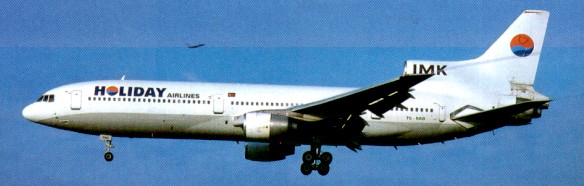
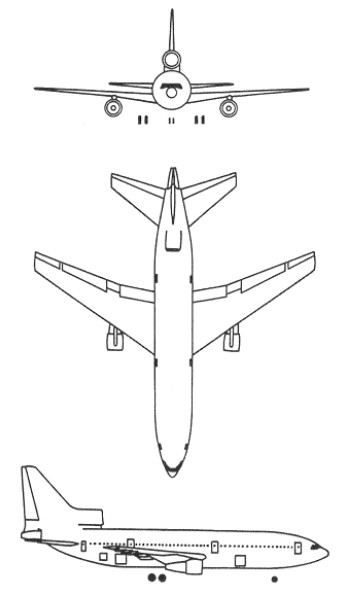
In the 1960s, American Airlines approached Lockheed and competitor Douglas with a need for an aircraft smaller than the existing 747, but still capable of flying to distant locales such as London, the Caribbean, and Latin America from company hubs in Dallas/Ft Worth and New York. The Model L-1011 was designed to enter this category with optimum payload-range performance and short-field characteristics. The Model L-1011 is powered by three 42,000-lb. s.t. turbofan engines, two of which are mounted in pods underneath each wing, and the third is located in the rear of the fuselage at the base of the tail unit. The TriStar’s engine is integrated into the tail through an S-duct for improved quietness and stability. Fuel is carried in two integral wing tanks and an inboard tank. With a full load, the TriStar can travel a maximum of 4,467 miles. Accommodations provide for 256 passengers in a mixed coach and first-class arrangement or a maximum of 400 passengers in a high density all-economy configuration.
First flown on November 16, 1970, the twin-aisle TriStar’s design schedule closely followed that of its competitor, the DC-10, Douglas beat Lockheed to market by a year due to delays in powerplant development. Rolls-Royce, the maker of the TriStar’s RB211 turbofan engines, had filed for bankruptcy, halting L-1011 final assembly. The first flight was powered by Rolls Royce RB.211 high by pass ratio turbofan engines, from Palmdale, California.
The British government did not approve the large state subsidy used to restart Rolls-Royce operations until after the U.S. government had guaranteed the Lockheed loans previously provided to Rolls for the extensive engine contract. (The UK Goverment also took the contentious step (for a Conservative administration) of taking the aero-engine side of RR into public ownership, to maintain national defence capability). Its first revenue flight, for Eastern Air Lines, was made on 26 April 1972.
A longer-range variant of the standard-length L-1011 was developed in the late 1970s. Designated the L-1011-500, the fuselage length was shortened by 14 feet (4.3 m) to accommodate higher fuel loads.
Ironically, American Airlines never flew the “Ten Eleven,” purchasing many DC-10s instead.
Lockheed manufactured a total of 250 TriStars, ceasing production in 1984. Lockheed needed to sell 500 planes to break even. Failing to achieve profitability in the civilian airliner sector, the TriStar was to be Lockheed’s last commercial aircraft.
Flying all of its life on test and development work, the prototype was acquired by Aviation Sales of Ardmore in August 1986.
L-1011 Tristar Engines: 3 x Rolls Royce RB.211 22B turbofan, 42,000 lb / 180.5kN Wing span: 155 ft 4 in (47.34 m). Length: 178 ft 8 in (54.35 m). Height: 55 ft 4 in (16.87 m). Wing area: 312.1 sq.m / 3359.41 sq ft Empty wt. 102000 kg / 222,941 lb Max TO wt: 430,000 lb (195,045 kg). Fuel capacity 23,814 USG Max level speed: M0.9. Cruise 474 mph. Stall 144 mph. Initial climb rate 2,800 fpm Ceiling: 42,000 ft. Range w/max.payload: 5000 km / 3107 miles Pax cap: 345. Takeoff run 7,590 ft Landing roll 5,660 ft Crew: 2-3






 All Aero