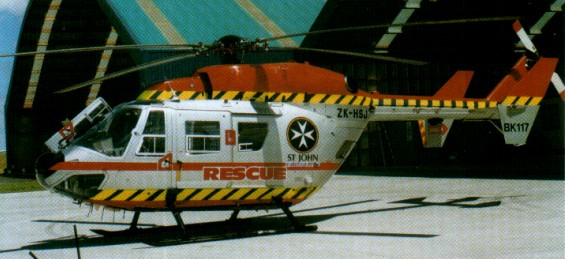
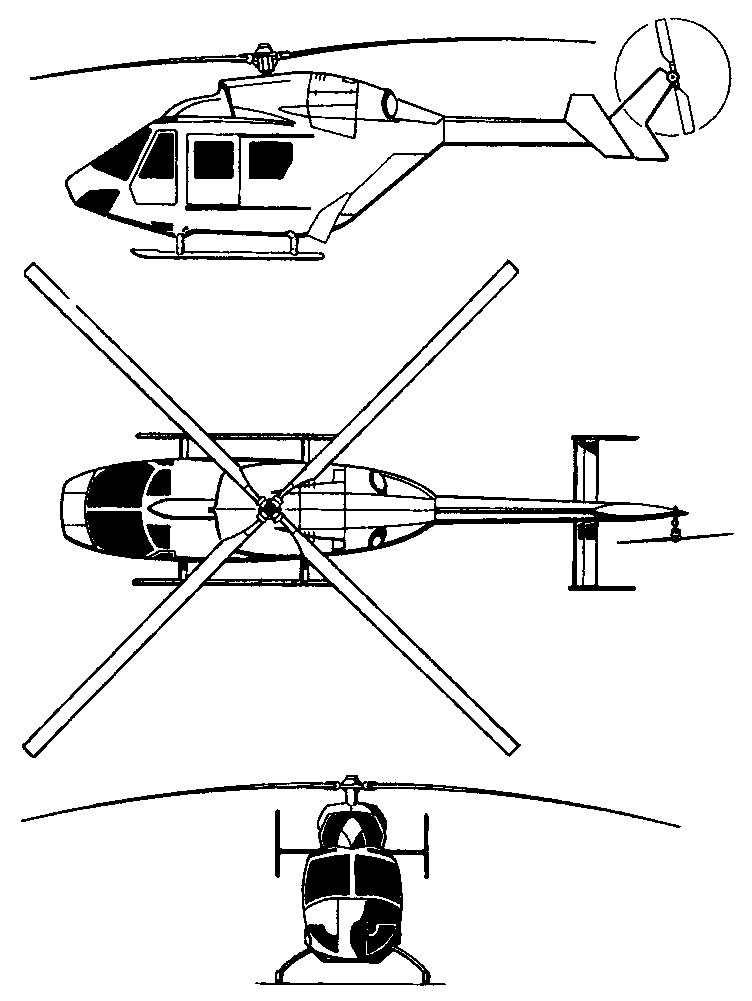
MBB BK.117 / Kawasaki BK.117 / IPTN NBK- 117

BK 117

On 25 February 1977, MBB of West Germany and Kawasaki of Japan signed an agreement for the joint development of a twin-turbine utility helicop¬ter suitable for military as well as civil use, following more than two years’ negotiation. Joint development costs were to be divided equally, the financing being guaranteed by the respective governments. MBB was to be responsible for the main rotor and tail rotor, tail boom, empennage, hydraulic system and controls, while Kawasaki was to develop the landing gear, fuselage, transmission and other minor components. This emerged as the BK 117, which uses the BO 105’s rigid main rotor and a Japanese-developed transmission.

The original programme was based on four prototypes, two to be built by MBB in Munich and two by Kawasaki in Gifu, all to be completed by mid 1979. In each case, one of the prototypes was intended for flight testing and the other for static tests. However although the German company succeeded in completing its two models by the end of 1979, only one of the Japanese prototypes was ready on time.

A fair percentage of parts and systems are identical to those of the German Bo.105 helicopter. The hydraulic system is based on the original Bo.105 version and even the rotor is taken from the Bo.105, suitably enlarged to match the demands of the bigger and heavier BK-117. The four-blade rotor is of the rigid type with a titanium hub and reinforced fiberglass blades. The transmission is derived from the Japanese KH-7 project: a seven-ten-seat helicopter which was to have been fitted with two 590shp Lycoming turbine engines. The BK-117 also has a pair of Avco-Lycoming LTS-101-650B-1 engines, delivering 600shp on take-off and 550shp maximum continuous power. The fuel tanks, with a total capacity of 605 liters, are housed in the lower part of the fuselage.

The executive version of the BK-117 carries a pilot and five passengers, but the volume of 3.22cu.m gives room for nine passengers in the high density version or in those used for commuter and offshore services to oil platforms. It can be loaded through two large sliding doors, one on either side of the fuselage. Behind the passenger cabin is a large baggage hold with a capacity of 1.34cu.m, which is reached through two hinged doors at the rear of the fuselage. A cargo hook can be fitted to the cabin floor for external lift work.

German and Japanese prototypes flew for the first time on 13 June 1979 (D-HBKA) and 10 August 1979 (JQ0003, the third BK.117) respectively. Kawasaki was first to fly a production aircraft (JQ1001) on 24 December 1981; MBB followed with D-HBKC on 23 April 1982, this machine being the first production aircraft to be delivered to a customer, in early 1983.

By the beginning of 1982, the BK-117 prototypes had logged more than 750 flying hours and type approval by the German Federal Authorities followed shortly afterwards. Half of the 130 aircraft ordered by February 1982 were for customers in the United States, where deliveries began in early 1983, from two production lines, in Germany and Japan.

Combining utility troop trans¬port and anti-tank capability, the BK.117A-3M was originally conceived as a contender for the Belgian Aeromobility 1 requirement. Based on the civilian BK.117A-3 airframe, the A-3M is offered in a multirole military configuration equipped with an under-nose Lucas 12.7mm or 0.5in gun turret with helmet sight, HOT anti-tank missiles with stabilised roof mounted sight, rocket pods, AAMs, and an ECM and Racal radar warning system, managed by a Racal 3000 Series avionics management system. Provision is also made for a mast mounted sight. Up to 11 troops can be carried in the utility role. Powered by twin Lycoming LTS1O1-650B-1 turboshafts, the BK.117 A-3M has a maximum take-off weight of 3,200kg and an operating range (minus auxiliary tanks) of 495km. MBB later abandoned its armed military BK 117A-3M.

The 1990 production version was the BK.117B-1. This was certificated in 1987 and is powered by two 592 shp (442 kW) Textron Lycoming LTS 101-750B-1 turboshafts.
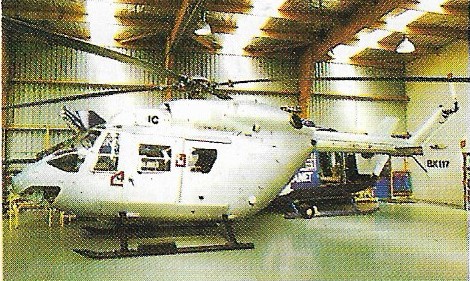
BK 117 B1

The B-2 model has an increased MTOW and an extended C of G range.

Germany’s ministry of defence used one BK 117 as a composites testing aircraft.

More than 180 BK 117s had been delivered from the production lines in Germany and Japan by 1990.
The BK 117M is a military version, six.of which were delivered for trials with the West German Army.

An agreement was concluded in 1982 for the type to be built in Indonesia under licence by IPT Nurtanio as the NBK-117.

By January 1990 more than 250 BK 117s had been delivered worldwide, including 36 by Kawasaki, the standard aircraft being the BK 117B-1.

Since April 1990 a BK 117 engine testbed has been flying equipped with Turbomeca Arriel turboshafts in an effort to offer customers an alternative engine, and certification was scheduled for 1992.

On 1 September 1991, MBB transferred its Helicopter Division to Eurocopter Hubschrauber GmbH. This was later integrated with Aerospatiale’s helicopter interests into the Paris-based Franco-German Eurocopter Holdings, along with the NH-90, BO 105, BO 108 and BK 117.
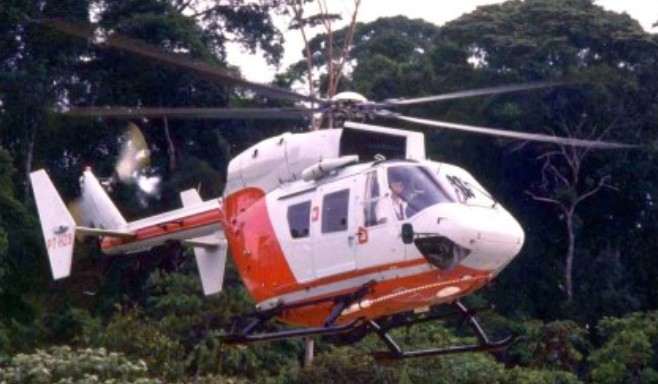
Gallery

Variants:

BK 117A-1
Initial production version with LTS 101-650B-1 engines

BK 117A-3
Certificated in March 1985 with larger tail rotor fitted with twisted blades and take-off weight increased to 3200kg

BK 117A-4
Certificated in July 1986 with increased transmission limits at take-off power, improved tail rotorhead, and extra internal fuel (on German aircraft), all giving enhanced performance

BK 117 B-1
Fitted with more-powerful LTS 101-750B-1 engines to provide further increased performance and 140kg more payload; certificated in 1987

BK 117M
Military version of A-1 proposed by MBB in 1985, and flying since 1988; fitted with taller skids, a Lucas turret mounted under the fuselage houses a Browning 12.7mm automatic machine-gun and 450 rounds of ammunition, controlled by a helmet-mouted sight; outrigger pylons can carry up to eight HOT II or TOW antitank missiles, air-to-air missiles, rocket-pods, or forward-firing cannons; a doorway gunners position with a 12.7mm gun can also be installed, or 11 troops can be carried

Specifications:

MBB/Kawasaki BK 117
Engine: 2 x Lycoming LTS101-650B-1, 650 shp / 410kW
TBO: 2400 hr
Main rotor: 36.1 ft / 11m
Seats: 8/10
Length: 32.7 ft / 9.91m
Length rotors turning: 13m
Height: 10.9 ft / 3.83m
Max ramp weight: 6283 lb
Max takeoff weight: 6283 lb / 2850kg
Standard empty weight: 3505 lb / 1650kg
Max useful load: 2778 lb
Max landing weight: 6283 lb
Max sling load: 2645 lbs
Disc loading: 6.1 lbs/sq.ft
Power loading: 7.4 lbs/hp
Max usable fuel: 1058 lbs
Max rate of climb: 1830 fpm
Service ceiling: 17,000 ft / 4570m
Hover in ground effect: 11,000 ft
Hover out of ground effect: 8700 ft
Max speed: 150 kts
Normal cruise @ 3000 ft: 139 kt / 250km/h
Fuel flow @ normal cruise: 463 pph
Endurance @ normal cruise: 2.1 hr
Range max payload: 500km

BK.117
Engine: 2 x Lycoming LTS 101-750A3, 986 shp
Empty wt: 1849 kg
Cruise: 130 kts
Range: 540 km (340nm)

BK.117B-2
Engine: 2 x Lycoming LTS 101-750B-1
Instant pwr: 548 kW
Rotor dia: 11 m
MTOW: 3350 kg
Useful load: 1595 kg
Max speed: 150 kts
Max cruise: 133 kts
Max range: 540 km
Crew: 2
Pax: 10
Seats: 8/11.

BK.117C-1
Engine: 2 x Turbomeca Arriel 1E2
Instant pwr: 574 kW
Rotor dia: 11 m
MTOW: 3350 kg
Useful load: 1585 kg
Max speed: 140 kts
Max cruise: 133 kts
Max range: 540 km
Crew: 2
Pax: 10
Seats: 8/11

BK.117M
Engines: two 592-shp (441-kW) Lycoming LTS 101-650B-1 turboshafts
Maximum speed 155 mph (250 km/h) at sea level
Initial climb rate 1,476 ft (450 m) per minute
Service ceiling 15,000 ft (4,570 m)
Range 308 miles (495 km)
Empty weight 5,644 lb (2,560 kg)
Maximum take-off weight 7,055 lb (3,200 kg)
Main rotor diameter 36 ft 1 in (11.00 m)
Length overall, rotors turning 42 ft 8 in (13.00 m)
Height 11ft 0.3 in (3.38 m) to top of rotor head
Main rotor disc area 1,022.96 sq ft (95.03 sq.m)
Armament: one 0.5-in (12.7-mm) machine gun and disposable weapons
Hardpoints: 2
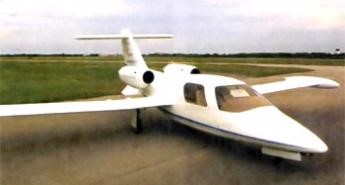
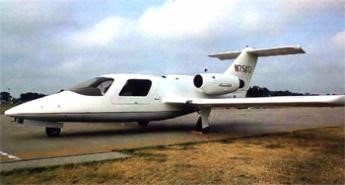
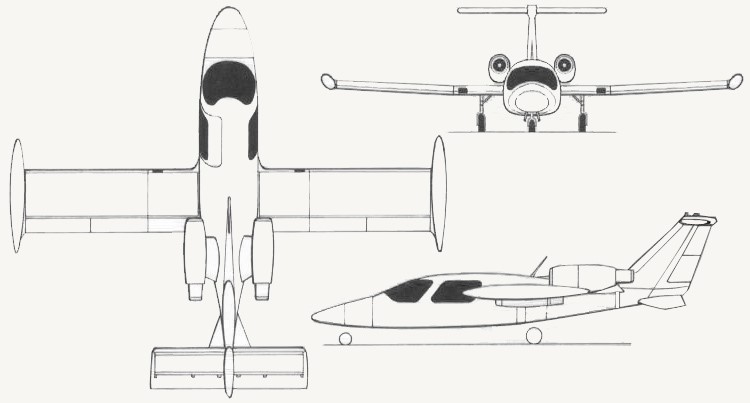
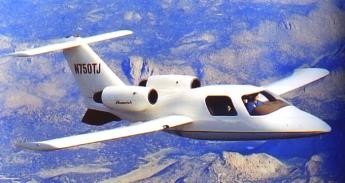
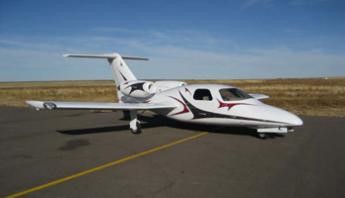
Maverick Air TwinJet

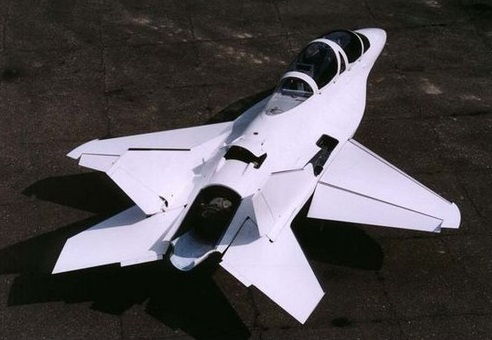
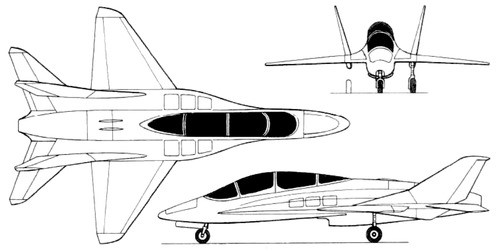
Bob Bornhofen was retired when he got into the aviation business, and had no aviation background. He wondered why he couldn’t buy a personal jet, and in 1998 he decided to create one. Bornhofen has been funding much of the project out of his own pocket.

To be marketed as a kit, the Twinjet has a pre-preg eglass composite airframe with carbon fiber control surfaces and empennage.

The TwinJet was not certified because it uses two converted surplus GE-T58 military helicopter engines (overhauled and zero-timed).

The TwinJet was designed in anticipation of the FJX-2 engine, which was being developed under the General Aviation Propulsion program. The FJX-2 was going to be a new generation turbofan engine producing 700-800 pounds of thrust.

When delays occurred for that engine, Bob Bornhofen elected to use the T58 engines so he wouldn’t slow the TwinJet development.

The first prototype was flight tested to about 370 knots during a series of tests to determine if the aircraft had any major certification-related problems.

Engines: 2 x GE-T58 turbojet
Wing span: 10,21 m (33 ft 6 in)
Wing span, tip tanks: 10,52 m (34.5 feet)
Lenth overall: 8,69 m (28 ft 6 in)
Height overall: 2,74 m (9 ft 0 in)
Empty weight: 2,600 lb
MAUW: 5,100 lb
Fuel capacity: 270 USgallon
Optional fuel: 320 US gallon
Max speed 30,000 ft: 480 mph
Cruise speed 30,000 ft: 400 mph
Single-engine cruise speed 30,000 ft: 230 mph
Initial rate of climb: 3,500 fpm
Single-engine climb rate: 1,000 fpm
Stall at 5,100 lb: 90 mph
Range standard fuel: 1,000 miles
Range optional fuel: 1,300 miles

Prototype N750TJ.

Serial number: 1,
First flight 4 august 1999.
Public debut at EAA Air venture, Oskosh, August 2000.
Destroyed on Jan. 24, 2003 in Melbourne, Florida

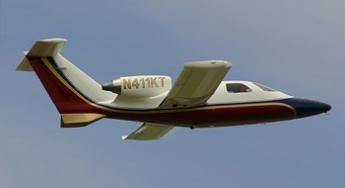
N411KT

Serial number: 2,
Owned by Mike Seavall (Longmont, Colorado).
It was built from a Maverick Air’s kit. Two years were spent to build it.

N699VA

Serial number: 3
Professionaly built in 2003.
Fitted with 2 T850 engines

Martin 275 P6M Seamaster

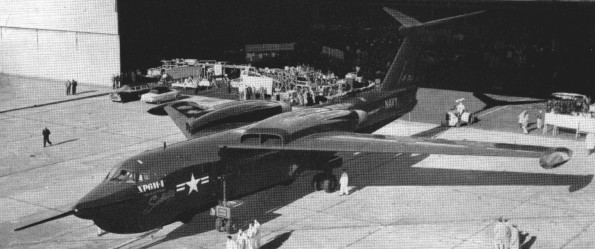
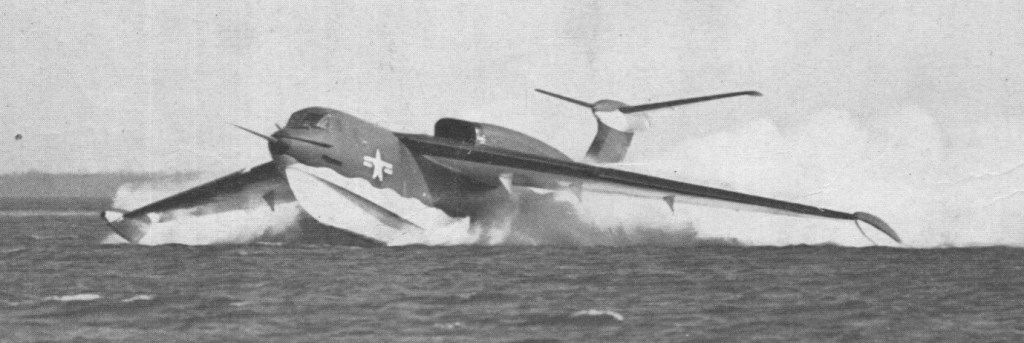
To meet a US Navy requirement for a high-performance multi-role flying-boat, Martin offered its Model 275 design. This had an all-metal hull of high length/beam ratio, mounting a cantilever high-set sharply-swept wing incorporating so much anhedral that the stabilising floats at the wing-tips could be attached permanently; the tail unit was of T-tail configuration with all-swept surfaces. Above the wing, to minimise spray ingestion, were mounted four Allison turbojet engines, and pressurised accommodation was provided for a crew of five. A beaching cradle allowed the SeaMaster to taxi in and out of the water under its own power. The P6M used a rotary bomb bay (as used on Martin’s licence-built Canberras and the XB-51). This permitted weapons release at high speeds without the drag of conventional bomb doors.

Martin P6M Seamaster Article

The first XP6M-1 prototype was flown on 14 July 1955, the second following on 18 May 1956. Ejection seats were fitted to the second and subsequent aircraft. These proved useful when the second SeaMaster pitched up, went into a loop and disintegrated. The original position of the engine exhausts caused stress on the rear fuselage which resulted in structural damage. The angle of the exhausts was adjusted after testing.

Martin received orders for six pre-production YP6M-1 boats powered by Allison J71 turbojets each developing a maximum 5897kg afterburning thrust. Successful flight testing led to an order for 24 production P6M-2 aircraft named SeaMaster, which differed primarily by having 7711kg thrust non-afterburning Pratt & Whitney J75-P-2 turbojet engines. The cockpit glazing was modified on later models to give a much better overhead and side view. However, the contract was cancelled on 21 August 1959 after only three had been built and these, together with the YP6M-1s, were scrapped at a later date. They were the fastest flying-boats ever built.

YP6M-1
Engines: 4 x J71 turbojet.
Speed: 600 mph.

P6M
Engines: 4 x Pratt & Whitney J75-P-2 turbojets, 7938kg
Wingspan: 30.48 m / 100 ft 0 in
Length: 40.84 m / 133 ft 12 in
Height: 9.45 m / 31 ft 0 in
Max take-off weight: 72575 kg / 160001 lb
Payload: 13600kg / 29983 lb
Max. speed: 965 km/h / 600 mph
Ceiling: 12200 m / 40050 ft
Range: 4830 km / 3001 miles
Armament: 6 x 12.7mm machine-guns, 1800kg of weapons
Crew: 4

Martin B-57 Canberra / General Dynamics WB-57F

The beginning of the Korean conflict on 25 June 1950 and the shortcomings of the Douglas B-26 / A-26, accounted for the urgent procurement of a light tactical bomber.

Martin B-57 Canberra Article

The new bomber had to be capable of operating from unimproved airfields, at night and in every kind of weather, with conventional or atomic weapons. High altitude reconnaissance was another must. For such purposes, the B-45 was too heavy; the Navy AJ-1, too slow; and the Martin experimental B-51’s range too short.

As a result of the outbreak in Korea, the Air Force reached a final decision. The desire for a night intruder was so strong that it took just a few days to set in motion the informal production endorsement of February 1951. Because of its experience with the XB-51, the Glenn L. Martin Company was recognized as the most qualified contractor to assume the domestic production of the British aircraft and to deal with the likely engineering difficulties involved in manufacturing a high-performance tactical bomber.

The new bomber became the Martin B-57, a by-product of the English Electric Canberra, the first British-built jet bomber, initially flown in 1949. Adaptation of a foreign-made aircraft to American mass production methods, as well as the use of different materials and tools, could present many difficulties. Another problem, perhaps more critical, centered on the Wright J65 turbojets, due to replace the Canberra’s two Rolls Royce Avon turbojet engines. The J65 was the U.S. version of the Sapphire, a British hand-tooled production currently scheduled for manufacturing by the U.S. Curtiss-Wright Corporation. The Air Force was fully aware of these potential pitfalls, but had no better option. It had an immediate requirement for a light jet bomber, with a 40,000-foot service ceiling, a 1,000-nautical mile range, and a maximum speed of 550 knots.

Testing of two imported Canberras revealed design faults that could affect the safety, utility, and maintenance of the future B-57. Then, one of the British planes crashed; Martin’s subcontractors could not meet their commitments; and the J65 prototype engines consistently failed to satisfy USAF requirements. In June 1952, further test flights had to be postponed for a year because of continuing engine and cockpit troubles. As a result, the Korea-bound B-57 did not fly before 20 July 1953, just 7 days before the conflict ended. Production of the crucial RB-57 was also delayed. The reconnaissance version entered service in mid-1954, after testing again confirmed that the more powerful J65 engines, added equipment, and other improvements had increased the aircraft’s weight, in turn reducing the speed, distance, and altitude of both the B-57 and the RB-57.

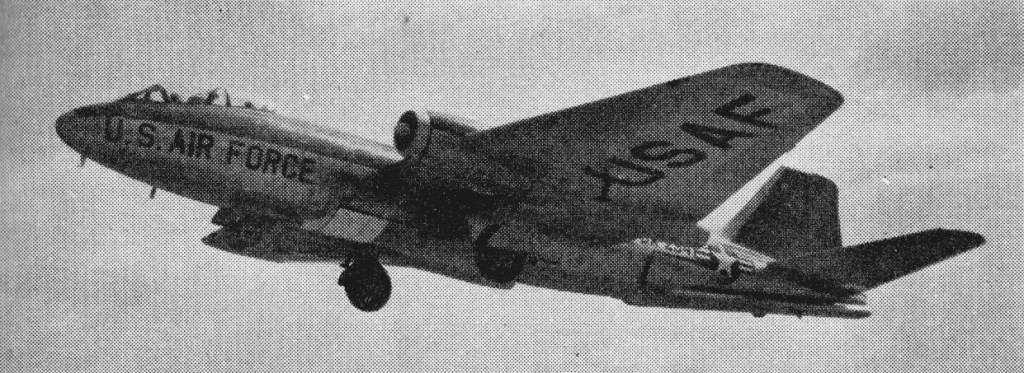
The program was reduced, but there was no talk of cancellation. In 1955, the B/RB-57s justified their costs when they served overseas pending the B/RB-66 deliveries which, as predicted, had fallen behind schedule. The first Martin B‑57A (the name Canberra was re­tained, though Night Intruder was also used) flew on 20 July 1953. In 1956, much-needed RB-57Ds joined the Strategic Air Command, and various configurations of this model satisfied important special purposes.

RB-57D

The main model (202 built) was the B 57B with a redesigned forward fuselage with a crew of only two seated in tandem under a giant rear hinged canopy. This attack version introduced a heavier bombload in a rotary door weapon bay, plus eight pylons under the outer wings and forward firing guns. The B 57B equipped two wings in Tactical Air Command and a wing of PACAF (Pacific Air Forces) but had mainly been passed to Air National Guard units by the early 1960s. Vietnam requirements then demanded aircraft in this class and all available B 57Bs (many had been re built into other models) were rushed to South Vietnam and used very success¬fully in the attack role and in particular as FAC (Forward Air Control) aircraft.

Martin B-57B

Delivered too late for combat in Korea, the RB-57 in May 1963 and the B-57 in February 1965 began to demonstrate under fire in Southeast Asia the basic qualities justifying the Canberra’s original selection.

RB-57 Reconnaissance Canberra Article

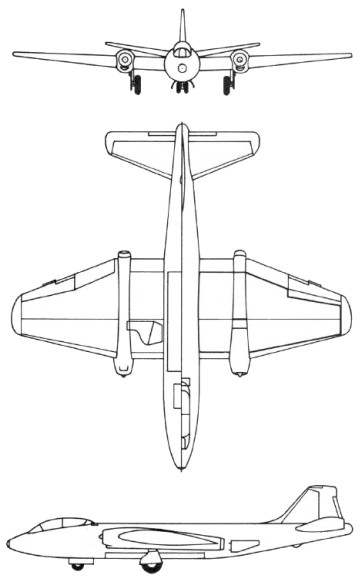
The original B-57A differed little externally from the English Canberra B2. The RB-57A was similar, with reconnaissance equipment.

The B-57B, with eight 0.50 in or four 20mm guns in the wings, bombs in an internal bomb bay, and underwing racks, served with the Chinese Nationalist and Pakistani air forces.

Variants include the RB-57D(A) and (B) with cameras, the RB-57D(C) and (D) electronics reconnaissance aircraft with radomes at the nose and tail and under the fuselage, and the RB-57(C) with wingtip radomes.

In 1970, other reactivated and newly equipped B-57s, known as Tropic Moon III B-57Gs, were deployed to Southeast Asia, where they made valuable contributions until April 1972. A total of 16 B 57Bs was rebuilt as B-57G (Tropic Moon) all weather and night attack aircraft with APQ 139 radar, a FLIR (forward looking infra-red), low light TV and laser ranger. The most capable aircraft of its day, the B 57G remained a mere study programme despite brilliant combat results.

B-57E

The last new-built version was the B 57E multi role attack/bomber and target tug, all 68 of which were later modified for other tasks.

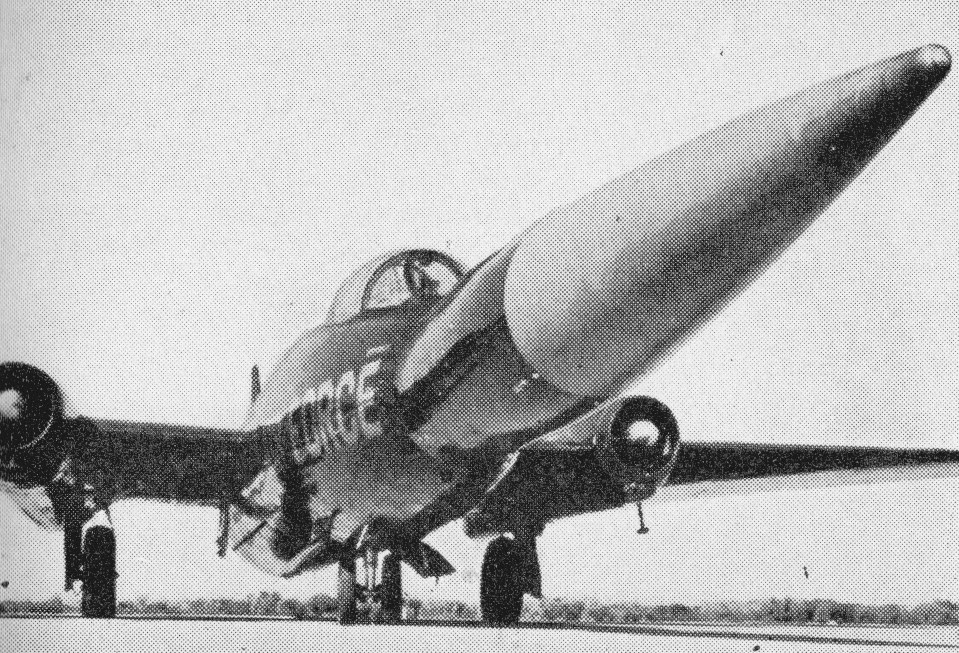
Martin B-57 modified to test the Boeing Bomarc interceptor missile

Finally, WB-57Fs, either modified RB-57Fs or former B-57Bs, were still flying high-altitude radiation sampling missions in 1973. Concurrently, EB-57Es, and related adaptations of the versatile B-57, continued to play significant roles, with no immediate phaseout in sight.

RB-57F

403 were built under licence by Martin (in six variants) as the B-57 and served with the US Air Force from August 1953 until 1982 in various marks and guises. At a later date a number of these were converted by General Dynamics to serve as ultra high-altitude strategic reconnaissance aircraft. These were provided with a wing span of 37.19m, two 80kN Pratt & Whitney TF33-P-11 turbofan engines (replacing the conventional power plant), plus two 14.68kN Pratt & Whitney J60-P-9 turbojets in underwing pods, and many equipment and avionics changes to fit them for their specialised role. The B-57 saw combat over Vietnam beside other Canberras from Australia.

The USAF bought 21 WB-57F aircraft, which were built by General Dynamics from existing B-57Bs and RB-57Ds. The airplanes’ ability to reach altitudes over 65,000 feet, carry payloads in excess of 4,000 lbs, and its triple spar wings made it a very capable high-altitude platform. Missions included everything from weather reconnaissance for Apollo space launches to sampling radiation in nuclear weapon test plumes.

In the late 1960s and early 1970s the Air Force decided to ground the WB-57F and depend exclusively on the U-2 for high-altitude support. The mission of monitoring nuclear test bans was better done by the WB-57F than the U-2, however. That mission was important enough that three aircraft were given to NASA to keep that capability alive, which were designated N925N, N926NA, and N928NA.

When N925N was retired and put on display at Pima Air & Space Museum in Tucson, Arizona, it that left NASA with two WB-57Fs. Another airframe joined the fleet in 2011 after been taken out of the 309th Aerospace Maintenance and Regeneration Group, (AMARG), better known as the “Bone Yard,” at Davis-Monthan Air Force Base, Arizona. The aircraft, designated N927NA, began as a B-57B, and then was one of 21 aircraft rebuilt as an RB-57F in 1964. As an RB-57F the aircraft had its wingspan increased to 122 feet and the original Wright J65 turbojets were replaced by Pratt & Whitney TF-33 turbofans, doubling both the wingspan and thrust.

N927 had been retired in June 1972 and remained on “celebrity row” at the Bone Yard until May 2011 when it was dismantled and trucked to Sierra Nevada Corporation at Centennial Airport, Colorado. After being refurbished to flying condition it was flown to Ellington AFB in August 2013.

The aircraft had been in storage for over 40 years and made its first flight in 41 years in the summer of 2013, setting a record for the longest an aircraft had sat in the Bone Yard before returning to flying status.

NASA’s WB-57F

Based at Ellington Field near NASA’s Johnson Space Center in Houston, Texas, the WB-57F operates in NASA’s High Altitude Research Program. The aircraft provides unique, high-altitude (up to 70,000 feet MSL) airborne platforms to United States government agencies and other customers for scientific research, advanced technology development, and testing around the world.

Since 2000, the unique performance capabilities of the WB-57F aircraft and increasing costs associated with the ER-2 program have resulted in NASA allowing multiple customers to use the WB-57Fs for atmospheric and satellite sensor research. The DOD programs have gotten much broader, and N928 (and sometimes N926) have multiple customers asking us to help them develop satellite sensors.

Both aircraft were enjoying multiple customers. By June 2014, both aircraft were upgraded with global positioning satellite navigation systems, F-15 main landing gear and brakes, and the gross weight capability of both aircraft was certified from 63,000 pounds to 72,000 pounds. Ongoing upgrades to the aircraft include installation of the ACES II ejection seat system and installation of an improved, modern autopilot.

Gallery

B-57B
Night intruder bomber
Engines: 2 x Wright J65-W-3 Sapphire turbojets, 7,500lb thrust
Wingspan: 64 ft
Length: 65 ft. 6 in
Loaded weight: 46,000 lb.
Max speed: over 600 m.p.h.
Ceiling: over 45,000 ft.
Max range: 3,000 miles.
Armament: 8x.50 in. machine-guns
Bombload: 6,000 lb; 8×5-in. rockets
Hardpoints: 4
Crew: 2

B 57B
Engines: two 3,275 kg (7,220 lb) thrust Wright J65 W 5 turbojets.
Maximum speed 937 km/h (582 mph) at 12190 m (40,000 ft).
Service ceiling 14630 m (48,000 ft).
Range 3700 km (2,300 miles).
Weights: empty 11793 kg (26,000 lb)
Maximum take off 24948 kg (55,000 lb)
Wing span 19.51 m (64 ft 0 in)
Length 19.96 m (65 ft 6 in)
Height: 4.75 m (15 ft 7 in)
Wing area: 89.18 m (960 sq ft).
Armament: eight 12.7 mm (0, 5 in) or four 20 mm guns; up to 2722 kg (6,000 lb), 16 underwing rockets or mixed rocket/ bomb/napalm loads.

RB-57D
Engines: 2 x Pratt & Whitney J57C, 11,000 lb
Wingspan: 106 ft
Length: 65 ft 6 in
Height: 14 ft 10 in
Max speed: 632 mph at 40,000 ft
Service ceiling: 60,000 ft

RB 57F
Engines: 2 x Pratt & Whitney TF33 P 11 turbofan, 18,000 lb (8,165 kg) st, and 2 x P&W J60 P 9 auxiliary turbojets, 3,300 lb (1,500 kg) st.
Wing span: 122 ft 5 in (37.32 m)
Length: 69 ft 0 in (21.03 m).
Height: 5.8 m / 19 ft 0 in
Max take-off weight: 20360 kg / 44886 lb
Empty weight: 13600 kg / 29983 lb
Max. speed: 880 km/h / 547 mph
Ceiling: 25000 m / 82000 ft
Range w/max.fuel: 6440 km / 4002 miles
Typical endurance: Over 10 hr
Crew: 2
Armament: None

Martin B-57 Intruder
Martin RB-57D
Martin RB-57F

Martin XB-51

In World War lithe USAAF made widespread and effective use of the attack bomber for battlefield tasks. For post¬war service the USAAF wanted a higher-speed successor, and the specification produced two types in the Douglas XB-43 and Martin Model 234 XB-51.

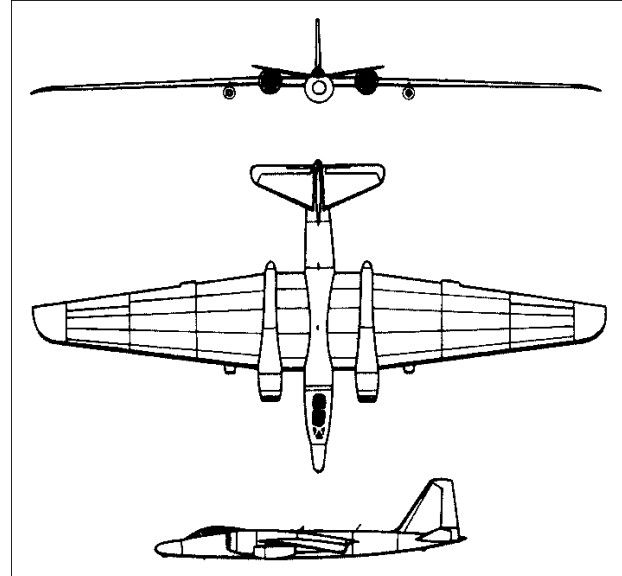
The Martin was designed originally to meet a US Army Air Force requirement for a close-support bomber, being allocated the designation XA-45. However, it was developed instead as a medium bomber with turbojet power-plant and two prototypes were ordered under the designation XB-51.

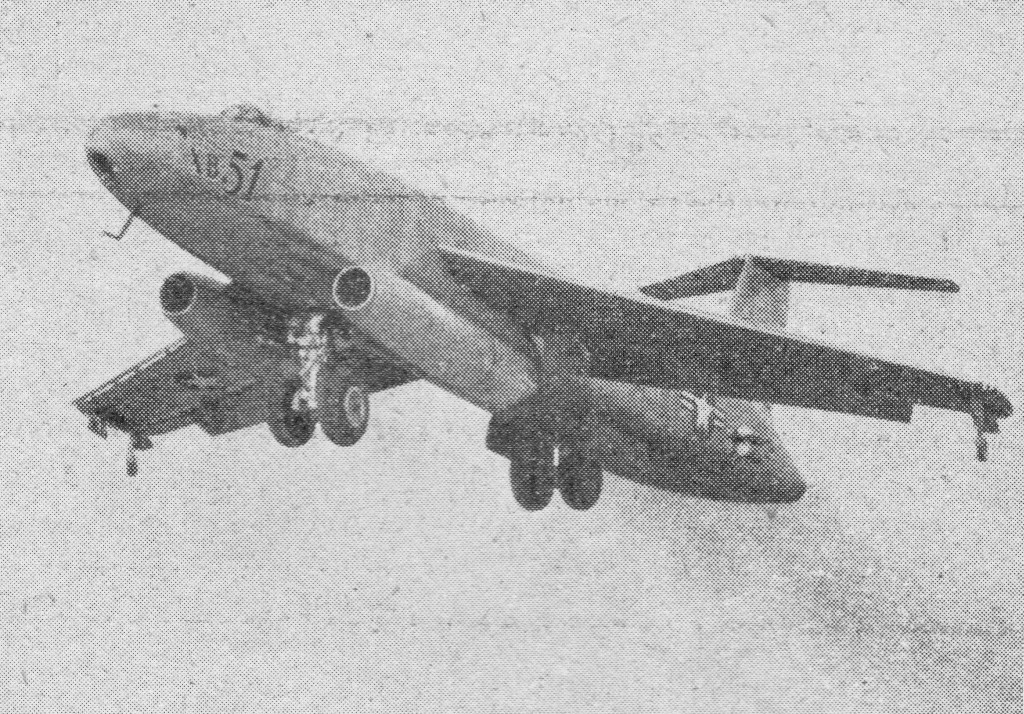
The XB-51 featured a tandem-unit landing gear arrangement, a thin variable ¬incidence wing whose leading edges were swept at 35 degrees, a swept T-tail. It was powered by three 2640kg thrust General Electric J47-GE-7 or -13 turbo-jets, one pylon-mounted low on each side of the forward fuselage and the third within the rear fuselage.

Other features included pressurised accommodation for the two-man crew, provisisions for JATO (jet-assisted take-off) units, and a braking parachute.

The first of two aircraft flew in October 1949, Martin’s Director of Flight O.E. (Pat) Tibbs making the first flight, taking off from Baltimore and lading at Naval Air Test Centre at Patuxent, in a flight of 35 minutes.

XB-51 first take off

Although flight trials confirmed that the XB-51 had very good performance, they revealed that the type had poor handling qualities in the air. The XB-51 did not proceed past the prototype stage and the USAF opted instead for licence-production of the English Electric Canberra as the Martin B-57.

Engines: 3 x 2360kg General Electric J47-GE-13
Max take-off weight: 25393 kg / 55982 lb
Empty weight: 13431 kg / 29610 lb
Wingspan: 16.18 m / 53 ft 1 in
Length: 25.93 m / 85 ft 1 in
Height: 5.28 m / 17 ft 4 in
Wing area: 50.91 sq.m / 547.99 sq ft
Max. speed: 1038 km/h / 645 mph
Cruise speed: 857 km/h / 533 mph
Ceiling: 12344 m / 40500 ft
Range: 2576 km / 1601 miles

Martin XB-48

During 1944 the US Army Air Force issued its first specification for a large jet bomber. By December 1944 proposals had been received from Boeing, Convair, Martin and North American for medium bomber for tactical- and operational-level use. The Martin Model 223 XB-48 being one of the contenders to meet this requirement.

Two XB-48 prototypes were ordered, the first of them flying on 14 June 1947 as a large shoulder mounted, straight wing monoplane with the capability of carrying up to 9072kg of bombs. Power was provided by six 1701kg thrust Allison J35-A-5 turbo-jets, three mounted beneath each wing. The landing gear was of the new bicycle form with main units ahead of and behind the bomb bay. The 33.02m span Model 223 failed to achieve the performance required and failed to win a production contract.

Engines: 6 x General Electric J35-C-7, 16.7kN
Wingspan: 33.02 m / 108 ft 4 in
Length: 26.14 m / 85 ft 9 in
Wing area: 120.77 sq.m / 1299.96 sq ft
Max take-off weight: 46539 kg / 102601 lb
Empty weight: 26578 kg / 58595 lb
Max. speed: 830 km/h / 516 mph
Armament: 9000kg of bombs

Margański & Mysłowski EM-10 Bielik

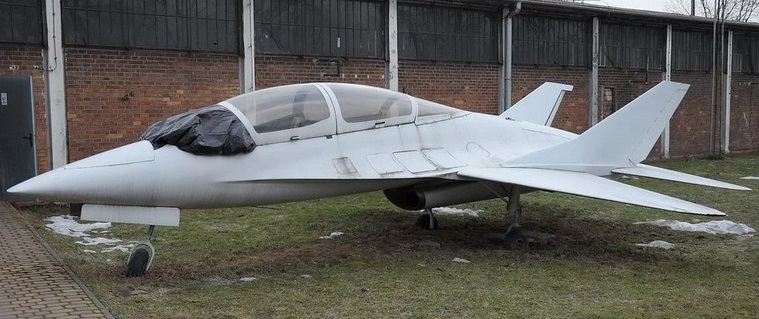
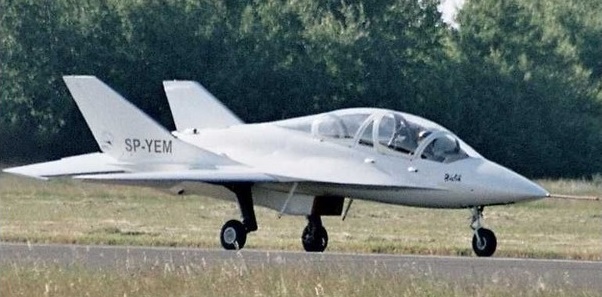
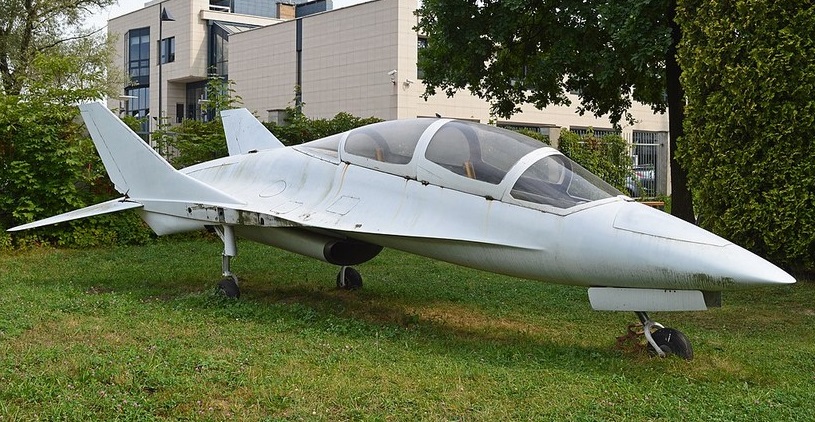
The EM-10 Bielik (English: white-tailed eagle) is a low cost Polish military training aircraft prototype, designed by Edward Margański and built by Margański & Mysłowski Zakłady Lotnicze, first flown on 4 June 2003.

The single engine aircraft has a composite (mostly carbon fibre) fuselage with a light alloy aft section and the pressurized cockpit is fitted with ejection seats.

Only one was built, now residing in the Polish Aviation Museum.

Gallery

EM-10 prototype
Powerplant: 1 × General Electric CJ610-6 turbojet, 13.5 kN (3,000 lbf) thrust
Wingspan: 6.60 m (21 ft 8 in)
Wing area: 11.90 sq.m (128.1 sq ft)
Length: 9.00 m (29 ft 6 in)
Height: 2.50 m (8 ft 2 in)
Aspect ratio: 3.7
Empty weight: 1,700 kg (3,748 lb)
Max takeoff weight: 2,500 kg (5,512 lb)
Fuel capacity: 850 kg (1,870 lb)
Maximum speed: 1,100 km/h (680 mph, 590 kn)
Maximum speed: Mach 0.9
Stall speed: 165 km/h (103 mph, 89 kn)
Ferry range: 2,500 km (1,600 mi, 1,300 nmi) with auxiliary tanks
Rate of climb: 45 m/s (8,900 ft/min)
Wing loading: 210.1 kg/m2 (43.0 lb/sq ft)
Crew: 2

Mantelli AM 12 Palas

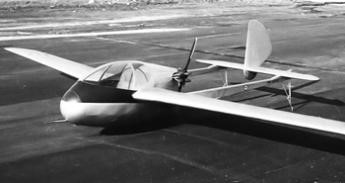
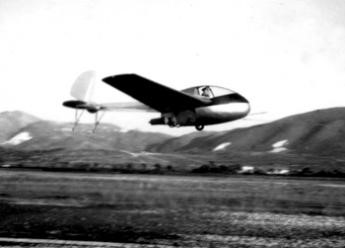
Although its origins are reminiscent of the Alaparma AM-10, the AM-12 was a glider. It was powered by a 38 hp CANC and finally with a 4-cylinder Praga 75 D HP. Three, with a long wing were built Guidonia (near Rome) by the Italian military center of gliding.

The fourth built with a shorter wing, was first flown as a glider before being changed to receive a Turbomeca Palas turbojet of 160 kgf. This engine had been recovered from the prototype of the jet Caproni F-5.

It is with this engine Mantelli, on February 17, 1962, beat the world record for altitude for jets of less than 500 kg, with 6700 m, and earn the 1962 Bleriot prize.

Later the aircraft was re-engined with a Walter Praga – D 75 piston engine. It is in this that Adriano Mantelli took the world record altitude for aircraft less than 500 kg, with 8763 m on April 16, 1964

Wingspan: 12 m
Length: 5.5 m
Height: 1.4 m
Wing area: 34.48 m²
Empty weight: 210 kg
Maximum weight: 500 kg
Maximum speed: 220 km / h
Minimum speed: 50 km / h