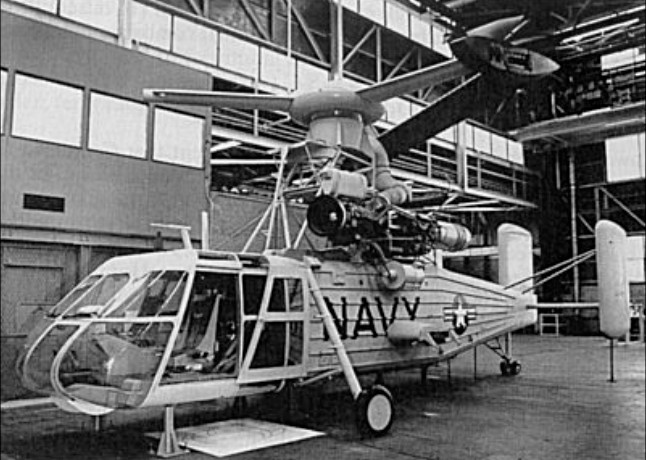
The McDonnell Model 86 was the first helicopter specially designed for the Navy vert-rep (vertical replenishment) mission – carrying supplies and ammunition between ships—and for the Marine logistic support mission—carrying heavy loads for short distances from ship-to-shore or from marshalling areas ashore to front-line units.
Emphasis was placed during its design on extreme simplicity, ease of maintenance, and good flying characteristics while carrying underslung loads of up to 6804kg when operating at normal gross weight, or 9979kg when operating at overload gross weight. The powerplant installation, derived from that developed for the XHRH-1, consisted of two 3750eshp Allison XT56-A-2 turbines mounted atop the fuselage and providing compressed-air to the 726kg thrust McDonnell 12JP20 pressure jet at the extremity of each rotor blade. The crew of two consisted of a pilot on the starboard side and an aft-facing winch operator to port. There was no provision for carrying loads internally. Loads were to be carried externally on a sling, in a net, or in a specially-developed pod. This pod was to be fitted with a detachable tail unit to stabilize the load in flight and with large wheels to enable it to be towed on uneven ground after it had been delivered to forward bases. Consideration was also given to using the Fairchild pod which had been designed for the XC-120 twin-engined cargo aircraft.
Three XHCH-1 prototypes (BuNos 138654/138656) were ordered on 11 April, 1952, under Contract NOa(s)52-947 and a mock-up was inspected on 22 and 23 May, 1953. However, the programme was later cut back due to lack of funds. No prototypes were completed but a much revised mock-up was inspected on 15 and 16 November, 1956, and a full-scale rotor was tested on a hot-whirling bench beginning in December 1957. Additional budget cuts forced the Navy to terminate the contract on 18 January, 1959, before completion of a prototype. Nevertheless, McDonnell kept working on the Model 86 sky crane until June 1961.
XHCH-1 Rotor diameter: 19.81m Length: 11.45m Height: 5.07m Empty weight: 6749kg Loaded weight: 16026kg Maximum weight: 19051kg Maximum speed at sea level: 185km/h Rate of climb: 16m/s Hover ceiling out of ground effect: 2285m Combat radius: 37km
In 1950, after trials with the XH-20 had been terminated, McDonnell engineers remained convinced that for certain specialized applications the intrinsic simplicity of this system would outweigh its uneconomical fuel consumption rate. Hence, after failing to attract the interest of the Army in a proposed light scout and observation vehicle using a ramjet-driven rotor, they turned their attention to the agricultural market in the belief that an easily maintained, low cost helicopter would find a ready market.
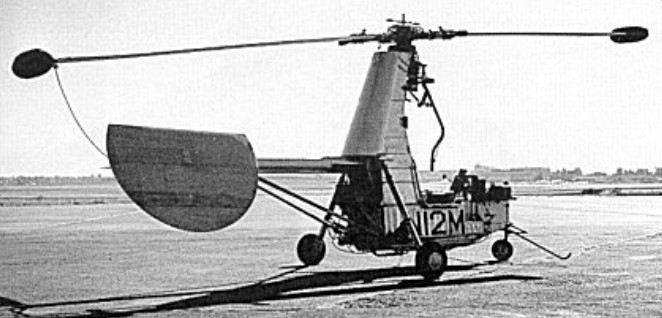
As described in a specification report dated 26 September, 1950, the Model 79 was essentially similar in concept and construction to the Model 38 (XH-20) but was somewhat larger with the diameter of the two-bladed rotor being increased from 5.49m to 8.23m. It differed further from the Model 38 in having tail surfaces consisting of a fixed ground adjustable tailplane and a universally mounted movable rudder. Open accommodation was provided for a pilot, and alternate alighting gears, consisting of either a tricycle gear or twin skids, were offered. Power was provided by a pair of McDonnell 8RJ4 ramjets, one at the tip of each rotor blade, and 379 litres of fuel was carried in two tanks. For ferry purposes auxiliary tanks could be fitted to increase fuel capacity to 681 litres.
Designed as a utility helicopter, the Model 79 was intended to be used for pest or weed control, defoliation, fertilizing, seeding, or many other varied uses such as carrying mail or cargo. To that end, it could be fitted with either (1) dual liquid chemical tanks with a total capacity of 439 litres and dual spray booms; (2) dual dust or seed bins with a total capacity of 0.44cu.m and a dust outlet pointing downward and aft of the rotor disc; or (3) dual mail or light cargo bins with a total volume of 1.13cu.m. As a further alternative, the design provided for the installation, either during construction or as rapid modification kits, of cockpit floor extensions and removable plastic panels to convert the single-seat Model 79 into the two-seat Model 79A with dual controls.
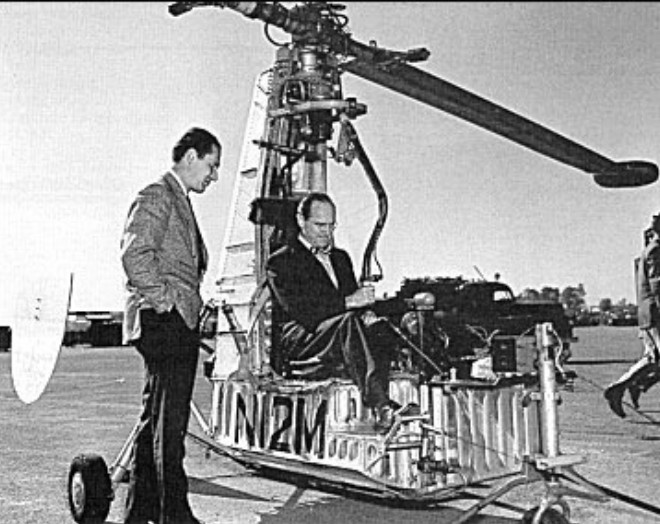
Charles R. Wood Jr. first flew the single seat Model 79 demonstrator, which was registered N12M, on 26 March, 1952. Although trials proved relatively uneventful and confirmed that the basic design was sound and easy to fly and maintain, development of the Model 79 had to be abandoned in mid-1953 as the type had failed to attract commercial interest due to high fuel consumption rate and noise level.
Steve Cole 15.03.2012 My Grandfather, Willis Cole Jr. worked for McDonnell. Somehow he acquired most of Big Henry when the project was cancelled. There are pictures of it sitting in the family driveway. Up until a few years ago, the landing gear, instrument panel and a piece of the fuselage (with the N12M number) were still floating around his garage. Willis Cole Jr. passed away 3-16-2012.
Model 79 Rotor diameter: 8.23m Fuselage length: 4.72m Height: 2.54m Empty weight: 293kg Loaded weight: 816kg Maximum weight: 907kg Maximum speed: 138km/h Rate of climb: 5m/s Hover ceiling in ground effect: 1160m Service ceiling: 3050m Endurance: 62 min
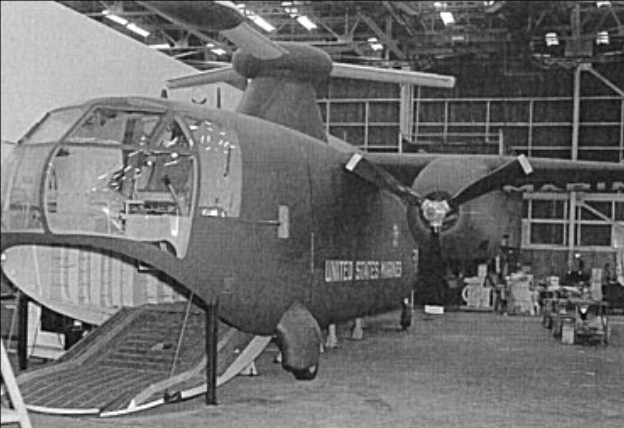
Design of the Model 78 was started in 1950 in answer to a request for proposals for an assault transport helicopter which had been issued by the Navy Department on behalf of the US Marine Corps. Intended to operate from CVE-105 class (USS Commencement Bay) carriers, the new helicopter was to fit on 13.41m by 12.80m deck elevators. Its primary mission was to carry 30 troops to objectives up to 100 naut miles away and return to the carrier without the need to refuel ashore.
To fulfil what were then most demanding requirements, McDonnell designed a compound helicopter with a three-bladed rotor and short wings on which were mounted two 3507shp Allison XT56-A-4 turbines. For vertical flight, air from engine-driven auxiliary compressors was to be ducted to 726kg thrust McDonnell 12JP20 pressure jets, one at the extremity of each rotor. For forward flight, each engine was to drive a three-bladed propeller, with transition from helicopter flight mode to conventional flight being made by transferring power from the auxiliary compressors to the propellers as soon as the forward speed exceeded the stalled speed of the wing. Normal accommodation was to have been provided for a crew of two and 30 fully-equipped troops. Alternatively, accommodation could have been provided for 36 troops or 24 litter patients, or two Jeep-sized vehicles could have been carried internally. Larger loads (up to a maximum weight of 5224kg) could be carried externally. Another noteworthy design feature was the inclusion of a hydraulically-operated loading ramp in the forward fuselage, beneath the cockpit. Folding wings, rotor blades, and tail unit were to have enabled the Model 78 to fit on the deck elevators of CVE-105 carriers.
The Navy selected the McDonnell design on 15 March, 1951, and two and a half months later issued a Letter of Intent for three XHRH-1 prototypes (BuNos 133736/133738) to be built under Contract N0a(s)-51-1201. A full-scale mock-up of the XHRH-1 was inspected on 22 and 23 October, 1952, and construction of the prototypes was begun. However, after the Korean War had ended, budget cuts and concern over anticipated developmental problems led to the cancellation of the contract before completion of a single XHRH-1. All work on the project ended in April 1954.
XHRH-1 Rotor diameter: 19.81m Wingspan: 13.72m Length with rotor blades and tail folded: 16.33m Height: 5.09m Wing area: 30.84 sq.m Empty weight: 8695kg Loaded weight: 13795kg Maximum weight: 16329kg Maximum speed at sea level: 444km/h Climb rate: 12m/s Hover ceiling out of ground effect: 3050m Combat radius: 185km
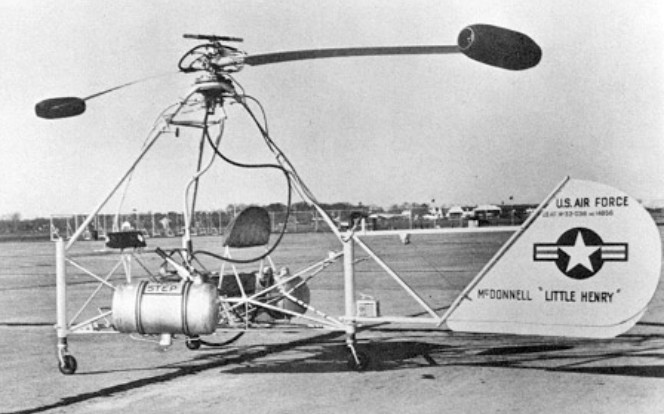
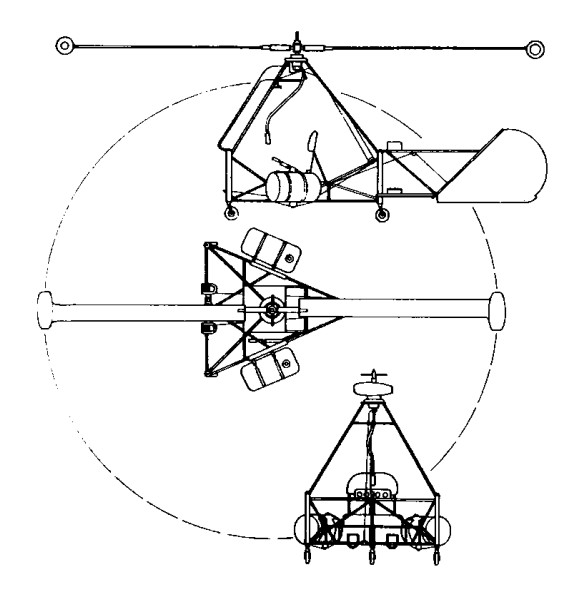
The XH-20 “Little Henry” was developed by a team led by Marvin Marks in close co-operation between the Helicopter and Propulsion Division of McDonnell and the AAF/USAF Rotor Wing Branch, Propeller Laboratory and Rotary Wing Unit, Aircraft Projects Section, Wright-Patterson AFB. At the time of its inception, the XH-20 was unique in being powered by two McDonnell-developed 18.42cm ramjet units weighing only 4.5kg each, mounted at the tips of the two-blade rotor and fed from tanks beside the pilot. The fuel, originally propane but later gasoline (motor car petrol), was boosted through a feed line to a delivery valve on the rotor head. From there centrifugal force took over to convey the fuel through the blades to the tip-mounted ramjets.
Having undertaken privately-funded studies of ramjets as powerplants for helicopters, McDonnell submitted an unsolicited proposal to the Air Materiel Command at Wright Field in the spring of 1946 and in July was awarded a contract for the development and testing of two experimental machines. It was then hoped that the powerplant would make it feasible to build small, lightweight helicopters by reducing or eliminating complex and heavy engine parts, gear systems, and transmissions. It was claimed that this powerplant installation would result in increased efficiency and would completely eliminate the need for a conventional anti-torque rotor. Accordingly, the two XH-20s were ordered as flying test-beds and were not intended as production prototypes. Their airframe was kept as simple as possible and consisted of welded tubes carried on three vertical legs ending with free-castoring wheels. Conventional helicopter controls were fitted, and the pitch lever incorporated a motorcycle-type throttle to regulate the fuel flow.
Fitted as a single-seater, the first of two prototypes (46-689 and 46-690) made both its first tethered flight on 5 May, 1947, and its first free flight on 29 August in St Louis with Charles R. Wood Jr. at the controls. With the project team then benefitting from the experience of Friedrich von Dobhloff, the Austrian engineer who had pioneered the application of jet principles to helicopters during the war, tests continued for four years. During that time, one of the two XH-20s was modified as a two-seater and, like the single-seater, proved generally satisfactory. However, the ramjet units had excessive fuel consumption, which drastically limited range and endurance when compared to conventionally-powered helicopters, and rate of descent in autorotation was excessive. Accordingly, the Air Force terminated the programme in 1951. The first XH-20 was preserved and is now part of the collection of the Air Force Museum at Wright-Patterson AFB, Ohio.
Main rotor diameter: 5.49m Length: 3.81m Height: 2.13m Max take-off weight: 254kg Empty weight: 129kg Cruising speed: 80km/h Endurance: 50min
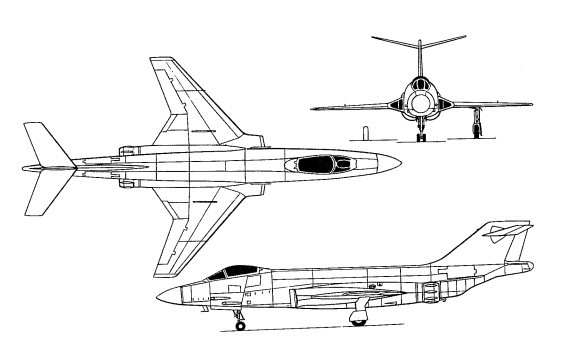
Though the 1950 penetration fighter competition among XF-88, XF-90 and YF-93A resulted in no production contract, the Strategic Air Command still wanted an escort fighter, its F-84F being seen as only an interim solution. McDonnell’s design team under Herman Barkey responded with the heaviest single-seat fighter ever built. Powered by two 5307kg Pratt & Whitney J57-P-13 turbojets, the F-101 would carry four 20mm cannon plus three Hughes GAR-ID or GAR-2A Falcon missiles or 127mm high-velocity aircraft rockets (HVAR) mounted on rotary bomb doors. A single-seater, with the two engines side-by-side, the wing has a 35 degree sweepback on the leading edge and distinctive ‘W’-shape trailing edge.
The F-101 has mid-set wings with 35 degree sweepback, and swept-back tail surfaces with a one piece all-moving tailplane mounted near the tip of the fin. Conventional ailerons, rudder and trailing edge flaps are fitted, with an airbrake on each side of the tail-boom. A tricycle undercarriage has single wheels on each main unit and twin wheels on the nose unit. The mains retract inward into the wings and the nose wheels retract forward. A fire-control radar is in the nose.
The first F-101A flew on 29 September 1954 at St Louis, and exceeded Mach 1 on its maiden flight. This was a production craft, there being no service-test machine. SAC dropped its requirement and the 77 F-101As built went to the Tactical Air Command. The first delivery was made 2 May 1957 to the 27th Tactical Fighter Wing. Seven of these airframes were later designated JF-101A while being used for temporary tests.
F-101A Voodoo
The first of two YRF-101A service-test reconnaissance Voodoos flew on 10 May 1956, followed by 35 RF-101A airframes delivered to TAC’s 363rd Tactical Reconnaissance Wing at Shaw AFB, South Carolina. The reconnaissance Voodoo had a lengthened nose with space for downward or oblique cameras and other sensors.
On 12 December 1957, Major Adrian E. Drew, USAF, established a World Air Speed Record of 1207.6 mph, in an F-101 Voodoo.
An RF-101A was shot down during the Cuban missile crisis of October 1962.
The F-101B Voodoo was developed by modifying the single seat F-101 fighter involved extending the fuselage forward to house a new weapons system and a second crewman to operate it. The bigger F-101B Voodoo was fitted with 5438kg Pratt & Whitney J-57-P-55 engines, with their characteristic large afterburners.
The first F-101B flew on 27 March 1957 at St Louis. For long-range intercept, it could carry two Douglas MB-1 Genie nuclear unguided rockets as well as three Falcons. Deliveries began on 18 March 1959 to the 60th Fighter Interceptor Squadron.
Eventually, the F-101B equipped 16 ADC squadrons, guarding against the Soviet bomber threat to North America. ANG units operated the F-101B between 1970 and 1982.
The JF-101B designation was applied to two machines used for temporary tests. One NF-101B was structurally modified for development work. Very late in their careers, with reconnaissance Voodoos still needed long after the interceptor variant was retired, 22 of the two-seat airframes were converted to RF-101B. The TF-101B was a version of the interceptor with full dual controls.
The F-101C single-seat tactical fighter differed from the F-101A primarily in having the capability to carry a US tactical nuclear weapon, and 47 were delivered to TAC.
The RF-101C, the first of which was flown 12 July 1957, was an improved development of the RF-101A; 166 went to TAC squadrons. The USAF began operating the RF-101C in South East Asia in 1964 and suffered its first combat loss on 21 November 1964 when an RF-101C of the 15th Tactical Reconnaissance Squadron was shot down over Laos.
Though not as much publicised as other combat types, the RF-101C remained in combat until 1970. No less than 31 airframes were lost in battle, plus another six to operational causes. In the mid-1960s, a few RF-101Cs served with the Nationalist Chinese air force, flying clandestine missions over the mainland.
Other Voodoo variants were the F-101F, the USAF designation for the CF-101F interceptor operated by Canadian forces; the RF-101G, a conversion of high-hour RF-101A airframes for reconnaissance duties with the Air National Guard; and the RF-101H, another reconnaissance conversion.
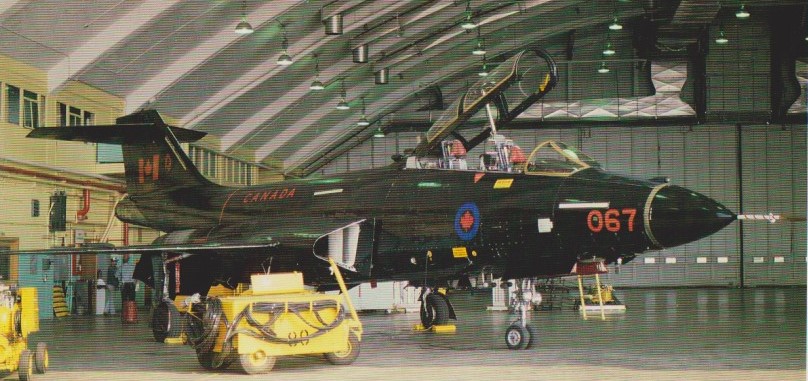
After the cancellation of the Avro Arrow in February 1959, Canada urgently needed a fast interceptor to meet the continued threat from manned Soviet bombers. By late 1959, the RCAF picked the Voodoo as the aircraft that best met Canada’s requirements. In June 1961, the RCAF agreed to purchase sixty six nearly new CF-101B Voodoos from existing USAF stocks. The deal transferred the aircraft to five front line squadrons and an OTU, to replace obsolete CF-100s.
In 1961 and 1962, 410 Cougar and 425 Alouette Squadrons of Bagotville, 409 Night Hawk Squadron of Comox, and 416 Lyns Squadron of Chatham were equipped with 66 Voodoos in total (55 CF-101B and 10 CF-101F), all built by McDonnell-Douglas.
At the beginning of the 1970’s, the aging CAF Voodoo fleet was exchanged for sixty six lower timed USAF Voodoos. These replacement aircraft were equipped with a superior missile control system. Even with the Voodoo fleet restored to its original size, serviceability began to be a problem. In 1977, the CAF launched a program to find a new fighter to replace the Voodoo and by April 1980, the search eventually narrowed down to the CF-18 Hornet.
Since the Summer of 1983 each of the four Voodoo Squadrons has been stood down. First 410 Squadron converted to the CF-18 OTU. 409 Squadron became the first operational CF-18 Sqn. 425 and 416 Squadrons received CF-18s in December 1984.
EF-101B 101067 “Electric” Voodoo
One aircraft remained in service. The CAF received Voodoo 191067 in the early 1980s and modified it to an EF-101B for ECM duties. The aircraft ws operated by 414 ‘Electronic Warfare’ Sqn and known as the “Electric” Voodoo. The EF-101B was retired by the end of 1986.
Most of the Voodoo fleet was phased-out by the end of 1984 and the last Voodoo flight anywhere was made in April 1987, when #101006 was delivered to CFB Chatham for display at CFB Cornwallis.
One F-101B appeared briefly on the US civil register, as N8234, used for thunderstorm research by Colorado State University.
Altogether 807 Voodoos were built for the USAF. The McDonnell Aircraft Co. manufactured 479 F-101B Voodoos in the United States, between 1957 and 1961.
F-101 Engines: 2 x P&W J-57-P-13, 52.0kN Max take-off weight: 18000-22250 kg / 39683 – 49053 lb Empty weight: 12700 kg / 27999 lb Wingspan: 12.1 m / 39 ft 8 in Length: 20.6 m / 67 ft 7 in Height: 5.5 m / 18 ft 1 in Wing area: 43.2 sq.m / 465.00 sq ft Max. speed: 1940 km/h / 1205 mph Cruise speed: 950 km/h / 590 mph Ceiling: 15800 m / 51850 ft Range w/max.fuel: 4800 km / 2983 miles Crew: 1 Armament: 4 x 20mm machine-guns, 15 missiles
F-101A Voodoo Long-range escort fighter Engines: 2x Pratt and Whitney J57 turbojets 10,000 lb. thrust with afterburners. Crew: 1 Wingspan: 39 ft. 8 in Length: 67 ft. 5 in Armament: 4×20 mm. cannon
F-101B Voodoo Engines: 2 x Pratt&Whitney J57-P-55, 53347 N / 16,900 lb Length: 67ft 5in / 20.54 m Height: 18.012 ft / 5.49 m Wingspan: 39ft 8in / 12.09 m Max take off weight: 46679.9 lb / 21170.0 kg Max. speed: 1060 kts / 1963 km/h / 1,134 mph at 35,000 feet Service ceiling: 52001 ft / 15850 m Max ROC: 14,000 fpm Range: 1350 nm / 2500 km Crew: 2 Armament: 3x Missile AIM-4E Super Falcon, 2x AIR-2A Genie
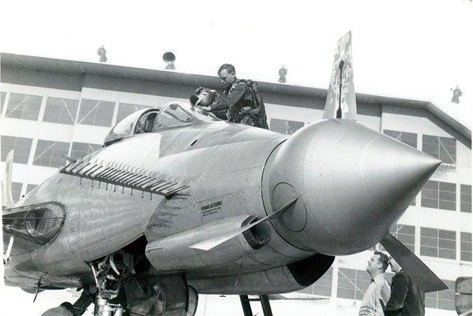
Designed to meet a requirement for a single-seat long-range escort fighter, the XF-88 was recipient of a contract for two prototypes on 14 February 1947. Powered by two 3,000 lb st (1361 kgp) Westinghouse XJ34-WE-13 turbojets, the first XF-88 was flown on 20 October 1948, but proved seriously underpowered. The second XF-88 was therefore fitted with two XJ34-WE-22 engines fitted with short afterburners which boosted thrust to 3,600 lb st (1 633 kgp), a change in designation to XF-88A accompanying this modification.
Performance was still insufficient, but the XF-88 was considered by the USAF to possess development potential and a Letter of Intent was issued covering further evolution of the basic design into what was eventually to become the F-101 Voodoo.
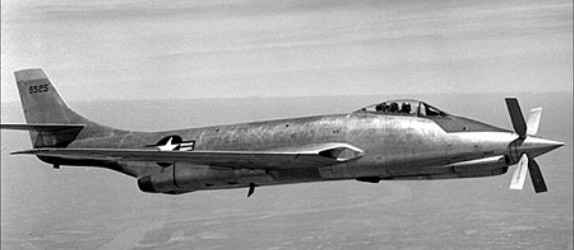
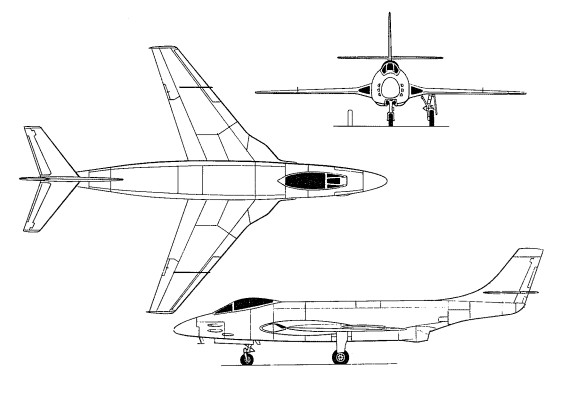
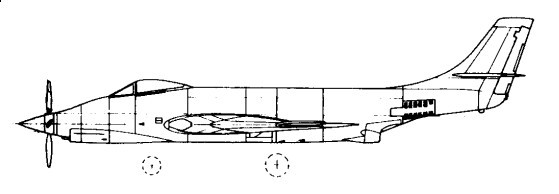
The first prototype was then recast as the XF-88B testbed for the Allison XT38 turboprop, with which it undertook many flights from April 1953 with 27 different propellers featuring varying numbers of blades in diameters between 4 and 10 ft (1.2 and 3.05 m). The XF-88s airframe then went forward to provide the structural and aerodynamic basis for the F-101 interceptor and reconnaissance fighter.
Engines: 2 x Westinghouse J34-WE-13 turbojets, 3000-lb (1361-kg) thrust Max speed, 641 mph (1 032 km/h) at sea level Time to 35,000 ft (10 670 m), 14.5 min Range, 1,737 mls (2 795 km) Empty weight, 12,140 lb (5 507 kg) Normal loaded weight, 18,500 lb (8 391 kg) Span, 39 ft 8 in (12,09 m) Length, 54 ft 1.5 in (16,50 m) Height, 17 ft 3 in (5,26 m) Wing area, 350 sq ft (32,52 sq.m)
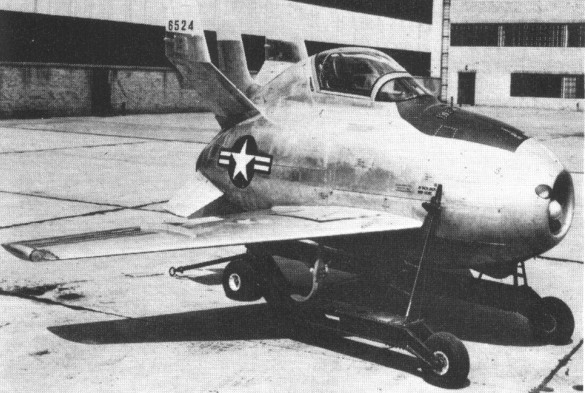
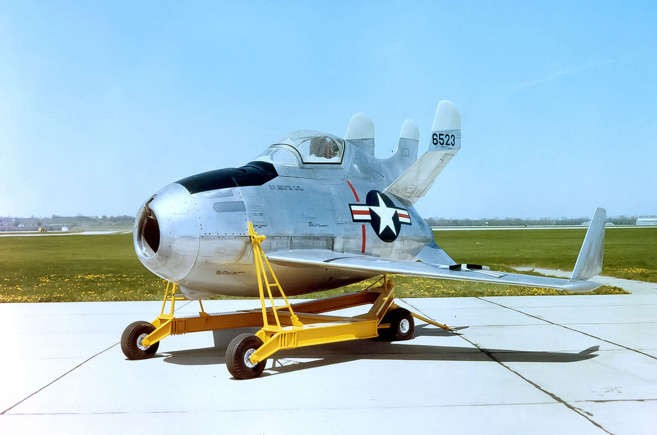
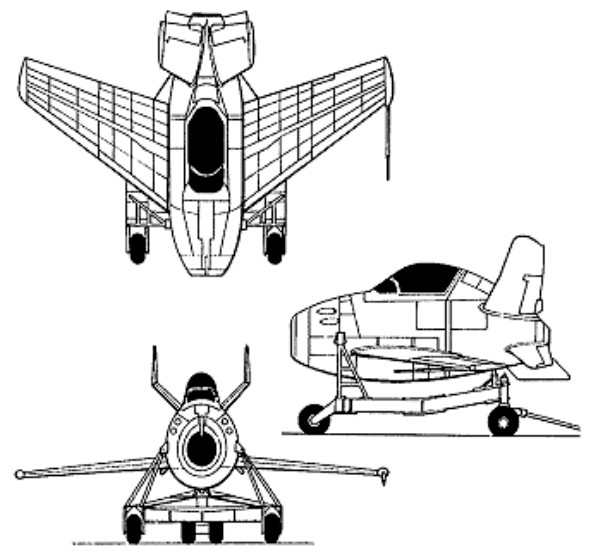
McDonnell proposed a ‘parasite’ (‘symbiote’) fighter had to be small enough to be carried aloft by a bomber and released as required. As early as 1942 McDonnell had proposed such a type as the MX-472 for semi-external carriage by the B-29, and further evolution of the concept resulted during 1945 in four variants of the Model 27 design for internal carriage by the Northrop B-35 and Convair B-36 heavy bombers. Under the spur of early ‘Cold War’ events, McDonnell reworked the Model 27 into the XF-85 Goblin. Designed under the leadership of Herman D Barkley, the XF-85 the subject of a Letter of Intent for two prototypes on 9 October 1945. The XF-85 was to be stowed in the number one or four bomb bay of the B-36 intercontinental bomber. Over target, it would be dropped free to protect the B-36 from enemy interceptors.
The fuselage was virtually filled by the 3000-lb (1361-kg) thrust Westinghouse J34-WE-7 turbojet and its fuel plus the four 0.5-in (12.7-mm) machine-guns and their ammunition, the pilot being seated astride the engine under a bubble canopy immediately aft of the hook that permitted aerial release and recovery of this tiny fighter. The wings were swept at 37 degrees and arranged to unfold from their vertically stowed position, which gave the fighter a ‘hangared’ width of only 5 ft 4.75 in (1.64 m), for an extended span of 21 ft 1.5 in (6.54 m) after being lowered from the parent aircraft. The fighter was intended to be launched from and recovered by a retractable trapeze which was to be extended beneath the parent bomber, no undercarriage being fitted.
In 1947, indoor tests were begun to evaluate the mating arrangement between the Goblin and a mock-up of a B-36 fuselage. On 9 November 1947 the first of two XF-85s was disassembled at the manufacturer’s St Louis plant and flown aboard a C-97 transport to Moffett Field, California, for wind-tunnel tests. While being positioned in the tunnel, the aircraft fell 12.2 m, was badly damaged, and had to be returned to St Louis, being replaced at Moffett by the second machine.
On 5 June 1948, this second XF-85 was transported to Muroc AFB, California, and, with no B-36 airframe available for evaluation of the parasite fighter concept, experiments began using an EB-29B Superfortress. Ed Schoch, a former US Navy F6F Hellcat pilot with four air combat kills in the Pacific war, was the only man ever to fly the XF-85.
Flight trials were initiated by the second prototype which was powered by a 3,000 lb st (1361 kgp) Westinghouse J34-WE-37 turbojet. After five captive flights on the trapeze of a specially modified Superfortress (EB-29B), the XF-85 was launched at 20,000 ft (6 095 m) on 23 August 1948, this first free flight terminating in an emergency landing. On his first attempt on 23 August 1948, Schoch was attempting to re-engage the bomber’s trapeze when he slammed into it, shattering his canopy, ripping his helmet off, and knocking him unconscious. Schoch recovered in time to make a shaky landing on the XF-85’s underside skid in the Muroc desert, damaging the plane.
The second flight on 14 October 1948, resulted in a normal mid-air drop and subsequent hook-up. Three more times, however, struggling to manoeuvre the tricky Goblin, Schoch was forced to make belly landings in the desert rather than regain his link-up with the Superfortress.
On 8 April 1949, the original XF-85 made its first and only flight. In budget-lean 1949, the XF-85 programme was quietly terminated after 2 hr 19 min of test flying, although the Strategic Air Command eventually became interested in the parasite fighter concept when it became possible to carry an RF-84K aboard a B-36. The first XF-85 is on display at the Air Force Museum in Dayton, Ohio, while the second is at the Strategic Air Command Museum in Omaha, Nebraska, displayed in inaccurate markings with a spurious tail number.
Max speed (calculated), 664 mph (1 068 km/h) Combat endurance, 30 min Empty weight, 3,740 lb (1 696 kg) Loaded weight, 4,550 lb (2 064 kg) Span, 21 ft 1½ in (6,44 m) Length, 14 ft 10.5 in (4,53 m) Height, 8 ft 3.25 in (2,56 m) Wing area, 90 sq ft (8,36 sq.m)
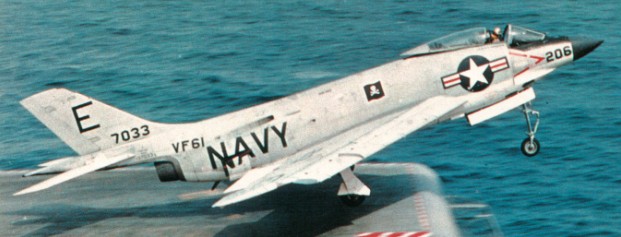
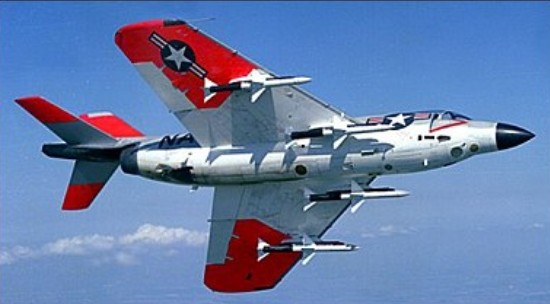
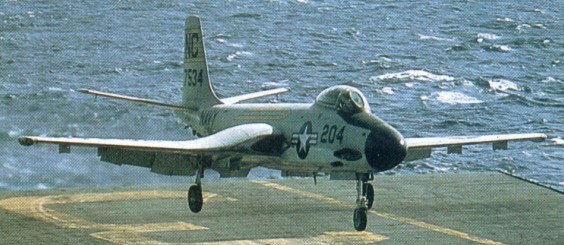
The prototype of the Demon naval fighter first flew on 7 August 1951 but proved to have poor stability, poor forward visibility and a low roll rate. These faults were corrected on the initial production model, but the poor reliability and performance of the J40 engine meant that most of the 58 built never flew.
The airframe had mid-set wings, swept-back at 45 degrees, swept-back tail surfaces and one-piece all-moving tailplane. The wings were fitted with leading edge slats and trailing edge slotted flaps. Airbrakes were in the upper surface of each wing root trailing edge and on the sides of the rear fuselage. The outer wings fold upward for storage. In-flight fuelling is fitted.
The tricycle undercarriage had a single wheel on each unit, the mains retracting inwards into the wings, and the nose wheel retracting rearward.
By June 1955 the F3H 2 had been produced with the Allison J71 engine, which still gave limited power. A modified afterburner system gave power in the range needed to make safe carrier landings.
They served with the US Navy in three versions – F3H-2N all-weather fighter, F3H-2M missile-armed day fighter, and F3H-2P for photo-reconnaissance.
The first naval fighter to be armed with guided missiles was the F3H-¬2M.
F3H-2 Demon Engine: 1 x Allison J71-A-2E turbo-jet, 62.23kN / 14,250 lb with afterburner Wingspan: 10.77 m / 35 ft 4 in Wing area: 48.22 sq.m / 519.04 sq ft Length: 17.96 m / 58 ft 11 in Height: 4.44 m / 14 ft 7 in Max take-off weight: 15377 kg / 33901 lb Empty weight: 10039 kg / 22132 lb Max speed: 730 mph at SL Max ROC: 12,800 fpm Service ceiling: 13000 m / 42650 ft Range w/max.fuel: 2205 km / 1370 miles Armament: 4 x 20mm cannons, 2722kg of weapons Crew: 1
F3H-1N Demon Carrier-based day and night fighter Engine: Westinghouse J40-WE-22 turbojet, 7,500 lb with afterburner Wingspan: 35 ft. 4 in Length: 59 ft Loaded weight: about 23,370 lb Max speed: over 750 m.p.h. Ceiling: 45,000 ft. Range: about 2,000 miles. Armament: 4×20 mm. cannon Crew: 1
F3H-2N Engine: Allison J71-A-2 turbojet, with afterburner, 9,700 lb. thrust
By the beginning of 1943 Westinghouse had made considerable progress with the engines, and the next job was to design an efficient airframe. The US Navy’s Bureau of Aeronautics decided to call on the services of the McDonnell Aircraft Corporation, the resultant joint effort to be designated XFD-1.
The designers set out to produce the smallest possible fighter that would satisfactorily carry a pilot, four 0.50-inch guns and their ammunition for a specified length of time. Weight, wing area and even engine power were treated as secondary consideration. Everything was to be kept as simple as possible with no “frills” or unnecessary gadgets to complicate production. Unorthodox ideas such as a tailless or tail-first layout (to keep the tail out of the way of the jet exhaust) or a prone position for the pilot were quickly put aside.
The McDonnell engineering team took just about a year to finalise the design of the XFD-1, although a preliminary mock-up inspection was held at St Louis at the end of May 1943. The release of drawings for structural work began on 25 January 1944 and construction of the prototype took a further year. By January, 1945, the last drawings had been finished, the last airframe parts made and assembled. On paper, the Westinghouse 19B was now promising a thrust of 1,500 lb (680 kg) in a version designated WE-19XB-2B for the prototypes of the XFD-1, but, in practice, engines reaching McDonnell were unable to produce this thrust and deliveries were lagging behind airframe availability.
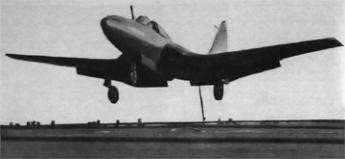
The first prototype McDonnell Phantom during deck-landing trials aboard U.S.S. Franklin D. Roosevelt.
In order to minimise the delay, taxy trials of the first XFD-1, by now named Phantom, began with only one engine installed, and ballast in the other engine bay, during January 1945. Although the 19B engine was producing only 1,325 lb at this stage, the company’s chief test pilot Woodward Burke felt confident enough to allow the aircraft to get airborne on 26 January 1945 in what has subsequently become widely re¬corded as the Phantom’s first flight. According to Kendall Perkins, though, this was only an “initial hop (rising a short way off the ground)”; the first real flight followed a few days later, after the second engine had been installed.
Satisfactory results were recorded in the first few weeks of flight testing, including a speed of 483 mph (778 km/h) at 20,000 ft (6 100 m), an initial rate of climb of 5,000 ft/min (25 m/sec) and a range of 750 mls (1 200 km). Consequently, the Navy was ready to initiate production of its first jet fighter, placing a contract for 100 FD-1s on 7 March 1945. They were to be powered by 1,600 lb st (726 kgp) Westinghouse J30-WE-20 turbojets, these being productionised WE-19s. The pro¬duction aircraft would closely resemble the prototypes, but would have increased internal fuel capacity, provision for a belly drop tank, a taller, square-tipped fin, slightly lengthened front fuselage and (on all but the first three production aircraft) dive brakes in the upper and lower surfaces of the outer wing panels.
Within a few months of production being launched, the war was over, first in Europe and then against Japan. VJ Day, on 2 September 1945, brought massive and immediate cuts in aircraft contracts in the US and that for the FD-1 was cut back to 30 aircraft, but later increased again to 60. Some considera¬tion was given to using an improved Model 19C version of the Westinghouse engine in the second batch of 30 aircraft, perhaps to have been designated FD-2s, but this did not materialise, and the entire production run was of the FD-1 configuration. After a first flight of a production FD-1 on 28 October 1946, deliveries were made from January 1947 to 29 May 1948, with the designation changing from FD-1 to FH-l halfway through the run, on 21 August 1947 (and then becoming retrospective for the Phantoms already in service).
First production aircraft designed by the company, the McDonnell FH-1 Phantom was notable in being also the first jet designed to operate from an aircraft-carrier. The US Navy placed the original letter of intent on 30 August 1943, and the first prototype made its initial flight from St Louis airport, Lambert Field, on 26 January 1945. The type was certainly not over-powered, because the final propulsion system, adopted after many studies of alterna¬tives, was two slim Westinghouse 19B engines buried in the wing roots. Later produced in small numbers as the J30, these were hardly enough for ade¬quate performance.
The first flight is thus all the more remarkable in that, at that time, Westinghouse had been able to deliver only one engine, and one of the wing-root engine bays was empty.
At that time McDonnell’s US Navy designator letter was D, the pro¬totype being the XFD-1, but because of confusion with Douglas (which also used letter D) McDonnell was assigned letter H, so that the 60 pro-duction Phantoms were designated FH-1, first flying on 28 October 1946. They were gentle and easy to fly, and on 21 July 1946 a prototype landed on and took off from USS Franklin D. Roosevelt. The production aircraft were delivered from December 1946 and served mainly with US Marine fighter squadron VMF-122. Their fault was lack of performance and lack of fire¬power, and the next-generation F2H Banshee was a vast improvement on both counts and after equipping one US Navy and two USMC squadrons, were withdrawn in 1950.
FH-1 Phantom Powerplant: two 726-kg (1,600-lb) thrust Westinghouse J30-20 turbojets Maximum speed 771 km/h (479 mph) at sea level / 813 km/h (505 mph) at high altitude Cruising speed 215 kt / 399 km/h Service ceiling 13000 m (43,000 ft) Range 1110 km (690 miles) without belly drop tank. Empty weight 3031 kg (6,683 lb) Maximum take-off weight 5459 kg(12,035 lb) Wing loading 43.67 lb/sq.ft / 213.0 kg/sq.m Wingspan 12.42 m (40 ft 9 in) Length 11.81 m (38 ft9 in) Height 4.32 rn (14 ft2 in) Wing area 25.64 sq.m (276 sq ft) Armament: four 12.7 mm (0.5-in) machine-guns in upper part of nose Crew: 1
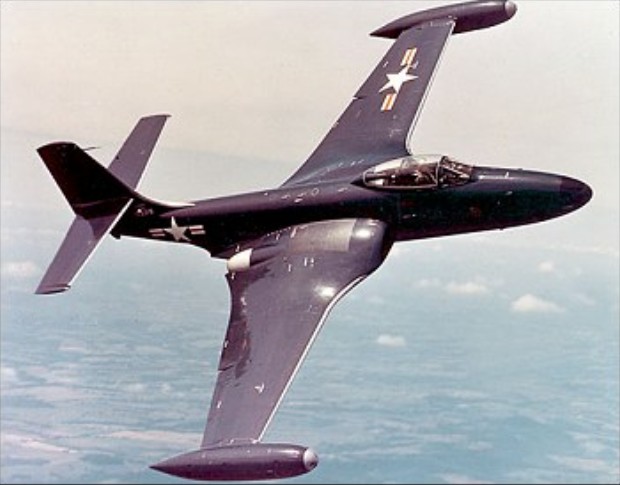
The McDonnell F2H Banshee began life even before the end of World War II when the US Navy requested an improved version of the FH-1 Phantom. Designed by a team headed by Herman D. Barkley, bearing a resemblance to the earlier type, the Banshee was of increased size, incorporating folding wings, and with a lengthened fuselage to house more fuel, and with similarly-mounted and more powerful Westinghouse turbojet engines. Conventional ailerons, elevators and rudder were fitted, and split trailing-edge flaps. Small air-brakes were in the top surface of the outer wings. A tricycle undercarriage, with a single wheel on each unit, has the mains retract outward into the wings, and the nose wheel retracts rearward. Fuel was in five tanks in the fuselage.
Three prototypes being ordered on 22 March 1945, as XF2D-1s, these later gaining the name Banshee. First flying in prototype form from St Louis, Missouri, on 11 January 1947, by then redesignated XF2H-1.
Initial trials were successfully accomplished, McDonnell being rewarded in May 1947 by a contract for 56 production F2H-l fighters, which began to enter service with VF-171 of the Atlantic Fleet during March 1949.
Like the later Phantom II, the Banshee proved to be a versatile machine, satisfactorily undertaking day and night fighter tasks, all-weather interception, close air support and photographic reconnaissance.
Following on from the original F2H-1 came the F2H-2, which had slightly more powerful engines and a longer fuselage. Production of the basic F2H-2 totalled 364, some of which were later modified to F2H-2B standard for close support tasks.
F2H-2 Banshee
14 examples of the F2H-2N specialized night-fighter derivative were also completed, these incorporating airborne interception radar in a slightly longer nose.
For reconnaissance, 89 F2H-2P aircraft were completed as new, these being unarmed and featuring six cameras in an elongated nose section.
Production then switched to the F2H-3 (in 1962 redesignated F-2C), which was optimized for all-weather fighter duties, the first of 250 entering service during April 1952 and being easily recognizable by virtue of a fusel¬age- rather than fin-mounted tailplane, and was 8 ft longer than the -2, with more than double the internal fuel capacity and APQ-41 radar in the nose (250 built).
During the summer of 1949 the first US pilot to ever use an ejection seat escaped his F2H-1 Banshee while speeding over coastal South Carolina at 500 kts.
From November 1955, 39 ex-US Navy F2H-3s were transferred to the Royal Canadian Navy. That service’s first operational jet fighters, they were operated from HMCS Bonaventure until 12 September 1962, when the last examples were retired from service. They proved to be the last carrier-based fighters in Canadian service. Plans to acquire the F2H-3P for reconnaissance were abandoned.
The final production model was the F2H-4 (F-2D), which introduced improved APG-41 radar and more powerful engines, the 150th and last bringing production of the ‘Banjo’ to a close in August 1953.
The F2H was finally phased out of front line US Navy use on 30 September 1959, but remained with reserve units until the mid-‘sixties.
Contracts were to call eventually for a total of 892 production aircraft.
XF2D-1 / XF2H-1 Engines: 2 x Westinghouse J34 turbojets Number produced: 3
F2H-1 Banshee Engines: 2 x Westinghouse J34-WE-22 turbojets, 3000 lbs.st. Length 40 ft 2 in Armament: 4 x 20 mm cannon. Number produced: 56
F2H-2 Banshee Engines: 2 x Westinghouse J34-WE-34 turbojets, 3250 lbs.st. Length 40 ft 2 in Armament: 4 x 20 mm cannon. Number produced: 364
F2H-2B Banshee Engines: 2 x Westinghouse J34-WE-22 turbojets, 3000 lbs.st. Length 40 ft 2 in Armament: 4 x 20 mm cannon, 2 x 500 lb bomb.
F2H-2N Length 40 ft 2 in Number produced: 14
F2H-2P Banshee Armament: none Number produced: 89
F2H-3 / F-2C Engines: two 14.45kN (3,250-lb) thrust Westinghouse J34-WE-34 turbojets Maximum speed 933 km/h (580 mph) at sea level Service ceiling 14874 m (48,800 ft) Max range 2374 km(1,475 miles) Maximum speed 35,000 ft / 10,668 m: 532 mph / 856 kph Empty weight 55056 kg (11,461 lb) Maximum take-off 7802 kg (17,200 lb) Wingspan 12.73 m (41 ft 9 in) Length 14.68 m (48 ft 2 in) Height 4.42 m (l4 ft 6 in) Wing area 27.31 sq.m (294 sq.ft) Armament: four 20-mm cannon, plus (Canadian aircraft only) two AIM-9 Sidewinder air-to-air missiles. Crew: 1 Number produced: 250
F2H-4 / F-2D Engines: 2 x Westinghouse J34-WE-38 turbojets, 3600 lbs.st. Wingspan: 44 ft. 11 in Length: 47 ft. 6 in Loaded weight: approx. 19,000 lb Max speed: 610 m.p.h Ceiling: 56,000 ft Typical range: 2,000 miles at over 500 mph Armament: 4 x 20 mm. cannon Crew: 1











 All Aero