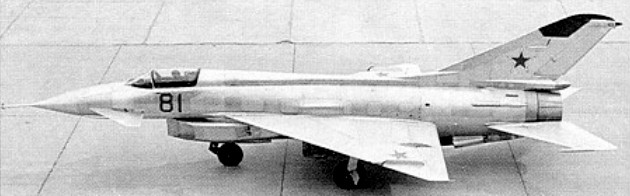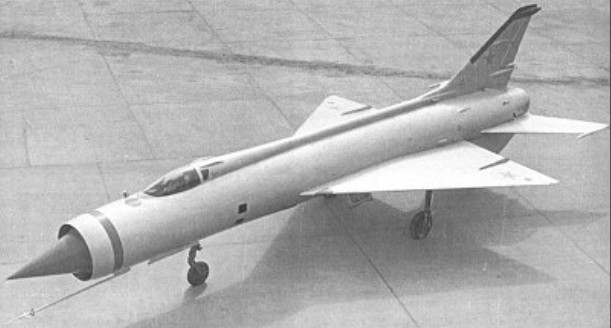
Mikoyan-Gurevich Ye-152

Ye-152a

For high speed development purposes and as a test bed for a 15-tonne engine that was being developed by the Tumansky bureau with a view to powering a proposed Mach=3.0 high-altitude interceptor (which was to materialise as the MiG-25), the MiG OKB developed what was ostensibly a pure research aircraft, the Ye-150. Powered by a Tumansky R-15-300 engine of 6840kg boosted to 10150kg with afterburning, the Ye-150 flew for the first time on 8 July 1960, and was subsequently to attain a speed of Mach=2.65 or 2816km/h and a ceiling of 22500m. Design of an all-weather high-altitude interceptor based on the research aircraft had paralleled work on the Ye-150. As the Ye-152A, this had been adapted to take two proven R-11F-300 engines owing to development problems with the large R-15 engine which were resulting in serious delays.

In consequence, the Ye-152A interceptor fighter was ready to fly before the Ye-150 research aircraft upon which it was based, this event taking place on 10 July 1959.
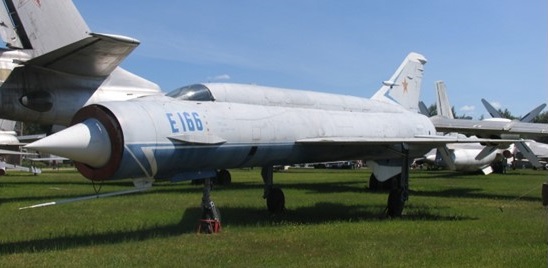
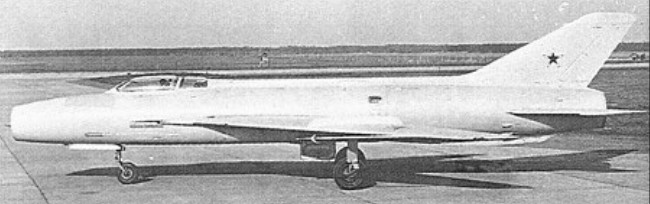
Powered by two R-11F-300 engines each rated at 3900kg and 5740kg with afterburning, the Ye-152A was intended to carry the Uragan 5B radar accommodated in a large, fixed intake centrebody and a pair of MiG-developed K-9 (K-155) long-range beam-riding missiles. While the intake centrebody of the Ye-152A was non-translatable, the extreme forward fuselage with intake orifice was hydraulically movable, thus achieving the same effect as a fully-variable shock cone. The Ye-152A was overtaken by the R-15-powered Ye-152, and its flight test programme was terminated after 55 flights of which only two were made carrying K-9 AAMs.

Ye-152P
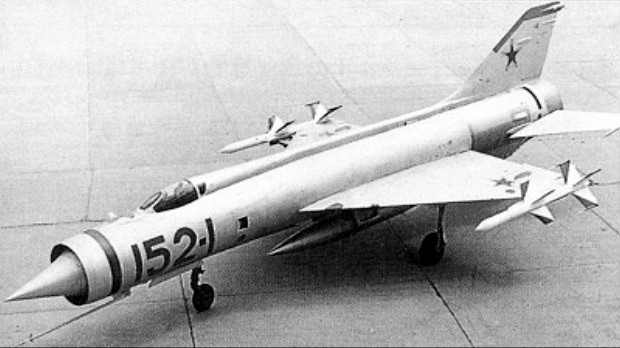
Ye-152P

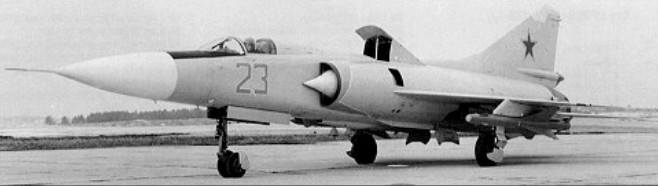
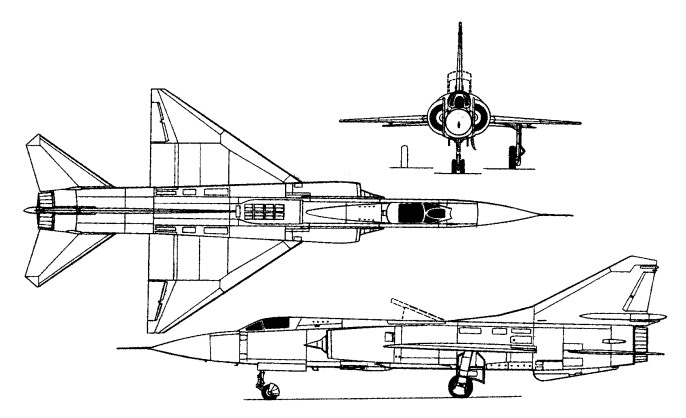
With the availability of the R-15-300 engine in acceptable form for fighter installation, the MiG OKB built two further prototypes of the Ye-152 with a single turbojet of this type supplanting the paired R-11F-300s of the Ye-152A. Retaining the systems of the Ye-152A, the Ye-152/1 and /2 were powered by the R-15-300 rated at 6890kg and boosted to 10210kg with afterburning. A larger delta wing swept back to 53° 47′ on the leading edge was fitted, and the tips terminated in launchers for two K-9 AAMs.

Equipped with Uragan 5B, the Ye-152/1 flew for the first time on 16 May 1961, and in the course of the following flight test programme, the Ye-152/2 attained 2740km/h and an altitude of 22500m, Mach=2.28 being recorded at 18000m with two K-9 missiles. Continuing development of the basic design resulted in the construction of two more prototypes, the first of these joining the test programme early in 1961 as the Ye-152P. Fitted with more sophisticated intercept and navigation equipment, the Ye-152P had a deeper and broader dorsal fairing substantially increasing internal fuel capacity and was intended to be fitted with an 3.50m canard surface which was to be free-floating at subsonic speeds and locked at supersonic speeds. In the event, this canard was not fitted.

Development of the Ye-152 series of interceptors was stopped as a result of the OKB ‘s preoccupation with the Ye-155P (MiG-25P), but the remaining prototype was completed for high-speed research as the Ye-152M with an R-15B-300 engine providing an afterburning thrust of 10210kg. This aircraft established (as the Ye-166) an absolute speed record over a 100km closed-circuit of 2601km/h on 7 October 1961, and an absolute speed record of 2681km/h on 7 July 1962.

Ye-152a
Max take-off weight: 13960 kg / 3777 lb
Wingspan: 8.49 m / 27 ft 10 in
Length: 19.00 m / 62 ft 4 in
Wing area: 34.02 sq.m / 366.19 sq ft
Max. speed: 2500 km/h / 1553 mph
Ceiling: 19800 m / 64950 ft

Ye-152/2
Max take-off weight: 14350 kg / 31637 lb
Empty weight: 10900 kg / 24031 lb
Wingspan: 8.79 m / 28 ft 10 in
Length: 19.66 m / 64 ft 6 in
Height: 42.02 m / 137 ft 10 in
Max. speed: 2510 km/h / 1560 mph
Ceiling: 22670 m / 74400 ft
Range w/max.fuel: 1470 km / 913 miles
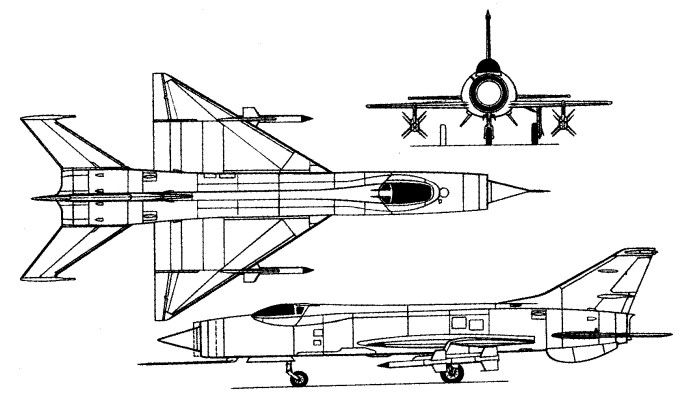
Mikoyan/Gurevich Ye-152A
Mikoyan/Gurevich Ye-152(P)

Mikoyan-Gurevich Ye-150

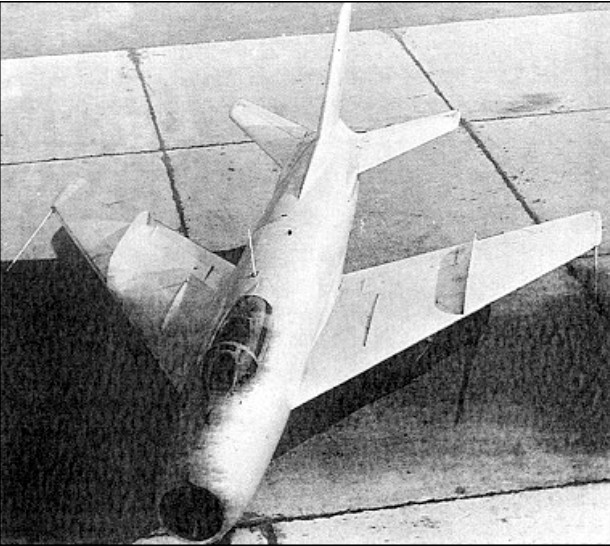
For high speed development purposes and as a test bed for a 15-tonne engine that was being developed by the Tumansky bureau with a view to powering a proposed Mach=3.0 high-altitude interceptor (which was to materialise as the MiG-25), the MiG OKB developed what was ostensibly a pure research aircraft, the Ye-150. Powered by a Tumansky R-15-300 engine of 6840kg boosted to 10150kg with afterburning, the Ye-150 flew for the first time on 8 July 1960, and was subsequently to attain a speed of Mach=2.65 or 2816 km/h and a ceiling of 22500m. Design of an all-weather high-altitude interceptor based on the research aircraft had paralleled work on the Ye-150, the Ye-152A.

The Ye-150 family of high-speed research aircraft introduced features such as stainless steel and titanium into the airframe to withstand the heat at speeds of more than 1491 mph (2400 km/h).

Mikoyan-Gurevich MiG-23PD / MiG-23-01

One of two parallel studies to meet a VVS requirement for a new frontal fighter capable of operating from small, austerely-equipped forward bases, the MiG-23PD – Pod’yomnye dvigateli, or, literally, “lifting engines” – or 23-01 was first flown on 3 April 1967. Featuring a 57° delta wing planform fundamentally similar to that of the MiG-21 but scaled up 73.6%, the MiG-23PD alias 23-01 featured auxiliary lift engines close to the CG. Two 2350kg Kolesov RD-36-35 engines were accommodated by a bay inserted in the centre fuselage and provided with a rear-hinged and louvred dorsal trap-type intake box and a ventral grid of transverse louvres deflecting the jet thrust during accelerating transition. A similar arrangement had been tested by the OKB in the previous year with the MiG-21PD test bed, which, with a 90cm fuselage lengthening aft of the cockpit and two RD-36-35 lift engines, had entered flight test on 16 June 1966. The primary power plant of the MiG-23PD was a Khachaturov R-27-300 of 5200kg and 7800kg with afterburning, and air was bled from the last compressor stage for flap blowing, the combination of lift engines and blown flaps reducing take-off distance to 180- 200m. Armament consisted of one 23mm GSh-23 cannon and two AAMs – one radar-guided K-23R and one IR-homing K-23T. Flight test continued until the autumn of 1967 when further development was discontinued in favour of the parallel MiG-23-11.

Engine: 1 x Khachaturov R-27-300, 5200kg – 7800kg with afterburning
Max take-off weight: 18500 kg / 40786 lb
Wingspan: 7.72 m / 25 ft 4 in
Length: 16.80 m / 55 ft 1 in
Height: 5.15 m / 16 ft 11 in
Wing area: 40.00 sq.m / 430.56 sq ft

Mikoyan/Gurevich MiG-23PD

Mikoyan-Gurevich MiG-23

MiG-23 Flogger

Designed to provide Frontal Aviation with a tactical fighter offering secondary ground-attack capability, and capable of meeting contemporary Western fighters on more than equal terms, the MiG-23 was designed around the primary aim of an aircraft that could operate effectively without being tied to massive concrete runways. The Mikoyan bureau is known to have adopted two approaches to this requirement: first was the Ye-23 (or Ye-230) prototype of tailed-delta configuration and incorporated high-lift devices to give STOL capability, powered by a single turbofan engine supplemented by a battery of Kolesov lift-jets amidships for VTOL operations; the alternative prototype was the Ye-231, which deleted the lift-jets and replaced the delta wing by a variable-geometry wing.

Mikoyan-Gurevich MiG-23 Article

First flying in June 1967, with a decision to develop the swing-wing Ye-231 finalised probably during 1968, resulting in the pre-production MiG-23S ‘Flogger-A’ which, powered by a Tumansky R-27 turbojet with an afterburning thrust of 10200kg, first entered service for operational evaluation in 1970-71.

At about this time it must have been decided to optmise the MiG-23 as an air-combat fighter, and to develop a dedicated ground-attack parallel version, which was allocated the designation MiG-27. In consequence, aerodynamic changes were made to the MiG-23, the fuselage structure being lightened and more advanced avionics being introduced by the time the initial MiG-23M version entered service in 1973. More or less simultaneously the dedicated attack variant was developed and, while having much in common with the MiG-23, this was sufficiently different to warrant the allocation of the separate designation MiG-27.

The series production Flogger B (MiG-23M) entered service in 1973, using an R-29 engine. The High Lark radar fitted to the Flogger B gave it a limited look-down capability, improved in 1978 by the addition of an under-nose infrared sensor. The export version of the Flogger B being the Flogger E.

The MiG-23MF, known to NATO as ‘Flogger-C’, differs from other versions by having a shorter dorsal fin, new sensors and a lighter radar.

(20+04) Mikoyan-Gurevich MiG-23 MF 0390213098 – marked 584

Identified by Nato are the MiG-23 Flogger K interceptor with dog¬tooth notches in the wing gloves, and the MiG¬-27 Flogger J with revised under-nose sensors and leading-edge root extensions.

There is also a MiG-23U Flogger C two-seat operational trainer, with an R-27 engine and Jay Bird radar, and featuring a longer cockpit and deeper dorsal spine.

Issued in quantity to the Soviet tactical air force, Frontal Aviation, the MiG-27 ‘Flogger-D’ has an export counterpart in the MiG-23BN ‘Flogger F’, which retains the original 125070-kg (27,557-lb) R-29 afterburning turbojet (plus variable inlets and nozzle) and twin-barrel cannon.

The Flogger G was a modified version of the Flogger B interceptor with smaller dorsal fin. The similar MiG-23BN ‘Flogger-H’, another ‘high-speed’ variant, is distinguished by two avionics pods astride the lower fuselage, forward of the nosewheel doors.

The Algerian airforce received 40 MiG-23BN.

Gallery

Engine: 1 x R-29B, 120.2kN
Wingspan: 8.2-14.3 m / 26 ft 11 in – 46 ft 11 in
Length: 16.8 m / 55 ft 1 in
Height: 5.5 m / 18 ft 1 in
Wing area: 27.3 sq.m / 293.85 sq ft
Max take-off weight: 18000 kg / 39683 lb
Empty weight: 11000 kg / 24251 lb
Max. speed: 2500 km/h / 1553 mph
Ceiling: 18600 m / 61000 ft
Range w/max.fuel: 3000 km / 1864 miles
Range w/max.payload: 960 km / 597 miles
Armament: 1 x 23mm cannon, 2000kg of weapons
Crew: 1

Mig-23MF Flogger B
Engine: 1 x Tumansky R-29, 25,353 lb / 11,500 kg thrust
Span: 46 ft 9 in / 14.25 m spread
Span: 26 ft 9.5 in / 8.17 m swept
Length: 59 ft 6.5 in / 18.15 m
Height: 14 ft 4 in / 4.35 m
Wing area: 293.4 sq.ft / 27.26 sq.m
Range: 1180 mi / 1900 km
Ceiling: 60,040 ft / 18,300 m
Speed: 1522 mph / 2450 km
Bombload: 6614 lb / 3000 kg
Armament: 1 x 23 mm GSh-23L cannon
Seats: 1

Mig-23 Flogger G
Engine: 1 x Tumansky R-29B.
Installed thrust (dry / reheat): 78.5 / 122 kN
Span: 14.3 m / 8.2 m
Length: 18.5 m
Wing area: 27 sq.m
Empty wt: 8200 kg
MTOW: 18,000 kg
Warload: 2000+ kg
Max speed: 2.4+ Mach
Ceiling: 20,000 m
TO run: 900 m
Ldg run: 900 m
Combat radius: 1300 km
Fuel internal: 5750 lt
Air refuel: No
Armament: 6 x AAM, 1 x 23 mm
Hard points: 5

Mikoyan/Gurevich MiG-23

Mikoyan-Gurevich Ye-230 / Ye-231

Trials in the direct-lift approach started with the MiG-21DPD to validate the basic concept, but were then taken a stage further with the Ye-230 prototype. This was built in parallel with the Ye-231 variable-geometry prototype to ensure maximum commonality for any production type resulting from the twin programmes. The Ye-230 was of tailed delta configuration, was powered by a Lyulka AL-1F-1 afterburning turbojet, and had the same type of lift engine arrangement as the MiG-21DPD, namely two turbojets (probably Koliesov units) located vertically on the centre of gravity with air drawn from above past a rear-hinged louvred dorsal door and exhausted downward through a grid of ventral transverse louvres which could be angled by the pilot to provide a forward thrust component during transition to forward flight.

The Ye-231 variable-geometry prototype was almost identical to the Ye-230 apart from its lack of lift jets and the use of variable-geometry swept wings similar to those of the General Dynamics F-111, the first operational variable-geometry warplane. Comparative trials revealed the superiority of the variable-geometry arrangement. and the Ye-231 thus became the precursor of the MiG-23 fighter, later adapted with a modified nose and simpler engine arrangements as the MiG-27 attack aeroplane.

Mikoyan-Gurevich I-75

Retaining the wing of the I-7U and designed around the 30km acquisition-range Uragan 5 radar and a pair of heavy, long-range K-8 beam-riding AAMs, the I-75 was flown for the first time on 28 April 1958.

Powered by a Lyulka AL-7F-1 turbojet offering 6240kg and 9215kg with afterburning, the I-75 flew five times before being grounded on 15 May for installation of the Uragan 5B. Testing was resumed on 25 December 1958. Although the I-75 demonstrated exceptional performance, the prototype was flown only 18 times after the resumption of the test programme, which was terminated on 11 May 1959 with the decision to adopt the competitive Sukhoi T-431 for series production (as the Su-9).

Max take-off weight: 10950 kg / 24141 lb
Empty weight: 8274 kg / 18241 lb
Wingspan: 9.98 m / 32 ft 9 in
Length: 18.27 m / 59 ft 11 in
Wing area: 31.90 sq.m / 343.37 sq ft
Max. speed: 2050 km/h / 1274 mph
Range: 1470 km / 913 miles

Mikoyan/Gurevich I-75

Mikoyan-Gurevich I-7 / I-410

Prior to abandonment of the I-3 (I-380) without flight test owing to the Klimov bureau’s inability to develop the intended VK-3 engine to an acceptable standard for installation, a further prototype had been completed as the I-3U (I-410). Similarly intended for the VK-3 engine, the I-3U (also known as the I-5) was intended to be part of the so-called Uragan (Hurricane) automated air interception system. When, in the summer of 1956, it became evident to the MiG OKB that the Klimov engine would not be forthcoming, work began on the redesign of the aircraft to take a Lyulka AL-7F turbojet of 6240kg and 9220kg with afterburning. In this form, the aircraft became the I-7U which flew for the first time on 22 April 1957. With quarter-chord sweepback reduced from the 57 deg of the I-3U to 55 deg, the I-7U carried a pair of 30mm NR-30 cannon in the wing roots and had four wing stores stations each capable of carrying a rocket pod containing 16 57mm ARS-57Ms. On 21 June 1957, the sole prototype I-7U suffered damage as a result of the starboard undercarriage leg failing when the aircraft landed following its 13th flight. After repair, the test programme was resumed but involved only six more flights, the last of these taking place on 24 January 1958. The I-7U was then re-engined with an AL-7F-1 to become the I-75.

Further development of the basic I-3 concept with the 20,500-lb (9300-kg) thrust Lyulka AL-7F, resulted in the I-7K that first flew in January 1959 and proved capable of flight at Mach 2.35. Evolution via I-7P, and I¬7P prototypes led to the I-7SF all-weather interceptor, but this too was not ordered into production.

Max take-off weight: 11540 kg / 25441 lb
Empty weight: 7952 kg / 17531 lb
Wingspan: 9.98 m / 32 ft 9 in
Length: 16.92 m / 55 ft 6 in
Wing area: 31.90 sq.m / 343.37 sq ft
Max. speed: 2300 km/h / 1429 mph
Range: 1505 km / 935 miles

Mikoyan-Gurevich I-3 (I-380)

The I-1 led to several further developments epitomized by the I-3U (1-380) fighter-bomber beaten by the Su-22, and the I-3P (with an unknown alternative designation in the I-¬380 series) radar-equipped interceptor beaten by the Su-9. The I-3 series of fighter-bomber prototypes were powered by the 18,518-lb (8400-kg) thrust Klimov VK-3 turbojet and had about double the empty weight of the initial MiG-21 variants.

Mikoyan-Gurevich I-1 / I-370

During 1953, the MiG OKB launched the design of a single-engined tactical fighter which was to utilise a wing fundamentally similar to that of the twin-engined SM-9, forerunner of the MiG-19, work on which was proceeding in parallel. Officially designated I-370 and assigned the OKB appellation of I-1, the new fighter received a Klimov VK-7 turbojet rated at 3525kg and boosted to 5235kg with afterburning. The prototype was flown for the first time on 16 February 1955, but high speed performance proved disappointing. It was therefore returned to the factory where an uprated VK-7 engine was installed, this having normal maximum and afterburning thrust ratings of 3935kg and 6270kg respectively. With a new wing, the quarter-chord sweepback of which was increased from 55 to 57 deg, the prototype was redesignated I-2 by the OKB. Limited testing of the I-2 was undertaken during which design maximum speed proved unobtainable. A further development of the basic design, the I-3 (I-380), remained unflown owing to the non-delivery of its more powerful VK-3 engine.

Max take-off weight: 8300 kg / 18298 lb
Empty weight: 5086 kg / 11213 lb
Wingspan: 9.00 m / 29 ft 6 in
Length: 12.70 m / 41 ft 8 in
Wing area: 25.00 sq.m / 269.10 sq ft
Max. speed: 1452 km/h / 902 mph
Ceiling: 17000 m / 55750 ft
Range w/max.fuel: 2500 km / 1553 miles

Mikoyan-Gurevich Ye-8

During 1961, the MiG OKB initiated work on an upgraded fighter based on the basic MiG-21PF airframe and referred to contemporaneously as the MiG-23. Assigned the OKB designation Ye-8, it featured a bifurcated ventral air intake for the R-21F engine, which, developed by N Metskhvarishvili, was rated at 4500kg and 7000kg with afterburning. A variable-incidence canard spanning 2.60m was fitted – this having been earlier tested by a Ye-6T – and it was proposed to install Sapfir 21 radar to accompany an armament of two K-13 AAMs. The first of two prototypes, the Ye-8/1, was flown on 17 April 1962, followed on 29 June by the Ye-8/2. On 11 September, the R-21F engine of the Ye-8/1 exploded at Mach=1.7 at 10000m. It was subsequently ascertained that the sixth compressor stage fan had penetrated the engine casing and had then continued on to destroy the starboard aileron. At this time, the Ye-8/2 had effected 13 flights, but the programme was abandoned.

Max take-off weight: 8200 kg / 18078 lb
Wingspan: 7.15 m / 23 ft 5 in
Length: 14.90 m / 48 ft 11 in
Wing area: 23.13 sq.m / 248.97 sq ft
Max. speed: 2230 km/h / 1386 mph
Ceiling: 20000 m / 65600 ft

Mikoyan/Gurevich Ye-8