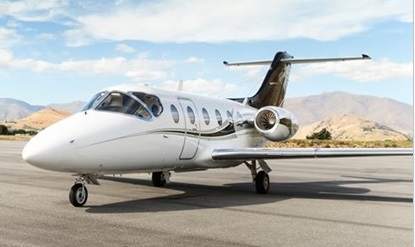
Nextant 400XT Jet

Nextant Aerospace selected the Beechjet 400/Hawker 400XP for remanufacturing as the Nextant 400XTi. The hundreds of millions of dollars needed to develop a new jet was a huge barrier, yet a well designed and -built jet has a long service life and could be an ideal platform on which to add new avionics and engine technology as well as aerodynamic tweaking using modern tools such as computational fluid dynamics.

The 400XTi is essentially a Beechjet 400/Hawker 400A/XP with new Fadec-controlled 3,050-pound-thrust Williams International FJ44-3AP engines replacing the original 2,965-pound Pratt & Whitney Canada JT15D-5Rs, aerodynamic improvements to the nacelles and pylons, a new Rockwell Collins Pro Line 21 flight deck, fresh interior and other enhancements. The jets undergo 60 engineering changes, replacement of more than 40 time-controlled components, compliance with A-, B-, C- and D-check inspections as well as compliance with all FAA airworthiness directives and applicable manufacturer service bulletins during a 6,000-man-hour renewal/overhaul process. The resulting remanufactured 400XTi carries a two-year tip-to-tail warranty (three for the engines), which can be extended to five years as an option.

The first remanufactured version was the 400XT, but in 2014 Nextant introduced the 400XTi, with an improved and more spacious composite cabin shell that takes full advantage of unused space in the fuselage, a new noise insulation package, Nextant-designed winglets, Luma Technologies LED warning panels and a Mid-Continent Instruments LCD standby attitude module and True Blue Power MD835 lithium-ion backup battery units. The MD835s eliminate a 90-day inspection interval for the jet’s original lead-acid backup batteries.

By 2015, Nextant had converted more than 40 Beechjet/Hawker 400s and delivered them to owners in eight countries since certification of the upgrades in 2011. Flight Options has ordered forty 400XTi conversions, and charter provider Travel Management Company was upgrading its entire fleet of 50 Beechjet/Hawker 400s. Nextant’s backlog represents a quarter of the available fleet of about 600 jets. There were also another 180 Air Force T-1A Jayhawks (Beechjet 400s) that could be converted, if the Air Force were to select the 400XTi upgrade instead of buying a new jet for its Air Education and Training Command bases.

The Nextant 400XTi sold for $5.15 million (2015). The airframe was valued at $995,000, so that would be deducted from the price if an owner brought a Beechjet/Hawker 400 for conversion. The performance improvements include a 50-percent range extension, 30 percent lower operating costs and 20 to 25 percent less fuel burn.

The Nextant 400XTi has the 3,502-pound Williams International FJ44-3APs (flat-rated to 3,050 pounds at ISA +7 deg C) engines. The jet itself can’t fly faster than its limiting Mach .785 Mmo. The new nacelles housing the Williams engines and the larger pylons are the fruit of computational fluid dynamics analysis that showed excessive drag due to a supersonic shockwave in the area between the nacelles and the fuselage. The pylons now have twice the surface area, and the redesign eliminated the drag problem. Noise compliance exceeds Stage IV requirements.

To help improve maintenance access to the nose gear and other areas, Nextant added access panels so mechanics don’t need to remove dozens of fasteners for routine maintenance tasks. Further adding to future reliability is a completely new primary wiring harness, built by Nextant technicians on the company’s own looms. The new wiring meets the latest FAA electrical wiring interconnection system regulations.

The new composite cabin shell by Jeff Bonner R&D takes advantage of space within the fuselage structure that the existing interior didn’t use, and it adds three inches of width and 2.5 inches of height. N2Aero insulation reduces cabin noise by nine decibels, to 66 dB.

Three interior layouts were available, and a typical choice is the forward divan opposite the galley, then a four-club configuration, with seats for up to eight passengers (including the belted lavatory). Also offering eight seats is the four-club layout with two forward-facing seats aft and one seat up forward opposite the galley. This layout provides less legroom in the club seating area, however. A six-seat interior puts the galley on the right side of the cabin and includes the spacious four-club seating area, one seat opposite the galley and forward of the cabin door, plus the lavatory seat. Passenger seats were redesigned by Nextant engineers and are mechanically rebuilt and recovered. The two aft-facing seats in the club-seating area fold flat, and the divan can be extended outward to provide a larger sleeping surface.

The updated interior is fitted with a Rockwell Collins Venue cabin management system (CMS) with Airshow moving map, Apple iOS device control of the CMS, LED lighting and a new galley with a Nespresso machine and a new work surface. Optional features include Aircell Gogo Business Aviation Axxess (air-to-ground telecom and SwiftBroadband satcom) and 110-/220-volt power outlets. The lavatory bulkhead is moved six inches forward, and this helps provide more interior space for luggage (an additional 20 cu ft), as one of the Beechjet’s Achilles heels is the small 26-cu-ft external baggage capacity.

On the outside, the most prominent change is the new winglets with embedded LED lights. Most of the upgraded jets were equipped with aluminum winglets, but soon, if not already, the 400XTi will have new carbon-fiber winglets that are raked back farther and shave 24 pounds off the empty weight. The new winglets bolt onto the existing structure and will be provided as a kit to owners with the old winglets.

The heavy remanufacturing and maintenance tasks take about eight to 10 weeks, during which the Beechjet/Hawker 400 is completely stripped down. All life-limited components are replaced, landing gear is overhauled, the entire structure is inspected and any repairs are completed. Typically, the horizontal stabilizer has cracked ribs, induced by an oscillation caused by the thrust reversers. Nextant technicians install thicker ribs in a special jig built in-house.
The engine mount beam that runs across the aft fuselage is another weak area, and Nextant engineers redesigned the beam with added doublers to make it stronger but maintain the same geometry so that it would meet the latest regulatory stress load requirements without requiring modification of the adjacent structure. Nextant also replaces the engine mount with a much stronger one-piece milled unit made of stainless steel alloy.

For pilots, the biggest visible change is the flight deck, where the old CRT-based Rockwell Collins Pro Line 4 avionics are replaced with a Pro Line 21 suite. The base system in the 400XTi includes two PFDs and two MFDs in portrait orientation, which provides one PFD and one MFD for each pilot to control. Dual Collins FMS 6100s are mounted on the angled portion of the console between the seats. All other avionics are new, including dual solid-state AHRS, autopilot, Waas LPV GPS 4000S, com and nav, ADF, DME, transponders, radar altimeter, weather radar, Taws, Tcas II, DBU 5010E database loader, 406-MHz ELT and the Mid-Continent standby attitude module. The eyebrow warning lights now use LEDs instead of incandescent bulbs. Engine instruments are all hosted on the Rockwell Collins MFDs, and if an MFD fails the engine indications migrate to the respective PFD.

After the major maintenance and modification phase, including avionics upgrades, the jet is moved outside for engine runs and flight-testing, then the exterior is painted and the interior installed. The final flight-test takes place about 16 to 17 weeks after the jet rolls into the Nextant facility. One way to spot a Nextant modified Beechjet/Hawker 400 is the new supplemental data plate mounted next to the old one on the aft fuselage.

Nextant 400XT

The 400XT made its first test flight in March 2010. Receipt of final certification from the Federal Aviation Administration (FAA) was announced in October 2011. Deliveries of the Nextant 400XT began that same month, with initial deliveries of a 40-aircraft, $150 million order to private aviation company Flight Options LLC.

The 400XTi, at a takeoff weight of 13,800 pounds, 2,500 below the 16,300-pound mtow, will climb to 40,000 feet in 15 minutes. Climbing at more than 2,000 fpm at 30,000 feet. Takeoff field length, about ISA+15 on the ground, is about 3,100 feet.

At FL410 power for long-range cruise, Mach .70 and 392 ktas, burns 730 pph total. Pushing up the power to maximum continuous thrust raised the fuel flow to 1,040 pph, but in those conditions the airspeed would exceed the Mmo, so normal cruise is Mach .73 and 447 ktas, which brings the fuel flow down to about 1,000 pph.

The 400XTi can fly about five hours after reaching FL400 to FL410 at long-range cruise speed. The performance numbers in the flight manual supplement show that at a weight of 14,000 pounds, a climb to FL410 on an ISA day would consume 458 pounds of fuel. Climbing to FL450 in the same conditions should take 23 minutes and 578 pounds of fuel.

The stock Hawker 400XP can fly 1,464 nm with two pilots and four passengers (NBAA IFR reserves, 100-nm alternate). Under the same conditions, the 400XTi can fly more than 2,000 nm. Fuel capacity is 4,912 pounds. Typical BOW for a 400XTi is between 10,750 and 10,850 pounds, Marker said, depending on the options and interior configuration. These numbers are lower than the typical 10,985-pound BOW of a Hawker 400XP.
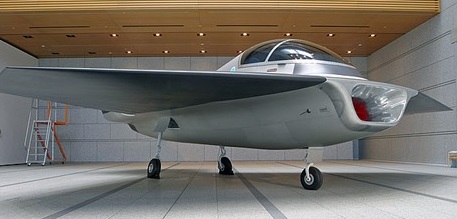
Newson Kelvin 40

The Kelvin 40 “concept plane” by designer Marc Newson, who was developing the interiors for Qantas’ A380s. The Kelvin is fitted with a real Snecma jet engine, and Newson says the aircraft has been proven to be aerodynamically viable. But will never fly. On display at a design exhibition in Tokyo.

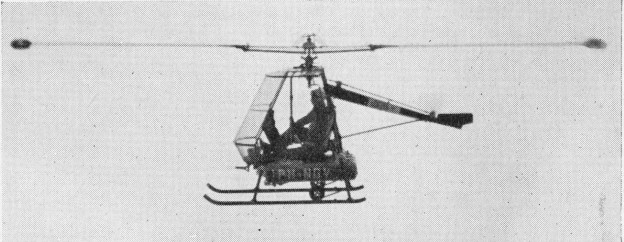
Navickas Load Ranger 2000

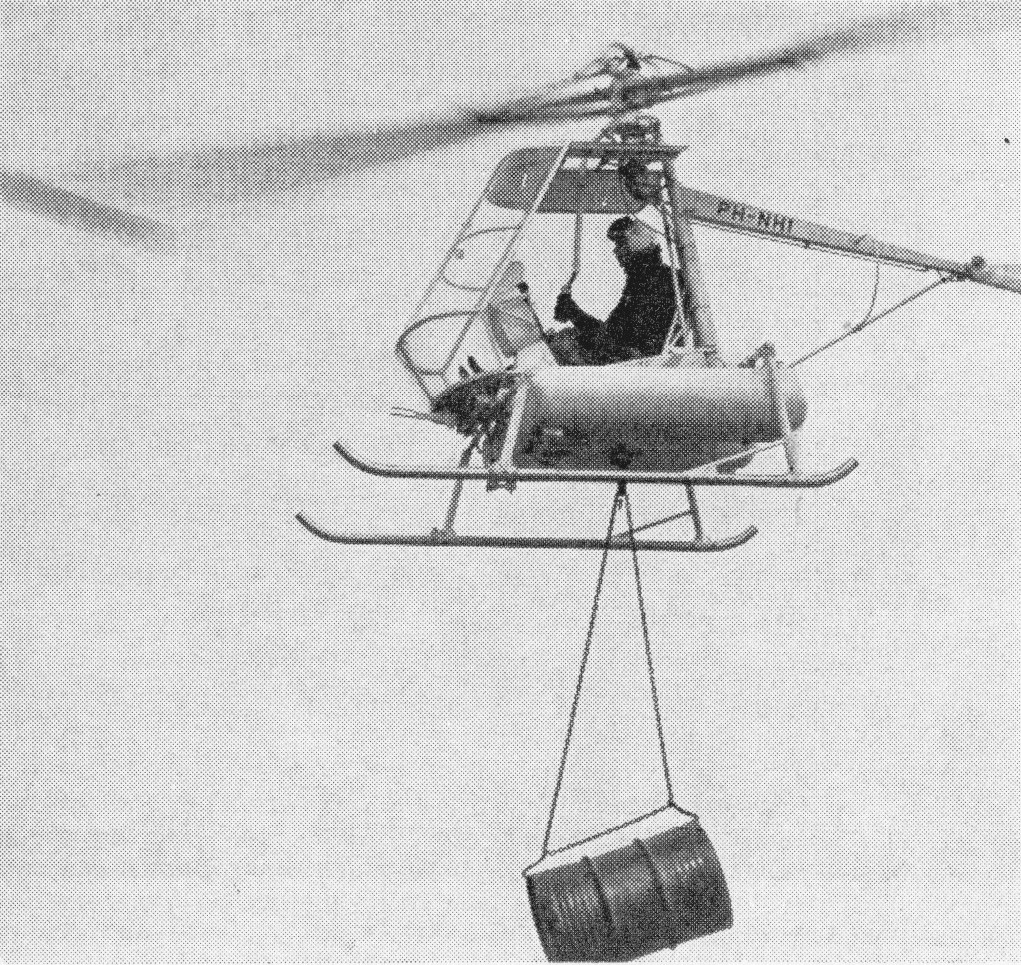
Designed and built by Tom Navickas, the Load Ranger is primarily targeted at the aerial spraying market, but applications for medium freight hauling, law enforcement and special missions also being considered.

Development started July 1996; first flight in April 1997 and certificated in the Experimental category; 30 flight hours logged by February 1998. Restricted use certification was aimed for third quarter of 1998, but no further information.

The structure was a chrome-alloy tubing skeleton with semi-monocoque skin and a slab-sided fuselage with large centre cargo compartment accessed via a roller shutter. The landing gear was tubular welded steel skids.
Power was from one Allison 250-C18 turboshaft, rated at 236kW for take-off, and a max continuous rating of 201kW driving a two-blade metal main rotor with blade folding. Fuel capacity in standard tank was 190 litres, and with auxiliary or ferry tank, 758 litres.

A pilot and operator were in tandem seats. A freight compartment had a typical load capacity of 907kg. Alternatively, six passengers can be seated side saddle in the cargo compartment with roller doors stowed.
It was priced at US$500,000 (with Army surplus Allison T63 engine and drive train) or US$1.5 million (with civil Allison 250-C18 engine and Bell 206 drive train) in 1999.

Tom Navickas was killed in the Load Ranger in Jersey fathers day 2005 and killed his nephew with him. Apparently they ran out of fuel.

Load Ranger 2000
Main rotor diameter: 10.15m
Tail rotor diameter: 1.58m
Fuselage length: 10.44m
Overall length, rotors turning: 11.79m
Overall width: 0.70m
Height to top of rotor head: 3.35m
Height over tail fin: 3.20m
Weight empty: 438kg
Max gross weight: 1520kg
Useful internal load: 1081kg
External slung load: 1045kg
Never-exceed speed: 278km/h
Hover ceiling, IGE: 2745m
Hover ceiling, OGE: 1065m
Service ceiling: 4725m
Range, with max fuel: 547km

NASA AD-1 / Ames AD-1

Robert T. Jones of Ames calculated that an aircraft’s wing made to pivot 4 degrees to the fuselage might halve the fuel consumption. Specifications bases, in particular geometric configuration were established by NASA based on one made by Boeing. In consultation with the Rutan Aircraft Factory, Ames and Dryden built the AD-1 oblique wing aircraft in 1977, a twin jet composite aircraft with direct controls and a top speed of 175kts (324kph). Set perpendicular to the fuselage for takeoff and landing, the oblique wing could be made to rotate up to 60 degrees for higher speed flight and between 1979 and 1982, demonstrated the feasibility of such a concept, performing three landings with the wings pivoted at 45 degrees.

The test aircraft’s 32 foot wing can be pivoted 60 degrees during cruise, to reduce drag while still allowing high airspeeds. In the conventional position, the wing should provide ample lift and stability for takeoffs, landings and low speed manoeuvres. Designated the AD 1, the test aircraft is 40 feet long, has a gross weight of 2,000 pounds and is powered by two 220 pound thrust turbojets. The structure was made entirely of fiberglass.

The aircraft was delivered by Aimes at Dryden Flight Research Center at Edwards Air Force Base in March 1979. The first flight was performed by test pilot NASA Thomas C. McMurtry December 21, 1979. Thomas flew only the 79 flights until 7 August 1982.

Although the oblique wing is still considered by some as a viable concept for large transport, unpleasant flight characteristics of the AD-1 at certain angles discouraged designers to adopt this configuration.

Gallery

Engines: 2 x Microturbo TRS-18, 220 lb / 100 kg
Wing span: 9.85 m / 34 ft 2 in
Length: 11.82 m
Wing area: 8.60 m²
Aspect ratio: 11.2
Thickness/chord: 12%
Loaded weight: 809 kg
Empty weight: 535 kg
Max speed: 220 knts
Min speed: 74 knts
Seats: 1

NASA QSRA

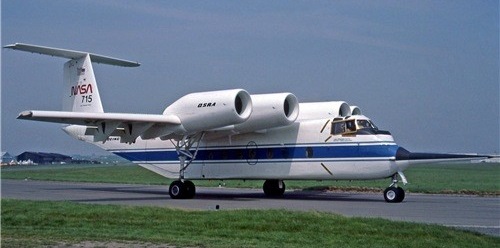
QSRA – A Quiet Short-Haul Research Aircraft built under contract to the U.S. National Aeronautics and Space Administration by Boeing. Following a short flight-test period at Boeing, the plane was delivered to NASA Ames in California to continue the design flight test programme. The advanced research vehicle is actually a remanufactured twin-engined C-8A Buffalo built originally by de Havilland Canada and owned for several years by NASA, Boeing created an all-new wing incorporating boundary layer control, four Lycoming turbofans which exhaust over the upper surfaces of the wings and new engine nacelles and cross-ducting, Coanda flaps, a new but similar tail and installed new instrumentation.

Objective of the QSRA is to build an experimental flight research aircraft aimed at developing the technology for quiet short-haul commercial airliners of the future with short takeoff and landing capabilities. Another purpose is to explore the operating procedures of such an airplane in the airport terminal environment.

The QSRA has four engines of 7500 pounds thrust each mounted above the wing and exhausting over the wing. This arrangement provides “upper surface blowing” much like the Boeing YC-14 military prototypes. In union with the specially designed wing and flap system, extremely high lift is generated with very low noise.

Engines: 4 x Lycoming turbofan

Napier Oryx

Napier Oryx

The Napier Oryx was a British gas-turbine engine designed and built by Napier. The engine was developed by the Aero Gas Turbine Division of Napier in conjunction with Percival. Funding came from the Ministry of Supply.

Its sole application was the unsuccessful Percival P.74. The P.74 was a design for a tipjet-powered helicopter. The jet power to be supplied from engines within the helicopter and piped to the rotor tips.

The output gas temperature from the engines had to be below 400°C for the helicopter’s stainless steel rotor ducts, so a bypass design was used. This also blew “cold” air from the compressor, rather than purely hot turbine exhaust. Rather than using an over-sized compressor with a bypass around the turbine (as commonly used in the turbofan engine), the Oryx used an auxiliary compressor in addition. This was mounted behind the turbine, with its gas flow in the opposite direction to the main engine core. The two air streams were deflected through 90° in a collector chamber, then exited vertically upwards. Gas flow through this collector was arranged so that each stream remained separate, the cold air from the auxiliary compressor passing through a bifurcated duct, so as to wrap around the hotter turbine outlet. By this means, the duct was further protected from the hot exhaust. Separator plates inside each duct split the stream into a number of flows and deflected each one separately, thus preserving the flows approximately constant across the whole duct. When the flows finally merged, they were flowing parallel and at approximately the same velocity, thus reducing turbulence and energy loss.

A Corliss non-throttling valve could divert individual engine output to the outside of the aircraft through a butterfly valve (closed in flight), permitting full running with the rotor stationary for starting and ground running. In the P.74 the two Oryx engines fed their outputs to a common duct that took the thrust to the rotor head.

Rotax electric starters were used but alternate methods could have been used.

First run in November 1953, the Oryx and the P.74 tip jet powered helicopter project, were later cancelled.

The Oryx was expected to be used for the planned commercial P.105 development of the P.74. In the P.105 the two engines would have been fitted back to front on either side of the rotor mast, feeding their outputs to the rotor hub. It was anticipated that 900 “gas horsepower” could be produced in its developed form.

Specifications:
Oryx N.Or.1
Type: Single shaft gas generator
Length: 83.5 in (2,121 mm)
Diameter: 19.25 in (489 mm)
Dry weight: 495 lb (225 kg)
Compressor: 12-stage axial flow
Combustors: 5 tubular chambers
Turbine: 2-stage axial flow
Fuel type: Avtur (D.Eng. R.D. 2482) or wide cut gasoline (D.Eng. R.D. 2486)
Oil system: Vane type pressure pump delivering 80 psi (551.58 kPa), Synthetic lubricant to DERD 2487
Maximum power output: Max take-off: 750 hp (559.27 kW) gas horsepower (the power generated by the maximum flow of gas through a turbine of 100% efficiency) at 21,900 rpm
Overall pressure ratio: 6:1
Air consumption: Power unit – 9.9 lb (4.5 kg) / sec, Auxiliary compressor – 5.1 lb (2.3 kg) / sec
Turbine inlet temperature: 752 °F (400 °C)
Specific fuel consumption: Max continuous: 0.735 lb/ghp/hr (0.443 kg/gkW/hour)
Power-to-weight ratio: 1.56 hp/lb (2.565 kW/kg)
Max continuous Power: 610 hp (454.88 kW) gas horsepower at 21,000 rpm
Max take-off Spec Fuel Consumption: 0.68 lb/ghp/hr (0.41 kg/gkW/hour)

Nanchang Q-6

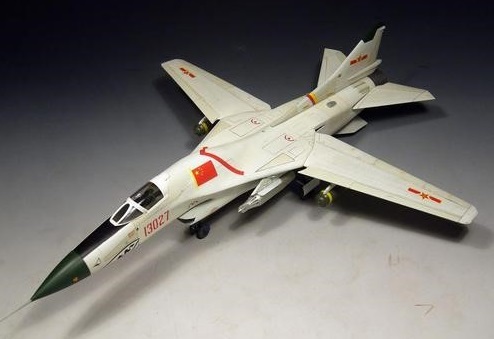
In the mid-’70s, China managed to get their hands onto Egyptian MiG-23BNs and -MSs, and downed American F-111s. Using this captured technology, Nanchang was asked to develop a swing-wing strike aircraft for the PLAAF. Originally, plans centered around a quick domestic copy of the MiG-23BN. However, when PLAAF requirements added air-to-air capabilities, the MiG-23BN would prove inadequate. Plans then shifted to repurposing the F-111 electronics for the new design. Chinese industry proved incapable of producing systems as small as the design called for, forcing a major redesign that made the Q-6 comparable in size to the Su-24. The side intakes of the MiG-23 proved inadequate for dogfighting, so they were relocated to the chin, while the inadequate engine was to be replaced with the domestically-produced WS-6 turbofan. Overall, however, the project quickly proved to be beyond the means of the Chinese aerospace industry. Development dragged on as much of the intended onboard systems proved too difficult to copy. While an advanced fly-by-wire system (first of its kind for China) was developed for the Q-6’s swing wings, it proved to be 12% heavier than the one employed on the MiG-23. The WS-6 proved to be failure as well, and thus, in 1989, with requirements shifting away from swing-wing designs, the Q-6 was finally cancelled.

Nanchang Q-5 / A-5

A-5C Fantan

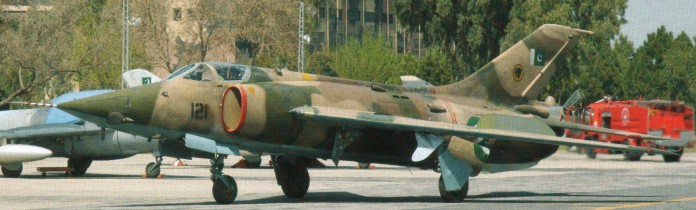
As Shenyang began developing MiG-19s locally under the J-6 name in 1958, the PLAAF requested the development of the design into a dedicated attack aircraft. Shenyang assigned the same project manager as the one in charge of the J-12 program. The aircraft was designated Qiangjiji-5 (Q-5) which stands for Attack aircraft 5. A long list of changes was made to the MiG-19 design, making the new aircraft virtually unrecognizable. The intakes were moved to the fuselage sides to make space for a radar, while the aircraft was lengthened and area ruled to make space for an internal weapons bay and reduce transonic drag, respectively. The wing root 30mm cannon of the J-6 were replaced with 23mm cannon, but payload was doubled to 2,000kg, and the number of hardpoints was increased from four to six. Meanwhile, larger, less swept wings were added. Although it was designed by Shenyang, further development and production were assigned to Nanchang. The prototype was completed in 1960, but due to the political climate at the time, was cancelled before it took flight in 1961.

Nanchang Q-5 / A-5 Article

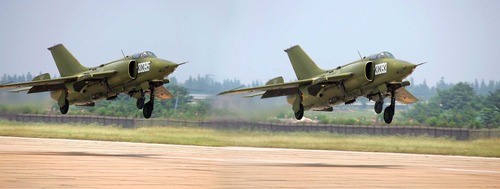
The prototype program was kept alive by small team and resumed officially 1963, when the PLAAF revived the project and moved it to Nanchang. First flight took place on 4 June 1965, featuring an area ruled fuselage for minimum transonic drag, cockpit armour protection, a “solid” nose and a weapon bay (for early test and production aircraft, but omitted from improved production versions). The Q-5 (particularly its wing) is based on the Mikoyan-Gurevich MiG-19, already built in the People’s Republic under the designation Shenyang J-6. Slightly longer than its ancestor, the Q-5 differs considerably in profile by reasons of a ‘solid’ nose and cheek air inlets made necessary by transfer of some avionics from the centre fuselage to make way for an internal weapons bay (now used for additional fuel), although the MiG’s four wing strongpoints and root-mounted cannon are retained for close support work. Over¬all length was increased, and wing span was extended to compensate. An internal weapons bay was incorporated, but this is now used to house additional fuel, increasing internal fuel capacity by 70 per cent. External stores are carried on four underwing and four under-fuselage stations. Powered by the same Soviet-designed, Chinese-built engines as the J-6, this variant has a taller fin and a narrower centre fuselage. A camera mounted on starboard side of the nose is for gunnnery recording only.

Performance was found to be slightly worse than the J-6 at high altitude, but it was just as fast at low altitudes. Further modifications were found necessary, leading to flight test of two much modified prototypes from October 1969. Known in the West as the Nanchang A-5 ‘Fantan-A’ and to the People’s Liberation Army Air Force as the Qiangjiji-5 (Attack Aircraft Type 5), the Q-5 was revealed in limited detail only during 1980.

Series production was approved at the end of 1969, with deliveries beginning 1970. A total of approximately 1000 aircraft were built, of which nearly 600 were the improved Q-5IA variant. A small number, perhaps a few dozen, of the Q-5IAs were modified to carry nuclear weapons. The nuclear capable Q-5A first flew on 1st August 1970. The Q-5A added two more hardpoints. On 7th January 1972, a Q-5A dropped a 20 kT nuclear bomb on Lop Nor nuclear test site in northwest China.

A long-range variant emerged, replacing the interal bay with a fuel tank, and the late production Q-5D received advanced HUDs, laser designators, and FLIR. In the late 1980s, there were plans to upgrade the Q-5 fleet with the avionics of the AMX International AMX, but these plans fell through after sanctions over the heavy-handed response to the 1989 Tiananmen Square protests.

Exported from 1983 as the A-5, North Korea was the first export customer for the aircraft, buying 40 Q-5As.

Peak production levels were attained in the early 1970s, and by 1978 production had almost come to an end. Export orders from North Korea, Burma and Pakistan, together with additional local requirements, caused production to be increased in the early 1980s. 40 or more were delivered to Pakistan in 1982-3. Pakistan required an eventual total of some 150 of this type.

1984 production models at Nanchang were the Q-5-III for Chinese use, and the A-5C for export. The A-5C (Q-5III) is the improved version of the Q-5I variant. It was flight tested in late 1980 and certified for production on 20 October 1981 and was exported in 1983 to Bangladesh (20) and Pakistan (52).

In 1988 the A-5M version first flew with a ranging radar, and simultaneously the Q-5K Kong Yun entered testing with a French avionics package.

A small number of aircraft were modified to carry nuclear weapons designated Q-5A. The Q-5B was equipped with a Doppler radar in a reshaped nose and was capable of carrying two torpedoes for maritime strike missions. Q-5I was the first improvement of the Q-5 design. The internal bomb bay was deleted in favour of more internal fuel storage to extend the aircraft’s range. The landing gear was strengthened and two extra hardpoints were fitted. Some of the Q-5I aircraft for the Navy were fitted with Doppler radar making it capable of using the C-801 Anti-Ship Missile.

The Q-5IA is an upgraded Q-5I featuring two extra underwing hardpoints and a new gun/bomb-sighting system. Later RWR was added which resulted in the Q-5II. The Q-5IA was further enhanced and offered for export designated A-5C (Q-5III). The A-5C incorporated many modifications including upgraded avionics and AIM-9 Sidewinder AAM capability.

Upgrade programmes involving Western avionics such as laser rangefinder, INS, and HUD systems from Thomson-CSF started in 1986 with France (Q-5K Kong Yun based on the Q-5II) and Italy (A-5M), but Kong Yun programme terminated in 1990. The all-weather Q-5M (A-5M) incorporated the nav/attack system from the AMX aircraft, and made its first flight on 30 August 1988 and 24 aircraft were ordered by Myanmar. Later that year the A-5M prototype crashed and somewhere in the second half of the 1990s the program was ultimately stopped. Some sources say that Myanmar bought 24 A-5Cs from China instead.

In late 2003, Sudan was reported to have acquired 15-20 A-5Cs from China, believed to be financed by Iran. Reports indicated that Sudanese pilots were trained in China, Iran and locally in Sudan. Pakistan Air Force instructors were said to be involved in the training of Sudanese aircrew, particularly at Dezful-Ardestani Air Base in southern Iran. In January 2007, two Sudanese Air Force A-5Cs (serials 402 and 403) deployed to Nyala Airport, southern Darfur, with at least one more (410) being deployed later. Sudan failed to submit a prior request to the UN for their deployment, as required under UN Security Council resolution 1591.

The two-seat JQ-5J version was developed by Hongdu Aviation Industry Group (HAIG). It was first revealed to the public in the form of a model at the Zhuhai Air Show in December 2004. In addition to the redesigned front fuselage the aircraft features a larger vertical tail. The first prototype JQ-5J made its maiden flight on 25 February 2005.

Gallery

Variants:

Q-5
Powerplant: two 3250-kg (7,165-1b) thrust Shenyang Wopen-6 (Tumansky R-913F-811) afterburning turbojets
Wing span: 9. 70 m (31 ft 10 in)
Length 16.73 m (54 ft 10.5 in)
Height 4.51 m (14 ft 9.5 in)
Empty weight: 6494 kg (14,317 lb)
Maximum take-off weight: 12000 kg (26,455 lb)
Maximum speed 11000 m (36,090 ft): 1190 km/h (739 mph) or Mach 1.12
Maximum speed sea level: 1210 km/h (752 mph)
Service ceiling 16000 m (52,495 ft)
Combat radius lo-lo-lo max load: 400 km (249 miles)
Combat radius hi-lo-hi: 600 km (373 miles)
Armament: two 23-mm Type 23-2 cannon (with 100 rpg) in wing roots
Hard points: four wing and four fuselage pylons carrying (normally) 1000 kg (2,205 lb) or (maximum) 2000 kg (4,409 lb) of ordnance

Q-5A

Q-5 Fantan A
Engine: 2 x Wopen WP-6.
Installed thrust (dry / reheat): 51 / 64 kN
Span: 9.7 m
Length: 15.7 m
Wing area: 28 sq.m
Empty wt: 6500 kg
MTOW: 12,000 kg
Warload: 2000 kg
Max speed: 1.1+ Mach
Ceiling: 16,000 m
T/O run: 1250 m
Ldg run: 1050 m
Combat radius lo-lo-lo: 400 km
Fuel internal: 3700 lt
Air refuel: No
Armament: 2 x 23 mm
Hard points: 8

Q-5B

Q-5I

Q-5IA

Q-5II

Q-5III / A-5C
Powerplant: two 31.87 kN (7,165 lb st) Shenyang Wopen-6 (WP6) afterburning turbojets
Length 16.25m (53 ft 4 in)
Height 4.52m (14 ft 10 in)
Wing span 9.70m (31 ft 10 in)
Empty weight: 6494 kg (14,317 lb)
Max Take-Off Weight: 12000 kg (26,455 lb)
Max level speed at 11.000m (36,000 ft) Mach 1.1 or 1190 km/h (740 mph)
Service ceiling 15,850 m (52,000 ft)
Armament: two Type 23-2K 23mm cannons with 100 rounds per gun; up to 2000 kg (4,410 lb) of ordnance

A-5M

JQ-5J

Nanchang J-12

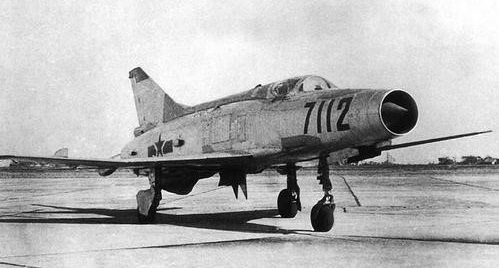
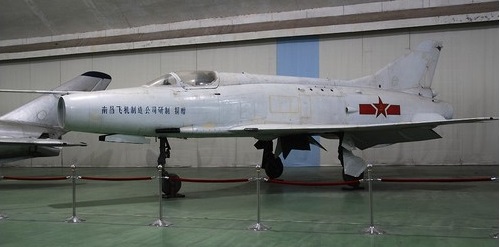
In the mid 1960s, the North Vietnamese had shown the efficacy of the use of “guerilla interceptors” – small aircraft operating from camouflaged airfields to ambush enemy aircraft. While the PLAAF recognized the practicality of such operations and wished to apply them locally, the aircraft currently available for the role – MiG-17s, -19s, and -21s – were less than ideal. Thus, in 1969, Nanchang was issued requirements for a new lightweight fighter with a loaded weight under 4,500kg. Development proceeded and by August, they were performing wind tunnel testing, and by the next year, the design had started prototyping. The resulting J-12 was simple, coming in at 4,530kg. The J-12 was armed with a single 30mm and 23mm cannon in the wing roots, and was powered by a single WP-6Z turbojet. To simplify the design, it used only an optical gunsight, and lacked area ruling. To facilitate rough airfield operations, intake flow could be diverted through auxiliary ports on the fuselage sides.

When the J-12 first flew in December 1970, testing revealed a top speed of 1,300km/h, making the J-12 the lightest supersonic fighter ever to fly. Range was a short 688km, making the design effectively a point-defence interceptor. The only guided munitions that the aircraft could carry were simple IR-guided short range AAMs. In all, nine J-12s were built, with testing continuing until 1977. At this point, the shortcomings of the design were found to greatly outweigh its benefits, and the design was cancelled in favour of further development of the J-7 and J-8.

J-12