North American AJ Savage / A-2 Savage / NA-146 / NA-163 / A2J

North American XA2J-1 124439

The first heavy attack type to see service from aircraft-carriers of the US Navy, the North American AJ Savage was developed (as the North American NA-146) using two Pratt & Whitney radial engines, augmented by a tail-mounted Allison J33 turbojet. In practice the type saw only limited use in the strategic bombing role for which it had been designed, being replaced from the mid 1950s onwards by the Douglas A3D Skywarrior, but several were subsequently modified to serve as inflight-refuelling tankers with a hose-and-reel unit in place of the turbojet.

North American XA2J-1 Article

In order to meet the specification’s demands a large aircraft was required, this in turn dictating the need far an unusual composite powerplants configuration – a pair of Pratt & Whitney R-2800 Double Wasp radials as the primary engines augmented by an auxiliary Allison J33 turbojet in the lower rear fuselage.

This third engine was intended to provide a high speed ‘dash’ capability during the attack phase of the aircraft’s operation and for extra boost on takeoff when required. Other features included shoulder mounted folding wings, tricycle undercarriage, wing tip fuel tanks and (on the first models) dihedral tail planes.

An initial contract for three prototype XAJ-l (NA-146) aircraft was awarded to North American in late June 1946, and construction of these got under way almost immediately although more than two years were to elapse before the Savage took to the air for the first time on 3 July 1948. In its original guise the Savage was manned by a crew of three and was intended to carry a 4536-kg (10,000-lb) weapon load in an internal bomb bay in the aircraft’s belly. The three prototypes (121460 to 121462), were fitted with a flat horizontal tail.
North American AJ-1

These were followed by 55 initial production AJ-1s (NA-156, -160, and -169, 122590 to 122601, 124157 to 124186, and 124850 to 124864), the first one flying on 10 May 1949. The horizontal tail with dihedral. Production-configured aircraft began to enter service with Composite Squadron VC-5 in mid-September 1949, but it was not until the end of August 1950 that this unit was considered operationally ready, this marking the climax of several months of sea-borne trials aboard the USS Coral Sea. The AJ-1 was re-designated A-2A in 1962. The first carrier landings were performed aboard USS Constellation in August 1950. The first variant to see service with the US Navy was the AJ-l, of which 40 were built, and these were followed by 55 examples of the AJ-2 (NA-163and NA-184, 130405 to 130421, and 134035 to 134072) which featured slightly more powerful radial engines as well as increased fuel capacity, a slightly longer fuselage and a taller fin and rudder to improve handling qualities. The AJ-2 first flew on 19 February 1953 and was re-designated A-2B in 1962.
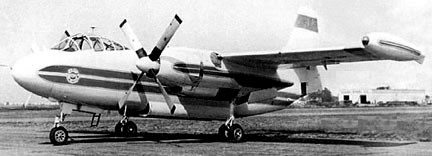
North American AJ-2 Civil borate bomber N101Z

This photo is AJ-2 130418, probably taken in 1971, possibly at Bridgeport CT. It is wearing markings applied by Avco Lycoming while used an engine test-bed, registered N68667. Following its naval use, it was used as a fire bomber in Oregon, registered N101Z, before going to new owners. In 1984 it was flown to the Naval Air Museum at Pensacola and is now on display in USN markings.

Preceding the AJ-2 bomber was the photo-reconnaissance AJ-2P (NA-175 and NA -183, first flight 30 March 1952) equipped with 18 cameras for day and night photography at high and low altitudes, photo-flash bombs in the weapons bay, automatic control of most of the cameras, the associated electronics equipment in a modified nose and additional fuel capacity. Four US Navy combat squadrons were still operating the AJ-2 in 1958 and these received AJ-2Ps.

A total of 30 AJ-2Ps was built, 128043 to 128051, 129185 to 129195, 130422 to 130425, and 134073 to 134075, this being the last model to see squadron service, not being retired from the active inventory until the beginning of 1960. The AJ-2P has distinctive radar “thimble” nose and zero-dihedral stabilizer.

AJ-2P Savage

A number of AJ-1s and AJ-2s were converted to flight refuelling tankers with a hose-and-reel unit installed in the weapons bay. The few Savages still in service in September 1962 when all USAF and USN aircraft designations were combined into the existing Air Force system were redesignated A-2A (AJ-1) and A-2B (AJ-2).

AJ Air Tankers of Van Nuys CA converted two as fire fighters after removing the J-33 in the tail, showing one in action with no big prop spinners and a firefighting scheme with a big #88 about 1988.

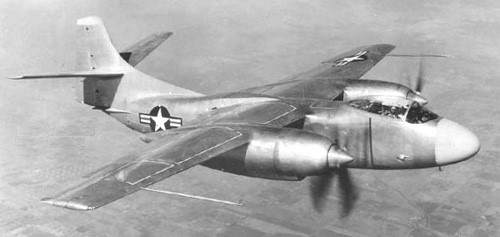
In 1948 North American began work on the NA-163 turboprop-powered derivative of the AJ-1 Savage, two prototypes being ordered in September of that year. The US Navy specified major changes, including deletion of the Allison J33 booster engine, and the first prototype North American XA2J-1, 124439, did not fly until 4 January 1952. Development was hampered by problems with the Allison XT40-A-6 engines, each of which comprised two T38 engines driving contra-rotating propellers through a gearbox, allowing either T38 in each unit to be shut down for long-range cruise. The three-man crew was provided with a pressurised cabin and defensive armament comprised two 20mm guns in a remotely-controlled barbette. Maximum offensive load was 4911kg of bombs. The completed second prototype, 124440, was never flown. One ended up being burned in a fire-fighting demo at Edwards AFB in 1962.

AJ-2 Savage
Engines: 2 x 2,500-hp (1864-kW) Pratt & Whitney R-2800-48 radial and 1 x 4,600-lb (2087-kg) thrust Allison J33-A-10 turbojet
Max speed: 628 km/h (390 mph)
Service ceiling: 12190 m(40,000 ft)
Range 3540 km (2,200 miles)
Empty wt: 12247 kg (27,000 lb)
Maximum take-off wt: 23396 kg (51,580 lb)
Wing span 21.77 m (71 ft 5 in)
Length 19.23 m (63 ft 1 in)
Height 6.22 m (20 ft 5 in)
Wing area 77.62 sq.m (835.5 sq ft)
Armament: up to 4536 kg (10,000 lb) of bombs carried internally.
Crew: 3

AJ-2
Engines: 2 x Pratt & Whitney R-2800-44W, 1790kW + Allison J33-A-19 auxiliary turboprop, 2087kg
Max take-off weight: 23973 kg / 52852 lb
Wingspan: 22.91 m / 75 ft 2 in
Length: 19.20 m / 62 ft 12 in
Max. speed: 758 km/h / 471 mph
Crew: 3

AJ-2P Savage
Carrier-based photo-reconnaissance and attack bomber
Engines: 2×2,400 h.p. Pratt & Whitney R2800-48W and 1 x 4,600 lb. thrust Allison J33-A-10
turbojet.
Wingspan: 71 ft. 5 in
Length: 65 ft.
Loaded weight: 55,000 lb.
Max. speed: 425 m.p.h.
Ceiling: 40,000 ft.
Typical range: More than 3,000 miles at 290 mph
Payload: 12,000 lbs internal
Operational equipment: 18 cameras
Armament: 2 x 20mm cannon
Crew: 3

XA2J-1
Engines: 2 x Allison XT40-A-6 turboprops
Armament: 2 x 20mm cannons, 4900kg of weapons
Crew: 3

North American A3J / A-5 Vigilante

RA-5C

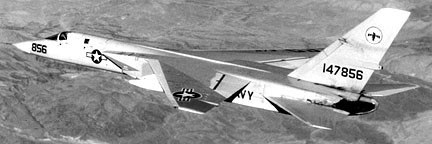
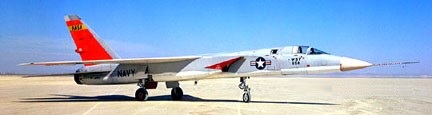
The Vigilante was designed as a Mach 2 carrier-based attack aircraft capable of carrying nuclear or conventional bombs. The airframe has high-set wings sweptback at 37.5 degrees, and sweptback tail surfaces, both horizontal and vertical surfaces consisting of one-piece all-moving surfaces. There are three section spoilers instead of ailerons. Three-section leading-edge flaps are on each wing. There is a flap blowing system for the trailing-edge flaps. The wingtips fold upward, fin-tip sideways and fuselage nose upward for stowage on board ship. The engines are mounted side-by-side in the rear fuselage, with wedge-shape air intakes on each side of the fuselage. A tricycle undercarriage has a single wheel on each unit, the nosewheel retracts inward and mains retract inward.

North American A3J / A-5 Vigilante Article

The first prototype flew on 31 August 1958.

A3J-1 Vigilante no.1

Two YA3J-1 (NA-233, -247 / 145157/145158) were built, powered by 16150 lb GE YJ79-GE-2. First deliveries were made to the US Navy were made in June 1961 for service trials. They became YA5-A in 1962.

57 production A3J-1 (NA-247, -258, -263, -269, -272) attack aircraft were delivered to the US Navy during 1960, becoming operational on board USS Enterprise in February 1962 (146694/146702, 147850/147863, 148924/148933, 149276/149299). These became A-5A.

A-5A 147856
A-5A 147858

In 1962 six A3J-2 (NA-269) were built (149300/149305) with Additional fuel in a humped fuselage-top decking. First flying on 29 April 1962, they became A-5B.

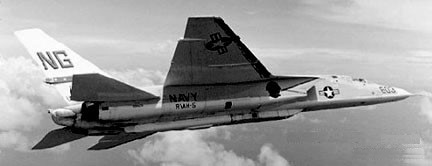
First flying on 30 June 1962, 55 A3J-3P (149306/149317, 150823/150842, 151615/151634, 151726/151728, 156608/156643) were built as a long-range photo-recon version of the A3J-2, plus 59 converted A-5A and A-5B. These became A-5C/RA-5C in 1962.

North American A-5C 156638
North American RA-5C

The other major version of the Vigilante was the RA-5G, a reconnaissance type of which more than 90 were built as new; most of the A-5A were subsequently converted to this standard.

Gallery

A3J-1
Engines: 2x General Electric J79-GE-2, 10,500 lb (15,000 with reheat)
Wingspan: 53 ft
Length: 73 ft
Height: 20 ft

A3J-1 / A-5A
Engines: 2 x J-79, 17000 lb
Wingspan: 53’0″
Length: 76’6″
Max speed: 1385 mph
Cruise speed: 805 mph
Stall: 156 mph
Range: 985 mi
Ceiling: 43,800′

A3J-3P / A-5C / RA-5C
Engines: 2 x J79, 17860 lb
Length: 76’6″
Useful load: 42,090 lb
Max speed: 1290 mph
Cruise speed: 783 mph
Stall: 154 mph
Range internal fuel: 547 mi
Range max fuel: 944 mi
Ceiling: 48,400′
Combat radius: 1,500 mi

RA 5C Vigilante
Engines: 2 x GE J-79-8(N) turbo-jet, 75.6kN
Max take-off weight: 27300 kg / 60187 lb
Wingspan: 16.2 m / 53 ft 2 in
Length: 22.3 m / 73 ft 2 in
Height: 5.9 m / 19 ft 4 in
Wing area: 65.0 sq.m / 699.65 sq ft
Max. speed: M2+
Ceiling: 18300 m / 60050 ft
Range: 3700 km / 2299 miles
Crew: 2

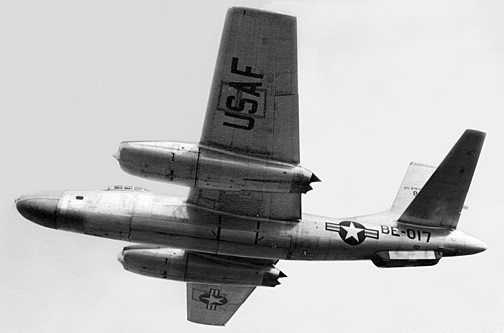
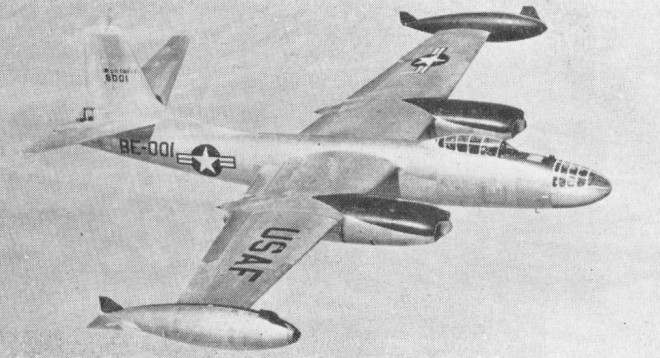
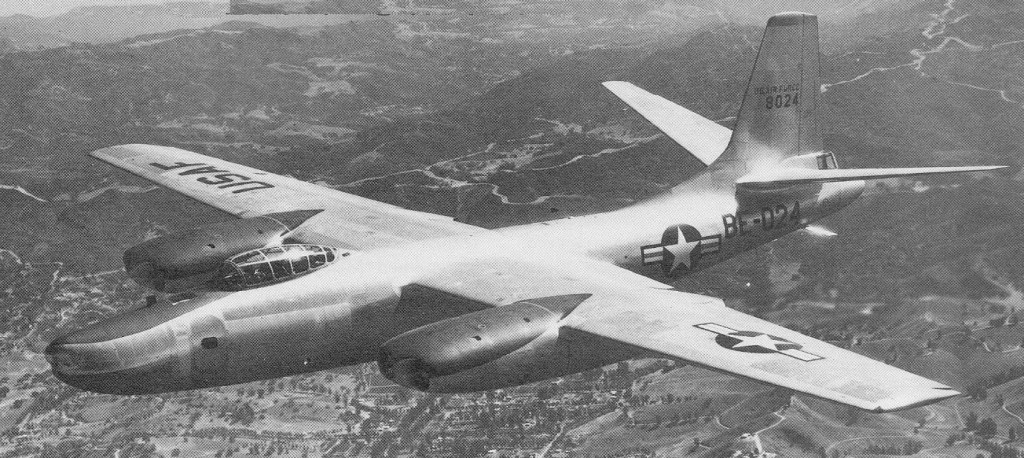
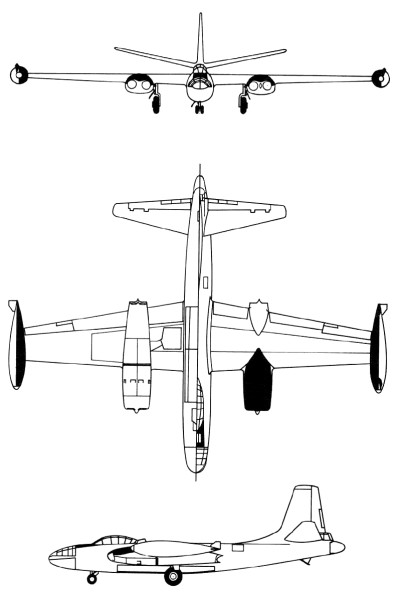
North American B-45 Tornado

RB-45C

In 1943, aware of Nazi Germany’s advances in the field of jet propulsion, the Army Air Forces (AAF) asked the General Electric Company to devise a more powerful engine than its prospective axial turboprop. This eventually brought about the production of the J35 and J47 turbojets. In 1944, 1 year after the jet engine requirements were established, the War Department requested the aircraft industry to submit proposals for various jet bombers, with gross weights ranging from 80,000 to more than 200,000 pounds, and only 4 contractors answered the call. The design was frozen in early 1945.

North American B-45 Tornado Article

Pressed for time, the AAF in 1946 decided to skip the usual contractor competition, review the designs, and choose among the proposed aircraft that could be obtained first. The multi-jet engine B-45, with the understanding that if a less readily available bomber was to prove superior enough to supplant it (which the Boeing XB-47 did), that aircraft would also be purchased.

The design was generally conventional, though the main gears had very large single wheels which retracted sideways into the wing roots. In normal bomber versions the bomb aimer/navigator occupied the capacious pressurized nose, the two pilots sitting in a tandem fighter like cockpit farther aft and above, with a large multi pane canopy. The crew door was on the left side of the forward fuselage. A gunner was housed in a pressurized tail compartment.

The first flight was on 17 March 1947 (piloted by George Krebs) and testing of the XB-45 prompted pre-production changes. North American Aviation redesigned the nose panel, increased the aircraft’s stabilizer area, and lengthened the tailplane by nearly 7 feet.

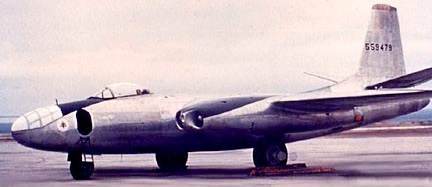
North American XB-45 45-59479
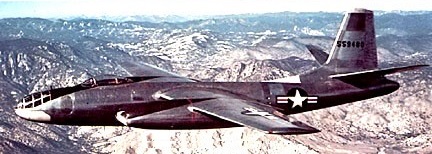
North American XB-45 45-59480

In August 1948, 22 of the 90 B-45s, ordered less than 2 years before, reached the newly independent Air Force. However, the B-45’s weight and takeoff distances had increased, and numerous structural and mechanical defects appeared.

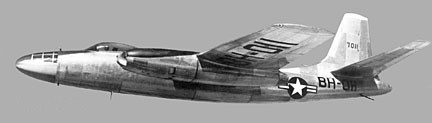
In November 1948 the B 45A (NA-147) went into service with the 47th Bombardment Group of the USAF, later based in England. Ninety-six were built (47-001/097, the last one of which was a static test-frame.

North American B-45A 47-011

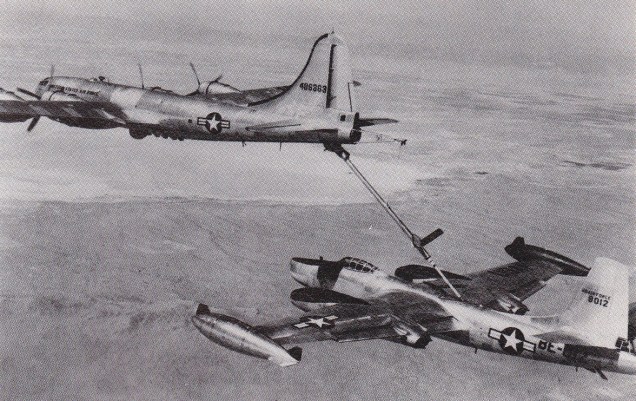
In June 1951 an RB-45 became the first jet bomber to be refuelled in flight by a Boeing KB-29.

Boeing KB-29 and North American RB-45 Tornado

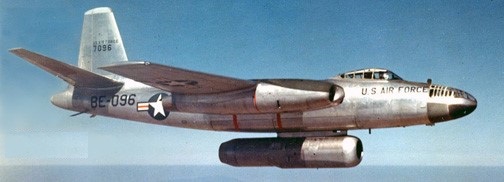
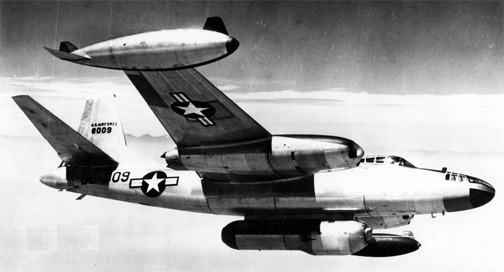
The DB-45A were conversion of B-45A as guided missile director. The JB-45A 47-096 and JB-45C of 1950 were engine test beds for Westinghouse and General Electric.

North American JB-45A 47-096
North American JB-45C 48-009

The fourteen TB-45A were target tugs modified from B-45A.

The B-45B was a project only, none were built.

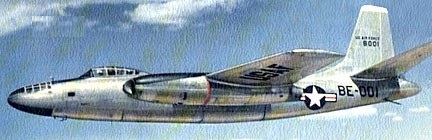
Ten B-45C (NA-153 48-001/010) were built in 1950. The DB-45C were conversions of B-45A as guided missile director.

North American B-45C 48-001

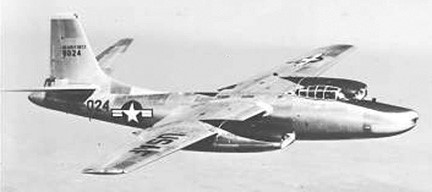
Thirty-three RB-45C and JRB-45C (NA-153 48-011/043) were built in 1949 for Photo-recon.

North American RB-45C 48-024
North American JRB-45C 48-017

As the B-47’s future production had become certain, in mid-1948 the Air Staff questioned the B-45’s value as well as its potential use. As President Truman slashed Air Force expenditures, the programmed production of B-45s was reduced to a total of 142 aircraft at a unit cost of US$1,081,000.

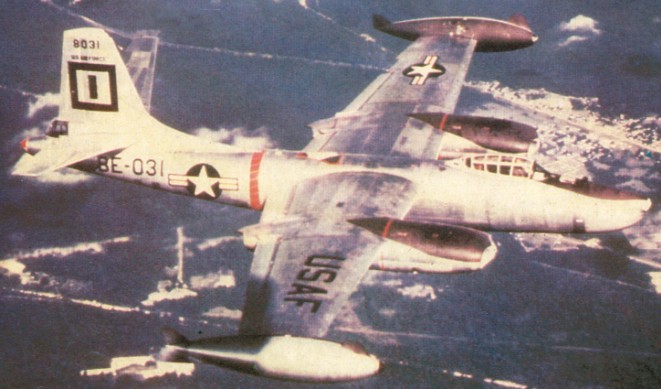
Only 96 B 45As were built, plus 10 of the stronger and more powerful B 45C which was disting¬uished by large wingtip tanks. Many A models were modified to B 45C standard. The final 33 aircraft were RB-¬45C camera aircraft, some of which (unlike the bomber versions) operated over Korea. Some had water injection tanks hung under the twin engine nacelles, jettisoned after take off.

Although continuously plagued by engine problems, component malfunctions, lack of spare parts, and numerous minor flaws, the B-45 regained importance. The B-45 was designed to carry both conventional and atomic bombs. Under the code name of Backbreaker, several distinct atomic bomb types and large amounts of new electronics support equipment had to be fitted in place of the standard components. In addition, the 40 B-45s allocated to the Backbreaker program also had to be equipped with a new defensive system and extra fuel tanks. Despite the magnitude of the modification project, plus recurring engine problems, atomic-capable B-45s began reaching the United Kingdom in May 1952, and deployment of the 40 aircraft was completed in mid-June, barely 30 days behind the Air Staff deadline.

B-45C Tornado

The British and American military intelligence services collaborated under utmost secrecy. Thus in 1952 four American RB-45C reconnaissance aircraft, wearing British colours but without registration marks, operated from RAF Sculthorpe on photo-missions over East Germany and other Eastern-bloc countries. Very up-to-date for the time, the RB-45C was equipped with 12 cameras. The aircraft were based at Sculthorpe in January 1952 as a detachment of the 91st Strategic Reconnaissance Wing of SAC.

The last B 45s were withdrawn from combat duty in mid-1958. The entire contingent, Backbreaker and reconnaissance models included, was phased out by 1959. Yet, the B-45 was the Air Force’s first jet bomber and as the first atomic carrier of the tactical forces.

RB-45C Tornado

Gallery

XB-45 / NA-130
Engines: 4 x GE TG180, 4000 lb
Speed: 536 mph

B-45A Tornado
Engines: 4 x GE J47, 5200 lb
Wingspan: 89’1″
Length: 75’4″
Max speed: 575 mph
Cruise speed: 455 mp
Crew: 3-4

B 45C Tornado / NA-153
Engines: four 2359 kg (5,200 lb) thrust General Electric J47 GE 13/15 turbojets (some with water injection 2722 kg/6,000 lb)
Wing span over tip tanks: 29.26 m (96 ft 0 in)
Length: 22.96 m (75 ft 4 in)
Height 7.68 m (25 ft 2 in)
Wing area: 109.2 sq.m (1,175.0 sq ft)
Empty weight 22182 kg (48,903 lb)
MTOW: 51235 kg (112,952 lb)
Max speed 932 km/h (579 mph) at low level
Service ceiling: 13165 m (43,200 ft)
Range 3074 km (1,910 miles)
Armament: two 12.7 mm (0.5 in) machine guns in tail turret
Internal bombload of up to 9979 kg (22000 lb).
Crew: 3
North American T-2 Buckeye / Rockwell T-2

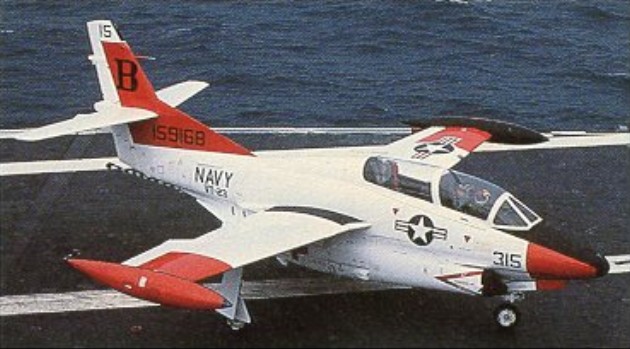
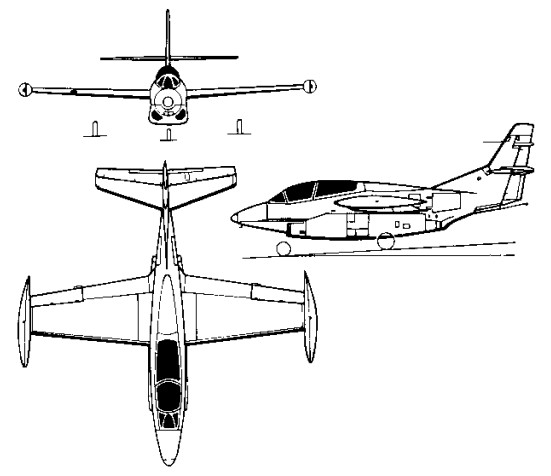
With a requirement in 1956 for a multi-role jet trainer, the US Navy awarded North American a contract to build its North American NA-241 design, which combined proven components and equipment from earlier aircraft manufactured by the company. Ordered as the T2J-1 (later T-2A), this trainer combined a wing derived from the FJ-1 Fury and the control system of the T-28C Trojan with a single 1542kg thrust Westinghouse J34-WE-36 turbojet, and accommodated the instructor and pupil in tandem, seated (eventually) on zero-zero ejection seats.

North American T-2 Buckeye Article

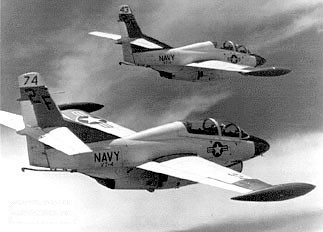
The first of six initial production T-2As was flown on 31 January 1958 and deliveries to the US Navy began in July 1959, by which time the name Buckeye had been allocated to this trainer. Equipping US Navy Training Squadrons VT-4, -7, -9 and -19, a total of 217 T-2As was built.

Two T-2A were modified to serve as YT-2B prototypes, in which the single J34 turbojet was replaced by two 1361kg thrust Pratt & Whitney J60-P-6 turbojets. The first was flown on 30 August 1962, being followed by 97 similar T-2B aircraft , 152382-152391, 152440-152475, 153538-153555, and 155206-155238 (NA-280, -288, -291, -294, -310) from 1962.

Rockwell-North American T-2B

Final production version was the 1958 T-2C (NA-307, -318, -332, -340) which introduced General Electric J85 turbojets, preceded by a single YT-2C prototype conversion from a T-2B.

A total of 273 was built under US Navy contracts before production ceased, comprising 231 T-2Cs for navy use (155239-155241, 156686-156733, 157030-157065, 158310-158333, 158575-158610, 158876-158911, 159150-159173, 159704-159727) plus 12 T-2D and 30 T-2E aircraft in 1969, procured for Venezuela and Greece respectively.

The DT-2C was a drone director conversion.

It was to be re¬tired in favour of the more advanced T 45 Goshawk which has cockpit instrumentation similar to the F/A-18 Hornet.

Gallery

T 2A
Engine: 1 x 3,400 lbs.t. (1542 kpg) Westinghouse J34 WE 36
Max speed, 492 mph (792 kph) at 25,000 ft (7620 m)
Cruise, 422 mph (679 kph)
Initial climb, 5,000 fpm (25.4 m/sec)
Service ceiling, 42,500 ft (12 950 m)
Range, 550 mls (885 km)
Empty weight, 6,893 lb (3 127 kg)
Loaded weight, 9,916 lb (4498 kg)
Span, 36 ft (10.97 m)
Length, 38 ft 8 in (11.78 m)
Wing area, 255 sq.ft (23.7 sq.m)

T 2B
Engines: 2 x 3,000 lbs.t. (1316 kgp) J60.
MTOW: 12,300 lb
Top speed: 545 mph

YT-2B / T 2B
Engines: 2 x J60-P, 3,000 lbs.t. (1316 kgp)
Useful load: 3842 lb
Speed: 540 mph
Ceiling: 44,000 ft

T-2C / DT-2C
Engines: 2 x General Electric J85-GE-4 turbo-jet, 13.1kN / 2950 lb
Max take-off weight: 5978 kg / 13179 lb
Empty weight: 3681 kg / 8115 lb
Wingspan: 11.63 m / 38 ft 2 in
Length: 11.79 m / 38 ft 8 in
Height: 4.51 m / 14 ft 10 in
Wing area: 23.70 sq.m / 255.10 sq ft
Useful load: 5065 lb
Max speed: 521 mph
Cruise speed: 465 mph
Ceiling: 13535 m / 44400 ft
Range: 1465 km / 910 miles
Crew: 2

T-2J
Engines: 2 x Westinghouse J34, 3400 lb
Wingspan: 36’0″
Length: 38’4″
Max speed: 494 mph
Cruise speed: 417 mph
Stall: 67 mph
Range: 967 mi

North American T-2 Buckeye

Nord 2200

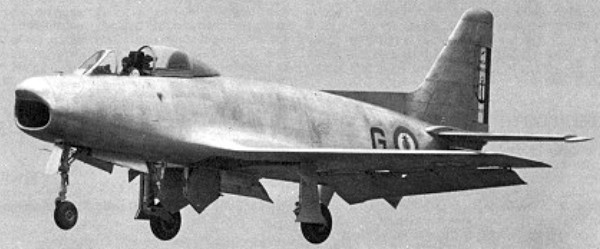
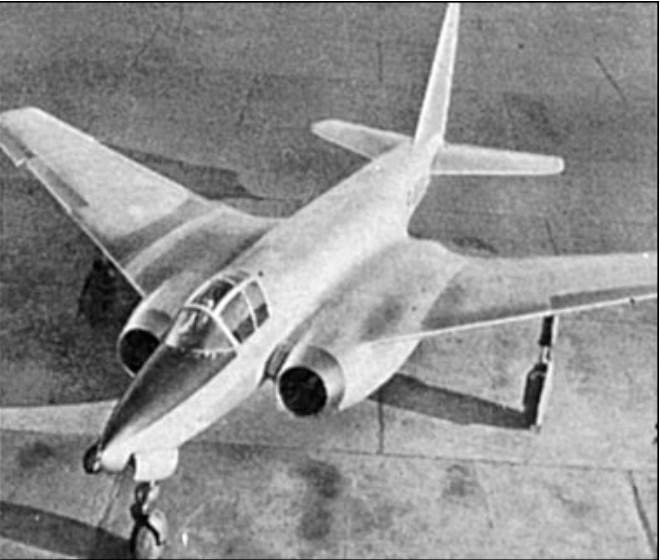
In June 1946, the Service Technique Aeronautique issued a preliminary requirement for a shipboard fighter armed with three 20mm or 30mm cannon and capable of carrying two 500kg bombs or eight 90mm rockets. Responding to this requirement, the SNCA du Nord tendered the Nord 2200, designed by a team led by Messrs Coroller, Dupin and Buret, in competition with the Aerocentre NC 1080 and the Arsenal VG 90.

Powered by a 2268kg Hispano- Suiza Nene 102 turbojet and featuring a 24 degree sweptback laminar-flow wing with large Fowler-type flaps, the Nord 2200 was first flown on 16 December 1949, and was fitted with neither wing folding nor armament. On 24 June 1950, the sole prototype was damaged and the opportunity was taken to fit a servo control system, introduce redesigned and larger vertical tail surfaces, and make provision for an AI radar scanner over the engine air intake. Flight testing was resumed on 24 May 1951, but in 1952 the decision was taken by the Aeronavale to adopt the de Havilland Sea Venom to meet its shipboard fighter requirement. Nevertheless, flight testing of the Nord 2200 continued until June 1954.

Max take-off weight: 7890 kg / 17395 lb
Empty weight: 4830 kg / 10648 lb
Wingspan: 12.00 m / 39 ft 4 in
Length: 13.90 m / 46 ft 7 in
Height: 4.80 m / 16 ft 9 in
Wing area: 31.60 sq.m / 340.14 sq ft
Max. speed: 936 km/h / 582 mph

Nord 1601

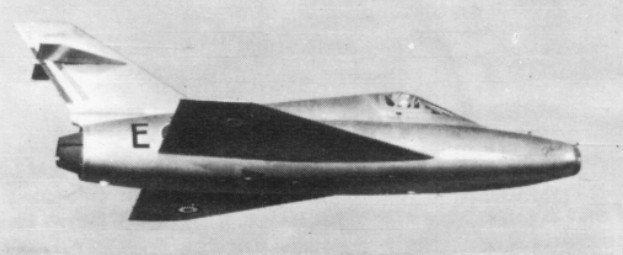
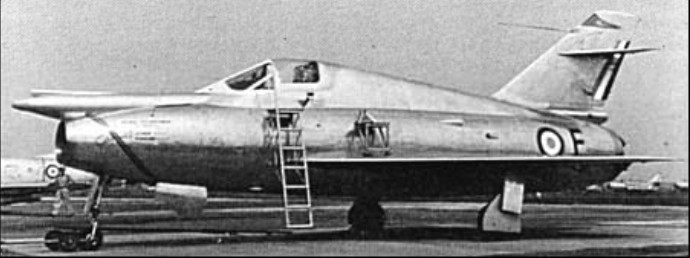
Under the designation Nord 1601, Nord designed a single-seat twin turbojet-powered aircraft to investigate the aerodynamic capability and efficiency of swept wings and related high-lift devices. A cantilever mid-wing monoplane with 33° of sweepback on the wing leading edges, the N 1601 had a wing incorporating ailerons, spoilers, leading-edge slats and trailing-edge flaps. The configuration included swept tail surfaces, and there were retractable tricycle landing gear and two 1814kg thrust Rolls-Royce Derwent 5 turbojet engines in underslung wing-mounted nacelles on each side of the fuselage. The pilot was accommodated on a Martin-Baker ejector seat in a cockpit enclosed by a jettisonable canopy. The aircraft was first flown on 24 January 1950, and the research programme of the 12.46m span N 1601, which had a maximum speed of 1000km/h and a ceiling of 12000m, provided valuable design information. An all-weather fighter version of this aircraft was allocated the project number N 1600 but was not built.

Nord 1601
Engines: 2 x Rolls-Royce Derwent 5 turbojets, 1814kg
Wingspan: 12.46 m / 41 ft 11 in
Max. speed: 1000 km/h / 621 mph
Ceiling: 12000 m / 39350 ft

Nord N.1500 Griffon

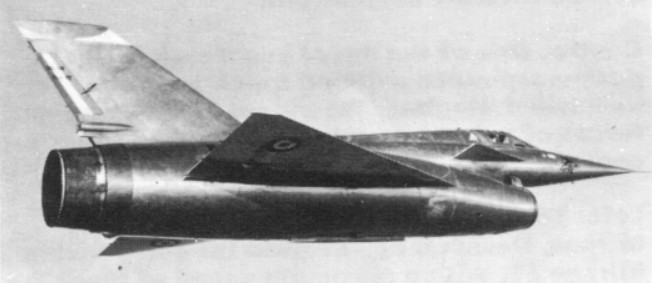
The Gerfaut lB and Gerfaut II prototypes paved the way for the N.1500 Griffon prototype of interceptor potential. After early tests of the Gerfaut la, Nord designed and built the Nord 1500-01 Griffon I research aircraft, which was intended to flight-test a combined turbojet-ramjet power unit. A delta wing aircraft with 60 degrees of sweepback on the leading edge, the N 1500 had elevons for control in pitch and roll. Thus the tail unit comprised only swept vertical surfaces, and fixed foreplanes were mounted on each side of the forward fuselage.

This flew on 20 September 1955 with a 4100kg thrust SNECMA Atar 101G21 afterburning turbojet, but was soon fitted with the planned combination powerplant comprising a 3800kg thrust Atar 101F turbojet and a Nord ramjet to produce the Griffon II and achieved Mach 1.85 in 1957. This was capable of supersonic performance on its ramjet, but was not developed into an operational type.

At the completion of initial testing the airframe was modified to accept a 3500kg thrust Atar 101E3 turbojet within the ducting of an integral ramjet of Nord design, the turbojet being located just forward of the ramjet burners. Then redesignated N 1500-02 Griffon II, it was flown first on 23 January 1957, completing more than 200 test flights before the Nord research programme ended in 1959.

27 October 1958 pilot Andre Turcat set closed circuit speed record of 1,638 kmh. On 25 February 1959 it set a 1018 mph, world speed record over a 100 km closed course and 13 October 1949 saw 1448 mph at 50,000 ft.

Some testing was carried out under USAF research contract.

Gallery

Wingspan: 26.6 ft
Length: 47.75 ft

Nord N.1402 Gerfaut / 1405 Gerfaut II

N.1402 Gerfaut I

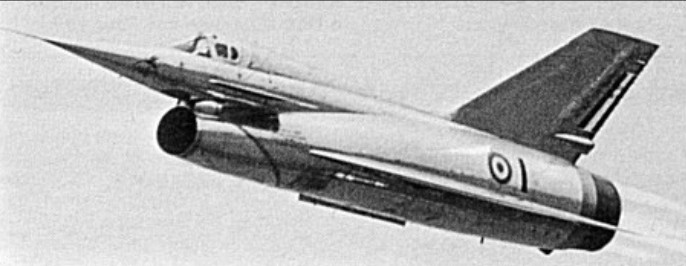
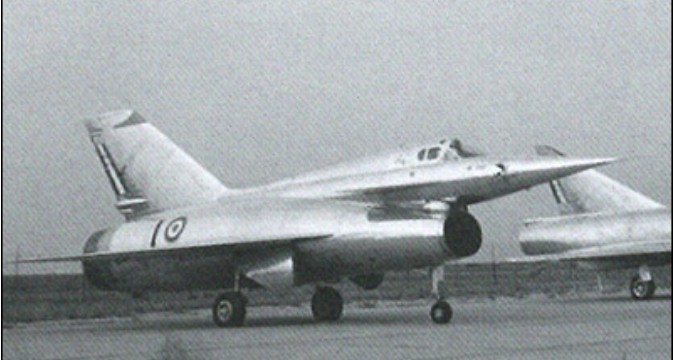
Nord was another protagonist of the tailless delta configuration, and on 3 August 1954 is N.1402 Gerfaut I prototype with the Atar 101D3 turbojet became the first aeroplane to exceed Mach 1 in level flight without an afterburner or a supplementary rocket motor. Gerfaut IB and Gerfaut II prototypes were also produced, and these paved the way for the N.1500 Griffon prototype of interceptor potential.

Nord N.1402 Gerfaut / 1405 Gerfaut II Article

The Gerfaut II was a development of the Gerfaut 1A, which was the first high-powered jet delta-wing aircraft to fly in France (15 January 1954), powered by a 43.15kN SNECMA Atar 101G turbojet with afterburner. The Gerfaut II first flew on 17 April 1956 and on 16 February 1957 established a number of time-to-height records from a standing start, including a climb to a height of 6,000m in 1 minute 17 seconds and to 9,000m in 1 minute 34 seconds. The Gerfauts were used to collect data for a high-speed fighter design.

Noel Penny Turbines NPT301

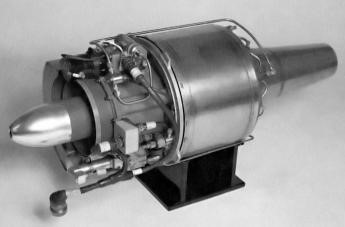
The NPT 301 Turbojet has been developed to equip reusable drones, and target drones requiring power 130-150 Kgp.

The NTP 301-3/4 version has been specially developed to fit the CMC Leopard which made its first flight in January 1989.

NPT 301 Turbojet
Length: 1000 mm
Diameter: 343 mm
Weight: 40 to 45 Kg
Power: 137-143 Kgp

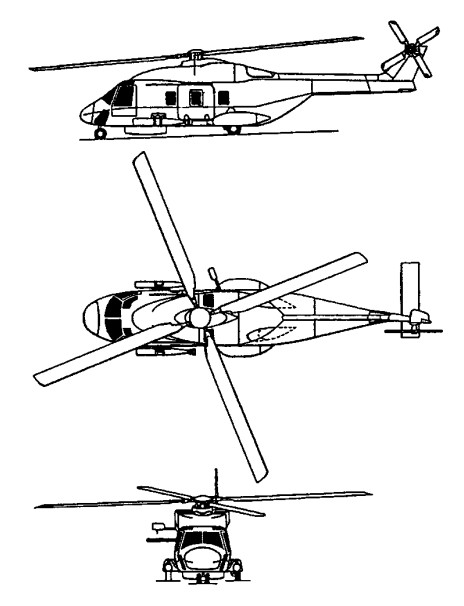
NHI NH90

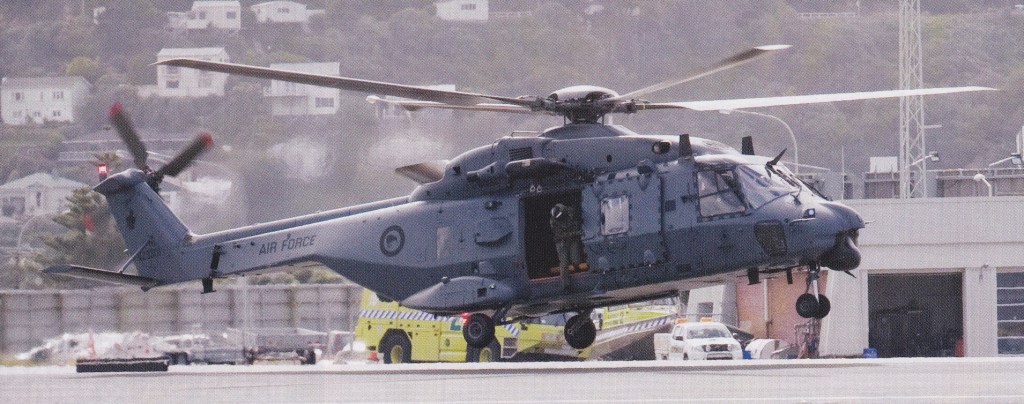
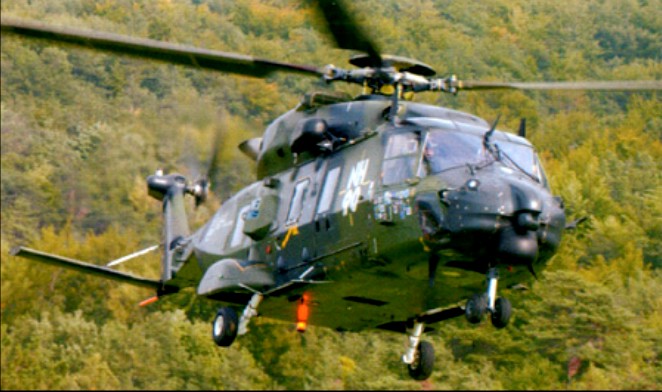
In the 8000/9000kg class, the NH90 was developed and qualified in both a Naval and Army variant and powered by RTM322 engines. A rear ramp option is available for the Army variant. Designated as the TTH (Tactical Transport Helicopter) and NHF for the NATO Frigate Helicopter, the NH90 has fly-by-wire controls and is capable of all-weather operations either on land or at sea. In the tactical version it carries 20 fully-equipped troops or 2500kg of cargo. In the NHF version can undertake multimaritime roles including the ASW or anti-surface vessel role and can carry up to 700kg of missiles.

Five European nations signed the memorandum in 1985 allowing the development of the NH 90. The work is being shared by Eurocopter France (43%), Agusta (26%), Eurocopter Germany (24%) and Fokker (7%).

Largely built of composite materials, the NH90 was in service with France, Italy, Germany, the Netherlands, and New Zealand.

NHI NH90 Articles

NH90 Solomons Deployment 2018 Article

Gallery

NH-90
Engine: 2 x RTM 322-01/9 turboshaft, 1484kW at take-off
Main rotor diameter: 16.3m
Length with rotors turning: 16.3m
Height with tail rotor turning: 5.44m
Max take-off weight: 10000kg
Empty weight: 5400kg
Max speed: 290km/h
Cruising speed: 259km/h
Service ceiling: 4250m
Range: 1204km
Payload: 2000kg

NH90 TTH
Engine: 2 x R-RTM 332 or 2 x GE CT7-6E
Instant pwr: 1367 or 1360 kW
MTOW: 10,000 kg
Payload: 4460 kg
Max speed: 155 kts
Max range: 930 km
HIGE: 9,600 ft
HOGE: 7878 ft
Crew: 2
Pax: 20