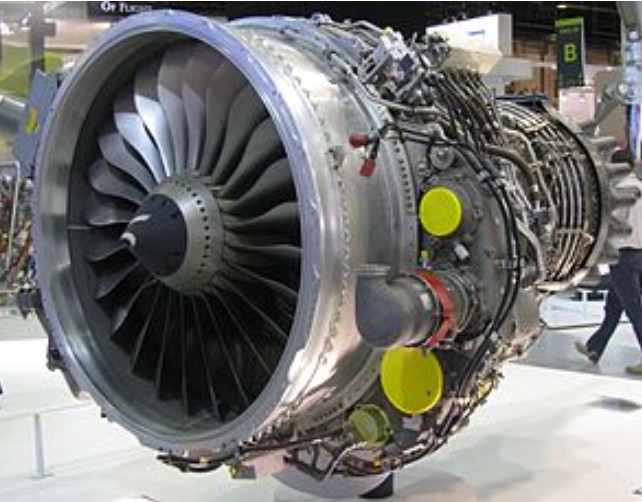
The PowerJet SaM146 is a turbofan engine produced by the PowerJet joint venture between Snecma of France and NPO Saturn of Russia. Snecma is in charge of the core engine, control system (FADEC), transmissions (accessory gearbox, transfer gearbox), overall engine integration and flight testing. The SaM146 design is based on the CFM56 and has been conceived to meet customer requirements regarding fuel burn, cost of operation and dispatch reliability.
The core was developed by Snecma, drawing on its M88 ‘hot section’ military engine experience and the DEM21 core demonstrator project – with its six-stage compressor and single-stage, high-pressure turbine with active blade-tip clearance control – and various other modern design features (such as single-piece bladed disks).
The SaM146 provides 62 to 77.8KN of thrust (6,200 to 7,700 kg). In April 2003, Sukhoi Civil Aircraft Company selected the SaM146 for its Superjet 100 regional aircraft, to be produced in 75 and 95-seat versions. NPO Saturn is responsible for the components in the low pressure section and engine installation on the Sukhoi Superjet 100 regional aircraft and ground testing.
First run in 2008, the SaM146 utilizes a single-stage turbine and as a new design has been developed to meet current and projected environmental standards, including regulations of the ICAO Committee of Aviation Environmental Protection Sixth Session (CAEP VI), set to become effective in 2008.
Blisk technology is used to improve fuel economy and lower maintenance.
On 23 June 2010, it was announced that EASA certified PowerJet for its SaM146 engine. It gained Russian certification in August 2010.
Applications: SaM146 1S15 Sukhoi Superjet 100/75
SaM146 1S17 Sukhoi Superjet 100/95
SaM146 1S18 Sukhoi Superjet 100/95LR
Specifications: SaM146-1S17 Type: Twin spool, High-bypass turbofan Length: 86 in (2.2 m) Diameter: 48.2 in (1.22 m) Dry weight: 1,708 kg (3,765 lb) Compressor: 1 stage fan, 3-stage low pressure, 6-stage high pressure axial compressor Combustors: Annular Turbine: 1-stage high pressure, 3-stage low pressure Fuel type: Jet A, Jet A-1, TS-1, RP Maximum thrust: 76.84 kN (17,270 lbf) (Maximum takeoff thrust) Overall pressure ratio: 23.8:1 Bypass ratio: 4.43:1 Specific fuel consumption: 0.374 lb/lbf-hr (Dry) and 0.629 lb/lbf-hr (Cruise) Thrust-to-weight ratio: 5.3:1
PowerJet is a joint venture between Snecma of France and NPO Saturn of Russia to produce PowerJet SaM146 turbofan engine. Snecma is in charge of the core engine, control system (FADEC), transmissions (accessory gearbox, transfer gearbox), and NPO Saturn is responsible for the components in the low pressure section and engine installation on the Sukhoi Superjet 100 regional aircraft and ground testing.
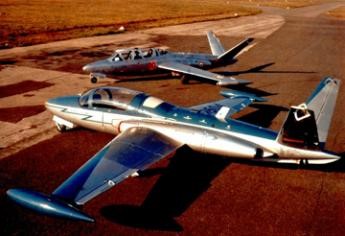
A new Heinkel company (mid of fifties) began by forming the Flugzeug Union-Süd Group, in collaboration with Messerchmitt AG., to produce 210 Fouga Magister for the new German air force. In cooperation with Potez, it developped from the Magister a new four seat executive, training and liaison aircraft known as the Potez-Heinkel CM-191. Heinkel was entirely responsible of the production.
The prototype of the four-seat Potez-Heinkel CM191 was flown for the first time at Toulouse on 19 March 1962. Jacques Grangette, Potez’s chief pilot was at the controls, with P.Caneill. The CM 191 first flight lasted forty minutes and a second flight of one hour and ten minutes duration was made on the same day.
Two prototypes were built. They were for many years as experimental aircraft to test various equipment or as liaison aircraft
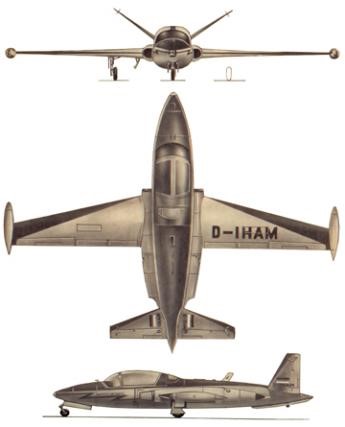
Potez – Heinkel CM191 # 1 received a double registration from the beginning as D- 9504 and D- IHAM. It made its first flight in Toulouse March 19, 1962 and after 109 hr of manufacturer flight testing it was issued to the CEV Istres for testing .
It was subsequently delivered to Germany where it finished its career with 61 Erprobungsstelle Manching. This aircraft was registered in the United States, where it has changed ownership in 2008, to be based in Elk Grove, Illinois.
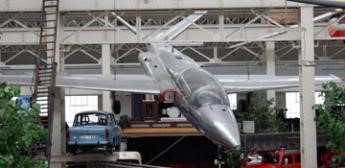
Potez – Heinkel CM191 # 2 received the registration D- 9532 and completed its career with 61 Erprobungsstelle Manching. This aircraft is now preserved and exhibited at the Am Technik Museum, Speyer, Germany.
Potez – Heinkel CM- 191 # 2 D- 9532
Variants:
CM.191 – 1956 4-seat corporate jet deriv. of CM.170, 2 x Marboré IV, 2 built CM.191: aka Potez-Heinkel C.M.191, aka Heinkel P.191, first flown 1962
CM.192 – Messier project nos. 48046/48007 and 27457/48008 CM.192: Flight 1 June 1961 ident. Potez-Heinkel C.M.192 as per C.M.191
Engines: 2 x Marboré IV Span, without tip-tanks: 12,02 m (39 ft. 5 in) Span, with tip-tanks: 12,70 m (41 ft. 8 in) Length: 9,93 m (32 ft. 7 in.) Height: 3,20 m (10 ft. 6 in.) Weigth empty: 2 391 Kg (5,271 lb.) Max Payload: 380 kg (838 lb.) Max TO weight: 4 350 Kg (9,590 lb.) Max 0 fuel weight: 3 005 Kg (6,625 lb.) Max wing loading: 231 Kg/m² (47.3 lb/sq ft) Max. Speed: 710 kmh (441 mph) Max. Permissible speed: 740 kmh (460 mph) Max. Crusing speed: 605 kmh (376 mph) Stalling speed: 148 kmh (92 mph) Max rate of climb: 906 m/mn (2970 ft/mn) Service ceiling: 12 000 m (39,370 ft) TO. Run: 900 m (3,250 ft) TO. Run dist. to 15m: 1 180 m (3,870 ft) Range with max fuel: 1860 km (1,150 miles)
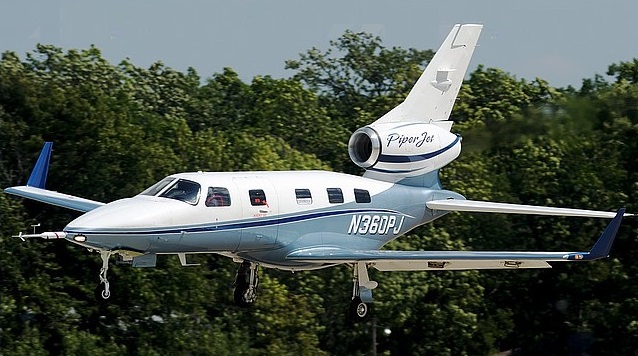
Piper Aircraft announced single-engined VLJ the PiperJet in October 2006, as a competitor to the twin-engined Eclipse 500 and Cessna Citation Mustang very light jets. The aircraft’s fuselage was the same cross section as the propeller-driven Piper PA-46 series, with a four-foot increase in length. It was to be capable of carrying up to 7 passengers and cruise at 360 knots (666.7 km/h), at a maximum altitude of 35,000 feet (10,668.0 m). Maximum range was expected to be 1,300 nautical miles (2,407.6 km), with a full-fuel payload of 800 pounds. Piper selected Williams International to supply its FJ44-3AP turbofan engine for the PiperJet.
Due to the engine being mounted above the center of gravity, power was highly stabilizing (addition of power would push the nose down), which could have been disconcerting to pilots. Initially, Piper designers incorporated an automatic pitch trim system to coordinate horizontal stabilizer angle of incidence with power setting. This system was later replaced by a vectored thrust nozzle, developed by Williams International, which resulted in reduced weight and simplified manufacturing processes.
A design feature of the aircraft was the use of a straight duct air intake design for the vertical stabilizer (tail) mounted engine, rather than an s-duct arrangement.
The prototype first flew on 30 July 2008.
A selling price of US$2.199 million in 2006 dollars was initially set and as of February 19, 2007, Piper announced that it had received 180 pre-orders. An entry-into-service date of early 2010 was initially anticipated, later changed to 2011-12. In October 2009 the company indicated that it had delayed the delivery of the first customer aircraft to mid-2013 and had informed depositors.
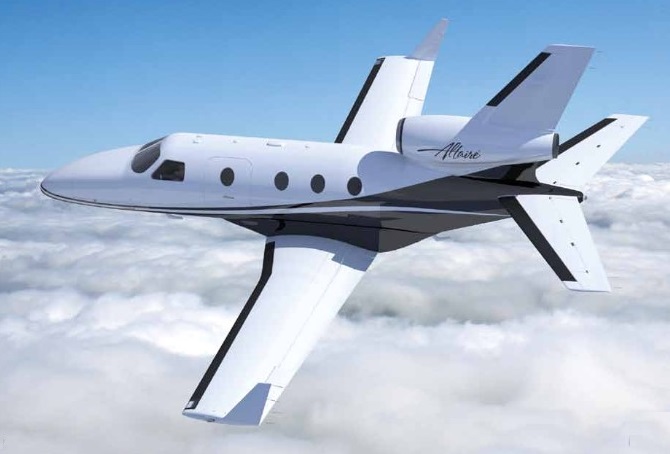
The PiperJet did not enter production and in October 2010 Piper announced it would instead develop an aircraft with a larger circular-section fuselage known as the Piper PiperJet Altaire. The 160 customers who had placed orders for the PiperJet retained their delivery positions with the new aircraft and at the same $2.2 million price.
Based on the PA-47 PiperJet prototype, the Altaire featured a slightly larger fuselage with a rounded cross-section, and included a conventional control yoke for flight control, as opposed to the original PiperJet’s side-stick controller. Piper had been tooling up its facilities in Vero Beach, Florida (USA) to build four Altaire prototypes to be used for FAA (safety & performance) certification of the aircraft through 2013. First delivery of aircraft to customers was scheduled for 2014. The first flight was expected in 2012.
The fuselage of the original Piperjet was designed using the Piper Meridian single-engine turboprop as a template. The new owners of Piper, Imprimis, found fault with this design prompting a revision without direct reference to the Meridian. According to Piper CEO Geoffrey Berger, “We wanted to give our jet customers an even roomier light jet that incorporates a scalable design, paving the way for a future family of competitive business jets,”. The new fuselage design provided an additional 4 inches of headroom and nine more inches of elbow room and does away with a hump in the cabin floor that accommodated the wing spar in the old design.
PiperJet Altaire
The Altaire had been designed for single-pilot operation allowing one passenger to occupy the co-pilot’s seat. Combined with 4 passenger seats in the cabin behind the flight deck, the jet would typically have seated 5 passengers. The cabin would have been specially configured to add an additional seat such that a total of 6 passengers can be accommodated in addition to the pilot. There was 20 cubic feet (570 L) of baggage space behind the passenger seats and another 20 cu ft (570 L). of heated but unpressurized space in the nose of the aircraft. The Altaire would have been powered by the Williams International FJ44-3AP. This model of engine employs a “passive vectored thrust” design that helps compensate for nose-down pitch of the aircraft when power is increased as a result of mounting the engine relatively high up in the tail. Piper estimated that this engine would get the Altaire up to a 35,000 feet (11,000 m) maximum cruise altitude and a 320 knot cruise speed. Maximum cruise speed was projected to be 360 knots. The aircraft was expected to have a 1,200-to-1,300-nautical-mile (2,200 to 2,400 km) non-stop range.
The aircraft was expected to retail for around US$2.6 million, ‘standard’ equipped. Piper estimates variable operating cost at about US$730 per hour. This compares with about US$870 for the comparable model Cessna Mustang.
On 17 October 2011 the company announced that the PiperJet Altaire program was “under review”. Piper’s new interim CEO, appointed that same day, Simon Caldecott said, “This is being undertaken to ensure the company is properly aligning business goals and light-jet market forecasts with investment strategies and economic forecasts.” The next day, on 18 October 2011, AVweb editor-in-chief Russ Niles called for the project to be ended, calling it “unrealistic” to pursue the design in the face of Federal Aviation Administration opposition to certifying a single engined jet to 35,000 ft (10,668 m) and the lack of economic reasoning as the aircraft would cost the same as most twin-engined jets. Niles called on Piper saying, “the sooner it ends its “review” of the project and puts a bullet in it the better.”
On 24 October 2011, despite the Altaire’s development being “on schedule and on budget”, the program was indefinitely suspended by Piper due to economic issues, with the company laying off a number of workers who had been assigned to the project. It was stated the company would entertain offers for the PiperJet/Altaire project.
In 2012, the prototype was located at the Florida Air Museum.
original PA-47 PiperJet Powerplant: 1 × Williams FJ44-3AP turbofan, 2,820 lbf (12.5 kN) thrust Hot Section Inspection: 2,000 hours TBO: 4,000 hours Length: 35 ft 8 in (10.87 m) Wingspan: 44 ft 3 in (13.49 m) Height: 15 ft 8 in (4.78 m) Full fuel payload: intended to be 800 lbs (363 kg) +/-5% Usable Fuel: 457 USgal (1,730 liters) Cruise speed: 360 kn (414 mph; 667 km/h) (intended maximum cruise speed +5% -2.5%) Range: 1,300 nmi (1,496 mi; 2,408 km) (intended maximum range +/-5%) Service ceiling: 35,000 ft (11,000 m) Maximum Cabin Height: 55.0 in (1.4 m) Cabin Length: 17.8 ft (5.4 m) Cabin Width: 55.0 in (1.4 m) Main Entry Door Width: 36.0 in (0.9 m) Total Pressurized Cabin Volume: 260 cu ft (7.3 cu m) Nose Baggage Compartment (unpressurized): 20 cu ft (0.57 cu m) / 200 lbs (90.9 kg) Maximum Cabin Differential: 7.6 psid Crew: 2 Capacity: 6-7 passengers
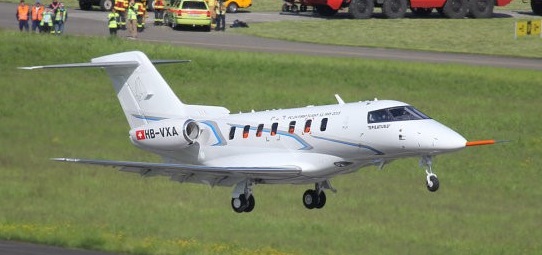
The PC-24 twin-engine business jet is equipped with a cargo door.
The first ever PC-24 took off on its maiden flight on 11 May 2014 at 10:00 local time from Buochs Airport. Prototype P01, callsign HB-VXA, flew across central Switzerland for a total of 55 minutes. The flight went exactly as planned with no problems. The aircraft took off from runway 07 in just under 600 meters and climbed to 10,000 feet (approx 3000 m ) in around three minutes. Test pilot Paul Mulcahy flew the PC-24 as Pilot in Command, with second test pilot, Reto Aeschlimann. The maiden flight followed a route across Central Switzerland – from Altdorf to Brünig via Engelberg. Twelve Flight Test engineers watched the flight from the ground on a stream of real-time flight data received from the PC-24.
A total of three PC 24 prototypes were to be built and used to complete a test programs of some 2,300 hours over the next two years.
Pilatus sold 84 PC-24’s in the space of just 36 hours at last year’s European Business Aviation Conference & Exhibition (EBACE) in May 2014. Certification and initial deliveries of the first aircraft were to come off the production line are planned from 2017.
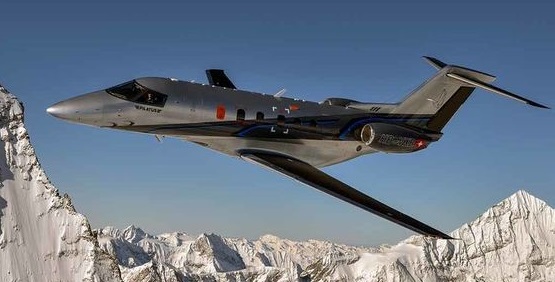
The Pilatus PC-24, the “super versatile jet” from the Swiss manufacturer that is designed to bring many of the PC-12 turboprop’s unique capabilities to the bizjet market.
PC-24 production has started at Pilatus Aircraft’s headquarters in Stans, Switzerland, as the manufacturer readies to deliver the first customer airplane following certification.
In January 2017, fractional-ownership company PlaneSense was revealed as the launch customer for the jet, which features a large aft cargo door and the ability to operate from unimproved airstrips, both hallmarks of the PC-12 NG.
Flight testing to date has confirmed that the PC-24 will beat original projections and that the current flight test schedule is tracking on time, allowing for the handover of the first customer airplane two short weeks after certification is in hand.
Pilatus opened and closed the order book for the PC-24 at the EBACE show in Geneva in 2014, notching 84 sales, or three years’ worth of production. A long line of potential customers is said to be showing interest in the $9 million jet. Pilatus says it will reopen the order book after completing certification.
The PC-24 will boast a speed of 425 knots, a range of nearly 2,000 nm, a max operating altitude of 45,000 feet and a max payload figure of 2,500 pounds. The jet will be capable of carrying up to 10 passengers.
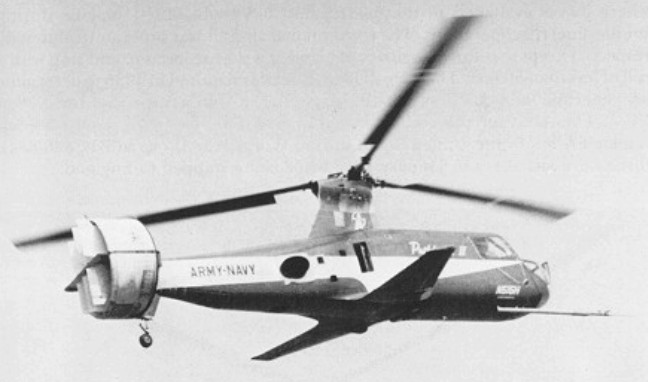
The Piasecki Aircraft Corporation has been engaged since the early 1960s on a series of compound helicopter research designs known by the name Pathfinder. The concept first took material form at the Model 16H-1 Pathfinder prototype (registration N616H). This aircraft was developed as a private venture and flew for the first time on 21 February 1962, undertaking this flight as a ‘pure’ helicopter without using the 3-blade ducted tail fan. No wings were fitted at that stage, the cabin was unfaired, and the retractable landing gear was fixed in the extended position. Small stub-wings, which could be folded, and a fully-enclosed cabin to accommodate a pilot and 4 passengers, were added later in the year. The Pathfinder also mounted a retractable landing gear.
Piasecki 16H-1 N616H
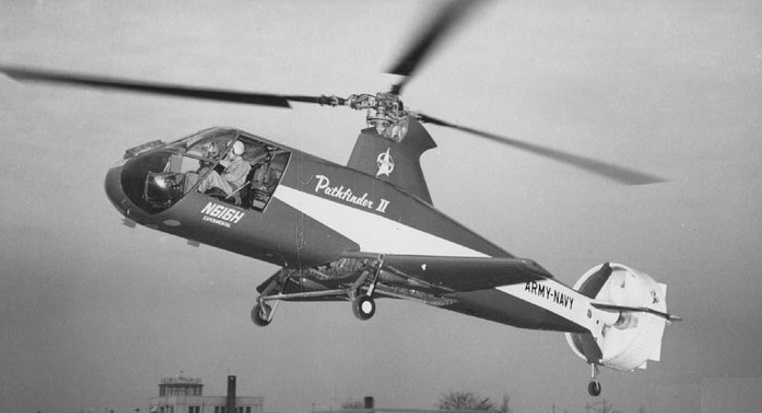
Powered by a 550shp UACL PT6B-2 turboshaft engine, the Pathfinder had a l2.50m diameter 3-blade rotor, a fuselage length of 7.62m and a gross weight of 2,565kg. In all, it amassed a total of 185 flying hours, during which speeds of up to 273km/h were attained. Piasecki subsequently received a joint US Army/US Navy contract to develop a compound helicopter capable of providing data on flight by such aircraft at speeds of up to 370km/h. As part of this programme the original aircraft was redesigned to become the Model 16H-1A Pathfinder II, in which form it made its second ‘first’ flight on 15 November 1965. Modification work had begun in 1964, ground tests and tethered test ascents were carried out in in October 1965, and initial hovering trials were completed by the end of the year.
The principal design changes in the Pathfinder II were the enlargement of the fuselage, lengthened to accommodate 8 persons; the installation of a 1,250shp General Electric T58-GE-5 engine; and the adoption of a three-foot larger-diameter rotor at 13.4m, a new drive system and a new tail fan. The gross weight of the 1A model was 1037kg heavier than the first model. By May 1966 the Pathfinder II had flown some 40 hours, during which it had achieved level speeds of up to 361km/h (compared to 287 with the first version), had flown sideways at up to 55km/h and backwards at 52km/h, and had made 20 autorotative flights. For the final phase of the Army/Navy programme, in the summer of 1966, it was refitted with a 1,500shp T58-GE-5 engine, having new-design air intakes ahead of the wing leading edges, and received the new Model designation 16H-1C.
Piasecki 16H-1A Pathfinder II
Joint Army-Navy sponsorship of the 16H-1A ended in late 1966, at which time the craft was returned to Piasecki for further company-funded research.
Piasecki announced several designs based upon the Pathfinder configuration, although up to 1972 none of these had been built. In 1968 it announced the Model 16H-3F Pathfinder III, a twin-turbine design using the 16H-1A fuselage with two T58-GE-10’S and 4-blade rotor and tail fan, for search and rescue, ASW and military utility applications.
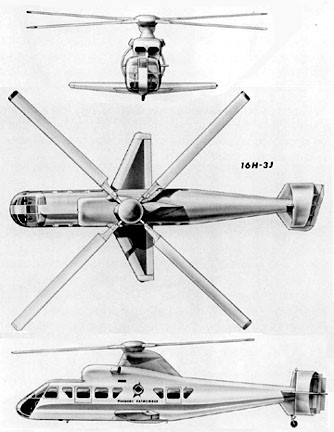
The 16H-3H Heli-Plane project, for an 8-passenger executive transport with twin PT6 or TPE 331 engines, was superseded in 1969 by the 9/15-seat 16H-3J commercial transport project; this in turn was redesignated 16H-3K in 1971, following the proposal to install more powerful PT6B engines.
In 1972 Piasecki was reported to be working on a high-performance development of the original Pathfinder, designated 16H-1HT, to seat a pilot and 4 passengers. Intended to be powered by a 986shp Turbomeca Astazou XVI engine, it was planned to have a maximum speed of 325km/h and a range of 708km.
While the Army was pursuing the flying platforms, they were also investigating larger rotorcraft along similar lines, called the “flying jeeps”. Some sources imply that they were intended mostly for hovercraft operation, with an ability to fly over obstacles or impassable terrain when necessary, while other sources indicate they were regarded as helicopter-like utility vehicles that operated normally as flying machines. Whatever the case, the US Army Transportation Research Command began an investigation into the flying jeeps in 1956, leading to award of contracts for prototypes to Chrysler, Curtiss-Wright, and Piasecki in 1957.
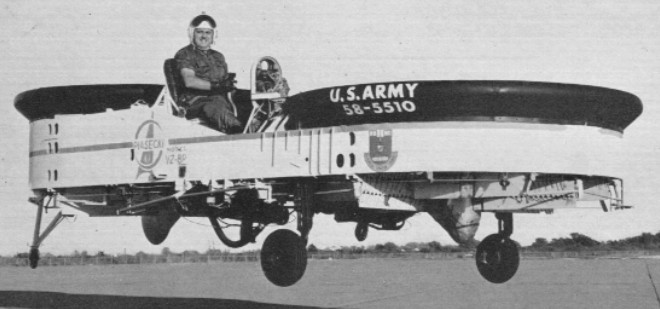
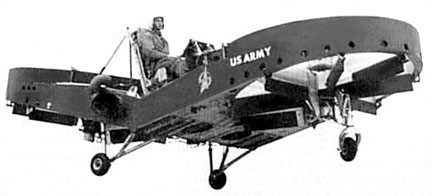
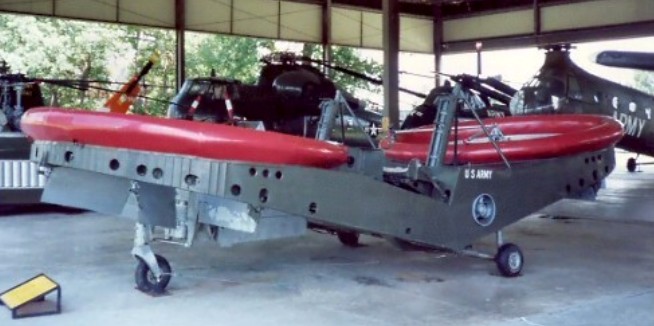
The first of the Piasecki flying jeep was the Piasecki “Model 59H AirGeep”, which was given the Army designation “VZ-8P”. The craft was built around two tandem 2.4 meter (8 foot) diameter, three-bladed, ducted rotors driven by two 135kW / 180 hp Lycoming piston engines. Both powerplants were connected to a single central gearbox so that both rotors would continue to turn even if one engine failed. The “Sky Car” had fairly conventional helicopter-type controls which provided directional stability through a series of hinged vanes mounted under each rotor duct. Forward motion was achieved by pitching the aircraft nose-down. The craft had fixed tricycle wheeled landing gear, and accommodated its single pilot and one passenger in seats sited between the two rotor ducts.
The AirGeep was 7.9 meters long and 2.7 meters wide (26 feet by 9 feet), with three-bladed rotors in ducts in the front and the back. The pilot and passenger sat between the ducts. The rotors spun in opposite directions to reduce torque effects.
The first of two Model 59 AirGeep (58 5510) examples ordered by the Army was first flown on 12 October 1958. Apparently it proved grossly underpowered, barely able to fly over a fence, and it was sent back to the shop, where the piston engines were replaced by a single 317 kW (425 HP) Turbomeca Artouste IIB turbine engine. The upgraded AirGeep flew on 28 June 1959. It weighed 1.1 tonnes (2,500 pounds) and could carry a payload of 550 kilograms (1,200 pounds), including the pilot.
Turned over to the Army shortly, the machine was subsequently given the designation VZ-8P (the “P” indicating Piasecki). Shortly after being accepted by the Army the VZ-8P was fitted with a single 315kW Turbomeca Artouste IIB turbine engine in place of its twin Lycoming pistons, and its first turbine-powered flight took place in June 1959.
The AirGeep was put through trials for both the Army and the Navy over the next few years. The engine was upgraded again to a Garrett / Airesearch 331-6 engine, which had a higher power-to-weight ratio. For Navy trials, which began in June 1961, the rotorcraft was fitted with floats, and redesignated the “PA-59 SeaGeep”.
The second VZ-8P incorporated several significant design changes and was designated the Model 59H “Airgeep II” by Piasecki and the VZ-8P (B) by the Army. The Army Transportation Research Command issuing a contract for the “Model 59K”, which made its first non-tethered flight in the summer of 1962.
Piasecki PA-59K 58-5510
The AirGeep II was similar to the AirGeep, except that the aircraft was “bent” in the middle so that the rotors were tilted fore and aft, to improve forward flight characteristics. The AirGeep II used twin 298 kW (400 SHP) Turbomeca Artouste IIC turboshaft engines, once again linked so that if one failed the other would drive both rotors. One engine could also be coupled to the landing wheels to drive the machine on the ground.
Airgeep II 58-5511
The increased power allowed a maximum take-off weight of 2.2 tonnes (4,800 pounds). The pilot and observer had “zero-zero” ejection seats, allowing safe escape if the machine was on the ground and standing still, and there were seats for up to passengers.
Piasecki PA-59N 58-5510
During 1961 it was used for a series of trials by the U.S. Navy, operating from water and from the deck of a destroyer. For these, pontoons replaced the wheeled undercarriage and the VZ 8 became known as the PA-59N Seageep. Following completion of these trials, it was re engined with an AiResearch Model 331 6 turboshaft.
Piasecki VZ-8(P)
Neither version of the VZ-8P was dependent upon surface effect lift for flight and, though intended to operate within a few feet of the ground in order to make the best use of natural cover, both were quite capable of flying at altitudes of several thousand feet. Both versions were found to be stable and relatively capable craft.
The Airgeep was ultimately judged by the Army to be mechanically ill-suited to the rigors of field operations. The “flying jeep” concept was eventually abandoned in favor of the further development of conventional battlefield helicopters, and both VZ-8P examples were dropped from the Army’s inventory in the mid-1960s.
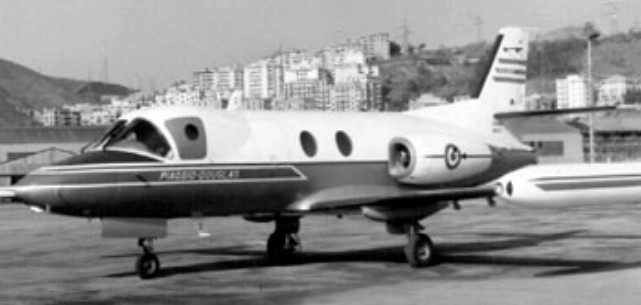
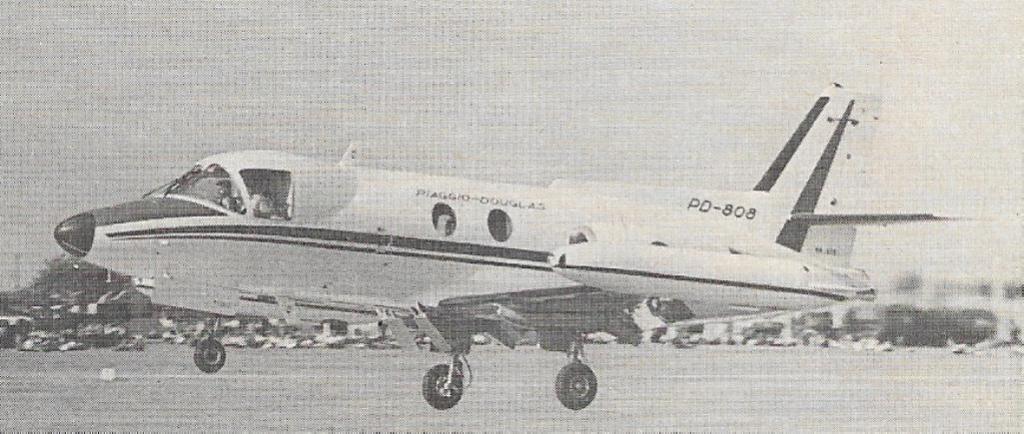
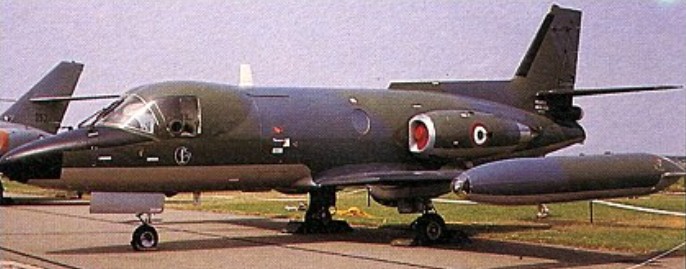
Under an agreement signed in 1961, Piaggio and Douglas Aircraft developed the PD-808 for military and commercial use. Originally designed by the Douglas Aircraft Company of Long Beach, California, as a business jet. No orders were received, and the complete project was bought by Piaggio, which flew the first prototype in 29 August 1965.
The PD-808 was powered by Bristol Siddeley Viper turbojets mounted on the sides of the rear fuselage. Piaggio also failed to secure any worthwhile commercial interest, but a few examples were taken by the Italian air force.
After appearing at the Paris Air Show it was modified.
Only 27 examples of this type, with low-set wings and aft-mounted turbojet engines, were produced, and 25 of these went to the Italian air force. The first aircraft were configured for the utility role (navaid calibration, navigation training for three pupils, and light transport of up to eight passengers or an equivalent freight load), but the last six aircraft were completed as electronic warfare platforms with cabin accommodation for specialist Elint (electronic intelligence) equipment and its three operators.
Power increased in 1966 to 3,300 lbs. s.t. The PD-808 differed from the original model by having larger tip tanks, a longer dorsal fin, and a forward-sliding nose fairing. By 1972, the aircraft was available in several versions: a five-seat executive version, a seven-seat executive transport, a six-seat version for the Italian Air Force, and one powered by 3,500-lb. s.t. AiResearch turbofans. Other PD-808s are powered by twin 3,360-lb. s.t. turbojets drawing from two integrated tanks of 511 gallons total capacity and wingtip tanks with 473 gallons total capacity.
Four versions were produced for the Italian Air Force as the PD-808 VIP six-seater for government and military VIP transport duties; PD-808 TA nine-seat transport and navigation trainer; PD-808 ECM electronic-countermeasures version; and the PD-808 RM radio-calibration version that is equipped for medium- and high-altitude calibration of navigation aids.
Engines: two Rolls-Royce Bristol Viper Mk 526 turbojets, 3,368-lb. s.t / 1524kg Wingspan: 13.2 m / 43 ft 4 in Length: 12.85 m / 42 ft 2 in Height: 4.8 m / 16 ft 9 in Wing area: 20.9 sq.m / 224.97 sq ft Max take-off weight: 8165 kg / 18001 lb Empty weight: 4830 kg / 10648 lb Max. speed: 850 km/h / 528 mph Cruise 497 mph Stall 104 mph Service ceiling: 13700 m / 44950 ft Range w/max.fuel: 2100 km / 1305 miles Initial climb rate: 5,400 fpm Takeoff distance (35′): 3,180 ft Landing distance (50′): 2,990 ft Seats: 5-9
PD-808ECM Five-seat electronic warfare plane Engines: two 3,360-lb (1,524-kg) thrust Piaggio built Rolls-Royce (Bristol Siddeley) Viper Mk 526 turbojets Maximum speed 529 mph (851 kph) at 19,685 ft (6,000 m) Initial climb rate 5,415 ft (1,650 m) per minute Service ceiling 44,950 ft (13,700 m) Range 1,322 miles (2,128 km) Empty weight 10,648 lb (4,830 kg) Maximum take-off weight 18,001 lb (8,165 kg) Wing span 43 ft 3.75 in (13.20 m) Length 42 ft 2in (12.85 m) Height l5ft 9in (4.80m) Wing area 224.97 sq ft (20.90 sq.m) Armament: none
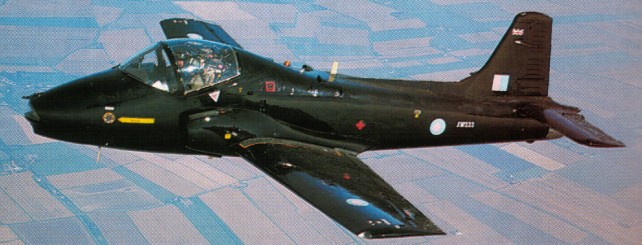
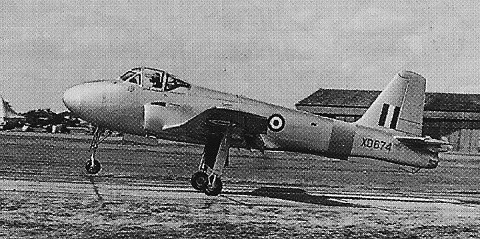
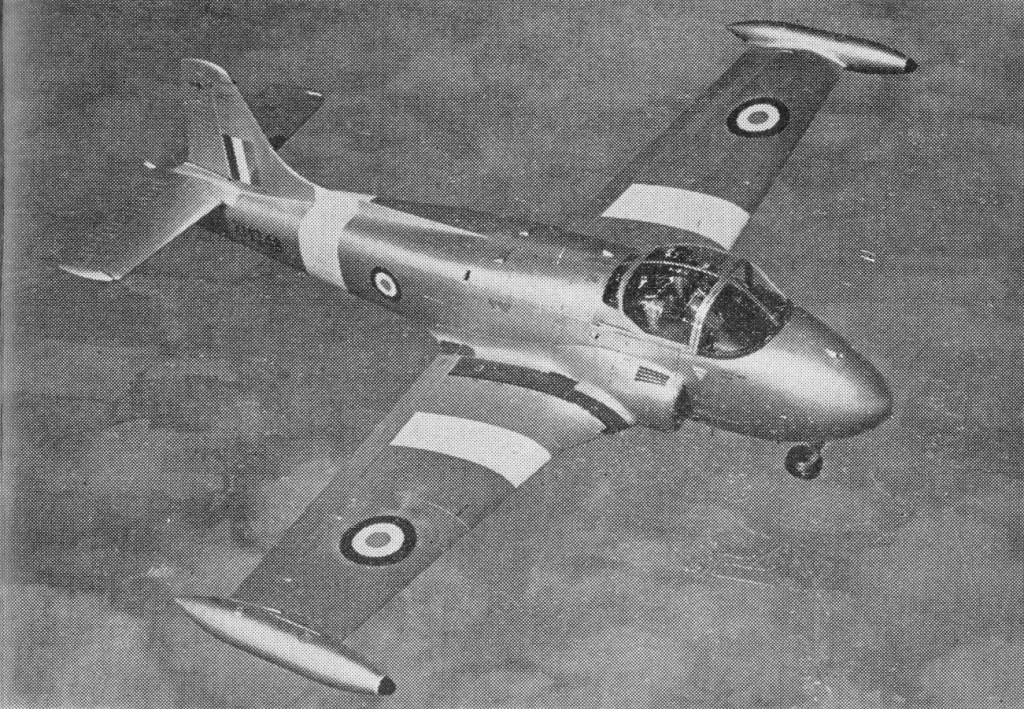
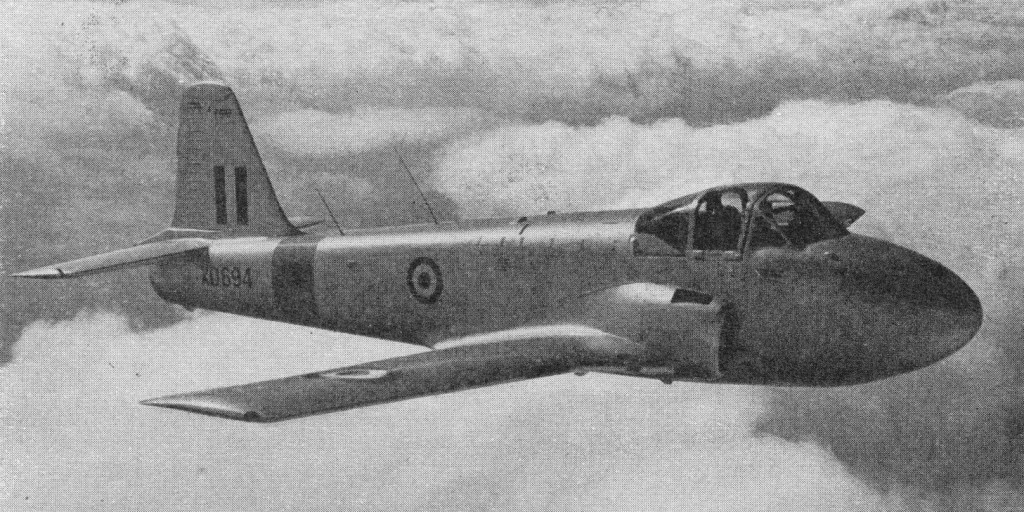
A gas turbine development of the Provost, Jet Provost first flew on June 26 1954, powered by a 1,640 1b. Armstrong Siddeley Viper ASV.5 jet engine. Initially the Jet Provost appeared without a dorsal fin, which was fitted for a while and then removed and replaced by a long ventral fin. Another modification was the sweeping forward of the leading edge wing roots just outboard of the cheek intakes.
After trials, it went to No. 2 Flying Training School at Hullavington for the first all-through (Jet Provost to Vampire) jet flying training course. Production deliveries began in 1959.
Early versions had the prototypes long, stalky undercarriage, but from the 11th aircraft a shorter one was introduced.
The T.3 was the basic trainer for the Royal Air Force until the mid-1970s, when the up-graded T.4 was introduced.
The Jet Provost T.3, together with the more powerful T.4, with an up rated Viper ASV.11 with 2,500 lb thrust, for night, instrument and formation flying, plus aerobatics, served with the RAF, the T.4 entering service in 1961.
T.3
T.4
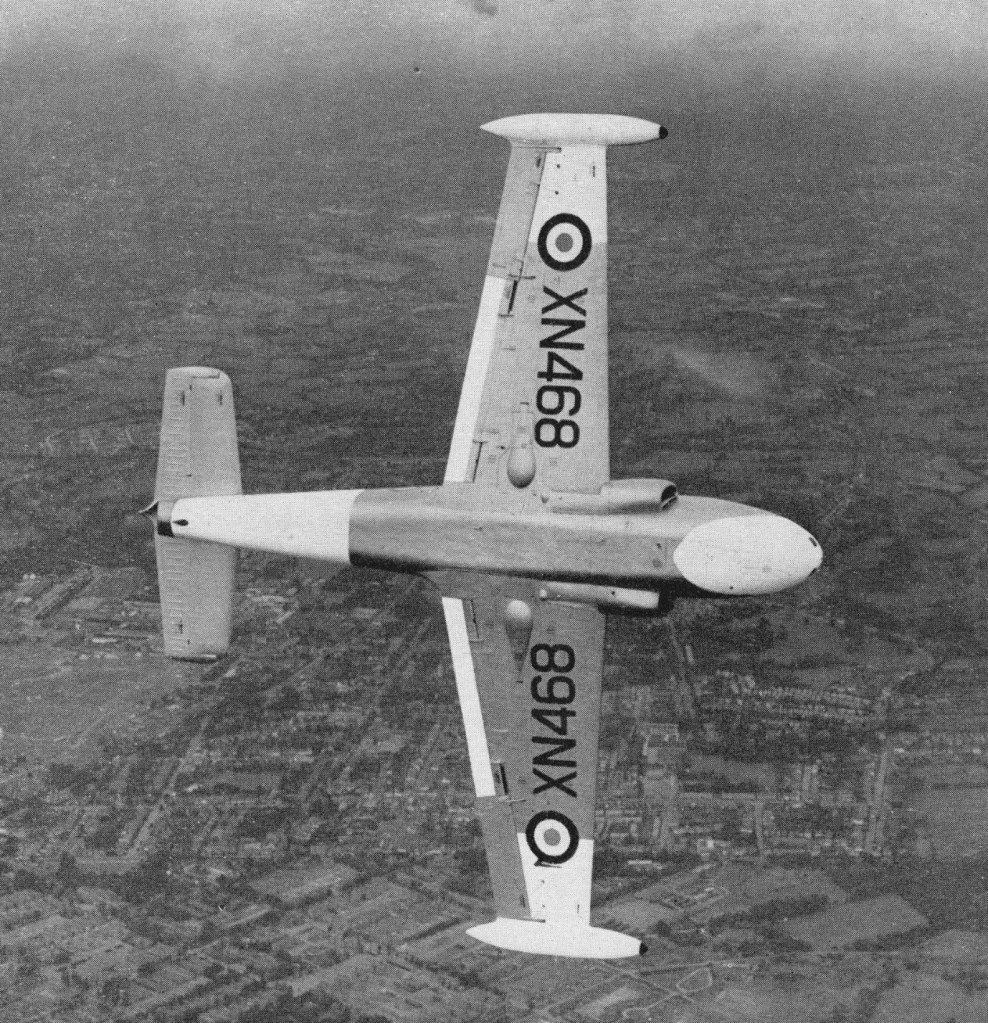
In 1964 the original designers of the Jet Provost responded to the need for a pressurised version and began private work on the design. The Jet Provost T5 differed externally from earlier versions by a re-designed hood and a more bulbous shape to accommodate the pressurised cockpit.
The prototype T5 made its first flight on 28 February 1967. A total of 110 Jet Provost T5s were produced for the Royal Air Force and the first was handed over to the Central Flying School on 3 September 1969. Between 1973 and 1976, ninety-three were modified by an upgrade in avionics equipment and became T5As.
The rough grey coating on the wing of the aircraft was applied in order to break up the smooth airflow and give an early indication of the onset of a stall as the T5’s original clean wing design gave the pilot little prior warning.
Export versions were the T.51 and 52.
The T.5 was further developed into the BAC 167 Strikemaster.
T.4 Engine: Bristol Siddeley Viper 201, ASV8 or ASV11, 2500 lb TO dist: 1030 ft Ldg dist: 1415 ft Time to 30,000ft: 13.3min Wing span: 36 ft 11 in (11.25 m) Length: 32 ft 5 in (9.88 m) Height: 10 ft 2 in (3.11 m) Wing area, 213.7 sq.ft (19.8 sq.m) Empty wt: 4,650 lb (2 110 kg) Max TO wt: 7400 lb (3356 kg) Max speed, 411 mph (661 kph) at 20,000ft (6096 m) Cruise, 280 mph (451 kph) Initial climb, 3,950 fpm. (20 m/sec) Range: 1075 km / 668 miles Crew: 2
T.4A
T.5 Engine: RR Viper 201, 2500 lb thrust Length: 33.99 ft / 10.36 m Height: 10.171 ft / 3.1 m Wingspan: 35.335 ft / 10.77 m Wing area: 213.127 sq.ft / 19.8 sq.m Max take off weight: 9122.1 lb / 4137.0 kg Weight empty: 5490.5 lb / 2490.0 kg Max. speed: 382 kts / 708 km/h Service ceiling: 36745 ft / 11200 m Wing loading: 42.85 lb/sq.ft / 209.0 kg/sq.m Range: 782 nm / 1448 km Crew: 2 Armament: 2 MG 7,62FN/550rds, 1000kg (8x ext.)
In 1951, a Helicopter Division was formed by Hunting Percival and design work commenced on a medium-sized helicopter designated P.74.
The P.74 was intended as a demonstrator for a new type of helicopter. It worked on the tip-jet principle, but the P.74 had a gas generator under the cabin floor which fed compressed air through triple ducts to the three-bladed rotor, each blade of which had triple ejector ducts. The hot and noisy gas pipes running up the cabin walls between rows of seats. The rotor blades were not adjusted by actuators at the hubs as on most helicopters but by ailerons on the trailing edges. Pitch was controlled with a screw jack.
This machine had a teardrop-shaped fuselage with the two-seat cockpit in the nose and a large cabin running the full length of the fuselage. The P.74’s undercarriage consisted of four wheels, the forward two of which were castoring. There was no entrance door or escape hatch near the cockpit. The only way in or out was the door at the rear of the port side of the fuselage.
The prototype was completed in the spring of 1956, carrying the military serial number XK889. Months of testing in a static rig showed up many problems with the power system, which refused to develop full power and maximum gas flow. Finally these problems were fixed and a first flight attempted. Despite the efforts of two pilots on the very stiff controls, the P.74 resolutely refused to fly. One engineer associated with the project says that a consultant designer used the wrong formula for calculating lift. All the figures added up but the P.74 went nowhere. It was ordered to be towed across the airfield out of sight, and that is about the last anyone heard of it.
Plans to fit a more powerful Rolls-Royce RB.108 turbine engine (which should have got the P.74 into the air) were abandoned when the helicopter industry was rationalized. A proposed 10-passenger model called P.105 using the Oryx system was never built.
Hunting Percival P.74 Engines: 2 x Napier Oryx Rotor diameter: 16.77 m Max take-off weight: 3518 kh Cruising speed: 178 kph Ceiling: 8530 m Range: 530 km









 All Aero