Helicopter development of W-3 using French avionics.
Seats: 5
Jet
PZL Swidnik SW-4
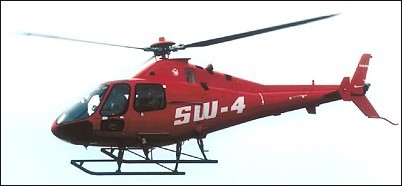
A 4-5 seat civil helicopter of conventional streamlined appearance, development began 1985 with a full-scale mockup completed in 1987. A major redesign was undertaken 1989-90, using an Allison (now Rolls-Royce) 250 engine in a more streamlined fuselage with a modified tail unit. GFRP is used for approximately 20% of the airframe, and the remainder mainly of aluminium alloy. An all-metal monocoque fuselage.
Fitted with a three-blade GFRP main rotor; arrowhead tailfin on port side, with two-blade GFRP tail rotor to starboard; narrow tailplane with small endplate fins; skid landing gear. The landing gear is able to accommodate heavy landing sink rate, of 3.1m/s by elastic deflection of cross-tubes.
Accommodation is for one pilot and up to four passengers or one stretcher patient and a medical attendant. One front-hinged and one rearward-sliding door on each side of cabin.
The first flying prototype had one 450shp / 336kW Rolls-Royce 250-C20R/2 turboshaft. Transmission rating 336kW for T-O, 283kW maximum continuous; 30 minute run-dry capability. Standard fuel capacity 500 litres in tank below main gearbox.
Prototype (c/n 600102), rolled out in December 1994, and was a non-flying testbed for ground and equipment tests; ‘101 was a static test airframe, ‘103 and ‘104 were flying prototypes. The first flight made by 600103 (red overall; later registered SP-PSW) was on 26 October 1996 (‘official’ flight three days later).
Trials in 1997 demonstrated requirement for a new rotor head design, enlarged horizontal stabiliser and more robust hydraulic system. Following 70 hours of test-flying, SP-PSW was grounded in late 1997 for installation of SAMM-designed hydraulic flight control system, with which it was then due to return to flying in 1998. Second flying prototype (yellow overall), with improved skids, exhibited statically at Paris Air Show, June 1997; registered as SP-PSZ in October 1998, but not flown until early 2001.
Some 640 hours (total) were flown by July 2002, when certification programme almost complete; domestic certificate to JAR 27 awarded 14 November 2002.
The first five production aircraft were started during the first quarter of 1999. Deliveries of these were scheduled to take place in 2003. Second prototype shown at Paris in June 2001; first at Berlin in May 2002.
According to a mid-2003 report, Swidnik considering re-engineering SW-4 with Pratt & Whitney Canada PW200 turboshafts, assembled locally by PZL-Rzeszow. Alternative powerplant is 615shp P&W PW200/9.
The Polish Air Force requirement confirmed in mid-2002 for purchase of 47 by 2010, of which seven planned to enter service in 2005 and 14 in 2006; for use in training role. Two of first five production aircraft scheduled for Polish Air Force Academy were to be delivered in 2003; next three are purchase options for commercial customers. Other orders reported from three unidentified German customers.
Cost in 2002 was US$690,000.
PZL Swidnik SW-4
Engine: 1 x Allison 250-C20R/2 turboshaft, 270kW
Crew: 1
Passengers: 4
Main rotor diameter: 9.0m
Length with rotors turning: 10.55m
Fuselage length: 8.24m
Height: 2.93m
Max take-off weight: 1700kg
Empty weight: 730kg
Max speed: 245km/h
Rate of climb: 10m/s
Hovering ceiling, IGE: 3500m
Range: 600km

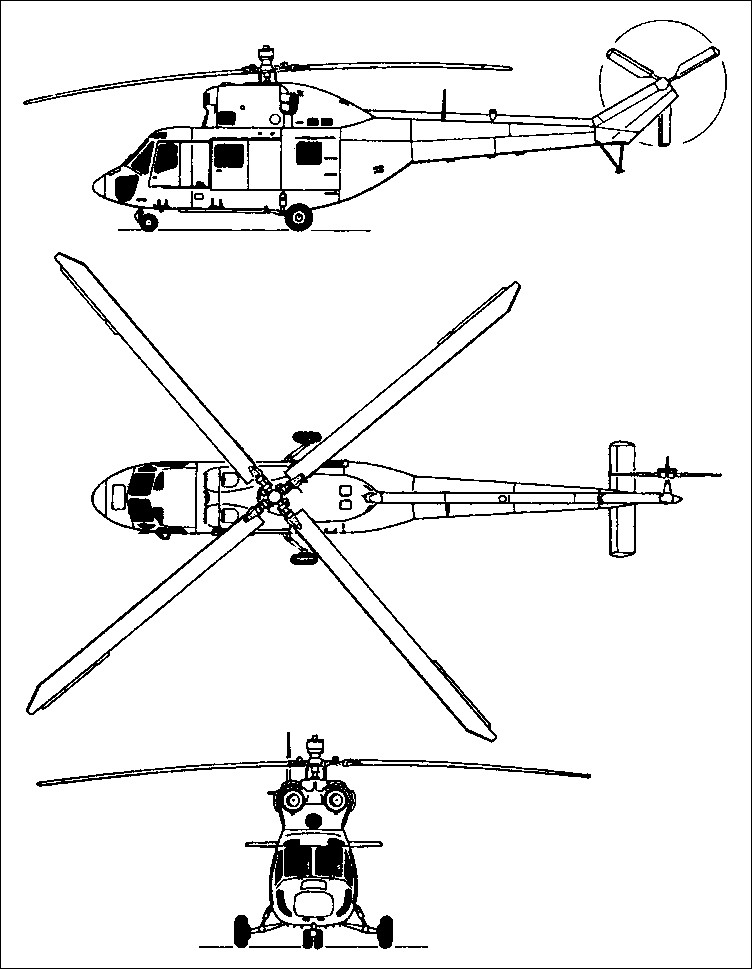
PZL Swidnik W-3 Sokol
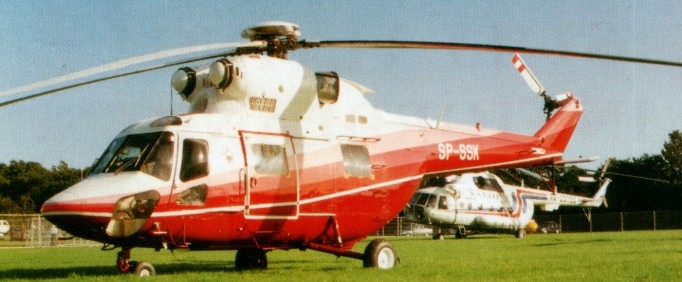
Developed under a 1970 joint Polish/Soviet agreement with preliminary design by engineers from both countries at Mil OKB in Moscow in 1972, where a preliminary mockup was completed in 1975 with accommodation for 12 passen¬gers or up to 2,100kg of internal cargo.
Detail design and definitive mockup by Swidnik 1976. PZL’s design team was under Stanislaw Kaminski. Static/fatigue ground test airframe of 1978 followed by five flying prototypes, first of which (SP-PSA, as W-3 Sokol (Falcon)) made first flight 16 November 1979, and used in subsequent tiedown tests; remaining prototypes embodied changes resulting from tests.
Soviet participation ended in 1980. Manufacturer’s flight trials resumed 6 May 1982 with second prototype (SP-PSB); third, fourth and fifth prototypes all made first flights in 1984 on 24 July (SP-PSC), 4 June (SP-PSD) and 26 November (SP-PSE) respectively; certification trials carried out in wide range of operating conditions, including heavy icing and extreme temperatures of -60 and +50°C. Provisional Polish certification 26 September followed by full certification in Poland 10 April 1990, and to Russian NLGW-1 and -2 regulations 17 December 1992
A conventional utility helicopter of pod-and-boom layout and with engines above cabin. Four-blade fully articulated main rotor and three-blade tail rotor; main rotor has pendular Salomon-type vibration absorber for smooth flight and low vibration levels. Transmission driven via main, intermediate and tail rotor gearboxes. Tailfin integral with tailboom; fixed incidence horizontal stabiliser, not interconnected with main rotor control system.
Main rotor blades have NACA 23012M aerofoil section and (on Polish Navy W-3RM) manual folding. Rotor brake standard. Rotor rpm 268.5 (main) and 1,342 (tail); main rotor blade tip speed 220.7 m/s. Rotor blades (main and tail) and single-spar horizontal stabiliser of laminated GFRP impregnated with epoxy resin; tail rotor driveshaft of duralumin tube with splined couplings; duralumin fuselage; GFRP fin trailing-edge.
Three hydraulic boosters for longitudinal, lateral and collective pitch control of main rotor; one booster for tail rotor control. Constant-speed rpm control for continuous operation (manual rpm control also available). Two-axis stability augmentation system with pitch and roll hold. Three- and four-axis AFCS available from late 1994.
Landing gear ia a non-retractable tricycle type, plus tailskid beneath tailboom. Twin-wheel castoring and self-centring nose unit; single wheel on each main unit. Oleo-pneumatic shock-absorber in each unit. Mainwheel Stomil Poznan tyres size 700×250; nosewheel tyres size 400×140. Tyre pressures 4.90 and 4.40 bar respectively. Pneumatic disc brakes on mainwheels. Metal ski landing gear optional. Six inflatable flotation bags on Anakonda and W-3AM.
Power is from two WSK PZL-Rzeszow PZL-10W turboshafts, each with rating of 671kW for T-O and emergency ratings of 746kW and 858kW for 30 and 2 1/2 minutes OEI respectively.
Particle separators on engine intakes, and inlet de-icing, standard. Power plant equipped with advanced electronic fuel control system for maintaining rotor speed at pilot-selected value amounting to ±5% of normal rpm, and also for torque sharing as well as for supervising engine limits during start-up and normal or OEI operation. Engines and main rotor gearbox mounted on bed frame, eliminating drive misalignment due to deformations of fuselage. Transmission rating 1,342kW maximum for T-O, 1,163kW maximum continuous and 857kW OEI. Engine input rpm 23,615.
Four bladder fuel tanks beneath cabin floor, with combined capacity of 1,720 litres. Auxiliary tank, capacity 1,100 litres, optional (not FAA approved). Oil capacity 14 litres per engine.
Pilot (port side), and co-pilot or flight engineer, side by side on W-3 flight deck, on adjustable seats with safety belts. W-3A can be flown by single pilot in VFR, with extra passenger in co-pilot seat. Dual controls and dual flight instrumentation optional. Accommodation for 12 passengers in main cabin or up to eight survivors plus two-person rescue crew and doctor in Anakonda SAR version. Seats removable for carriage of internal cargo. Medevac version can carry four stretcher cases and medical attendant (EMS version, one stretcher, three medical personnel and intensive care suite). Baggage space, capacity 180kg, at rear of cabin.
Door with bulged window on each side of flight deck; large sliding door for passenger and/or cargo loading on port side at forward end of cabin; second sliding door at rear of cabin on starboard side. Optically flat windscreens, improving view and enabling wipers to sweep a large area. Accommodation soundproofed, heated (by engine bleed air) and ventilated.
Systems include two independent hydraulic systems, working pressure 90 bar, for controlling main and tail rotors, unlocking collective pitch control lever, and feeding damper of directional steering system; automatic power changeover if one system fails. Flow rate 11 litres/min in each system. Vented gravity feed reservoir at atmospheric pressure. Pneumatic system for actuating hydraulic mainwheel brakes. Electrical system providing 200/115V three-phase AC power at 400Hz and 28V DC power. Electric anti-icing of all rotor blades. Fire detection/extinguishing system. Air conditioning and oxygen systems optional. Neutral gas system optional, for inhibiting fuel vapour explosion.
Avionics: Standard VFR and IFR nav/com avionics permit adverse weather operation by day or night. Bendix/King avionics standard; alternatives at customer’s option.
Comms: Chrom (NATO ‘Pin Head’) IFF transponder in military versions.
Radar: Bendix/King RDS-82 weather radar in W-3A; 5A-813 radar in W-3RM.
Flight: Stability augmentation system standard. AP Decca navigator in W-3 KM.
Mission: SPOR search and detection system in W-3RM.
Self-defence: Modified Syrena RWR in military versions initially; to be replaced by Thales EWR-99 (SPS-H in W-3PPD).
Cargo version equipped with 2,100kg capacity external hook and 150kg capacity rescue hoist. W-3RM has 272kg capacity electric hoist; stretchers, two-person rescue basket, rescue belts, two six-person liferafts, rope ladder, portable oxygen equipment, electric blankets and vacuum flasks, various types of buoy (light, smoke and radio) and marker, binoculars, flare pistol and searchlights. Firefighting version: one 1,590 litre ‘Bambi bucket’ on cargo sling or 1,500 litre expandable underbelly tank.
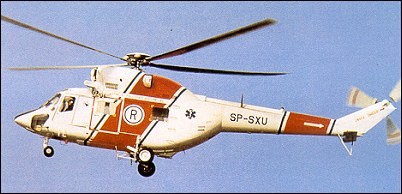
Production started in 1985 and 20 early aircraft supplied to Aeroflot from 10 August 1988, but subsequently returned to Swidnik, most being reallocated to Heliseco for firefighting in Spain. The first batch of 50 had been built by mid-1991 and a further batch of 20 were under construction.
Polish (26 March), Spanish, US (31 May) and German (6 December) FAR Pt 29 (VFR) certification of W-3A received 1993. On 31 May 1993, it became the first Eastern bloc helicopter to be awarded FAA certification. Polish ICAO-standard noise certification 1995. At 1994 prices, a basic W-3A was available tor US$2.5 million.
Polish civil W-3 users include the Interior Ministry, a telephone company and a cardiac hospital.
By 1 January 1996, excluding prototypes, 85 W-3s had been built by PZL, and the 100th example was completed in 1996. MoU 13 April 1996 with Daewoo, South Korea (later part of KAI), for purchase of 35 Sokols with marketing rights in Asia, but payments (and hence deliveries) delayed due to regional economic difficulties. Korean agreement expired April 2003 and not renewed by July.
The Sokol has been delivered in quantity to the Polish military forces (40 examples) and to Myanmar (12), Korea (3) and the German Border Police (6).
Polish armed forces versions including W-3RM Anakonda for air/sea rescue, and W-3W Sokol and similar W-3WA each with 23 mm cannon and outriggers for missiles, rockets and other weapons.
September 1998 co-operation agreement between Swidnik and Euromissile led to integration of HOT 3 ATM on Sokol, followed by successful firing tests during demonstration of HOT/Viviane system at Polish firing range in Nowa Deba on 4 March 1999, using Swidnik trials aircraft SP-SUW (c/n 360318). This aircraft utilised in 2000 as prototype to test new main rotor blades with modified leading-edges and increased damage tolerance. Swidnik continues to offer W-3/HOT 3 variant as potential export version, but domestic requirement for W-3H now shelved in favour of a 50-aircraft support role upgrade of existing Sokols, attack requirement instead being met by upgrading Mi-24 fleet.
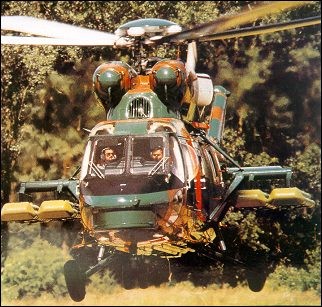
A total of 143 (excluding five flying prototypes and four static test airframes) were completed by early 2001, of which 131 then in service. Three reportedly purchased in early 2002 by Ukraine Border Guard. However, no new production reported from early 2001 until at least mid-2003.
The basic VFR, single-pilot W-3A in 2002 cost US$3.156 million.
Under a Polish MoD contract of October 2002, valued at approximately US$22.8 million, PZL-Svidnik is to upgrade 16 W-3W and 12 W-3WA Sokols from 1994/2000 production to NATO-compliant (STANAG 4555) standard with Rockwell Collins AN/ARC-210 U/VHF radios, Bendix/King KLU 709 Tacan, and cockpit instrumentation compatible with the pilot’s Litton M927 NVGs. The contract was due for completion by 2006.
Versions:
W-3 Sokol
Initial civil and military version; production (52) completed. Two W-3s (0501 and 0502) upgraded by WZL 1 as W-3RL for combat SAR role in 1999 as part of Polish qualification for NATO membership; based at Bydgoszcz. New equipment includes Rockwell Collins search radar, Bendix/King com radios and intercom, Tacan, GPS, radio compass, IFF, searchlight, rescue hoist, stretchers (two) and auxiliary fuel tanks; standard crew of five. One conversion to S-1RR prototype; one other converted as W-3U Salamandra armed prototype but reverted to W-3 and delivered to Myanmar.
W-3W
Armed W-3 (W for Wielozadaniowy: multipurpose) with starboard-mounted 23mm GSz-23 twin-barrel gun; Mars-2 launchers for sixteen 57mm S-5 or 80mm S-8 unguided rockets, ZR-8 bomblet dispensers, Platan minelaying packs, and six cabin window mounted AK 47, 5.45mm Tantal or PKM machine guns. Twenty-two delivered to Polish Ministry of National Defence; entered service with Polish Air Force 47 Szkolny Pulk Smiglowcow (Helicopter School Regiment) at Nowe Miasto (five) and Polish Army (17).
W-3A
Improved version for Western certification; redesign started 1989; first flight 30 July 1992; FAA type approval to FAR Pt 29 received 31 May 1993, German LBA certification 6 December 1993. Dual hydraulic systems, new de-icing system, Western instrumentation. First delivery, to Saxony Police Department, Germany, 20 December 1993. One W-3A2 (c/n 370508, SP-PSL) fitted in early 1998 with Smiths Industries AFCS (four-axis digital autopilot) with a view to obtaining Polish (GILC) and US (FAA) single-pilot IFR certification.
W-3AM
Version of W-3A with six inflatable flotation bags. Thirteen, mostly for South Korea, produced by January 2002.
W-3WA
Combat support armed version of W-3A; weapons include GSz-23L gun, Strzala-2 AAMs and Polish Gad fire-control system. Total of 27 delivered to Polish armed forces by January 2002: Air Force, five, Army 18, Navy three and MoD one. Three in combat SAR configuration (presumably based on W-3RL) delivered in second quarter 2000 to 7th Cavalry Regiment at Mazowiecki: new comms, NVG-compatible instrumentation, new IFF, classified ESM and armoured crew seats. Four adapted in 2001 for Polish Army smoke-laying role, equipped with PWD Pylia smoke generation system developed by WSK-PZL Rzeszow and the Polish Armed Forces’ Chemistry and Radiometry Military Institute; equip 66th Air Squadron.
W-3WB
(wsparcia bojowego: combat support): Armed prototype (c/n 360318), equipped 1993-94 by Kentron (hence alternative designation W-3K) with South African weapon systems. Returned to Swidnik 1994 and became HOT/Viviane testbed.
W-3PPD Gipsowka
Airborne command post (powietrzny punkt dawodzenia) version of W-3A. Four conversions to be procured by Polish Army as Mi-2PPD replacements by 2006, first of which (0816) was delivered to 66th Air Squadron in first half of 2001. Specialised command, control and communications (C3) avionics include Thales RRC-9500 UHF (two) and RRC-3500 HF (one) radios, Totem 300 INS and a MIL-STD-1553B databus. Crew includes four operator workstations, each with a 16″ flat-panel colour display; flight deck is NVG-compatible. Also to have EW suite (as in W-3), including Thales SPS-H RWR and chaff/flare dispenser. Defensive armament is carried on external outriggers.
W-3RM Anakonda
Offshore search and rescue (ratowinczy morski: sea rescue) version of W-3; watertight cabin, six inflatable flotation bags, additional window in lower part of each flight deck door. In service with Polish Navy (five delivered, of which two since lost; retrofit with folding main rotor blades from late 2000); Ministry of Interior (one) and for Swidnik trials (one). Latest examples, with US FSI Ultra 4000 FLIR, are designated W-3WARM (first aircraft, 360813, delivered 21 May 1998; second, 360815, 15 March 1999; third, 360906, 18 January 2002), the A indicating American (FAA) certification standard and W indicating armament. Upgrade under test from 2000 includes a more advanced engine control system and a deck lock for shipboard deployment.
S-1RR Procjon
Electronic combat reconnaissance (rozpoznanie radioelektronicznego) version of W-3; prototype (c/n 310203) converted from W-3, first flown 1996 and delivered to Polish Air Force by 1 January 1997. Subsequent aircraft designated SRR-10 Procjon-3 (alternative designation W-3RR); first of these (c/n 370720) first flown in 1998 and fully equipped in 1999. ECR suite includes two-place console and chaff/flare dispensers; large external antenna housings include one on nose, one on cabin roof and one on starboard side of fuselage; last-named can be rotated downwards for full 360° scan capability.
W-3H
Unofficial designation for armed support helicopter, derived from W-3WA; pursued as upgrade under new-abandoned Huzar programme. Local requirement for 96. Avionics and weapons fit decided in favour of Israeli (Elbit avionics and Rafael NT-D ATM) equipment in October 1997, but selection immediately overturned by new Polish government; rival avionics offered by Boeing and Sextant, partnered by Hellfire II and HOT 3, respectively. Programme reinstated October 1998 but foundered due to inability to demonstrate NT-D in Poland within deadline of 30 November and Israeli deal cancelled by Polish government on 8 December 1998.
Specifications:
PZL Swidnik W-3
Engine: 2 x PZL-10V turboshaft, 662kW
Main rotor diameter: 15.7m
Length with rotors turning: 18.79m
Fuselage length: 14.21m
Height: 4.2m
Max take-off weight: 6400kg
Empty weight: 3630kg
Cruising speed: 238km/h
Hovering ceiling, IGE: 3200m
Range: 745km
Payload: 2100kg,
W-3A
Engine: 2 x PZL Rzeszow PZL-10W, 876 shp
Instant pwr: 662 kW
Rotor dia: 51.509 ft / 15.7 m
Height: 13.78 ft / 4.2 m
Length: 46.654 ft / 14.22 m
MTOW: 14112.0 lb / 6400 kg
Payload: 2100 kg
Useful load: 2550 kg
Max. speed: 146 kt / 270 km/h
Max cruise: 127 kt
Max range: 1244 km
HIGE: 9606 ft
HOGE: 6232 ft
Service ceiling: 16,105 ft
Initial climb rate: 1673.23 ft/min / 8.5 m/s
Crew: 1-2
Pax: 12 / 2100kg
PZL Mielec I-22
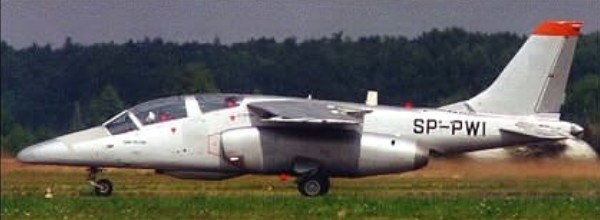
Launched 1977, leading to 1980 Polish Ministry of National Defence Iskra-22 requirement for combat-capable jet trainer. The I-22 prototype made its first flight on March 3, 1985 and the type was revealed in October 1986 as a twin-jet advanced trainer/light-attack aircraft.
First production order (for nine aircraft, only five of which were completed in I-22 configuration) announced September 1991; first of these (serial number 103) made first flight 5 May 1992, handed over to Polish Air Force (with second aircraft 105) 24 October 1992; next three (201, 202 and 203) delivered February 1994 (203 since lost).
Reappraisal in 1995 indicated that I-22 with PZL-5s was underpowered, and the four survivors were due to be upgraded to M-96 standard during 1996-97 (K-15 engines, Martin-Baker seats and improved avionics). Earlier proposal to suspend Iryda development and buy 36 ex-German Alpha Jets was reversed in December 1995; funding concentrated instead on M-93K improvements and evaluation of M-96. The five survivors were delivered to PZL for conversion.
Equipment includes a ventral 23mm gun pod, four underwing hardpoints for up to 2,000kg of stores, a nose-mounted 13mm camera gun, 1FF, and a radar warning receiver. The landing gear is designed for rough-field operations and provision is made for a brake parachute.
I-22 Iryda
Engines: 2 x PZL-5 SO-3W22 turbojets, 10.7kN
Wingspan: 9.6 m / 32 ft 6 in
Length: 13.2 m / 43 ft 4 in
Height: 4.3 m / 14 ft 1 in
Wing area: 19.9 sq.m / 214.20 sq ft
Max take-off weight: 6900 kg / 15212 lb
Empty weight: 4700 kg / 10362 lb
Max. speed: 840 km/h / 522 mph
Cruise speed: 570 km/h / 354 mph
Ceiling: 11000 m / 36100 ft
Initial climb rate: 7283.46 ft/min / 37.0 m/s
Range w/max.fuel: 902 nm / 1670 km
Range w/max.payload: 420 km / 261 miles
Armament: 1 x 23mm GSz-23 cannon, 200 rounds
Hardpoints: 4
Bombload: 2000kg
Crew: 2
I-22 Iryda
Engines: 2 x PZL-5 SO-3W22 K-15 turbojets, 15 kN
Wingspan: 9.6 m / 32 ft 6 in
Length: 13.2 m / 43 ft 4 in
Height: 4.3 m / 14 ft 1 in
Wing area: 19.9 sq.m / 214.20 sq ft
Armament: 1 x 23mm GSz-23 cannon, 200 rounds
Hardpoints: 4
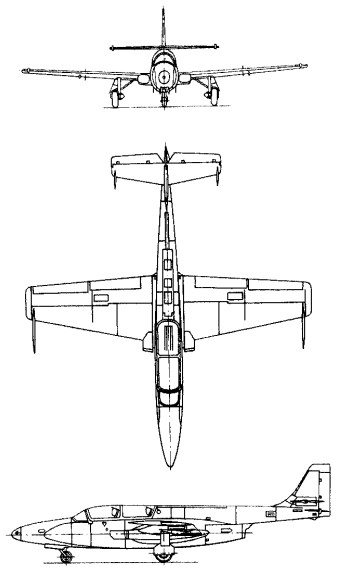
PZL Mielec TS-11 Iskra

Design of the P.Z.L. Mielec TS-11 Iskra (Spark) two-seat turbojet-powered primary and advanced trainer began in 1957, being intended as a replacement for the TS-8 Bies two-seat basic trainer. Four prototypes were built, and the first flight of the type was recorded on 5 February 1960.
PZL Mielec TS-11 Iskra Article
Following type approval during 1961 initial deliveries began in March 1963, and the TS-11 became operational with the Polish air force in 1964. Since that time well over 500 have been built, manufactured not only for use by the nation’s air force, but also for export to India, which procured 50. A cantilever mid-wing monoplane of all-metal construction, the TS-11 has retractable tricycle landing gear and is powered by a single turbojet mounted within the fuselage, aft of the cockpit.
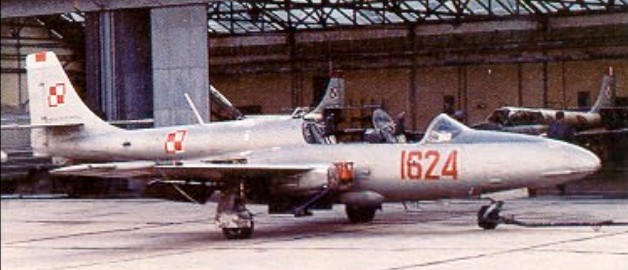
Early aircraft were powered by the Polish-designed HO-10 turbojet developing 780kg thrust, but from the mid-1960s TS-11s have been powered progressively by the 2,205 lb / 800kg thrust SO-1 turbojet, the similarly rated but improved SO-3, or the uprated SO-3W. The Iskra was being replaced in Polish air force service by the I-22 Iryda.
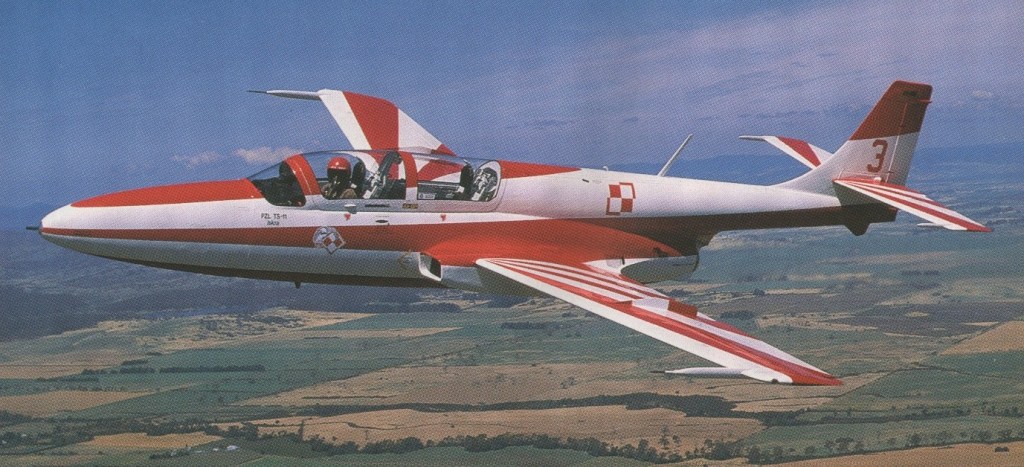
Later developments were the Iskra 100 with attack capability and the Iskra 200, built as single and two seaters. The Indian Air Force also operated the Iskra 100.
Limited production of the 1987 version of the TS-11, the Iskra-Bis DF, continued at Mielec. The Iskra-Bis DF is a tandem-seat combat and reconnaissance trainer powered by a single uprated 10.8kN SO-3W turbojet. It is equipped with a 23mm cannon in the forward fuselage, an S-13 camera gun, and four underwing hardpoints for 100kg of bombs, rockets, and gun pods. For recon¬naissance training three cameras may be carried, one in each intake fairing and one in the cockpit floor.

Engine: 1 x Narkiewicz turbojet, est 1,760 1,980 lbs.t. (800 900 kgp)
Max speed, 497 mph (800 kph)
Service ceiling 39,370 ft (12 000 m)
Loaded weight, 7,496 lb. (3 400 kg)
Span, 32 ft 9.5 in (10 m)
Length, 36 ft 1 in (11m)
Height, 10ft 10 in (3.3 m)
PZL-WSK TS 11 bis DF Iskra
Engine: 1 x SO-W3, 1100kg
Installed thrust: 10.8 kN
Span: 10.06 m / 33 ft 0 in
Length: 11.15 m / 37 ft 7 in
Wing area: 17.5 sq.m / 188.37 sq ft
Height: 12 ft 6 in / 3.500 m
Empty wt: 2560 kg / 5644 lb
MTOW: 3840 kg / 8466 lb
Max speed: 770 kph / 478 mph
Initial ROC: 1140 m / min
Ceiling: 37730 ft / 11,500 m
T/O run: 660 m
Ldg run: 720 m
Fuel internal: 1200 lt
Range: 675 nm / 1250 km
Armament: 1 x 23 mm
Hardpoints: 4
Bombload: 400kg
Crew: 2
PZL Mielec LLP-M-15 Belphegor
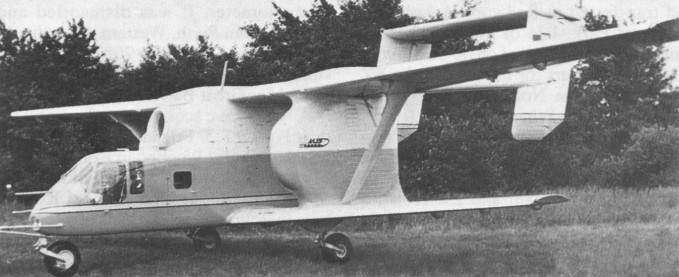
Following an agreement between the Polish and Soviet governments for the design and production of a new large agricultural aircraft, allocated the designation P.Z.L. Mielec M-15, design of this aircraft was initiated in late 1971 and the initial LLP-M15 prototype made its first flight on 30 May 1973. One M-15 prototype and five pre-production aircraft followed, and completion of the development programme was signified by the award of a full certificate of airworthiness on 4 April 1979.
The M-15 had unequal-span biplane wings, twin tailbooms extending aft to twin fins and rudders united by a high-set tailplane and elevator, and fixed tricycle landing gear. A central fuselage nacelle provided accommodation for the pilot and, to his rear, had a cabin to seat two ground crew during ferry flights between operating areas. The single turbofan power-plant was mounted above the fuselage nacelle, and two streamlined chemical hoppers occupied the full gap between each wing, mounted directly beneath the tailbooms, their combined chemical capacity 2900 litres.
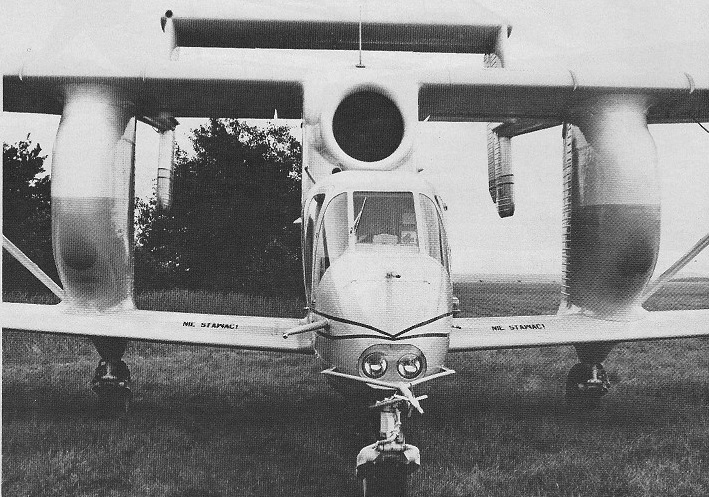
Powered by a 3,300-1b thrust Ivehenko AI-25 turbofan, it was also fitted with an Ivehenko AI-9 APU, which provides power for engine starts, refuelling and pumping chemicals into the two 1460-litre hoppers located between the wings. The cockpit was air-conditioned and behind was space for two ground crew and their gear, tools, spares, etc. The upper wing was equipped with a variety of high-lift devices, while the lower wing had nozzles for the dispensing of granular or liquid chemicals.
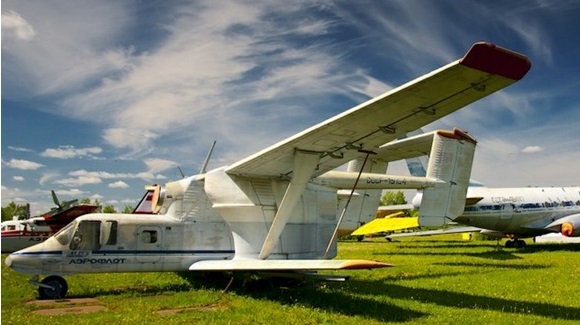
The cabin normally housed a mechanic or two, but could carry up to 21 passengers for ferry purposes.
Its usual working speed was 80 knots, but it could “dash” to the next job at over 140 knots.
Plans had been made to manufacture 3,000 M-15s, which had been given the name Belphegor during 1979, but production ended in 1981 after only 120 had been built because the aircraft was uneconomical in operation, P.Z.L. producing the turboprop An-3 instead.
Engine: 1 x Ivchenko AI-25 turbofan, 1500kg / 3307 lb
Wing span: upper 72 ft (22 m); lower 49 ft (15 m)
Wing area: 67.9 sq.m / 730.87 sq ft
Length: 13.13 m / 43 ft 1 in
Height: 5.34 m / 18 ft 6 in
Max take off weight: 11686.5 lb / 5300.0 kg
Max. speed: 200 km/h / 124 mph
Cruise speed: 175 km/h / 109 mph
Range: 480 km / 298 miles
Crew: 1-2
Hopper cap: 2500kg
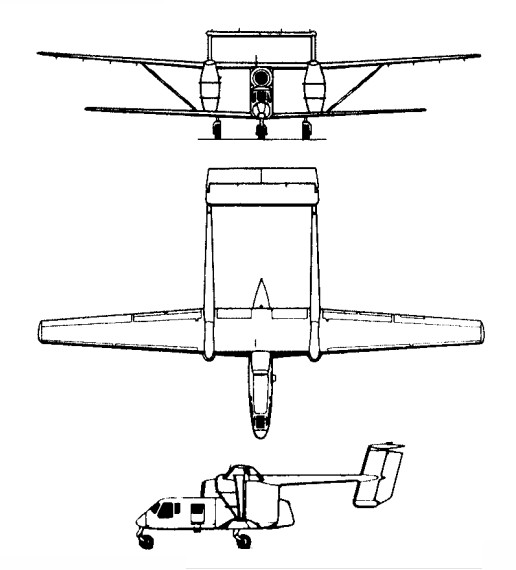
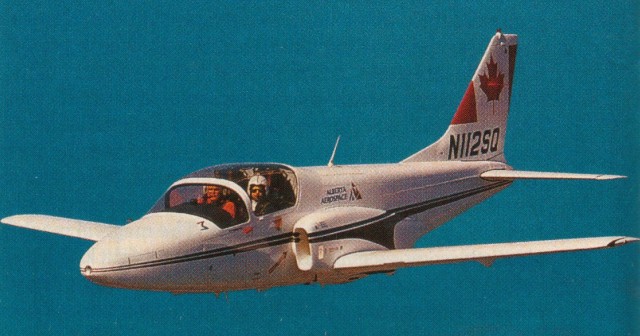
Promavia Jet Squalus / General Avia Jet Squalus / Alberta Aerospace Phoenix FanJet
A Belgian enterprise, the Jet Squalus was designed and built around the Garrett TFE109 engine by General Avia in Italy. Designed by Stelio Frati, the prototype Jet Squalus made a successful first flight on April 30, 1987. Three prototypes of the “all through” side by side seat trainer were built and flown to Belgium. The Squalus was promoted as “the first and only third generation global trainer”, offering ab initio and advanced training from one cockpit.
Two proto¬types of the Jet Squalus are being built by General Avia in Italy, the first powered by a Garrett TFE-109 turbofan, and the second by a more powerful Williams International FJ-44. Following completion of initial flight trials the aircraft will be flown to Belgium, where production, marketing, and support of the “all-¬through” jet trainer will be administered by Promavia.
The initial 1,330 lb st (5.92 kN) -1 unit was replaced by the Garrett TFE 109-3 turbofan of 1,600 lb st (7,12 kN).
Light weapons and/or drop tanks can be carried on underwing hardpoints.
No orders had been placed for the aircraft by 1988.
In 1995 the Belgian company Promavia licensed Alberta Aerospace to begin development of an ab initio trainer version of its Jet Squalus, under the name Phoenix FanJet. Eventually Promavia sold Alberta Aerospace the flying Jet Squalus prototype for conversion (to include new Williams- Rolls FJ44 turbofan engine in a revised airframe, new “glass” cockpit, larger flying control surfaces and more), allowing certification in about the year 1999. After Promavia ceased trading, Alberta Aerospace purchased other Promavia assets, allowing eventual production in Canada.
Based in Calgary, Canada, Alberta Aerospace obtained the two prototypes built with plans to install Williams-Rolls FJ44-1a engines. Almost 80% of the structural and stress testing for certification was completed by Frati, who tested the airframe to +7 and –3.5G. With a 140 kt gear extension speed, the aircraft did not meet the 61 kt stall speed required for civilian certification for single engine, so the wing span was to be extended by four feet.
A flight demonstrator was fitted with the Williams FJ44 engine.
Jet Squalus
Engine: 1 x Garrett F109-1, 1,330 lb st (5.92 kN)
Span: 9 m
Length: 9.4 m
Wing area: 13.6 sq.m
Empty wt: 1200 kg
MTOW: 2000 kg
Max speed: 584 kph
Initial ROC: 975 m / min.
Ceiling: 11,280 m
T/O run: 366 m
Ldg run: 336 m
Fuel internal: 720 lt
Range: 1850 km
Combat radius: 460 km
Hardpoints: 4
Jet Squalus
Engine: 1 x Garrett TFE 109-3 turbofan, 1,600 lb st (7,12 kN).
Jet Squalus
Engine: 1 x Williams-Rolls FJ44-1A, 1600 lb
ROC SL: 2360 fpm
Max cruise: 315 kt at 20,000 ft
Max range; 715 nm at 261 kt
MTOW: 5100 lb
Equipped weight; 3408 lb
Useful load: 1692 lb
Fuel capacity: 185 USG
PROCAER Cobra F.400 / F.480
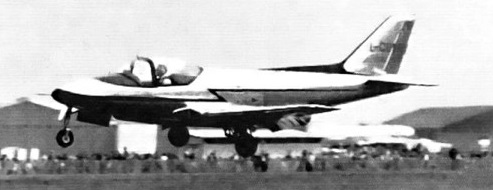
In 1960, under the direction of Stelio Frati, Procaer built the F.400 Cobra, a two-seater jet powered by a Turbomeca Marboré II.
Construction of Cobra is mixed wood and all metal and the outer coating of birch plywood covered with a pure aluminum foil bonded over the entire surface.
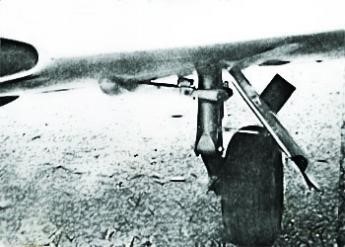
The prototype was destroyed during its return from the Paris Air Show to Italy.
A second prototype, with four seats and a Marboré VI, the Procaer F-480, was maintained in the collection of Charles Bezard.
Engine: Turbomeca Marboré II
Wingspan: 8.70 m
Length: 7.80 m
Height: 2.80 m
Wing area: 11.70 m²
Aspect ratio: 6.5
Empty weight: 700 kg
Loaded weight: 1300 kg
Wing loaded: 111 Kg / m²

Pratt & Whitney Canada PT6T / T400

The Pratt & Whitney Canada PT6T Twin-Pac is a turboshaft engine designed for helicopters. Manufactured by Pratt & Whitney Canada, its first application was in the Bell 212 and UH-1N Twin Huey helicopter family. The PT6T Twin-Pac consists of two PT6 power turbines driving a common output reduction gearbox, producing up to 2,000 hp at 6,000 rpm. The engine is designated T400 by the U.S. military.
The U.S. military came very close to not procuring the UH-1N Twin Huey because of the PT6T. The purchase of the aircraft for U.S. military use was opposed by the Chairman of the House Armed Services Committee at the time, Mendel Rivers. Rivers took this position because the PT6T was produced in Canada. The Canadian government had not supported U.S. involvement in Vietnam, and had opposed U.S. policies in southeast Asia, as well as accepting U.S. draft dodgers. Rivers was also concerned that procurement of the engines would result in a negative trade deficit situation with Canada. Congress only approved the purchase when it was assured that a U.S. source would be found for the PT6T engines. This source was Pratt & Whitney Engine Services in Bridgeport, West Virginia, which was established in 1971 to assemble and test new T400-WV-402 engines. As a result, the U.S. military ordered 294 Bell 212s under the designation UH-1N, with deliveries commencing in 1970.
Variants:
PT6T-3
Basic production model
PT6T-3A
Same as the PT6T-3 but with aluminum (instead of magnesium) gearbox casting, No longer used.
PT6T-3B
Same as the PT6T-3, except for the single power section contingency ratings and has PT6T-6 compressor turbine components.
PT6T-3BE
Same as the PT6T-3B with the removal of the torque sharing function in the torque control and is a PT6T-3BE gearbox fitted with two PT6T-3B power sections.
PT6T-3BF
Similar to the PT6T-3B, except 30-minute one engine inoperative (OEI) rating is equivalent to the 2½ minute OEI rating.
PT6T-3BG
Similar to the PT6T-3BE, except 30 minute OEI rating is equivalent to the 2½ minute OEI rating.
PT6T-3D
Same as the PT6T-3B, except for improved hot section hardware to allow for increased ratings.
PT6T-3DE
Same as the PT6T-3D, except the continuous OEI rating is replaced by a 30 minutes rating.
PT6T-3DF
Same as the PT6T-3DE, except for improved hot section hardware to allow for increased ratings.
PT6T-6
Same as the PT6T-3, except for the 2½ min rating and higher ratings and improved engine parts.
PT6T-6B
Same as the PT6T-6 with the removal of the torque sharing function in the torque control and is a PT6T-6B gearbox with two PT6T-6 power sections.
PT6T-9
Similar to the PT6T-3DF, except for an improved hot section and it is equipped with an engine electronic control system.
T400-C-400
Military PT6T-3
T400-CP-401
Military variant used on the VH-1N variant of the UH-1N.
T400-WV-402
Military PT6T-6, assembled by Pratt & Whitney Engine Services, Inc. in West Virginia
Applications:
AH-1J and AH-1T SeaCobra
Bell 212
Bell 309
Bell 412
CH-146 Griffon
UH-1N Twin Huey
Sikorsky S-58T
Sikorsky S-69
Pratt & Whitney Canada PW600 / PW610 / PW615 / PW617 / PW625

The Pratt & Whitney Canada PW600 series is a family of very small turbofan engines developed by Pratt & Whitney Canada for use in very light jets. Designed with scalability in mind, the engines can produce between 900 lbf (4,000 N) and 3,000 lbf (13,000 N) of take-off thrust.
First run of the 2,500 lbf (11,000 N) thrust PW625F demonstrator engine was on 31 October 2001. P&WC began work on the 900 lbf (4 kN) thrust PW610F engine, destined for the Eclipse 500, in 2002. The engine was certified by the Canadian authorities on the 27 July 2006. The first Eclipse 500 aircraft, powered by two PW610Fs, was delivered to a customer on 31 December 2006.
With a 14.5 inch (36.83 cm) diameter fan, the PW610F is one of the smallest turbofans to enter production. Little is known about the engine cycle, although the bypass ratio is believed to be about 1.83. Driven by a single-stage low pressure (LP) turbine, the single stage fan is an advanced snubberless design, with wide chord blades integral with the rotor hub. The newly patented high pressure (HP) compressor comprises a diagonal (i.e. mixed) flow stage, supercharging a conventional centrifugal blower, the whole being driven by a single stage HP turbine. A reverse flow combustor and forced mixer/common exhaust are also featured in the design. Dual lane Full Authority Digital Engine Control (FADEC), for smoother, more reliable, operation, is included in the specification. Hispano-Suiza Canada is currently designing and manufacturing the FADEC for this engine.
The larger, 1,350 lbf (6,000 N) thrust, PW615F has a 16 inch (40.64 cm) diameter fan and is aimed at the Cessna Citation Mustang. This engine was certified in December 2005, with first deliveries in March 2006. The Mustang aircraft was certified on 8 September 2006, and deliveries began in 2007. This engine will also be used in the upcoming Eclipse 400, but it will be limited to 1,200 lbf (5,300 N) thrust. Bypass ratio of PW615F amounts to 2.8.
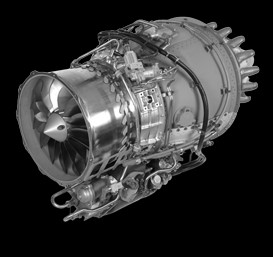
The PW610F achieved its rated takeoff thrust of 900 pounds after only five hours during the test run, which took place May 4, 2004. The first flight of the PW610F engine took place December 16, 2004 (on P&WC’s Boeing 720 flying test bed). During the 6-hour flight, a number of tests were performed, including performance characterization and an altitude re-light. The PW610F had previously completed more than 500 hours of ground testing. PW610Fs also meet Stage 3 noise requirements.
So far, the 1,615 lbf (7,180 N) thrust PW617F, with a 17.6 inch (44.7 cm) diameter fan and bypass ratio of 2.7, is the largest in the family and is designed to power the Embraer Phenom 100. The engine first ran on 29 June 2006, with certification expected in the 4th quarter of 2007. First delivery of a production model is expected in March 2008.
As of October 15, 2006, fifty PW610Fs and PW615Fs had been delivered by P&WC.
Variants:
PW610F
PW615F
PW617F
Applications:
Cessna Citation Mustang
Eclipse 400
Eclipse 500
Embraer Phenom 100
Specifications:
PW610F
Take-off Thrust: 900 lbf (4 kN)
Flat-rated to: >ISA+10C
Dry Weight: 259.3 lb (117.62 kg)
Length: 45.4 in
Fan Diameter: 14.5 in
PW610F-A
Power: 950 lbf
Diameter: 14″
Length: 42″
PW615F
Take-off Thrust: 1,350 lbf (6 kN)
Flat-rated to: >ISA+10C
Dry Weight: 310 lb (140.61 kg)
Length: 49.5 in
Fan Diameter: 16.0 in
PW617F
Take-off Thrust: 1,615 lbf (7.18 kN)
Flat-rated to: >ISA+10C
Dry Weight: 380 lb (176.9 kg)
Length: 52.6 in
Fan Diameter: 17.6 in
PW625F demonstrator
Take-off Thrust: 2,500 lbf (11.1 kN)
Fan Diameter: ~21.8 in
 All Aero