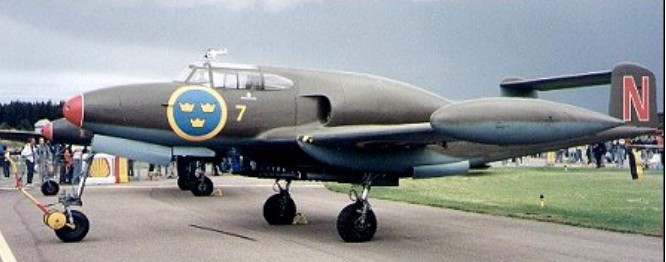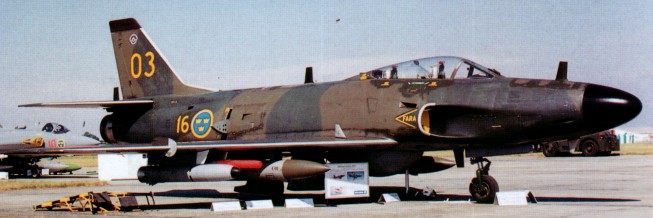
Saab J-32 Lansen

J32E

On 20 December 1948 Saab received the go-ahead to proceed with the design and the construction of a mock-up of a conventional single-engined aircraft designated the 1150 or Aircraft 32.

Design was initiated to provide the Swedish air force with an all-weather attack aircraft powered by two de Havilland turbojets, but the promise of an indigenous, and consequently cheaper engine brought cancellation of the original project. The design was drawn up around the new Swedish powerplant, but development delay of this engine threatened Saab’s programme and, instead, it was to be given a go-ahead following a decision to power the aircraft by a Rolls-Royce Avon turbojet.

SAAB J-32 Lansen Article

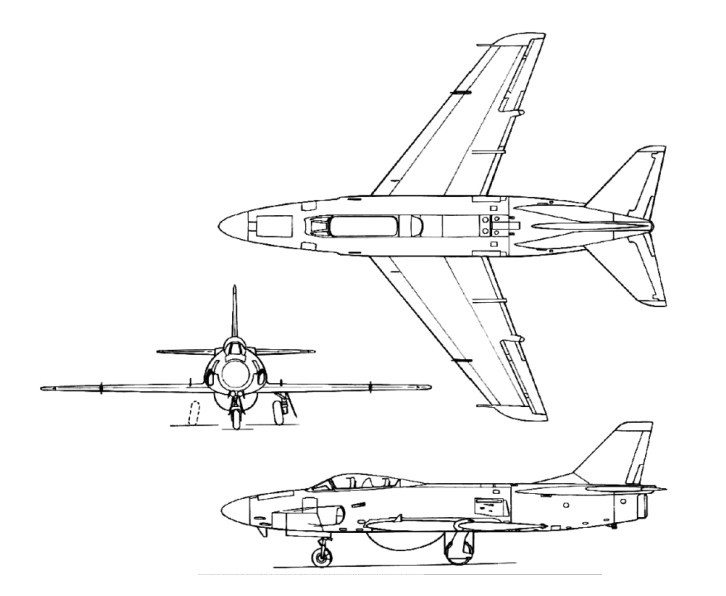
The type is a two-seat cantilever low-wing monoplane with powered controls, retractable tricycle landing-gear a single wheel on each unit). The main wheels retract inwards into the fuselage and the nosewheel retracts forward. The crew of two accommodated in tandem on ejection seats in a pressurised cockpit. Its wing incorporated 35 degrees of sweepback and like that of the Saab-29 before it was evaluated in scaled-down form on a Saab Safir trainer. Conventional ailerons, elevators, rudder, Fowler flaps and variable incidence tailplane were fitted, and four air-brakes on the sides of the rear fuselage.

Four prototypes of the Saab-32 design were ordered, and following the maiden flight of the first prototype on 3 November 1952, on 25 October 1953, the 32A became the first Swedish-built airplane to break the sound barrier.

Production of the A 32A Lansen (Lance) started in 1953, an all-weather attack aircraft powered by a Swedish-built version of the Rolls-Royce Avon Series 100, developing 4500kg afterburning thrust. The first production 32As were delivered to Fl7 Wing at Kallinge in December 1955. A total of 285 A-32As were built.
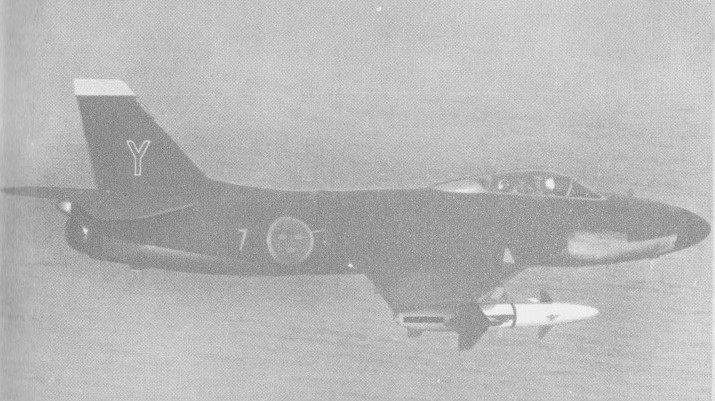
A32A Lansen

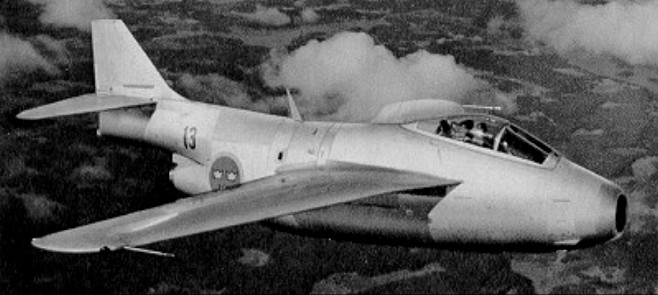
The first prototype of the 32B – an all-weather interceptor equipped with a more powerful engine, heavier armaments, navigational and homing radar, a sophisticated fire-control system and an autopilot designed by Saab, flew for the first time on 7 January 1957 (153 built).

When production of the A 32A ended in mid-1958, deliveries began almost immediately afterwards of the J 32B all-weather/night fighter. It introduced the Flygmotor RM6B turbojet, a licence-built version of the Rolls-Royce Avon Series 200 which developed 6900kg afterburning thrust, providing much enhanced performance. Production of the J 32B ended in early 1960.
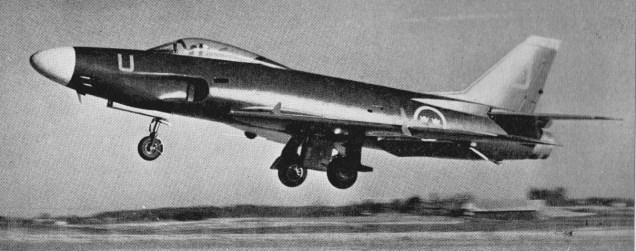
Lansen J32B

Built almost in parallel with this version was the S 32C reconnaissance aircraft with a modified nose to carry advanced cameras as well as radar surveillance equipment. The 32C was a reconnaissance aircraft equipped with five separate cameras (37 built). The 32C made its first flight on 26 March 1957.

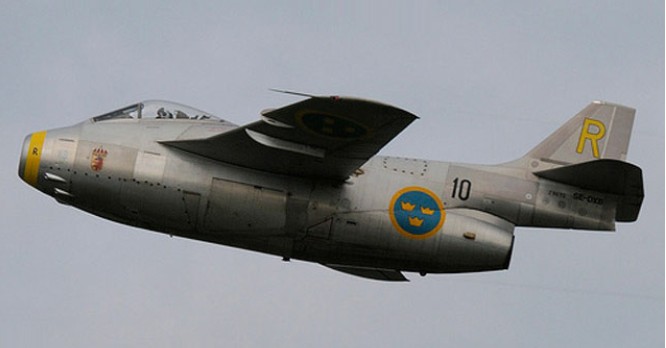
When production ended with delivery of the last J 32B, on 2 May 1960, a total of 447 Saab-32s of all versions had been built for the Flygvapen. By 1993 only a handful of Lansens remained in military service, chiefly with the Forsokscentralen (test and trials unit) of the Flygvapen. Two-seat J 32B and J 32D target tugs are in use along with 14 specially modified J 32E electronic warfare ‘aggressor’ aircraft. These aircraft are operated by F13M, based at Malmslatt, with a permanent detachment at the RFN’s Norland missile test range in Videsl, Lapland. Three J 32B target-tugs were formerly operated by civilian contractor Swedair, but reverted to air force control.

The last of the type being retired from active service in 1973.

Gallery

A32A
Engine type/thrust: RM5A Svenska Flygmotor/Rolls-Royce Avon Mk21 (7626-10351 lbs)
Span: 13.00 m (42 ft 7.75 in)
Wing area: 402.6 sq.ft
Length: 14.94 m (49 ft 0.25 in)
Height: 15 ft 6 in
Empty weight: 15,400 lb
Take-off weight: 13600 kg (29982 lb)
Max speed: 0.91 Mach / 700 mph at SL
Cruise speed: 0.8 Mach
Landing speed: 210 kph (131 mph)
Max ROC: 11,800 fpm
Range: 1850 km (1150 sm)
Service ceiling: 15000 m (49210 ft)
Armament: 4 x 20mm cannon
Hardpoints: 4 / 1300 lb
Seats: 2

J32B
Engine type/thrust: RM6A Rolls-Royce Avon Mk47A (10560-14683 lbs)
Span: 13.00 m (42 ft 7.75 in)
Length: 14.94 m (49ft 0.25 in)
Take-off weight: 13500 kg (29762 lb)
Max speed: 0.93 Mach
Cruise speed: 0.8 Mach
Landing speed: 250 kph (155 mph)
Range: 2000 km (1240 sm)
Max. altitude: 16000 m (52490 ft)
S32C
Engine type/thrust: RM5A Svenska Flygmotor/Rolls-Royce Avon Mk21 (7626-10351 lbs)
Span: 13.00 m (42 ft 7.75 in)
Length: 14.94 m (49 ft0.25 in)
Take-off weight: 13600 kg (29982 lb)
Max speed: 0.91 Mach
Cruise speed: 0.8 Mach
Landing speed: 210 kph(131 mph)
Range: 1850 km (1150 sm)
Max. altitude: 15000 m (49210 ft)

S32D
Engine type/thrust: RM6A Rolls-Royce Avon Mk47A (10560-14683 lbs)
Span: 13.00 m (42 ft 7.75 in)
Length: 14.94 m (49ft 0.25 in)
Take-off weight: 13500 kg (29762 lb)
Max speed: 0.93 Mach
Cruise speed: 0.8 Mach
Landing speed: 250 kph (155 mph)
Range: 2000 km (1240 sm)
Max. altitude: 16000 m (52490 ft)
S32E
Engine type/thrust: RM6A Rolls-Royce Avon Mk47A (10560-14683 lbs)
Span: 13.00 m (42 ft 7.75 in)
Length: 14.94 m (49ft 0.25 in)
Take-off weight: 13500 kg (29762 lb)
Max speed: 0.93 Mach
Cruise speed: 0.8 Mach
Landing speed: 250 kph (155 mph)
Range: 2000 km (1240 sm)
Max. altitude: 16000 m (52490 ft)
Saab 32 Lansen

Saab J29 Tunnan

Saab’s original project for the Saab-29 had envisaged it as a conventional monoplane powered by a de Havilland Goblin turbojet, but information on German swept-wing research which became available soon after the end of hostilities in Europe (combined with development of the more powerful de Havilland Ghost turbojet) resulted in redesign to incorporate these features. As the company had no experience of the behaviour of a swept wing it was decided to use a Saab Safir lightplane to test a wing of this configuration, a reduced-scale wing with 25 degrees of sweep-back being installed and flown on this aircraft. Negotiations were initiated with de Havilland for licence-production of the Ghost turbojet in Sweden.

Saab-29 Article

Of cantilver shoulder-wing monoplane configuration, the Saab-29 had retractable tricycle landing gear, its powerplant mounted within the rotund fuselage, and with the pilot accommodated on an ejection seat in a pressurised cockpit.

The first of four Saab-29 prototypes was flown initially on 1 September 1948, but it was not until the spring of 1951 that the aircraft was ordered into production, being the first aircraft in its class to be production-built in Western Europe.

First flown in prototype form on 1 September 1948, the initial production model was the J29A which began to enter service with the Swedish air force (Flygvapen) during May 1951 at Norrkoping.

Powered by a single Svenska Flygmotor RM2 turbojet engine (a licence-built version of the de Havilland Ghost) some 200 or so J29As were completed before production switched to the Saab-29B which was a multi-mission machine, the interceptor variant being known as the J29B (with increased fuel) while a specialised attack derivative A29B. The A29B being able to carry a variety of external ordnance including 250-kg (551-lb) general-purpose bombs, unguided air-to-air rockets with additional air-to-ground capability.

The S29C was optimized for reconnaissance tasks with the Hispano 20-mm cannon being replaced by six automatic cameras. Flown for the first time during June 1953, the S29C subsequently adopted the so-called dog-tooth’ wing leading edge which improved transonic handling characteristics.

First fitted to the Saab-29D variant, the Swedish-designed afterburner resulted in significantly greater power but only a few of the J29D subtype were built, it being supplanted by the J29E which was the first to feature extended-chord outer wings with the ‘dog-tooth’ leading edge as standard. Both after¬burner and ‘dog-tooth’ were incorporated in the definitive J29F which flew in prototype form on 20 March 1954 and possessed dual interceptor/attack capability.

SAAB J-29F

The type remaining in production until April 1956, by which time a total of 661 had been built. They remained in service until 1958 when their gradual replacement by the Saab-32 Lansen began.

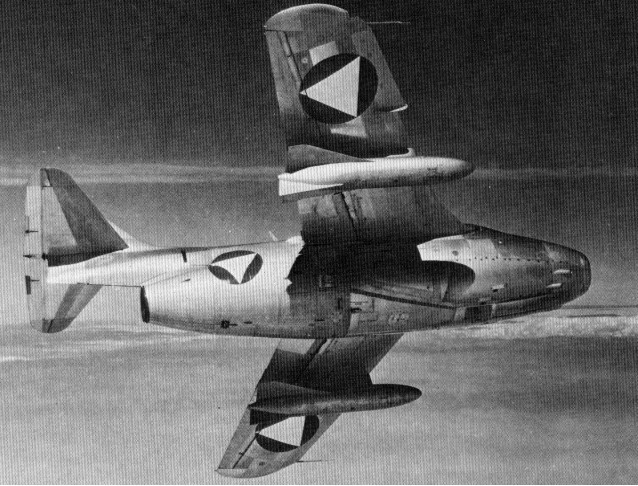
In 1961-2 30 ex-Flygvapen J 29Fs were supplied to Austria as fighter-bomber and reconnaissance aircraft, those operating in the latter role using a detachable pod housing three Vinten cameras. The J29F was retired in 1972.

Gallery

J29A
Engine: RM2 Svenska Flygmotor / De Havilland Ghost 50 (5004 lb)
Span: 11.00m (36 ft10.25 in)
Length: 10.23m (33 ft 6.75 in)
Take off weight: 7530-8375 kg (16600-18463 lb)
Max speed: 1035 kph (643 mph)
Cruise speed: 800 kph (497 mph)
Landing speed: 220 kph (137 mph)
Range: 1200 km (750 sm)
Max. altitude: 13700 m (44950 ft)

J/A29B
Engine: RM2 Svenska Flygmotor / De Havilland Ghost 50 (5004 lb)
Span: 11.00 m (36 ft10.25 in)
Length: 10.23 m (33 ft 6.75 in)
Take off weight: 7530-8375 kg (16600-18463 lb)
Maximum speed: 1035 kph (643 mph)
Cruising speed: 800 kph (497 mph)
Landing speed: 220 kph (137 mph)
Range: 1500 km (930 sm)
Max. altitude: 13700 m (44950 ft)

S29C
Engine: RM2 Svenska Flygmotor / De Havilland Ghost 50 (5004 lb)
Span: 11.00 m (36 ft10.25 in)
Length: 10.23 m (33 ft 6.75 in)
Take off weight: 7530-8375 kg (16600-18463 lb)
Maximum speed: 1035 kph (643 mph)
Cruising speed: 800 kph (497 mph)
Landing speed: 220 kph (137 mph)
Range: 1500 km (930 sm)
Max. altitude: 13700 m (44950 ft)

J29E
Engine: RM2 Svenska Flygmotor / De Havilland Ghost 50 (5004 lb)
Span: 11.00 m (36 ft10.25 in)
Length: 10.23 m (33 ft 6.75 in)
Take off weight: 7530-8375 kg (16600-18463 lb)
Maximum speed: 1035 kph (643 mph)
Cruising speed: 800 kph (497 mph)
Landing speed: 220 kph (137 mph)
Range: 1500 km (930 sm)
Max. altitude: 13700 m (44950 ft)

J29F
Engine: RM2B Svenska Flygmotor / De Havilland Ghost 50 with afterburner (6173 lb)
Span: 11.00 m (36 ft10.25 in)
Length: 10.23 m (33 ft 6.75 in)
Height: 3.75 m(12 ft 3.5 in)
Wing area: 24.00 sq.m (258.3 sq ft)
Wheel track: 7 ft 2 in
Take off weight: 7530-8375 kg (16600-18463 lb)
Empty wt: 4600 kg (10,141 lb)
Maximum speed: 1060 kph (659 mph) at 1500m (4,920 ft)
Landing speed: 220 kph (137 mph)
Initial ROC: 3600 m/min (11,810 fpm)
Service ceiling: 15500 m (50850 ft)
Range: 1100 km (680 sm)
Ferry range: 2700 km (1,678 sm)
Cruising speed: 800 kph (497 mph)
Armament: four 20-mm Hispano cannon, plus two Rb324 air-to-air missiles, or 24 75-mm (2.95-in) rockets, or eight 180-mm (7.09-in) or 150-mm (5.9-in) rockets, or two 250-kg (551-lb) bombs.

Saab 29 Tunnan

Saab J-21

On 1 April 1939, the Air Force Materiel Administration invited AB Förenade Flygverkstäder to tender for a new fighter aircraft to be powered by the new Bristol Taurus engine, a sleeve-valve unit delivering 1,200 hp. The timetable was incredibly tight. Saab proposed a radical configuration (designated the Ll3) in which the engine was mounted behind the cockpit, offering the advantages of a twin-engined craft in terms of visibility and armament. Unfortunately, this proved to be impractical since the Taurus engine was air-cooled.

Saab J-21 Article

In March 1941, Saab was authorized to resume work on the fighter project. By this time, technology had outstripped the original Ll3 concept and a new liquid-cooled Daimler-Benz engine was available as though made to order. The modified design — the J21 — was presented to the Air Force chiefs on 1 April 1941.

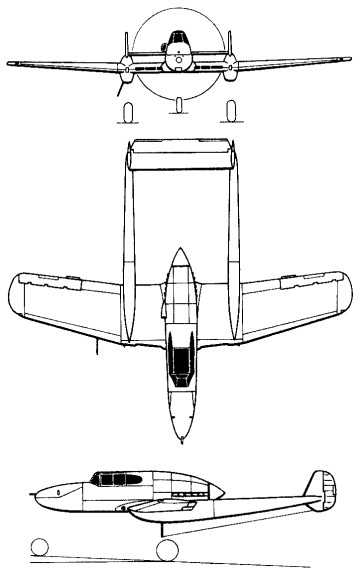
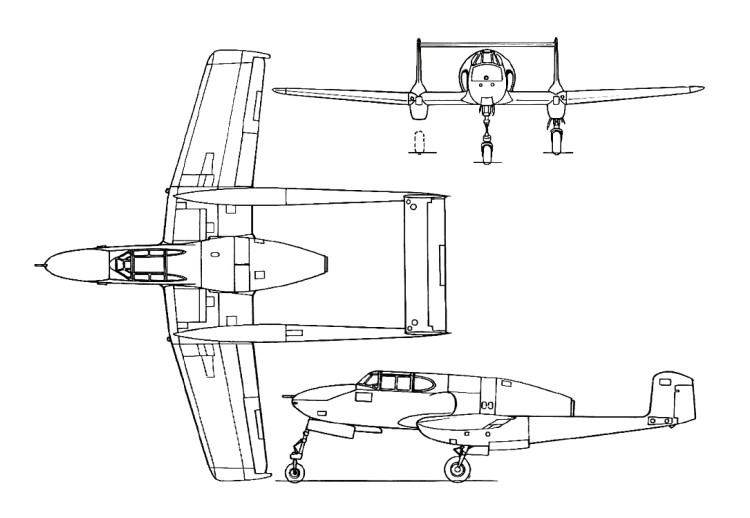
The design was a cantilever low-wing monoplane having moderate wing sweep, with central fuselage nacelle to accommodate the pilot on an ejection seat. Power was a rear-mounted powerplant in pusher configuration, twin booms extending aft from the wings with twin fins and rudders united by the tailplane with elevator, and retractable tricycle landing gear.

The first of three Saab-21A prototypes was flown on 30 July 1943 and these, like a few early production aircraft, were powered by the imported Daimler-Benz DB 605; all subsequent production had a Swedish licence-built version of this engine.

The first operational aircraft was delivered to F8 Wing at Barkaby on 1 December 1945.

When introduced into service in late 1945 as the J21A-1 the new type was the only pusher-engined fighter to become operational during World War II, being followed by the generally similar J21A-2 and, finally, by the A21A attack aircraft, these three versions being built to a total of 299 before production ended in 1948.

Continuous improvements were made and a bomb-carrying version, the J21A-3, made its debut on 22 May 1947.

The A21A had the same armament as the J21A fighter, was equipped to carry rockets or light bombs on under-wing racks, and had provision for the installation of a ventral gun pack housing eight 13.2mm machine-guns.

Although increasing the speed was the first priority of the plane’s designers at this time, all attempts to achieve this aim using piston engines were abandoned with the advent of the jet engine in late 1945, and four J21A-ls were modified in an initial attempt to adopt the new technology.

Svenska Aeroplan adapted its Saab-21 design to accept the installation of a de Havilland Goblin gas turbine. This seemed a simple way to gain experience with this form of powerplant and, at the same time, extend the performance capability of the proven Saab-21 design; however, it was to prove rather more difficult a process than had been anticipated. The redesign affected 50% of the airframe rather than 20% as had been anticipated. The first requirement was for the aft fuselage nacelle to be widened to accept the new engine and the tailplane moved to the top of the fin to be clear of the jet efflux. It was also decided that because of the higher performance of this aircraft some structural strengthening was essential, and as there was no longer any need to be concerned about propeller ground clearance the landing gear struts were shortened. In this form the first Saab-21R prototype was flown initially on 10 March 1947.

J-21R

Almost two years elapsed before all development-problem fixes had been finalised, the first deliveries of production aircraft starting during February 1949.

The original Saab-21 production order had been for 120 aircraft, but because of delay in its development, a programme for the specially-designed turbojet-powered Saab-29 was well advanced, with a result that the Saab-21R order was reduced to only 60 aircraft. These were produced as the J21RA with a 1361kg thrust de Havilland Goblin 2 engine, and J21RB with a licence-built Goblin turbojet, 30 of each being built. After comparatively short service in the fighter role, all were converted as attack aircraft, redesignated A21R and A21RB respectively, and carrying 10 100mm or five 180mm Bofors rocket projectiles, or 10 80mm anti-tank rockets.

In all, 298 J21s were built. The last of these was retired from service on 23 July 1954, al¬though the J21R continued to fly until 4 April 1957.

J21A
Engine: Daimler Benz 605B, 1475 hp / 1100kW
Span: 11.64 m (38 ft 2.25 in)
Length: 10.45 m (34 ft 3.5 in)
Height: 3.96 m / 13 ft 0 in
Wing area: 22.2 sq.m / 238.96 sq ft
Take-off weight: 4150 kg (13615 lb)
Empty weight: 3250 kg / 7165 lb
Maximum speed: 640 kph (398 mph)
Cruising speed: 495 kph (308 mph)
Landing speed: 145 kph (90 mph)
Range: 1500 km (930 miles)
Max. altitude: 11000 m (36090 ft)
Armament: 1 x 20mm cannon, 4 x 13.2mm machine-guns
Crew: 1

A21A
Engine: Daimler Benz 605B, 1475 hp
Span: 11.64 m (38 ft 2.25 in)
Length: 10.45 m (34 ft 3.5 in)
Take-off weight: 4413 kg (14478 lb)
Maximum speed: 640 kph (398 mph)
Cruising speed: 495 kph (308 mph)
Landing speed: 145 kph (90 mph)
Range: 1500 km (930 miles)
Max. altitude: 11000 m (36090 ft)

21RA
Engine: De Havilland Goblin 2 (2998 lb)
Span: 11.37 m (37 ft 3.75 in)
Length: 10.56 m (34 ft 7.75 in)
Take-off weight: 5033 kg (16512 lb)
Maximum speed: 800 kph (497 mph)
Cruising speed: 700 kph (435 mph)
Landing speed: 155 kph (96 mph)
Range: 900 km (560 miles)
Max. altitude: 12500 m (41010 ft)

21RB
Engine: De Havilland Goblin 3, 3307 lb / 1500kg
Span: 11.37 m (37 ft 3.75 in)
Length: 10.56 m (34 ft 7.75 in)
Height: 2.95 m / 10 ft 8 in
Take-off weight: 5033 kg (16512 lb)
Maximum speed: 800 kph (497 mph)
Cruising speed: 700 kph (435 mph)
Landing speed: 155 kph (96 mph)
Range: 900 km (560 miles)
Max. altitude: 12500 m (41010 ft)
Armament: 1 x 20mm cannon, 4 x 13.2mm machine-guns
Crew: 1

Saab 21
Saab 21R

Ryan VZ-11 / XV-5 Vertifan

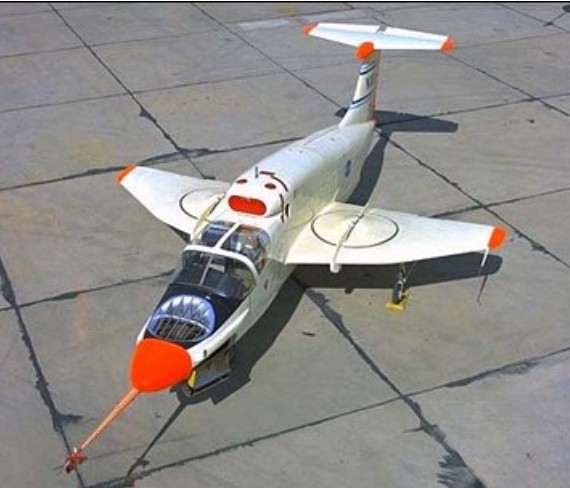
Developed with possible Army operational applications in view, the Ryan VZ 11 uses a totally different concept to obtain VTOL performance. The outcome of several years’ work on lift fans by General Electric Corporation, the VZ 11 derives its vertical lift from two ducted fans, one in each wing.

Unlike other ducted fans, above the General Electric version is powered by the jet exhaust from a turbojet engine which is directed on to turbine blades at the tips of the fan blades.

The VZ 11 layout has two 2,658 lb.s.t. General Electric J85 GE 5 turbojets in the fuselage, fed by a dorsal intake over the two seat cabin. For vertical operations, the fans are powered, together with a third fan in the nose which provides a small lift increment but is primarily for pitch control. For roll control, the thrust developed by the wing fans can be varied differentially by means of ‘butterfly’ doors over the inlets. Louvres under the outlets provide yaw control.

Once the VZ 11 is airborne, the louvres are moved to deflect the fan flow rearwards. This gives the aircraft a forward thrust component. As speed builds up the undercarriage is retracted. At about 120 knots, the wings provide sufficient lift to sustain flight and the exhaust flow from the two engines is then switched from the fans to direct propulsion nozzles. The butterfly doors and louvres close over the fan ducts and the aircraft continues as a conventional jet propelled type.

Two prototypes of the VZ 11 were ordered from Ryan in November 1961 as part of a U.S. Army research contract to investigate lift fans which was placed with General Electric. The designation was changed to VZ-5A in July 1962 and flight trials began in 1963. The XV-5 first flew in May 1964.

Ryan XV-5A Article

Republic Aviation joined GE and Ryan in XV-5A development and was directing flight tests at Edwards AFB in 1964. Republic would share in building additional prototypes if the craft met Army and DoD expectations.

XV-5A
Engines: 2 x 1200kg General Electric J85-GE-5
Max take-off weight: 7690 kg / 16954 lb
Empty weight: 5450 kg / 12015 lb
Wingspan: 9.25 m / 30 ft 4 in
Length: 13.75 m / 45 ft 1 in
Height: 4.5 m / 15 ft 9 in
Max. speed: 880 km/h / 547 mph
Ceiling: 12200 m / 40050 ft
Range: 1600 km / 994 miles

Ryan X-13 Vertijet

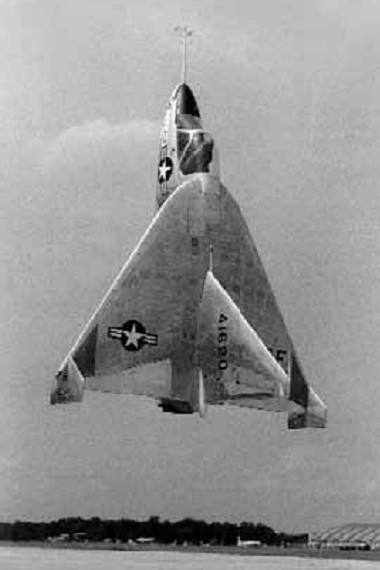
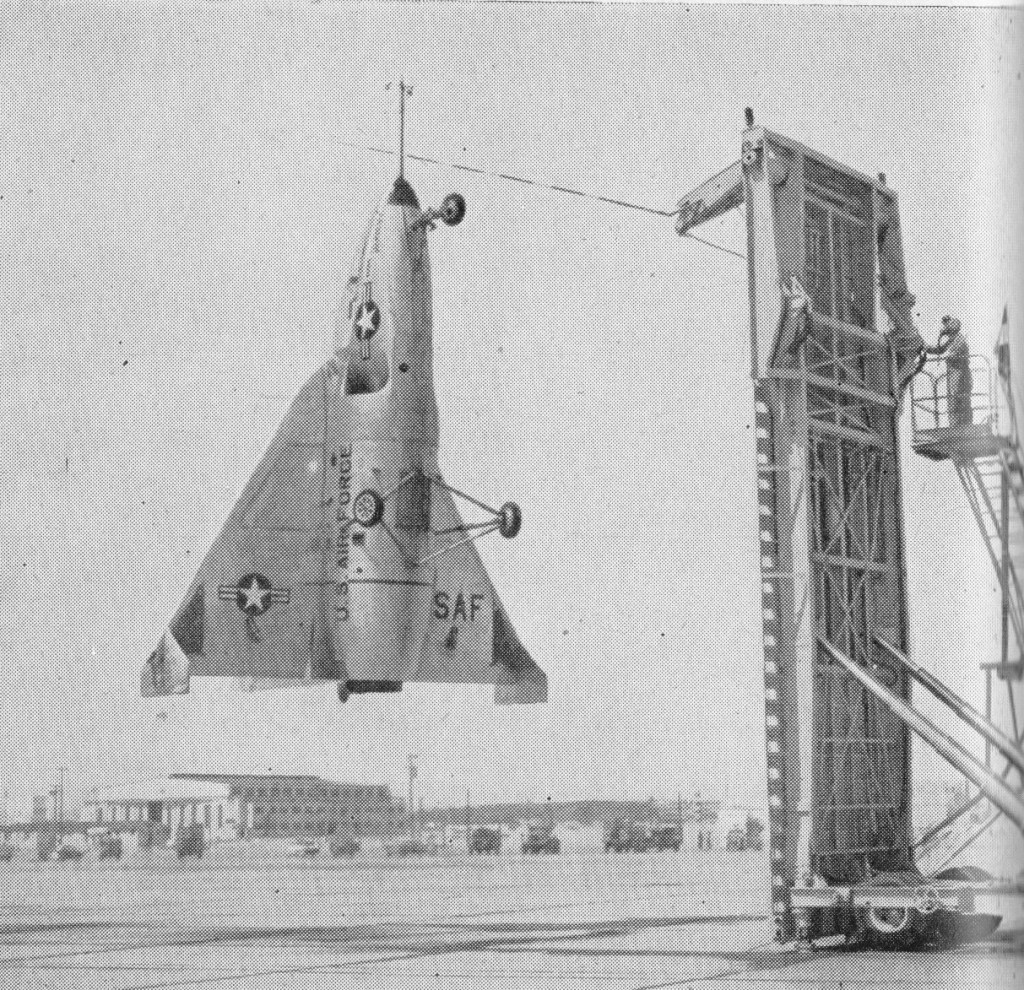
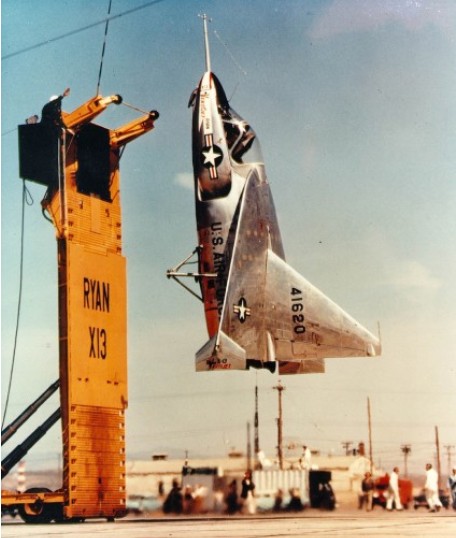
The X-13 was designed to explore the feasibility of building a pure-jet vertical takeoff and landing (VTOL) fighter aircraft. Secondary purposes included validating several Ryan designed VTOL control system concepts.

Ryan produced the X-13 Vertijet and XV-5 VTOL aircraft for the USAF. The X-13 was a ‘tail-sitter in the mould of the Convair XFY-1 and Lockheed XFV-1, though in this instance configured as a pure research type powered by a single 10,000-lb (4536-kg) Rolls-Royce Avon turbojet. The aeroplane first flew in conventional mode with temporary wheeled landing gear on 10 December 1955, and in ‘tail-sitter’ mode during May 1956.

The seat tilted forward 45 degrees to give the pilot a more comfortable position during vertical flight. Many early flights were made with no canopy. As first built, the X-13 had a huge fin, its height nearly as great as the wingspan. This was shortened during later testing.

The success and efficiency of the X-13 flight test program provided a significant amount of data to the designers of subsequent VTOL aircraft designs. The X-13s proved that vertical flight, on jet thrust alone, was both technically feasible and practical. The ease with which the aircraft routinely transitioned from vertical to horizontal attitude, and back again, left little question as to the flexibility and operational utility of such flight modes.

The delta-winged X-13 used a unique landing method, involving a special trailer, a hook and a striped pole. To land the pilot had to approach the trailer’s vertical base board without being able to see it. A pole marked with gradations protruded from the board and the pilot had to use this to judge his ‘altitude’ from the landing wire. In one demonstration at the Pentagon, the X-13 flew from its trailer, crossed the Potomac River, destroyed a rose garden with its thrust and landed in a net. Although this impressed the top brass, further funding was not forthcoming and the project petered out.

The last flight was made on 30 July 1957.
Fastest Flight: 483 mph (approx)
Highest Flight: 10,000 feet (approx)

Both X-13s survived their test program. The first aircraft is on loan from the National Air and Space
Museum to the San Diego Aerospace Museum in California. The second aircraft is on display at the Air
Force Museum in Dayton, Ohio.

Gallery

Engine: 1 x 4540kg Rolls-Royce Avon RA.28-49 turbojet
Max take-off weight: 3317 kg / 7313 lb
Wingspan: 6.40 m / 21 ft 0 in
Length: 7.13 m / 23 ft 5 in
Height: 4.60 m / 15 ft 1 in
Max. speed: 777 km/h / 483 mph

Ryan XF2R

XF2R-1

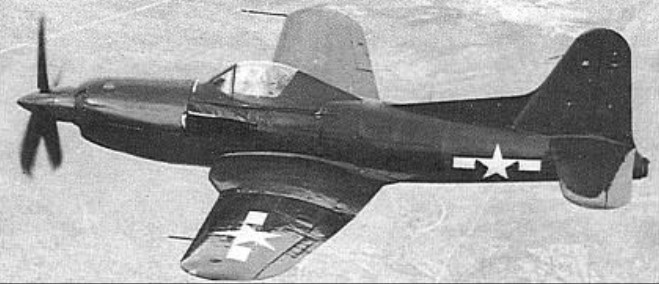
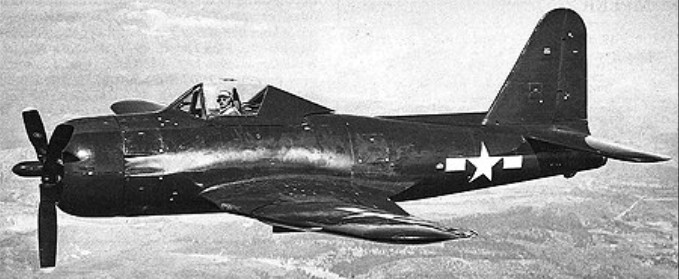
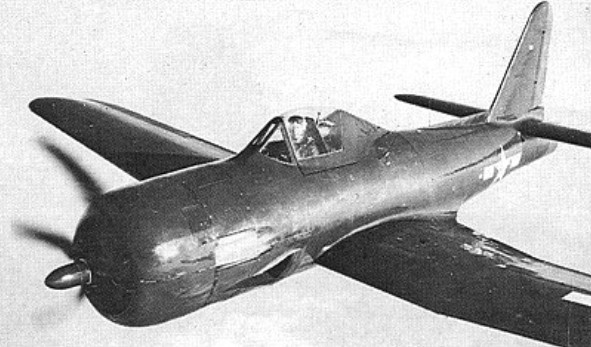
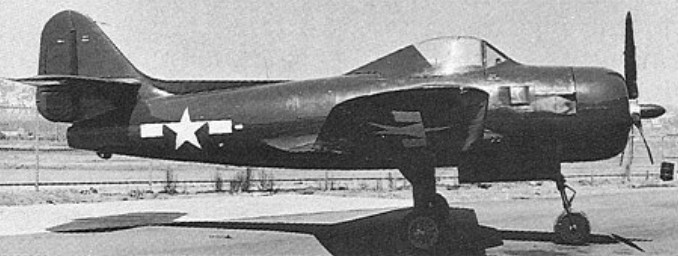
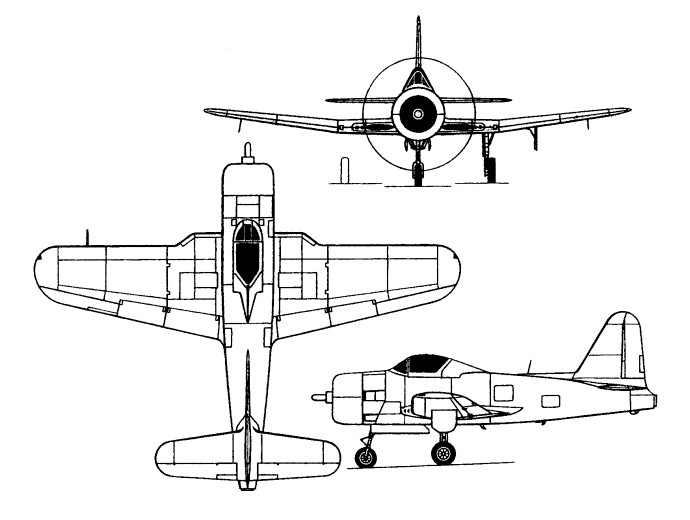
A major modification of the FR-1 Fireball, the Model 29 resulted from a Bureau of Aeronautics requirement for a single-seat fighter combining a turboprop with a turbojet. Assigned the designation XF2R-1 and later to become known unofficially as the “Dark Shark”, the single prototype utilised the fifteenth FR-1 production airframe and retained that fighter’s J31-GE-3 turbojet, mated with a General Electric XT31-GE-2 turboprop developing 1,700hp plus 227kg of residual thrust.

Although lacking the wing folding and the catapult and arrester gear standard on the FR-1, the XF2R-1 weighed 473kg more than its predecessor when it flew for the first time in November 1946. The XT31 drove a propeller with four square-tipped hollow-steel blades which could be fully feathered or reversed to zero blade angle extremely rapidly, the drag of the flatter blade angle serving as an effective air brake for landing. By comparison with the FR-1, the vertical tail surfaces of the XF2R-1 were enlarged to compensate for the lengthening forward to accommodate the turboprop, but the airframe of the later fighter was similar in most other respects. The XF2R-1 underwent extensive testing at Muroc Dry Lake, but no further development was undertaken.

Max take-off weight: 4990 kg / 11001 lb
Wingspan: 12.80 m / 42 ft 0 in
Length: 10.97 m / 36 ft 0 in
Height: 4.27 m / 14 ft 0 in
Wing area: 28.33 sq.m / 304.94 sq ft
Max. speed: 800 km/h / 497 mph
Ceiling: 11920 m / 39100 ft

Ryan FR-1 Fireball / Model 29

In December 1942, nine US aircraft manufacturers received a Request for Proposals from the Bureau of Aeronautics for a single-seat shipboard fighter combining piston engine and turbojet, the former to be the main power source and the latter to provide boost in climb and combat. The Ryan Model 28, designed by Benjamin T Salmon and William T Immenschuh, was selected as winning contender by the Bureau and three prototypes were ordered on 11 February 1943 as XFR-1s.

A low-wing, cantilever monoplane of classic design, the XFR-1 was the first carrier aircraft designed from the outset to use a laminar-flow aerofoil and the first US Navy aircraft to have an entirely flush-riveted exterior and metal-skinned movable control surfaces. Power was provided by a 1,350hp Wright R-1820-72W Cyclone nine-cylinder air-cooled radial and, in the rear fuselage, a 726kg General Electric I-16 (later redesignated J31) turbojet. Proposed armament consisted of four 12.7mm machine guns with provision for a 454kg bomb under port inboard wing panel. Other features were hydraulically-folding outer wings and a tricycle undercarriage.

A contract for 100 production FR-1s was placed on 2 December 1943, the first XFR-1 flying seven months later, on 25 June 1944, with only the piston engine installed. The turbojet was added a few days later. Initial flight tests led to the major redesign and enlargement of the vertical tail and lowering of the horizontal tail. On 31 January 1945, by which time a number of series FR-1s had been completed and were under test, a contract was placed for 600 FR-2s which were to differ in having the R-1820- 74W engine of 1,500hp with water injection. In the event, neither the FR-2 nor the XFR-3 was to be built, the latter being intended to mate the 907kg General Electric I-20 turbojet with the -74W piston engine.

XFR-4

The XFR-4 entered flight test in November 1944. Utilising the 19th FR-1 production airframe, this replaced the J31-GE-3 turbojet with a 1542kg Westinghouse J34-WE-22, discarded the wing root intakes of the FR-1 in favour of flush inlets in the sides of the forward fuselage, and had the aft fuselage extended by 20cm. It was found, however, that the thrust of the J34 was too great to permit efficient use of both engines and the XFR-4 programme was discontinued accordingly.

Due to its (relatively) high-speed dash capability, the Fireball was considered for use in defence against kamikaze attacks. The war ended just as the first squadron was becoming operational. .Deliveries of the FR-1 to the US Navy began in March 1945, the Fireballs equipping one squadron (VF-66) and completing carrier qualification in May (aboard the USS Ranger). After VJ-Day, the 34 FR-1s remaining to be delivered were cancelled, together with all 600 FR-2s. On 18 October 1945, VF-66 was de-commissioned and its FR-1s transferred to VF-41 (redesignated VF-1E on 15 November 1946) which continued to fly them until mid- July 1947. Only 17 of the 66 FR-1s built saw squadron usage, the remainder being assigned for various test programmes.

FR-1
Engines: 1 x GE J31-GE-3 turbojet, 1600 lbs (726 kg) thrust & 1 x Wright Cyclone R1820-72W, 1425 hp piston.
Wingspan: 12.19 m / 40 ft 0 in
Length: 9.85 m / 32 ft 4 in
Height: 4.24 m / 14 ft 11 in
Wing area: 25.54 sq.m / 274.91 sq ft
Max take-off weight: 5285 kg / 11651 lb
Empty weight: 3488 kg / 7690 lb
Max speed: 370 kts, (piston power only: 255 kts).
Range: 1658 km / 1030 miles

Ryan FR-1 Fireball