Shenyang J-31

The second product of the J-XX program to be revealed to the public was the J-31. Revealed to the public in 2012, it clearly incorporates some stealth aspects, especially towards the front of the aircraft.

Testing began in October 2012, and in late 2014, the J-31 was displayed publicly at an airshow for the first time. The prototype mounts two Russian-designed RD-93 turbofans (the same engines as the MiG-29). The mockup shown at that same event seems to show that several changes to the design are in store. While the intended role of the J-31 within China is unclear, it does seem to be slated for export, with Pakistan reportedly planning to purchase up to 40 J-31s.

Shenyang J-16

In 2000, China purchased an Su-30MKK from Russia, which formed the basis for development of two-seat J-11 variants. The Chinese developed the two-seat J-11BS into a dedicated strike fighter under the designation J-16.

Just as its predecessor, it extensively employs composites to lower airframe weight, while new materials and design elements were used to lower RCS. The J-16 first took flight in 2011 and was accepted into service two years later.

A small production of only 25 aircraft built. While still in production, priority seems to be placed on development and production of the fifth-generation J-20 and J-31 fighters.

Shenyang J-15

Soon after development of the J-11B began, Shenyang began to develop a navalized version of the aircraft to operate from the recently purchased carrier Varyag. In 2001, China purchased an unfinished Su-33 prototype from the Ukraine, allowing Shenyang to work with the design to develop a carrier aircraft. Meanwhile, the Chinese government made repeated attempts to acquire Su-33s directly from Russia. Negotiations fell apart in 2006 when the J-11B was revealed, and thus Shenyang was forced to develop a domestic solution. The resulting aircraft was almost identical in appearance to the Su-33, but is considerably lighter and more capable thanks to extensive use of composites and newer onboard systems.

The J-15 first flew in 2009, powered by the same AL-31F turbofans that powered the Su-33. Carrier trials began in late 2012, and as of late 2013 the J-15 has began operational testing.

Shenyang WS-15 / Xian WS-15

The WS-15 or Woshan 15, is a turbofan engine designed by Shenyang Aeroengine Research Institute or Institute 606 and manufactured by Xi’an Aero-Engine Company to power the Chengdu J-20 fifth generation fighter aircraft and possibly the J-10B for the PLAAF.

The People’s Republic of China began development of the WS-15 in the 1990s. The WS-15 is designed to produce a maximum 180 kN thrust with afterburner and is expected to power fifth generation fighters such as the J-20. The “Core” of the WS-15 was displayed for the first time in 2010. It is rumored that the WS-15 core completed high altitude testing in 2009. A high thrust turbofan for transport aircraft based on the WS-15 core was also being developed. This turbofan designated SF-A and is developed for Y-20 military transport aircraft and C919 airliner.

The design and development of the WS-15 engine used experiences learned from the previous WS-10 turbofan engine program started in the early 1980’s.

Specifications:
WS-15
Type: Afterburning turbofan
Compressor: axial
Maximum thrust:
Prototype: 16,500 kilograms (36,000 lb) with afterburner
Goal: 18,350 kilograms (40,500 lb) / (180 kilonewtons (40,000 lbf)) with afterburner [2]
Thrust-to-weight ratio:
Prototype: 9
Goal: 10

Shenyang WS-10

The Shenyang Liming WS-10 (or WS10, WS stands for Woshan, Chinese: 涡扇, meaning turbofan), codename Taihang, is a turbofan engine designed and built in the People’s Republic of China. The WS-10A is already being used to power the J-11B and the J-16; eventually it will be used to power the Chengdu J-10 aircraft that currently feature Russian Saturn AL-31FN turbofan engines.

The WS-10 project had its roots in the earlier WS-6 turbofan, which was abandoned at the start of the 1980s. Development of the WS-10 started in 1987 by Shenyang Aeroengine Research Institute (606 Institute) of the China Aviation Industry Corporation and was based upon the core of CFM International CFM56 engines imported from the United States in 1982. This core itself deriving from the F16’s GE F101 engines. The original WS-10 was found to lack the performance needed for modern jet-powered fighters and was never used to power an aircraft. The design was modified and an improved version, the WS-10A, was tested on a prototype Shenyang J-11 fighter in 2002.

In 2005 it was reported that, according to Russian sources familiar with China’s WS-10A turbofan development project, WS-10A was being developed to be slightly more powerful than the Saturn/Lyulka AL-31. The sources noted that China was encountering problems with meeting weight reduction goals for the WS-10A’s primary and secondary compressors and had problems meeting thrust requirements. It was also stated that Chinese thrust vectoring technology was under development for the WS-10A. The Chinese media also reported in 2005 that the WS-10A had completed 4 months endurance testing and the engine was later certified for production in 2006.

According to an interview publicised in January 2007 with J-10 pilot Li Cunbao (李存宝), the J-10 had not yet been equipped with the domestic WS-10 engine, because although the WS-10 could match the performance of its Russian counterpart (the AL-31), there was a serious drawback; the WS-10 took longer to “spool up”, i.e. there was a delay in reaching the same thrust output as the Russian engine.
WS-10A is reported to have 13,200 kilograms (29,100 lb) of thrust and a 7.5:1 thrust-to-weight ratio, making it comparable to the AL-31F turbofan. The WS-10A was first displayed in public at the 2008 Zhuhai Air Show. The WS-10A design consists of a 7-stage high pressure compressor, short annular combustor with air blast atomizer and air film cooling blades. It is the first production turbofan from China to feature single crystal nickel-based turbine blades, which allow higher intake temperatures and greater engine thrust. WS-10A has also been equipped with a FADEC (full authority digital engine control) system. An asymmetric thrust vector control (TVC) nozzle, similar to the TVC nozzle of the Russian AL-31F-TVN engine, has also been reported undergoing testing.

On 2 April 2009, the director of AVIC (Aviation Industry Corporation of China) Lin Zuoming (林左鸣), stated that there were problems with the quality control procedures on the WS-10A production line, meaning the Taihang turbofan was still of unsatisfactory quality. He said that solving these problems would be a key step. In addition to poor build quality, the engines suffered from poor reliability, the Chinese engines have been lasting 30 hours at a time vs 400 for the Russian originals. Despite AVIC’s issues with quality control, mass production of the WS-10 series engines would contribute significantly in improving Chinese industrial capabilities.

The overall situation had steadily improved by the end of 2009, after which the WS-10A had reportedly proved mature enough to power the J-11B Block 02 aircraft. By late 2013, the improved WS-10A engine has reached a new level of maturity and performance, it powered the J-16 throughout its entire flight test program and now the J-16 is starting to reach IOC and begin small batch production.

Derivatives of the WS-10 are under development, such as a high-bypass turbofan variant for propelling large transport aircraft and marine gas turbine variant for propelling ships. The high-bypass turbofan is called WS-20 which is derived from the WS-10A’s core to power the Y-20 strategic transport currently under development by XAC.

A thrust-vectoring variant with higher thrust (132 kilonewtons (30,000 lbf)), called the WS-10B, is in testing and is ready for combat aircraft installation, while an even further upgrade with higher thrust (155 kilonewtons (35,000 lbf)), designated the WS-10G, was also under testing.

Variants:
WS-10 – original design producing a thrust of 126 kilonewtons (28,000 lbf)
WS-10A – improved variant producing a thrust of 130 kilonewtons (29,000 lbf)
WS-10B – upgraded variant producing a thrust of 135 kilonewtons (30,000 lbf)
WS-10G – upgraded variant producing a thrust of 155 kilonewtons (35,000 lbf) with Thrust Vectoring and stealthy nozzles that have jagged edges and tiles
WS-20 – derived variant with high-bypass ratio and none afterburner to power the Y-20 transport. 138 kilonewtons (31,000 lb)

Specifications:
WS-10A
Type: Afterburning turbofan
Diameter: 950 millimetres (37 in) inlet
Dry weight: 1,630 kilograms (3,590 lb)
Compressor: 3 fan and 9 compressor stages
Combustors: annular
Turbine: 1 high-pressure and 2 low pressure stages
Maximum thrust: 132 kilonewtons (30,000 lbf) with afterburner
Bypass ratio: 0.78:1
Turbine inlet temperature: 1750 K (1,477 °C (2,691 °F))
Thrust-to-weight ratio: 7.5

Shenyang J-13

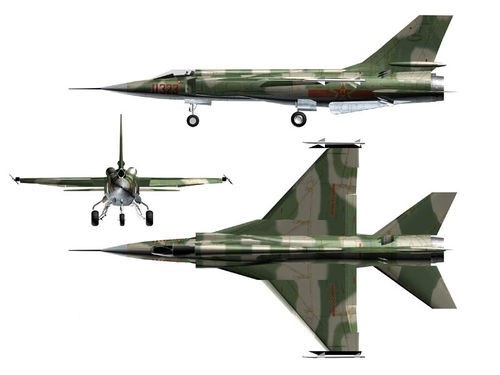
In the early 1970s, Shenyang began looking into the development of a new fighter to replace their J-6/MiG-19s. When, in 1974, the PLAAF proposed the development of a new lightweight fighter with a top speed of Mach 2, Shenyang began serious design work, testing several wing configurations. The design that emerged had side-mounted intakes and a double-delta wing. While as early as 1976 Shenyang had finalized the design and was looking into the avionics and materials to be used in the aircraft, it was still without an engine. Plans called for the Rolls-Royce Spey derived WS-9 engine to be used, but when the engine finally emerged in 1980, it proved unsuitable for a single-engined fighter. In the late 1970s, the Chinese had got their hands on an Egyptian MiG-23MS complete with its Tumansky R-29 turbojet, which was hastily copied. However, when the new engine proved to be underperforming, the project was once again delayed. Further issues came in 1981 when the success of the J-8 caused the funding for the J-13 to be cut. Throughout the 80’s the project soldiered on with low priority, with new requirements emerging that called for the design to be competitive with the newest fourth generation fighters. Finally, the project was abandoned in the early 1990s as Chengdu’s J-10 proved to be more promising.

Shenyang J-11

J-11B

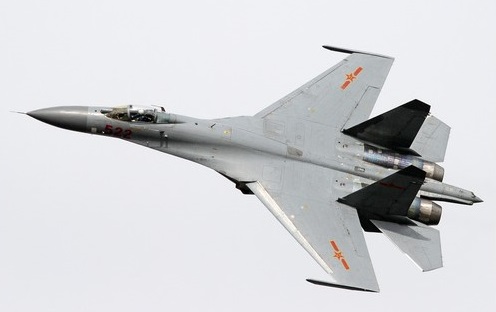
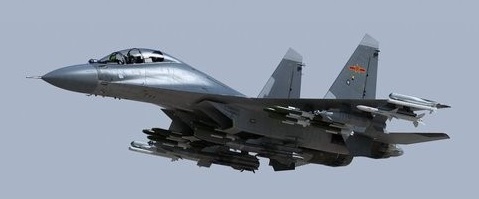
In 1995, China secured the rights for domestic production of the Su-27SK by Shenyang under the designation J-11. As originally conceived, the J-11 was to be merely a Chinese-built Su-27SK – complete with Russian engines and systems. While the J-11 took flight in 1998 and quickly entered service alongside Russian-production Su-27s, Shenyang went to work on the development of an indigenous improvement to the design. Designated the J-11B, the new aircraft used domestically-designed WS-10 engines, domestically-designed onboard systems, and extensively employed composites to lower the empty weight by 700kg. The J-11B added the capability to mount a variety of Chinese-designed ordnance, including anti-ship missiles.

J-11B

The J-11B has had its share of controversy. Its legitimacy has been called into question, as concerns have been raised over unlicensed production of the Su-27 design. Production has stopped of the original J-11s, apparently shifting to J-11B production, but, as is common with the Chinese, the domestically designed WS-10 engine has had many teething issues. Shenyang has looked to Russia for alternatives – the AL-31 series engines used on SU-30MKIs were a top choice for an alternative powerplant. At least one squadron did operate WS-10-powered J-11Bs briefly, but the aircraft were quickly grounded after the engines proved to have impractically short lives (30 hours compared to 400 for Russian engines). In spite of the issues, however, the J-11B has gone on to form the basis for further Chinese Flanker variants.

Shenyang F-9

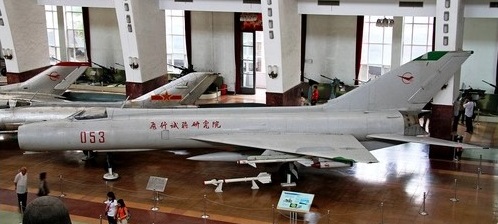
By 1975 preliminary reports had reached the West of a considerably modified version of the F 6, the MiG-19SF and PF built under licence in China. (Unlike the MiG 21, built in as small numbers as the Shenyang F 8, the earlier F 6 continued in production and proved useful by China and various export customers.)

The Shenyang complex of the Chinese aerospace industry has long been known for painstaking quality and attention to detail, but also for a lack of original design experience. It cannot have been easy to derive a largely new twin engined fighter from the F-6, differing in such respects as generally increased size, a large nose radar and lateral engine inlets.

First announced in the West by US Defense Secretary Rumsfeld in 1976, when it was described as the Fantan A fighter-bomber, the F 9 was originally powered by Tumansky RD 913 engines, each rated at 3250 kg (7164 1b) thrust with maximum afterburner.

Shenyang J-8

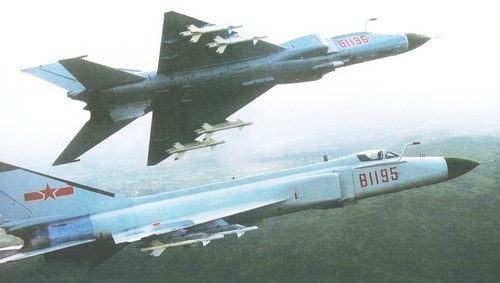
The J-8 began development in the mid 1960s as a fairly late response to new high-speed, high-altitude threats from NATO aircraft. The J-8 was an entirely new design, developed from the J-7 (itself a MiG-21 copy). The basic configuration of the MiG-21 was carried over, while a second Chinese-built Tumansky R-11 engine was mounted in the airframe. Initial variants would retain the nose-mounted intake, giving the J-8 the appearance of a larger, fatter MiG-21. Despite the design calling for a solid nose to house a radar, Shenyang’s unfamiliarity with such designs meant that these initial J-8s would be vastly less capable than what was required.

The first J-8 took flight on 5 July 1969, demonstrating performance similar to the Su-15. While the initial J-8 design continued testing and prepared for production, Shenyang continued to develop the design into the more capable interceptor China was in need of.

Developments eventually led to the J-8II, with a nose-mounted radar and side-mounted intakes, giving the design an appearance nearly identical to the Su-15. Meanwhile, the J-8I, the initial variant, entered service in 1980, with disappointing performance. It was limited to short-ranged IR missiles, and demonstrated performance comparable to decade-old Soviet designs. Production of the J-8I was cut short, and the aircraft were replaced as soon as the newer J-8IIs became available. About 200 were built before attention switched to the more capable J-8-II.

Early in 1986 US Government approval was given to an unprecedented agreement, under which $500m worth of modern avionics would be sold to China for use in its next-generation interceptor, the J-8-II. Fifty-five sets of equipment will be supplied, each including an interception radar, an inertial navigation system, a headup display, and mission and air data computers.

In May 1984, the first J-8II took flight, marking a major improvement over the J-8I. Changes to the forward fuselage not only included radars and intakes, but also the cannon armament and weapon systems. It has relocated fuselage intakes, a ventral fin which folds to starboard for landing, and twin Wopen 13A-II powerplants probably developed from the Soviet Tumansky R-13-300 engine. Systems aboard the J-8II provided the PLAAF with a much more capable interceptor, while it still lagged behind contemporary western designs. The J-8II was rushed into service as soon as possible, replacing the obsolete J-8I. Shenyang continued to develop the systems of the J-8II, with hopes of eventually mounting an American AN/APG-66 radar on the design. However, when the backlash from the 1989 Tiananmen Square incident hurt Sino-American relations, less capable domestic systems were used.

The J-8II fully replaced the J-8I by the 1990s with a production run of over 300 aircraft. While performance leaves much to be desired, it has proved more than capable for the few interceptions they have had to make since the end of the Cold War. Shenyang has continued to upgrade the J-8II’s systems, attempting to make the design as competitive as possible. However, fire control systems and radars still seem to lag behind the West. The only notable incident involving the J-8 was the 2001 Hainan Island incident, where a J-8II intercepted a US EP-3 just outside Chinese airspace, colliding with the aircraft. While the Chinese pilot was killed, the EP-3 survived the collision, and was forced to make an emergency landing in China. The J-8II was slated to be replaced by the more modern J-10 and J-11 fighters.

J-8-II

Gallery

J-8-I
Engines: 2 x Liyang Wopen-7B turbojet, 13448 lb st

J-8-II
Engines: 2 x Liyang Wopen-13A II turbojet, 9500/14815 lb st

Shenyang FT-6

The two seat Shenyang development of the MiG-19SF, the FT 6, is not widely known, despite service with Egypt as well as Pakistan.

Although the Soviet Union built a small number of MiG¬-19UTI two seat trainers, the V VS concluded that a two seat MiG 19 conversion trainer was unnecessary for transitioning and production was terminated, and the Shenyang built FT 6 appears to owe little or nothing to its Soviet predecessor.

Whereas the Russian tandem two seat modification was accommodated within the existing fuselage, the forward section of the FT 6 was lengthened by some 33 in (84 cm) over the original 41 ft 4 in (12,6 m), (without the long nose pitot) by the Shenyang design team to allow room for the second occupant.

This necessitated the addition of two more ventral strakes beneath the rear fuselage as compensatory side area to prevent snaking, giving the FT 6 a total of three strakes in all.

Other differences from the standard F 6 are few, although, in view of the already very limited endurance, to make up for the loss of fuel capacity resulting from the second cockpit, extra tankage had to be provided. A prototype two seater appeared with small tip tanks to rectify this deficiency, but these apparently proved unacceptable on a 58 deg (leading edge) swept wing. The solution adopted on production FT 6s was to remove the two 30 mm NR 30 wing root cannon and insert extra fuel tanks in their bays, leaving only the single similar weapon under the nose for armament training. This leaves the FT 6 with only 150 or so litres (33 Imp gal) less fuel than the single seat version and allows a safe average training sortie time of about 45 minutes.

With the same twin Tumansky RD 911 811 (WP 6) axial flow turbojets as the single seat F 6, with a military rating of 5,732 lb (2600 kg) each, or 7,165 lb (3 250 kg) with reheat, the FT 6 offers virtually identical performance and handling to the F 6, with a maximum limit speed of around Mach 1.25 1.4, and a nominal low level supersonic capability in the clean configuration of some 723 knots (1340 km/h). At a gross weight of around 19,274 lb (8 742,5 kg), with two 167 Imp gal (760 lt) drop tanks, the F 6 has a thrust/weight ratio of 0.86:1. The F 6’s low speed stability and handling are somewhat critical, particularly for inexperienced pilots, and the requirement for a two seat version for conversion training is therefore logical.

Pakistan received its first FT 6s in September 1980. Transitioning pilots complete 20 dual landings in the FT 6 before going solo, plus about 66 sorties in the F 6 to complete the OCU course.

In the opinion of the PAF, the F 6 is probably the cheapest combat aircraft to operate of any in its class, and costs about one sixth as much as the Mirage III or 5 per flying hour. Both types have about the same manpower requirements, at around 50 60 maintenance man hours per flying hour, but spares for the F 6 from China are very considerably cheaper. The F 6 has suffered from the limitations of very short component lives engine TBO, for example, is only 100 flying hours, and 600 hours for the airframe.