Lockheed Martin / NASA X-59 QueSST

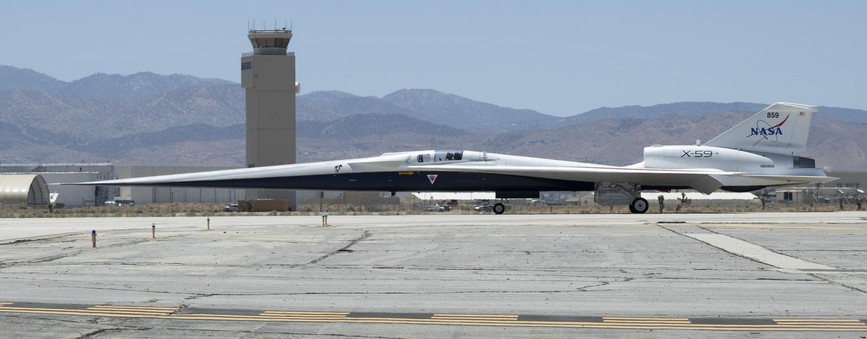
NASA’s X-59 quiet supersonic research aircraft has officially begun taxi tests, marking the first time this one-of-a-kind experimental aircraft has moved under its own power. NASA’s experimental X-59 jet is designed to fly faster than sound but also dampen the sonic “boom.”

Despite schedule delays in the early 2020s, the X-59 was delivered to NASA for flight testing in January 2025. Ground tests, including low-speed taxiing, began in mid-July, with a maiden flight expected later that year.

On July 18, 2025, NASA’s experimental X-59 supersonic research aircraft basked in golden light on the ramp at Lockheed Martin’s Skunk Works facility before being put through a series of ground tests.

The X-59 Palmdale 12 Sept 2025

The X-59 Quesst (Quiet SuperSonic Technology) is an experimental aircraft developed by Lockheed Martin’s Skunk Works for NASA, designed to achieve supersonic speeds with dramatically reduced noise, transforming the traditional sonic “boom” into a softer “thump.”

NASA test pilot Nils Larson and the X-59 team, made up of NASA and contractor Lockheed Martin personnel, completed the aircraft’s first low-speed taxi test at U.S. Air Force Plant 42 in Palmdale, California, on July 10, 2025.

Nils Larson is set to serve as pilot for first flight, with X-59’s crew chiefs – Matt Arnold from X-59 contractor Lockheed Martin and Juan Salazar from NASA.

The X-59’s life support system is designed to deliver oxygen at the aircraft’s cruising altitude of 55,000 feet. Larson will also wear a g-suit, similar to what fighter pilots wear.

The X-59 features an ejection seat and canopy adapted from a U.S. Air Force T-38 trainer, which comes equipped with essentials like a first aid kit, radio, and water.

The taxiing represents the X-59’s last series of ground tests before first flight. Over the coming weeks, the aircraft will gradually increase its speed, leading up to a high-speed taxi test that will take the aircraft just short of the point where it would take off.

During the low-speed tests, engineers and flight crews monitored how the X-59 handled as it moved across the runway, working to validate critical systems like steering and braking. These checks help ensure the aircraft’s stability and control across a range of conditions, giving pilots and engineers confidence that all systems are functioning as expected.

The X-59 is the centerpiece of NASA’s Quesst mission, which aims to demonstrate quiet supersonic flight by reducing the loud sonic boom to a quieter “thump.” Data gathered from the X-59 will be shared with U.S. and international regulators to inform the establishment of new, data-driven acceptable noise thresholds related to supersonic commercial flight over land.

Lockheed Martin Skunk Works in partnership with NASA, successfully completed the first flight of the X-59. The X-59 took off from Skunk Works’ facility at U.S. Air Force Plant 42 in Palmdale, California, before landing near NASA’s Armstrong Flight Research Center in Edwards, California. The X-59 performed exactly as planned, verifying initial flying qualities and air data performance on the way to a safe landing at its new home.

First flight

Skunk Works will continue to lead the aircraft’s initial flight test campaign, working closely with NASA to expand the X-59’s flight envelope over the coming months. Part of this test journey will include the X-59’s first supersonic flights, where the aircraft will achieve the optimal speed and altitude for a quiet boom. This will enable NASA to operate the X-59 to measure its sound signature and conduct community acceptance testing.

For more than a decade, Lockheed Martin Skunk Works and NASA have collaborated. Lockheed Martin Skunk Works is leading the design, build and flight test of the X-59 quiet supersonic technology (QueSST) X-plane. The technology demonstrator will be flown over populated areas to provide U.S. and international regulators with statistically valid data required to help approve new rules that could allow quiet commercial supersonic flight over land.
Airbus Racer

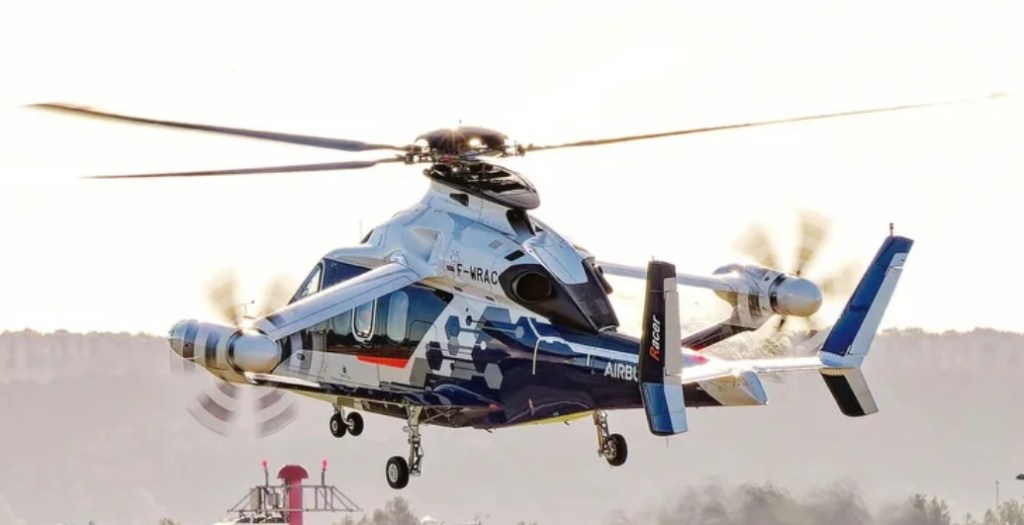
The Airbus Racer is an experimental airframe.

Airbus uses the Racer as a testbed for technology, one of its main focuses is developing an aerodynamic airframe. Aside from a sleek design, it features a pair of box-wing outriggers equipped with additional rotors and a twin-boom tail that forgoes the typical rear rotor setup.

The Airbus team set a goal of reaching a fast cruise speed of 253 mph, which it achieved within two months of the Racer’s first flight. Test pilot Hervé Jammayrac later pushed it up to 260 mph. It achieved its speed in part due to a design that produces a drag coefficient in the same range as Airbus’s smallest models despite its larger size.

A pair of Safran Aneto-1X engines each make 2,500 shp.

Sikorsky RaiderX

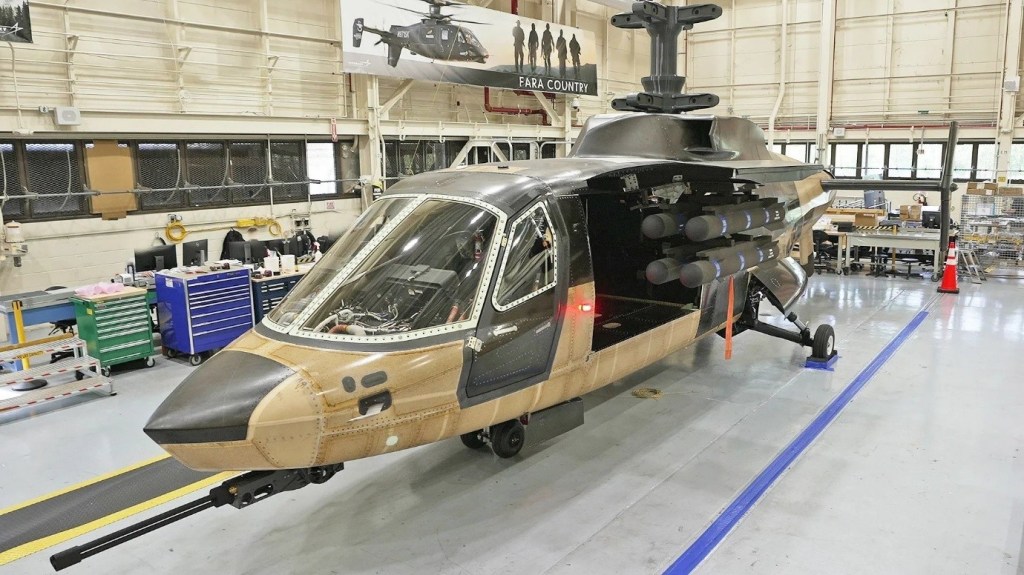
The first RaiderX competitive prototype in a hangar at Sikorsky’s West Palm Beach, Florida, facility.

The S-97, in turn, paved the way for the promising RaiderX, which was widely seen as being a potential frontrunner for the Future Attack Reconnaissance Aircraft (FARA) program, which aimed to supply the Army with a high-speed new-generation scout and attack helicopter. FARA was cancelled early 2024.

Bombardier Global 8000

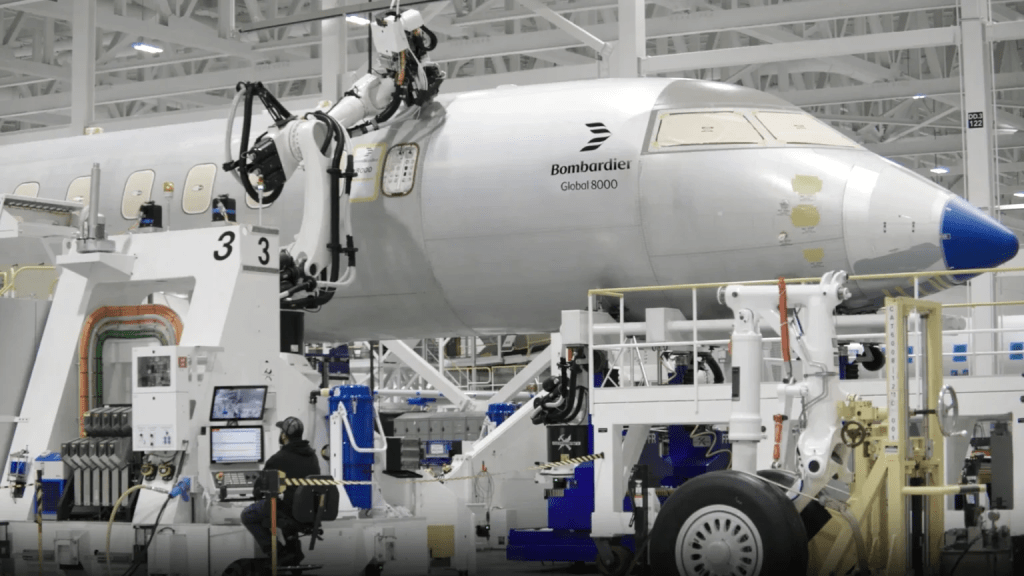
Canadian Aerospace company Bombardier has achieved a major milestone as the first production Global 8000 business jet completed its inaugural flight from Toronto Pearson International Airport (YYZ).

The flight, which took place on May 16, 2025, tested key systems as part of Bombardier’s production flight test protocol. The aircraft took off under the command of pilot Sandro Novelli, with co-pilot Charlie Honey and flight engineer Bhargav Bhavsar. The Global 8000, the fastest business jet in the world.

The Global 8000 represents Bombardier’s next-generation advancement, evolving from the proven performance of the Global 7500. With a top speed of Mach 0.94, it is the fastest civil aircraft since the Concorde. Designed for a range of up to 8,000 nautical miles nonstop.

The Global 8000 is not only fast—it is smooth. Bombardier’s patented Smooth Flex Wing technology reduces turbulence impact.

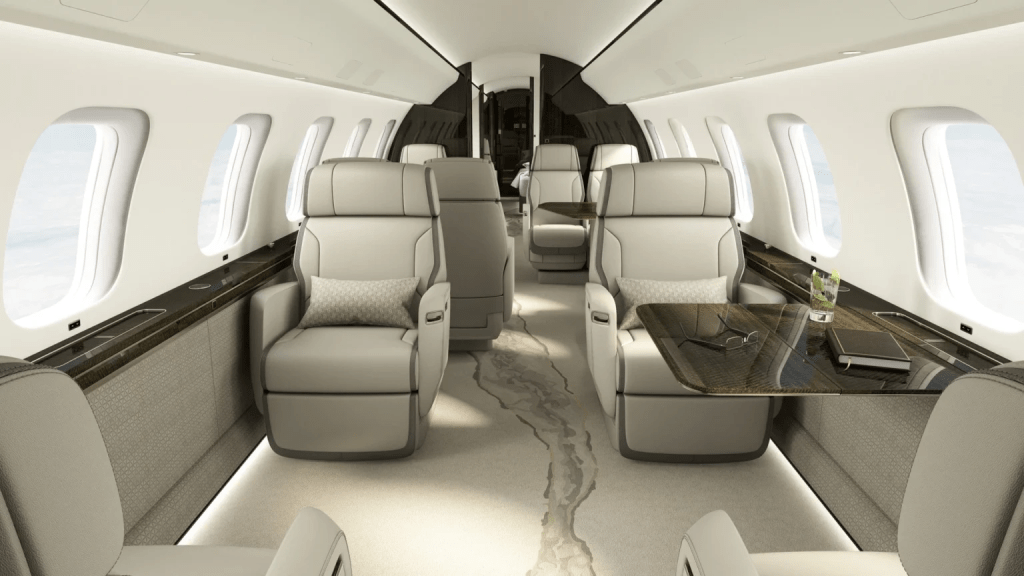
The cabin design of the Global 8000 includes four true living zones, a private crew rest area, and the longest seated length in its class.

Cabin altitude is held at 2,900 feet while cruising at 41,000 feet—ensuring less fatigue and greater well-being for passengers.

Turbo-Union RB199

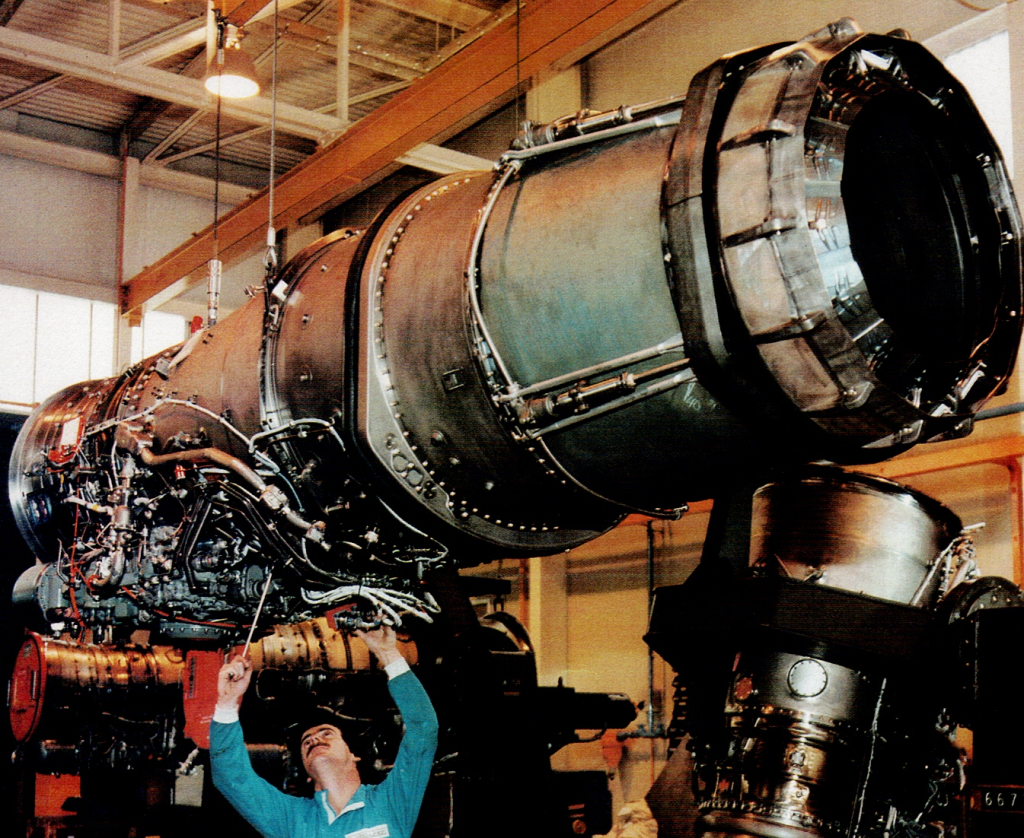
The Turbo-Union RB199 is a turbofan jet engine designed and built in the early 1970s by Turbo-Union, a joint venture between Rolls-Royce, MTU and Aeritalia.

The RB199 originated with a requirement, in 1969, to power a new European multirole combat aircraft (MRCA) called the Panavia MRCA. The engine requirements to meet the Panavia MRCA specification were significant advances over current engines in thrust-to-weight ratio, fuel consumption and size. The final selection of the engine for the MRCA was made between a new European collaboration, Turbo Union, with the RB199, and Pratt & Whitney who proposed the JTF16. The Panavia MRCA would later be called the Panavia Tornado.

Advanced engine studies at Bristol Siddeley had already been done to support the BAC/Dassault AFVG and were based on the Pegasus two-spool arrangement. At Rolls-Royce, where the three-shaft RB211 engine was in development, three shafts were considered better. Rolls-Royce took over Bristol Siddeley in 1967 so the configuration for the RB199 was decided, a three-shaft engine, but fundamentally to Bristol’s design and Bristol’s higher technology.

The overall design concept for the international collaborative program, three shafts was decided by Rolls-Royce. The bypass ratio was chosen for long-range, with low fuel consumption, particularly when throttled back. The selected BPR also gave a higher reheat boost than with smaller values used on similar engines. The design of the individual modules was shared between Rolls-Royce, MTU and Fiat according to their existing expertise. Rolls-Royce designed the fan using scaled-down Pegasus knowledge, the combustor, the high pressure (HP) turbine and the reheat. The reheat used cold air combustion techniques, described by Arthur Sotheran and which were derived from their experience with ramjets and plenum chamber burning (PCB) in Pegasus front nozzles. Fiat had built turbines for the Viper so designed the low pressure (LP) turbine as well as the final nozzle. MTU designed the intermediate pressure(IP) and high pressure (HP) compressors, the IP turbine, and the thrust reverser.

A three-spool arrangement reduces the pressure ratio on each compressor so no variable stators were needed. To meet the short afterburner requirement an arrangement known as mix-then-burn, as used in current engines, was not possible because it was too long and heavy. The RB199 used a much shorter arrangement known as mix/burn.

The RB199 first ran on 27 September 1971 at Patchway, UK. It was flight-tested using an Avro Vulcan with the engine installed in a nacelle that was representative of the Tornado aircraft. The Vulcan first flew with the RB199 in 1972.

Service flying with the Royal Air Force, German Navy and German and Italian Air Forces in the European environment showed normal failure mechanisms for turbine blades, thermal fatigue, creep and high cycle fatigue (HCF) so development started on replacing the initial production equiaxed blades with single-crystal ones which last longer at high temperatures.

Sand ingestion tests had been done and passed as part of the qualification for service introduction but operating in desert conditions with the Royal Saudi Air Force produced new problems. Frequent flying in air carrying different sizes of sand particles caused deposits on the HP turbine blades from sand passing through the combustor. In addition, sand carried with the cooling air through the blades blocked the cooling holes. Single crystal blades were being introduced to improve the life of the blades for the European operating conditions and revised cooling hole arrangements were introduced at the same time to reduce the detrimental effect of sand on blade cooling. With incorporation of these blade processing and cooling changes “Desert Storm Tornado aircraft flew some of the most arduous missions of any Allied aircraft with reliability no worse than peacetime and no engines were rejected for HP Turbine blade defects.”

RB199 Mk.104D

Looking back on the RB199 program in 2002 Chief Engineer for the RB199, Dr. Gordon Lewis, concluded “The final production standard provided satisfactory reliability and performance.

Variants and applications

RB199 Mk 101
Initial variant powered first Tornado IDS deliveries, with a 38.7kN (8700lbf) dry thrust, 66.01kN (14840lbf) with afterburner.

RB199 Mk 103
Powering Tornado IDS strike versions, with a thrust rating of 40.5 kN (dry) 71.2 kN (reheat)

RB199 Mk 104
Powering the Tornado F3 Air Defence Variant, with a thrust rating of 40.5 kN (dry) 73 kN (reheat)

RB 199 Mk104D
Derivative used on the BAe EAP.

RB199 Mk 105
Powering Tornado ECR versions and applicable to IDS, with a thrust rating of 42.5 kN (dry) 74.3 kN (reheat)

RB199-122
A derivative of the Mk104 (originally designated Mk 104E[13]), powering the first two prototypes of the Eurofighter Typhoon (DA1 and DA2) until the initial versions of the Eurojet EJ200 were available.

Specifications (RB199-104)
Type: Turbofan
Length: 3,600 mm (142 in)
Diameter: 720 mm (28.3 in)
Dry weight: 976 kg (2,151 lb)
Compressor: 3-stage LP, 3-stage IP, 6-stage HP
Turbine: Single-crystal HP, single-crystal IP, 2-stage LP
Maximum thrust: 40 kN (9,100 lbf) dry, 73 kN (16,400 lbf) wet
Turbine inlet temperature: ~1,600 K
Thrust-to-weight ratio: 7.6 (with reheat)

RB299 Mk.104

Shenyang FC-31 Gyrfalcon / J-35

Shenyang FC-31

The Shenyang FC-31 Gyrfalcon (also referred to as the J-35 in its naval variant) represents China’s second stealth fighter program and its first carrier-capable fifth-generation aircraft.

The FC-31 features a conventional twin-engine layout with canted vertical stabilisers similar to the F-22.
The aircraft incorporates internal weapons bays to preserve stealth characteristics and uses advanced composite materials to reduce weight and radar signature.

Powered by Russian-designed RD-93 derivatives (the Chinese WS-13 engines), production variants are expected to receive the more powerful WS-19 engines currently under development. These will enable the FC-31 to reach speeds of Mach 1.8 (2,205 km/h) and achieve supercruise capability.

With an estimated unit cost of $70 million, the FC-31/J-35 represents China’s strategic push to modernise its naval air arm. Initial operational capability on China’s newest carriers is expected by 2026, potentially altering the balance of power in the Western Pacific.

Cirrus Vision Jet

Cirrus first began development of the Vision Jet in the early 2000s. The Cirrus founders, the Klapmeier brothers, started the program in their offsite Duluth, Minnesota, facility. It was officially revealed to the public in June 2006 at the Cirrus Owners and Pilots Association meeting.

The first prototype of the Cirrus Vision Jet conducted its maiden flight in July 2008. However, Cirrus ran into difficulties financing the continued testing and development program of the light business jet, especially in 2009 during the height of the Great Recession.

However, after the slow development process in the early 2010s, a new Cirrus investor provided enough financing to complete the development of the aircraft. It was officially certified by the Federal Aviation Administration (FAA) in October 2016. Deliveries of the aircraft began later that same year.

The Vision Jet is a low-wing-configured aircraft with retractable tricycle landing gear. The aircraft’s airframe is also made entirely out of composite materials. It utilizes a single turbofan engine that rests on the top of the fuselage near the rear of the aircraft. Because of the unique engine configuration, the aircraft utilizes a V-tail.

The small cabin can fit up to seven total occupants in three rows. However, the third row is small and typically can only accommodate two adults or three children. Passengers enter the cabin through a clamshell door on the left-hand side of the fuselage.

Additionally, the Vision Jet is powered by the Garmin G3000 avionics suite, including the Garmin Emergency Autoland System. The Vision Jet also features the Cirrus Airframe Parachute System (CAPS).

Vision Jet
Engine: 1 x Williams FJ33 turbofan, 1,850 lb thrust
Wingspan: 38 feet 9 inches
Length: 30 feet 11 inches
Height: 10 feet 11 inches
Gross weight: 6,000 lb
Maximum speed: 311 knots (358 mph)
Range: 600 nm (690 miles)
Service ceiling: 31,000 feet

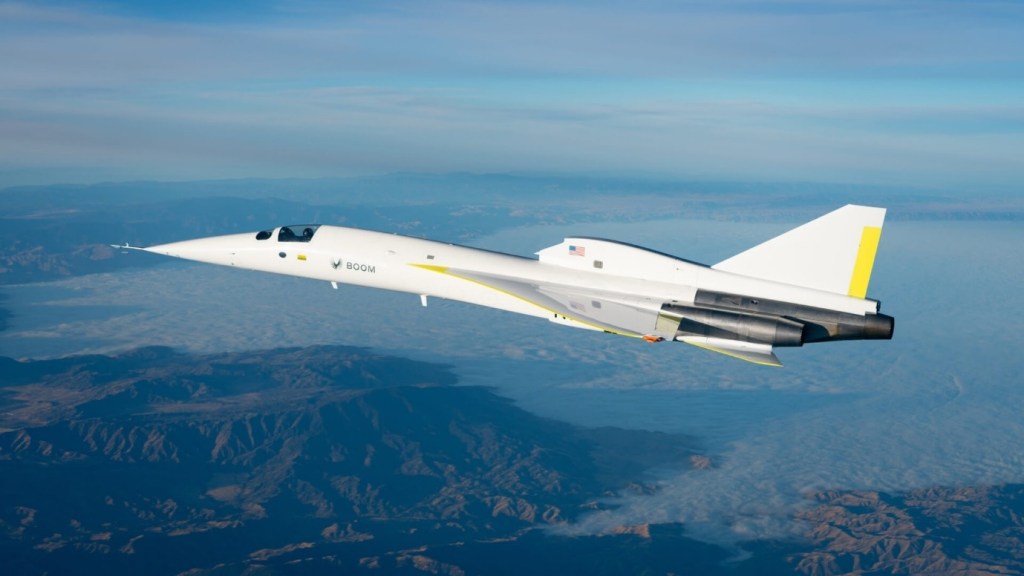
Boom XB-1

The XB-1 jet, the company’s prototype, was designed to bring back supersonic travel in a more efficient and accessible way, aiming to halve flight time from the traditional eight hours to just 3.5 hours.

After starting its tests in March 2024, the XB-1 reached a record speed of Mach 0.87 and reaching 27,716 feet of altitude during its ninth test flight.

Modifications to the vibration system made after the previous flight helped make the jet’s progress safer and more efficient.

The test pilot is Tristan Brandenburg.

After years of testing and refinement, a pilot flying the aerospace company’s XB-1 scale prototype finally broke the sound barrier during a livestream event—not once, not twice, but three times.
XB-1 took off from the runway at Mojave Air & Space Port near Barstow, California at about 11:21 AM EST. From there, Boom Supersonic’s Chief Test Pilot Tristan “Geppetto” Brandenburg ascended in the experimental plane to an altitude of 34,000 ft before turning left and beginning its supersonic test. After successfully achieving Mach 1.1 at 11:32 PM EST, Brandenburg continued XB-1 on its deceleration and descent path. At one point, however, XB-1 briefly broke the sound barrier once again.

XB-1 reached max dynamic pressure during final handling checks during its 10th test flight

“Alright, knock it off, knock it off,” someone in Boom Supersonic’s flight control room could be heard joking during the livestream.

XB-1 surpassed Mach 1 yet again a few minutes later before landing 11:54 PM EST after a total flight time of 33.49 minutes.
Tuesday’s success comes less than a year after the demonstrator aircraft’s debut flight on March 22, 2024. The XB-1 conducted another 10 flights prior to today’s Mach 1 breakthrough. Its most recent took place on January 10, when Brandenburg topped out at Mach 0.95 at an altitude of 29,481 ft (575 knots true airspeed, or roughly 661 mph).
At almost 63-feet-long, the XB-1 is about one-third the size of Overture, Boom Supersonic’s proposed commercial jet.
XB-1’s first flight was originally scheduled for 2021, but required pushbacks to address various engineering and design concerns.

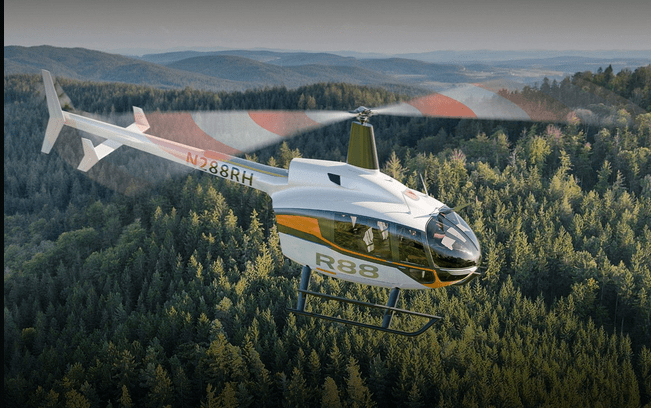
Robinson R88

The R88 will feature an open-tail rotor design and two-bladed main rotor system. It also includes new LED aircraft exterior lights, including pulsed landing and taxi lights, tail rotor lighting, scene lighting, and entry lights, further enhancing utility and safety.

The internal payload was expected to accommodate over 2,800 pounds and deliver more than 3.5 hours of flight time and more than 350 nautical miles of range. It will carry up to two pilots and up to eight passengers for a passenger total of 1,800 pounds with a full fuel tank.

Large sliding doors on each side will provide easy access for passengers and cargo. The rear has a fold-down, truck-bed style door for simplified cargo loading or easily accommodating a HEMS stretcher. The aircraft is available with standard skids or optional high skids for increased ground clearance and compatibility with a firefighting water tank.

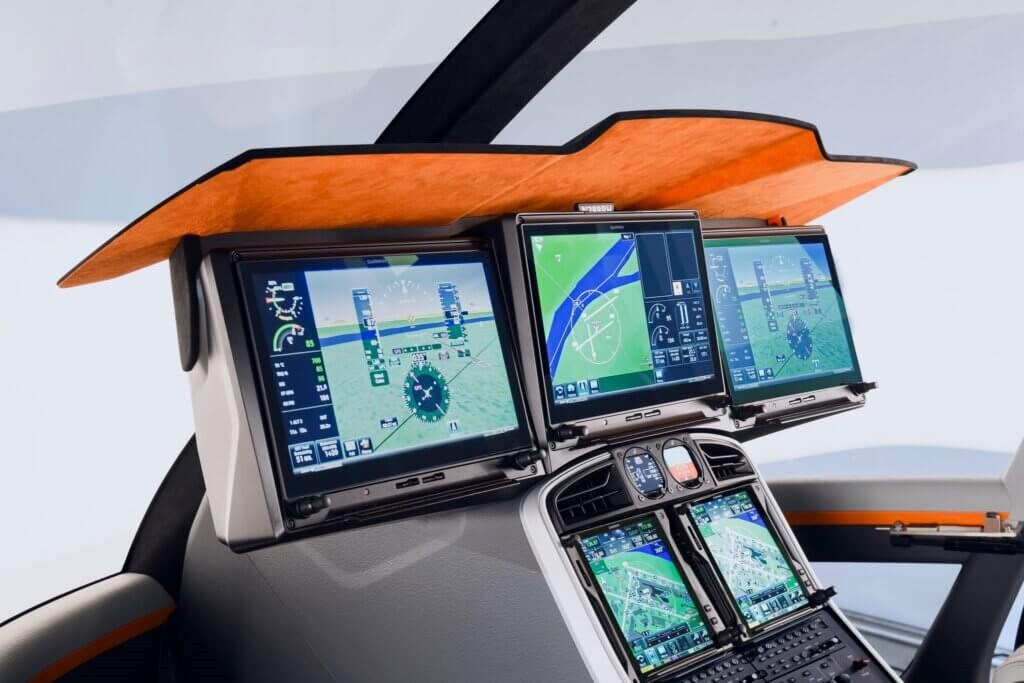
The Garmin avionics suite includes large Garmin G500H TXI displays and GTN navigators with touchscreen controls for easy operation, vivid displays, and extensive capabilities. The G500H TXI will include a crew-alerting system to provide the pilot with intelligent information about the aircraft’s systems. Offered is a standard 4-axis autopilot from Garmin. This system will provide a full range of important safety functions, including level mode, hover assist, limit cueing, low/high speed protection, and low altitude protection.

A standard data recording system with Datalink automatically will capture engine and system data for simplified operation and maintenance. A standard health usage monitoring system (HUMS) will monitor critical components and provide real-time track and balance data so operators can address issues before they affect operations.

The R88 incorporates dual hydraulics for pitch and roll for critical flight controls. Other standard safety features include an inlet barrier filter and impact-resistant windshields certified to Part 29 transport helicopter requirements.

The R88 introduces dual cyclic controls with removable controls on both sides, allowing the pilot in command to be in either the left or right seat with a passenger in the other seat. The aircraft will be type-certified for optional single-pilot IFR operations. The all-new interior design features comfortable, functional seating, easy-to-maintain materials, and a versatile layout.

New LED exterior lighting, including pulse landing and taxi lights, tail rotor lighting, scene lighting, and entry lights, further enhance safety.

The configurable cabin features a flat floor, allowing for multiple forward and club seating configurations, effective air medical and public safety mission configurations, and multiple future seating options. A fold-down, truck-bed style rear door simplifies cargo loading and accommodates a HEMS stretcher. The air conditioning system is made entirely by Robinson Helicopter.

Robinson partnered with Safran Helicopter Engines to add the Arriel 2W engine.

The R88 offers a wide range of optional OEM-provided mission equipment, including a 3000-lb. HEC-rated cargo hook, utility basket, optional wire strike protection kit, pop-out floats, and more.

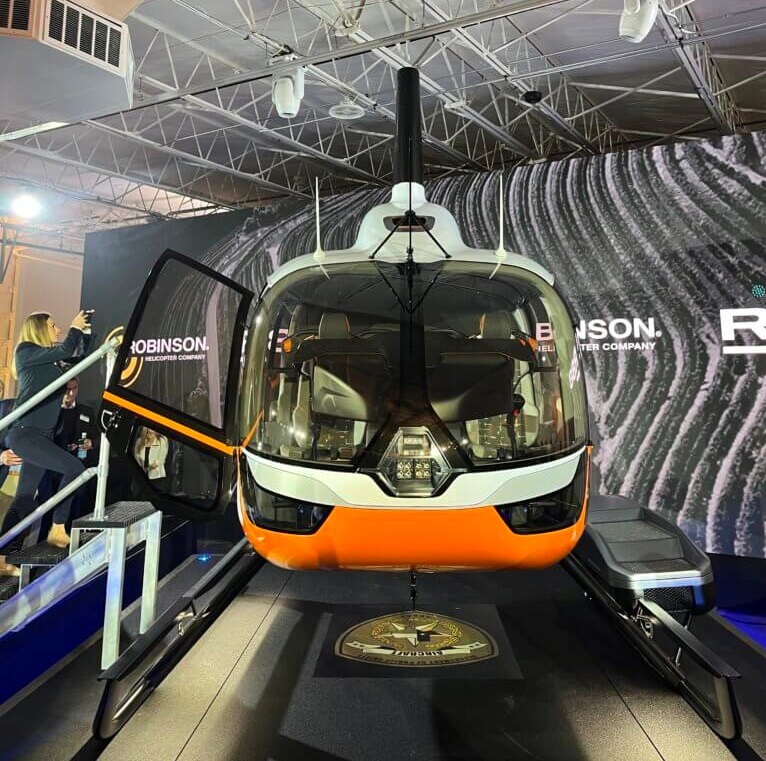
The aircraft was shown with two banks of four seats in the main cabin.

With a launch price starting at $3.3 million, the R88 was presented in a configuration of two pilot seats followed by two banks of four passenger seats, illustrating the 275-cubic-foot (7.8-cubic-meter) cabin volume.

Powered by the 1,000-shaft-horsepower Safran Arriel 2W, the R88 has a payload capacity of up to 1,800 pounds (815 kilograms) with full fuel, and a range of 350 nautical miles (650 kilometers), with endurance above 3.5 hours.

The R88 was shown with a high-skid configuration and cargo basket.

The engine of the R88 is in a different position than it is in the R66 and R44. Those types have a low engine placement within the airframe, while the R88’s engine is moved higher — representing a more “conventional” placement in a helicopter.

It has the standard Robinson two-bladed main rotor and tail, but scaled up to accommodate the increase in power and size provided by the Arriel engine. The blades have a 50 percent bigger chord than those of the R66, and are “quite a bit” longer, said Smith.

The tail boom looks similar to Robinson’s other types, but is higher up on the airframe. When the aircraft is equipped with high skids — as it was during the type’s unveiling in Dallas — the boom is high enough for most people to comfortably walk underneath.

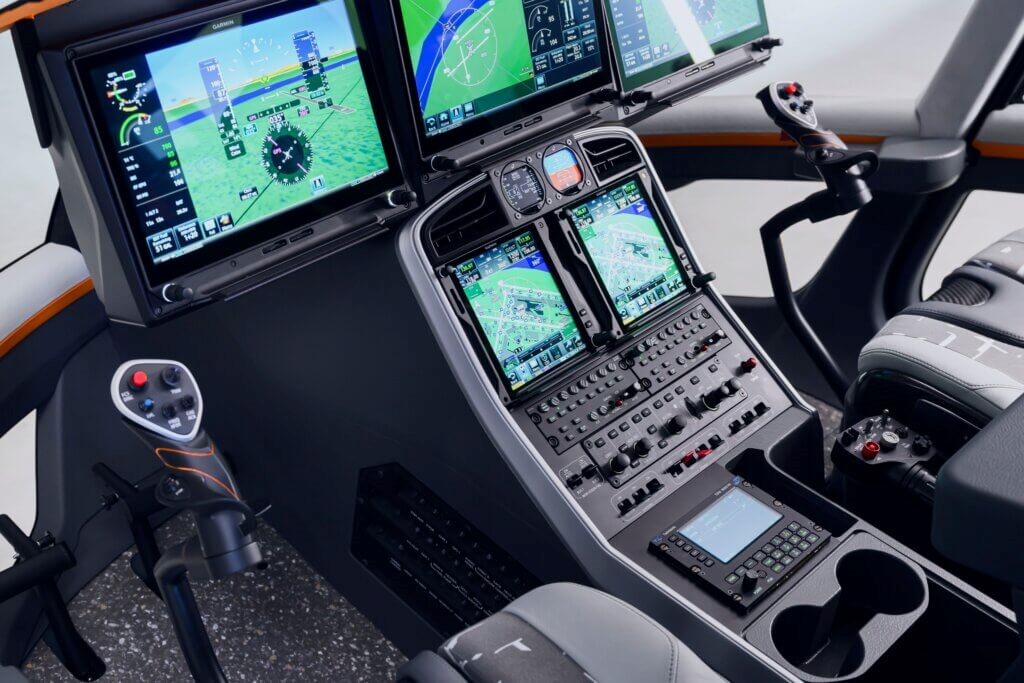
Inside, the cockpit is fully glass, with dual conventional cyclic controls (rather than Robinson’s famed “T” bar — or teetering cyclic — as used in the other types in its range).

Switching to a conventional cyclic was the result of another functional decision, driven by the aircraft’s large width. They couldn’t get the teetering cyclic to work — it’s too large of a movement.

The R88 has a Garmin avionics suite, including large G500H TXi displays and GTN navigators with touchscreen controls.

G500H TXi avionics.

The R88 will have a four-axis autopilot as standard, along with data recording with datalink and a health and usage monitoring system (HUMS). Other safety features include an inlet barrier filter and impact-resistant windshields certified to part 29 transport helicopter standards.

Optional equipment will include a 3,000-pound human external cargo (HEC)-rated cargo hook, utility basket, wire strike protection kit, and pop-out floats.

The cabin has three entry points. Sliding doors — a new feature for a Robinson helicopter — are on both sides, while a fold-down door at the back of the cabin provides access from the rear.

Zafar 300

The Zafar 300 is an Iranian attack helicopter based upon the American Bell Model 206A Jetranger utility helicopter, adapted for a military gunship role. It is armed with a General Electric GAU-2B/A Minigun rotary six-barrel machinegun in an under-nose turret, and disposable stores on two hard points. The Zafar 300 is manned by a crew of two comprising a pilot and gunner seated in tandem.