Soloviev D-90A / Aviadvigatel PS-90

PS-90A-76

The Aviadvigatel PS-90 is a Russian high-bypass commercial turbofan rated at 16000 kgf (157 kN, 35,300 lbf) thrust. It powers Russian airliners such as the Ilyushin Il-96 and the Tupolev Tu-204/Tu-214 series and transport aircraft such as the Ilyushin Il-76. It is made by the Russian aircraft engine company Aviadvigatel, which is the successor of the Soviet Soloviev Design Bureau. “PS” are the initials of Pavel Aleksandrovich Soloviev (Russian:Павел Алеќсандрович Соловьёв).

With the advent of new generation of Russian airliners, Aviadvigatel developed the PS-90 to satisfy the demands of economy, performance and exhaust emissions. It represented a huge advance over previous generations of 1960s era Soviet engines. The PS-90 is almost double the efficiency of those engines and is reasonably competitive to the current generation of western engines.

It incorporates many firsts in a Russian engine with advanced technology features such as
High-bypass turbofan design for economy
Integrated exhaust with exhaust mixer for good efficiency
Acoustically treated exhaust duct for low noise
Full-authority digital engine control (FADEC)
Long service life based on on-condition maintenance
Modular design for ease of maintenance
It was first certified in 1992 and has been in service since. Approximately 300 had been built to 2010.

Variants:
There are five variants; the basic PS-90A, the PS-90A-76, the improved PS-90A variants, PS-90A1 and PS-90A2, and the PS-90A-42 turbojet.

PS-90A
The PS-90A engine is the initial variant and is standard equipment for Ilyushin Il-96-400, Tupolev-204-100 and the Tupolev-214. For the first time it allowed Russian airliners to achieve similar performance and economy to their western counterparts. PS-90A is rated nominally at 16000 kgf (157 kN, 35,300 lbf) thrust, 13.3% less than the original Rolls-Royce RB211-535E4 engine (which are also offered on the Tu-204), and the fuel consumption is 8.2% less than it.

PS-90A-76
This variant is a modification of the basic PS-90A engine. It extends the service life of the Il-76 transport airplanes and raises their efficiency by installation of the PS-90A-76 engine instead of the D-30KP. It transformed these airplanes into the quiet, economical and extended range variant, the Ilyushin Il-76MF. It is rated nominally at 14,500 kgf (142 kN, 32,000 lbf) thrust.

PS-90A2
The PS-90A2 is an advanced derivative of the PS-90A,developed in co-operation with Pratt & Whitney. It has a proportion of components from France, Germany, Sweden and the USA. It is lighter than PS-90A and features improved FADEC. These features improve the performance and reduce maintenance costs by 40%.. The PS-90A2 is the first Russian engine to be ETOPS-180 min rated. It was offered in newly built aircraft and is completely interchangeable with the PS-90A.
It has the same thrust rating as the PS-90A, 16000 kgf (157 kN, 35,300 lbf) thrust. It is also capable of 18000 kgf (176 kN, 39,600 lbf) thrust.
Future American involvement in engine development has been put in doubt after attempts to block sale of PS-90A2 engines to a major Iranian customer for the type.

Specifications:
PS-90A1
Type: Twin-spool high bypass turbofan with a single-stage fan
Length: 4,964 mm (195.4 in)
Fan diameter: 1,900 mm (75 in)
Dry weight: 2,950 kg (6,500 lb)
Compressor: 2-stage LP, 13-stage HP
Combustors: Fully annular
Turbine: 2-stage HP, 4-stage LP
Maximum thrust: 17,400 Kgf; 38,400 lbf (171 kN)
Bypass ratio: 4.4
Fuel consumption: 0.595 kg/kgf hour

Soloviev D-20

The Soloviev D-20P was a low-bypass turbofan engine rated at 52.9 kN (11,900 lbf) thrust. It was built by the Soloviev Design Bureau. The engine was used on the Tupolev Tu-124.

Type: Twin-spool turbofan engine
Dry weight: 1,468 kg
Compressor: Three-stage LP, eight-stage HP, axial flow
Combustors: 12-chamber cannular
Turbine: Two-stage LP turbine, single-stage HP turbine
Maximum thrust: 5,400 kg
Overall pressure ratio: 13:1
Bypass ratio: 1:1

Solar T62

The Solar T62 is a family of compact auxiliary power units (APUs) installed in ground power units and aircraft. The T62T32 variant has also been successfully adapted as the power plant for small single seat and two seat home-build helicopters.

The T62T32 adopts a classic small gas turbine design featuring a centrifugal compressor and radial inflow turbine. The two are mounted back to back and supported on a common shaft with outboard bearings. The bearings hold the shaft in a cantilever fashion, this arrangement has a clear advantage – both bearings are outside the hot section of the engine and so run cooler in operation.

The combustion system fitted to the Solar T62 consists of an annular reverse-flow chamber with six vaporising burners. The operation of vaporising burners requires the presence of heat in the compositor in initiate the vaporisation process, this is provided a special small atomising burner and igniter plug.

The T62T32 version carries a heavy duty reduction gearbox that can carry a 60Kva 400Hz generator turning at 6,000 rpm. The usual accessories are also driven form the gearbox and also a heavy duty pre-engaged starter motor. Other versions of the T62 generally carry smaller lighter gearboxes and may make use of electrical starter generators or hydraulic starters.

The T62 is unusual in carrying a hybrid fuel control system. Fuel is supplied to the engine by a small gear pump, up to running speed the fuel flow is controlled by a mechanical pneumatically operated valve pressurised from the compressor delivery (P2). This arrangement ensures smooth surge free acceleration after starting. When full speed is reached an electronic governor takes over by means of a rotary solenoid actuator and fuel metering valve. The governor arrangement is not dissimilar to many diesel governors fitted to generator sets running at constant speed.

The USAF EMU30 transportable generator set was fitted with the T62T32 model, a number of these units can be found surplus from time to time in the USA. Demand for these units is likely to have been stimulated by the use of the engine as a powerplant in small kit built helicopters. Some modifications are carried out to reduce the weight of the substantial gearbox housing.

Gallery

Variants:

T62 Titan
The direct drive main production version.

T62T-2
80 hp (60 kW) at 56,700 turbine rpm for Boeing-Vertol CH-47A Chinook helicopters.

T62T-2A
95 hp (71 kW) at 56,700 turbine rpm for Boeing-Vertol CH-47B / C Chinook helicopters.

T62T-11
80 hp (60 kW) at 56,700 turbine rpm for Boeing-Vertol CH-46A Sea Knight helicopters.

T62T-12
105 hp (78 kW) at 61,240 turbine rpm

T62T-16 / -16A1
95 hp (71 kW) for Sikorsky CH-3, Sikorsky SH-3 and Sikorsky CH-54A Skycrane helicopters at 56,700 turbine rpm, with 8,000 and 8,100 rpm outputs.

T62T-25
Turboshaft – 80 hp (60 kW) at 56,700 turbine rpm

T62T-27
Turboshaft – 150 hp (110 kW) at 61,250 turbine rpm, with 1x 8,000 and 1x 8,216 rpm outputs.

T62T-29
Turboshaft – 95 hp (71 kW) at 56,700 turbine rpm, for Lockheed Jetstar and Pan American Falcon business Jets at 56,700 turbine rpm, with 1x 8,000 and 1x 8,100 rpm outputs.

T62T-32
Power Output: 150HP @ 60,000rpm
Compressor: single stage centrifugal
Combustor: annular reverse flow with 6 vaporising burners
Turbine: single stage radial inflow
Layout: overhung rotor single shaft with reduction gearbox
Fuel system: gear pump, part hydro mechanical/part electronic governor
Ignition System: high energy plug torch igniter
Starting System: electric starter
Oil system: return system wet sump reservoir
Accessories: Brush-less Alternator
Application: 400Hz EMU30 Military Generator set

T62T-32A
150 hp (110 kW) at 61,250 rpm. Military Ground Power Unit (GPU) often used by US Navy and Air Force.

T62T-39

T66
A free power turbine version for the US military.

Soko / CNIAR J-22 Orao / IAR-93

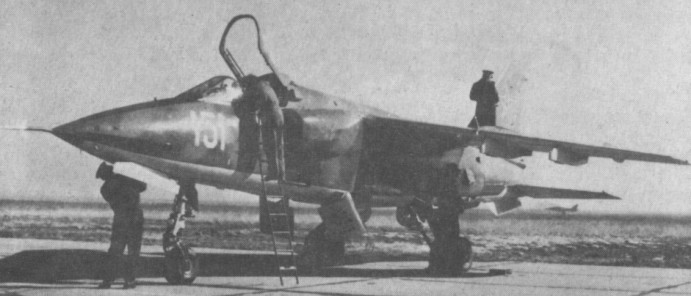
Built in Yugoslavia as the Soko Orao (eagle) and in Romania as the CNIAR (Centrul National al industriei Aeronautica Române) IAR-93, the aircraft was designed by a joint team and developed under a programme known as YuRom, the name indicating the partner countries. Prototypes assembled by Soko and CNIAR made their first flights within minutes of each other on 31 October 1974, and these were followed by a pair of two-seat variants, both of which flew on 29 January 1977. During 1978, deliveries began of a pre-production batch of 15 to each country, after which the initial series model, known in Romania as the IAR-93A, entered service. This was fitted with a pair of non-afterburning Viper Mk 632 engines, but after a short run of single and two-seat aircraft to this standard (20 of them for Romania) manufacture began of the definitive IAR-93B which features a licence-built afterburner and structural changes such as integral wing fuel tanks and a honeycomb rudder and tailplane.

Soko / CNIAR J-22 Orao / IAR-93 Article

The uprated Orao 2/IAR-93B flew in Jugoslavia in October 1983, and in Romania in 1985. The principal difference from the earlier Orao 1/IAR-93A is the introduction of a licence-built Viper 633 with reheat, giving improved performance and weapons carrying capability. The Orao 2 has a Thomson-CSF headup display, and four underwing and one underfuselage stores pylons. Optical and infrared reconnaissance pods are available for carriage on the centreline station.

Romania required 165 IAR-93Bs, including some two-seat models, with similar operational capability to the main version, for advanced training and weapons instruction. Yugoslav plans were believed to be similar. The Orao/lAR-93 is limited to the close support role by its lack of radar or inertial navigation, but low-level interception is a secondary duty.

The J-22 Orao/IAR-93 attack aircraft was out of production before all deliveries made, due to regional conflict.

Orao 2/IAR-93B
Engine: 2 x Rolls-Royce Viper Mk 633-47 afterburning turbojets
Installed thrust (dry / reheat): 37.7 / 44.8 kN, 2268-kg (5,000-1b)
Span: 9.62 m (31 ft 6.75 in)
Length excluding probe: 13.96 m (45 ft 9.5 in)
Height 4.45 m (14 ft 7.25 in)
Wing area: 26 sq.m (279.86 sq ft)
Empty equipped wt: 5900 kg (13,007 lb)
MTOW: 10,097 kg (22,260 lb)
Warload: 2800 kg
Max speed: 1160 kph (721 mph) at sea level
Initial ROC: 5.5 min to 13,000 m / 3960 m (12,990 ft) per min
Service ceiling 12500 m (41,010 ft)
T/O run: 690 m
Ldg run: 1050 m
Combat radius hi-lo-hi: 360 km
Fuel internal: 2600 lt
Air refuel: No
Armament: two 23-mm GSh-231, twin-barrel cannon (with 200 rpg) in front fuselage
four wing pylons and one centreline pylon carrying five x 250-kg (551-1b)

SOKO J 22 Orao 2
Engine: 2 x Rolls Royce Viper 633 41, 17462 N
Length: 45.932 ft / 14.0 m
Height: 14.764 ft / 4.5 m
Wingspan: 31.496 ft / 9.6 m
Wing area: 279.864 sq.ft / 26.0 sq.m
Max take off weight: 24806.3 lb / 11250.0 kg
Weight empty: 12678.8 lb / 5750.0 kg
Max. payload weight: 12127.5 lb / 5500.0 kg
Max. speed: 626 kts / 1160 km/h
Landing speed: 148 kts / 274 km/h
Cruising speed: 394 kts / 730 km/h
Initial climb rate: 13779.53 ft/min / 70.0 m/s
Service ceiling: 44291 ft / 13500 m
Wing loading: 88.77 lb/sq.ft / 433.0 kg/sq.m
Range: 572 nm / 1060 km
Crew: 1
Armament: 2800kg ext 5pods

Soko G.4 Super Galeb

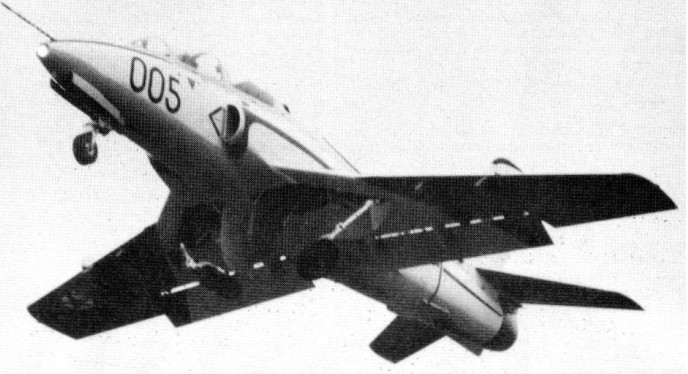
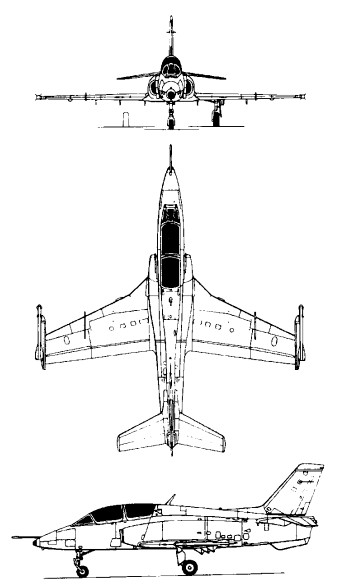
Designed to replace the T-33 and the earlier G.2A Galeb in Jugoslavian Air Force service, this two-seat basic trainer/light strike aircraft has swept wings and all-swept tail surfaces, the tailplane having pronounced anhedral, and stepped tandem seating. Its performance is improved by the introduction of a 17.8kN Rolls-Royce Viper turbojet.

Soko G.4 Super Galeb Article

The first of two prototypes was flown on 17 July 1978 and the first of six pre-production aircraft on 17 December 1980. These and the first prototype were designated G-4 PPP, and had fixed tailplanes with inset elevators and no anhedral.

Production examples (and the second prototype) were designated G-4 and featured an all-moving anhedral tailplane and comprehensive avionics improvements. Armament includes a detachable underfuselage 23mm cannon pod, and a variety of stores on four underwing hardpoints. A Ferranti D282 gyro gunsight is standard equipment.

The G-4 was been ordered in large numbers for the Yugoslav air force. They were delivered to the Air Academy at Zemunik (later relocated to Udbina) and to advanced flying schools at Pula and Totograd. The academy fleet includes the ‘Letece Zvezde’ (Flying Stars) formation display team, whose aircraft are painted in a red, white and blue colour scheme.

Twelve G-4s, in two batches of six, were delivered to Myanmar in 1991 and 1992.

A ground-attack trainer, with advanced avionics, an upgraded nav/attack system, and wingtip missile launch rails was developed under the designation G-4M, but no prototype has flown. A similar single-seat derivative designated G-5 was also under development.

The UTVA factory was heavily bombarded in 1999 and certain parts of it were still off limits due to the unexploded ordnance in 2012. All five original lasta 95 prototypes were destroyed in the factory and the only existing Supergaleb G4MD prototype was lightly damaged.

Gallery

G.4 Super Galeb
Engine: 1 x R-R Viper 632 Mk. 632
Installed thrust: 17.8 kN
Span: 9.88 m / 32 ft 5 in
Length: 11.86 m / 39 ft 11 in
Height: 4.28 m / 14 ft 1 in
Wing area: 19.5 sq.m / 209.90 sq ft
Empty wt: 3250 kg
MTOW: 6330 kg / 13955 lb
Loaded weight: 3250 kg / 7165 lb
Warload: 1350 kg
Max speed: 491 kt / 910 kph / 565 mph
Landing speed: 89 kt / 165 km/h
Cruising speed: 459 kt / 850 km/h
Initial ROC: 1800 m / min
Ceiling: 15,000 m / 49200 ft
T/O run: 600 m
Ldg run: 550 m
Fuel internal: 1720 lt
Combat radius lo-lo-lo: 300 km
Range w/max.payload: 600 km / 373 miles
Armament: 1 x 23 mm GSz-23L cannon
Hardpoints: 5
Crew: 2

SOKO G-4 Super Galeb

Soko G.2 Galeb

The first of two prototype SOKO G2-A Galeb (Gull) two-seat trainer and light attack aircraft was flown during May 1961 and production was started in 1963.

Soko G.2 Galeb Article

Powered by a 2,500 lb / 1134kg thrust Rolls-Royce Viper 22-6 turbojet, the G2-A was the standard version for the Yugoslav air force. A G2-AE export variant became available from late 1974 and was built for Libya and Zambia. The basic G2 A version served with the Yugoslav Air Force and G 2A Es with Libya and Zambia.

Production of the G-2A Galeb ended in 1983.

Gallery

G-2A Galeb
Engine: 1 x 2500 lbs.t. (1134 kgp) Bristol Siddeley Viper A.S.V.11 Mk. 22-6 turbojet
Span: 34ft 0.75 in (10.38 m)
Length: 33 ft 11.5 in (10.35 m)
Height: 3.3 m / 11 ft 10 in
Wing area: 209.14 sq.ft (19.43 sq.m)
Empty weight: 5485 lb (2488 kg)
Loaded weight: 7,438 lb. (3374 kg)
Max. speed: 505 mph (812 kph) at 20,340ft (6200 m)
Cruise: 334 mph (537 kph)
Initial climb: 4,500 fpm (22.86 m/sec)
Ceiling: 10000 m / 32800 ft
Range w/max.payload: 1250 km / 777 miles
Crew: 2

SOKO G-2 Galeb

Sud-Est SE 5000 Bardoudeur / SE 5003 Bardoudeur

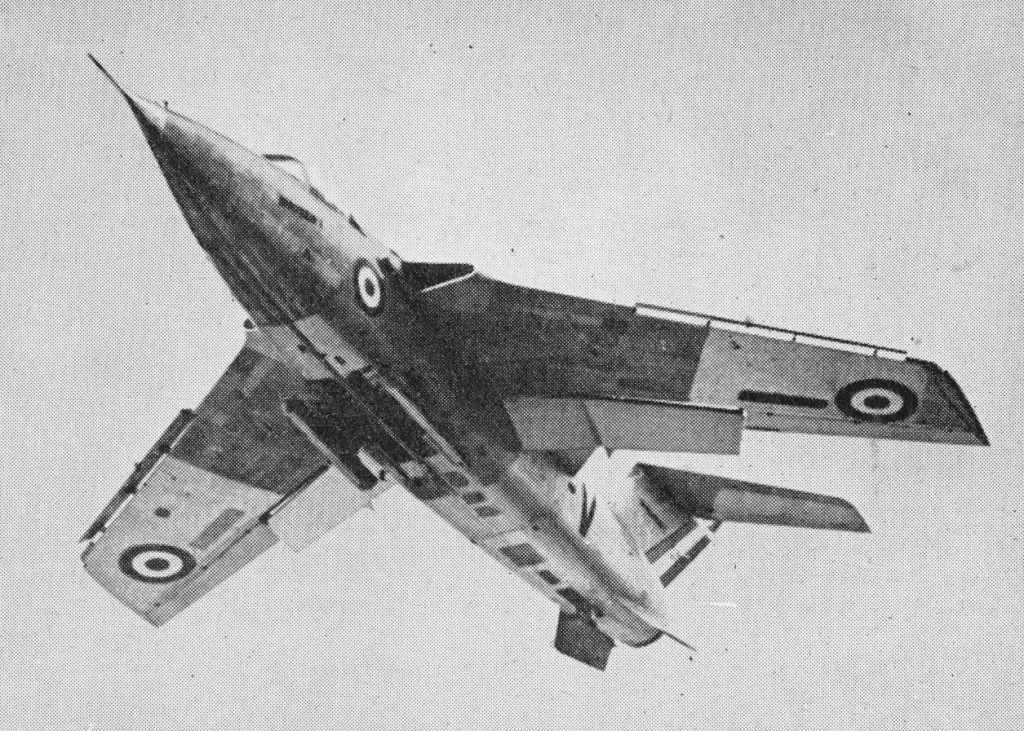
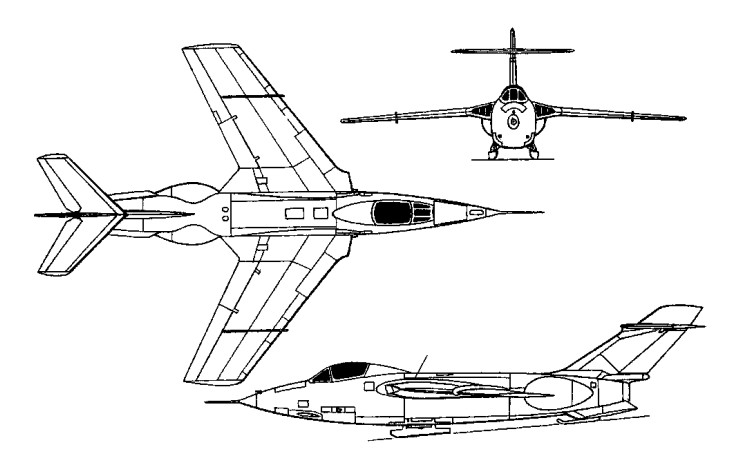
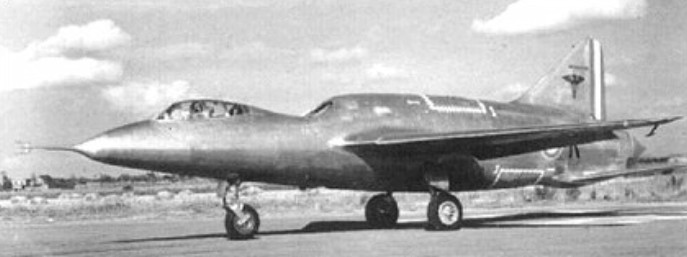
A private-venture single-seat tactical support fighter, the SE 5000 Baroudeur – a name derived from the Arabic word baroud for battle, and, in French Foreign Legion parlance, describing a pugnacious fighter – was designed by Wsiewolod J Jakimiuk. Of all-metal construction with a wing sweptback 36 degrees at quarter-chord, the Baroudeur represented an attempt to achieve a measure of independence from permanent runways. In place of a conventional undercarriage, it was provided with a combination of jettisonable take-off trolley and landing skids like the Me 163B Komet.

Sud Est SE 5000 Bardoudeur Article

The first prototype was powered by a 2,395kg SNECMA Atar 101B turbojet and flew on 12 May 1954.

Proposed armament comprised two 30mm or 37mm cannon. The Baroudeur was progressively re-engined with the Atar 101C and 101D-1, this last, rated at 2,600kg, powering a second prototype, which flew on 12 May 1954 and featured a three degree increase in wing anhedral.

Two months earlier, an official contract covered both SE 5000 prototypes as well as three SE 5003 pre-series aircraft. The first SE 5003 was flown in September 1955 with an 3,700kg Atar 101E-4, the second and third aircraft having a 2,850kg Atar 101D-3 and a 3,500kg Atar 101E-3 respectively. The Baroudeur eventually demonstrated the ability to take-off without recourse to the jettisonable trolley and the first SE 5003 was flown with flush-fitting auxiliary fuel tanks on the aft fuselage sides. The NATO nations elected to adopt a more conventional aircraft to meet the lightweight tactical fighter requirement and development of the Baroudeur was discontinued.

SE 5003
Engine: 1 x SNECMA “Atar” 101C, 27.5kN
Loaded weight: 7150 kg / 15763 lb
Empty weight: 4520 kg / 9965 lb
Wingspan: 10.0 m / 33 ft 10 in
Length: 13.66 m / 45 ft 10 in
Height: 3.25 m / 11 ft 8 in
Wing area: 25.30 sq.m / 272.33 sq ft
Max. speed: 1033 km/h / 642 mph
Crew: 1

Sud-Est SE 5000 / SE 5003 Baroudeur

Sud-Est S.E.2415 Grognard II

A second prototype, the SE.2415 Grognard II, flew in February 1945. A two-seater with wings swept at 32 degrees, it was damaged in a belly landing. Both designs suffered from flutter-induced problems. The definitive production version would have been the SE.2418, which was to have been powered by Rolls-Royce Tay turbojets, but the SO Vautour was selected to meet the Armee de l’Air’s ground-attack requirement instead.

SE.2415-08
Engine: 1 x 2400kg Rolls-Royce Nene 102 turbojet
Max take-off weight: 18000 kg / 39683 lb
Empty weight: 11312 kg / 24939 lb
Wingspan: 13.58 m / 45 ft 7 in
Length: 16.84 m / 55 ft 3 in
Height: 5.20 m / 17 ft 1 in
Wing area: 44.23 sq.m / 476.09 sq ft
Max. speed: 960 km/h / 597 mph
Cruise speed: 880 km/h / 547 mph

Sud-Est S.E.2415 Grognard II

Sud-Est SE 2410 Grognard

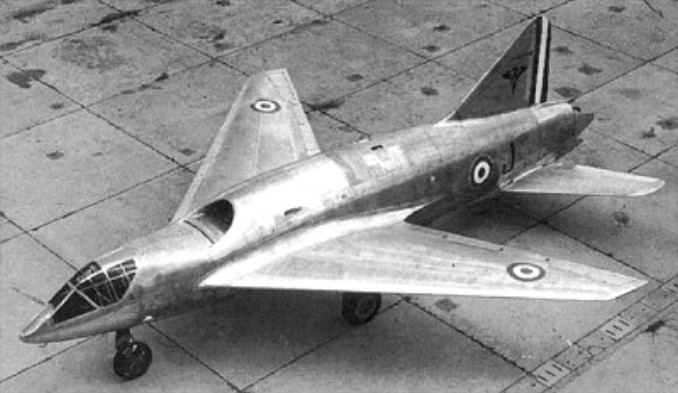
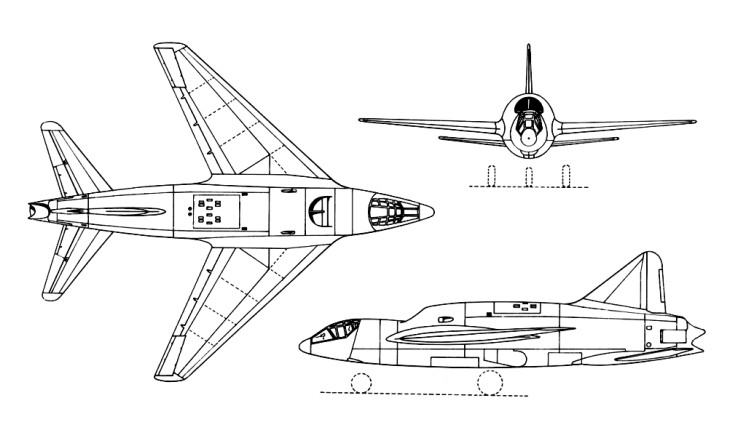
Designed as a single-seat ground-attack aircraft, the Sud-Est SE.2410 Grognard (Grumbler – a nickname for a soldier of Napoleon’s Old Guard) prototype flew for the first time on 30 April 1950. Powered by two 2197kg thrust Hispano-Suiza Nene 101 turbojets mounted one above the other in the fuselage and aspirated via a dorsal inlet, the Grognard I flew as a single¬-seater with wings swept at 47 degrees.

A second prototype, the SE.2415 Grognard II, flew in February 1945. Both designs suffered from flutter-induced problems. The definitive production version would have been the SE.2418, which was to have been powered by Rolls-Royce Tay turbojets, but the SO Vautour was selected to meet the Armee de l’Air’s ground-attack requirement instead.

SE.2410 Grognard
Engine: 2 x 2197kg Hispano-Suiza Nene 101 turbojets
Wingspan: 13.57 m / 44 ft 6 in
Wing area: 495 sq.ft
Length: 15.40 m / 50 ft 6 in
Height: 17 ft
Empty weight: 24,508 lb
Loaded weight: 31,967 lb
Max. speed: 1038 km/h / 645 mph at 4920 ft
Ceiling: 11590 m / 38050 ft
ROC: 5315 fpm
Range: 853 km / 530 miles
Armament: 2 x 30mm cannon, bombs and rockets
Crew: 1

Sud-Est SE 212 Durandal

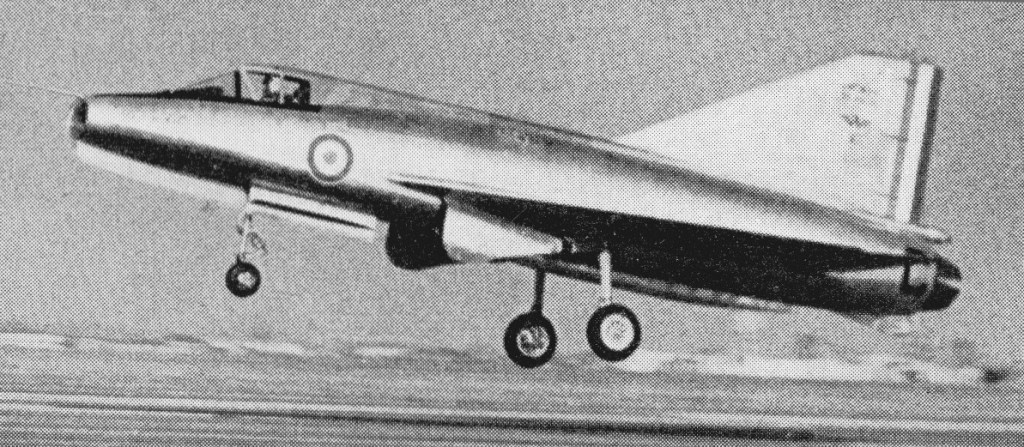
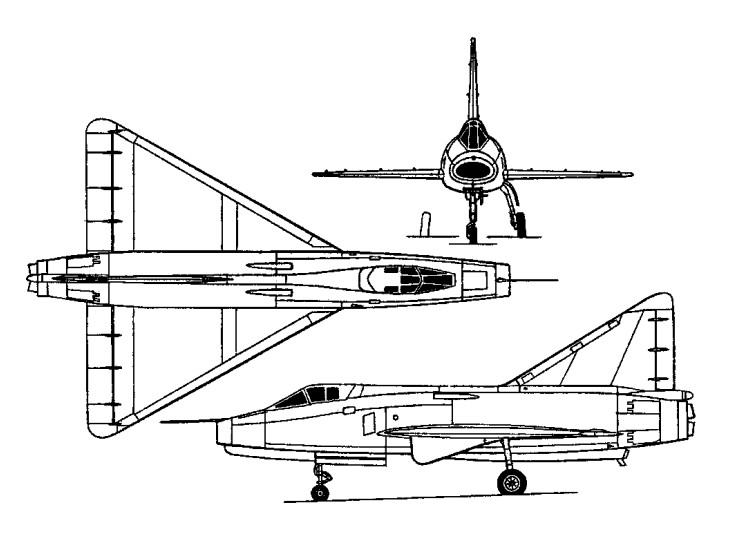
From the end of 1951, the bureau d’etudes headed by Pierre Satre at the SNCA du Sud-Est undertook a series of studies of potential lightweight mixed-power interceptor fighters under what was effectively the generic designation SE 212. These studies crystallized in the shape of a small, 60-degree delta powered by a SNECMA Atar 101F with an afterburning thrust of 3800kg and a 750kg SEPR 75 rocket motor. The primary armament was intended to consist of a single AA 20 or R 052 missile carried externally on the fuselage centreline, alternative armament being two 30mm DEFA cannon or 24 SNEB rockets of 68mm calibre. An official contract was placed for two prototypes, the first of which was flown on 20 April 1956 without the rocket motor fitted. The Atar 101F turbojet was subsequently replaced by an Atar 101G with an afterburning thrust of 4400kg, and the first flight during which the rocket motor was lit took place on 19 December 1956. The second prototype SE 212 was flown on 30 March 1957. During flight testing a speed of 1444km/h, or Mach=1.36, was attained at 12,300m without the rocket motor and 1667km/h, or Mach=1.57, was reached at 11,800m with the rocket motor lit. These speeds were achieved without armament fitted, and the test programme terminated in 1958.

Loaded weight: 6700 kg / 14771 lb
Empty weight: 4575 kg / 10086 lb
Wingspan: 7.44 m / 24 ft 5 in
Length: 12.07 m / 40 ft 7 in
Wing area: 29.60 sq.m / 318.61 sq ft
Max. speed: 1667 km/h / 1036 mph